
Blister-Cartoning Integrated Lines: A Complete Beginner's Guide
An automatic blister-cartoning line is a single, linked packaging system that forms blister pockets, seals tablets or capsules inside them, and then places the finished blister cards into folded cartons — without the manual transfer steps that separate machines would require. This guide explains what forming, sealing, and cartoning each mean inside one machine, why the industry has moved toward integrated lines, and how to read the specifications that matter when you compare options.
What Is a Blister-Cartoning Integrated Line?
A blister-cartoning integrated line combines two traditionally separate functions — blister packaging and cartoning — into one synchronized production flow. Rather than forming and sealing blister packs on one machine, collecting them in trays, and then feeding them into a separate cartoner by hand or by a short conveyor, an integrated line links both stages through a controlled transfer system.
The integrated machine operates in a fully servo-linked mode with a PLC/HMI interface and synchronized multi-station control. Its role is to complete blister packaging, leaflet folding, carton opening, blister insertion, batch and date coding, inspection and rejection, and downstream connection — improving automation and reducing manual transfer between stages.
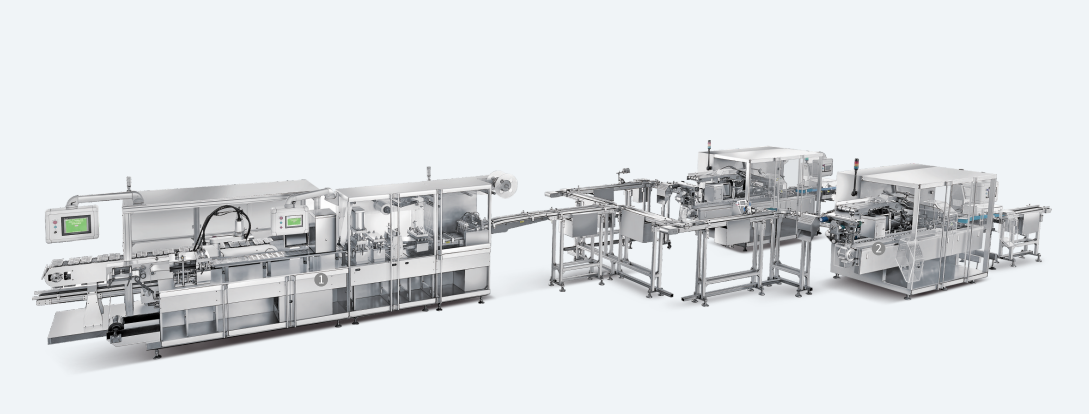
An automatic blister-cartoning integrated line links primary blister forming and sealing with secondary cartoning in one synchronized flow.
The Problem Integrated Lines Solve
When blister packaging and cartoning run on two unlinked machines, the gap between them becomes a source of operational risk. Operators must collect blister cards, check them, and load them into the cartoner — a step that introduces labor cost, the chance of wrong insertion or a missing leaflet, and additional handling that is difficult to reconcile with cleanroom discipline.
Integrated lines address these gaps by design:
- Fewer manual transfer points — blister cards move automatically from the forming and sealing section to the cartoning section.
- Consistent synchronization — one control system coordinates the speed of blister output with carton demand, so the two halves of the line stay balanced.
- Single-point inspection and rejection — coding, inspection, and rejection are handled in-line rather than across two machines.
- Cleaner and more maintainable layout — a linked line reduces the footprint and material exposure of interim storage between machines.
Industry Background: Why the Market Is Moving Toward Integration
Pharmaceutical packaging sits inside a strict regulatory environment. Regulatory frameworks such as Current Good Manufacturing Practice (cGMP) establish the quality foundation for pharmaceutical production, and standards such as ISO 15378:2017 specify Good Manufacturing Practice (GMP) requirements for primary packaging materials for medicinal products. For equipment buyers, these frameworks translate into expectations around documentation, cleanability, and traceability that apply to packaging machinery as part of the production chain.
At the same time, the equipment category itself continues to grow. According to Custom Market Insights, the global blister packaging machine pharmaceutical market was valued at USD 2.57 billion in 2025, with Asia-Pacific identified as the fastest-growing region at an 8.87% CAGR to 2031. A separate commercial research estimate places the broader pharmaceutical packaging machinery market — a scope that explicitly includes blister packaging and cartoning equipment — at USD 7.09 billion in 2026.
These figures describe the category, not any single solution. The practical takeaway for buyers is simpler: as solid-dosage production expands and quality expectations tighten, integrated blister-cartoning architecture has become a mainstream way to organize primary and secondary packaging within one controlled flow.
The Three Building Blocks: Forming, Sealing, and Cartoning
One reason integrated lines can be confusing to newcomers is that three distinct functions share a common name — "packaging." Here is what each one actually does.
Forming
Forming is where the blister cavity is created. A base film — typically PVC, or a cold-form aluminum structure for higher barrier applications — is heated and pressed into a mold so that pockets shaped to hold tablets or capsules are formed in the film. The clarity and depth of these pockets determine how well the product sits and how the pack will behave in later handling.
Sealing
Sealing is where the product is closed in. Once tablets or capsules are loaded into the formed pockets, a lidding material — commonly aluminum foil — is applied and heat-sealed to the base film. The result is a sealed blister card in which each dose is protected until the end user pushes it through the foil.
Cartoning
Cartoning is secondary packaging. Finished blister cards are grouped, an instruction leaflet is folded and prepared, a flat carton blank is opened, the blister cards (and leaflet) are inserted, and the carton is closed and coded. On an integrated line, this happens automatically as a continuation of the blister process rather than as a separate operation.
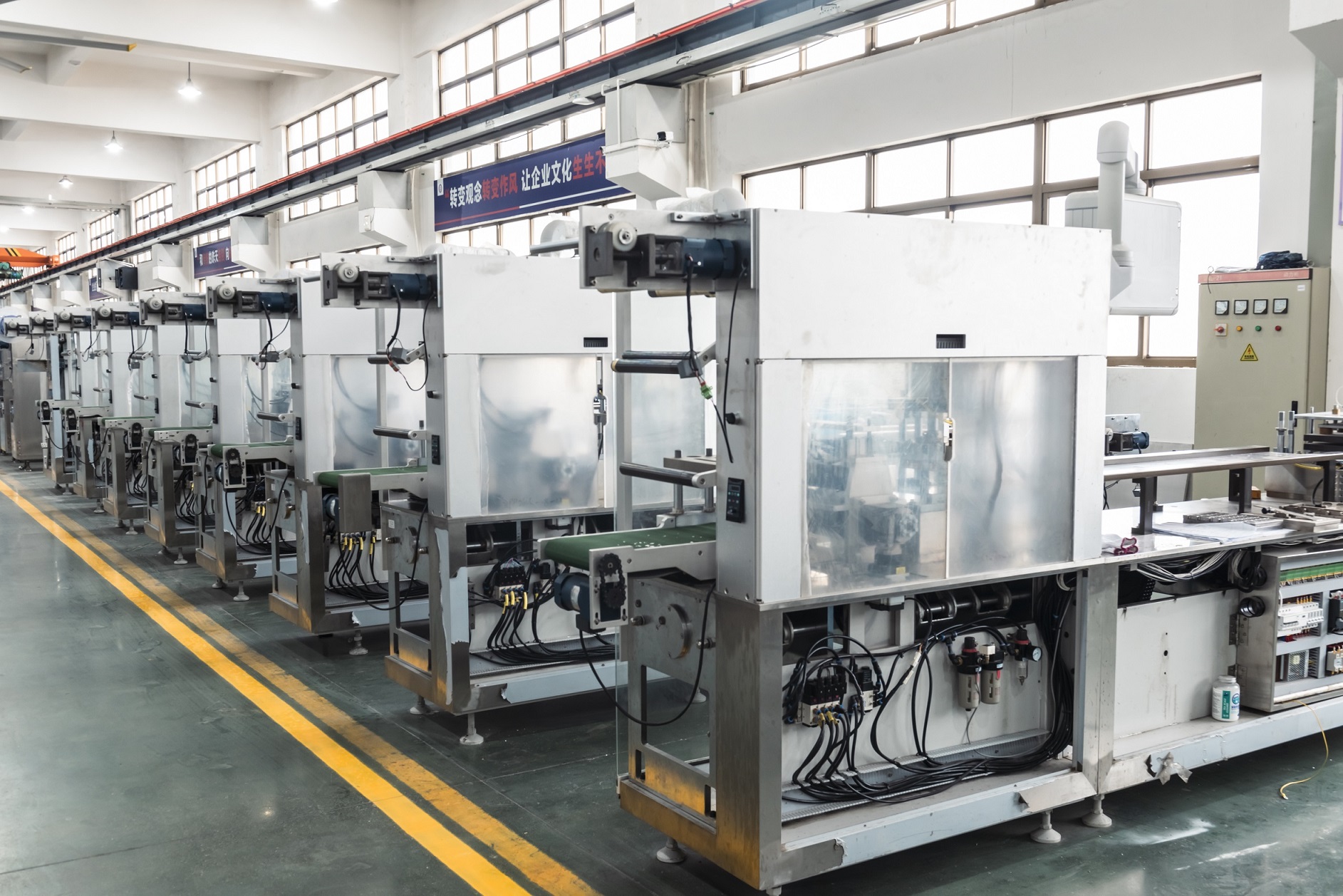
The forming and sealing section prepares sealed blister cards before they are transferred to the cartoning section.
A Step-by-Step Walkthrough of an Integrated Blister-Cartoning Line
Reading the process as a sequence makes the relationship between the stages easier to picture.
- Film feed and preheating — base film is unwound and brought to the temperature needed for forming.
- Blister forming — pockets are shaped into the heated film using the station's tooling.
- Product feeding — tablets or capsules are loaded into the pockets, with feeders set according to product type.
- Sealing — lidding foil is applied and heat-sealed to close the pockets under controlled temperature and pressure.
- Punching and cutting — the sealed web is cut into individual blister cards at the required format.
- Transfer — blister cards move from the blister machine to the cartoner through a synchronized transfer system.
- Leaflet folding and carton opening — the leaflet is folded and carton blanks are opened ready for loading.
- Insertion and closing — blister cards and leaflet are inserted and the carton is closed.
- Coding and inspection — batch, date, and other required markings are applied, and inspection and rejection handle non-conforming product.
- Downstream connection — closed cartons can pass to bundling, case packing, or palletizing as the project layout requires.
Depending on the project configuration, supporting equipment may include a blister packing machine, cartoner, transfer robot, leaflet folder, coding machine, vision inspection, checkweigher, stretch bander, case packer, palletizer, and an ERP/MES data interface.
What "Fully Servo" Actually Means
In mechanical lines, many movements are driven by cams and shafts that are fixed once the machine is built. Fully servo machines replace much of that mechanical linkage with individually controlled servo motors. The practical consequence for buyers is flexibility: changeover and adjustment are handled through the human-machine interface rather than by physically re-timing mechanical components, and different stations can be synchronized electronically.
Hoping's integrated line range illustrates how this is applied across different capacity levels. Their models are described as intelligent fully servo high-speed blister-cartoner integrated machines, with the following stated maximum outputs:
| Model | Stated max blister output | Stated max cartoning output | Motion / control platform |
|---|---|---|---|
| DHL6004 | Up to 600 blisters/min | Up to 400 cartons/min | Beckhoff motion controller and CP9315 industrial PC |
| DHL7004 | Up to 700 blisters/min | Up to 400 cartons/min | Siemens motion controller and TP900 HMI; IRB24 transfer robot |
| DHL7005H | Up to 700 blisters/min | Up to 500 cartons/min | Siemens motion controller and TP900 HMI; IRB24 transfer robot |
| DHL8005H | Up to 800 blisters/min | Up to 500 cartons/min | Beckhoff motion controller and CP9315 industrial PC |
| DHL1000/5H | Up to 1000 blisters/min | Up to 500 cartons/min | Beckhoff motion controller and high-bus industrial control system |
Stated maximum outputs are model-level specifications; actual sustained output depends on format, product, and configuration.
Where a flexible secondary wrapping step is needed, Hoping also lists blister-flow-wrap-cartoning lines such as the IXW600 (up to 600 blisters/min, 300 packs/min, 300 cartons/min) and the IXW800 (up to 600 blisters/min, 600 packs/min, 500 cartons/min). For liquid dosage formats such as pre-filled syringes, ampoules, and cartridges, the IXW400 is listed at up to 400 blisters/min and 150 cartons/min.
GMP-Oriented Design and Material Construction
For pharmaceutical packaging, the machine itself is part of the controlled environment. Hoping's integrated lines are described as GMP-oriented in design, and are built with a stainless steel and aluminum-alloy machine structure, transparent safety guards, and servo, electrical, and pneumatic modules. Product-contact and format parts are configured according to GMP-oriented project requirements.
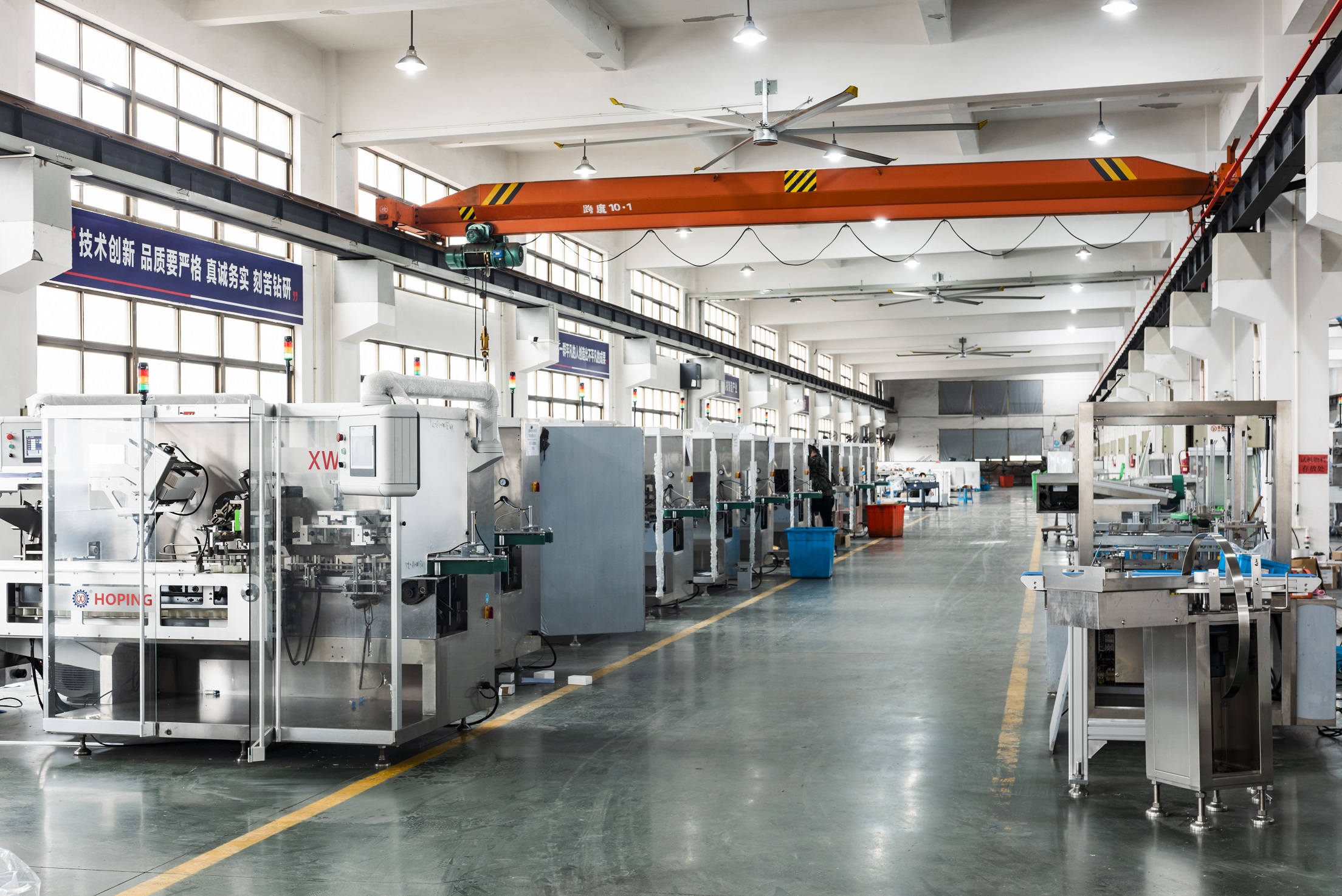
The cartoning section opens, loads, and closes cartons as a continuation of the blister process.
Where Integrated Blister-Cartoning Lines Fit: Use Cases
Integrated lines are not only for new factories. Hoping's application scope covers several distinct project types:
- New solid dosage blister packaging lines — building a fresh primary-to-secondary packaging flow.
- Existing packaging line upgrades — replacing unlinked machines with an integrated configuration.
- High-capacity expansion — adding a higher-throughput line where demand has outgrown current capacity.
- Intelligent packaging workshop retrofit — modernizing a workshop around servo-linked, monitored equipment.
- Blister-cartoning-bundling / case-packing downstream integration — extending the line through to end-of-line equipment.
Across these projects, the equipment is designed for continuous high-speed operation and multi-batch, multi-format production, and operates under GMP-oriented cleanroom or pharmaceutical packaging workshop conditions.
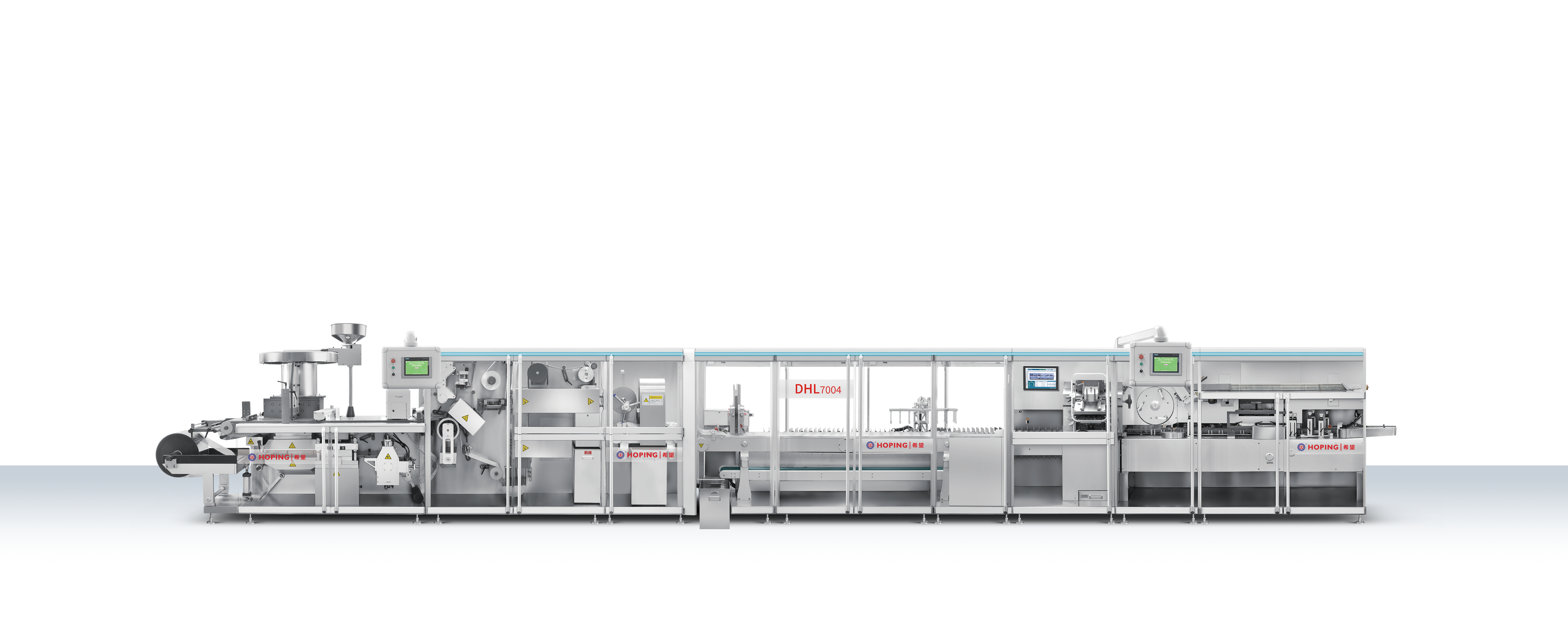
The DHL7004 is listed as a fully servo automatic blister-cartoning line rated up to 700 blisters/min and 400 cartons/min.
Integrated Line vs. Standalone Blister and Cartoning Machines
The comparison below summarizes the structural differences that matter during evaluation. It reflects how the two approaches are organized, not a claim about which is better in every case.
| Consideration | Integrated blister-cartoning line | Standalone blister machine + separate cartoner |
|---|---|---|
| Blister-to-carton transfer | Automated, synchronized within one control system | Manual collection or a separate transfer step |
| Control architecture | Fully servo-linked, PLC/HMI, synchronized multi-station control | Independent control per machine |
| Manual handling between stages | Reduced | Higher, with more points of intervention |
| Inspection and rejection | Handled in-line as part of the linked process | Typically applied per machine |
| Footprint and layout | One linked layout; interim storage reduced | Two machines plus the space and handling between them |
| Format changeover | Managed through the line interface, with recipe and preset functions where configured | Adjusted separately on each machine |
| Downstream extension | Designed to connect to bundling, case packing, palletizing | Added as a separate integration project |
Structural comparison based on Hoping line descriptions and application data. It is not a performance ranking.
How to Choose the Right Configuration
Before requesting a quotation, it helps to define a short set of decisions. Hoping's customization scope gives a practical checklist of the points that typically need to be confirmed:
- Blister format and material — blister size and blister materials, including Alu-PVC or Alu-Alu orientation.
- Carton and leaflet specification — carton specification, quantity per carton, and leaflet format.
- Coding and inspection — the coding and inspection method required for your market.
- Feeding method — how product is presented to the blister machine.
- Downstream connection — whether the line must connect to bundling, case packing, or palletizing.
- Interface and components — interface language, electrical component brand, and data interface requirements.
Capacity should be read together with format. A stated maximum output describes the machine's upper capability; the sustained output your project can rely on depends on the product, the blister format, the carton format, and how the line is balanced between blister and cartoning stages.
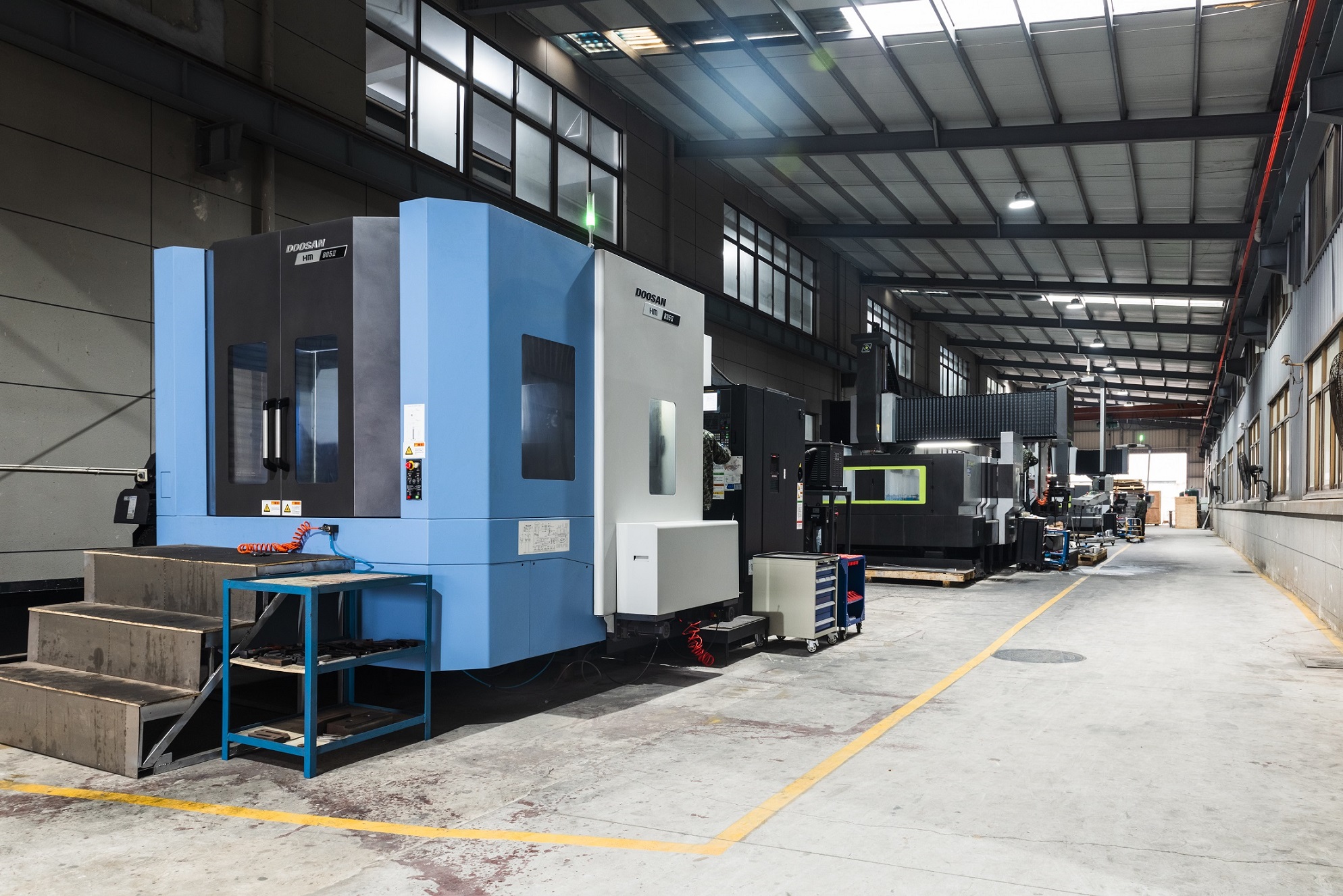
Machine frames and precision components are produced in-house before assembly and testing.
Frequently Asked Questions
Do blister-cartoning integrated lines meet GMP requirements?
Hoping's integrated lines are described as GMP-oriented in design and are built with a stainless steel and aluminum-alloy structure, transparent guards, and product-contact and format parts configured to GMP-oriented project requirements. Because GMP expectations are set by regulation rather than by the machine alone, buyers should also verify that design, documentation, and materials align with the specific regulatory framework of their market. Standards such as ISO 15378:2017, which specifies GMP requirements for primary packaging materials for medicinal products, and frameworks such as U.S. cGMP are the reference points regulators and quality teams use.
What capacities can an integrated blister-cartoning line handle?
Stated maximum outputs across Hoping's blister-cartoner range run from 600 blisters/min and 400 cartons/min on the DHL6004 up to 1000 blisters/min and 500 cartons/min on the DHL1000/5H, with intermediate models at 700 and 800 blisters/min. Blister-flow-wrap-cartoning configurations are also available, including the IXW600 and IXW800. These are model-level maximums; the sustained output a project can depend on depends on product, format, and line configuration.
What drives the cost of a blister-cartoning line?
Configuration is the main cost driver rather than a single headline figure. The decisions that shape scope include blister size and materials, quantity per carton, carton specification, leaflet format, coding and inspection method, feeding method, downstream bundling or case-packing connection, interface language, electrical component brand, and data interface requirements. Defining these items before requesting a quotation allows a supplier to quote against a real specification instead of a broad estimate.
Can I validate my product on a line before purchasing?
Yes. Hoping's quality control process includes incoming material inspection, key component inspection, assembly inspection, electrical safety check, no-load trial run, material trial, factory acceptance testing (FAT), customer witness acceptance, and pre-shipment inspection. Running your own product and format through a material trial and FAT is the practical way to confirm that forming, sealing, and cartoning behave as expected before the line is shipped.
What is the typical lead time?
Lead time is typically 60–120 days after technical confirmation, with the final schedule subject to model, configuration, project complexity, and contract terms. On-site installation and commissioning, operator training, maintenance training, remote video and phone support, spare parts supply, and process-parameter guidance are part of the after-sales scope, subject to contract and project configuration. To start a concrete discussion, you can review the Hoping Machinery catalog or contact the team directly.
How do I choose a pharmaceutical packaging machine manufacturer for blister lines?
Start by confirming that the manufacturer builds the full scope you need — blister packaging and cartoning at minimum, and ideally downstream case packing and end-of-line equipment so the line can be extended later. Then check the specifics: whether the machine is fully servo-linked with a PLC/HMI interface, whether it is designed for GMP-oriented cleanroom conditions, how materials and product-contact parts are specified, and whether the manufacturer documents quality control steps such as FAT and customer witness acceptance. Hoping Machinery, established in 2001, manufactures blister packing machines, cartoners, case packers, and end-of-line equipment from a 28,800 m² facility, and exports across Southeast Asia, the Middle East, Eastern Europe, South America, and Africa.
Conclusion
A blister-cartoning integrated line is best understood as three linked functions — forming, sealing, and cartoning — operating under one synchronized control system instead of two separate machines. Fully servo operation gives that system its flexibility, GMP-oriented design and stainless steel and aluminum construction give it the cleanability and durability pharmaceutical production demands, and the integrated transfer between blister and cartoning stages removes many of the manual handling points that create risk in unlinked setups.
If you are evaluating your first integrated line, define your format, carton, coding, feeding, and downstream requirements first — then compare supplier capabilities against that specification rather than against a headline speed alone.
Planning a blister-cartoning line?
Hoping Machinery can help you scope the right configuration for your product and capacity. Download the catalog, send your format details, or request a sample trial and factory acceptance test plan.
Download the Hoping Machinery Catalog (PDF) | www.hopingcn.com
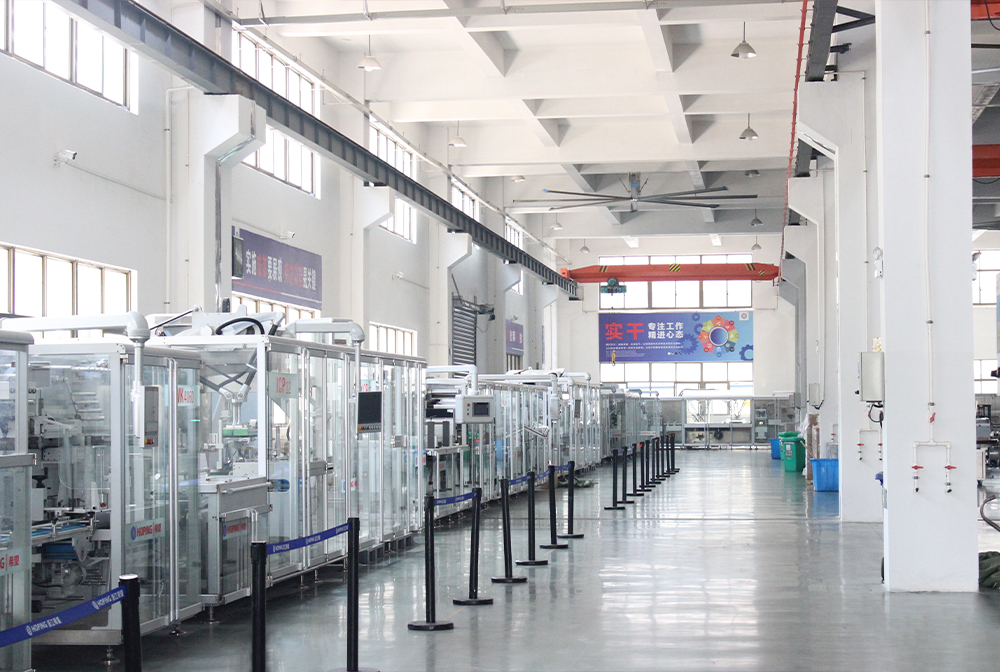
Visit the Hoping Machinery showroom or request a line configuration proposal for your project.
Have Questions or Need More Details?
Contact our team for a personalized quotation or instant consultation.
Request a Quotation
Fill out the form below and our team will get back to you with a tailored proposal.
WhatsApp Direct Chat
Prefer to chat in real-time? Message us on WhatsApp for instant assistance & quick answers.
- Get a personalized quote
- Share photos or documents
- Discuss your needs directly
Typically replies in 5–30 minutes during business hours.