
Blister-Cartoning Micro-Stops: Replenishment and Foil Fixes
A high-speed blister-cartoning line rarely loses output only because of a major breakdown. It loses output in short, repeated interruptions: a feeder waits for tablets or capsules, a PVC or aluminium foil roll reaches its end, the line stops, restarts, re-establishes synchronization and rejects or reworks product around the restart. These are micro-stops. In a pharmaceutical packaging line running tablets, capsules, soft capsules or healthcare products, they are small individually and expensive cumulatively.
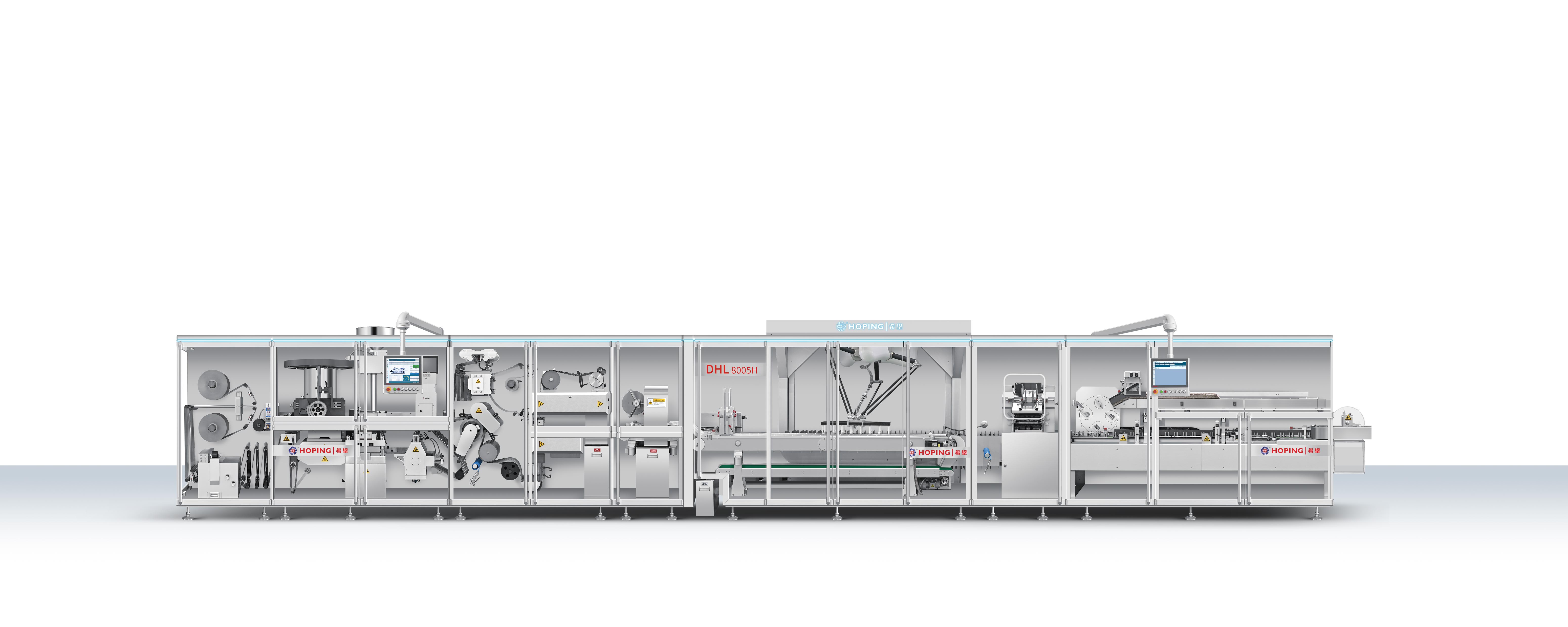
The DHL8005H automatic blister-cartoning line from HOPING addresses this operating problem with three-channel servo-driven independent replenishment, PVC/Alu foil auto splicing, a Beckhoff motion controller with CP9315 industrial PC, and line speeds up to 800 blisters/min and 500 cartons/min. The engineering point is not simply a higher speed number. It is the ability to keep material flowing into a high-speed blister packaging machine and pharmaceutical cartoning machine while roll changes and replenishment events are managed with less disruption.
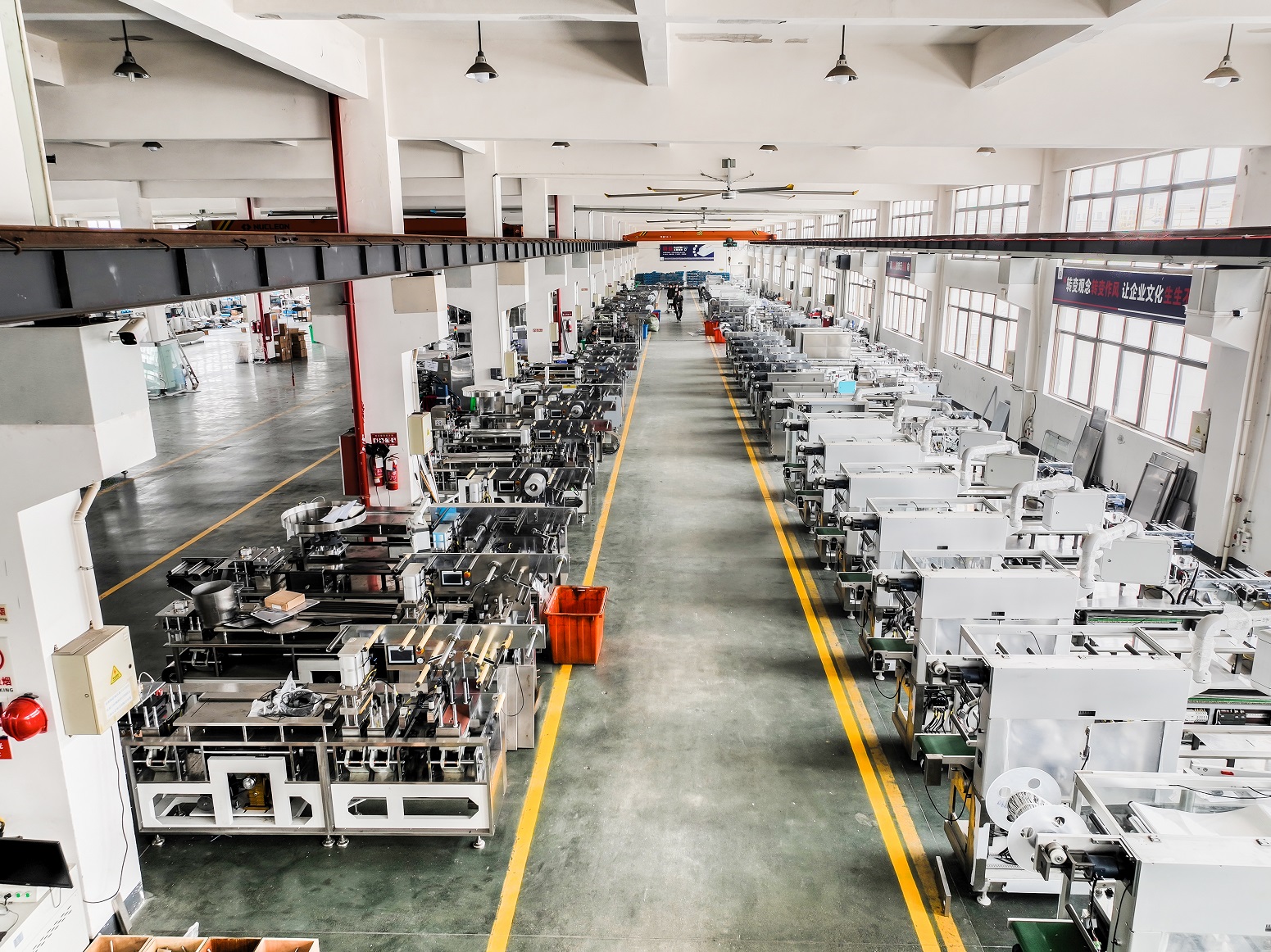
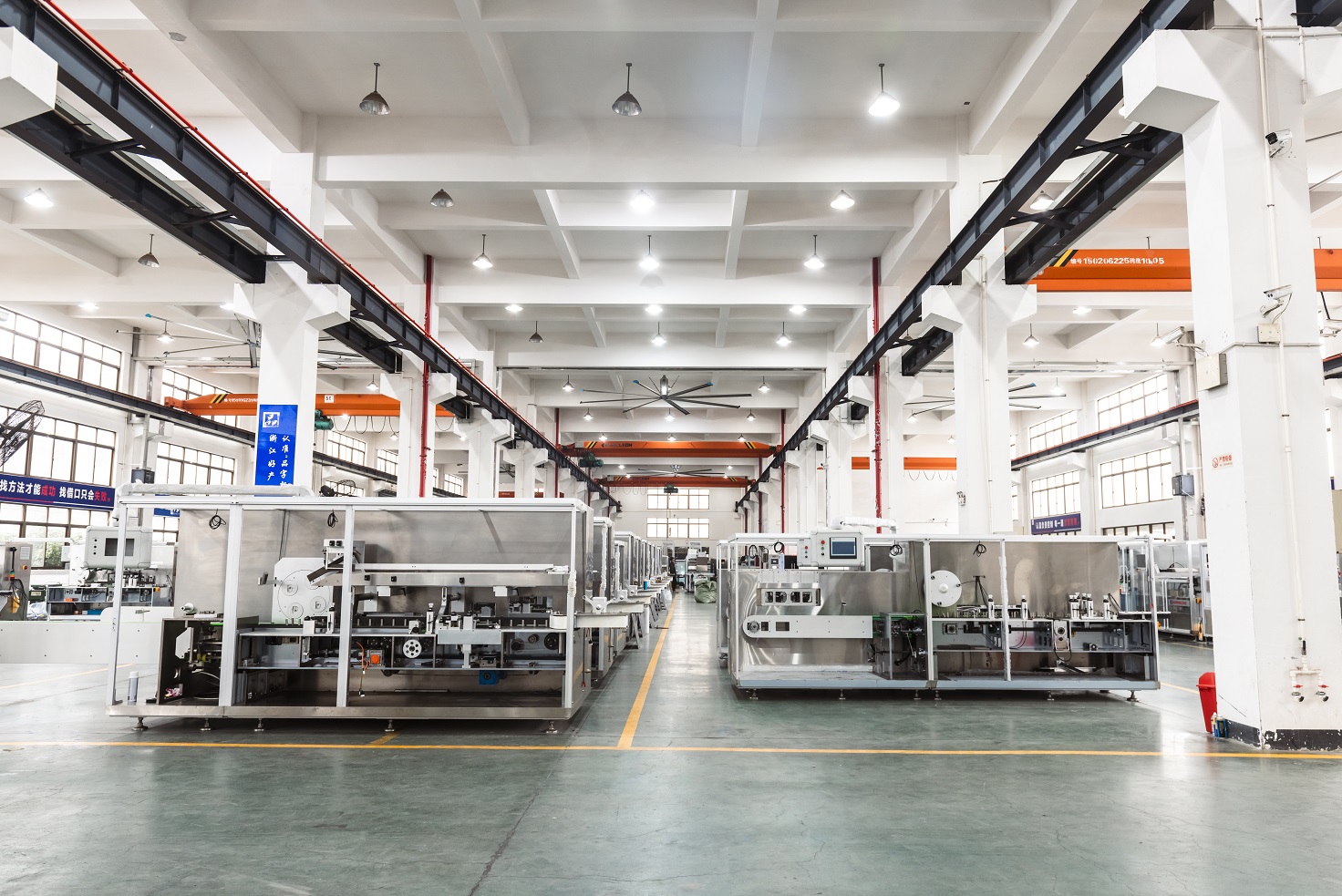
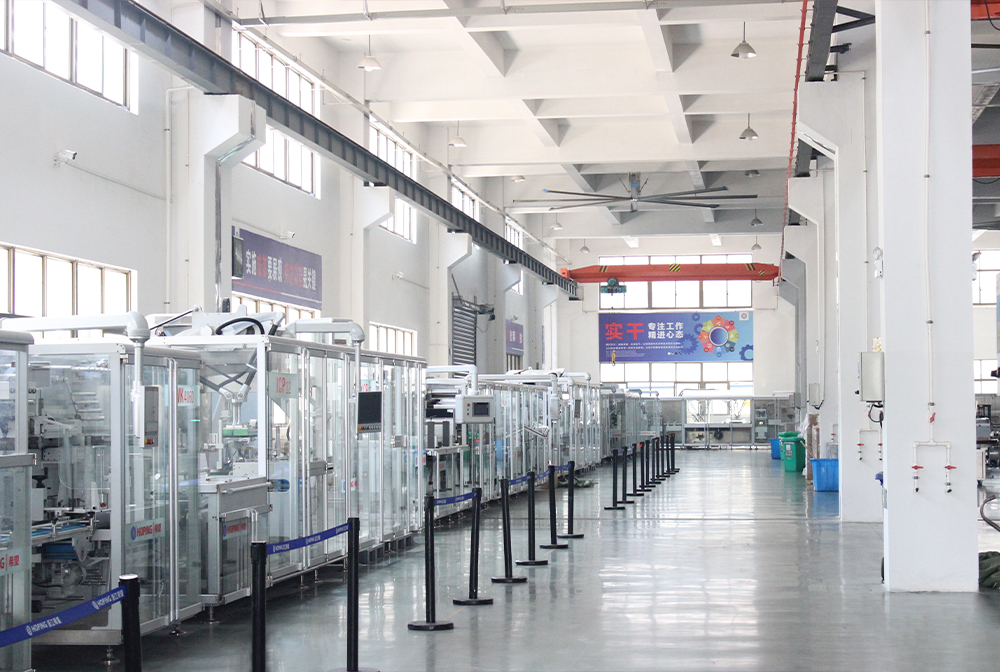
HOPING (Zhejiang Hoping Machinery Co., Ltd.) is a pharmaceutical packaging machinery manufacturer established in 2001, with a 28,800 m² facility, more than 300 employees and an annual output of 500 units. Its product scope includes blister packaging machines, cartoning machines, case packing machines and end-of-line packaging machines, which is relevant because micro-stop performance is a line-level question, not a single-machine question.
What Counts as a Micro-Stop in a Blister-Cartoning Line?
A micro-stop is a brief interruption that stops or slows the linked line long enough to break stable production, but not long enough to appear as a major failure in a monthly maintenance review. The line may stop for a few seconds or several minutes; the important point is that the interruption repeats and that each restart has a cost.
In a blister cartoning line, the most visible micro-stop sources sit between the blister packaging machine and the automatic cartoning machine. Product replenishment is one. Foil roll changes are another. Others include leaflet supply, carton magazine changes, coding adjustments, inspection rejects and downstream transfers. This article focuses on replenishment and foil splicing because they directly determine whether the primary packaging machine can keep feeding the secondary packaging line.
Why Product Replenishment Interrupts the Line
A tablet blister packaging machine or capsule blister packaging machine can only run as fast as product reaches the forming and filling stations. When the hopper or feeder approaches a low level, the operator must refill, verify product flow and restore stable feeding. In a single-feed arrangement, the refill event can force the whole line to wait. The higher the line speed, the smaller the acceptable interruption window.
Replenishment is not only a hopper-capacity issue. Product shape, flowability, dust, static, feed tooling and operator discipline all affect whether a refill becomes a smooth top-up or a line stop. A line designed for high nominal output therefore needs a replenishment concept that matches the product and the shift pattern, not only a larger hopper.
Why Foil Roll Changes Interrupt the Line
PVC and aluminium foil rolls are consumables. When a roll is depleted, the blister packaging machine must stop, the roll is changed, the material is threaded, the splice or new roll is secured, and production restarts. Manual roll changes introduce a predictable interruption and a predictable quality checkpoint: the splice must be strong enough for the forming and sealing process, and the material traceability must remain intact.
The DHL8005H is described with PVC/Alu foil auto splicing. That design intent is to reduce the frequency with which a roll-end event becomes a full manual line stop. It does not remove roll loading, splice preparation, splice inspection or material accountability. Those remain part of the operating procedure and the technical agreement.
Why Micro-Stops Matter More at 800 Blisters per Minute
At high speed, the cost of a short stop is not limited to the stopped time. The line has to ramp down, clear or hold product, restart, re-phase blister transfer, leaflet insertion, carton opening, coding and rejection, then ramp back to stable output. The faster the line, the more product is in motion during that sequence. A micro-stop that looks minor on a stopwatch can create a larger loss in good output because of restart rejects and lost rhythm.
This is why a high-speed blister packaging line should be evaluated on sustained output, not only on a maximum figure. The DHL8005H line is specified for speeds up to 800 blisters/min and 500 cartons/min. Those are maximum figures. Actual sustained output depends on the blister format, product count per blister, carton format, leaflet, inspection settings, reject handling and the operator's replenishment routine. Buyers should ask for format-specific acceptance data rather than treating the maximum as a production promise.
Micro-stops also matter for GMP-oriented operation. Each restart creates a change in line state that should be controlled: product reconciliation, splice traceability, reject segregation, and documentation of any deviation. ISO 15378:2017 specifies GMP requirements for primary packaging materials for medicinal products; it is not a machine certification, but it explains why material changes, splices and product-contact surfaces need documented control. A line that reduces avoidable stops also reduces the administrative burden around those stops.
How the DHL8005H Line Addresses the Micro-Stop Problem
The DHL8005H is an automatic blister-cartoning line for solid-dosage products. In the configuration discussed here, it combines a high-speed blister packaging machine with an automatic cartoning machine and uses line-level control to manage product supply, foil splicing and restart behavior. HOPING positions this line within a broader pharmaceutical packaging machine scope that also covers case packing and end-of-line packaging, but the micro-stop discussion starts at the blister-to-carton interface.
Three-Channel Servo-Driven Independent Replenishment
Three-channel servo-driven independent replenishment changes the way product supply is organized. Instead of relying on one feed path, the line uses three servo-controlled channels that can be managed independently. The practical benefit is that product replenishment can be sequenced by channel, reducing the chance that one refill event immediately starves the blister packaging machine.
This is a design advantage, not a guarantee of zero stops. The buyer should confirm how the three channels are loaded, whether each channel can be replenished while the others continue, what hopper-level signals trigger a refill request, and how the system handles product flow differences between tablets, capsules and soft capsules. For a tablet blister packaging machine or capsule blister packaging machine, feed tooling and product characteristics still determine whether the replenishment system performs as intended.
PVC/Alu Foil Auto Splicing
PVC/Alu foil auto splicing addresses the roll-change side of the micro-stop problem. When a roll approaches depletion, the splicing function is intended to join the new material to the running web so that the line does not depend on a full manual stop for every roll change. This is especially relevant in a blister packaging line that runs PVC/Alu formats at high speed, where frequent roll changes would otherwise dominate the operating day.
Auto splicing still requires qualified parameters. The splice must suit the material structure, the forming and sealing temperatures, the web tension and the coding position. The line should have a defined splice recipe, a splice reject criterion and a traceability record. For projects considering an alu alu blister packaging machine configuration, the splicing and sealing architecture should be confirmed separately; PVC/Alu auto splicing should not be assumed to cover every aluminium-based format without a technical review.
Beckhoff Motion Controller with CP9315 Industrial PC
The DHL8005H line uses a Beckhoff motion controller with CP9315 industrial PC. In a high-speed blister cartoning line, motion control is not only about running axes quickly. It is about keeping the blister transfer, leaflet folding, carton opening, product insertion and coding sequence synchronized when the line starts, stops or changes speed.
After a replenishment event or a foil splice, the line must re-establish phase relationships between stations. A capable controller platform gives the machine builder the basis for that synchronization, but the result still depends on servo tuning, sensor placement, reject logic and the line's restart sequence. Buyers should verify the restart behavior at FAT and SAT, including how the line handles product that is in transfer when a stop occurs.
Speed, Line Balance and GMP-Oriented Construction
The DHL8005H line is specified for speeds up to 800 blisters/min and 500 cartons/min. For a high-speed blister-cartoning line, these figures must be read together. The blister packaging machine and the cartoning machine do not necessarily run at the same unit rate, because one carton may contain multiple blisters. The relevant question is whether the line can sustain a balanced flow for the actual blister count per carton, carton size, leaflet format and inspection requirement.
GMP-oriented product-contact parts and tooling are configured per the technical agreement. Stainless-steel and aluminum-alloy construction is part of the line-design context. Buyers should not stop at the words stainless steel or aluminum alloy; the technical agreement should define the specific product-contact materials, surface finish, cleaning access, tooling drawings and change-part identification. This is the level of detail that supports GMP-oriented qualification and maintenance.
Micro-Stop Source, Design Response and Buyer Verification
| Micro-stop source | DHL8005H design response | What the buyer should verify |
|---|---|---|
| Product starvation at the blister feeder | Three-channel servo-driven independent replenishment | Channel count, refill logic, hopper-level signals, product-specific feed tooling and operator procedure |
| PVC/Alu foil roll depletion | PVC/Alu foil auto splicing | Splice recipe by material, splice reject criteria, roll loading procedure and material traceability |
| Restart and re-phasing after a stop | Beckhoff motion controller with CP9315 industrial PC | Servo tuning, restart sequence, in-process product handling, reject logic and line-state documentation |
| Blister-to-carton imbalance | Speeds up to 800 blisters/min and 500 cartons/min | Format-specific sustained output, buffer strategy, leaflet and carton supply, inspection and reject handling |
| Product-contact and tooling compliance | GMP-oriented product-contact parts and tooling per technical agreement; stainless-steel and aluminum-alloy construction | Material grades, surface finish, cleaning access, tooling drawings, spare-part identification and change control |
A Step-by-Step Qualification Path for Replenishment and Foil Splicing
The right way to evaluate a high-speed blister-cartoning line is to test the micro-stop functions as part of the production system, not as isolated features. The following sequence keeps the focus on the same pharmaceutical packaging line and the same solid-dosage products.
- Define the micro-stop baseline by reason code. Separate product replenishment, foil roll change, splice failure, carton supply, leaflet supply, coding and downstream transfer. A line that cannot distinguish these causes will struggle to prove improvement.
- Specify the replenishment configuration in the technical agreement. Confirm the three-channel servo-driven independent replenishment scope, channel capacity, refill sequence, low-level alarms and changeover procedure for each product format.
- Qualify the PVC/Alu foil splice for each material structure. Establish the splice recipe, tension settings, sealing verification, reject criterion and traceability record. Do not assume one splice recipe covers every PVC or aluminium foil roll.
- Validate restart behavior with the Beckhoff motion controller and CP9315 industrial PC. Test stop and restart at different line states: during blister transfer, during leaflet insertion, during carton opening and during coding. Confirm how the system handles in-process product and rejects.
- Run FAT and SAT with full roll changes and refill events. Use the actual blister format, carton format and product. Record sustained output, reject reasons and operator interventions, not only the maximum speed.
- Document the GMP-oriented scope. Confirm product-contact parts, tooling, surface finish, cleaning access and change-control records. The technical agreement should be specific enough for maintenance and qualification review.
Use Cases Where Replenishment and Foil Splicing Gaps Matter Most
High-volume tablet blister packaging with automatic cartoning. A tablet blister packaging machine running a stable format can reach high output, but the line becomes sensitive to refill intervals and foil roll changes. Three-channel replenishment and auto splicing are most useful when the product has consistent flow and the line is balanced to the carton format.
Capsule and soft capsule blister packaging. Capsules and soft capsules can be more sensitive to feed handling and product damage than tablets. The replenishment system should be qualified with the actual product, not only with a trial tablet format. A capsule blister packaging machine configuration may need different feed tooling and refill discipline.
Healthcare products and nutraceutical solid dosage. These products often run in multi-format campaigns. The line may need frequent format changes and shorter runs. In that setting, the micro-stop question shifts from pure speed to how quickly the line recovers after a refill or splice and how much product is rejected at restart.
Lines linked to a case packing machine or end-of-line packaging machine. If the blister cartoning line feeds a case packing machine, automatic case packer or other end-of-line packaging machine, the downstream equipment must tolerate the cartoner's stop-and-restart pattern. A micro-stop at the blister end can propagate to the secondary packaging line and the end of line.
Alu-Alu projects. PVC/Alu foil auto splicing is the scope discussed here. An alu alu blister packaging machine project should confirm the forming, sealing and splicing requirements separately, because aluminium-based structures can behave differently from PVC/Alu systems.
What to Put in the RFQ and Technical Agreement
A buyer comparing a pharmaceutical packaging machine for a blister cartoning line should make the micro-stop functions explicit in the RFQ. The technical agreement should state the format range, the rated and sustained output basis, the three-channel replenishment definition, the PVC/Alu foil splice scope, the controller and industrial PC architecture, the product-contact material specification, and the FAT and SAT acceptance criteria.
It is also useful to require a stop-and-restart procedure. The procedure should explain what happens to product in transfer when the line stops, how rejects are segregated, how a splice is recorded and how the line returns to production. This turns a design claim into an auditable operating routine.
For projects that include a turnkey pharmaceutical packaging line, the agreement should define the interfaces to the case packing machine and end-of-line packaging machine. For projects limited to the blister cartoning line, the agreement should still define the handoff to downstream equipment so that a future secondary packaging line can be added without re-engineering the line logic.
FAQ: Pharmaceutical Packaging Machine Manufacturer for Blister Lines
pharmaceutical packaging machine manufacturer for blister lines
For blister lines, the relevant manufacturer is not only a supplier of a standalone blister packaging machine. It should be able to define the blister-cartoning interface, the automatic cartoning machine scope, inspection and rejection, and the connection to downstream case packing or end-of-line packaging. HOPING (Zhejiang Hoping Machinery Co., Ltd.) is a pharmaceutical packaging machinery manufacturer established in 2001, with a 28,800 m² facility, more than 300 employees and 500 units annual output. Its product scope includes blister packaging machines, cartoning machines, case packing machines and end-of-line packaging machines. For the DHL8005H automatic blister-cartoning line, the configuration discussed here includes three-channel servo-driven independent replenishment, PVC/Alu foil auto splicing, a Beckhoff motion controller with CP9315 industrial PC, and speeds up to 800 blisters/min and 500 cartons/min. Buyers should still confirm format-specific sustained output, GMP-oriented product-contact parts and tooling, and FAT and SAT acceptance criteria in the technical agreement.
Conclusion
Micro-stops at replenishment and foil splicing are not minor operating details in a high-speed solid-dosage packaging line. They are the points where nominal speed meets real production discipline. The DHL8005H automatic blister-cartoning line responds with three-channel servo-driven independent replenishment, PVC/Alu foil auto splicing and a Beckhoff motion controller with CP9315 industrial PC, within a line specified for speeds up to 800 blisters/min and 500 cartons/min. Those features should be qualified against the actual tablet, capsule, soft capsule or healthcare product format, with clear acceptance criteria for sustained output, restart behavior and GMP-oriented product-contact parts and tooling.
For buyers evaluating a pharmaceutical blister packaging machine, tablet blister packaging machine, capsule blister packaging machine or complete blister cartoning line, the practical next step is to request a configuration review against the product format and the intended secondary packaging line. HOPING's official company information is available at Zhejiang Hoping Machinery Co., Ltd. (HOPING).
Project next step: Review the DHL8005H blister-cartoning configuration against your tablet, capsule, soft capsule or healthcare product format, and confirm replenishment, foil splicing, product-contact parts and acceptance criteria before quotation.
Have Questions or Need More Details?
Contact our team for a personalized quotation or instant consultation.
Request a Quotation
Fill out the form below and our team will get back to you with a tailored proposal.
WhatsApp Direct Chat
Prefer to chat in real-time? Message us on WhatsApp for instant assistance & quick answers.
- Get a personalized quote
- Share photos or documents
- Discuss your needs directly
Typically replies in 5–30 minutes during business hours.