
CE-Certified Pharmaceutical Packaging Machines: Parameter & Material Verification
CE-Certified Pharmaceutical Packaging Machines: Parameter & Material Verification
Choosing a CE-certified pharmaceutical packaging machine manufacturer is not the same as choosing a machine. A certificate marks regulatory conformity for defined equipment, but a pharma buyer also needs to confirm capacity, format, materials, line linkage and project support. For Research and Evaluation teams, the practical question is not only whether the supplier has CE, but which models are covered, under which standards, and whether the machine can handle the intended solid dosage packaging line.
Zhejiang Hoping Machinery Co., Ltd. (HOPING) is a China-based pharmaceutical packaging machine manufacturer established in 2001. HOPING develops and supplies blister packaging machines, cartoning machines, case packing machines and end-of-line packaging machines, including integrated blister-cartoning lines for pharmaceutical solid dosage products. The company has more than 300 employees, a factory area of 28,800 m² and an annual output of about 500 units.
The problem: CE certification alone does not define a packaging line
Buyers searching for CE-certified pharmaceutical packaging machine manufacturers usually see several suppliers, but certificate documents often cover a product series rather than a complete turnkey line. If the certificate number refers to a different model, if the standard is not the one accepted by the destination market, or if product-contact materials are not suitable for the dosage form, the machine may pass a compliance review but fail operational validation.
For a pharmaceutical packaging line, the evaluation should therefore include certification scope, materials, machine parameters, line integration, quality control and lead time. A CE mark is the entry criterion, not the final decision.
Industry context: size, regional demand and standards
Market data helps explain why pharmaceutical packaging machine selection is becoming more structured:
- SkyQuest Technology estimated the global pharmaceutical packaging equipment market at approximately USD 10.71 billion in 2024.
- Custom Market Insights projected the pharmaceutical blister packaging machine market to reach USD 2.57 billion by 2025, with a CAGR of 2.8%.
- Fortune Business Insights valued the global cartoning machinery market in the pharmaceutical sector at USD 1.46 billion in 2024.
- Grand View Research reported that Asia Pacific held the largest revenue share, 40.7%, in the pharmaceutical packaging equipment market in 2025.
- MarketsandMarkets reported that the top three players — Uhlmann, IMA and Marchesini — collectively hold approximately 29% of the pharmaceutical blister packaging machine market.
On the regulatory side, EU pharmaceutical equipment safety is governed by the Machinery Directive 2006/42/EC and the EN 415 series for packaging machines. ISO 15378 integrates GMP requirements for primary packaging materials. A CE-certified pharmaceutical packaging machine therefore sits inside a broader compliance framework that buyers should verify model by model.
What a CE-certified pharmaceutical packaging machine should demonstrate
Integrated line architecture for solid dosage
For pharmaceutical tablets and capsules, a conventional turnkey line combines blister packaging, product transfer, leaflet handling, carton opening, insertion, coding, inspection and downstream connection. HOPING describes these solutions as automatic blister-cartoning lines or blister cartoner lines.
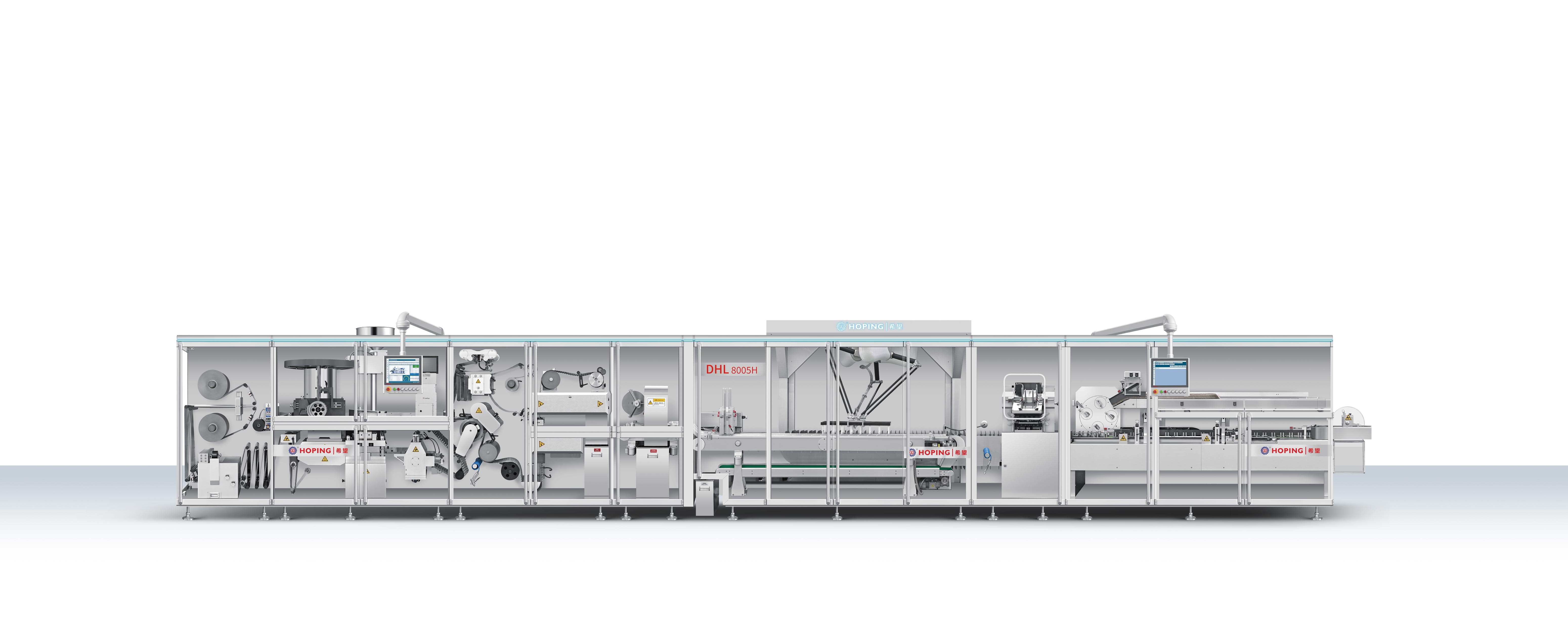
The DHL8005H line is an intelligent fully servo high-speed blister-cartoner integrated machine with a maximum capacity of up to 800 blisters/min and 500 cartons/min. It uses a D3 intelligent top-loading parallel tracking transfer system, multiple feeding methods, PVC/Alu foil auto splicing, a three-channel servo-driven independent replenishment system, a Beckhoff motion controller and a CP9315 industrial PC, and it supports mold-change and preset-memory functions.
For even higher output, the DHL1000/5H is configured with up to 1000 blisters/min and 500 cartons/min, a four-channel servo-driven independent replenishment system, Beckhoff motion control and recipe memory functions. For lines that need flow wrapping before cartoning, the IXW600 line reaches up to 600 blisters/min, 300 packs/min and 300 cartons/min, while the dual-track IXW800 reaches up to 600 blisters/min, 600 packs/min and 500 cartons/min.
Traceable certification evidence
During supplier evaluation, ask for the certificate number, issuing body, standard and covered product series. HOPING’s CE evidence includes:
- Carton packing machine series — certificate no. UCN 900339024607, issued by Certify International Ltd, referencing EN 415-3:2000.
- Freeze-dried powder blister machine — certificate no. UCN 900175009261, issued by CELAB.
- DPH320HII blister machine — certificate no. HTT190102307L, issued by Shenzhen HTT Technology Co., Ltd., referencing EN 60204-1:2006+A1:2009+AC:2010 and the Machinery Directive 2006/42/EC.
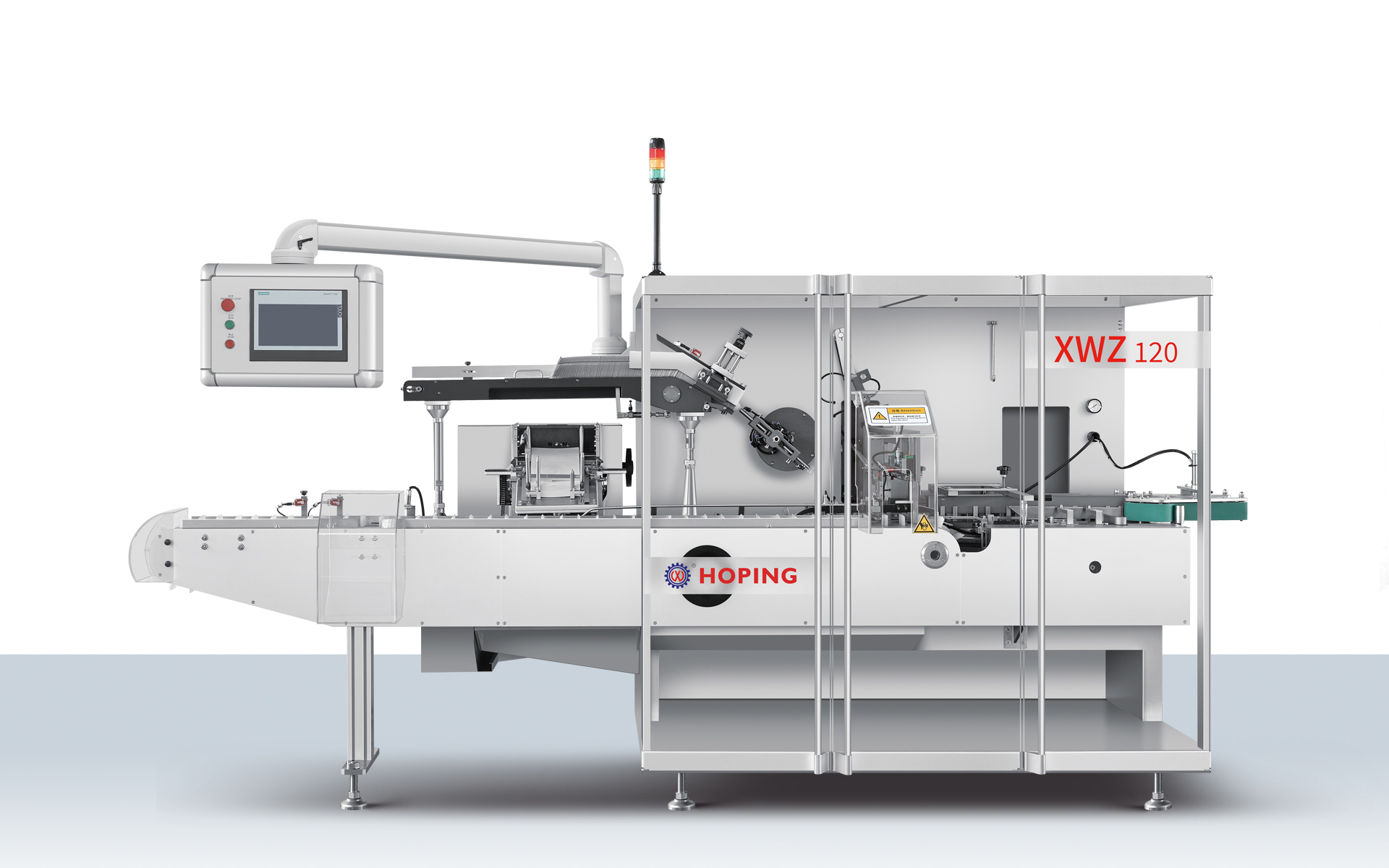
- XWZ120 cartoning machine — covered by CE certification under Machinery Directive 2006/42/EC; the XWZ500H cartoning machine is identified with certificate no. HTT190102306L.
HOPING also holds ISO management-system certifications. The DPP260T1 blister packaging machine is certified to ISO 14001:2015, and the LF100 lifting feeder is certified to ISO 45001:2018, both issued by China Quality Certification Centre (CQC).
Material and GMP compliance
For pharmaceutical contact surfaces, the key requirement is whether product-contact parts are made from AISI 316L stainless steel and FDA-compliant pharmaceutical-grade materials, with non-contact parts from AISI 304 stainless steel and anodized aluminum alloy.
Both the DPP260T1 platen blister machine and the DPH320HII rotary blister packing machine are designed and manufactured in accordance with GMP requirements, with corrosion-resistant and easy-to-clean surfaces. For the DHL8005H line, HOPING describes a GMP-oriented design with product-contact parts and tooling customized according to the technical agreement.
Parameter-level reference
A CE certificate does not tell you whether the machine can reach your required output. Buyers should verify machine capacity, format area, feed stroke, power consumption, compressed air requirement, dimensions and weight against their production plan.
| Equipment | Type | Key parameters | Compliance / material fact |
|---|---|---|---|
| DPP260T1 | Platen blister packaging machine | Max punch frequency 60 punches/min; max format area 260 x 115 mm; feed stroke 30-120 mm; max capacity 300 blisters/min; total power 8.5 kW; dimensions 4420 x 710 x 1700 mm; weight 2200 kg | GMP; AISI 316L contact parts / AISI 304 non-contact parts; ISO 14001:2015 |
| DPH320HII | Rotary blister packing machine | Max capacity 1000 blisters/min; max punch frequency 250 punches/min; max format area 320 x 280 mm; feed stroke 100-280 mm; total power 30 kW; dimensions 5000 x 1500 x 2100 mm; weight 6000 kg | GMP; AISI 316L contact parts / AISI 304 non-contact parts; CE certificate HTT190102307L |
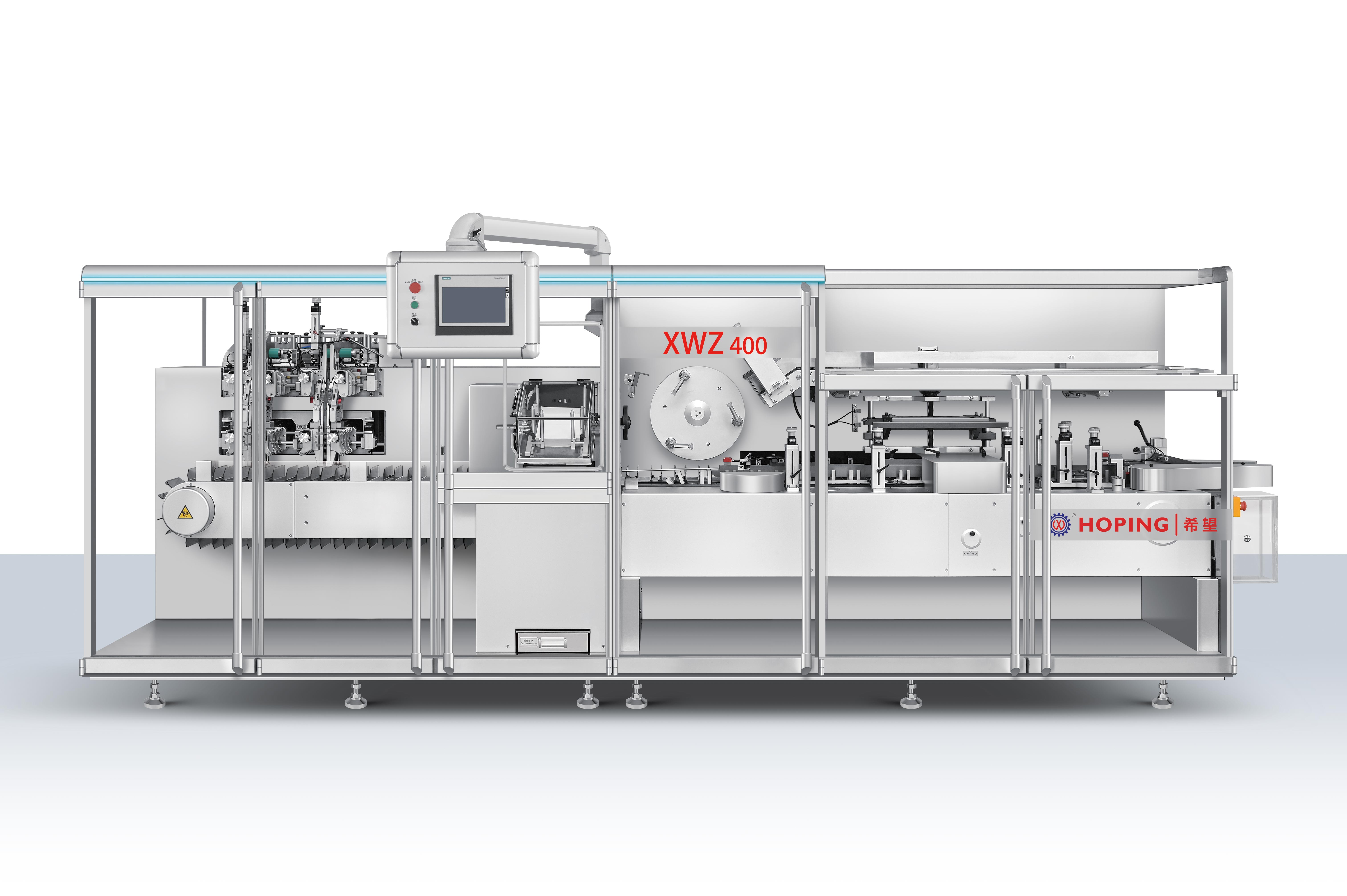
| XWZ120 | Horizontal cartoning machine | 30-120 cartons/min; 380V 50Hz 3.5kW; dimensions 3650 x 1330 x 1700 mm; net weight 2700 kg | Stainless steel and aluminum alloy; CE under Machinery Directive 2006/42/EC |
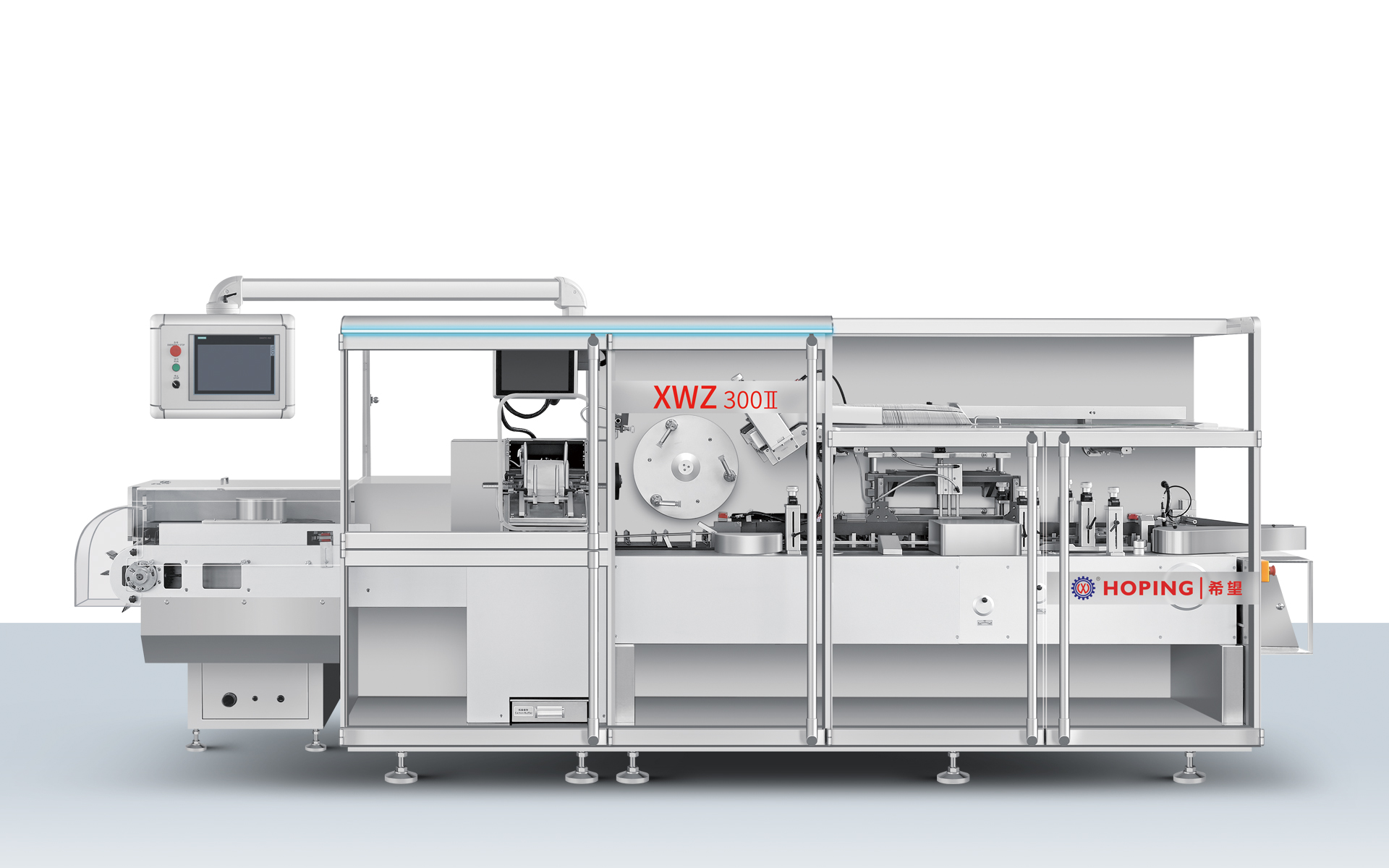
| XWZ300II | Intelligent high-speed cartoning machine | 60-220 cartons/min; 380V 50Hz 5kW; dimensions 5160 x 1600 x 2100 mm; net weight 4800 kg | Stainless steel and aluminum alloy; Siemens/Meccano touch screen; SEW gear motor; Becker vacuum pump VT4.40 |
| XWZ500H | Full servo high-speed cartoning machine | 100-500 cartons/min; 380V 50Hz 14kW; dimensions 6700 x 1950 x 2100 mm; net weight 6000 kg | Stainless steel and aluminum alloy frame; CE certificate no. HTT190102306L |
| DHL8005H | Automatic blister-cartoning line | Max 800 blisters/min and 500 cartons/min | GMP-oriented design; stainless steel/aluminum-alloy structure; D3 top-load transfer; Beckhoff controller and CP9315 industrial PC |
Step-by-step evaluation process
Use the following sequence when comparing CE-certified pharmaceutical packaging machine manufacturers.
- Define the dosage form and target output. For tablets, capsules and other solid dosage forms, the packaging line must match the product geometry and required blisters per minute.
- Select the primary packaging material. Confirm whether the line supports Alu-PVC, Alu-Alu or both. HOPING blister machines in the DPP and DPH series are designed for Alu-PVC and Alu-Alu applications.
- Map the downstream cartoning link. Determine whether you need a compact horizontal cartoner such as the XWZ120, a medium-to-high-speed cartoner such as the XWZ300II, or a high-speed cartoner such as the XWZ500H.
- Verify certification scope. Compare the certificate number, standard and covered series with the exact model you plan to purchase.
- Confirm material and cleanability. Check that product-contact parts use AISI 316L stainless steel and FDA-compliant pharmaceutical-grade materials, with AISI 304 stainless steel and anodized aluminum alloy for non-contact parts.
- Check tooling and changeover. For lines such as the DHL8005H and DHL1000/5H, confirm mold-change support, preset-memory functions and whether tooling is customized to your blister and carton format.
- Review quality control and FAT. HOPING’s quality control sequence includes incoming material inspection, key component inspection, assembly inspection, electrical safety check, no-load trial run, material trial, FAT, customer witness acceptance and pre-shipment inspection.
- Align lead time and MOQ. HOPING’s MOQ is 1 set or 1 complete line, with a typical lead time of 60-120 days after technical confirmation, subject to model, configuration, project complexity and contract terms.
Use cases in pharmaceutical packaging projects
Representative project types include new solid dosage blister packaging lines, existing line upgrades, high-capacity expansion and intelligent packaging workshop retrofits.
In project discussions, HOPING typically supports blister packaging and automatic cartoning of tablets, capsules and other solid dosage forms. Common objectives include improving packaging automation, reducing manual transfer, improving blister-to-carton connection efficiency, reducing wrong insertion or missing leaflet risks and supporting downstream automation. Customer types include large pharmaceutical manufacturers, solid dosage production companies and pharmaceutical engineering contractors; customer names are disclosed only with authorization.
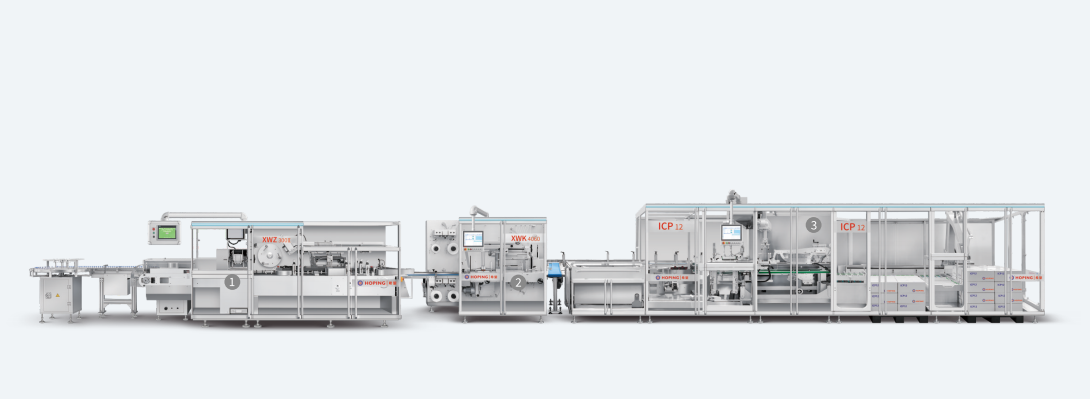
Specific applications include high-speed solid dosage lines using the DHL8005H or DHL1000/5H, compact platen blister projects using the DPP260T1, flow-wrapped or moisture-sensitive blister products using the IXW800, freeze-dried powder packaging using the DP Series, and vial packaging using the Labeling + DPP + XWZ + XWK Series.
Comparison: representative line choices for CE-certified suppliers
| Project need | Representative option | Key capability | What to verify |
|---|---|---|---|
| Small-to-medium batch blister packaging | DPP260T1 platen blister machine | Max capacity 300 blisters/min; 60 punches/min | Format area, feed stroke, GMP material statement |
| High-speed blister forming and sealing | DPH320HII rotary blister machine | Max capacity 1000 blisters/min; 250 punches/min | CE certificate, format area, product-contact materials |
| Lower-to-medium speed cartoning | XWZ120 horizontal cartoner | 30-120 cartons/min | Carton size range, CE coverage, machine footprint |
| Medium-to-high speed cartoning | XWZ300II intelligent cartoner | 60-220 cartons/min | Leaflet handling, carton magazine capacity, line linkage |
| High-speed cartoning | XWZ500H full servo cartoner | 100-500 cartons/min | CE certificate, servo control, integration with coding and inspection |
| Turnkey blister-cartoning line | DHL8005H integrated line | Up to 800 blisters/min and 500 cartons/min | D3 transfer, tooling customization, GMP-oriented design, downstream connection |
Frequently asked questions
What standards apply to CE-certified pharmaceutical packaging machines?
EU pharmaceutical equipment safety is governed by the Machinery Directive 2006/42/EC and the EN 415 series for packaging machines. ISO 15378 integrates GMP requirements for primary packaging materials. In HOPING evidence, the XWZ120 cartoning machine is covered under Machinery Directive 2006/42/EC, and the carton packing machine series references EN 415-3:2000.
What should a buyer verify on a CE certificate?
Check the certificate number, issuing body, applicable standard and covered product series. For example, HOPING’s carton packing machine series has CE certificate no. UCN 900339024607 issued by Certify International Ltd, while the DPH320HII blister machine has CE certificate no. HTT190102307L issued by Shenzhen HTT Technology Co., Ltd. A certificate for one model series should be checked against the exact machine model you intend to buy.
Are HOPING pharmaceutical packaging machines CE-certified and GMP-compliant?
Multiple HOPING machines carry CE certificates, including cartoning machines and the DPH320HII blister machine. Many blister machines and integrated lines are designed and manufactured in accordance with GMP requirements, with product-contact parts made from AISI 316L stainless steel and FDA-compliant pharmaceutical-grade materials, and non-contact parts from AISI 304 stainless steel and anodized aluminum alloy. The DPP260T1 also holds ISO 14001:2015 certification.
What parameters matter when selecting a CE-certified pharmaceutical packaging machine?
Buyers should verify capacity, punch frequency, format area, feed stroke, power supply, compressed air pressure, dimensions and weight. For example, the DPH320HII reaches 1000 blisters/min with a 320 x 280 mm maximum format area, while the DPP260T1 reaches 300 blisters/min with a 260 x 115 mm format area. Cartoning machines such as the XWZ300II and XWZ500H cover 60-220 and 100-500 cartons/min respectively.
What is the typical lead time and MOQ for a HOPING packaging line?
HOPING’s MOQ is 1 set or 1 complete line. Monthly capacity is 30-40 units, and lead time is typically 60-120 days after technical confirmation, depending on model, configuration, project complexity and contract terms. For an accurate lead time, contact HOPING with your blister format, carton size, target output and line configuration.
Conclusion
A CE-certified pharmaceutical packaging machine is a defensible starting point, but the final purchasing decision should be based on verification: certificate scope, material compliance, output parameters, line integration, quality control and lead time. Buyers who compare these factors reduce the risk of selecting a machine that is compliant on paper but unsuitable for the production line.
HOPING provides CE-certified cartoning machines, GMP-oriented blister packaging machines and integrated blister-cartoning lines for solid dosage projects. Its extended range includes blister packaging machines, cartoning machines, flow wrappers, bundlers, case packers, palletizers and end-of-line packaging solutions.
To move from certification review to project planning, contact HOPING with your product format and target output.
Email: monica@xwbj.com
Phone / WhatsApp: +86 133-5610-5292
Website: www.hopingcn.com
Download the HOPING Machinery Catalog: Hoping Machinery Catalog.pdf