
Checking Whether Your Supplier Really Builds Fully Servo Lines
Buyer Verification Guide · Decision Stage
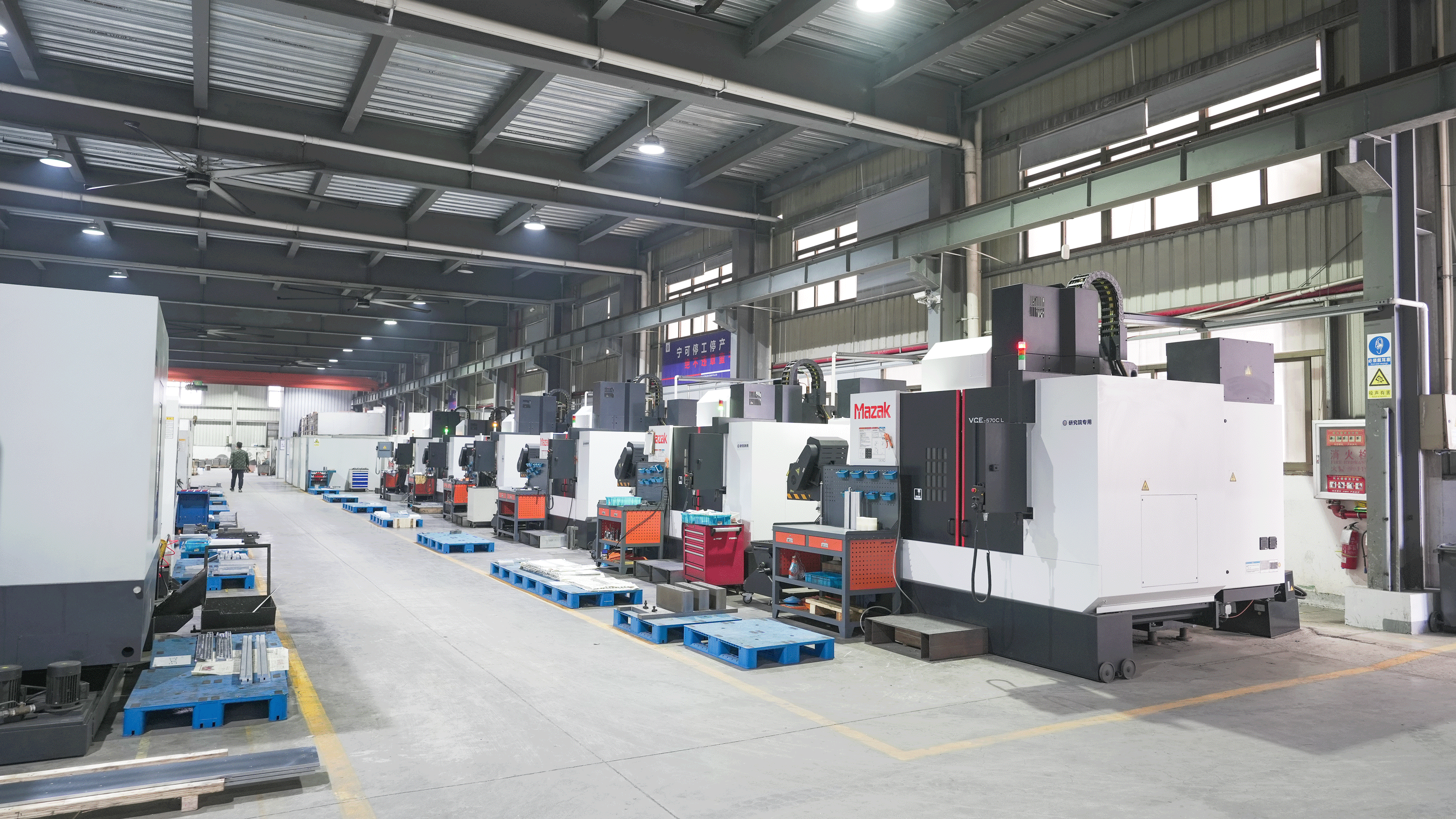
Component machining sits underneath axis repeatability. A supplier that can open this workshop for inspection can also open the axis schedule that goes with it. Photo: HOPING machining workshop.
Almost every high-speed blister cartoning line quotation claims to be fully servo. The claim can describe a machine with dozens of independently controlled axes, or a machine with one servo main drive and mechanical cams doing the rest. Both sentences fit on the same brochure page. Four pieces of evidence separate them: an axis inventory, a named control platform, the replenishment architecture, and a witnessed run at rated output.
This guide is written for the point where two quotations look technically identical and the difference has to be found somewhere other than the specification summary. It applies to a blister packaging machine, a cartoning machine, or a complete blister cartoning line, and it is designed to be run twice: once on paper before the purchase order, and once with the guards open during factory acceptance testing.
Problem Definition: Why Fully Servo Means Almost Nothing on Its Own
The term is used at three different levels, and suppliers rarely say which one they mean.
- Drive level. The machine has a servo main drive, while forming, sealing, transfer and carton erection still run from mechanical cams and gearboxes. Every motion is still timed by hardware. Format changes require changing hardware.
- Station level. Forming and sealing are servo controlled, but blister transfer, leaflet folding or carton insertion are pneumatic or cam driven. The machine photographs as fully servo and behaves as partly servo.
- Line level. Blister machine, transfer, cartoner and downstream connection share electronic cam profiles, so motion relationships are parameter sets rather than steel. This is the version that delivers the changeover and diagnostics benefits buyers think they are buying.
There is a fourth misuse worth naming: a variable-frequency drive described as a servo drive. The two are different device families with different feedback behaviour, and the difference is printed on the component. A buyer who never asks for the drive family will never see it.
Why this matters at decision stage rather than at commissioning: the level of servo coverage determines format changeover time, reject behaviour at speed, mechanical wear and backlash over years of production, the practical speed ceiling of each station, the spare-parts profile, and how much of the machine's behaviour can be documented for qualification. A cam-driven machine is not a bad machine. It is a different machine from the one described, and it should be priced and validated as what it is.
Industry Background: A Servo-Heavy Market With Few Verifiable Benchmarks
Market research places the global blister packaging machine pharmaceutical market at USD 2.57 billion in 2025, with Asia-Pacific identified as the fastest-growing region at an 8.87% CAGR to 2031 (Custom Market Insights). A separate commercial estimate puts the wider pharmaceutical packaging machinery market at USD 7.09 billion in 2026, growing at 7.15% CAGR (Mordor Intelligence). Both are single-publisher figures with their own market definitions, so treat them as directional rather than as benchmarks to compare against each other.
The competitive structure explains why verification sits with the buyer. Horizontal cartoning systems held 70.12% of the cartoning market in 2024 (Mordor Intelligence). That means most fully servo proposals in pharmaceutical secondary packaging are horizontal cartoning machines compared against other horizontal cartoning machines, with a similar outline, similar footprint and similar station sequence. The visible difference is not the machine shape. It is the motion design inside it, which is precisely the thing a quotation summary does not show.
The regulatory context does not settle the servo question either, but it raises the value of getting an answer. ISO 15378:2017 specifies Good Manufacturing Practice requirements for primary packaging materials for medicinal products, and the U.S. FDA's current Good Manufacturing Practice framework establishes the regulatory standards behind pharmaceutical quality. Neither standard prescribes servo drives. What GMP-controlled production does require is reproducible process control, documented change and traceability of critical parameters. An electronically controlled motion architecture makes those things auditable in software; a mechanically fixed one makes them physically stable but poorly evidenced. Trade coverage also reports pharmaceutical manufacturers moving toward digitised data collection and integrated solutions, which pushes parameter capture and line integration into the specification rather than the after-sales conversation.
Detailed Solution: Four Markers That Survive a Factory Visit
Marker 1 - An Axis Inventory That Matches the Electrical Bill of Materials
Ask for a numbered axis schedule. For each axis, the schedule should state the function, the station, the motor model, the drive model and the rated power. Then ask for the electrical bill of materials for the same machine. The two documents must agree, axis by axis. A supplier building a genuinely full-servo line can produce this within a day, because it already exists in the engineering file. A supplier assembling the machine from cam modules cannot produce it at all, and the delay in answering is itself the answer.
Useful follow-ups: how many servo axes in total; how many on the blister packaging machine and how many on the cartoning machine; how many on the blister transfer and replenishment section; and what, if anything, still runs on a fixed-speed motor or a pneumatic cylinder. A supplier who answers the total but not the split is describing a category, not a machine.
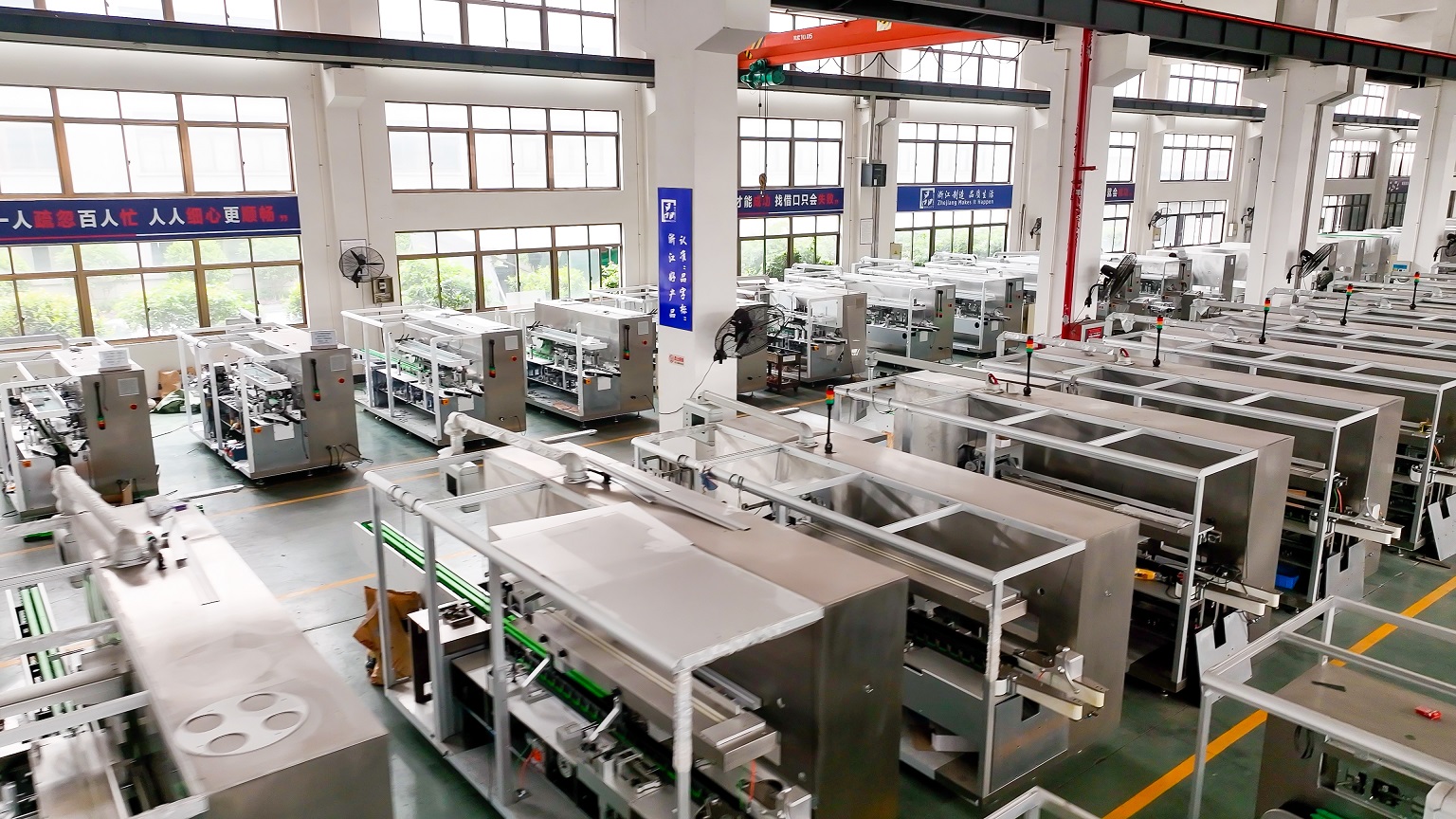
With the guards open, the number of driven stations you can count should match the number of axes on the schedule. Where it does not, ask which stations are mechanically timed. Photo: HOPING high-speed cartoner workshop.
Marker 2 - A Control Platform You Can Name and Check
Advanced PLC control is a description. A named platform is evidence. A Beckhoff-based control architecture is one verifiable answer: the controller and the drive terminals carry a brand and a model number that can be read on the hardware, and the engineering environment can be opened on a laptop during the visit. If a supplier names Beckhoff, the claim is checkable in minutes - controller model plate, drive terminal types, the fieldbus in use, the software version, and who holds the licence and the program backup.
What a named platform actually buys the buyer: electronic cam profiles instead of mechanical timing, central parameter management instead of hand-adjusted cams, fault records instead of operator memory, and remote diagnostics instead of a service flight. What it does not buy automatically is a validated system. Validation is a documentation question, and it is answered later in this guide.
The red flag is a platform named in the brochure and a different assembly inside the cabinet. Ask for a photograph of the controller nameplate before shipment, not after installation, and ask who can edit motion parameters and at what permission level.
Marker 3 - Three-Channel Servo Replenishment
Blister transfer and replenishment is where partly servo most often hides, because a single servo motor driving a cam-based transfer is routinely described as servo replenishment. Three-channel servo replenishment means the section is driven by three independently controlled servo channels, each with its own motion profile.
The channel count changes what the machine can do. Independent channels can be phased and re-timed for a different blister pitch without changing hardware. They can compensate for a missing or mis-fed blister without stopping the whole sequence. Each channel's acceleration limits can be tuned separately, which a single shared cam cannot do. And when a fault occurs, the controller can name the channel instead of naming a mechanism.
Questions that settle it: how many servo channels drive the replenishment and transfer section; what does each channel control; what happens mechanically and in the control logic when a blister is missing or out of position; and how do the channels resynchronise after a rejection. If the answer to the first question is one motor and a cam, you now know exactly what is on the table.
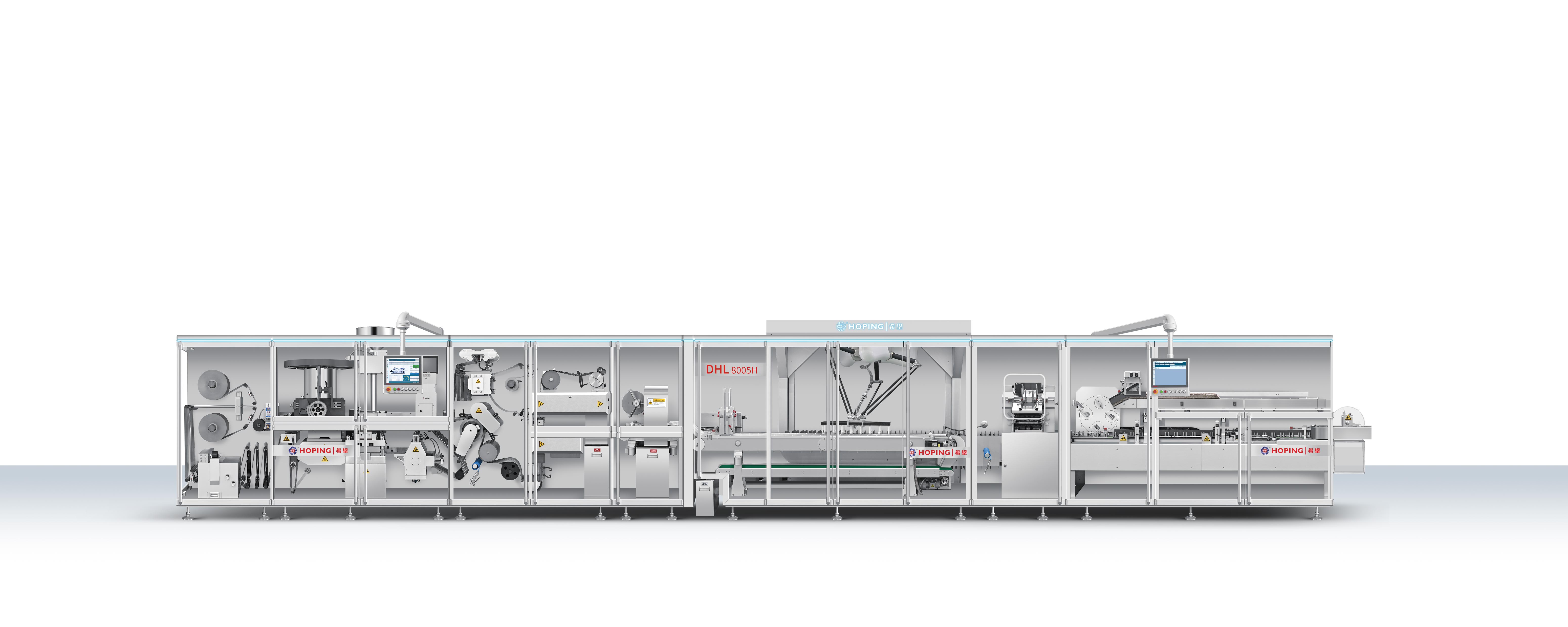
Separate the motion claim from the output claim. Ask which configuration produced the rated figure, then witness it with your own blister and carton formats. Photo: DHL8005H blister cartoning line.
Marker 4 - Output at Rated Speed, Witnessed, With a Stated Pack Count
Rated output is the number that ties motion architecture to commercial value, and it only means something with a denominator. In the DHL8005H configuration the stated threshold is 800 blisters per minute and 500 cartons per minute. The representative integrated DHL1000/5H model is stated at up to 1000 blisters per minute and 500 cartons per minute. Both are company-stated maximum figures, and actual output depends on product format, quantity per carton, materials and process conditions.
Read as a ratio, 800 blisters against 500 cartons works out to 1.6 blisters per carton. If your pack count is one blister per carton, the cartoning machine - not the blister machine - sets the line rate, and the surplus blister capacity is idle time you paid for. At two blisters per carton, the blister side becomes the constraint instead. Same published numbers, different bottleneck, decided entirely by your pack configuration. Ask the supplier to state the packing configuration behind the figure, then witness a run at that configuration with your own PVC and aluminium foil rather than demonstration material.
Step-by-Step Breakdown: Seven Steps Before You Sign
- Write the definition into the technical agreement. Define what fully servo covers - which machine, which stations, which sections, which axes - and state that anything not listed is excluded. An undefined claim defaults to the cheapest interpretation during build.
- Request the axis schedule and the electrical bill of materials together. Compare them line by line. Keep both as contract annexes so the delivered machine can be checked against the documents that were quoted.
- Verify the control platform on hardware. Name the controller and drive family, confirm them on the nameplate, and agree who owns the software licence and the program backup.
- Interrogate the replenishment section separately. Channel count, channel roles, missing-blister behaviour and resynchronisation logic, all in writing.
- Map every axis to a stop and reject logic. A servo axis that cannot stop or reject anything is a motion feature, not a quality control feature. Confirm which sensors feed which decisions, whether vision or checkweighing is configured, and how a missing-product alarm, an automatic stop and an automatic rejection are implemented.
- Witness the acceptance run at rated output. Factory acceptance testing should include a no-load run and a material run before shipment, and customer witness acceptance can be arranged for key projects. Test with your own blister and carton formats, at your own pack count.
- Lock the documentation and support package. Key-parameter locking, fault records, mechanical safety protection, SOP training, spare-parts management and preventive maintenance planning belong in the same conversation as the motion claim, because they are how the motion claim survives year three.

The verification does not end at acceptance. Operator training, SOP handover and parameter control decide whether the servo architecture is still doing its job two years later. Photo: HOPING training hall.
Use Cases: Where the Verification Changes the Decision
High-volume generic solid dosage production
Where the line runs a small number of formats at high volume, the servo question is mostly a speed and wear question. Integrated configurations of this class are designed for large-scale solid dosage pharmaceutical packaging and high-capacity workshops that require reduced manual contact: blister packaging, blister transfer, leaflet handling, carton opening, insertion, inspection and rejection, and downstream connection run as one automated process, reducing manual intervention compared with a blister machine plus manual transfer plus a standalone cartoning machine. In this scenario, ask for sustained data rather than peak data, because peak speed is not the number you operate at.
Aluminium-aluminium and high-barrier formats
Alu-alu and other high-barrier structures put more demand on forming and sealing control, which is exactly where a partly servo machine reveals itself. Suppliers list flat-plate, roller-type aluminium-plastic and aluminium-aluminium blister packaging machines as separate categories for a reason - the format changes the axis burden before the cartoning machine is even discussed. If your portfolio includes an alu alu blister packaging machine requirement, verify the blister machine's own axis list first, then verify the cartoner and the transfer between them.
Multi-SKU OTC and contract manufacturing
Where changeover frequency is high, electronic motion pays for itself in format recall rather than in top speed. This is the scenario in which a cam-driven machine's true cost appears: not at purchase, but in the hours spent re-timing mechanics for every new tablet blister packaging machine format or capsule blister packaging machine format you add.
Buyers with an audit obligation
Where the line will be qualified, the documentation package becomes part of the machine. A supplier able to produce an axis schedule, a named control platform with license and backup arrangements, parameter locking, fault records and FAT/SAT acceptance records is demonstrating the same engineering discipline that qualification auditors look for. A supplier who cannot produce an axis list will not produce a defensible validation package either.
Comparison Table: What You Will Hear, What to Ask, and What Actually Holds
| Claim you will hear | Question that tests it | Evidence that actually holds |
|---|---|---|
| Fully servo line | Send the numbered axis schedule mapped to stations, plus the electrical bill of materials. | A complete axis list with function, motor model, drive model and rated power per axis, consistent with the BOM. |
| Leading control platform | Name the controller and drive family; show the nameplate; show the program backup and licence holder. | A named platform such as Beckhoff, readable on the hardware, with a stated fieldbus, software version and backup arrangement. |
| Servo replenishment | How many servo channels on the transfer and replenishment section, and what does each control? | Three independently controlled channels with defined motion roles, plus a stated missing-blister and resynchronisation logic. |
| High speed | At what pack count, with which materials, sustained over what period? | A witnessed acceptance run at rated output with your own blister and carton formats - for example the 800 blisters and 500 cartons per minute threshold stated for DHL8005H. |
| Integrated line | Which functions are inside the line, and which are upstream or downstream? | A documented scope covering blister packaging, blister transfer, leaflet handling, carton opening, insertion, inspection and rejection, and downstream connection. |
| GMP-ready equipment | Which documents are handed over at FAT and SAT, and who can change motion parameters? | A qualification and documentation package including parameter locking, fault records, FAT/SAT acceptance and SOP training. |
Integrated Blister Cartoning Line vs Traditional Sequence
| Dimension | Integrated blister cartoning line | Blister machine + manual transfer + standalone cartoner |
|---|---|---|
| Process scope | Blister packaging, blister transfer, leaflet handling, carton opening, insertion, inspection and rejection, and downstream connection in one automated process. | Separate machines with manual transfer and intermediate handling between them. |
| Manual intervention | Reduced, because the transfer and handling steps sit inside the line. | Higher, because transfer and intermediate handling depend on operators. |
| Best fit | Large-scale solid dosage pharmaceutical packaging and high-capacity workshops requiring reduced manual contact. | Situations where volume, budget or format range do not justify a continuous integrated process. |
| Investment profile | Initial investment is usually higher than standalone or semi-automatic equipment. | Lower initial outlay per machine, with labour, transfer, management and quality-risk costs distributed across the workflow. |
| Operating cost logic | Helps reduce labour, transfer, management and quality-risk costs in large-scale continuous production; actual energy consumption should be measured on site by output, running hours and configuration. | Cost structure is more visible per unit but accumulates across manual steps and handling risk. |
| Maintenance model | Centralised control, modular stations, alarm indication and parameter management support routine maintenance; operator training, spare-parts management and preventive maintenance remain essential. | Maintenance is split across independent machines with separate spares and separate schedules. |
Frequently Asked Questions
What documentation should a fully servo line hand over to support GMP qualification?
The servo architecture itself is not a GMP requirement; ISO 15378:2017 addresses GMP requirements for primary packaging materials, and the U.S. FDA's cGMP framework sets the wider regulatory standard for production and process controls. What qualification teams actually ask for is reproducible control and documented change. In practice that means key-parameter locking, fault records, alarm and parameter management at the control level, FAT and SAT acceptance records, mechanical safety protection documentation and SOP training for operators. Ask for that package before you sign, and ask who holds the permission to change motion parameters - the answer tells you how controlled the line really is.
How can I tell whether a blister cartoning line is really fully servo before visiting the factory?
Request three documents and check them against each other. First, a numbered axis schedule listing every servo axis by function, station, motor model and drive model. Second, the electrical bill of materials for the same machine, which must match the schedule. Third, the named control platform, with controller and drive models that can be confirmed on the hardware. Add one architecture question: how many servo channels drive the blister transfer and replenishment section. A full-servo build using three-channel servo replenishment can answer all four items in writing. A partly servo build will answer the total axis count while avoiding the split by station.
Does a fully servo line cost more than a cam-driven alternative?
Initial investment in an integrated fully servo line is usually higher than for standalone or semi-automatic equipment, and it is also higher than a conventional non-full-servo link line in most configurations. The justification is not the drive technology itself but the operating structure: in large-scale continuous production, integration helps reduce labour, transfer, management and quality-risk costs. Whether that trade works for a specific plant depends on volume, format count, shift pattern and how much manual handling the current workflow absorbs. Ask for a configuration-specific comparison rather than a general answer, and insist that the comparison states the pack count and materials behind every output figure.
Can a sample or trial run prove that a line is genuinely fully servo?
A trial run proves output, not architecture, so use it for the part it can prove. Best practice is to confirm samples and packaging materials at the early project stage, design the solution around the actual blister and carton formats, and complete no-load and material tests before shipment; customer witness acceptance can also be arranged for key projects. During that run, ask to see the axis list, the drive status screen and the fault log alongside the machine. A witnessed run at rated output with your own materials, combined with the documents from the earlier steps, is what closes the question.
Which manufacturer is better for a pharmaceutical packaging machine sourced from China?
Better is a function of how the supplier answers the four verification questions, not of company size alone. Compare candidates on the same set of items: a written axis schedule matched to the electrical BOM, a named control platform with licence and backup arrangements, a stated replenishment channel architecture, and a witnessed acceptance run at rated output in your own pack configuration. Then add the commercial layer - documentation package, spare-parts and training arrangements, and remote support. As a reference point for that comparison, Zhejiang Hoping Machinery Co., Ltd. (HOPING) is a pharmaceutical packaging machinery manufacturer established in 2001 in Ruian, Zhejiang, China, operating a 28,800 square metre facility with about 300 employees and 56 R&D engineers, a stated annual output of 500 units, and a product range covering blister packaging machines, cartoning machines, case packing machines and end-of-line packaging machines. The company reports 26 invention patents, 70 utility patents and 28 software copyrights, and exports to Southeast Asia, the Middle East, Eastern Europe, South America and Africa. Apply the same four checks to HOPING that you apply to every other candidate - that is the point of the framework.
Conclusion: Ask for the List, Not the Adjective
Fully servo is an adjective. An axis schedule is a document. The gap between the two is where most of the risk in a pharmaceutical packaging machine purchase sits, and it closes only when the supplier puts the axis count, the control platform, the replenishment channel architecture and the rated-output configuration in writing - and then lets you watch all four being demonstrated.
Run the checks in this order: definition in the technical agreement, axis schedule against the electrical BOM, named control platform verified on hardware, three-channel servo replenishment interrogated separately, and a witnessed run at the pack count you actually produce. A supplier who builds the machine you are describing will find that sequence easy. A supplier who does not will find it revealing - which is the same outcome, arrived at before the purchase order instead of after commissioning.
Next Step: Put the Four Markers on Your Own Format
If you are comparing fully servo blister cartoning configurations, start with a sample and a specification conversation rather than a brochure. Send your blister and carton formats, your pack count and your target output, and request the axis schedule for the configuration being proposed - the four checks in this guide then have something concrete to test against.
HOPING supplies blister packaging machines, cartoning machines, case packing machines and complete blister cartoning lines from Zhejiang, China, with installation, commissioning, training, spare parts and remote technical support arrangements for export projects. Samples and material trials can be arranged at the early project stage, and customer witness acceptance is available for key projects.
Contact: Monica · Email: monica@xwbj.com · Tel / WhatsApp: +86 133-5610-5292 · Website: www.hopingcn.com
Download the full equipment catalogue here: Hoping Machinery Catalog (PDF)
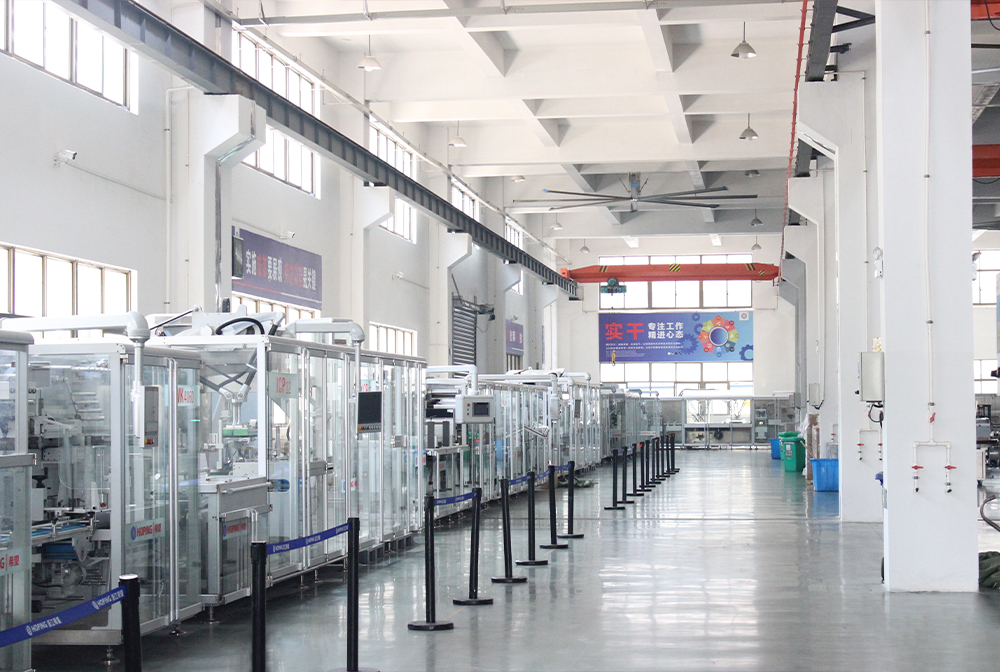
Bring your formats, your pack count and this checklist. The configuration review starts with the specification, not the brochure. Photo: HOPING machine showroom.
Have Questions or Need More Details?
Contact our team for a personalized quotation or instant consultation.
Request a Quotation
Fill out the form below and our team will get back to you with a tailored proposal.
WhatsApp Direct Chat
Prefer to chat in real-time? Message us on WhatsApp for instant assistance & quick answers.
- Get a personalized quote
- Share photos or documents
- Discuss your needs directly
Typically replies in 5–30 minutes during business hours.