DHL8005H Blister-Cartoner Line: Technical Parameters and Selection Guide
An integrated blister-cartoner line is judged by how well blister output, transfer and carton infeed hold together at production speed - not by a single maximum figure on a datasheet. The DHL8005H, built by Zhejiang Hoping Machinery Co., Ltd., is an intelligent, fully servo high-speed blister-cartoner integrated machine rated at up to 800 blisters per minute and 500 cartons per minute, and controlled by a Beckhoff motion controller paired with a CP9315 industrial PC.
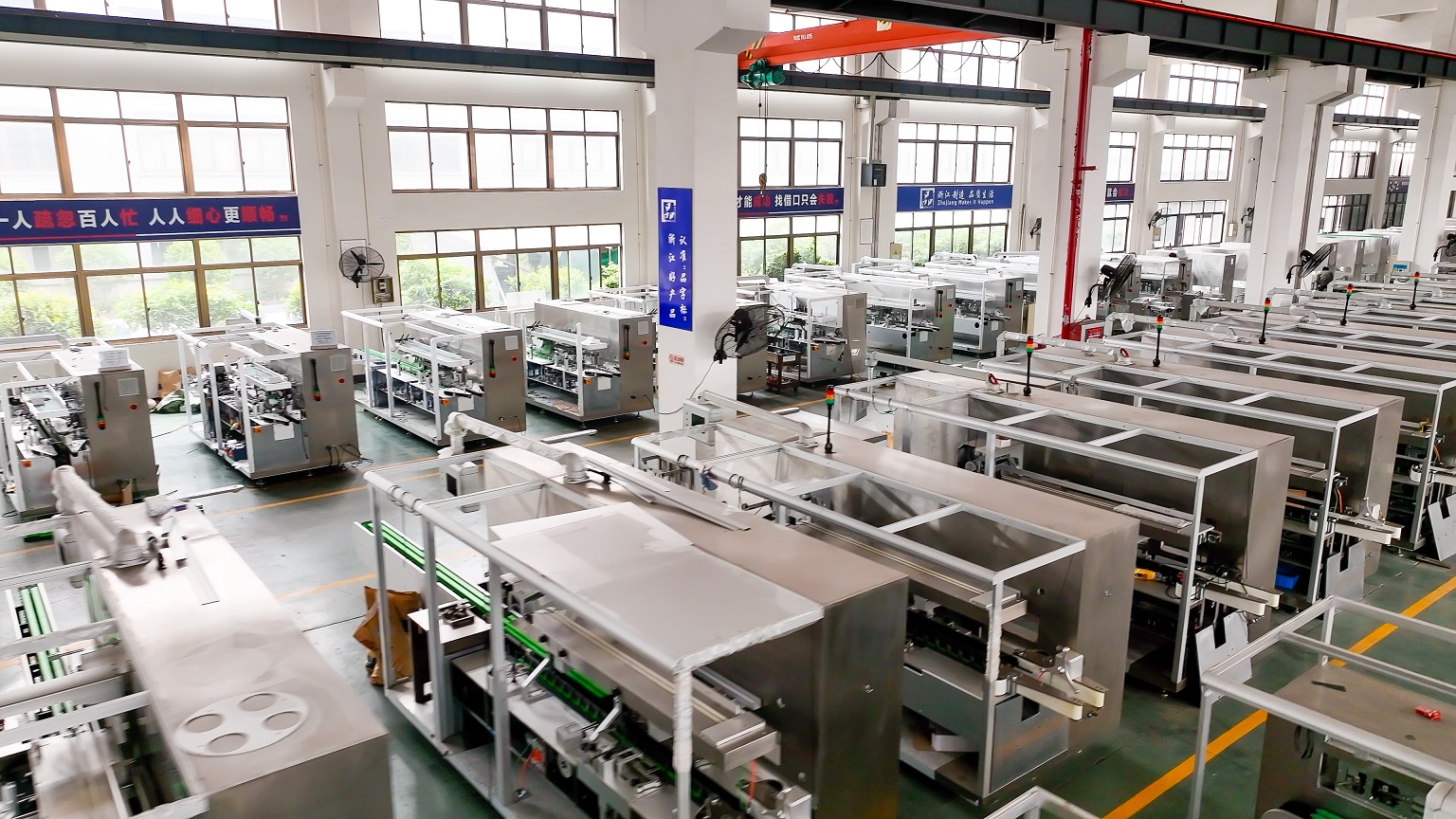
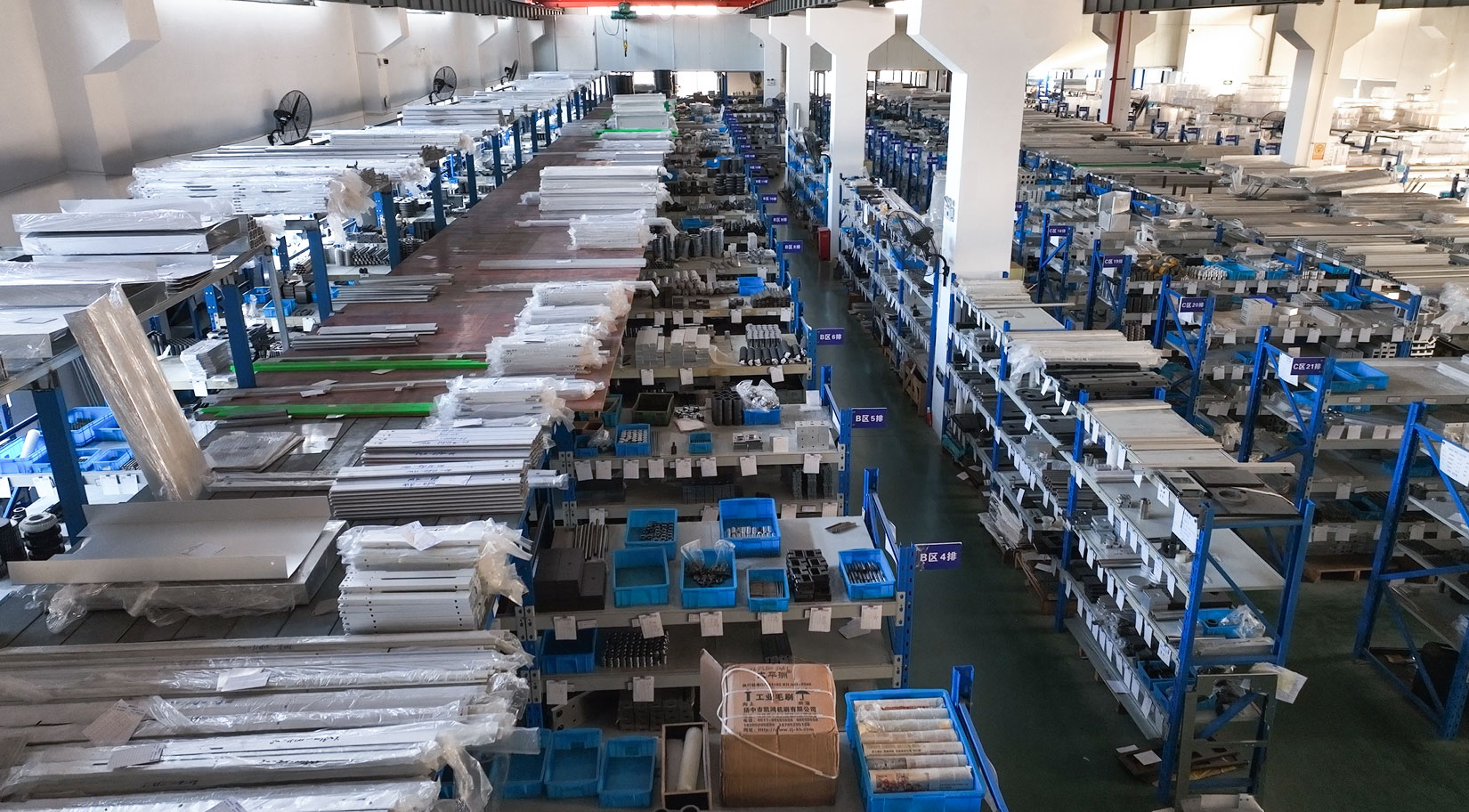
Zhejiang Hoping Machinery Co., Ltd. is a pharmaceutical packing machinery manufacturer established in 2001 in Ruian City, Zhejiang Province, China. The company employs more than 300 people and produces around 500 units per year across blister packing machines, cartoning machines, case packing machines and end-of-line packaging equipment, marketed under the HOPING brand.
This guide sets out what the DHL8005H does mechanically and electronically, which parameters actually change the delivered machine, how the line runs step by step, where it fits in solid dosage production, how it compares with other blister-cartoner models in the same range, and which points a buyer should confirm before signing a technical agreement. It is written for pharmaceutical manufacturers, engineering contractors and OEM brand owners who are evaluating and specifying an automatic pharmaceutical packaging machine at evaluation and execution stage.
Why Blister-Cartoner Parameters Are Hard to Compare
Two blister-cartoner datasheets can both claim high speed and still describe machines that behave completely differently once a validation batch is running. For a buyer at evaluation or execution stage, the difficulty is that the parameters which decide whether a line keeps its promise are rarely the parameters that are easiest to compare side by side.
Five issues drive most of the confusion:
- Peak rate is a ceiling, not a promise. A maximum capacity of up to 800 blisters per minute and 500 cartons per minute describes the upper limit of the machine. Sustained output depends on blister format, forming and covering materials, product feed behaviour, transfer reliability and cartoner infeed stability.
- The bottleneck moves. In an integrated line the constraint is rarely the blister former alone. It is the hand-off between blister output, leaflet handling, carton opening and insertion. A transfer or replenishment stage that cannot keep pace will pull the whole line down even if the blister station has spare capacity.
- Changeover defines effective capacity. For a plant running several SKUs, mold change and preset memory determine how much productive time survives between products.
- GMP-oriented construction changes the validation workload. Frame materials, guarding, and the specification of product-contact parts and tooling affect cleaning procedures, documentation and the effort needed to qualify the line on site.
- The delivered machine is a configuration, not a catalogue item. Blister size, carton specification, leaflet format, coding and inspection method, feeding method and downstream connection are all project-level decisions.
Plants that move from standalone equipment to linked lines usually do so to remove manual handling. Hoping's own case documentation frames the underlying problem in the same way: manual transfer and leaflet insertion errors in pharmaceutical packaging for blister packaging and automatic cartoning of tablets, capsules and other solid dosage forms.
Industry Background: Solid Dosage Packaging Is Moving to Linked Lines
Blister-cartoning sits at the point in a pharmaceutical plant where product value is already high and where regulatory scrutiny of the packaging step is continuous. Two forces shape equipment selection: growth in pharmaceutical packaging capacity, and the standards that define how that capacity must be built.
On the market side, SkyQuest Technology valued the global pharmaceutical packaging equipment market at approximately USD 10.71 billion in 2024, and Fortune Business Insights valued the pharmaceutical automatic cartoning machinery segment at about USD 1.46 billion in the same year. The blister side of the market is not dominated by a single group: a market intelligence report places the top three blister packaging machine suppliers - Uhlmann, IMA and Marchesini - at approximately 29% combined share, which leaves substantial room for regional manufacturers and specialist line builders.
On the standards side, two frameworks matter most. ISO 15378 integrates GMP requirements for primary packaging materials, so the way a machine handles film, foil, cartons and leaflets belongs to the quality system rather than to the maintenance schedule. In the European Union, pharmaceutical equipment safety is governed by the Machinery Directive 2006/42/EC and the EN 415 series of standards for packaging machines.
The practical consequence is a shift in how plants buy equipment. Instead of purchasing a blister packaging machine and an automatic cartoning machine separately and buffering them with operators and trays, more solid dosage projects are being specified as one integrated blister-cartoning line in which blister forming and sealing, transfer, leaflet handling, carton opening, insertion, coding, inspection and downstream case packing run as a single linked process.
The DHL8005H is designed for that type of project.
The DHL8005H Blister-Cartoner Line Explained
Hoping classifies the DHL8005H as an intelligent, fully servo high-speed blister-cartoner integrated machine and a solid dosage turnkey packing line. The subsystems below are taken from the manufacturer's published specification for this model.
Output architecture: up to 800 blisters/min and 500 cartons/min
The DHL8005H is specified at a maximum capacity of up to 800 blisters per minute and 500 cartons per minute. The two figures describe different stages of the same machine. The blister figure is the output of the forming, sealing and punching section. The carton figure is the output of the cartoning section. Where a product format does not allow both stages to run at their limit, the lower of the two becomes the practical ceiling for the line, which is why format definition comes before speed claims in any serious specification discussion.
The published scope of the line covers high-speed blister forming and sealing, transfer, leaflet handling, carton opening, insertion, coding and inspection, and connection to bundling, case-packing and palletizing equipment.
Control architecture: Beckhoff motion controller and CP9315 industrial PC
Motion on the DHL8005H is managed by a Beckhoff motion controller together with a CP9315 industrial PC. This is a PC-based control architecture: the industrial PC carries higher-level functions such as preset and recipe management, operator interface and line coordination, while the motion controller executes synchronized servo motion across the forming, sealing, transfer and cartoning axes.
For a buyer, the control platform is not a cosmetic detail. A PC-based architecture is what makes preset memory practical, because stored parameter sets can be recalled and applied consistently across production runs. It is also the foundation for the interface language and data interface options that form part of the customization scope. Within the same product family, the DHL1000/5H and the DHL6004 also use a Beckhoff motion controller with a CP9315 industrial PC, while the DHL7005H and DHL7004 use a Siemens motion controller with a TP900 HMI.
Transfer and replenishment: D3 top-loading transfer with three-channel servo replenishment
Blisters move from the blister section into the cartoner through a D3 intelligent top-loading parallel tracking transfer system. Replenishment - the stage that keeps the cartoner fed with a continuous, correctly oriented supply of blisters - is handled by a three-channel servo-driven independent replenishment system.
The word independent is the important one. Driving each replenishment channel with its own servo means the channels can be coordinated rather than mechanically linked, which supports a smoother infeed when blister output varies slightly across a production run.
Channel count is a capacity-scaling parameter in this family of machines. Hoping's higher-capacity DHL1000/5H uses a four-channel version of the same servo-driven independent replenishment concept, while the DHL8005H is specified with three channels. Buyers should treat channel count as a design choice matched to the target line speed, not as an isolated quality indicator.
Material handling: PVC/Alu foil auto splicing and multiple feeding methods
The DHL8005H supports PVC and Alu foil auto splicing, which allows a new roll of forming or covering material to be joined to the running web without stopping the line for a full material changeover. On a high-speed line, splicing capability translates directly into uptime, because an unscheduled stop of a few minutes on equipment rated in the hundreds of units per minute has a measurable effect on shift output.
The specification also lists multiple feeding methods, meaning the product infeed can be matched to the dosage form and to the upstream process rather than being fixed by the machine builder.
Changeover: mold change and preset memory
The line supports mold-change functions and preset-memory functions. Mold change covers the mechanical side of switching between blister and carton formats. Preset memory covers the control side: the parameters associated with a validated format can be stored and recalled, so a repeat run begins from a known state instead of from a manual re-setup.
Together, those two functions determine how much of a plant's available production time is genuinely available. A line that is fast but slow to change over can be the wrong purchase for a multi-SKU portfolio, even when its maximum output rate looks better on paper.
Construction and GMP orientation
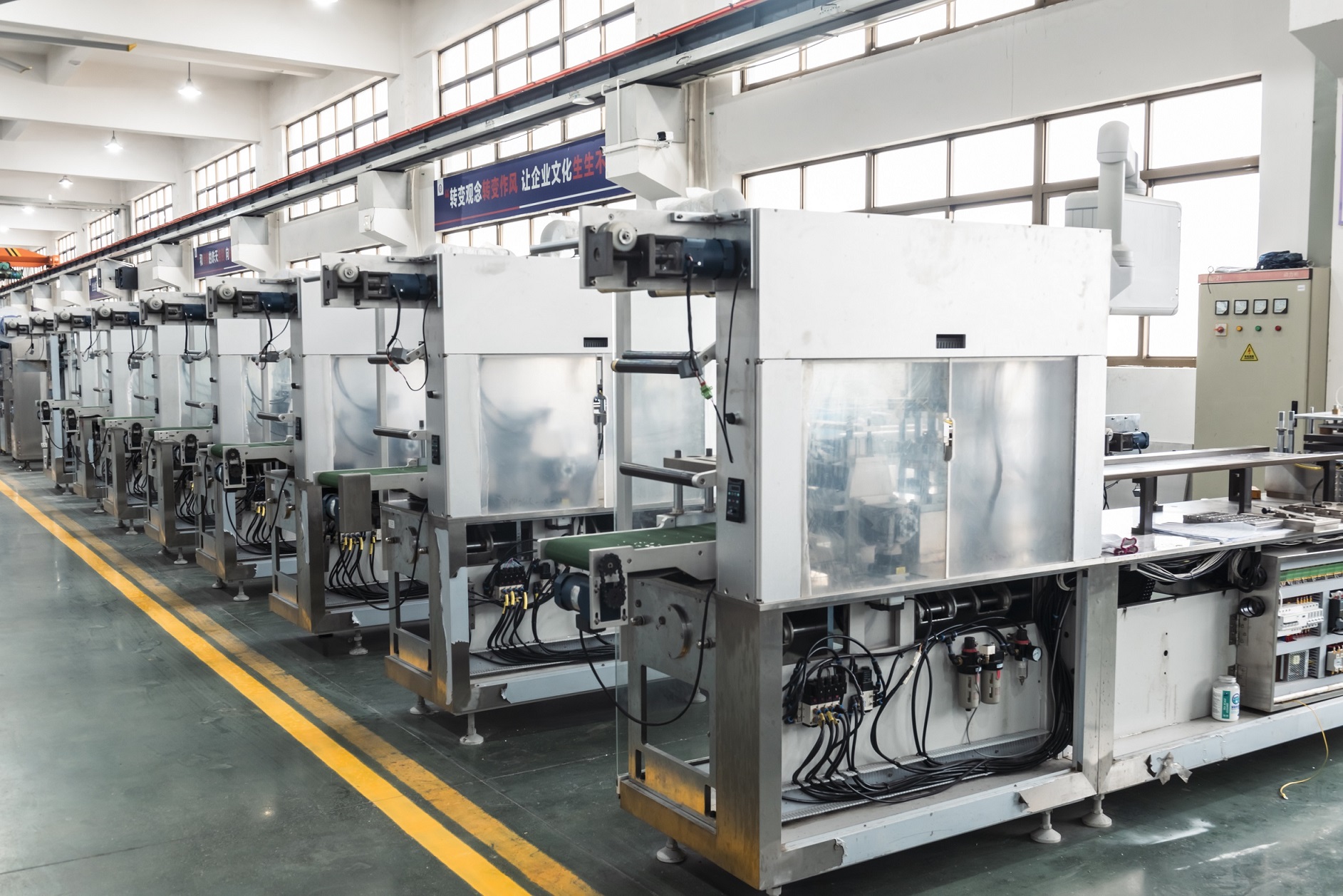
The DHL8005H uses a stainless steel and aluminum-alloy machine structure with transparent guarding, and integrates servo-driven motion components within that frame. Product-contact parts and tooling are GMP-oriented and are configured according to the technical agreement for each project.
That last phrase deserves attention when quotations are compared. Configured according to the technical agreement means the specification of contact parts and tooling is a project deliverable rather than a fixed catalogue value. Two buyers ordering nominally the same model can receive different contact-part specifications depending on the product, the packaging materials and the market they supply.
Selection Parameters: What to Confirm With the Supplier
Because the DHL8005H is a configured turnkey line rather than a fixed stock machine, selection is mostly a matter of defining the configuration. Hoping provides ODM, OEM and customizable production services, and the published customization scope for this line covers:
- Blister size
- Blister materials
- Quantity per carton
- Carton specification
- Leaflet format
- Coding and inspection method
- Feeding method
- Downstream bundling, case-packing and palletizing connection
- Interface language
- Electrical component brand
- Data interface
Alongside the technical configuration sit the commercial parameters: a minimum order quantity of 1 set or 1 complete line; a typical production lead time of 60 to 120 days after technical confirmation, subject to model, configuration, project complexity and contract terms; and a monthly production capacity of 30 to 40 units.
In practice, the sequence that avoids rework is to fix the dosage form and blister format first, then the target sustained speed, then the packaging materials and carton and leaflet formats, then coding and inspection, then the downstream connection to bundling, case packing and palletizing. Electrical and pneumatic requirements for the final configuration, along with any plant-specific interfaces, are then confirmed inside the technical agreement rather than assumed from a generic specification sheet.
Step-by-Step: How the DHL8005H Line Runs
- Blister forming and sealing. The forming film is heated, formed and filled, then sealed against the covering foil. PVC and Alu foil auto splicing keeps material feeding continuous when a roll is changed.
- Product feeding. Tablets, capsules or soft capsules are fed into the formed cavities using the feeding method selected for the project.
- Punching and cutting. The sealed web is separated into blister cards or strips in the required format.
- Transfer. The D3 intelligent top-loading parallel tracking transfer system carries the blisters from the blister section into the cartoner.
- Replenishment and balancing. The three-channel servo-driven independent replenishment system manages the flow of blisters into the cartoning infeed.
- Leaflet handling and carton opening. Leaflets are folded and carton blanks are opened in the cartoner section.
- Insertion and closing. Blister and leaflet are inserted into the opened carton, which is then closed.
- Coding, inspection and rejection. Coding and inspection are performed according to the project configuration, with rejection of non-conforming cartons.
- Downstream connection. Closed cartons are passed to bundling, case-packing and palletizing equipment when those modules are part of the project scope.
Use Cases: Where the DHL8005H Fits
The published application range of the DHL8005H covers pharmaceutical solid dosage production, capsule and tablet packaging, healthcare products, and food and cosmetic blister-cartoning projects.
Tablets. High-volume tablet production is the primary fit. The 800 blisters per minute blister output combined with 500 cartons per minute cartoning capacity suits plants that need to move a large tablet volume through secondary packaging without an intermediate manual buffer.
Capsules and soft capsules. Capsule and soft capsule packaging is listed in the application range, and the multiple feeding methods option allows the infeed to be matched to capsule geometry and upstream equipment.
Nutraceuticals and healthcare products. The line is specified for healthcare and nutraceutical blister-cartoning, where format variety and changeover frequency are usually higher than in a single-product prescription plant. Preset memory and mold-change support matter more in this setting than the raw speed figure.
Multi-format plants. Where one line must handle several blister and carton formats, mold change plus preset memory lets a validated format be recalled rather than rebuilt, which protects both changeover time and consistency.
New lines, capacity expansion and upgrades. Hoping's case material describes a project profile involving a large pharmaceutical manufacturer and solid dosage production company, covering 5 to 10 packaging lines and built for new line construction, capacity expansion or upgrading existing packaging lines. The stated objectives of that profile include improving packaging automation, reducing manual transfer, improving blister-to-carton connection efficiency, reducing wrong insertion and missing leaflet risks, and supporting downstream automation integration. Customer names are disclosed only with authorization.
Where the DHL8005H is not the right fit. The model is specified for solid dosage blister-cartoning and related blister-cartoning projects. Liquid dosage formats such as pre-filled syringes, ampoules and cartridges require a different integrated platform in the same range, where product geometry and format tooling are designed accordingly. Confirming the dosage form before comparing speed figures prevents an expensive mismatch.
DHL8005H Compared With Other Hoping Blister-Cartoner Lines
The table below uses the manufacturer's published specifications for each model. It is intended to show where the DHL8005H sits in the range, not to rank the models against each other.
| Model | Max blister output | Max carton output | Transfer to cartoner | Replenishment | Control platform | Changeover and memory |
|---|---|---|---|---|---|---|
| DHL1000/5H | Up to 1000 blisters/min | 500 cartons/min | D3 intelligent top-loading parallel tracking transfer system | Four-channel servo-driven independent replenishment system | Beckhoff motion controller and high-bus industrial control system | Mold-change and recipe memory functions |
| DHL8005H | Up to 800 blisters/min | 500 cartons/min | D3 intelligent top-loading parallel tracking transfer system | Three-channel servo-driven independent replenishment system | Beckhoff motion controller and CP9315 industrial PC | Mold-change and preset-memory functions |
| DHL7005H | Up to 700 blisters/min | 500 cartons/min | Self-developed IRB24 intelligent transfer robot | Independent replenishment (channel count not stated in the published specification) | Siemens motion controller and TP900 HMI; full servo drive | Mold-change support |
| DHL7004 | Up to 700 blisters/min | 400 cartons/min | Self-developed IRB24 intelligent transfer robot | Servo-driven independent replenishment | Siemens motion controller and TP900 HMI; full servo drive | Convenient mold change |
| DHL6004 | Up to 600 blisters/min | 400 cartons/min | High-speed transfer and cartoning linkage | Servo-driven independent replenishment | Beckhoff motion controller and CP9315 industrial PC | Convenient mold change |
Read across the table and three selection axes become visible. The first is throughput: the DHL8005H sits between the DHL1000/5H at up to 1000 blisters per minute and the DHL7005H and DHL7004 at up to 700 blisters per minute, while matching the DHL1000/5H and DHL7005H at 500 cartons per minute. The second is transfer principle: the DHL8005H uses the D3 intelligent top-loading parallel tracking system, whereas the DHL7005H and DHL7004 use the IRB24 intelligent transfer robot. The third is the control platform: Beckhoff with a CP9315 industrial PC on the DHL8005H, DHL1000/5H and DHL6004, against Siemens with a TP900 HMI on the DHL7005H and DHL7004.
Frequently Asked Questions
1. What compliance evidence applies to the DHL8005H and to Hoping as a supplier?
The DHL8005H is described by its manufacturer as a GMP-oriented line design, with a stainless steel and aluminum-alloy machine structure, transparent guarding, and GMP-oriented product-contact parts and tooling configured according to the technical agreement. At company level, Zhejiang Hoping Machinery Co., Ltd. holds CE certification for its cartoning machine series under certificate HTT190102307L, issued on 22 January 2019 by Shenzhen HTT Technology Co., Ltd. against Machinery Directive 2006/42/EC and EN 60204-1, and CE certification for its blister packing machine series under certificate HTT190102306L, issued on the same date by the same authority against the same directive and standard. Earlier CE certificates for carton packing machine and automatic blister packing machine series are also on record. In addition, the company holds ISO 14001:2015 and ISO 45001:2018 management-system certificates issued by the China Quality Certification Centre (CQC) covering the design, production and after-sales service of packing machines and packing production lines. Buyers should confirm which certificate scope applies to their final line configuration, since certification is issued against machine series and configurations rather than against a generic model name.
2. Can Hoping supply the DHL8005H as a customized or OEM blister packaging machine?
Yes. Hoping provides ODM, OEM and customizable production services. For the DHL8005H, the published customization scope covers blister size, blister materials, quantity per carton, carton specification, leaflet format, coding and inspection method, feeding method, downstream bundling, case-packing and palletizing connection, interface language, electrical component brand, and data interface. This means a buyer can align the delivered line with an existing blister format, an existing carton and leaflet design, an existing inspection strategy and an existing plant data environment rather than adapting the product to a fixed machine layout.
3. What are the minimum order quantity and the available delivery terms?
The minimum order quantity is 1 set or 1 complete line. Delivery terms offered are EXW Ruian or Wenzhou, FOB Ningbo or Shanghai, and CIF or CFR destination port, with final terms subject to the contract and to the customer's country requirements. Payment terms are subject to quotation, contract value, customer credit, project scope, destination market and the final project agreement, which is why commercial terms are usually settled in parallel with the technical agreement rather than before it.
4. How is a DHL8005H configuration validated before shipment and on site?
Hoping's quality control sequence for a configured line covers incoming material inspection, key component inspection, assembly inspection, electrical safety check, no-load trial run, material trial, FAT (factory acceptance test), customer witness acceptance and pre-shipment inspection. The published acceptance criteria are technical agreement confirmation, sample testing, FAT before shipment, SAT (site acceptance test) at the customer site, and third-party inspection arranged according to customer requirements. For a buyer, the practical takeaway is that the material trial and FAT are the points at which blister format, carton specification, leaflet handling and coding and inspection behaviour should be verified against the technical agreement, before the line is packed for shipment.
5. What is the typical lead time, and where can buyers get the full product catalogue?
Typical production lead time is 60 to 120 days after technical confirmation, with the final lead time subject to model, configuration, project complexity and contract terms. Monthly production capacity is 30 to 40 units. Buyers who want to move from evaluation to execution can download the Hoping Machinery catalogue for full machine and line specifications, or send the blister format, carton specification and target output to the Hoping team to receive a configuration proposal and quotation. The company can be reached through its website at www.hopingcn.com, by email at monica@xwbj.com, or by telephone and WhatsApp at +86 133-5610-5292.
Conclusion: Reading the DHL8005H Specification Correctly
The DHL8005H is an intelligent, fully servo high-speed blister-cartoner integrated machine rated at up to 800 blisters per minute and 500 cartons per minute, with a D3 intelligent top-loading parallel tracking transfer system, a three-channel servo-driven independent replenishment system, PVC and Alu foil auto splicing, mold-change and preset-memory functions, a Beckhoff motion controller with a CP9315 industrial PC, and a GMP-oriented stainless steel and aluminum-alloy construction in which product-contact parts and tooling follow the technical agreement.
The parameters that decide whether the line performs as expected are not the headline speed alone. They are the fit between the blister format and the cartoning format, the balance between transfer, replenishment and carton infeed, the changeover behaviour across the SKU portfolio, and the specification of the contact parts and tooling that the technical agreement locks in. Zhejiang Hoping Machinery Co., Ltd. supports that process with ODM, OEM and customizable production, a documented quality control and acceptance sequence, and after-sales support covering installation and commissioning, operator and maintenance training, remote support, spare parts supply and process-parameter guidance, subject to contract and project configuration.
Evaluate the DHL8005H against your own format
Send your blister size, carton specification, leaflet format, dosage form and target output. Hoping will return a configuration proposal, and you can download the full catalogue for machine and line specifications before the technical agreement stage.
Website: www.hopingcn.com | Email: monica@xwbj.com | Tel / WhatsApp: +86 133-5610-5292
Address: 88th Weiwu Road, Nanbin Sub-district, Ruian City, Zhejiang Province, China