
DHL8005H Blister-Cartoning Line: GMP Compliance Guide for Solid Dosage Packaging
GMP compliance on a high-speed blister-cartoning line is not proved by a single certificate or a single inspection result. On the DHL8005H Automatic Blister-Cartoning Line, compliance is the combined outcome of three engineering decisions: which materials and tooling touch the product, how the machine is built and guarded so that it can be cleaned, inspected and maintained, and how the motion-control platform keeps every cycle repeatable at up to 800 blisters per minute and 500 cartons per minute. This guide explains each decision and shows what a buyer should write into the technical agreement so that GMP-oriented design becomes verifiable before the machine is shipped.
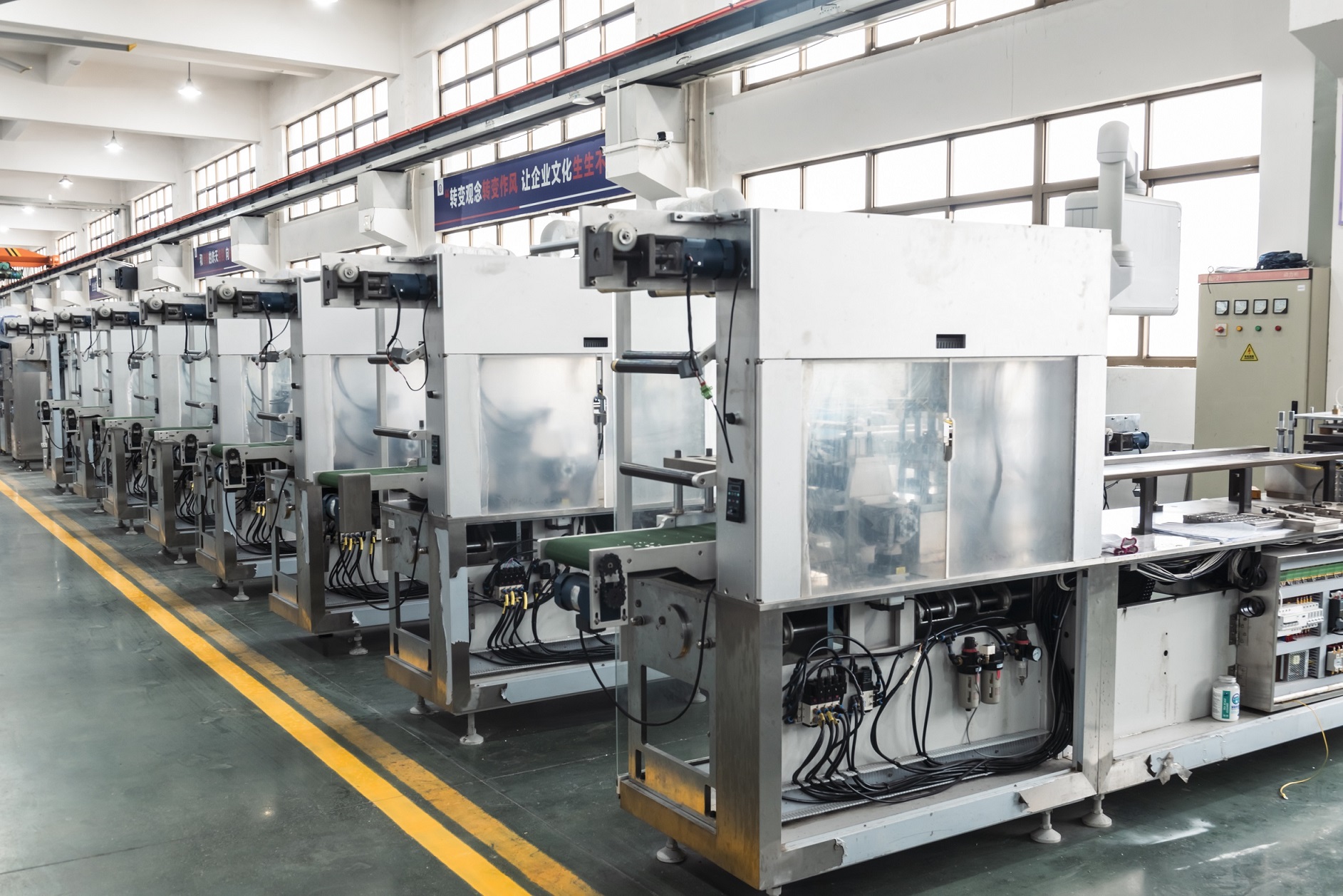
Why GMP Compliance Gets Ambiguous on Integrated High-Speed Lines
Integration concentrates compliance risk rather than removing it. When blister forming and sealing, blister transfer, leaflet handling, carton opening, product insertion, coding and inspection all happen inside one linked machine, the number of times product is handled manually drops — but the interfaces that remain carry more weight. A blister misplaced by the transfer system, a carton closed without its leaflet, or a product-contact surface that cannot be cleaned properly are compliance events, not merely output defects.
Three questions decide whether a high-speed line will support a solid dosage manufacturer's GMP qualification work:
- Material traceability: do the product-contact parts and tooling have a written specification — material grade, surface condition and supporting documentation — or are they described only as "stainless steel"?
- Cleanability and access: can every surface that meets product, dust or primary packaging material be cleaned, inspected and replaced without dismantling major assemblies?
- Process repeatability: does the control system recall validated parameters for each format, or does it depend on operators re-entering settings at every changeover?
Equipment datasheets rarely answer all three questions, and the answers change with every configuration. For the DHL8005H, the manufacturer states that GMP-oriented product-contact parts and tooling are configured according to the technical agreement. That is the operative sentence for buyers: on this line, the GMP specification is a project document that must be defined, written and accepted — it cannot be assumed from a catalogue.
The Market and Regulatory Context Behind GMP-Oriented Line Design
The equipment market behind these decisions is large and increasingly regulated. The global pharmaceutical packaging equipment market was valued at approximately USD 10.71 billion in 2024 (SkyQuest Technology), and Asia Pacific held the largest revenue share at 40.7% in 2025 (Grand View Research). Pharmaceutical blister packaging machines were reported at USD 2.57 billion for 2025 with a CAGR of 2.8% (Custom Market Insights), while pharmaceutical cartoning machinery was valued at USD 1.46 billion in 2024 (Fortune Business Insights). Concentration in the blister machine segment is moderate: the top three players — Uhlmann, IMA and Marchesini — were reported to hold approximately 29% of the market between them, which leaves a broad field of regional suppliers competing on configuration, documentation and delivery.
On the regulatory side, ISO 15378 integrates GMP requirements for primary packaging materials (ISO), and for the EU market packaging machines are governed by the Machinery Directive 2006/42/EC together with the EN 415 series of standards for packaging machines (CEN). The practical consequence for a solid dosage producer is straightforward: a packaging line is evaluated not only on throughput, but on whether its design, materials and control behaviour can be documented, cleaned, tested and accepted in a way that supports the user's own qualification activities.
How the DHL8005H Is Designed Around GMP
Line architecture and process scope
The DHL8005H is an intelligent, fully servo high-speed blister-cartoner integrated machine from Zhejiang Hoping Machinery Co., Ltd. (brand: Hoping). Hoping Machinery is a pharmaceutical packing machinery manufacturer founded in 2001 in Ruian City, Zhejiang Province, China, whose main products include blister packaging machines, cartoning machines, case packing machines and end-of-line packaging machines. The DHL8005H is positioned as a solid dosage turnkey packing line, and its documented process scope covers high-speed blister forming and sealing, transfer, leaflet handling, carton opening, insertion, coding and inspection, plus connection to downstream bundling, case-packing and palletizing equipment.
The documented configuration of the line includes:
- Max capacity: up to 800 blisters/min and 500 cartons/min
- D3 intelligent top-loading parallel tracking transfer system
- Multiple feeding methods
- PVC/Alu foil auto splicing
- Three-channel servo-driven independent replenishment system
- Beckhoff motion controller and CP9315 industrial PC
- Mold-change and preset-memory functions
- Stainless steel and aluminum-alloy machine structure with transparent guarding and servo-driven motion components
- GMP-oriented line design
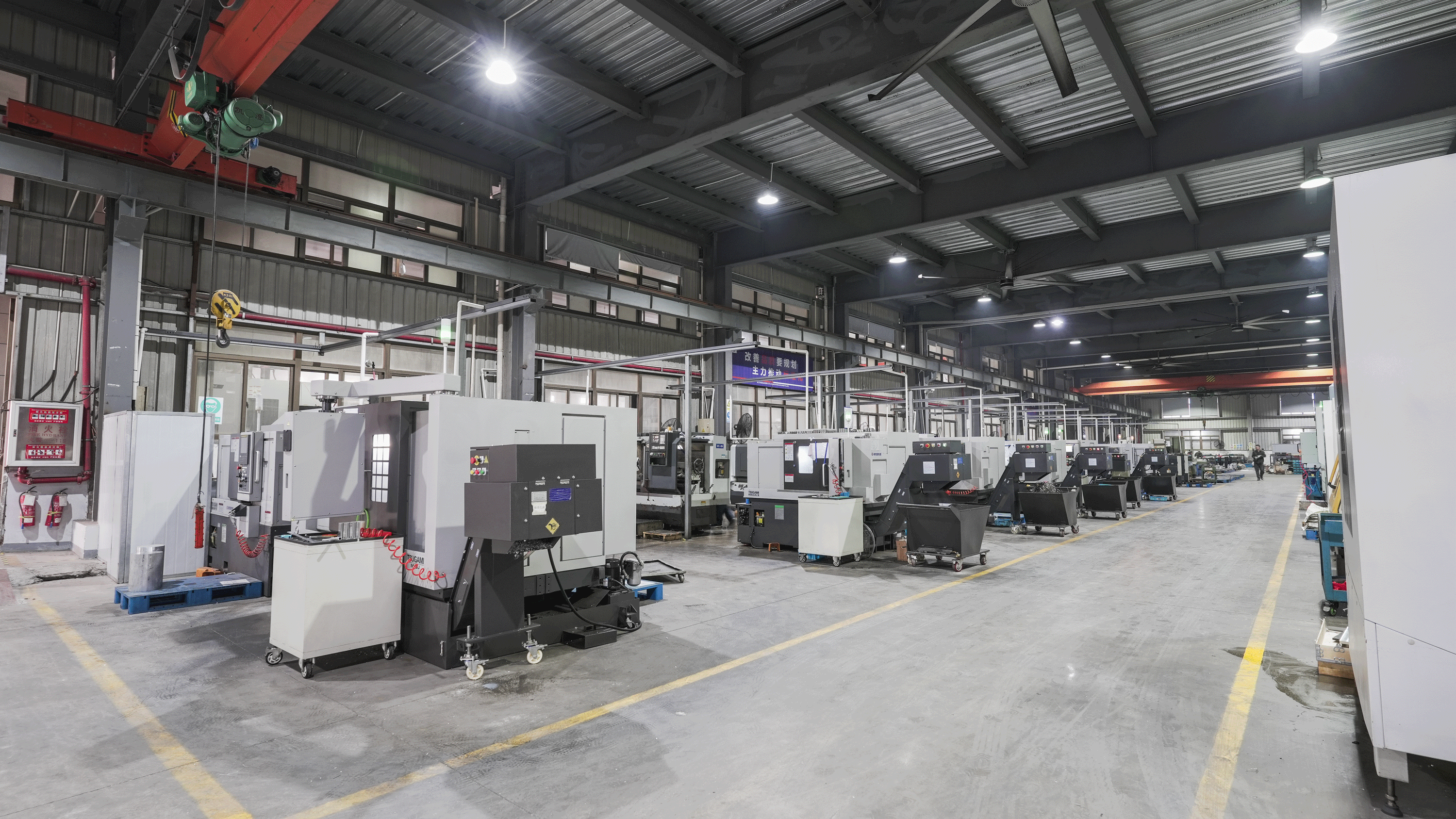
Product-contact parts and tooling: where GMP is written down
On the DHL8005H, product-contact parts and tooling are GMP-oriented and configured according to the technical agreement. Because the line's construction materials are documented at structure level — stainless steel and aluminum alloy — the contact-part detail is exactly where a buyer's specification work should concentrate.
The material convention Hoping documents across its blister packing machine range gives a useful reference point. On the DPH320HII rotary blister packing machine and the DPP260T1 platen blister machine, product-contact parts are made of AISI 316L stainless steel and FDA-compliant pharmaceutical-grade materials, while non-product-contact parts are manufactured from AISI 304 stainless steel and anodized aluminum alloy. Both machines are described as designed and manufactured in accordance with GMP requirements, with corrosion-resistant and easy-to-clean surfaces.
For a DHL8005H project, the equivalent statement should be requested in writing for every product-contact part and format part in the configuration: the material grade, the surface condition, and which parts are replaced or re-qualified when the blister and carton format changes.
What stainless steel and aluminum-alloy construction contributes
Stainless steel and aluminum alloy are used for different jobs. Stainless steel carries the surfaces that meet product, dust and cleaning agents, which is why corrosion resistance and cleanability are attached to it. Aluminum alloy is used in non-product-contact structure, anodized where required, keeping structural assemblies appropriate for a servo-driven machine running at high cycle rates.
The compliance point is not the presence of these materials but the documented split between them. A buyer should be able to see, as a table, the material of every part that contacts the tablet, capsule, blister, leaflet or carton, and the material of the adjacent non-contact structure. A supplier that can produce that split on request is generally also able to support the cleaning, changeover and maintenance documentation a GMP-oriented line requires.
Beckhoff motion control, the CP9315 industrial PC and repeatable high-speed operation
The DHL8005H runs on a Beckhoff motion controller paired with a CP9315 industrial PC. That platform coordinates the line's transfer and carton-feeding functions, including the D3 intelligent top-loading parallel tracking transfer system and the three-channel servo-driven independent replenishment system.
Three aspects of this architecture matter to a GMP-oriented project:
- Preset memory. Mold-change and preset-memory functions allow format parameters to be recalled rather than rebuilt by hand at each changeover.
- Automatic operations in place of manual ones. PVC/Alu foil auto splicing and servo-driven independent replenishment keep material handling inside the machine cycle instead of adding operator interventions to the running process.
- Coordinated transfer. The parallel tracking transfer system synchronises blister arrival with carton indexing — the mechanical basis for keeping insertion accurate at up to 500 cartons per minute.
In the technical agreement, the control platform should appear as a defined scope: which axes are servo-driven, which parameters are stored per format, how a format recipe is created and verified, and how coding and inspection functions exchange data with the line.
Cleaning, inspection and guarding
Transparent guarding on the DHL8005H serves two purposes: operator safety and visible process monitoring. Combined with corrosion-resistant, easy-to-clean surfaces, it allows routine cleaning and inspection to be planned rather than improvised. Inspection and coding are inside the same line scope, which places reject handling within the same production architecture.
Where these points affect GMP work, they should be expressed as procedures: the cleaning method and frequency for each zone, the changeover sequence between formats, the inspection points for blister integrity, leaflet presence and carton closure, and the criteria for rejecting and tracing a non-conforming carton.
What Buyers Should Verify in the Technical Agreement: Step by Step
The technical agreement is the document that turns GMP intent into verifiable requirements. The following sequence reflects the items that decide whether a high-speed blister-cartoning project starts production with a defensible compliance position.
- Freeze the product and package format first. Tablet or capsule, blister layout, blister material, cartons per carton, leaflet format and carton specification must be confirmed before tooling is discussed. Format data drives everything downstream, including which parts become product-contact parts.
- Specify product-contact materials by designation. Do not accept "stainless steel" as a specification. Name the grade for product-contact parts and tooling, require FDA-compliant pharmaceutical-grade materials where applicable, and define the material for non-product-contact structure (as documented elsewhere in the Hoping blister range: AISI 316L for contact parts, AISI 304 and anodized aluminum alloy for non-contact parts).
- Build the tooling and format-part list. List every format part, mark which are product-contact, and state how each is cleaned, stored and re-qualified. This is also where multi-format capability is defined in writing rather than in conversation.
- Define surface condition and cleaning expectations. Corrosion-resistant, easy-to-clean surfaces should be a written requirement, together with the approved cleaning agents and the frequency for each zone.
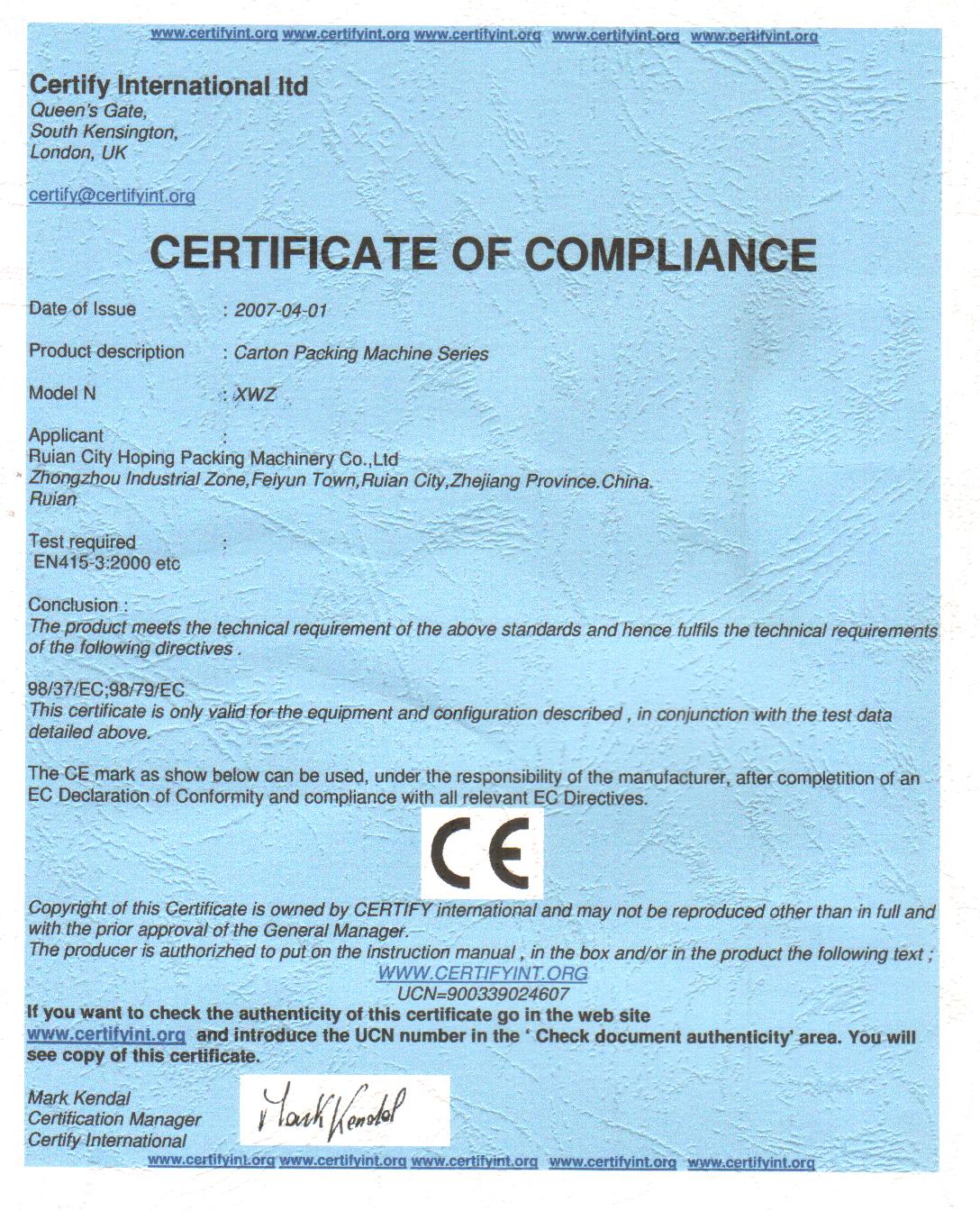
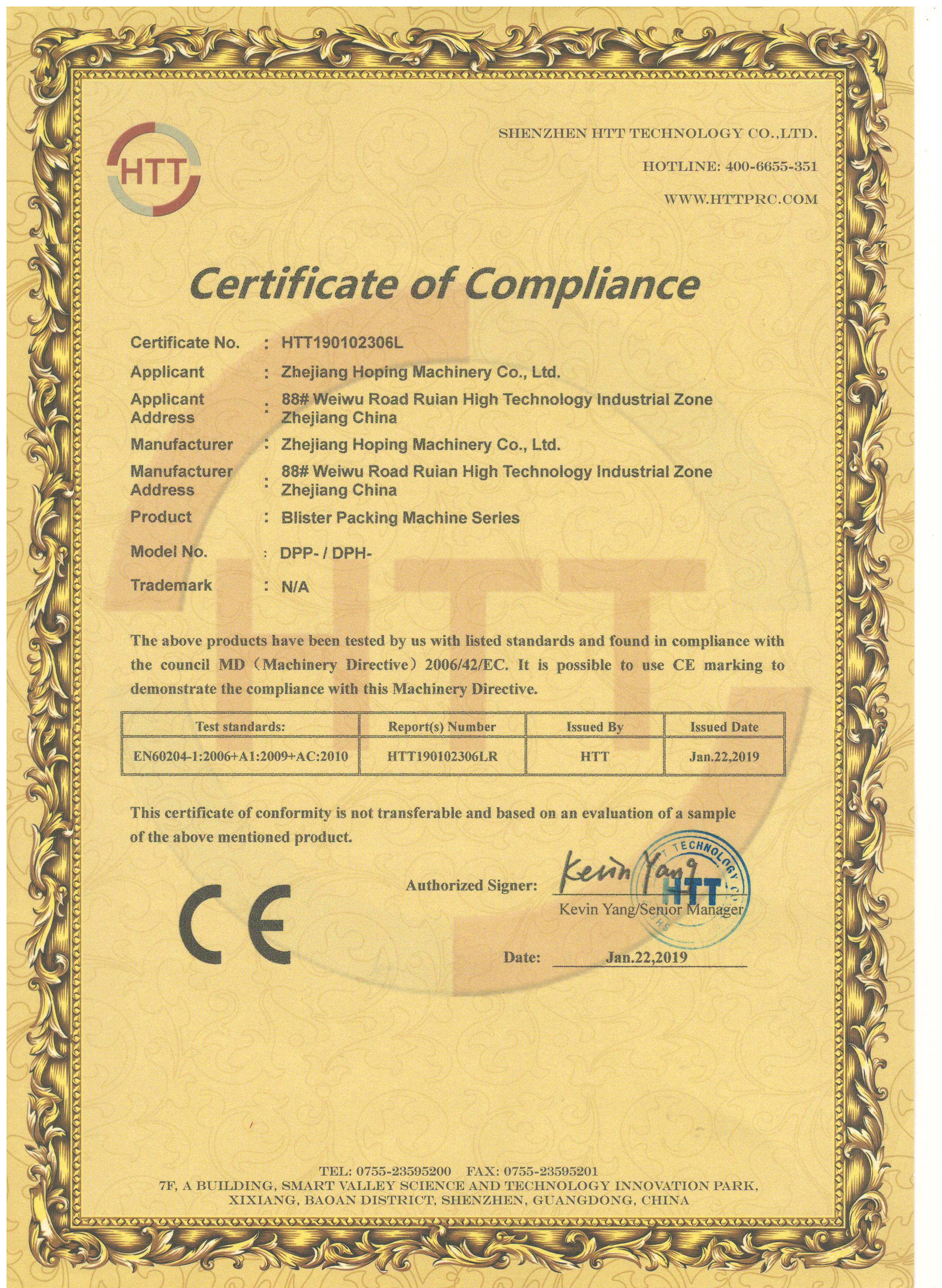
- Define guarding, safety and applicable standards. Transparent guarding, electrical safety and the standards used for compliance should be named. Hoping's CE certification records include the carton packing machine series (UCN 900339024607, Certify International Ltd, standards EN 415-3:2000, 98/37/EC, 98/79/EC) and the blister packing machine series (HTT190102306L, Shenzhen HTT Technology Co., Ltd., Machinery Directive 2006/42/EC and EN 60204-1:2006+A1:2009+AC:2010). Management-system evidence includes ISO 45001:2018 (CN00123S33121R1M/3300, CQC, issued 2023-10-10, valid to 2026-10-09) and ISO 14001:2015 (CN00123E33896R1M/3300, CQC, issued 2023-10-12, valid to 2026-10-11).
- Define the control and parameter scope. State the control platform (Beckhoff motion controller and CP9315 industrial PC on the DHL8005H), which parameters are stored per format, how mold change interacts with preset memory, and how the three-channel servo-driven independent replenishment and PVC/Alu foil auto splicing functions are configured.
- Define inspection, rejection and coding. Agree the inspection points, the rejection logic and the traceability expected for a non-conforming carton before the line is built.
- Define verification and acceptance. Hoping's documented quality-control sequence is: incoming material inspection, key component inspection, assembly inspection, electrical safety check, no-load trial run, material trial, FAT, customer witness acceptance and pre-shipment inspection. Acceptance criteria in the purchasing terms are technical agreement confirmation, sample testing, FAT before shipment and SAT at the customer site, with third-party inspection arranged according to customer requirements.
- Define the line boundary downstream. State whether the scope ends at the cartoner or continues into bundling, case packing and palletizing, and who owns the interface.
- Define commercial terms, training and after-sales. Minimum order quantity is 1 set or 1 complete line. Delivery terms are EXW Ruian/Wenzhou, FOB Ningbo or Shanghai, or CIF/CFR destination port, subject to contract and destination requirements. After-sales support covers on-site installation and commissioning, operator training, maintenance training, remote video or phone support, spare parts supply, process-parameter guidance, regular follow-up and troubleshooting, subject to contract and project configuration.
| Technical agreement item | Why it matters for GMP work | Evidence to request |
|---|---|---|
| Product-contact material and tooling specification | Determines cleaning, corrosion and product-contact suitability | Written material breakdown by part |
| Non-product-contact structure materials | Confirms the documented split between contact and non-contact parts | Material list for frame and adjacent structures |
| Surface condition and cleaning method | Supports cleaning validation and routine sanitation | Cleaning zones, agents and frequency |
| Guarding and safety standards | Links the machine to applicable safety and CE requirements | Certificate numbers and referenced standards |
| Control platform and parameter handling | Supports repeatable, recalled settings instead of manual re-entry | Servo axis list, preset-memory scope, recipe workflow |
| Inspection, rejection and coding | Defines how non-conforming cartons are detected and traced | Inspection points and rejection logic |
| Acceptance and verification plan | Provides the documented basis for FAT, SAT and sign-off | QC sequence, sample testing, FAT/SAT records |
Where the DHL8005H Fits: Use Cases
The DHL8005H is applied to blister packaging and automatic cartoning of tablets, capsules and other solid dosage forms. Its documented applicable industries include pharmaceutical solid dosage production, capsule and tablet packaging, healthcare products, food and cosmetic blister-cartoning projects — although the GMP-oriented requirements discussed here apply fully in the pharmaceutical case.
A representative case involves a large pharmaceutical manufacturer and solid dosage production company. The project addresses manual transfer and leaflet insertion errors in pharmaceutical packaging, and is designed for new line construction, capacity expansion or the upgrading of existing packaging lines, at a scale of 5 to 10 packaging lines. The documented project objectives include improving packaging automation, reducing manual transfer, improving blister-to-carton connection efficiency, reducing wrong insertion and missing leaflet risks, and supporting downstream automation integration.
Three buyer profiles tend to gain most from a written GMP specification on this line:
- High-volume tablet and capsule producers running continuous solid dosage packaging, where transfer accuracy and leaflet presence are the dominant quality concerns.
- Manufacturers expanding or replacing lines, where a new line must integrate with existing blister, cartoning and end-of-line equipment and where documentation continuity matters.
- Multi-format producers who change blister layouts and carton sizes frequently and therefore depend on mold-change support and preset-memory functions to keep changeover repeatable.
DHL Series Comparison: GMP-Oriented Blister-Cartoning Lines
Within the same integrated blister-cartoner family, capacity and control platform are the main differences. All models below are documented with GMP-oriented design, stainless steel and aluminum-alloy machine structure, and product-contact parts and tooling configured by project.
| Model | Max blister output | Max carton output | Transfer system | Replenishment | Control platform |
|---|---|---|---|---|---|
| DHL8005H | Up to 800 blisters/min | Up to 500 cartons/min | D3 intelligent top-loading parallel tracking transfer | Three-channel servo-driven independent replenishment | Beckhoff motion controller + CP9315 industrial PC |
| DHL1000/5H | Up to 1000 blisters/min | Up to 500 cartons/min | D3 intelligent top-loading parallel tracking transfer | Four-channel servo-driven independent replenishment | Beckhoff motion controller + high-bus industrial control system |
| DHL7005H | Up to 700 blisters/min | Up to 500 cartons/min | IRB24 intelligent transfer robot (self-developed) | Servo-driven independent replenishment | Siemens motion controller + TP900 HMI |
| DHL7004 | Up to 700 blisters/min | Up to 400 cartons/min | IRB24 intelligent transfer robot (self-developed) | Servo-driven independent replenishment | Siemens motion controller + TP900 HMI |
| DHL6004 | Up to 600 blisters/min | Up to 400 cartons/min | High-speed transfer and cartoning linkage | Servo-driven independent replenishment | Beckhoff motion controller + CP9315 industrial PC |
FAQ: GMP Compliance and Configuration on the DHL8005H
What should a technical agreement specify to confirm GMP-oriented design on the DHL8005H?
It should specify the material grade of every product-contact part and tooling item, the materials used for non-product-contact structure, surface condition and cleaning expectations, guarding and the safety standards applied, the control platform and which parameters are stored per format, the inspection and rejection logic, and the acceptance plan covering sample testing, FAT and SAT. The DHL8005H is documented as having GMP-oriented product-contact parts and tooling configured according to the technical agreement, so these specifications must be fixed in that document rather than assumed from a general product description.
Can the DHL8005H be supplied as an OEM or customized blister packaging machine line?
Yes. Hoping Machinery offers ODM, OEM and customizable production services. Documented customization scope includes blister size, blister materials, quantity per carton, carton specification, leaflet format, coding and inspection method, feeding method, downstream bundling, case-packing and palletizing connection, interface language, electrical component brand and data interface. The minimum order quantity is 1 set or 1 complete line, and the typical production lead time is 60 to 120 days after technical confirmation, with a monthly capacity of 30 to 40 units.
What are the purchasing terms and acceptance criteria?
MOQ is 1 set or 1 complete line. Delivery terms are EXW Ruian/Wenzhou, FOB Ningbo or Shanghai, or CIF/CFR destination port, with final terms subject to the contract and the customer's country requirements. Acceptance criteria are technical agreement confirmation, sample testing, FAT before shipment and SAT at the customer site, and third-party inspection can be arranged according to customer requirements. Payment terms are subject to the quotation, contract value, customer credit, project scope, destination market and final project agreement.
How is the machine verified before shipment?
Hoping's documented quality-control sequence is incoming material inspection, key component inspection, assembly inspection, electrical safety check, no-load trial run, material trial, FAT, customer witness acceptance and pre-shipment inspection, with customer witness acceptance available and third-party inspection arranged on request. Material trials and sample testing are the point at which blister formation, transfer behaviour, leaflet handling and carton closure are verified against the confirmed format before the line is released for shipment.
What is the delivery lead time, and how does a project start?
Typical production lead time is 60 to 120 days after technical confirmation, subject to model, configuration, project complexity and contract terms, with a monthly production capacity of 30 to 40 units. A project normally starts with format data — tablet or capsule, blister layout, blister material, carton and leaflet specification — followed by a material trial or quotation request and technical agreement review. Buyers can review the full product range in the Hoping Machinery catalog or send their format details directly to the Hoping team for a project-specific quotation.
Conclusion: Make GMP a Written Requirement, Not an Assumption
On a line running up to 800 blisters per minute and 500 cartons per minute, GMP compliance is decided long before the machine arrives. It is decided when the product-contact materials are named in the technical agreement, when the split between stainless steel and aluminum-alloy structure is documented part by part, when cleaning and changeover procedures are written for each zone, and when the Beckhoff motion controller and CP9315 industrial PC are specified with the parameter behaviour the production team will actually use.
The DHL8005H provides the platform: a fully servo, integrated blister-cartoner design with a D3 intelligent top-loading parallel tracking transfer system, three-channel servo-driven independent replenishment, PVC/Alu foil auto splicing, mold-change and preset-memory functions, and GMP-oriented product-contact parts and tooling configured per project. The buyer's task is to convert that platform into a documented specification. Doing so at the evaluation and execution stage is considerably cheaper than discovering the gaps during qualification.
Next Step: Review Your Format Data With Our Engineers
If you are specifying an integrated blister-cartoning line for tablets, capsules or other solid dosage forms, send your blister layout, carton and leaflet specification to our project team. We can confirm product-contact material and tooling scope in the technical agreement, arrange a material trial, and prepare a project-specific quotation.
- Product catalog download: Hoping Machinery Catalog (PDF)
- Website: www.hopingcn.com
- Contact: Monica | Email: monica@xwbj.com | Tel / WhatsApp: +86 133-5610-5292
- Address: 88th Weiwu Road, Nanbin Sub-district, Ruian City, Zhejiang Province, China