
Distributed Control vs Central Industrial PC in Blister-Cartoning Lines
When a pharmaceutical manufacturer specifies a blister-cartoning line with a target of 800 blisters per minute, the control architecture decision arrives long before the purchase order does. Two machines with nearly identical datasheets can behave very differently once they run continuously, depending on how the blister former, the transfer mechanism and the cartoner share control authority.
This comparison examines two common approaches to blister-cartoning line design: distributed control, in which each machine section runs its own controller, and central industrial PC control, in which a single industrial PC coordinates motion across the whole line. It also examines how the Beckhoff motion controller plus CP9315 industrial PC configuration used on HOPING's high-speed platforms produces integrated control, and how that architecture matches an 800 blisters/min performance target.
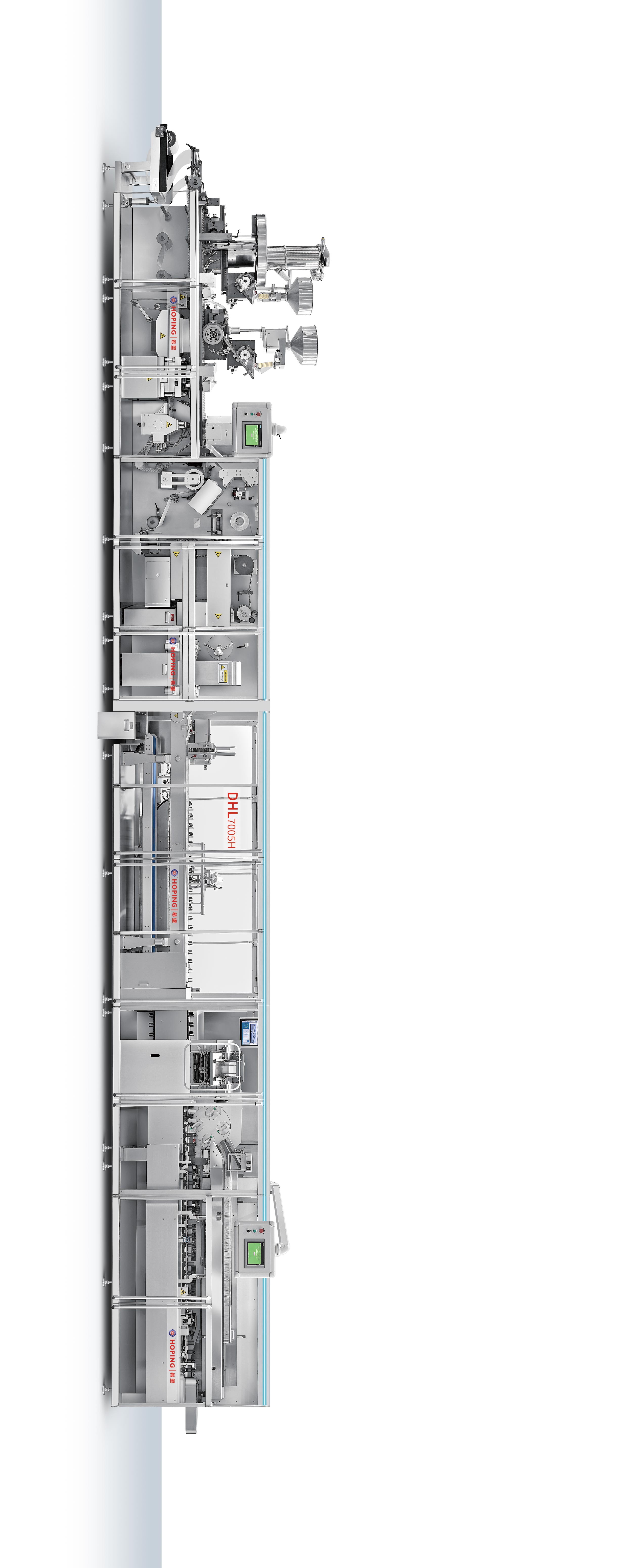
Problem Definition: Where the Architecture Decision Becomes Visible
At 800 blisters per minute, the blister machine produces roughly thirteen blister cards every second. The cartoner must receive those cards at the correct pitch, fold and insert a leaflet, open a carton, insert the blister, apply batch data and reject faulty units without backing up product on the blister side. Three separate controllers - one for the blister former, one for the transfer robot, one for the cartoner - require a reliable communication layer and tight cycle synchronisation across machines. When synchronisation lags, the line produces micro-stops, mis-inserts or rising rejection counts.
The architecture decision is therefore not a theoretical simplification. It determines whether the line can hold its rated output, how long a format change takes, and how easily the line can report data upward into a supervisory or quality system. For buyers in the Research and Evaluation stage, the control architecture is part of the technical evaluation package, not an afterthought.
Industry Background: Integrated Control Is Moving Into the Specification
Pharmaceutical packaging machinery requirements have moved past pure mechanical speed. Trade media reporting PMMI content states that pharmaceutical manufacturers are turning toward digitised data collection and integrated solutions to meet regulations and improve visibility (SRC-0019). That trend places the control layer inside the purchase specification rather than in the aftersales add-on column.
The blister segment itself continues to expand. A commercial research publisher valued the global blister packaging machine pharmaceutical market at USD 2.57 billion in 2025 and identified Asia-Pacific as the fastest-growing region, with an 8.87% CAGR to 2031 (SRC-0001, SRC-0004). Horizontal cartoning systems, the format typically paired with a blister-cartoning line, held 70.12% of the cartoning machine market share in 2024 (SRC-0004). These figures describe the demand environment; the practical takeaway is that rising output targets and tighter data expectations push buyers toward specifying integrated control.
At the equipment level, HOPING presents blister packaging, cartoning, inspection and end-of-line automation as one integrated pharmaceutical packaging process (SRC-0011), and its linerange covers blister packing, cartoning, flow packing, case packing and palletizing equipment (SRC-0013). That positioning reflects the shift from standalone machines to linked lines, which is precisely where the architecture comparison matters.
Detailed Solution: Two Approaches to Blister-Cartoning Control
Both architectures coordinate motion between blister forming, sealing, inspection, transfer, leaflet handling, cartoning and downstream equipment. The difference is where the coordinating logic sits.
Architecture A - Distributed Control
In a distributed design, each major machine section carries its own controller. The blister former, the transfer unit and the cartoner run local logic and exchange status and interlock signals over a communication bus. This approach is often easier to commission machine by machine and can allow staged upgrades across a long horizon. The trade-off is that line-level synchronisation depends on how precisely each controller tracks a shared bus clock. As speed rises, cross-controller cycle-time differences become more visible, and any weakness in how events are shared shows up as jitter or missed handoffs rather than as a clean fault.
Architecture B - Central Industrial PC and the Beckhoff + CP9315 Configuration
In a central architecture, one industrial PC acts as the line-level coordinator alongside a dedicated motion controller. This is the pattern used on HOPING's DHL8005H platform, whose published specification lists a Beckhoff motion controller and CP9315 industrial PC as the control backbone, with a maximum capacity of up to 800 blisters per minute and 500 cartons per minute (DHL8005H specification).
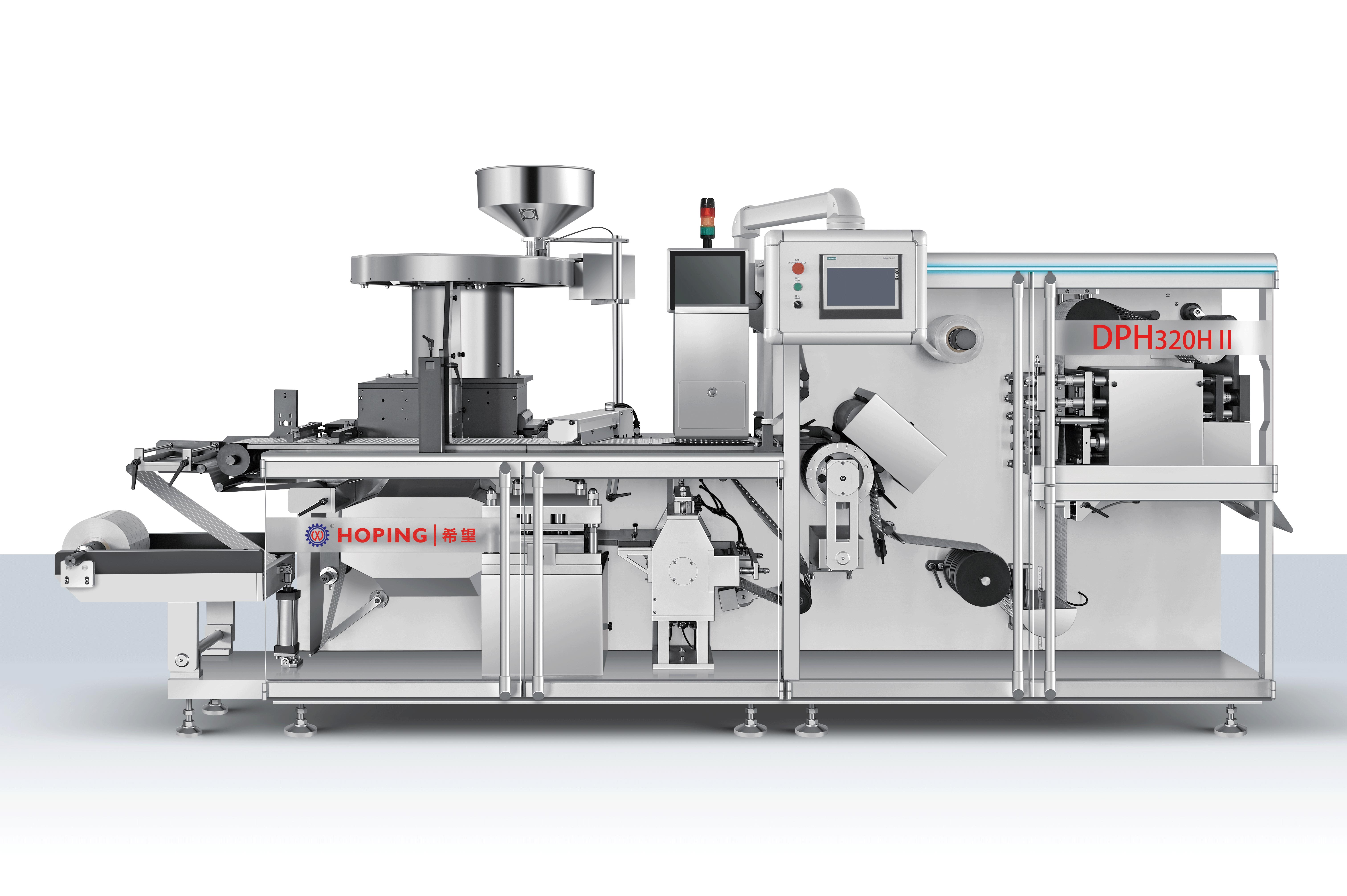
The CP9315 industrial PC becomes the single programming authority for the line. Motion is planned at line level, and the Beckhoff controller distributes synchronised pulses across the blister, transfer and cartoning stations. Because recipes, format-change parameters and alarms live in one place, an operator can run the line from a single point instead of duplicating settings across multiple controllers. The DHL8005H specification also lists a D3 intelligent top-loading parallel tracking transfer system, three-channel servo-driven independent replenishment, PVC / Alu foil auto splicing, and mould-change and preset-memory functions, all described as part of a GMP-oriented line design.
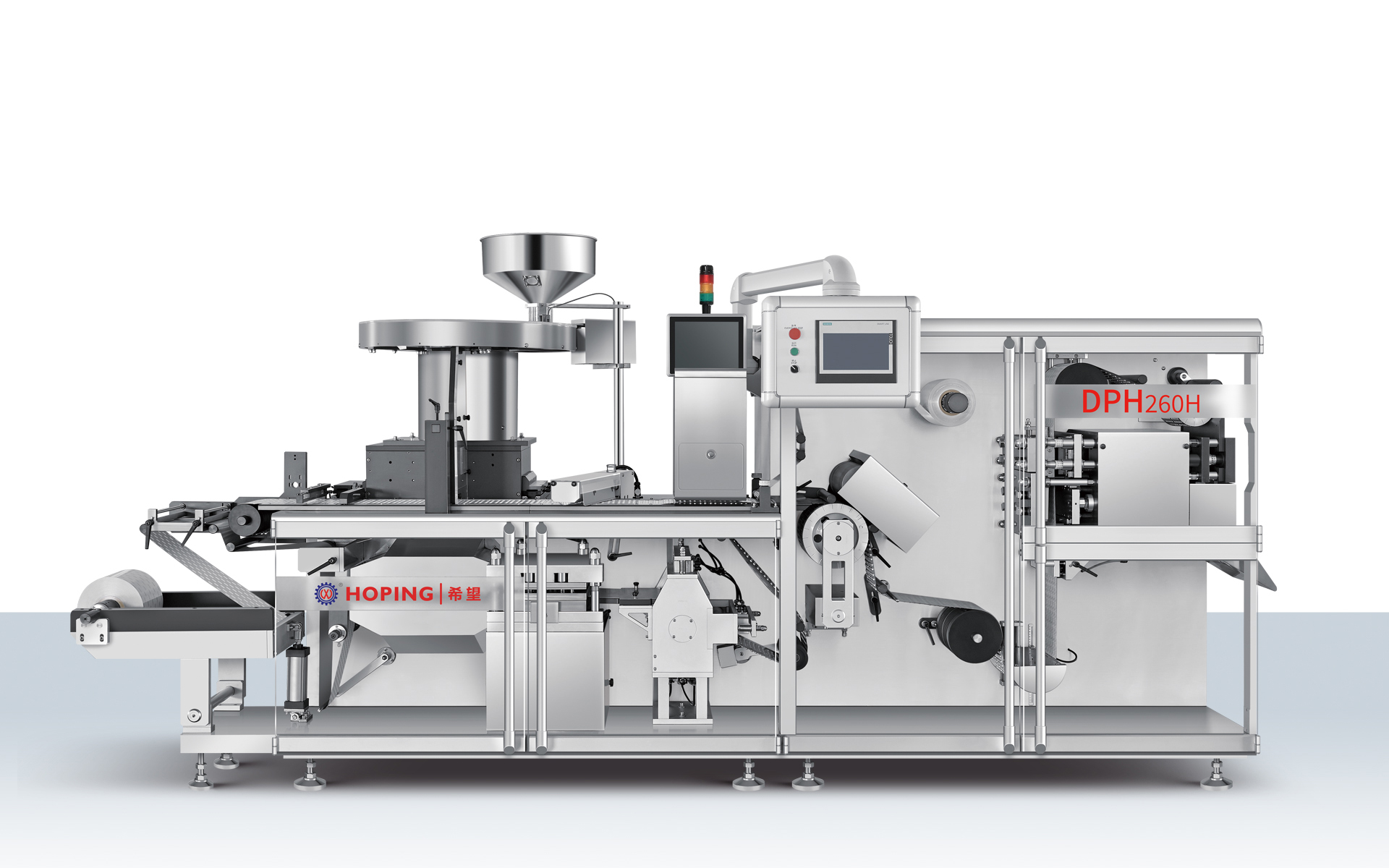
HOPING applies the same Beckhoff controller plus CP9315 industrial PC combination across additional high-speed platforms including the DHL6004, the IXW600 and the IXW800, while the higher-capacity DHL1000/5H specification lists a Beckhoff motion controller with a high-bus industrial control system. This consistency matters to buyers evaluating a family of lines, because recipes and operating logic transfer between models rather than requiring fresh training each time.
How the 800 blisters/min Target Separates the Two Approaches
A stated 800 blisters/min capability is an engineering constraint, not a marketing figure. At that output, the transfer system must move every blister card at high frequency without deforming the pocket or losing track of the card. A D3 top-loading parallel tracking transfer combined with three-channel servo-driven independent replenishment only works cleanly when the transfer, replenishment and cartoning stages run on the same cycle clock. Controllers that are loosely coupled over a bus commonly introduce the millisecond-level jitter that drives intermittent micro-stops at speed. This is why buyers targeting 800 blisters/min typically specify a central industrial PC architecture rather than a loosely coupled distributed one.
Practical note: HOPING's published packaging-line page reports a maximum of 1,000 blisters per minute and 500 boxes per minute for a line configuration, while the DHL8005H platform specification states 800 blisters per minute and 500 cartons per minute. Maximum stated outputs are nominal and should be confirmed against format, station count and operating conditions during factory acceptance testing.
Step-by-Step Breakdown: How to Evaluate Either Architecture
- Fix the output target and the format. State the blisters/min target alongside blister dimensions, tablets or capsules per blister, leaflet format and carton size. Every architecture conversation starts from these numbers.
- Map the line into control zones. List blister forming, filling, sealing, inspection, transfer, leaflet folding, carton opening, blister insertion, coding and rejection. Decide whether they sit in one control domain or several.
- Test the synchronisation requirement against the target. At 800 blisters/min, locking the zones to one cycle matters. Ask the manufacturer to describe the synchronisation timebase and how it handles speed transients during start-up or replenishment.
- Review replenishment and format-change strategy. On the DHL8005H, three-channel servo-driven independent replenishment is one example of how the line handles interruption in the product feed path without stopping the blister machine. Ask how many replenishment channels are offered and how they behave during a format change.
- Audit the changeover procedure. Mould-change support and preset-memory functions on the same platform indicate that format parameters can be recalled from a single interface instead of being re-keyed at each machine. Request the actual changeover sequence and target changeover time.
- Inspect data and documentation. Ask about recipe storage, alarm history, audit trail and how the control layer interfaces with an ERP or MES environment. HOPING's capability documentation lists ERP/MES data interfaces as a project-configuration option, so the interface should be fixed inside the project scope rather than assumed.
- Confirm acceptance and support scope. Ask the manufacturer to spell out incoming material inspection, key component inspection, electrical safety checks, no-load trial run, material trial and FAT arrangements, together with who covers on-site commissioning.
Use Cases: Where Each Architecture Fits
HOPING positions its blister-cartoning platforms for several project types, and each one carries a slightly different control-architecture preference. The scenarios below follow the company's described application scope: new solid dosage blister packaging lines, existing packaging line upgrades, high-capacity expansion, intelligent packaging workshop retrofits, and blister-cartoning-bundling / case-packing downstream integration projects.
- New solid dosage blister packaging line. A new 800 blisters/min facility has no legacy control layer to preserve, so full-line integration can be designed in from day one. Central IPC is the natural fit.
- Existing packaging line upgrade. When the blister former stays but the cartoner or downstream equipment is being brought onto a single control layer, a controller-integration programme can unify the line while retaining existing machines.
- High-capacity expansion. Adding an 800 blisters/min channel typically requires transfer and replenishment to operate in lockstep. A central architecture keeps that synchronisation isolated from the rest of the plant.
- Intelligent packaging workshop retrofit. When a plant is moving data collection upward from equipment level to management level, centralised recipes and alarm handling at the IPC layer simplify the handoff between shop floor and quality systems.
- Blister-cartoning-bundling / case-packing integration. Where the line is extended into stretch banding, case packing or palletizing, a single controller allows those stations to share one clock rather than each running locally. HOPING's XWK4060 stretch bander, XWK Series case packing machine and ICP12 case packing and palletizing combined machine are the downstream modules typically referenced in these projects.
Comparison Table
| Dimension | Distributed Control | Central Industrial PC (Beckhoff motion controller + CP9315) |
|---|---|---|
| Line-level coordination | Each machine controller runs local logic and coordinates over a communication bus | One industrial PC coordinates the motion controller; line-level logic holds authority |
| Fit with 800 blisters/min target | Requires careful timebase alignment; latency and jitter risk rises with speed | Supports up to 800 blisters/min and 500 cartons/min on the DHL8005H specification |
| Transfer and replenishment handling | Transfer and replenishment interlocked through shared signals | D3 top-loading parallel tracking transfer with three-channel servo-driven independent replenishment |
| Format change | Parameters adjusted at each section | Mould-change support with preset-memory recalled centrally |
| Data, recipes and alarms | Data may be scattered across controllers | Recipes, alarms and audit data held where an ERP/MES interface can be configured |
| Material supply continuity | Manual intervention typically required when a roll ends | PVC / Alu foil auto splicing listed on the platform |
| Expansion path | Suited to adding machines incrementally | Suited to new high-speed lines and full-line replacement |
| Commissioning style | Machine by machine, line-level integration later | Line-level integration earlier, aligned with FAT scope |
| Typical project profile | Mid-speed lines, staged retrofits | High-speed blister-cartoning, export projects, data-conscious plants |
FAQ
What GMP and documentation expectations apply to a pharmaceutical packaging machine manufacturer for blister lines?
ISO 15378:2017 specifies Good Manufacturing Practice requirements for primary packaging materials for medicinal products (ISO / Applus+ Laboratories, SRC-0003). The U.S. FDA publishes guidance on current Good Manufacturing Practice covering production and process controls and states that cGMP establishes the foundation for quality pharmaceuticals through regulatory standards (FDA, SRC-0006, SRC-0016). At equipment level, buyers should request the documentation package, GMP-oriented design features, cleanability provisions and validation support. For platforms such as the DHL8005H, the published specification describes a GMP-oriented line design.
Does an 800 blisters/min blister-cartoning line require a central industrial PC, or is distributed control enough?
At 800 blisters/min, the three sections of the line - blister, transfer and cartoning - need to run on a shared cycle. On the HOPING platform, the DHL8005H reaches up to 800 blisters per minute and 500 cartons per minute using a Beckhoff motion controller plus CP9315 industrial PC as the control backbone (DHL8005H specification). Distributed control remains workable on mid-speed lines or staged retrofits, but buyers whose target is 800 blisters/min generally specify a central IPC architecture to keep transfer and replenishment synchronised.
How does the Beckhoff motion controller plus CP9315 configuration compare with a distributed layout?
Both can drive a blister-cartoning line, and the choice is not absolute. The Beckhoff motion controller plus CP9315 industrial PC provides a single programming layer for line motion, recipes and alarms, which is useful when format memory, data collection from one point and an optional ERP/MES interface are in scope. A distributed layout can be attractive when multiple machines are already installed and need to be commissioned separately. HOPING applies the Beckhoff plus CP9315 combination across the DHL8005H, DHL6004, IXW600 and IXW800 platforms, which keeps recipe logic consistent across a line family.
What verification support should a pharmaceutical packaging machine manufacturer provide?
For HOPING, quality control covers incoming material inspection, key component inspection, assembly inspection, electrical safety check, no-load trial run, material trial, FAT, customer witness acceptance and pre-shipment inspection. Buyers should fix this scope, the acceptance criteria and the responsibility for on-site commissioning inside the contract or technical agreement. Confirming which FAT document set will be used - and whether customer witness acceptance is included - removes a common source of ambiguity during procurement.
How should lead time and after-sales support be factored into a blister-cartoning line purchase?
HOPING states that lead time is typically 60 to 120 days after technical confirmation, with the final lead time subject to model, configuration, project complexity and contract terms, and a minimum order quantity of one set or one complete line. After-sales coverage includes on-site installation and commissioning, operator and maintenance training, remote video or phone support, spare parts supply, process-parameter guidance and regular follow-up, subject to contract and project configuration. Buyers who want to align these terms with their own line plan can review the full product catalogue at Hoping Machinery Catalog or reach the team through hopingcn.com.
Conclusion
The choice between distributed control and a central industrial PC is a design decision that follows from the output target. On a line aiming at 800 blisters/min, the transfer, replenishment and cartoning stages must share a cycle clock, which is why an integrated architecture such as the Beckhoff motion controller plus CP9315 industrial PC appears on platforms like the DHL8005H. Distributed control still has a place in mid-speed and staged-upgrade projects, where machine-by-machine commissioning matters more than line-level lockstep.
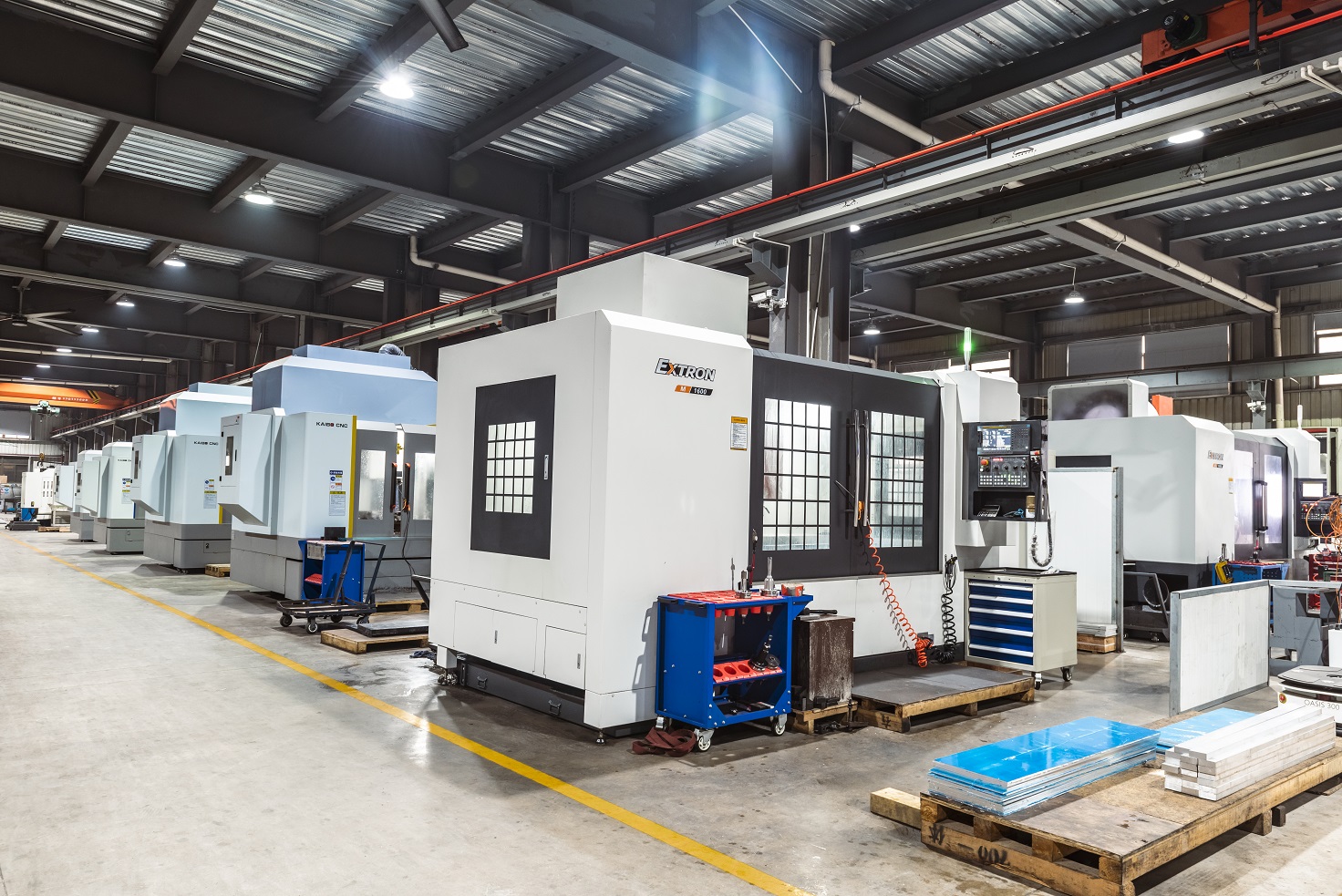
For buyers in the Research and Evaluation stage, the practical path is to fix the format and output target, map the control zones, ask the manufacturer to explain the synchronisation timebase, and confirm changeover, data and acceptance scope in writing. Zhejiang Hoping Machinery Co., Ltd., established in 2001 and operating from a 28,800 square metre facility in Ruian, Zhejiang Province, China, builds blister packaging machines, cartoners, case packers and end-of-line packaging equipment and supplies them to markets including Southeast Asia, the Middle East, Eastern Europe, South America and Africa.
Next Step
If the line you are comparing needs to hold an 800 blisters/min target with integrated control, the fastest way to test fit is to send your blister format, carton size and leaflet specification to the HOPING team. You can request a technical discussion, sample validation or a quotation for a blister-cartoning line configured around your project.
Website: www.hopingcn.com | Email: monica@xwbj.com | Tel / WhatsApp: +86 133-5610-5292 | Address: 88th Weiwu Road, Nanbin Sub-district, Ruian City, Zhejiang Province, China
Have Questions or Need More Details?
Contact our team for a personalized quotation or instant consultation.
Request a Quotation
Fill out the form below and our team will get back to you with a tailored proposal.
WhatsApp Direct Chat
Prefer to chat in real-time? Message us on WhatsApp for instant assistance & quick answers.
- Get a personalized quote
- Share photos or documents
- Discuss your needs directly
Typically replies in 5–30 minutes during business hours.