
From Regional Rules to Line Documentation: A Blister-Cartoning Compliance Guide
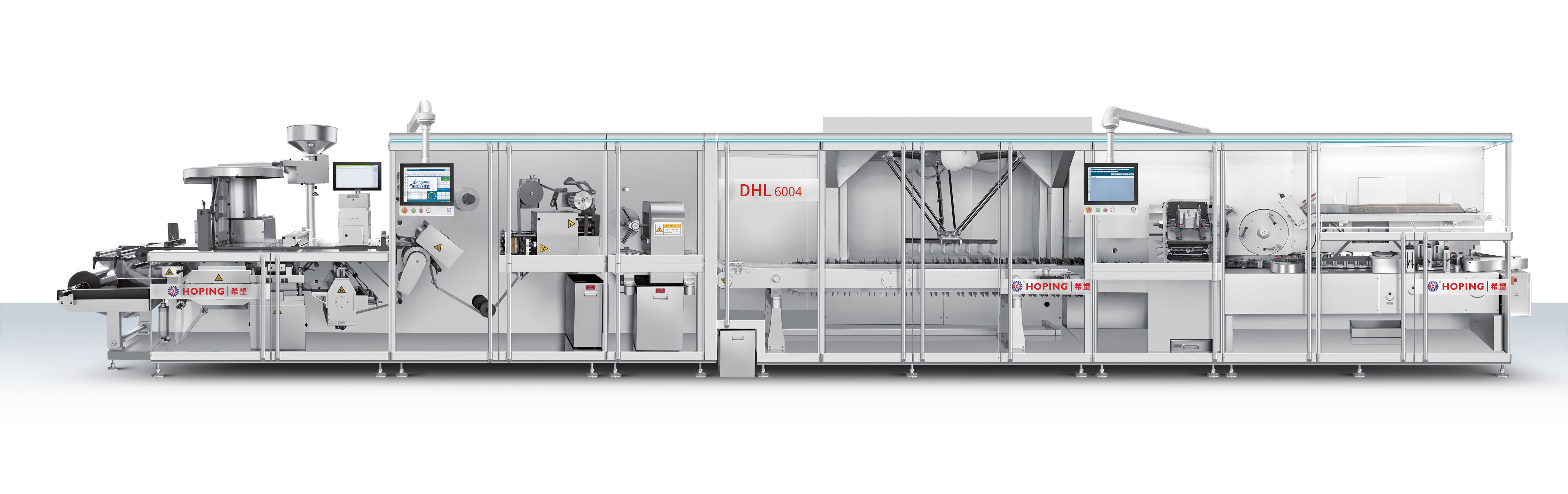
Hoping DHL6004 automatic blister-cartoning line — one of the DHL-series integrated lines referenced in this guide.
Regional pharmaceutical packaging requirements and machine documentation are not the same document, and the distance between them is where compliance projects lose time. A rule such as ISO 15378, or a regional machinery regulation, defines what the packaged product and the production process must satisfy. It does not define which stainless steel grade is used at the forming station, which controller runs the line, or which document proves the tooling was built the way the buyer assumed.
This guide closes that gap. It sets out a practical way to convert a regional requirement into a line specification that can be checked, and to request evidence rather than assume it. The worked example is the DHL8005H automatic blister-cartoning line built by Zhejiang Hoping Machinery Co., Ltd., a pharmaceutical packaging machinery manufacturer established in 2001 in Ruian City, Zhejiang Province, China, whose main products include blister packaging machines, cartoning machines, case packing machines and end-of-line packaging machines for pharmaceutical, food, electronics and cosmetics industries.
The Problem: A Regional Rule Is Not a Line Specification
Compliance rules are written for products and facilities, not for purchase orders. They answer product-protection, process-control and record-traceability questions. A blister-cartoning line specification has to answer a different set of questions: which material touches the tablet, how the blister format is defined, how the carton is closed, how the batch code is applied, and what happens to a rejected blister. Nothing in a regulation automatically produces those answers.
The practical rule for buyers is simple: if a compliance claim is not named in the technical agreement and not supported by a document, treat it as unconfirmed. That applies equally to certification scope, contact-part materials, tooling drawings and inspection functions. Three failure patterns follow from ignoring it:
- Buying a pharmaceutical packaging machine on the assumption that it “is GMP”, without a written list of what is documented and by whom.
- Quoting a capacity figure without fixing the blister format, carton size, leaflet format and contact-part materials that the figure depends on.
- Treating coding, inspection, bundling or case packing as implied, when the scope statement says they are configured per project.
Industry Background: A Large Market With Fragmented Rules
The global pharmaceutical packaging equipment market was valued at approximately USD 10.71 billion in 2024, according to SkyQuest Technology. Estimates vary with scope: Grand View Research put the market at USD 7.0 billion for 2025, because different reports include different shares of primary and secondary equipment. Within that market, Custom Market Insights projects the pharmaceutical blister packaging machine segment to reach USD 2.57 billion by 2025 with a CAGR of 2.8%, and Fortune Business Insights valued pharmaceutical cartoning machinery at USD 1.46 billion in 2024.
Demand is concentrated geographically but not in a single supplier base. Grand View Research reports that Asia Pacific held the largest revenue share of the pharmaceutical packaging equipment market in 2025, at 40.7%. At the same time, the three largest blister packaging machine suppliers — Uhlmann, IMA and Marchesini — collectively hold approximately 29% of that segment, according to a Market Intelligence Report. The implication for procurement is straightforward: a large share of installed lines is supplied by regional and mid-size builders, so the technical agreement, not the brand name, is where documentation is fixed.
Regulatory expectations are also layered. ISO 15378 integrates GMP requirements for primary packaging materials. In the European Union, pharmaceutical equipment safety is governed by Machinery Directive 2006/42/EC, with the EN 415 series addressing packaging machine safety. A buyer exporting to several markets therefore needs one line and several documentary positions — which is why treating documentation as a line specification, not an afterthought, shortens projects.
The Four-Layer Documentation Model
A blister-cartoning line can be documented in four layers. Each layer answers a different question, and each one can be verified independently.
Layer 1 — The regulatory layer
This layer names the destination market and the rule set that applies there. ISO 15378 covers GMP requirements for primary packaging materials; EU machinery safety references Machinery Directive 2006/42/EC and the EN 415 series for packaging machines. Markets in Southeast Asia, the Middle East, Eastern Europe, South America and Africa each apply their own national frameworks. The output of this layer is a short list: which standard, which authority, which evidence.
Layer 2 — Line architecture and GMP-oriented design
This layer defines what the line does and in what order. On the DHL8005H, the published scope covers high-speed blister forming and sealing, transfer, leaflet handling, carton opening, insertion, coding and inspection, and connection to bundling, case-packing and palletizing equipment. Its construction is documented as a stainless steel and aluminum-alloy machine structure with transparent guarding and servo-driven motion components, and the line is described as GMP-oriented in design. Architecture matters for compliance because it determines where product exposure, rejection and coding actually occur on a blister cartoning line.
Layer 3 — Materials, product-contact parts and tooling
This is the layer buyers most often assume rather than specify. Hoping’s published specification for the DPP260T1 platen blister machine — and the equivalent specification for the DPH320HII rotary blister machine — states that product-contact parts are made of AISI 316L stainless steel and FDA-compliant pharmaceutical-grade materials, while non-product-contact parts are manufactured from AISI 304 stainless steel and anodized aluminum alloy, with corrosion-resistant and easy-to-clean surfaces, designed and manufactured in accordance with GMP requirements.
On the DHL8005H blister-cartoning line, the documented position is different in wording but equally specific: GMP-oriented product-contact parts and tooling are configured according to the technical agreement. That phrase is the compliance hinge of the whole project. Material grades, surface finish and tooling geometry for a specific product are fixed in that agreement — not in a brochure, and not in an assumption.
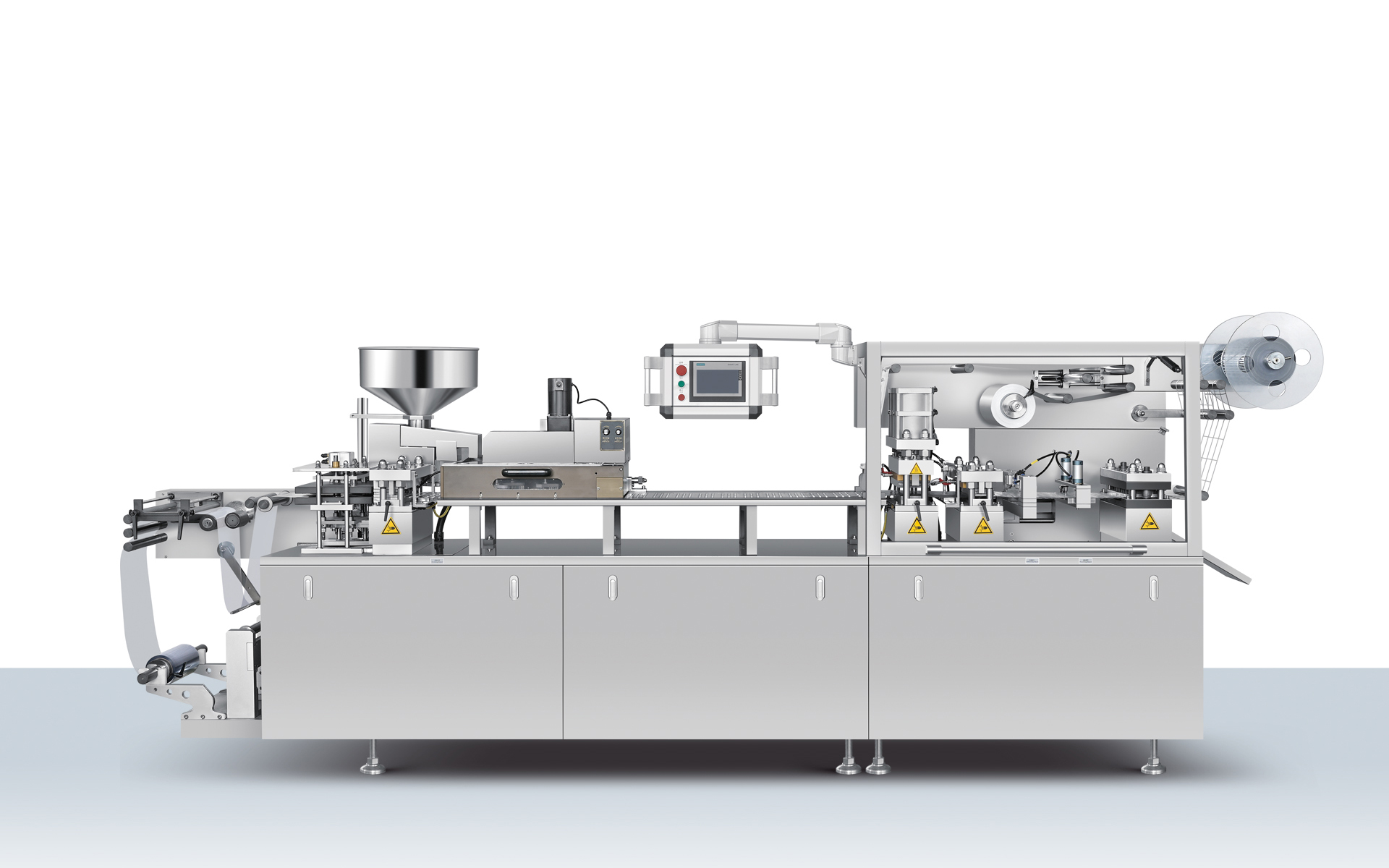
DPP260T1 platen blister packaging machine. Its published specification names AISI 316L stainless steel and FDA-compliant pharmaceutical-grade materials for product-contact parts, and AISI 304 stainless steel with anodized aluminum alloy elsewhere.
Layer 4 — Control platform and format repeatability
Documented automation hardware is easier to audit than documented automation claims. The DHL8005H specification identifies a Beckhoff motion controller and a CP9315 industrial PC, together with a three-channel servo-driven independent replenishment system, PVC and aluminum foil auto splicing, and multiple feeding methods. It also lists mold-change and preset-memory functions. Preset memory is the mechanism that lets a documented format setting be recalled between batches instead of being re-entered by hand — which is exactly the kind of detail an auditor or a validation engineer wants to see named in writing.
Worked Example: What the DHL8005H Actually Documents
Stripped of adjectives, the DHL8005H documentation says this:
- Classification: intelligent fully servo high-speed blister-cartoner integrated machine, described as a solid dosage turnkey packing line.
- Output: up to 800 blisters per minute and 500 cartons per minute.
- Transfer: D3 intelligent top-loading parallel tracking transfer system.
- Material supply: multiple feeding methods, PVC and aluminum foil auto splicing, three-channel servo-driven independent replenishment.
- Control platform: Beckhoff motion controller with CP9315 industrial PC.
- Format handling: mold-change and preset-memory functions.
- Construction: stainless steel and aluminum-alloy machine structure, transparent guarding, servo-driven motion components.
- Contact parts and tooling: GMP-oriented, configured according to the technical agreement.
- Scope boundary: blister forming and sealing, transfer, leaflet handling, carton opening, insertion, coding and inspection, plus connection to bundling, case-packing and palletizing equipment.
A published specification is a starting point, not a compliance opinion. It names the model, the architecture, the control platform and the construction, but the certificate scope for one specific destination market still has to be confirmed case by case. Published company information lists CE and ISO 9001/14001 certification for Zhejiang Hoping Machinery; as with any supplier, buyers should request the certificates themselves and check their scope, issuing body and validity rather than relying on a website statement.
Supplier depth is a supporting factor, not a substitute for documents. Zhejiang Hoping Machinery was established in 2001, operates a 28,800 square meter manufacturing facility with approximately 300 staff and a 56-engineer R&D team, and reports an annual production capacity of 500 units. The company holds 26 invention patents, 70 utility patents, 4 appearance patents, 10 PCT-protected patents in Europe, Russia, Germany, Italy and other countries, and 28 software copyrights. Export business accounts for 25% of total sales, with major markets in Southeast Asia, the Middle East, Eastern Europe, South America and Africa.
Step-by-Step: Translating a Regional Requirement Into a Verifiable Specification
Step 1 — Name the destination market and its rule set
Write down the market, the authority and the standard that governs the plant. ISO 15378 for primary packaging materials, Machinery Directive 2006/42/EC and the EN 415 series for packaging machinery in the EU, and the relevant national framework elsewhere. One page, one list.
Step 2 — Separate mandatory items from preferences
Contact-part material, cleanability, guarding, coding and inspection are usually mandatory. Capacity headroom, transfer technology and controller brand may be preferences. Marking the difference prevents a preference from being priced as a requirement, and prevents a requirement from being quietly dropped.
Step 3 — Convert each requirement into something measurable or inspectable
“Easy to clean” is not inspectable. “Corrosion-resistant and easy-to-clean surfaces, designed and manufactured in accordance with GMP requirements” is. On a blister packaging line, the measurable versions of a requirement usually involve material grade, surface condition, access for cleaning, format definition, capacity per format, and the identity of the control platform.
Step 4 — Attach a document to every item
Each specification line should point to a document: a material-of-construction statement, a tooling definition, a controller and software identification, a certificate, or a configuration drawing. If an item has no document, it has no evidence, and it should not appear as a confirmed capability.
Step 5 — Fix format data before tooling is made
Blister format, carton size, leaflet format, product feeding method and downstream connection point are the inputs that tooling and format parts are built from. On Hoping’s integrated lines, format parts are made according to confirmed blister and carton specifications, and tooling on the DHL8005H is configured per technical agreement. Tooling cannot confirm a format that was never written down.
Step 6 — Close the loop at handover
Confirm the items that keep the line compliant after installation: preset memory and recipe storage for validated formats, change parts for each documented format, coding and inspection behaviour, and the downstream connection. Cascade integration commonly includes bundling, case packing, palletizing and, depending on project configuration, ERP or MES data interfaces.
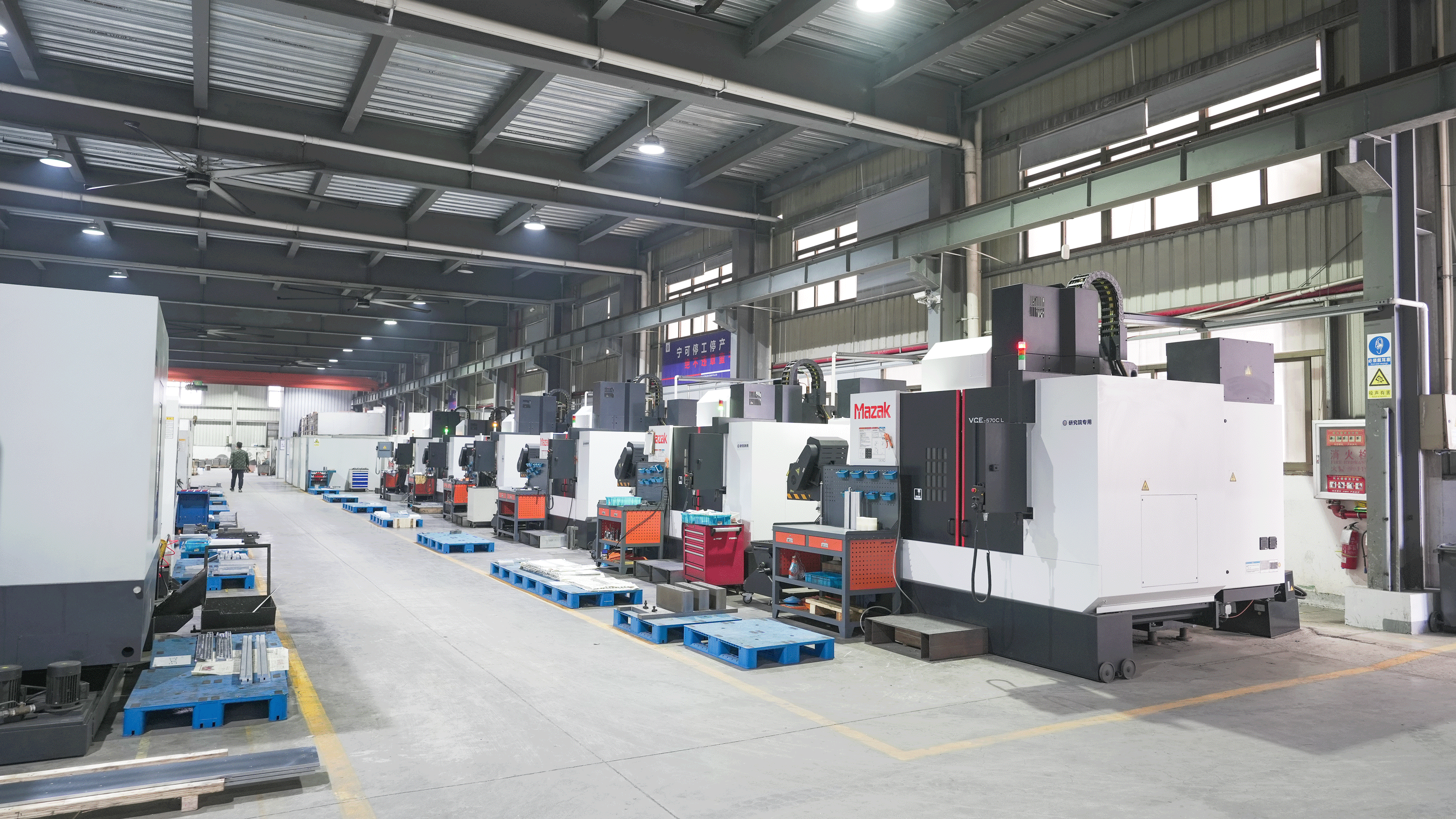
Machining workshop. Tooling and product-contact parts should be defined in the technical agreement — not assumed from a general GMP statement.
Use Cases: Where This Translation Work Pays Off
The documentation-first approach applies to most solid dosage packaging projects, and it matters most in five situations: a new solid dosage blister packaging line; an upgrade of an existing packaging line; a high-capacity expansion; an intelligent packaging workshop retrofit; and a blister-cartoning-bundling or case-packing downstream integration project.
These projects typically run in GMP-oriented cleanroom or pharmaceutical packaging workshop conditions, with continuous high-speed operation and multi-batch, multi-format production. The operating requirements are stability, easy cleaning, safety protection and traceability-oriented operation — which is another way of saying that what is written down in the agreement determines what can be verified later on the floor.
Typical applications include tablets, capsules and soft capsules on tablet blister packaging machine and capsule blister packaging machine formats, alu-alu blister packaging machine configurations for moisture-sensitive products, nutraceuticals and healthcare products, and — where the line configuration supports it — food and cosmetic blister-cartoning projects.
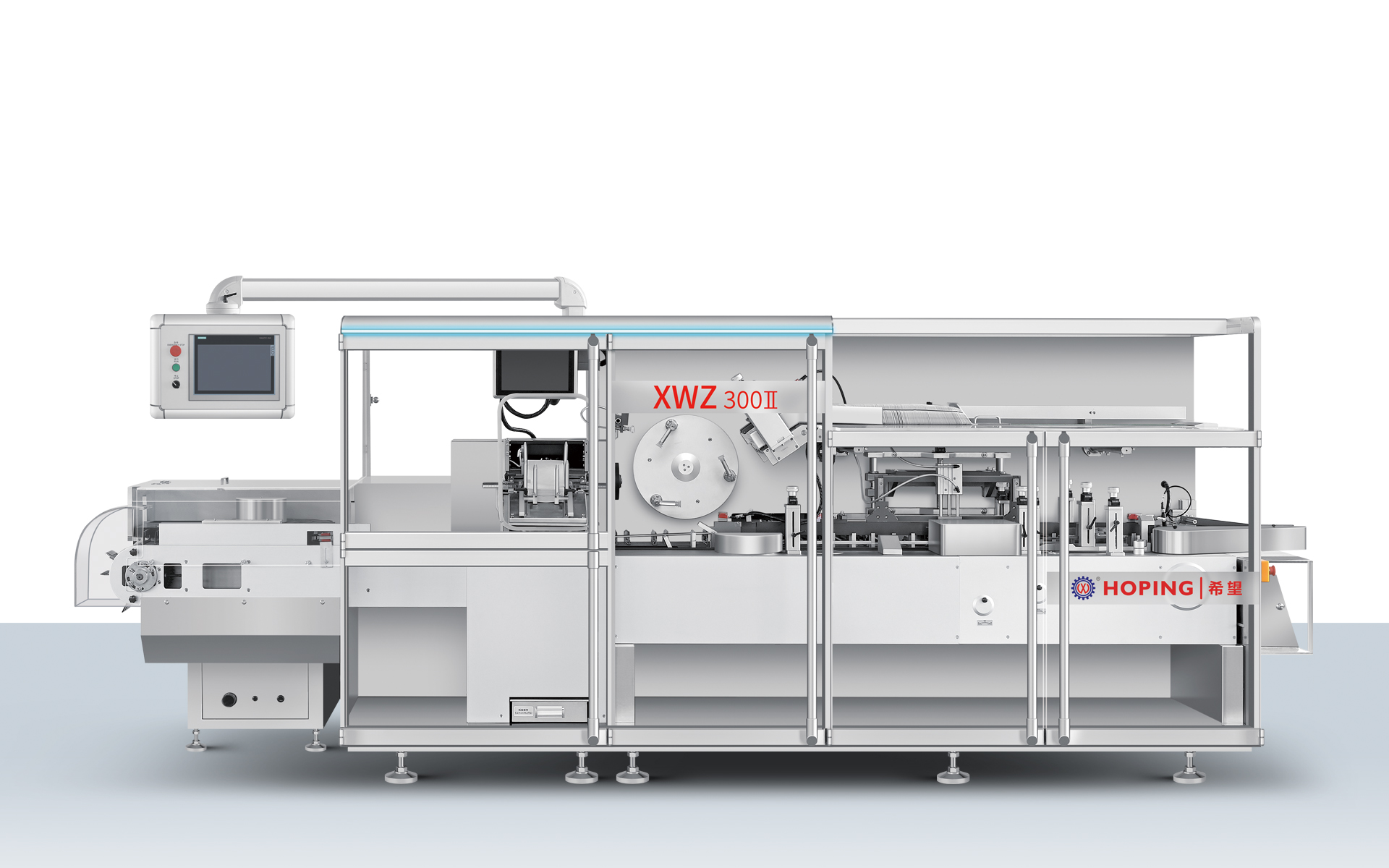
XWZ300II intelligent high-speed cartoning machine. Published information describes the machine as designed to comply with GMP requirements, with a carton magazine holding 600–700 boxes.
Documentation Evidence Map
The table below converts a compliance question into the document that answers it, with an example from published Hoping specifications.
| Verification item | Document to request | Documented example |
|---|---|---|
| Product-contact material | Material-of-construction statement per contact part | DPP260T1 and DPH320HII specifications: product-contact parts in AISI 316L stainless steel and FDA-compliant pharmaceutical-grade materials |
| Non-contact construction | Material statement for frame, guards and covers | AISI 304 stainless steel and anodized aluminum alloy (DPP260T1, DPH320HII); stainless steel and aluminum-alloy structure (DHL8005H line) |
| Cleanability | Statement of surface design and cleaning access | Corrosion-resistant and easy-to-clean surfaces, designed and manufactured in accordance with GMP requirements (DPP260T1, DPH320HII) |
| Tooling and format parts | Tooling definition referenced in the technical agreement | DHL8005H: GMP-oriented product-contact parts and tooling according to technical agreement |
| Control platform | Controller and industrial PC identification | DHL8005H: Beckhoff motion controller and CP9315 industrial PC |
| Format repeatability | Description of how settings are stored and recalled | DHL8005H: mold-change and preset-memory functions |
| Line output | Documented capacity per confirmed format | DHL8005H: up to 800 blisters per minute and 500 cartons per minute |
| Downstream integration | Written scope for coding, inspection, bundling and case packing | DHL8005H scope: coding and inspection, connection to bundling, case-packing and palletizing equipment |
| Certifications | Certificate copies with scope, issuing body and validity | Published company information lists CE and ISO 9001/14001 certification for Zhejiang Hoping Machinery |
Documented Specifications Across DHL-Series Blister-Cartoning Lines
Because compliance depends on what a specific model documents, it helps to compare the published data points across the integrated blister-cartoning line family rather than across brands.
| Documented item | DHL6004 | DHL7004 | DHL8005H | DHL1000/5H |
|---|---|---|---|---|
| Max blister output | Up to 600/min | Up to 700/min | Up to 800/min | Up to 1000/min |
| Max carton output | Up to 400/min | Up to 400/min | Up to 500/min | Up to 500/min |
| Transfer system | High-speed transfer and cartoning linkage | Self-developed IRB24 intelligent transfer robot | D3 intelligent top-loading parallel tracking transfer system | D3 intelligent top-loading parallel tracking transfer system |
| Controller / interface | Beckhoff motion controller and CP9315 industrial PC | Siemens motion controller and TP900 HMI | Beckhoff motion controller and CP9315 industrial PC | Beckhoff motion controller and high-bus industrial control system |
| Replenishment | Servo-driven independent replenishment | Servo-driven independent replenishment | Three-channel servo-driven independent replenishment system | Four-channel servo-driven independent replenishment system |
| Format memory | Convenient mold change | Convenient mold change | Mold-change and preset-memory functions | Mold-change and recipe memory functions |
| Structure | Stainless steel and aluminum-alloy | Stainless steel and aluminum-alloy | Stainless steel and aluminum-alloy | Stainless steel and aluminum-alloy |
| GMP-oriented design | Yes | Yes | Yes | Yes |
Values as published in Hoping product documentation for each model. Model selection should follow verified format, capacity and market data for the specific project. Where secondary flow wrapping is required, the IXW600 and IXW800 blister-flow-wrap-cartoning lines use the same Beckhoff controller and CP9315 industrial PC architecture as the DHL8005H.
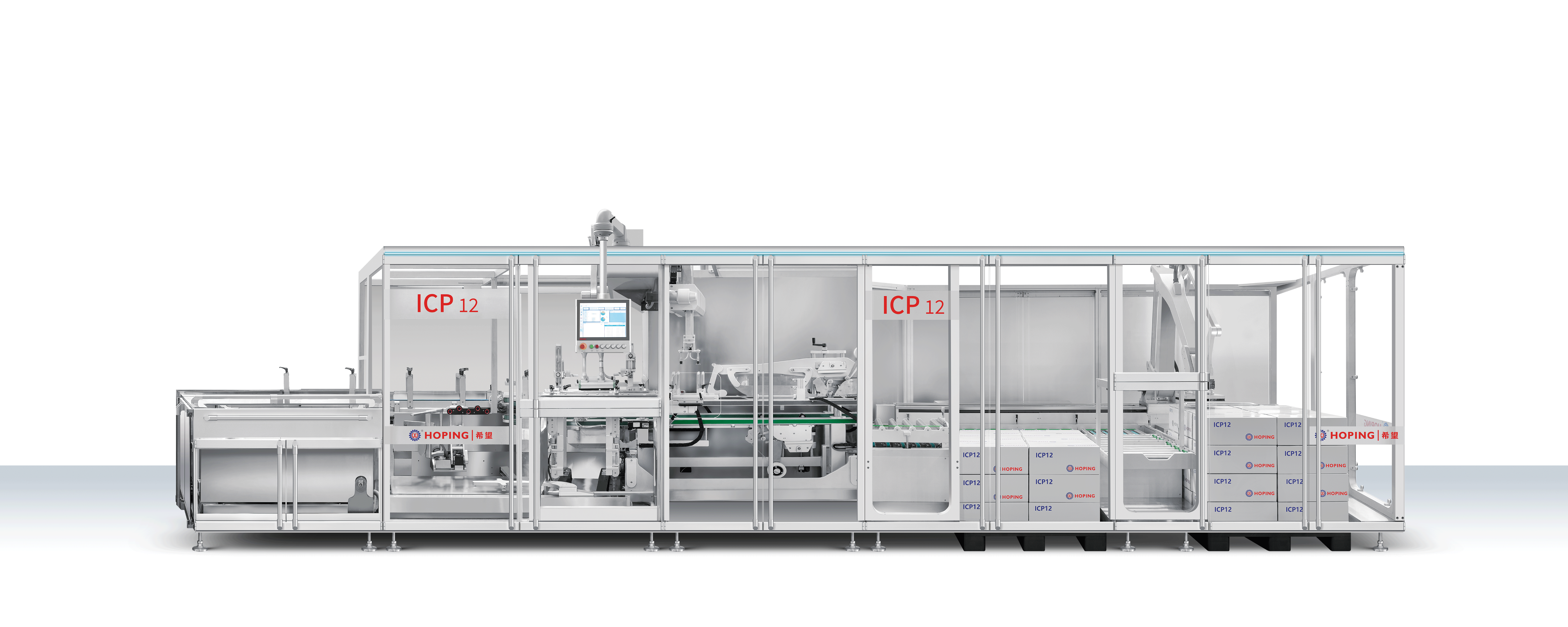
ICP12 case packing and palletizing integral machine. Downstream scope — automatic case opening, loading, sealing, conveying and palletizing at about 12 cases per minute — should be written into the line specification, not assumed.
FAQ
Which rules should define a blister-cartoning line specification?
Start from the destination market rather than the machine. ISO 15378 integrates GMP requirements for primary packaging materials, and in the European Union, pharmaceutical equipment safety is governed by Machinery Directive 2006/42/EC with the EN 415 series for packaging machines. Other markets apply their own national frameworks, so the specification should name the rule set for the plant where the line will run, then list what must be documented in writing: material of construction, product-contact parts, guarding, coding, inspection and the control platform.
How can I verify what a pharmaceutical packaging machine manufacturer actually documents?
Ask for documents rather than descriptions. Hoping’s published specifications state that on the DPP260T1 platen blister machine and the DPH320HII rotary blister machine, product-contact parts are made of AISI 316L stainless steel and FDA-compliant pharmaceutical-grade materials, while non-product-contact parts use AISI 304 stainless steel and anodized aluminum alloy, with corrosion-resistant and easy-to-clean surfaces designed and manufactured in accordance with GMP requirements. On the DHL8005H blister-cartoning line, product-contact parts and tooling are documented according to the technical agreement, and the control platform is identified as a Beckhoff motion controller with a CP9315 industrial PC.
Do compliance requirements change the commercial scope of a project?
They change scope, and scope is what the technical agreement fixes. Four items usually drive it: material of construction, such as AISI 316L contact parts versus AISI 304 and anodized aluminum alloy elsewhere; the number of blister formats and tooling sets; the control platform and inspection scope; and downstream integration such as stretch banding, case packing or palletizing. Any item left undefined in the agreement tends to return later as a change rather than as a documented deliverable.
What sample and format data should be fixed before tooling is made?
Blister format, carton size, leaflet format, product feeding method and the downstream connection point. Tooling and product-contact parts on the DHL8005H are configured according to the technical agreement, and format parts on the integrated lines are made to confirmed blister and carton specifications. The line supports multiple feeding methods and mold-change with preset memory, so a documented format can be recalled instead of re-entered — but only formats named in the agreement can be treated as covered.
What determines the build and commissioning schedule?
Configuration determines it more than headline capacity does. Zhejiang Hoping Machinery operates a 28,800 square meter manufacturing facility with approximately 300 staff, a 56-engineer R&D team and an annual production capacity of 500 units, and exports 25% of its output to Southeast Asia, the Middle East, Eastern Europe, South America and Africa. The schedule and the documentation list belong in the same agreement. To review the DHL-series configurations and the wider range — blister packaging machine, cartoning machine, case packing machine and end-of-line packaging machine — download the Hoping Machinery catalog, or send your market, format and capacity requirements to monica@xwbj.com or +86 133-5610-5292.
Conclusion: Document First, Then Specify
Regional pharmaceutical packaging rules will keep changing, and none of them will arrive as a machine specification. The lines that clear audits and start-up reviews without drama are the ones where the buyer converted each regional requirement into an inspectable item and attached a document to it: material of construction, contact parts and tooling per technical agreement, cleanable surfaces, guarding, coding and inspection, downstream integration, and a named control platform such as the Beckhoff motion controller and CP9315 industrial PC on the DHL8005H.
The working rule is worth repeating: what is not named and not documented should be treated as unconfirmed, whichever supplier builds the line. Applied early, that rule turns a compliance guide into a procurement advantage — and turns a blister cartoning line into a line you can defend in writing.
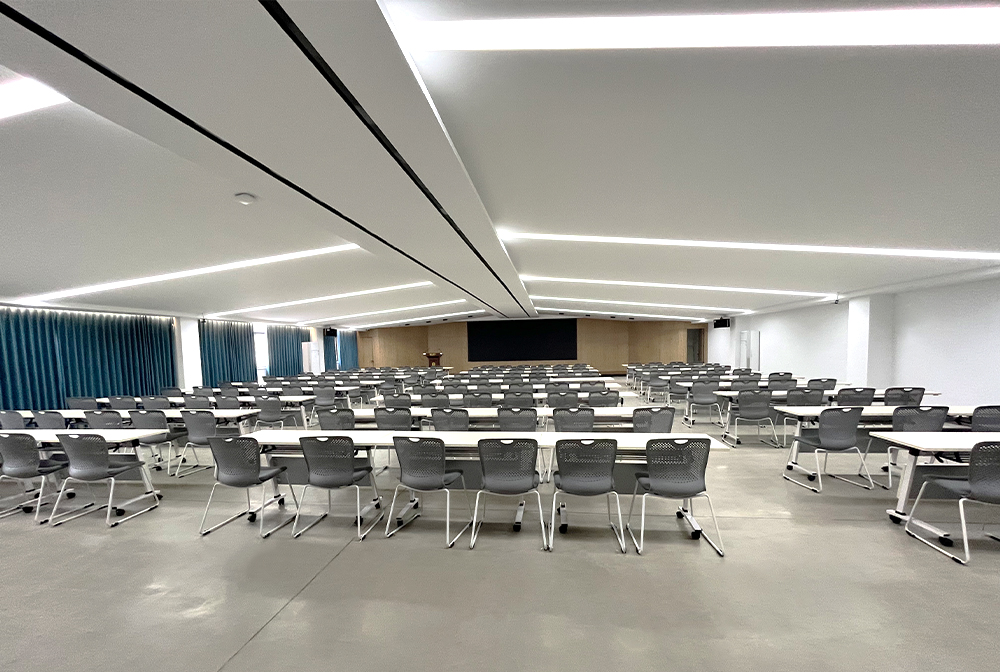
Training hall at Zhejiang Hoping Machinery, Ruian City, Zhejiang Province, China. Website: www.hopingcn.com · Contact: Monica · monica@xwbj.com · +86 133-5610-5292 · 88th Weiwu Road, Nanbin Sub-district, Ruian City, Zhejiang Province, China.
Have Questions or Need More Details?
Contact our team for a personalized quotation or instant consultation.
Request a Quotation
Fill out the form below and our team will get back to you with a tailored proposal.
WhatsApp Direct Chat
Prefer to chat in real-time? Message us on WhatsApp for instant assistance & quick answers.
- Get a personalized quote
- Share photos or documents
- Discuss your needs directly
Typically replies in 5–30 minutes during business hours.