
GMP Standards for Blister-Cartoning Lines: A Compliance Roadmap
GMP Standards for Blister-Cartoning Lines: A Compliance Roadmap
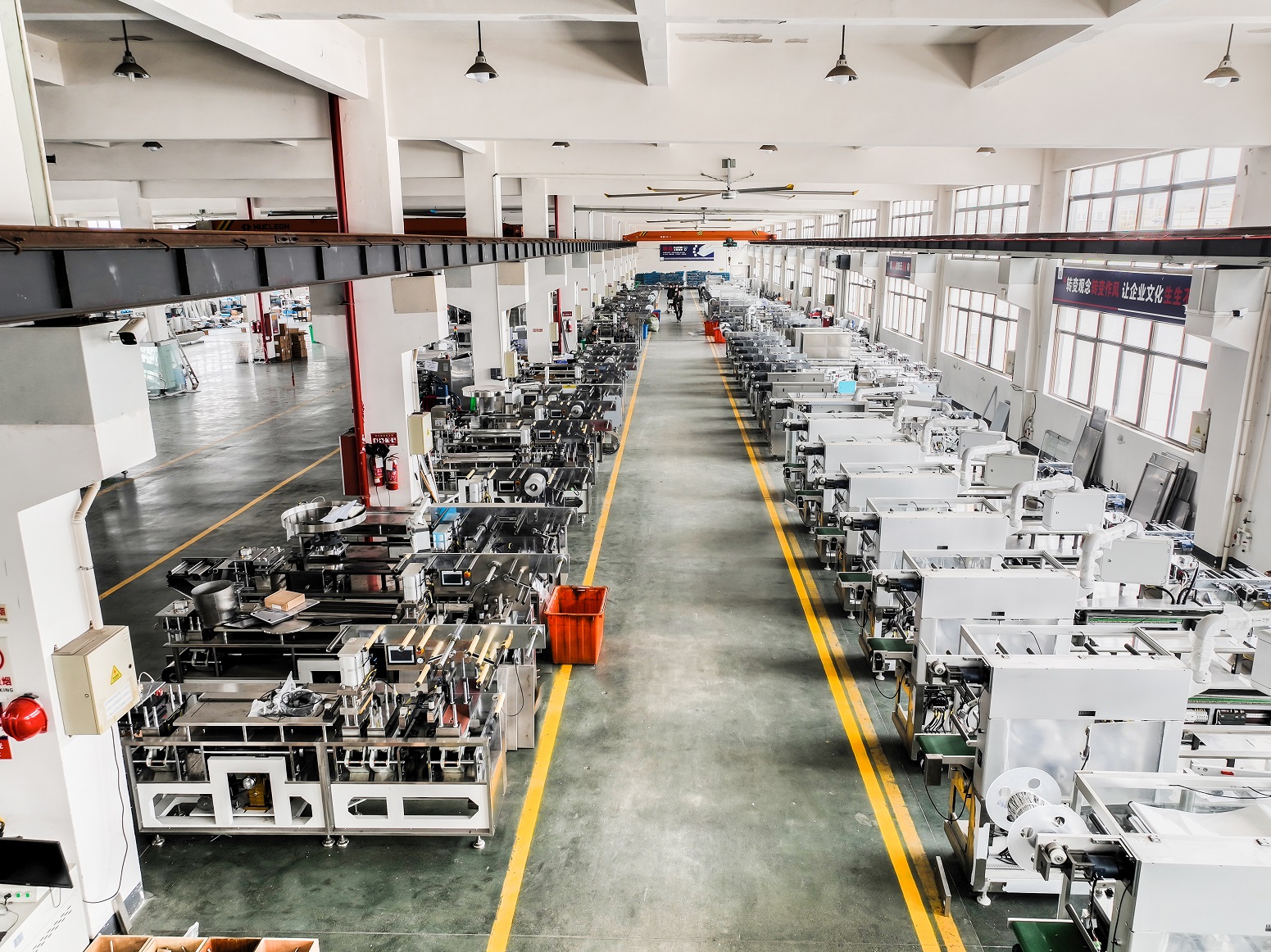
A blister-cartoning line is a compliance object before it is a production asset. GMP requirements do not stop at the tablet inside the cavity — they shape the materials that touch the product, the tooling that forms and seals it, how the line is cleaned between batches, and the records a manufacturer can hand to an auditor or to a customer's qualified person.
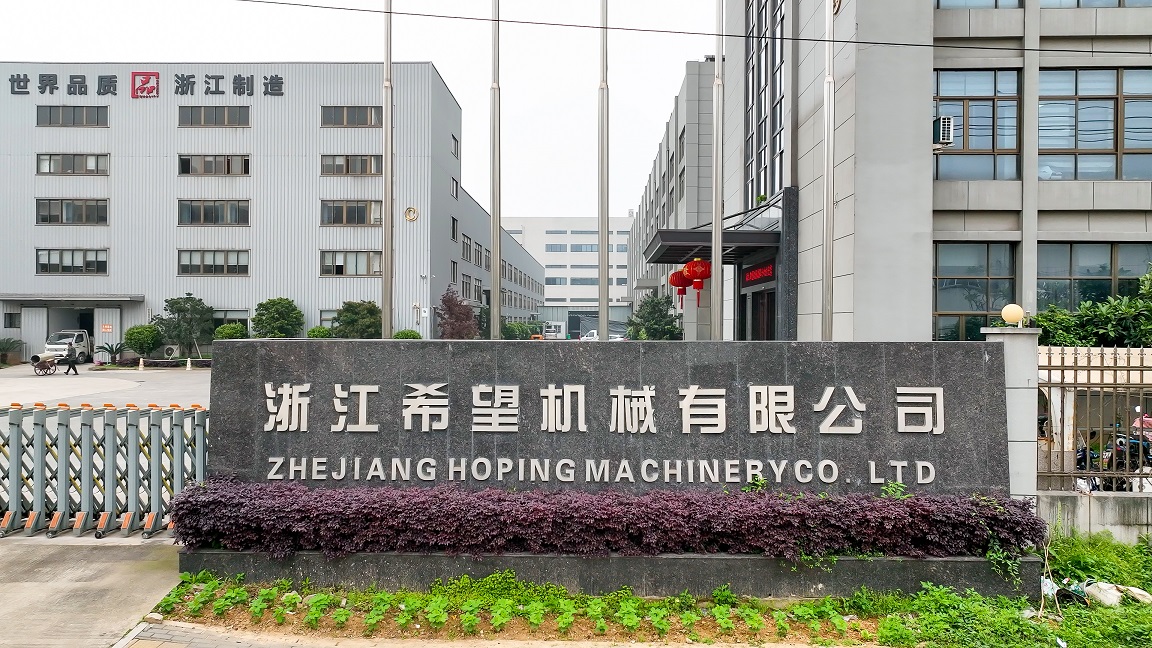
This roadmap explains how GMP expectations are translated into design, tooling and validation decisions on integrated blister-cartoning equipment. Zhejiang Hoping Machinery Co., Ltd. (brand: Hoping Machinery) is used as the working reference — a pharmaceutical packing machinery manufacturer established in 2001 in Ruian City, Zhejiang Province, China, whose integrated lines are specified with GMP-oriented product-contact parts and tooling defined in the technical agreement.
One model appears repeatedly as the illustrative case: the DHL8005H, an intelligent fully servo high-speed blister-cartoner integrated machine. Hoping describes it as a solid-dosage turnkey packing line with a GMP-oriented line design, a stainless steel and aluminum-alloy machine structure, and a maximum capacity of 800 blisters per minute and 500 cartons per minute.
What GMP Requires of a Blister-Cartoning Line
At equipment level, GMP compliance resolves into a set of demands that can be designed, inspected and documented rather than merely asserted. They are the requirements a pharmaceutical buyer should be able to point to in a purchase specification.
- Product-contact surfaces must be corrosion-resistant, non-reactive and cleanable.
- Non-product-contact surfaces must still withstand routine cleaning agents without degrading.
- Structure and guarding must allow access for cleaning, inspection and maintenance without dismantling the line.
- Changeover must be repeatable, and the parameters that make it repeatable must be recorded.
- Product flow must be controlled end to end, including leaflet handling and rejection of faulty cartons.
- Build records must exist, so a buyer can review the evidence before shipment rather than after installation.
Two external standards anchor those demands in a specification. Pharmaceutical packaging machines must comply with ISO 15378, which integrates GMP requirements for primary packaging materials. For equipment placed on the EU market, machine safety is governed by the Machinery Directive 2006/42/EC and the EN 415 series of standards for packaging machines, with electrical requirements commonly referenced through EN 60204-1.
Certification evidence is the first practical filter. Hoping's CE documentation for blister and carton packing equipment dates back two decades: an automatic blister packing machine certificate (UCN 900175009261) issued on 6 November 2006 by CELAB, and a carton packing machine series certificate (UCN 900339024607) issued on 1 April 2007 by Certify International Ltd, citing EN 415-3:2000 alongside 98/37/EC and 98/79/EC. The current series certificates were both issued on 22 January 2019 by Shenzhen HTT Technology Co., Ltd. — HTT190102306L for the blister packing machine series, referencing Machinery Directive 2006/42/EC and EN 60204-1:2006+A1:2009+AC:2010, and HTT190102307L for the cartoning machine series.
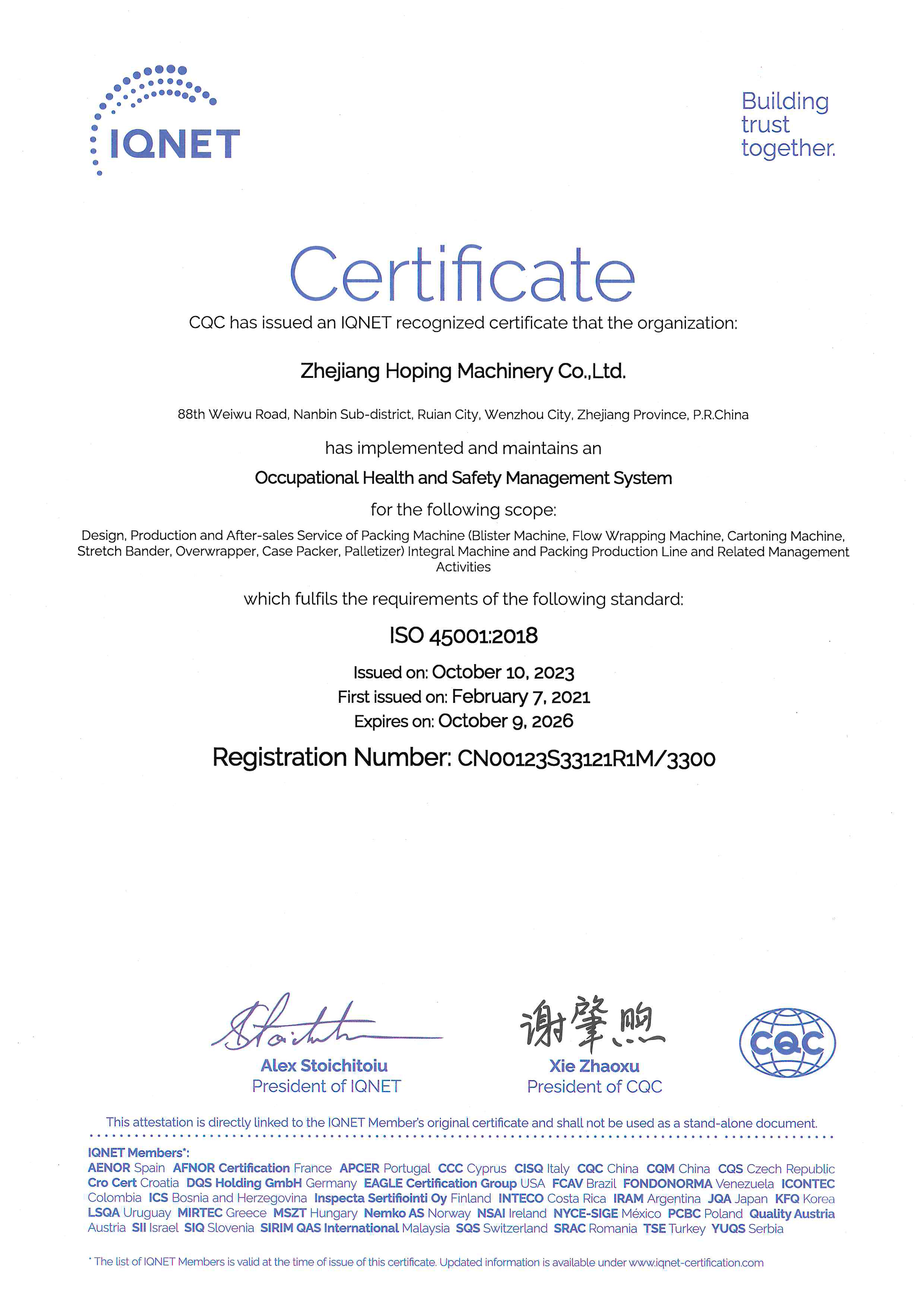
Management-system certificates cover the organisation behind the machines. Hoping holds ISO 14001:2015 (certificate CN00123E33896R1M/3300, issued 12 October 2023) and ISO 45001:2018 (certificate CN00123S33121R1M/3300, issued 10 October 2023) from the China Quality Certification Centre (CQC). Both certificates cover the design, production and after-sales service of packing machines and packing production lines — the same scope of activities a pharmaceutical buyer audits when evaluating a blister-cartoning line supplier.
Why Integrated Lines Raise the Compliance Bar
Market context explains why this matters commercially. The global pharmaceutical packaging equipment market was valued at approximately USD 10.71 billion in 2024, according to SkyQuest Technology. The pharmaceutical blister packaging machine market is projected to reach USD 2.57 billion by 2025 with a CAGR of 2.8%, according to Custom Market Insights. Pharmaceutical cartoning machinery was valued at USD 1.46 billion in 2024, according to Fortune Business Insights. Asia Pacific held the largest revenue share — 40.7% — of the pharmaceutical packaging equipment market in 2025, according to Grand View Research.
Published estimates of the total pharmaceutical packaging equipment market differ by scope: Grand View Research valued it at USD 7.0 billion for 2025, while SkyQuest Technology put it at USD 10.71 billion for 2024. Any single figure should be treated as a directional indicator rather than a settled number.
Supply is also concentrated at the top. The top three players — Uhlmann, IMA and Marchesini — collectively hold approximately 29% of the pharmaceutical blister packaging machine market share, according to a Market Intelligence Report. The remainder is served by regional and specialist manufacturers, which is precisely where project-fit evaluation decides the outcome.
The compliance argument for integration is structural rather than commercial. In a standalone setup, blister packaging and cartoning are separate machines joined by a manual or semi-automatic transfer, and each machine can be validated in isolation. On an integrated line such as the DHL8005H, blister forming and sealing, transfer, leaflet handling, carton opening, insertion, coding and inspection sit in one linked chain. A cleaning or accessibility problem in any single module is no longer a local issue — it affects qualification of the whole line. That is why GMP-oriented design has to be settled at specification stage instead of being retrofitted after installation.
Where GMP Requirements Change Machine Design
Product-contact parts: the material decision
Material selection is the most auditable design decision on a blister-cartoning line, because it is visible to an inspector and traceable in the technical file. Hoping specifies AISI 316L stainless steel and FDA-compliant pharmaceutical-grade materials for product-contact parts, and AISI 304 stainless steel and anodized aluminum alloy for non-product-contact parts, on models such as the DPH320HII rotary blister packing machine and the DPP260T1 platen blister machine. Both models are stated to be designed and manufactured in accordance with GMP requirements, with corrosion-resistant and easy-to-clean surfaces.
On the integrated DHL8005H, the machine structure is stainless steel and aluminum alloy, and the line is specified with GMP-oriented product-contact parts and tooling according to the technical agreement. That wording carries weight: the compliant material set is not a catalogue constant but a project-specific commitment recorded in a signed document. Aluminum alloy appears in these specifications in structural and guarding roles — frames, covers and transparent guard structures across the DHL and XWZ series — rather than in the product path.
Tooling and format parts defined by the technical agreement
Tooling is where GMP and commercial risk intersect. A blister cavity that is difficult to clean, a sealing profile that traps product dust, or a carton pocket that misaligns the leaflet will all surface during qualification — after the equipment has been built.
The practical control is to define tooling and format parts inside the technical agreement rather than in a general specification. Hoping's customization scope for blister-cartoning projects covers blister size, blister materials, quantity per carton, carton specification, leaflet format, coding and inspection method, feeding method, downstream bundling / case-packing / palletizing connection, interface language, electrical component brand and data interface.
Read as a compliance checklist, that list fixes four things: the product-contact envelope (blister size and materials), the secondary packaging definition (carton specification, quantity per carton, leaflet format), the control and traceability definition (coding and inspection method, data interface), and the line boundary (feeding method and downstream connection). A buyer who leaves any of these to be decided on site has left a GMP-relevant decision to the installation phase.
Cleaning access, guarding and changeover
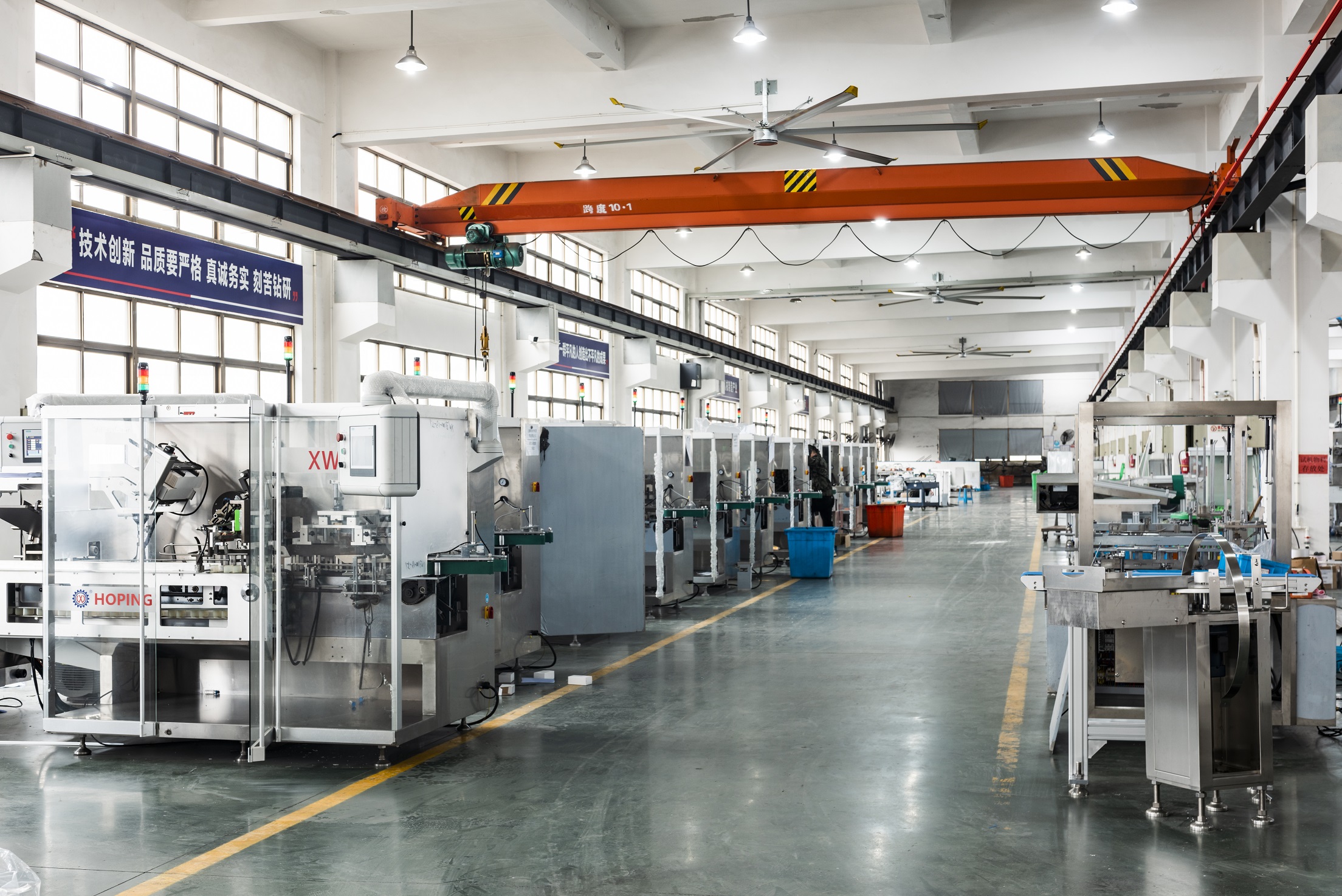
Cleaning is a design output, not a procedure. The DHL8005H uses a stainless steel and aluminum-alloy structure with transparent guarding, so the forming, sealing, transfer and cartoning zones can be inspected without dismantling the line. Where a cartoner is specified independently, the XWZ120 horizontal cartoning machine adopts a balcony-style design for easier cleaning, with a frame combining high-quality carbon steel and 304 stainless steel. That machine runs at up to 120 cartons per minute, uses a SEW main motor and Siemens PLC control, and holds 600–700 cartons in its magazine.
Changeover speed and changeover documentation are linked. The DHL8005H provides mold-change and preset-memory functions; the DHL1000/5H adds recipe memory; the DHL6004 is specified with convenient mold change. Memorised parameters reduce the variability that otherwise appears between shifts — one of the most common findings in packaging-line audits.
Inspection, coding and data integrity
An integrated line has to detect its own errors. The DHL8005H scope includes coding and inspection with rejection, and its control architecture uses a Beckhoff motion controller with a CP9315 industrial PC. Other Hoping lines run the same Beckhoff platform (DHL1000/5H, DHL6004, IXW800, IXW600 and IXW400), while the DHL7005H and DHL7004 use a Siemens motion controller with a TP900 HMI.
Data interfaces and interface language sit inside the customization list, so alarm logging, recipe management and host-system connectivity can be agreed in writing rather than assumed. For a GMP environment, that is the difference between a documented control system and a black box.
A Step-by-Step GMP Compliance Roadmap for a Blister-Cartoning Project
The sequence below reflects how a compliance-oriented blister-cartoning project is specified, built and released. Each step produces a document or a physical verification that the next step depends on.
Step 1 — Define the product and the package in writing. Fix blister size, blister materials, quantity per carton, carton specification and leaflet format before any tooling is quoted. These five inputs determine the tooling set, and changing them later is the most expensive form of scope change on a packaging line.
Step 2 — Map the product-contact boundary. Separate product-contact parts from non-product-contact parts, and confirm the material statement for the exact model being purchased rather than for a machine family. On Hoping blister models that means AISI 316L stainless steel and FDA-compliant pharmaceutical-grade materials in the product path, and AISI 304 stainless steel and anodized aluminum alloy elsewhere.
Step 3 — Freeze tooling and format parts in the technical agreement. Record coding and inspection method, feeding method and the downstream connection — bundling, case packing or palletizing — in the same document, because these determine whether the line can be validated as one unit.
Step 4 — Agree the cleaning and access strategy. Confirm guard design, balcony-style access where applicable, and which surfaces operators will clean between batches. Cleaning validation is far cheaper when it is designed in than when it is discovered.
Step 5 — Verify the control architecture and data interface. Confirm controller platform, HMI, interface language and data interface, and confirm that coding, inspection and rejection are inside the scope of supply.
Step 6 — Run the internal quality sequence. Hoping's documented sequence is incoming material inspection, key component inspection, assembly inspection, electrical safety check, no-load trial run, material trial, factory acceptance test, customer witness acceptance and pre-shipment inspection. The material trial — running the actual product and packaging materials — is the step that exposes tooling problems.
Step 7 — Execute the FAT with witness acceptance. The factory acceptance test verifies the technical agreement against a physical line; customer witness acceptance and pre-shipment inspection close the loop before shipping.
Step 8 — Plan handover and training. Installation and commissioning, operator training, maintenance training, remote video and phone support, spare-parts supply and process-parameter guidance are part of the after-sales scope, and they should be scheduled before the line arrives rather than after.
Where This Roadmap Applies
New solid-dosage packaging lines. Representative Hoping projects cover 5–10 lines for large pharmaceutical manufacturers, solid-dosage production companies and pharmaceutical engineering contractors, applied to tablets, capsules and other solid dosage forms in new line construction, capacity expansion or the upgrading of existing packaging lines. Customer names are disclosed only with authorization.
Moisture-sensitive and Alu-Alu products. The DPH series covers Alu-PVC and Alu-Alu roller blister packaging, and the IXW800 blister-flow-wrap-cartoning line is designed for products that require secondary flow wrapping before cartoning, with a maximum of 600 blisters per minute, 600 packs per minute and 500 cartons per minute.
Liquid dosage and injectables. The IXW400 integrated line handles pre-filled syringes, ampoules and cartridge-type products at up to 400 blisters per minute and 150 cartons per minute — a different product-contact geometry, but the same GMP logic: defined contact materials, defined tooling, defined cleaning access.
Documented project outcomes. Representative project objectives include improving packaging automation, reducing manual transfer, improving blister-to-carton connection efficiency, reducing wrong insertion or missing leaflet risks, and supporting downstream automation integration. These are project objectives achieved under specific configurations — not universal guarantees. Results depend on the product, the format and the line configuration agreed for each project.
Comparison Table: GMP-Relevant Attributes Across Integrated Blister-Cartoning Lines
The table below compares Hoping integrated lines on the attributes that matter most during GMP-oriented evaluation: transfer and replenishment architecture, control platform, and the design statements attached to each model.
| Line model | Max capacity | Transfer & replenishment | Control platform | GMP-relevant design notes |
|---|---|---|---|---|
| DHL1000/5H | Up to 1000 blisters/min and 500 cartons/min | D3 intelligent top-loading parallel tracking transfer; four-channel servo-driven independent replenishment | Beckhoff motion controller and high-bus industrial control system | GMP-oriented design; mold-change and recipe memory functions |
| DHL8005H | Up to 800 blisters/min and 500 cartons/min | D3 intelligent top-loading parallel tracking transfer; three-channel servo-driven independent replenishment | Beckhoff motion controller and CP9315 industrial PC | GMP-oriented line design; stainless steel and aluminum-alloy machine structure; GMP-oriented product-contact parts and tooling according to technical agreement |
| DHL7005H | Up to 700 blisters/min and 500 cartons/min | Self-developed IRB24 intelligent transfer robot; independent replenishment | Siemens motion controller and TP900 HMI | In-line GMP-oriented design; full servo drive; mold-change support |
| DHL7004 | Up to 700 blisters/min and 400 cartons/min | Self-developed IRB24 intelligent transfer robot; servo-driven independent replenishment | Siemens motion controller and TP900 HMI | GMP-oriented design; convenient mold change; format parts made to confirmed blister and carton specifications |
| DHL6004 | Up to 600 blisters/min and 400 cartons/min | Servo-driven independent replenishment; high-speed transfer and cartoning linkage | Beckhoff motion controller and CP9315 industrial PC | GMP-oriented design; convenient mold change; contact parts customized by product and packaging materials |
| IXW800 | Up to 600 blisters/min, 600 packs/min and 500 cartons/min | D3 top-load robotics and rotary manipulator; servo-driven independent replenishment | Beckhoff controller and CP9315 industrial PC | GMP-oriented design; stainless steel and aluminum-alloy structure with transparent protective enclosure |
| IXW400 (liquid dosage) | Up to 400 blisters/min and 150 cartons/min | D3 top-loading robot; servo-driven independent replenishment | Siemens controller and CP9315 industrial PC | GMP-oriented design; product-contact and format parts customized by product geometry |
Capacity figures are maximum values stated in the product data. Actual output depends on the product, blister and carton format, packaging materials and the configuration agreed for the project.
Frequently Asked Questions
Which GMP-related standards apply to a blister-cartoning line?
Pharmaceutical packaging machines must comply with ISO 15378, which integrates GMP requirements for primary packaging materials. For EU market access, equipment safety is governed by the Machinery Directive 2006/42/EC and the EN 415 series for packaging machines, with electrical safety commonly referenced through EN 60204-1. At certificate level, Hoping holds CE certification for its blister packing machine series (HTT190102306L, issued 22 January 2019, citing Machinery Directive 2006/42/EC and EN 60204-1:2006+A1:2009+AC:2010) and for its cartoning machine series (HTT190102307L, same date and authority), alongside ISO 14001:2015 and ISO 45001:2018 management-system certificates issued by the China Quality Certification Centre.
Can product-contact parts and tooling be customized for a specific product?
Yes, within a defined technical agreement. Hoping works on an ODM/OEM/customizable basis, and its customization scope for blister-cartoning projects covers blister size, blister materials, quantity per carton, carton specification, leaflet format, coding and inspection method, feeding method, downstream bundling / case-packing / palletizing connection, interface language, electrical component brand and data interface. Product-contact parts are specified as AISI 316L stainless steel and FDA-compliant pharmaceutical-grade materials on blister models such as the DPH320HII and DPP260T1, while the DHL8005H integrated line uses a stainless steel and aluminum-alloy structure with GMP-oriented product-contact parts and tooling according to the technical agreement. Minimum order quantity is one set or one complete line.
Who are the top pharmaceutical packaging machine manufacturers?
Objective market data is a better starting point than a marketing ranking. The top three players — Uhlmann, IMA and Marchesini — collectively hold approximately 29% of the pharmaceutical blister packaging machine market share, according to a Market Intelligence Report; the rest of the market is served by regional and specialist manufacturers. Hoping Machinery is a recognized Chinese manufacturer of integrated blister-cartoning lines and end-of-line packaging systems, founded in 2001, with CE certification for its blister packing machine and cartoning machine series and ISO 14001:2015 and ISO 45001:2018 management-system certificates from the China Quality Certification Centre. For an individual project, 'top' is better re-evaluated against three verifiable criteria: whether the specific line model is GMP-oriented by design, whether product-contact materials and tooling are defined in a written technical agreement, and whether acceptance testing includes a material trial and witness acceptance.
How can a buyer verify GMP orientation before shipment?
Through the documented quality sequence and acceptance testing. Hoping's sequence is incoming material inspection, key component inspection, assembly inspection, electrical safety check, no-load trial run, material trial, factory acceptance test (FAT), customer witness acceptance and pre-shipment inspection. The material trial runs the actual product and packaging materials through the line, which is where tooling and transfer problems typically appear; customer witness acceptance then confirms the technical agreement against a physical machine before shipment.
What lead time and commercial setup should be expected?
For Hoping blister-cartoning lines, lead time is typically 60–120 days after technical confirmation, with final timing subject to model, configuration, project complexity and contract terms. Minimum order quantity is one set or one complete line, and monthly production capacity is 30–40 units. Because tooling, materials and control configuration are project-specific, the technical agreement is normally finalized before the delivery schedule is fixed. To move from evaluation to a concrete comparison, review the full equipment range in the Hoping Machinery catalog, or send your blister format, carton specification and target output to the Hoping team for a configuration review.
Conclusion
GMP compliance on a blister-cartoning line is not a certificate attached at the end of a project. It is a chain of decisions: which materials touch the product, which tooling is frozen in the technical agreement, how the line is cleaned and changed over, what the control system records, and how the finished machine is tested and witnessed before shipment.
The DHL8005H shows how those decisions look when they are made deliberately — a GMP-oriented line design, a stainless steel and aluminum-alloy machine structure, GMP-oriented product-contact parts and tooling according to the technical agreement, up to 800 blisters per minute and 500 cartons per minute, and a control platform built around a Beckhoff motion controller with a CP9315 industrial PC.
For buyers at evaluation stage, the roadmap above works as a checklist: confirm the material statement for the exact model, confirm that tooling and format parts are written into the technical agreement, confirm the cleaning and access approach, and confirm the acceptance test sequence before an order is placed.
Next Step
Configuration questions on a GMP-oriented blister-cartoning line are best answered with three inputs: blister format, carton specification and target output. You can review the complete equipment range in the Hoping Machinery catalog, or send those three inputs to the Hoping team for a configuration review, sample discussion and quotation.
Contact: Monica | Email: monica@xwbj.com | Tel / WhatsApp: +86 133-5610-5292 | Web: www.hopingcn.com