
Long-Term Reliability in High-Speed Pharma Lines: Contract Terms, Spare Parts, and Support Models
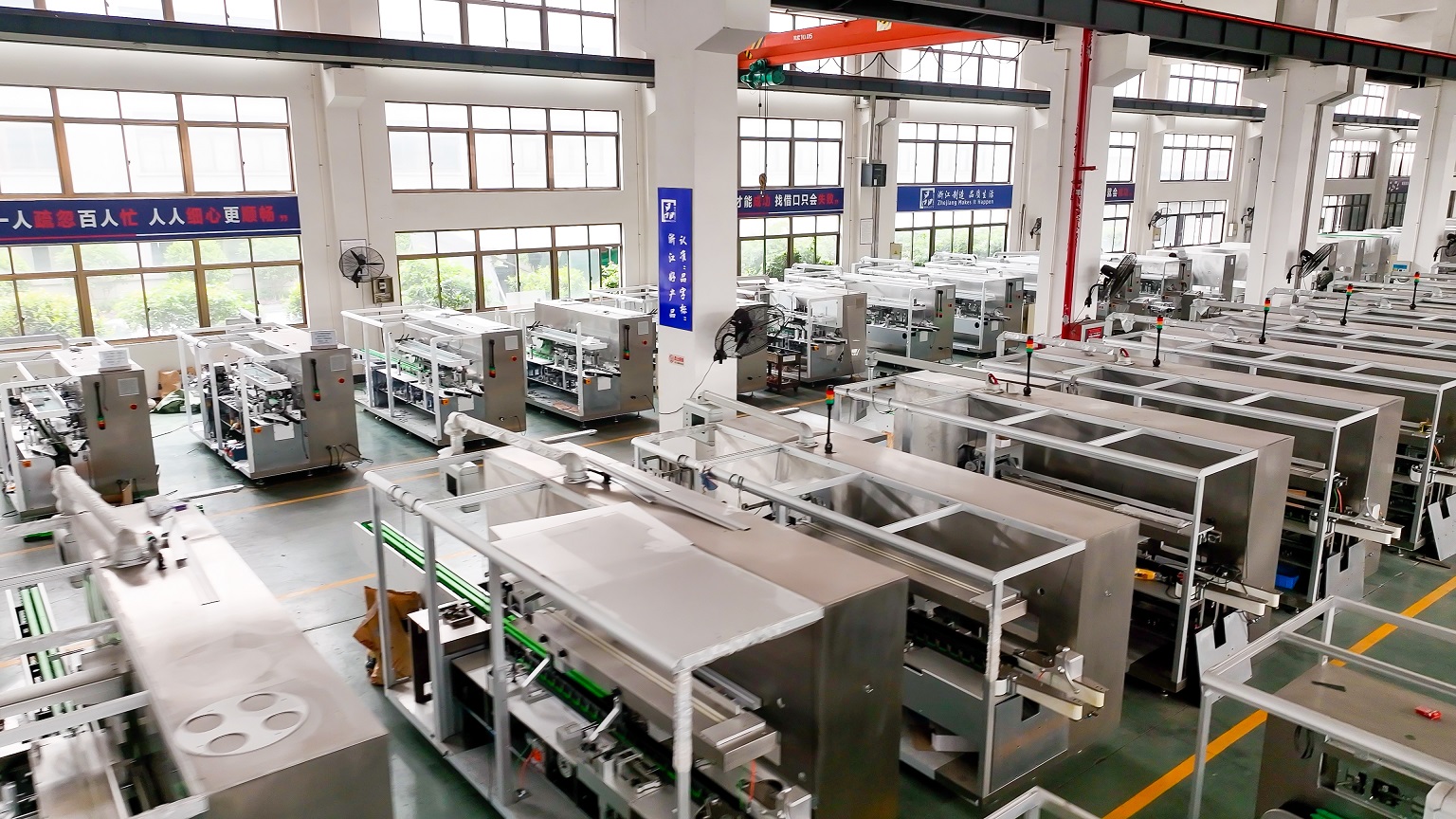
A high-speed blister-cartoning line is engineered for output, but its reliability over years is shaped by design choices, contract terms and the support model behind it. Image: Hoping Machinery workshop.
Reliability on a high-speed pharmaceutical packaging machine is not something a datasheet delivers on its own. It is the result of three decisions taken before shipment: which design features reduce wear, what the contract actually commits the supplier to, and how spare parts and support are organised after the acceptance certificate is signed. For a decision-stage buyer weighing a fully servo-driven integrated blister-cartoning line against a traditional blister packaging machine plus manual transfer and a standalone cartoning machine, those three decisions usually matter more than a headline speed figure.
This article uses the DHL8005H high-speed blister-cartoning line as its reference example of those design choices — servo-driven replenishment, stainless-steel construction and GMP-oriented tooling — and then works through the contractual, spare-parts and support structures that keep such a line productive in year two, year five and beyond.
Short answer: A high-speed blister-cartoning line stays reliable when three things are fixed in writing before shipment — (1) a design that reduces manual handling and mechanical adjustment, (2) an acceptance and documentation package based on factory and site testing (FAT/SAT, sample and material trials), and (3) a defined spare-parts model and support structure covering installation, commissioning, training, spare parts and remote technical support. Design lowers the maintenance load; the agreement decides who carries it.
Why Long-Term Reliability Is a Contract Question as Much as an Engineering Question
High-speed lines rarely lose reliability because one component was designed badly. They lose it in three slower ways: mechanical wear that accumulates in forming, transfer and sealing stations; setting drift that appears when formats are changed repeatedly; and commercial friction — a change part that takes too long to arrive, or a support request with no defined response obligation.
The operational risk list for this class of equipment is explicit: poor blister forming or sealing; missing, wrong or incomplete product feeding; missing leaflets; carton jams; coding and date-printing errors; foreign matter or contamination risk; downtime during high-speed operation; and delivery and installation risk on export projects. The corresponding control set is equally explicit: sensor monitoring, vision or checkweighing inspection where configured, missing-product alarms, automatic stop, automatic rejection, key-parameter locking, fault records, mechanical safety protection, FAT/SAT acceptance and SOP training.
Notice how much of that list belongs in a specification and an agreement rather than on a nameplate. Acceptance testing, training, parameter locking and fault-record review are deliverables. A buyer who negotiates only price and speed has left the majority of the reliability controls unaddressed.
A second consequence follows from the architecture itself. An integrated blister-cartoning line is described as combining blister packaging, blister transfer, leaflet handling, carton opening, insertion, inspection/rejection and downstream connection into one automated process, with a stated advantage over traditional blister machine plus manual transfer plus standalone cartoner arrangements in reducing manual intervention. Fewer manual interfaces means fewer places where a pack can be mis-handled or contaminated — but it also concentrates accountability. When primary and secondary packaging behave as one line, the buyer needs one partner answerable for the whole chain, and terms that reflect that.
Industry Background: More Capacity, More Compliance, Longer Horizons
The commercial context explains why reliability clauses are moving up the agenda. A commercial research publisher reports the global pharmaceutical packaging machinery market at USD 7.09 billion in 2026, growing at a 7.15% CAGR toward USD 10.02 billion by the end of its forecast window. Two limitations should be stated openly: the publisher's market definition and currency basis were not available in the retrieved material, and no segmentation between blister packaging, cartoning, case packing and end-of-line equipment was published. The figure is a directional signal, not a budgeting input.
Segment-level data exists for part of the scope. The pharmaceutical blister packaging machine market was reported at USD 2.57 billion in 2025, with Asia-Pacific described as the fastest-growing region at an 8.87% CAGR to 2031. In cartoning, horizontal systems were reported to hold 70.12% of market revenue in 2024 — the architecture most integrated blister-cartoning lines use.
Compliance pressure runs alongside capacity growth. ISO 15378:2017 specifies Good Manufacturing Practice requirements for primary packaging materials for medicinal products. The U.S. FDA describes current Good Manufacturing Practice (cGMP) as the foundation for quality pharmaceuticals through regulatory standards. A Chinese draft GMP guidance for pharmaceutical packaging materials has been reported at public-consultation stage, guiding marketing licence holders in reviewing packaging material suppliers. Trade reporting also points to pharmaceutical manufacturers turning toward digitised data collection and integrated solutions to meet regulations and improve visibility.
None of these sources establishes a machine-specific requirement, and none should be read as one. Their practical effect is different: they push documentation, change control and traceable parameter management into the scope of what a line must be able to demonstrate — and demonstration obligations live in the technical agreement.
The Design Side: Three Features That Decide How Much Maintenance a Line Needs
Design determines the maintenance load; the contract determines who carries it. On a high-speed blister-cartoning line, three design characteristics do most of the work.
1. Integration and reduced manual intervention
The integrated architecture combines blister packaging, blister transfer, leaflet handling, carton opening, insertion, inspection/rejection and downstream connection into one automated process. Compared with a traditional blister machine plus manual transfer plus a standalone cartoner, this has distinct advantages in reducing manual intervention.
For maintenance planning, the practical consequence is that manual handling interfaces — where product can be dropped, mis-fed or contaminated — are reduced, and line condition is concentrated in monitored stations. That is far easier to supervise with sensor monitoring, missing-product alarms, automatic stop and automatic rejection, the control set described for this equipment class. It also means the line suits large-scale solid dosage pharmaceutical packaging and high-capacity workshops that require reduced manual contact.
2. Servo-driven replenishment and parameter-based settings
Fully servo drive is described as improving motion synchronisation and operating efficiency. On the DHL8005H, the same principle appears in the servo-driven replenishment function: material replenishment is handled by driven axes rather than fixed mechanical linkage, so there is less adjustment hardware to wear and less mechanical re-setting when a format changes.
The maintenance difference is not cosmetic. On a mechanically adjustable machine, a format change is a physical operation measured in spanners and shims. On a servo-driven machine, it is increasingly a parameter set that can be stored, recalled and locked. Centralised control, modular stations, alarm indication and parameter management support routine maintenance — but only if the parameter sets themselves are controlled. Key-parameter locking, fault records and change-control discipline belong in the agreement precisely because parameter-based settings are only as reliable as the governance around them.
3. Stainless-steel construction and GMP-oriented tooling
Stainless-steel construction and GMP-oriented tooling carry long-term maintenance consequences on the DHL8005H. Stainless-steel surfaces are specified where cleaning, inspection and corrosion resistance matter; the contamination-risk entry on the operational risk list explains why surface condition is treated as a controlled property rather than a cosmetic one.
GMP-oriented tooling changes the equation differently: format parts and change parts are documented and treated as controlled items, so wear, replacement and re-qualification can be scheduled instead of discovered during a production run.
Two cautions belong here. Material grade, surface finish and the tooling documentation package are project-specific and should be fixed in the technical agreement rather than assumed. And tooling is a wear item: it will be replaced during the line's service life, which makes the spare-parts model a design-stage decision, not an afterthought.
What the design does not remove
Routine maintenance is supported by the control architecture, but operator training, spare-parts management and preventive maintenance remain important on this class of equipment. Design reduces the frequency and severity of interventions; it does not eliminate them. That residual load is exactly what the contract, the spare-parts model and the support structure are for.
The Contract Side: Turning Reliability Into Enforceable Terms
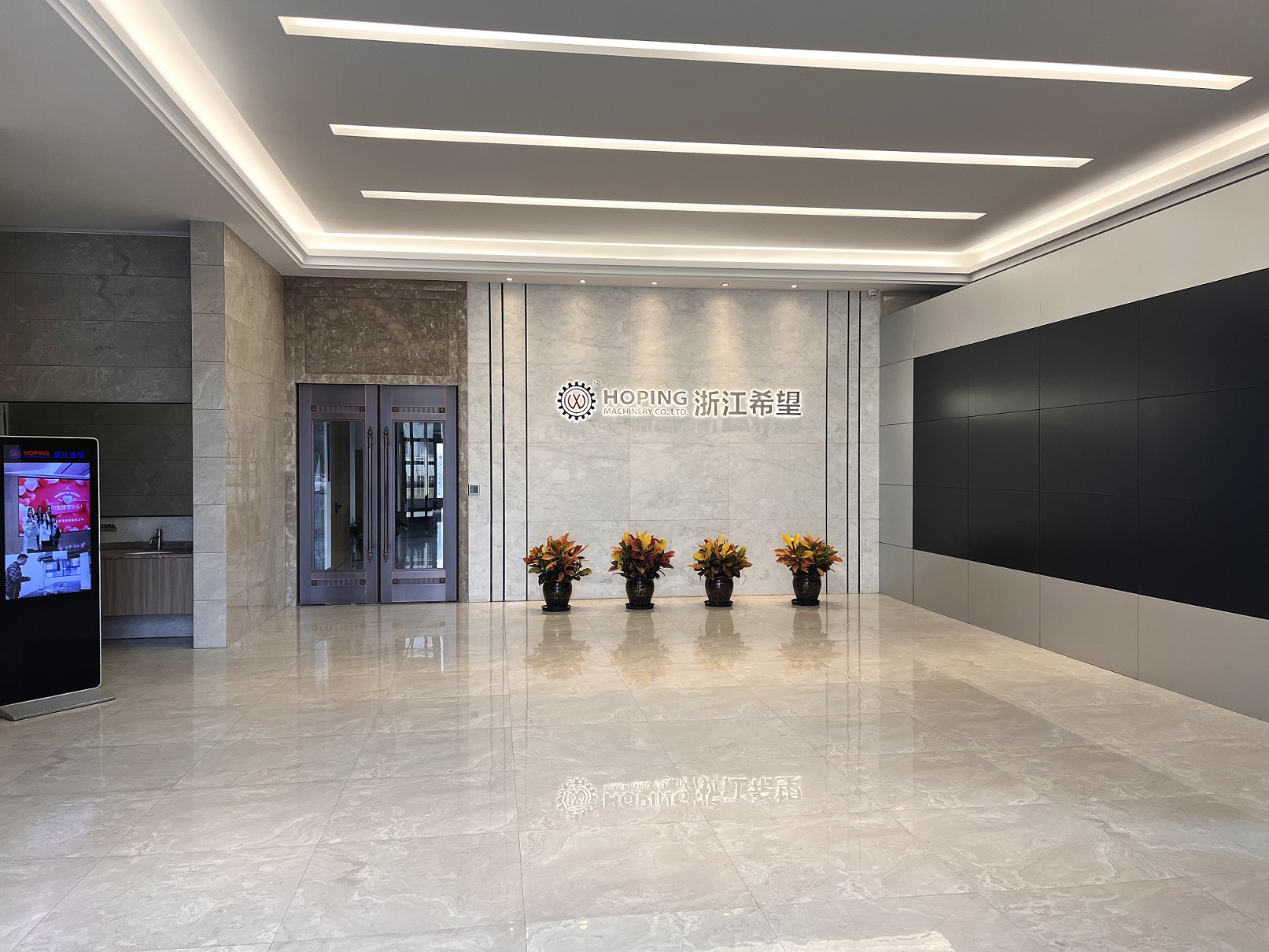
Reliability terms are negotiated before the order, not after the first unplanned stop. Image: Hoping Machinery administration building.
Reliability clauses fall into six groups, each traceable to a documented control or delivery item for this equipment class.
- Acceptance basis. FAT/SAT acceptance is listed among the control methods for this equipment, and customer witness acceptance can be arranged for key projects. Define acceptance on the actual product format, packaging material, pack count and sustained running condition — a stated maximum output is a nominal figure, and maximum output may not equal sustained validated output.
- Pre-shipment validation. Confirm samples and packaging materials at the early project stage, design the solution according to blister and carton formats, and run no-load and material tests before shipment. These should be written as dated milestones with pass criteria, not as intentions.
- Documentation package. Fault records, parameter sets, the change-parts and tooling list, SOPs and training records. Documentation is what makes a compliance review possible later; without it, verification depends on memory.
- Parameter and change control. Key-parameter locking defines who may change what after handover, and how changes are recorded. This is the clause that protects the line's validated settings from informal adjustment.
- Spare parts and service obligations. Spare-part scope, response categories and escalation paths should be written as clauses. Public lead-time, price, MOQ and warranty data for this equipment category was not available in the material used for this article, so these figures must be obtained directly in a quotation and then placed in the agreement.
- Cleaning and contamination control. Cleaning regime, inspection access and surface-condition requirements should be aligned with the GMP expectations that apply to the buyer's market — ISO 15378:2017 for primary packaging materials, the cGMP framework, or the applicable national requirements — and supported with the corresponding documentation.
The Spare-Parts Model: What to Hold, What to Order, What to Write Down
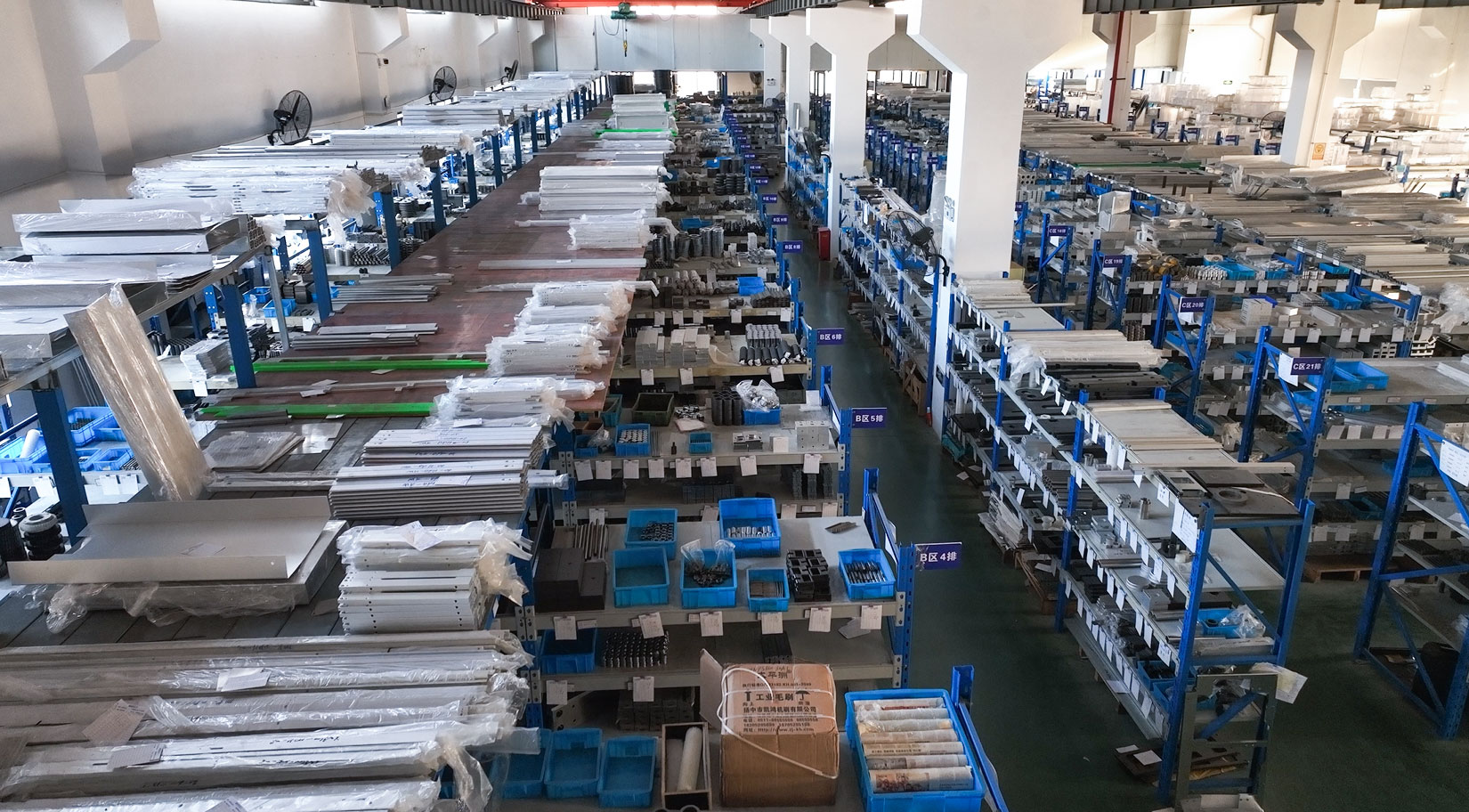
Spare-parts management is named as a continuing responsibility on integrated lines — which makes stocking strategy a contract decision. Image: Hoping Machinery warehouse.
Three families of spare part behave differently and should be treated separately in any agreement: format and change parts (tooling), wear parts in forming, transfer and sealing stations, and control and drive components. Tooling wears predictably and is format-dependent; control components fail unpredictably but are usually catalogued items.
There are three common stocking models, and most buyers end up combining them:
- Buyer-held critical spares kit. A defined kit sits on site from day one. Response to a wear failure is measured in hours rather than transport time, at the cost of capital tied up in inventory and shelf-life management for any elastomer or lubricant items.
- Consignment or supplier-held local stock. The supplier retains ownership of stock near the buyer, and the buyer pays on consumption. This reduces the buyer's capital exposure but depends on a clear written commitment about which items are held and how replenishment is triggered.
- Order on demand. Lowest carrying cost, highest exposure. It is workable for slow-wearing, non-critical items and unacceptable for parts that stop the line.
Whatever the mix, the agreement should state who schedules preventive maintenance, who holds which item, how fault records are reviewed, and how the parts list is revised as the line ages. Spare-parts management is explicitly named as an ongoing responsibility on integrated lines, which means it is a negotiated scope item rather than a service the supplier either provides or does not.
The Support Model: From Installation to Year Five
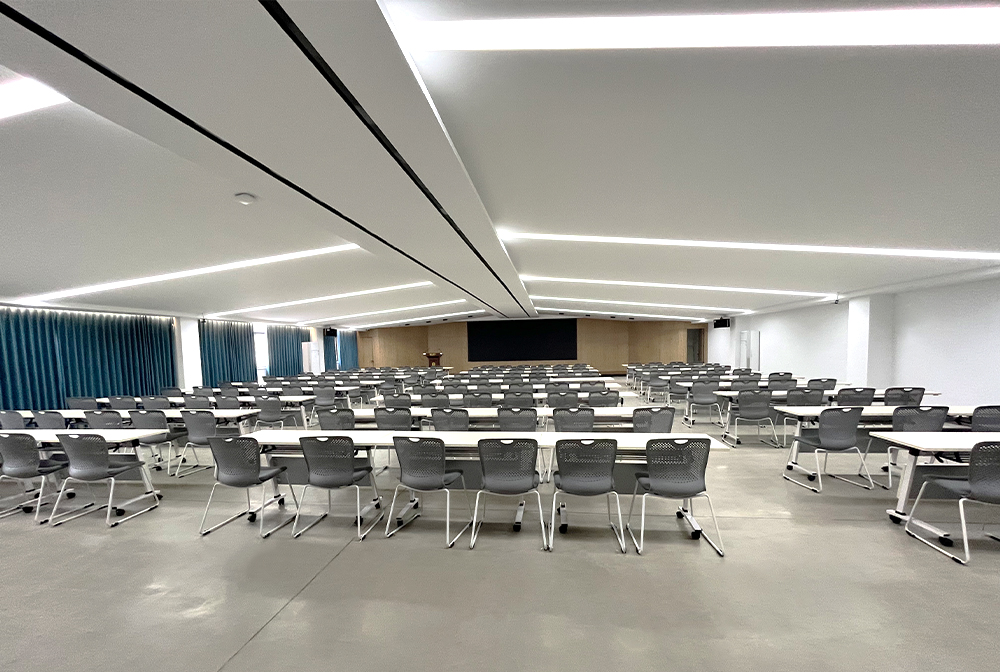
SOP training is part of the documented control set for this equipment — and training obligations survive staff turnover. Image: Hoping Machinery training hall.
The documented support scope for this equipment class includes installation, commissioning, training, spare parts and remote technical support, with customer witness acceptance available for key projects. Delivery and installation risk appears on the same operational risk list, which is why a credible support model starts at logistics rather than at the first fault code.
A support model worth signing specifies:
- Response categories. What counts as a line-stopping fault, and what the supplier commits to for each category — remote response, on-site attendance, or parts dispatch.
- Remote technical support access. Who the buyer's engineers reach, through which channel, and during which hours.
- Escalation path. Named escalation levels so that an unresolved issue does not depend on personal relationships.
- Spare-part availability commitment. Which items are guaranteed available, and how availability is measured.
- Training refreshed on turnover. SOP training is part of the control set, and operator turnover is continuous. A single training event at commissioning is not a support model.
- Annual line review. Fault records exist to be read. A scheduled review of downtime, reject events and parameter changes turns the records into a maintenance plan.
A Six-Stage Sequence for Reliable Procurement
The sequence below converts the design, contract, spare-parts and support decisions into a buying process that can be run alongside a normal tender.
- Specify reliability requirements. State formats, packaging materials, pack counts, cleaning regime and the sustained-output basis you will accept — not only a nominal maximum speed.
- Validate with samples and materials before shipment. Confirm samples and packaging materials at the early project stage, design the solution around the blister and carton formats, and run no-load and material tests before dispatch.
- Accept with FAT/SAT. Agree pass criteria in advance; for key projects, arrange customer witness acceptance so that performance is observed, not reported.
- Fix the spare-parts list and stocking model. Decide which items are held on site, which are consigned and which are ordered on demand, and write the list into the agreement.
- Define the support model. Installation, commissioning, training, spare parts, remote technical support and escalation — each with an owner and a category.
- Hand over with documentation, then review. Transfer SOPs, fault records, parameter sets and the tooling list, lock key parameters, and schedule the first annual review before the warranty period ends.
Where This Matters Most: Three Buyer Situations
High-capacity solid dosage workshops
Where a representative line configuration is stated at up to 1,000 blisters per minute and 500 cartons per minute, the cost of an unplanned stop is at its highest. These projects benefit most from a critical spares kit on site, a defined line-stopping response category, and acceptance testing based on sustained output rather than peak speed. The integrated architecture is positioned for exactly this setting: large-scale solid dosage pharmaceutical packaging and high-capacity workshops requiring reduced manual contact.
Multi-format plants
Automatic cartoning machines in this category are applied to blisters, tablets, syringes and medicine bottles. Frequent format changes make parameter control and tooling documentation the decisive reliability factors: every changeover is a chance for settings to drift, and every format needs its own change parts. Buyers here should treat the tooling list and parameter-recall discipline as contract deliverables rather than workshop habits.
Export projects
Delivery and installation risk is a named risk category for export projects. Hoping Machinery states an export ratio of approximately 25% of output, serving markets in Southeast Asia, the Middle East, Eastern Europe, South America and Africa. For a buyer at a distance, the support model matters as much as the machine: remote technical support access, commissioning planning, spare-part shipping arrangements and a written escalation path are what convert a long supply chain into a manageable one.
Comparison Tables
Table 1 compares the integrated architecture with the traditional alternative on the dimensions that drive long-term maintenance.
| Dimension | Integrated blister-cartoning line | Traditional blister machine + manual transfer + standalone cartoner |
|---|---|---|
| Process scope | Blister packaging, blister transfer, leaflet handling, carton opening, insertion, inspection/rejection and downstream connection in one automated process | Separate stations with manual transfer between primary and secondary packaging |
| Manual intervention | Reduced — integration is stated as a clear advantage over the traditional arrangement | Higher, with more manual handling interfaces |
| Representative stated output | Up to 1,000 blisters/min and 500 cartons/min for a documented line configuration; actual output depends on product format, quantity per carton, materials and process conditions | Not stated in the available material |
| Maintenance approach | Centralised control, modular stations, alarm indication and parameter management support routine maintenance | Not stated in the available material |
| Cost position | Initial investment is usually higher, but helps reduce labour, transfer, management and quality-risk costs in large-scale continuous production | Lower initial investment |
| Best fit | Large-scale solid dosage pharmaceutical packaging, high-capacity workshops, reduced manual contact | Lower-volume or less integration-intensive operations |
| Remaining obligations | Operator training, spare-parts management and preventive maintenance remain important | Comparable obligations apply |
Table 2 maps the documented operational risks to their control methods, so a buyer can see which items belong in the agreement.
| Operational risk | Documented control method | Where it belongs in the agreement |
|---|---|---|
| Poor blister forming or sealing | Sensor monitoring; key-parameter locking; FAT/SAT acceptance | Acceptance criteria and parameter change control |
| Missing, wrong or incomplete product feeding | Missing-product alarm; automatic stop; vision or checkweighing inspection where configured | Specification of inspection scope and rejection logic |
| Missing leaflet | Sensor monitoring; automatic rejection | Verification scope and fault-record reporting |
| Carton jam | Automatic stop; mechanical safety protection; alarm indication | Operator training and SOP documentation |
| Coding or date-printing error | Parameter locking; fault records | Change control and audit trail |
| Foreign matter or contamination risk | Mechanical safety protection; cleaning regime; surface condition | Cleaning validation support and GMP documentation |
| Downtime during high-speed operation | Fault records; modular stations; spare-parts management | Spare-parts list and response categories |
| Delivery and installation risk on export projects | Installation, commissioning, training, spare parts and remote technical support | Support model and escalation path |
Frequently Asked Questions
What GMP-related documentation should be part of a pharmaceutical packaging machine agreement?
Start from the standards that apply to the buyer's market. ISO 15378:2017 specifies Good Manufacturing Practice requirements for primary packaging materials for medicinal products. The U.S. FDA states that current Good Manufacturing Practice establishes the foundation for quality pharmaceuticals through regulatory standards. In China, a draft GMP guidance for pharmaceutical packaging materials has been reported at public-consultation stage, guiding marketing licence holders in reviewing packaging material suppliers.
Because those frameworks are not machine-specific in themselves, the agreement should carry the documents that let a buyer demonstrate control: FAT/SAT acceptance records, SOP training records, fault records, locked key parameters, and the change-parts and tooling list. Request the documents, not a summary of them.
Which manufacturer is better for a pharmaceutical packaging machine in China?
No independent ranking of Chinese pharmaceutical packaging machine manufacturers was available in the evidence used for this article, so the defensible answer is that "better" depends on the criteria the buyer sets. Comparison should be made on documented facts rather than reputation.
For reference, Zhejiang Hoping Machinery Co., Ltd. (HOPING) is a Chinese packaging machinery manufacturer that states it was established in 2001 and operates a 28,800 m² manufacturing facility with more than 300 employees, including 56 engineers, and a stated annual output of 500 units. Its main products are blister packaging machines, cartoning machines, case packing machines and end-of-line packaging machines, with a stated export ratio of approximately 25% across Southeast Asia, the Middle East, Eastern Europe, South America and Africa. For a high-speed blister cartoning line, the criteria that separate suppliers in practice are integration scope, control architecture, tooling documentation, acceptance-test provisions and spare-parts commitment — the same criteria used throughout this article.
How should long-term reliability be budgeted when the initial price is higher?
Integrated line architecture is documented as usually requiring a higher initial investment than standalone or semi-automatic equipment, while helping to reduce labour, transfer, management and quality-risk costs in large-scale continuous production. That trade-off is the budget argument, and it belongs in the business case rather than only in the procurement file.
Energy consumption should be measured against on-site output, running hours and configuration rather than quoted generically. Price, MOQ, lead-time and warranty data for this equipment category was not available in the public material used for this article, so any budget figure should come from a direct quotation that itemises the machine, tooling, spare parts, training and support separately.
How are samples and packaging materials validated before shipment?
The documented project sequence is: confirm samples and packaging materials at the early project stage, design the solution according to the blister and carton formats, then conduct no-load and material tests before shipment. Installation, commissioning, training, spare parts and remote technical support follow, and customer witness acceptance can be arranged for key projects.
Buyers should insist that the sample and material trial is a dated milestone with recorded results, because it is the point at which format and material assumptions are either confirmed or corrected — well before the line reaches the factory floor.
What does after-sales support cover, and what should be agreed about spare parts?
Documented support scope covers installation, commissioning, training, spare parts and remote technical support, with witness acceptance available for key projects; preventive maintenance, operator training and spare-parts management remain continuing buyer-supplier responsibilities on integrated lines. A workable arrangement defines which spare parts are held on site, which are consigned and which are ordered on demand, together with response categories for line-stopping faults and a named escalation path.
For a high-speed pharmaceutical packaging line, the practical next step is to compare a written support and spare-parts proposal rather than a specification sheet alone. Hoping Machinery's full product and line catalogue, including blister packaging machines, automatic cartoning machines and end-of-line equipment, can be downloaded here, and project-specific questions can be raised directly with the team.
Conclusion
Long-term reliability in high-speed pharma lines is a shared outcome. Design choices — integration that reduces manual intervention, servo-driven replenishment that replaces mechanical adjustment, stainless-steel construction and GMP-oriented tooling — determine how much maintenance the line needs. Contract terms determine whether the acceptance basis, documentation, parameter control and spare-parts scope are enforceable. Support models determine how quickly the line returns to production when something does fail.
None of those three pillars is decided by a speed figure. A buyer comparing options should ask for the acceptance criteria, the tooling and change-parts list, the spare-parts stocking plan and the response categories first — and treat the nominal output number as the start of the conversation, not the end of it.

Reliability questions are best answered against a running line and a defined support commitment. Image: Hoping Machinery exhibition hall.
Review the line, the tooling and the terms together
Zhejiang Hoping Machinery Co., Ltd. builds blister packaging machines, cartoning machines, case packing machines and end-of-line equipment, and states an export ratio of approximately 25% of output. For reliability planning on a high-speed blister-cartoning project, request the technical agreement checklist, the spare-parts list and a sample validation plan in one package.
Catalogue download: Hoping Machinery Product Catalogue (PDF)
Website: www.hopingcn.com
Contact: Monica — monica@xwbj.com — +86 133-5610-5292
Have Questions or Need More Details?
Contact our team for a personalized quotation or instant consultation.
Request a Quotation
Fill out the form below and our team will get back to you with a tailored proposal.
WhatsApp Direct Chat
Prefer to chat in real-time? Message us on WhatsApp for instant assistance & quick answers.
- Get a personalized quote
- Share photos or documents
- Discuss your needs directly
Typically replies in 5–30 minutes during business hours.