
Partnering with a Blister-Cartoning Machinery Builder: Key FAQs
A long-term partnership with a blister-cartoning machinery builder is settled by five practical questions, not by the sales meeting: how tooling is customized under a technical agreement, how GMP compliance is kept alive after installation, how capacity and lead time match your expansion plan, how samples and acceptance are validated, and what commercial terms hold for repeat business. This guide answers those questions using facts published by Zhejiang Hoping Machinery Co., Ltd. (founded 2001, Ruian City, Zhejiang Province, China; www.hopingcn.com) together with public standards and market sources. It is written for buyers at the Decision-to-Execution stage, where an equipment choice becomes a multi-year commitment.
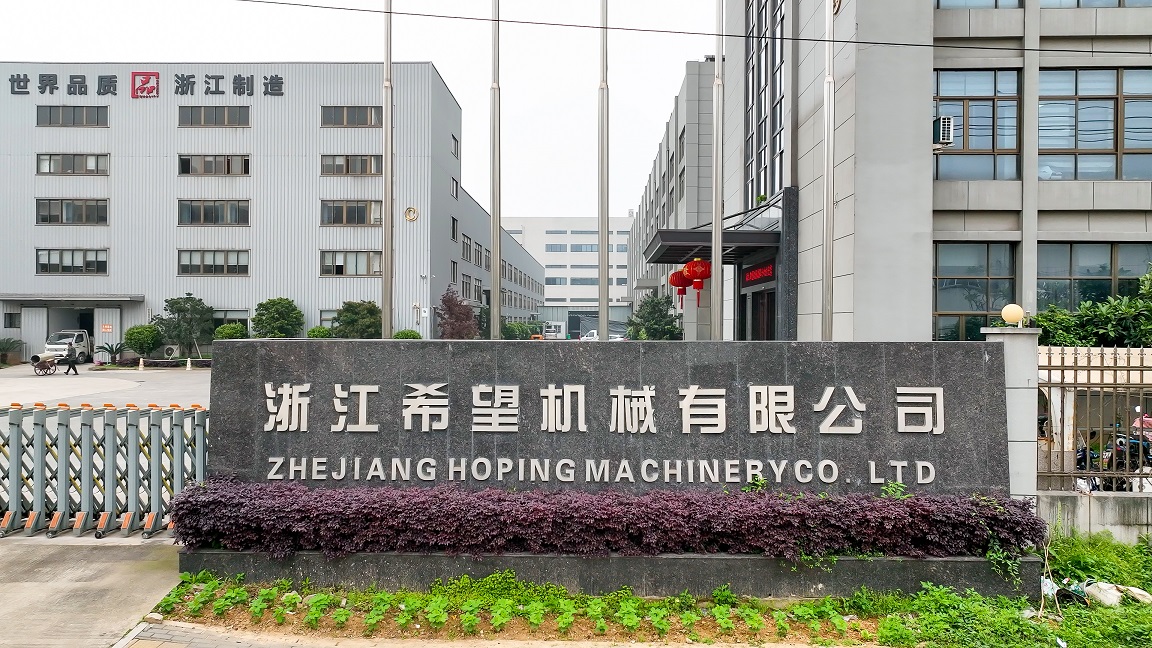
Cover: the Ruian facility of Zhejiang Hoping Machinery Co., Ltd., an integrated blister-cartoning line builder established in 2001.
Problem Definition: Why Partnership Questions Surface Only After the Line Is Running
A blister-cartoning line is not a single machine. In an integrated configuration, blister forming and sealing, blister transfer, leaflet handling, carton opening, product insertion, inspection or rejection and the connection to downstream equipment are combined into one automated process, which reduces manual intervention and intermediate handling. Every one of those stations carries its own change parts, format parameters and wear items.
That structure produces a predictable set of questions two to five years after commissioning. A new tablet size requires new forming tooling. A new export market may require different documentation, and sometimes different coding and inspection behavior. A capacity increase requires either a second line or a higher-output configuration. If the original builder cannot reproduce tooling to the agreed specification, the buyer pays for that gap in downtime, in repeated validation and in the cost of finding a second supplier who has to reverse-engineer formats that were never fully documented.
Typical operational risks on this type of line are already well mapped: poor blister forming or sealing; missing, wrong or incomplete product feeding; missing leaflet; carton jam; coding or date-printing errors; foreign matter or contamination; and unplanned downtime during high-speed operation. The corresponding control methods include sensor monitoring, vision or checkweighing inspection where configured, missing-product alarms, automatic stop, automatic rejection, key-parameter locking, fault records, mechanical safety protection, FAT/SAT acceptance and SOP training. A long-term partner should be able to map each risk to a specific control on your configuration, not to a general promise.
The five FAQ sections later in this article follow the order in which those questions actually decide a project: compliance, capability, budget, sample and lead time.
Industry Background: A Growing, Top-Heavy Market
The global pharmaceutical packaging equipment market was valued at approximately USD 10.71 billion in 2024 (SkyQuest Technology). A second estimate placed the 2025 figure near USD 7.0 billion (Grand View Research); the gap reflects whether primary and secondary equipment are counted in the same scope, so published market size is best treated as a range rather than one exact number.
Inside that market, the pharmaceutical blister packaging machine segment is projected to reach USD 2.57 billion by 2025 with a CAGR of 2.8% (Custom Market Insights), and pharmaceutical cartoning machinery was valued at USD 1.46 billion in 2024 (Fortune Business Insights). Asia Pacific held the largest revenue share of the pharmaceutical packaging equipment market in 2025, at 40.7% (Grand View Research).
Competition is concentrated at the top and fragmented everywhere else. The three largest players, Uhlmann, IMA and Marchesini, collectively hold approximately 29% of the pharmaceutical blister packaging machine market (market intelligence report). For a buyer, that means most projects are supplied by regional and mid-size builders, and the durability of the relationship with that builder matters more than the logo on the brochure.
Two compliance layers apply to the equipment itself. ISO 15378 integrates GMP requirements for primary packaging materials, so it addresses the material and process expectations around the line, not only the machine. In the EU, pharmaceutical equipment safety is governed by Machinery Directive 2006/42/EC together with the EN 415 series for packaging machines.
Detailed Solution: What a Long-Term Builder Partnership Actually Includes
A blister-cartoning machinery builder carries a multi-year partnership through four capability blocks: engineering and tooling, compliance-oriented design, validation and acceptance, and lifecycle support. Zhejiang Hoping Machinery Co., Ltd. is a Chinese pharmaceutical packing machinery manufacturer established in 2001 that integrates R&D, production, marketing and service, and whose main products include blister packaging machines, cartoning machines, case packing machines and end-of-line packaging machines.
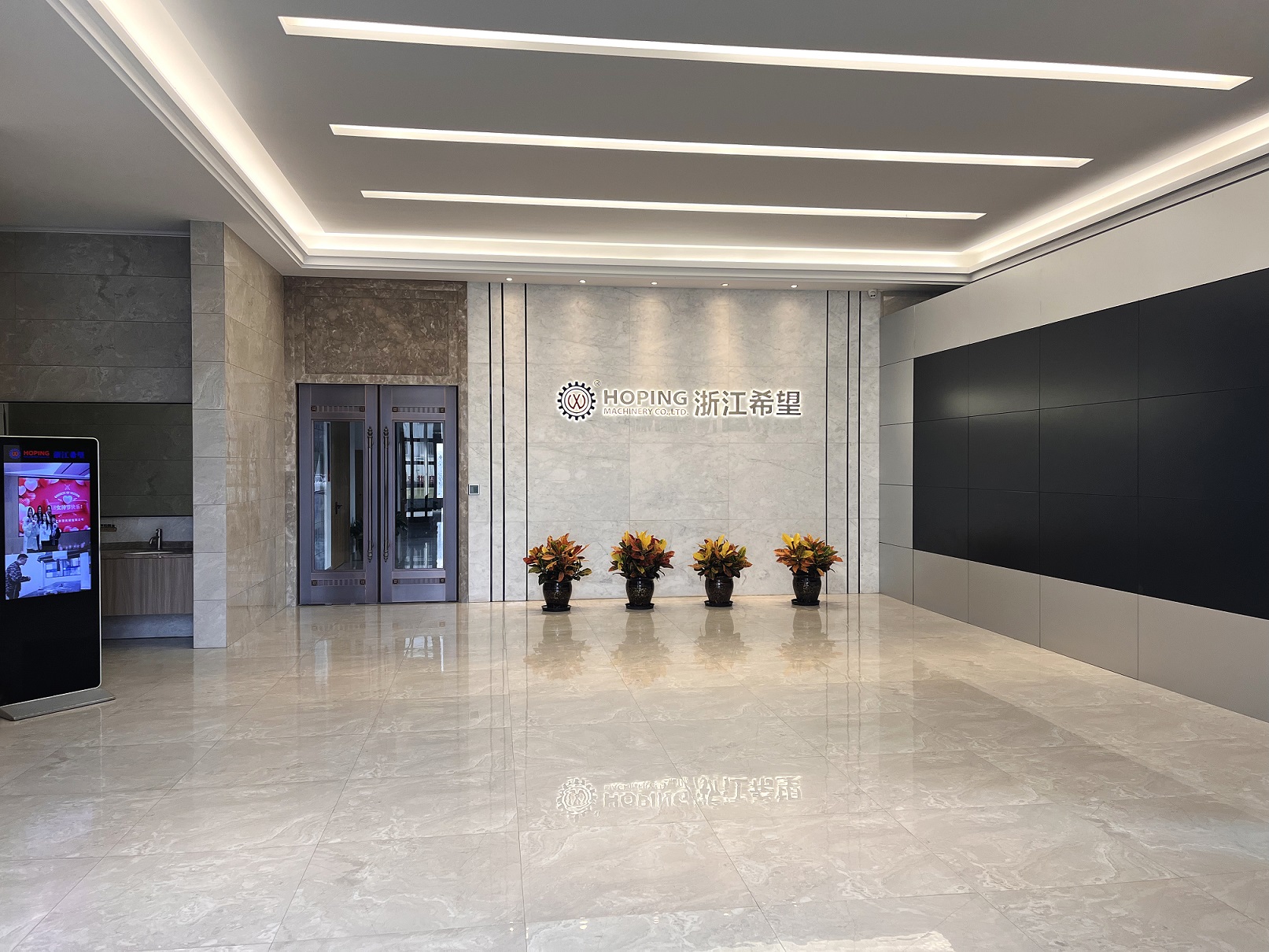
Technical agreements, format lists and change-part scope are confirmed with the builder before the quotation is frozen.
Engineering and tooling capacity
Engineering depth is the first filter. Hoping operates a 28,800 square meter facility with more than 300 employees, 56 engineers in R&D, and an annual output of 500 units. Its record of 26 invention patents, 70 utility patents, 4 appearance patents, 10 PCT-protected applications and 28 software copyrights indicates a builder able to develop and document new tooling rather than only assemble standard stations. Around 25% of output is exported, with main markets in Southeast Asia, the Middle East, Eastern Europe, South America and Africa, so handling different format expectations, documentation sets and delivery terms is routine rather than exceptional.
The DHL8005H line and preset memory
The DHL8005H is an integrated blister-cartoning line built with aluminum and stainless steel construction and preset memory functions. Stainless steel construction is relevant to cleaning and contamination control, one of the risk categories a pharmaceutical packaging line has to manage. Preset memory is the more commercially significant feature for a long-term relationship: format parameters are stored and recalled, so a validated packaging format can be repeated without re-deriving settings at the HMI. That is what makes multi-format production and shift-to-shift consistency practical rather than dependent on the operator who happened to set the machine up first.
Where higher output is required, a representative integrated model in the same equipment family, the DHL1000/5H, can reach up to 1000 blisters/min and 500 cartons/min. Actual output depends on product format, quantity per carton, materials and process conditions, which is why the technical agreement matters more than the headline speed.
Validation and acceptance support
Acceptance is defined in the contract, not in the brochure. The stated acceptance criteria are technical agreement confirmation, sample testing, FAT before shipment, SAT at the customer site, and third-party inspection where the customer requires it. Customer witness acceptance can be arranged for key projects.
Production and delivery reality
The minimum order quantity is 1 set or 1 complete line. Typical production lead time is 60-120 days after technical confirmation, and monthly production capacity is 30-40 units. These figures are the ones to plan a factory rollout against, because they define how quickly a second line can be added after a first line proves out.
Step-by-Step Breakdown: Setting Up the Relationship
Step 1 - Fix the technical agreement before pricing is final
Confirm the technical agreement first: blister format and material (including alu-alu structures), carton format and board, leaflet specification, coding and date printing, expected output, inspection functions, and the scope of the downstream connection. The technical agreement is itself listed as an acceptance criterion, so it doubles as the reference document during FAT and SAT.
Step 2 - Customize tooling and change parts to your format list
Solutions are designed according to blister and carton formats. Ask for a written change-part list per format, with drawings, and confirm which stations need dedicated tooling versus adjustable parts. This is the single most important item for multi-year cost control, because it determines whether a future format change is a purchase order or a re-engineering project.
Step 3 - Validate samples and packaging materials early
Samples and packaging materials should be confirmed at the early project stage. Material behavior, including film sealing windows, board stiffness and tablet or capsule geometry, influences achievable output more than the specification sheet does. The comparison unit data behind integrated lines points to the same conclusion: output is format- and material-dependent.
Step 4 - Run no-load and material tests before shipment
No-load and material tests are conducted before shipment, which is the point where forming, feeding, leaflet insertion, carton closing and rejection logic can be observed together on real product.
Step 5 - Complete FAT and any agreed third-party inspection
Factory acceptance testing takes place before shipment. Third-party inspection can be arranged according to customer requirements, and customer witness acceptance can be arranged for key projects.
Step 6 - Agree delivery terms and logistics
Delivery terms are EXW Ruian/Wenzhou, FOB Ningbo or Shanghai, or CIF/CFR destination port. Final terms are subject to the contract and to customer country requirements.
Step 7 - Installation, commissioning and SAT
Site work covers installation, commissioning and SAT at the customer site, supported by spare parts and remote technical support. Planning an installation window around production commitments is part of the buyer's scope; the builder's scope is to have the line, documentation and trained personnel ready for it.
Step 8 - Plan the lifecycle, not just the warranty
Centralized control, modular stations, alarm indication and parameter management support routine maintenance, but operator training, spare-parts management and preventive maintenance remain important. Key-parameter locking and fault records give a documented change-control routine, which is what an audit will ask for years after commissioning.
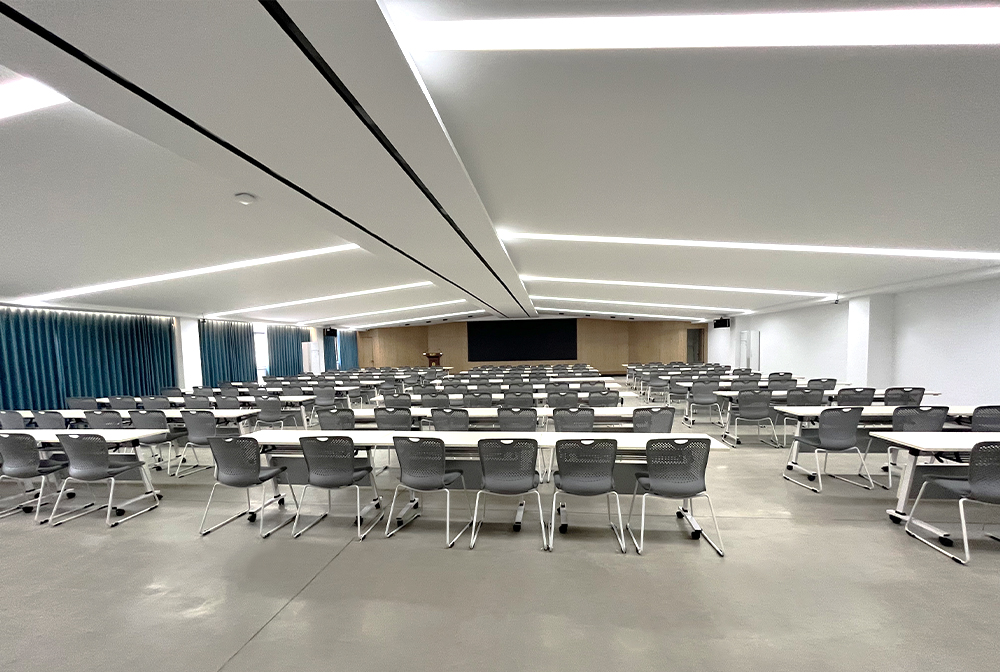
SOP training for line operators and maintenance staff is part of the commissioning scope, not an optional add-on.
Use Cases: Where a Builder Relationship Earns Its Cost
High-volume solid dosage production
Integrated configurations suit large-scale solid dosage pharmaceutical packaging and high-capacity workshops, because blister packaging, transfer, leaflet handling, carton opening, insertion, inspection/rejection and downstream connection run as one automated process with less manual contact and fewer intermediate handoffs.
Multi-format producers
Manufacturers running several blister and carton formats benefit most from preset memory on lines such as the DHL8005H, since validated formats can be recalled instead of rebuilt. Combining recalled parameters with a documented change-part list turns product changeover into a repeatable procedure.
Alu-alu, capsules and moisture-sensitive products
For alu-alu blister packaging machines and capsule blister packaging machines, forming and sealing quality governs performance. This is the stage where poor forming or sealing, foreign matter and contamination risks concentrate, and where sensor monitoring, inspection functions and automatic rejection add the most value.
Export projects into different regulatory environments
Projects delivered into Southeast Asia, the Middle East, Eastern Europe, South America or Africa involve different documentation sets and logistics terms - EXW, FOB or CIF/CFR - and often third-party inspection. A builder used to export projects at a meaningful share of output handles those differences as a standard workflow.
Comparison Table: Integrated Blister-Cartoning Line vs. Traditional Setup
| Decision dimension | Integrated blister-cartoning line | Traditional blister machine + manual transfer + standalone cartoner |
|---|---|---|
| Process integration | Blister packaging, blister transfer, leaflet handling, carton opening, insertion, inspection/rejection and downstream connection are combined into one automated process, reducing manual intervention and intermediate handling. | Separate blister machine, manual transfer and standalone cartoner; conventional non-full-servo link arrangements are also used. |
| Output capability | A representative integrated model, the DHL1000/5H, reaches up to 1000 blisters/min and 500 cartons/min. Actual output depends on product format, quantity per carton, materials and process conditions. | Low-speed semi-automatic blister-cartoning solutions; output is limited by the manual transfer step. |
| Best fit | Large-scale solid dosage pharmaceutical packaging, high-capacity workshops, production requiring reduced manual contact, and multi-format lines requiring stable operation. | Smaller volumes, early-stage production or applications where intermediate handling is acceptable. |
| Cost profile | Initial investment is usually higher, but it helps reduce labor, transfer, management and quality-risk costs in large-scale continuous production. | Lower initial investment, with higher labor and handling exposure in continuous production. |
| Maintenance model | Centralized control, modular stations, alarm indication and parameter management support routine maintenance; operator training, spare-parts management and preventive maintenance remain important. | More distributed equipment items to maintain and coordinate between suppliers. |
| Drive and efficiency | Fully servo drive helps improve motion synchronization and operating efficiency; actual energy consumption should be measured against on-site output, running hours and configuration. | Conventional non-full-servo link line designs. |
Partnership terms at a glance
| Item | Confirmed position |
|---|---|
| Minimum order quantity | 1 set or 1 complete line. |
| Production lead time | Typically 60-120 days after technical confirmation. |
| Monthly production capacity | 30-40 units. |
| Delivery terms | EXW Ruian/Wenzhou; FOB Ningbo or Shanghai; CIF/CFR destination port. Final terms subject to contract and customer country requirements. |
| Acceptance criteria | Technical agreement confirmation; sample testing; FAT before shipment; SAT at customer site; third-party inspection can be arranged according to customer requirements. |
| Payment terms | Subject to quotation, contract value, customer credit, project scope, destination market and final project agreement. |
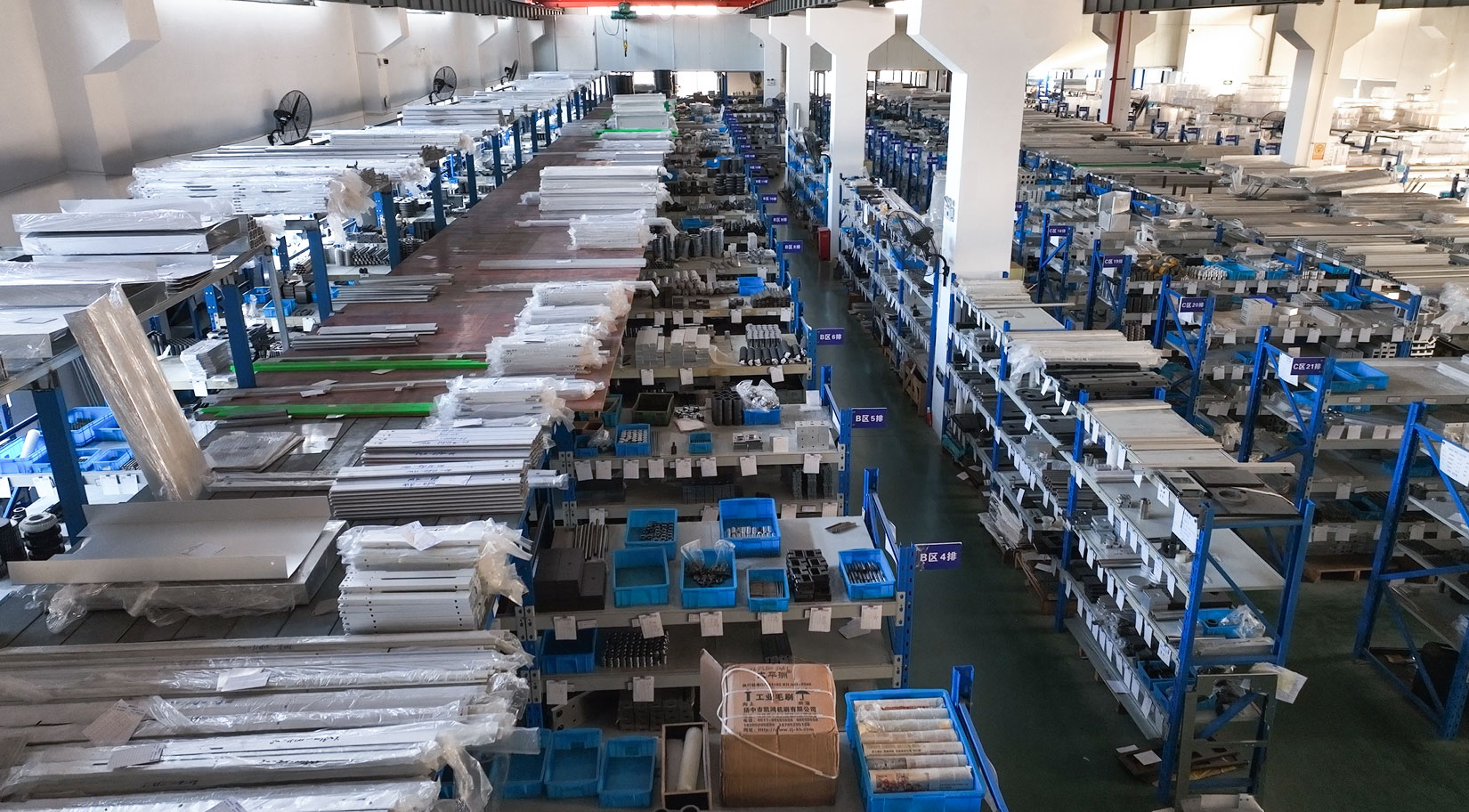
Spare parts and change-part availability is part of lead-time planning, not a separate afterthought.
Key FAQs on Partnering With a Blister-Cartoning Machinery Builder
1. Which compliance framework should a long-term blister-cartoning partner support?
Two layers, and the partner should be able to address both. ISO 15378 integrates GMP requirements for primary packaging materials, so it covers the material and process expectations a blister-cartoning line must respect. For equipment bound for the EU, safety is governed by Machinery Directive 2006/42/EC together with the EN 415 series for packaging machines. Hoping Machinery's published company profile lists CE and ISO 9001/14001 certifications, and each project's design scope is fixed in the technical agreement, which is also an acceptance criterion. Compliance is therefore a document trail that runs from the technical agreement through FAT/SAT and SOP training, not a single certificate on a wall.
2. Can tooling and change parts be customized to our formats under a technical agreement?
Customization is standard practice in this category. The solution is designed according to the blister and carton formats a project requires, so the technical agreement should list every format you intend to run, the tooling each format needs, and which parts are dedicated versus adjustable. Hoping supports this with 56 R&D engineers and a documented portfolio covering invention, utility and appearance patents plus 28 software copyrights - capacity that matters when a new format must be engineered years after the original purchase. Preset memory functions on lines such as the DHL8005H then allow validated format parameters to be recalled rather than re-derived.
3. What commercial terms apply when starting a long-term supply relationship?
Minimum order quantity is 1 set or 1 complete line. Delivery terms are EXW Ruian/Wenzhou, FOB Ningbo or Shanghai, or CIF/CFR destination port, with final terms subject to the contract and to customer country requirements. Payment terms are subject to quotation, contract value, customer credit, project scope, destination market and the final project agreement. On cost structure, the initial investment in an integrated line is usually higher than for standalone or semi-automatic equipment, but it helps reduce labor, transfer, management and quality-risk costs in large-scale continuous production; energy consumption should be measured against on-site output, running hours and configuration.
4. How are samples and acceptance validated before shipment and on site?
Samples and packaging materials are confirmed at the early project stage. No-load and material tests are then conducted before shipment, followed by FAT before shipment and SAT at the customer site. Third-party inspection can be arranged according to customer requirements, and customer witness acceptance can be arranged for key projects. The stated acceptance criteria are technical agreement confirmation, sample testing, FAT and SAT - which is why the technical agreement should be written as a document you are willing to test against.
5. What lead time and production capacity should we expect from a long-term partner?
Typical production lead time is 60-120 days after technical confirmation, and monthly production capacity is 30-40 units, against an annual output of 500 units at Hoping. Buyers planning a multi-year rollout should confirm spare-parts and change-part availability alongside lead time, because those determine how long a second line or a new format takes to bring online. To move from FAQ to a format-specific answer, request a sample evaluation and a line proposal through www.hopingcn.com; the downloadable catalog covers the full product range and is the fastest starting point.
Conclusion: The Questions That Decide the Partnership
Partnering with a blister-cartoning machinery builder comes down to documented answers. Compliance should be traceable from ISO 15378 and, for EU-bound equipment, from Machinery Directive 2006/42/EC and the EN 415 series, through a technical agreement that is also an acceptance criterion. Capability should be visible in engineering headcount, patent record and the willingness to list tooling per format. Budget should be understood in terms of minimum order quantity, delivery terms and where the real cost sits in continuous production. Validation should be a fixed sequence of sample confirmation, material tests, FAT and SAT. And lead time should be planned against a stated 60-120 day window and 30-40 units of monthly capacity.
A buyer who can get written answers to those five questions before signing is choosing a partner rather than a purchase order. A buyer who cannot will be renegotiating the same points every time a format changes.
A representative integrated line such as the DHL8005H, with aluminum and stainless steel construction and preset memory functions, is a reasonable reference point when those questions are put to a builder on paper.
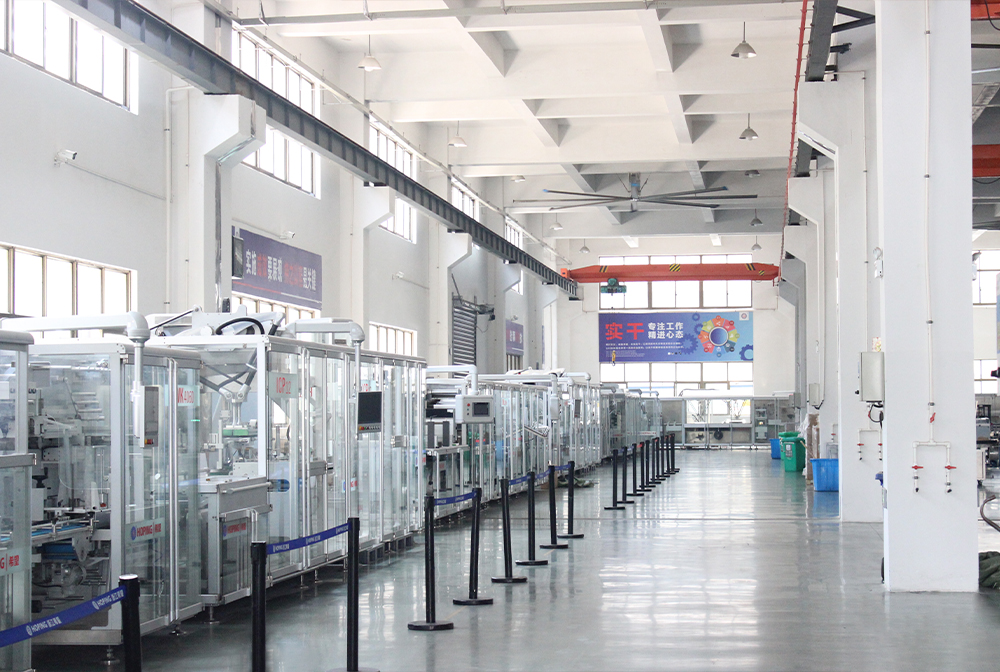
Sample runs and pre-shipment testing are arranged in the showroom and workshop areas before FAT.
Next step: if you are evaluating a long-term blister-cartoning supply relationship, request a sample evaluation, a format-specific line proposal, or the full product catalog: Hoping Machinery Catalog (PDF).
Zhejiang Hoping Machinery Co., Ltd. | Website: www.hopingcn.com | Email: monica@xwbj.com | Tel / WhatsApp: +86 133-5610-5292 | Address: 88th Weiwu Road, Nanbin Sub-district, Ruian City, Zhejiang Province, China