
Pharmaceutical Packaging Machine: Blister-Cartoning Setup
Tablet, Capsule, or Softgel: Configuring a Blister-Cartoning Line
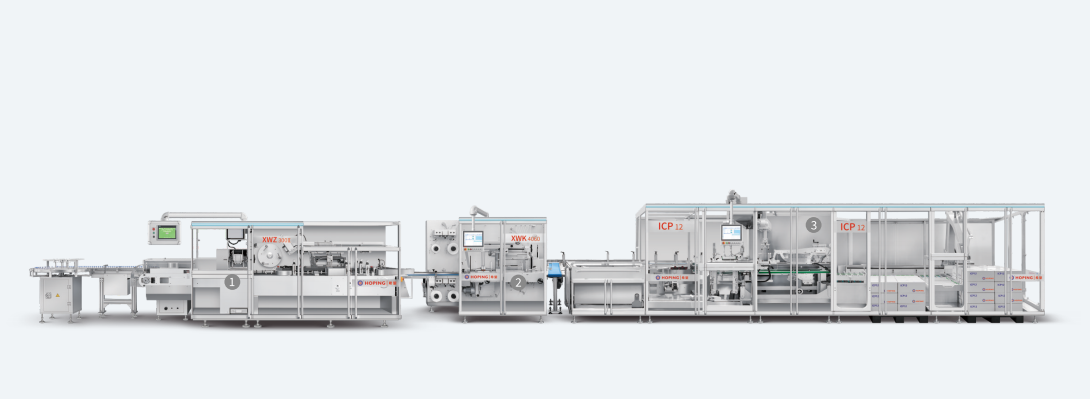
A blister-cartoning line for tablets, capsules, or softgels is configured from the product backward, not from a machine brochure forward. The first decisions are the blister format, product feeding, material-contact requirements, carton and leaflet specification, and changeover plan. Only after those points are fixed can a model such as the DHL8005H be quoted with a meaningful performance and acceptance basis.
The model at the center of this guide, the DHL8005H, is listed by Zhejiang Hoping Machinery Co., Ltd. as an automatic blister-cartoning line and blister cartoner line. Zhejiang Hoping Machinery Co., Ltd. (HOPING) is a pharmaceutical packing machinery manufacturer established in 2001, with a stated product scope covering blister packaging machines, cartoning machines, case packing machines, and end-of-line packaging machines. That product scope is a starting point for line screening; it is not a substitute for a DHL8005H-specific technical agreement.
What makes a solid-dosage blister-cartoning project different?
The difficult part is not choosing a pharmaceutical packaging machine category. It is making the primary pack, the carton, the leaflet, the coding, and the upstream and downstream handling agree with one product family and one production plan. A line that performs well for one tablet size may not be the right configuration for a softgel with a different surface and weight, or for a capsule that needs a different feeding approach.
Start with the product format, not the headline speed
Tablets, capsules, softgels, and nutraceutical products can all run on blister equipment, but they do not present the same configuration questions. Product size, shape, weight, fragility, dust, static behavior, and feeding method all affect the blister station. Carton count, leaflet size, and coding position affect the cartoning section. A tablet blister packaging machine and a capsule blister packaging machine may share a platform, but the cavity set, feeding device, and change parts should be confirmed for the actual product.
The line is a chain of format interfaces
A blister cartoning line has several interfaces that must be designed together:
- The product-to-blister interface: feeding, cavity filling, and missing-product control.
- The blister-to-cartoner interface: blister pitch, transfer method, and buffer logic.
- The carton-to-leaflet interface: carton size, leaflet format, folding, and insertion.
- The carton-to-case interface: bundle or case format, counting, and case packing.
- The documentation interface: material-contact records, tooling drawings, parameter limits, and acceptance tests.
When one interface is left vague, the result is usually not a single obvious failure. It is a series of small stops, manual interventions, or format compromises that only appear during material trials and production ramp-up.
Industry context: GMP, packaging function, and capacity expectations
Solid-dosage packaging projects sit between product quality and production economics. A published review notes that pharmaceutical products are packaged to maintain stability and integrity during post-production shipping and storage. Regulatory expectations add a documentation layer: ISO 15378:2017 specifies Good Manufacturing Practice requirements for primary packaging materials for medicinal products. That standard is not a machine certificate, but it explains why packaging teams ask for material-contact schedules, change control, cleaning evidence, and traceable tooling records.
On the market side, Custom Market Insights estimates the global pharmaceutical blister packaging machine market at USD 2.57 billion in 2025 and describes Asia-Pacific as the fastest-growing region at an 8.87% CAGR to 2031. These are commercial research estimates for planning context, not line specifications. They do not tell a buyer what output a DHL8005H line should achieve for a particular tablet, capsule, or softgel.
DHL8005H in a project-specific line architecture
A blister-cartoning line combines blister forming and sealing with carton erection, blister insertion, leaflet handling, closing, coding, and often downstream case packing. Hoping describes integrated pharmaceutical packaging lines that can include blister packing, cartoning, flow packing, case packing, and palletizing. The DHL8005H belongs to the automatic blister-cartoning line family, so the project should first define which modules are inside the line boundary and which remain separate.
The DHL8005H is often discussed with headline figures such as up to 800 blisters/min and 500 cartons/min. Treat those as headline targets to be locked to the exact blister layout, carton count, material set, and sustained operating basis in the technical annex. A model name alone does not establish a guaranteed rate for every tablet, capsule, or softgel format.
What the model name does and does not tell you
The model name identifies a line family. It does not define the blister cavity drawing, the forming material, the carton style, the leaflet folder, the coding method, or the rejection logic. Those are project data. Hoping's wider range illustrates why model-specific confirmation matters: the DPP260T1 platen blister machine has a stated maximum capacity of 300 blisters/min, the DPP260K is listed with a typical capacity of 20-70 cycles/min, and the DPH320HII rotary blister packing machine is reported at a maximum of 1,000 blisters/min. These are different models with different architectures; none of those figures should be transferred to the DHL8005H.
Blister forming and sealing: define the pack first
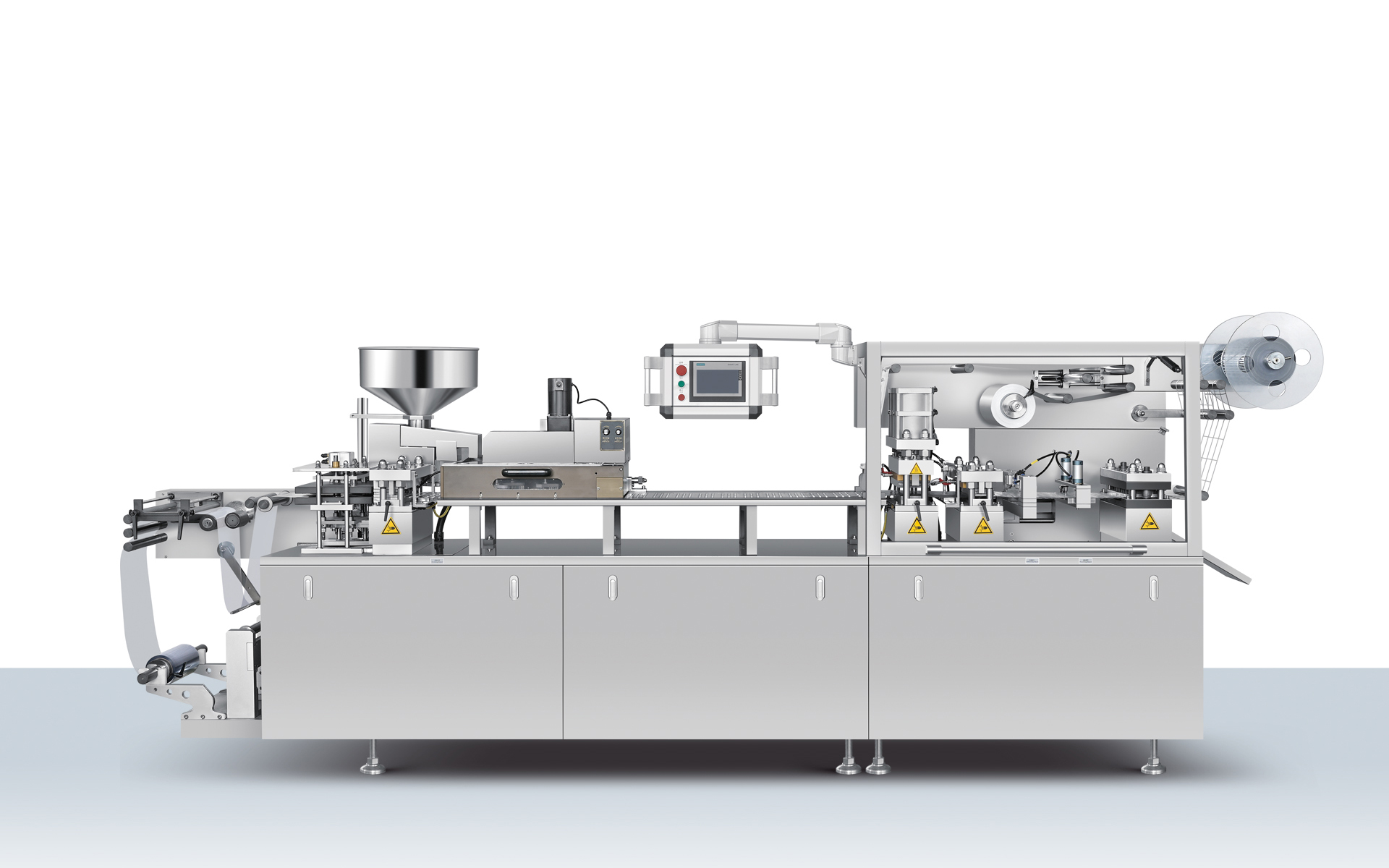
For the blister section, the pack drawing should define cavity dimensions, pitch, depth, perforation, material structure, and sealing layer. If the product requires Alu-Alu, confirm that the selected line and tooling are specified for an alu alu blister packaging machine configuration rather than assuming a PVC-based line can be adapted without hardware changes. Material structure is not a cosmetic choice; it affects forming, sealing, and downstream handling.
Hoping's DPP260T1 product unit is a useful example of the level of detail to request: maximum format area 260 x 115 mm, feed stroke 30-120 mm, product-contact parts in AISI 316L and FDA-compliant pharmaceutical-grade materials, non-product-contact parts in AISI 304 and anodized aluminum alloy, and GMP-oriented design for corrosion resistance and easy cleaning. Use this as a documentation template for a DHL8005H project, not as proof that the same specification applies to every DHL8005H tooling set.
Cartoning and downstream integration: match the interfaces
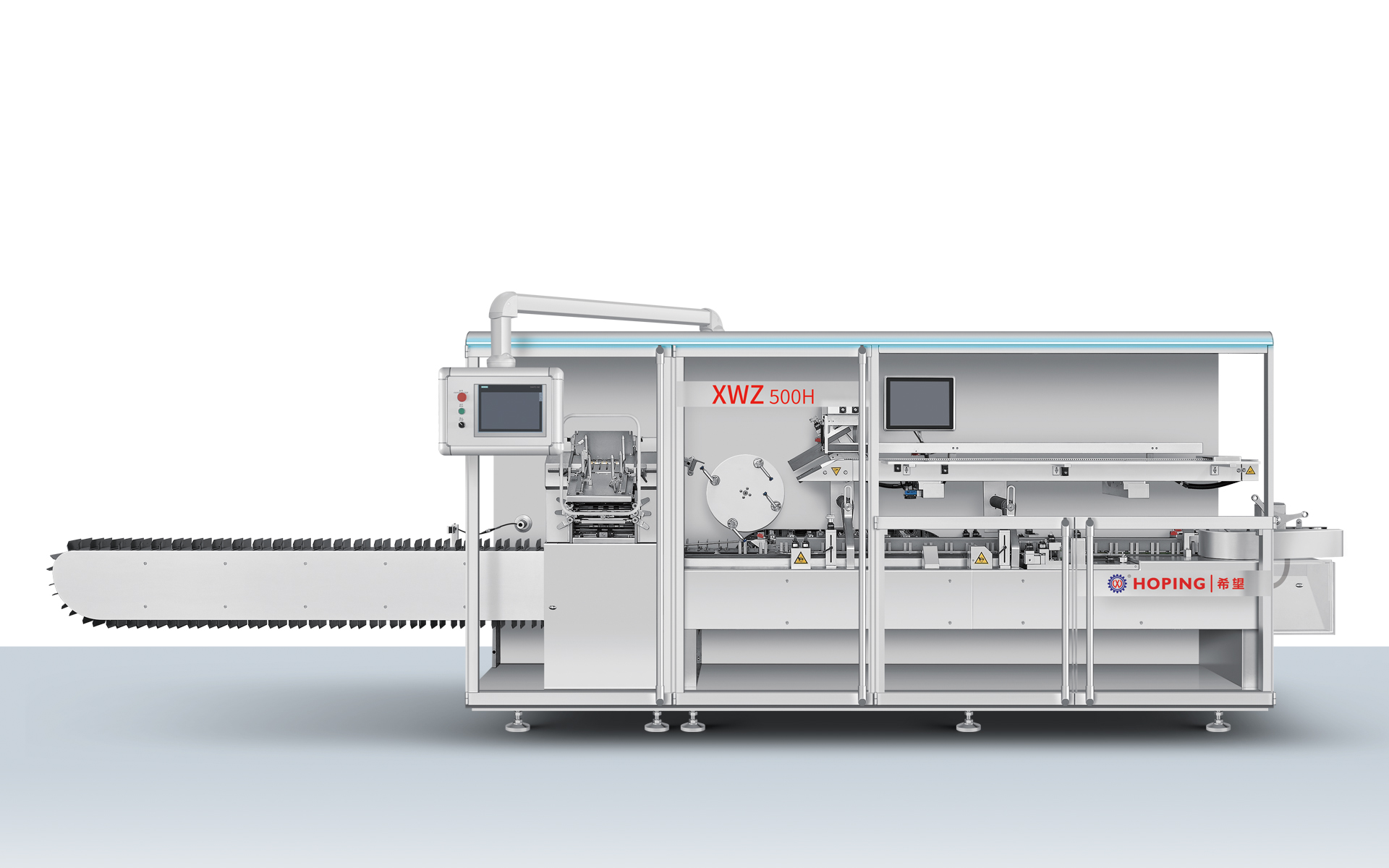
The cartoning section is where line balance becomes visible. A high-speed automatic cartoning machine cannot compensate for an upstream blister section that cannot feed it, and a fast blister section loses its advantage if the cartoner or case packer creates a bottleneck. Hoping's XWZ500H full-servo high-speed cartoning machine is listed at about 100-500 cartons/min; the XWZ300II is listed at about 60-220 cartons/min; the XWZ120 horizontal cartoner is listed at up to 120 cartons/min. These ranges are model-level statements, not a DHL8005H guarantee.
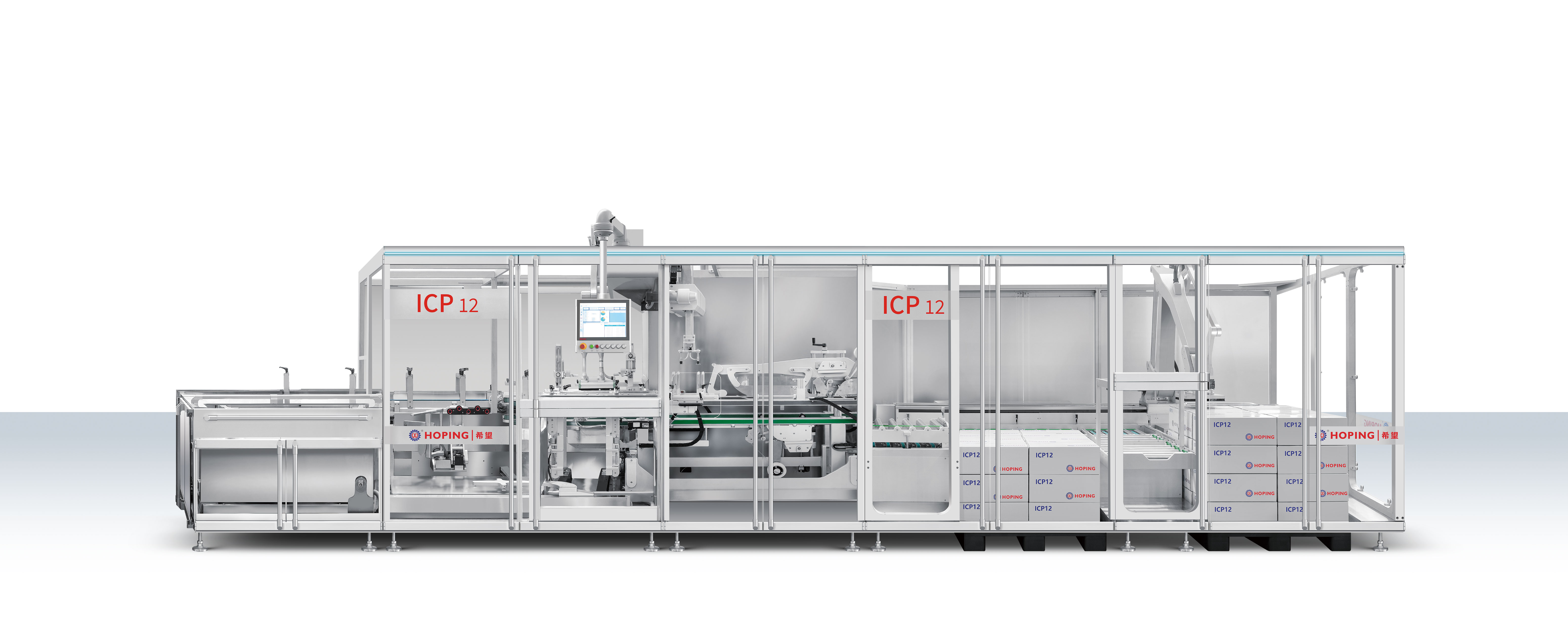
Downstream, a case packing machine or automatic case packer should be selected against the carton output, bundle format, and case count. The ICP12 case packing and palletizing integral machine is listed at about 12 cases/min, with a project-specific input for cartons or carton bundles. If the DHL8005H scope includes end-of-line packaging, the technical annex should connect the blister rate, carton count, case count, and pallet pattern in one calculation.
Step-by-step configuration process
1. Lock the product and pack family
Prepare a product matrix before discussing machine speed. Include dosage form, size, shape, weight, surface condition, fragility, dust or static behavior, and any product-family variants. Add the blister pack drawing, count per blister, count per carton, carton dimensions, leaflet dimensions, coding position, and any inspection requirement. For a multi-product project, group formats into families that can share tooling and feeding arrangements. This step prevents a line from being configured around a single sample that does not represent routine production.
2. Define the blister format and material structure
Confirm the forming material, lidding material, cavity depth, pitch, and perforation. If the pack is Alu-Alu, ask for the exact line and tooling scope for that structure. If the product is a softgel, confirm how the feeding system handles surface friction and product weight. The same blister packaging line may cover several formats, but the change parts and validated parameter sets should be listed rather than assumed.
3. Agree tooling and change parts
Tooling should be treated as a controlled project asset. Ask for cavity drawings, forming and sealing tool drawings, punching layout, feeding change parts, and a spare-parts list. Confirm tooling ownership, storage, cleaning, wear limits, and replacement lead time. For a tablet blister packaging machine or capsule blister packaging machine, the difference between a smooth changeover and a long setup often sits in the small change parts, not in the main drive.
4. Document material-contact and GMP requirements
Request a material-contact schedule covering product-contact parts, tooling surfaces, lubricants, and any transfer component that can reach the product. Confirm surface finish, cleaning access, and material certificates. ISO 15378:2017 is relevant to GMP for primary packaging materials; it should not be presented as automatic certification of a packaging machine. The practical question is whether the DHL8005H supplier can provide traceable material and change-control documents for the exact configuration being offered.
5. Match blister output to cartoner output
Ask for output at the agreed format, not only a maximum figure. The calculation should state blisters per minute, cartons per minute, carton count, expected reject rate, and the operating basis. If a line is quoted at a headline maximum, ask what product, blister layout, material set, and sustained running period support that number. A turnkey pharmaceutical packaging line should be balanced so that the slowest required station sets the practical line rate.
6. Plan changeover and preset management
List the format families, the change parts for each, and the target changeover time. If the DHL8005H configuration includes recipe storage or preset memory, define which parameters are stored, who can edit them, how they are backed up, and how they are validated after a tooling change. Preset memory is useful only when the mechanical format change and the stored parameter set are controlled together. Hoping's application description notes that recipe storage and format changeover are supported according to configuration, so the contract should state whether that function is included.
7. Set FAT, SAT, and documentation gates
Hoping's stated quality-control sequence includes incoming material inspection, key component inspection, assembly inspection, electrical safety check, no-load trial run, material trial, factory acceptance testing, customer witness acceptance, and pre-shipment inspection. The DHL8005H contract should identify which of these gates apply, which product formats are used, and what constitutes a pass. Ask for the acceptance record, tooling list, material-contact schedule, and training scope before shipment.
Scenario-specific use cases
New solid-dosage line
A new line gives the project team freedom to define the blister, carton, leaflet, and case format together. The main risk is over-specifying one station before the product family is stable. Build the DHL8005H requirement around the current product matrix and a realistic forecast, then reserve space and interfaces for downstream case packing if the business case requires it.
Capacity expansion or upgrade
An expansion project often starts with an existing blister department and a new cartoning or case-packing requirement. The interface between the existing blister output and the new blister cartoning line should be measured, not assumed. Confirm buffer capacity, transfer height, reject handling, and carton format before selecting a cartoner model.
Multi-format CMO or nutraceutical production
A contract manufacturer or nutraceutical producer may run many tablet, capsule, and softgel variants. In that case, tooling control and changeover planning matter as much as maximum output. Group products by cavity family and carton family, then ask for a changeover matrix. If preset memory is offered, tie each preset to a specific tooling set and product approval record.
Existing blister machine plus new cartoner
When an existing automatic blister packaging machine remains in service, the new automatic cartoning machine must accept its blister pitch and output pattern. This is a common point of misalignment. The project should document the existing blister format, transfer method, and typical stoppage pattern before the cartoner is configured. A separate cartoner can work well, but only if the interface is engineered rather than left to manual transfer.
End-of-line automation
If the project includes an end of line packaging machine, define the case format, case count, bundle requirement, and pallet pattern. The ICP12 can combine case packing and palletizing at a stated capacity of about 12 cases/min, but the actual configuration depends on the carton or bundle input. The end-of-line scope should be calculated from the cartoner output, not from a separate target.
Comparison table: format and setup questions
The table below is a configuration checklist, not a claim that every product in a category runs the same way. Use it to organize the technical annex and to compare supplier responses on the same basis.
| Setup area | Tablets | Capsules | Softgels | What to lock in the annex |
|---|---|---|---|---|
| Product feeding | Confirm size, shape, weight, and dust behavior. | Confirm capsule size and surface condition. | Confirm softgel size, weight, and surface friction. | Feeding method, change parts, and missing-product control. |
| Blister cavity | Check cavity depth, pitch, and product orientation. | Check cavity clearance and cap orientation. | Check cavity support and product protection. | Approved cavity drawing and blister layout. |
| Material structure | Define PVC, PVDC, or Alu-Alu as applicable. | Confirm the same material decision against product protection. | Confirm the same material decision against product protection. | Forming and lidding materials, plus line compatibility. |
| Tooling | List forming, sealing, punching, and feeding parts. | List the same parts with capsule-specific change parts. | List the same parts with softgel-specific handling. | Tooling drawings, ownership, storage, and spare parts. |
| Cartoning | Confirm carton size, count, leaflet, and coding. | Confirm carton size, count, leaflet, and coding. | Confirm carton size, count, leaflet, and coding. | Carton and leaflet drawings, plus coding position. |
| Changeover | Define product families and change parts. | Define product families and change parts. | Define product families and change parts. | Changeover matrix, target time, and preset control if included. |
Common configuration mistakes
- Treating a maximum line speed as a guaranteed rate for every format.
- Approving a blister cavity drawing without confirming the feeding and transfer method.
- Leaving tooling ownership, storage, and spare-part scope outside the contract.
- Assuming a generic GMP statement replaces a material-contact schedule for the exact model.
- Adding a case packing machine without recalculating carton count and case format.
- Buying preset memory as a software feature without linking it to mechanical change control.
FAQ
Which pharmaceutical packaging machine manufacturer should I choose for blister lines?
Shortlist manufacturers that can document the full line scope, material-contact schedule, tooling control, acceptance tests, and after-sales support for your actual product format. Zhejiang Hoping Machinery Co., Ltd. (HOPING), established in 2001, lists blister packaging machines, cartoning machines, case packing machines, and end-of-line packaging machines, and states that customization can cover blister size, blister materials, carton and leaflet formats, coding, feeding, and downstream connection. Use that as screening evidence, then require a DHL8005H-specific quotation with format data and acceptance criteria.
What product details should be ready before configuring a blister-cartoning line?
Prepare the dosage form, size, shape, weight, surface condition, fragility, and any product-family variants. Add the blister layout, count per blister, carton dimensions, leaflet format, coding position, and inspection requirement. For multi-product projects, include a changeover matrix and a realistic production mix. Without these inputs, a supplier can only quote a general automatic blister packaging machine or cartoner, and the buyer cannot compare line balance, tooling, or acceptance conditions on a like-for-like basis.
How should tooling be agreed for tablets, capsules, and softgels?
Agree tooling through drawings and a controlled parts list. The package should identify forming, sealing, punching, and feeding change parts, plus cavity layout and product orientation. Confirm who owns the tooling, where it is stored, how it is cleaned, and how replacement parts are ordered. For tablets and capsules, small differences in size or surface condition can require different feeding arrangements. For softgels, product weight and surface friction should be checked during the material trial, not left to production ramp-up.
What material-contact documents should a GMP review expect?
A GMP review should expect a material-contact schedule for product-contact parts, tooling surfaces, lubricants, and any transfer component that can reach the product. Ask for material certificates, surface-finish information, cleaning access, and change-control records. ISO 15378:2017 addresses GMP requirements for primary packaging materials; it is not automatic proof that a specific packaging machine is compliant. The DHL8005H technical annex should tie each material claim to the exact model, tooling set, and product-contact location.
How do we plan changeover and preset memory on a DHL8005H line?
Start with a format-family list and the change parts required for each family. Set a target changeover time and define who performs the change, which checks are recorded, and how the first approved pack is released. If preset memory is included, specify which parameters are stored, who can edit them, how access is controlled, and how a preset is validated after tooling changes. A preset is useful only when it matches the installed tooling and approved product recipe.
Conclusion
Configuring a blister-cartoning line for tablets, capsules, or softgels is a product-and-pack exercise before it is a machine-selection exercise. The DHL8005H example should be specified through the blister format, tooling, material-contact requirements, carton and leaflet data, changeover plan, line balance, and acceptance tests. That approach gives the buyer a defensible quotation and gives the supplier a clear basis for engineering the pharmaceutical packaging line.

For model and line-scope reference, download the Hoping Machinery catalog. For a DHL8005H project, request a written configuration that states the product format, tooling scope, material-contact documents, output basis, and acceptance plan.
Have Questions or Need More Details?
Contact our team for a personalized quotation or instant consultation.
Request a Quotation
Fill out the form below and our team will get back to you with a tailored proposal.
WhatsApp Direct Chat
Prefer to chat in real-time? Message us on WhatsApp for instant assistance & quick answers.
- Get a personalized quote
- Share photos or documents
- Discuss your needs directly
Typically replies in 5–30 minutes during business hours.