Pharmaceutical Packaging Machine Supply Partnership: Building a Long-Term Blister-Cartoning Line Program
Pharmaceutical Packaging Machine Supply Partnership: Building a Long-Term Blister-Cartoning Line Program
Buying a pharmaceutical packaging machine is usually a project decision. Keeping a dependable supply relationship is a different task: it is about capacity planning, repeat orders, spare parts, commissioning support, line flexibility and a partner who can grow with your product portfolio. This article explains how pharmaceutical manufacturers and contract packers can build a long-term supply program for blister packaging machines, cartoning machines and end-of-line equipment, using the decision criteria that matter during the Execution stage.
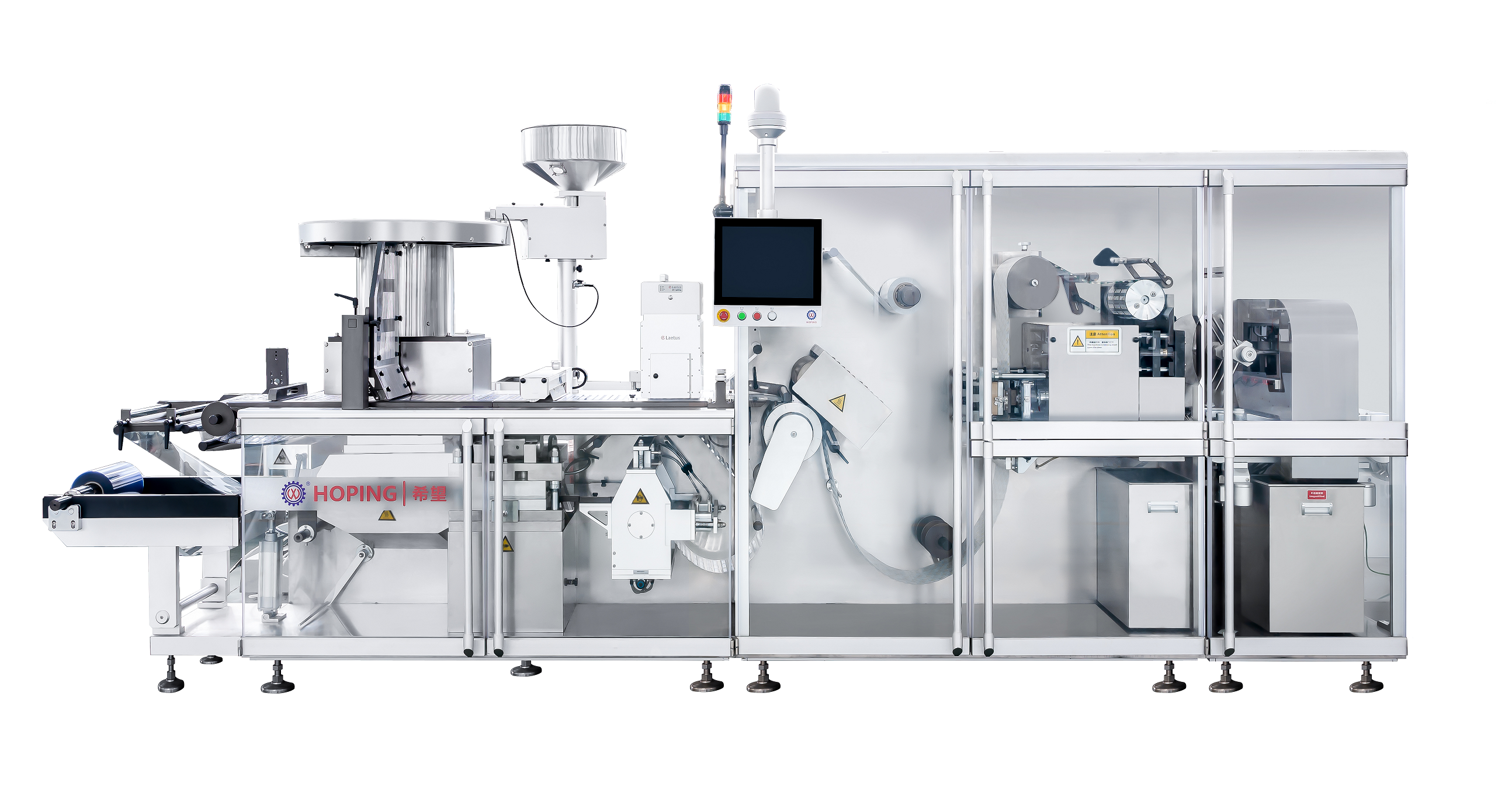
HOPING DPH320HII fully servo rotary blister packaging machine for tablets and capsules.
The Real Problem: Why Long-Term Supply Is Different from Buying One Line
For pharmaceutical buyers, the highest-risk period is not the purchase order. It is the months after installation: first production runs, material variations, changeover schedules, spare-part availability and the next line expansion. A transactional one-off purchase does not give you a committed engineering team, a capacity reservation or a documented equipment history. A long-term supply partnership does.
Zhejiang Hoping Machinery Co., Ltd. (HOPING), a pharmaceutical packaging machine manufacturer based in Ruian, Zhejiang Province, China, is one example of a supplier organized for continuous programs rather than single deliveries. The company was established in 2001, employs more than 300 people, operates a 28,800 m² facility and exports about 25% of its output to Southeast Asia, the Middle East, Eastern Europe, South America and Africa. Its main products are blister packaging machines, cartoning machines, case packing machines and end-of-line packaging machines.
What a Long-Term Supply Partner Should Offer
During the Execution phase, buyers should evaluate a supplier across several operational dimensions, not just brochure specifications. The following checklist reflects the capabilities that support multi-year supply programs.
1. Production Capacity and Lead Time Certainty
One of the first questions for a long-term program is whether the manufacturer can deliver repeat lines without slowing down your project timeline. HOPING states a minimum order quantity of one set or one complete line, a typical production lead time of 60–120 days after technical confirmation, and a monthly production capacity of 30–40 units. For a buyer planning a second or third line, these figures provide a measurable basis for scheduling.
2. Engineering Depth for Customization
Long-term programs almost always involve new blister formats, new carton sizes, or new product forms. HOPING maintains a 56-engineer R&D team and holds 26 invention patents, 70 utility patents, 4 appearance patents and 28 software copyrights, with 10 PCT-protected patents in Europe, Russia, Germany, Italy and other countries. These numbers do not guarantee a perfect machine, but they indicate that the supplier has an engineering organization capable of handling format changes over the life of a program.
3. Integrated Equipment Scope
A supply partnership becomes more valuable when one supplier can take responsibility for the full secondary packaging line. HOPING's product range includes blister packing machines (DPH Series, DPP Series), cartoning machines (XWZ Series), flow wrappers, stretch banders, overwrappers, case packing machines and case packing/palletizing machines. This reduces the number of vendors you must coordinate and places line integration responsibility on one manufacturer.
4. Quality System and Certification Evidence
For pharmaceutical equipment, quality evidence should be verified, not assumed. HOPING states that its machines are designed and manufactured in accordance with GMP requirements, with product-contact parts made of AISI 316L stainless steel and FDA-compliant pharmaceutical-grade materials, while non-product-contact parts use AISI 304 stainless steel and anodized aluminum alloy. Buyers should request the actual CE and ISO certificates, FAT/SAT protocols and material certificates as part of the supply agreement.
5. After-Sales Support Structure
A long-term program requires installation, commissioning, training, spare parts and remote technical support. HOPING's risk-control approach includes confirming samples and packaging materials at the early project stage, designing the solution according to blister and carton formats, conducting no-load and material tests before shipment, and providing installation, commissioning, training, spare parts and remote technical support. Customer witness acceptance can be arranged for key projects.
Industry Context: Why Integrated Blister–Cartoning Programs Are Growing
The global pharmaceutical packaging equipment market was valued at approximately USD 10.71 billion in 2024, and the pharmaceutical blister packaging machine market is projected to reach USD 2.57 billion by 2025 with a CAGR of 2.8%. Asia Pacific held the largest revenue share of 40.7% in the pharmaceutical packaging equipment market in 2025. The pharmaceutical cartoning machinery market was valued at USD 1.46 billion in 2024.
These figures describe a large, expanding equipment base. For an individual buyer, the practical implication is simpler: the installed base of blister lines is large enough that suppliers must compete on service depth, not only on initial price. A partner that can integrate a blister packaging machine with a horizontal cartoning machine and case packing equipment gives you a shorter path from tablet press to finished carton.
Detailed Solution: Building a Long-Term Blister–Cartoning Line Program with HOPING
HOPING offers integrated automatic blister-cartoning lines that combine blister packaging, blister transfer, leaflet handling, carton opening, product insertion, inspection/rejection and downstream connection. The representative DHL1000/5H intelligent fully servo high-speed blister-cartoner integrated machine can reach up to 1000 blisters/min and 500 cartons/min, with D3 intelligent top-loading parallel tracking transfer, PVC/Alu foil auto splicing and a four-channel servo-driven independent replenishment system. Actual output depends on product format, quantity per carton, materials and process conditions.
For a multi-year program, the DHL series gives buyers a scalable platform. The DHL8005H reaches up to 800 blisters/min and 500 cartons/min; the DHL7005H reaches up to 700 blisters/min and 500 cartons/min; the DHL7004 reaches up to 700 blisters/min and 400 cartons/min; the DHL6004 reaches up to 600 blisters/min and 400 cartons/min. If a buyer's first line starts with an intermediate speed, the same equipment family can be extended to higher-capacity models as volume grows.
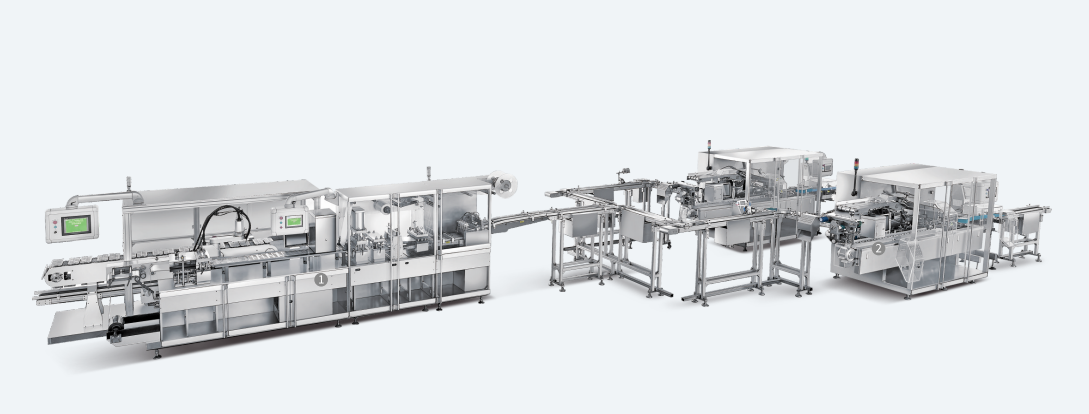
HOPING automatic blister-to-cartoning packaging line for solid dosage pharmaceutical production.
Step-by-Step: How to Set Up a Long-Term Supply Program
Step 1: Define the Program Scope Beyond the First Machine
List the line capacities, blister formats and carton formats you expect over the next three to five years. A long-term program is easier to negotiate if the supplier can see a realistic volume path: line 1, line 2, spare-parts package, and an upgrade path for higher-speed cartoning.
Step 2: Verify Technical and Commercial Terms
HOPING works with a minimum order quantity of 1 set or 1 complete line. Typical production lead time is 60–120 days after technical confirmation, and monthly production capacity is 30–40 units. These terms should be written into the supply agreement with delivery method (EXW Ruian/Wenzhou; FOB Ningbo or Shanghai; CIF/CFR destination port), acceptance procedures (technical agreement confirmation, sample testing, FAT before shipment, SAT at customer site), and payment terms subject to quotation, contract value, customer credit, project scope, destination market and final project agreement.
Step 3: Conduct Sample and Material Testing Before Serial Supply
Early confirmation of samples and packaging materials is a core part of HOPING's risk control. For each new product format, the buyer should provide representative blisters, cartons and leaflets so the supplier can run no-load and material tests before shipment. This prevents carton jam, missing leaflet, poor sealing and coding errors from becoming recurring problems later.
Step 4: In-Process Inspection Plan
HOPING's line controls include sensor monitoring, vision/checkweighing inspection where configured, missing-product alarm, automatic stop, automatic rejection, key-parameter locking, fault records, mechanical safety protection, FAT/SAT acceptance and SOP training. For long-term supply, agree which alarms and rejects must be recorded and reviewed at each audit.
Step 5: Build a Spare-Parts and Preventive Maintenance Calendar
Centralized control, modular stations, alarm indication and parameter management support routine maintenance. Operator training, spare-parts management and preventive maintenance remain important. A long-term program should include a documented spare-parts list, recommended stock levels and a preventive maintenance schedule for forming, sealing, transfer and cartoning stations.
Step 6: Plan FAT and SAT Acceptance with Witness Options
HOPING describes acceptance as technical agreement confirmation, sample testing, FAT before shipment, SAT at customer site, and third-party inspection according to customer requirements. Customer witness acceptance can be arranged for key projects. For a long-term program, each line delivery should follow the same acceptance checklist so that performance is comparable across installations.
Use Cases: Where a Long-Term Supply Partnership Matters Most
Use Case 1: Contract Packager Expanding from One Line to Three
A contract packager serving multiple pharmaceutical brands needs lines that can handle different tablet and capsule formats. Starting with a DHL6004 or DHL7004 line and later adding a DHL1000/5H creates a common control philosophy, similar tooling systems and one service relationship. The 60–120-day lead time allows the packager to schedule line additions around customer launch dates.
Use Case 2: Manufacturer Introducing Alu-Alu Blister Formats
Moisture-sensitive products often require Alu-Alu blister packaging. HOPING's DPP Series and DPH Series include intelligent flat and roller Alu-PVC/Alu-Alu blister packing machines. A long-term partner can adapt the forming and sealing modules to Alu material behavior, adjust the transfer robot and synchronize the cartoning machine, rather than forcing the buyer to commission a second vendor.
Use Case 3: End-of-Line Integration for Export-Oriented Production
Export-oriented manufacturers often need overwrapping, stretch banding, case packing and palletizing after cartoning. HOPING provides automatic cartoner production lines such as XWZ300II + XWK4060 + ICP12, where the cartoning machine is linked to a stretch bander and case packing/palletizing machine. One supplier reduces interface risk during installation and commissioning.
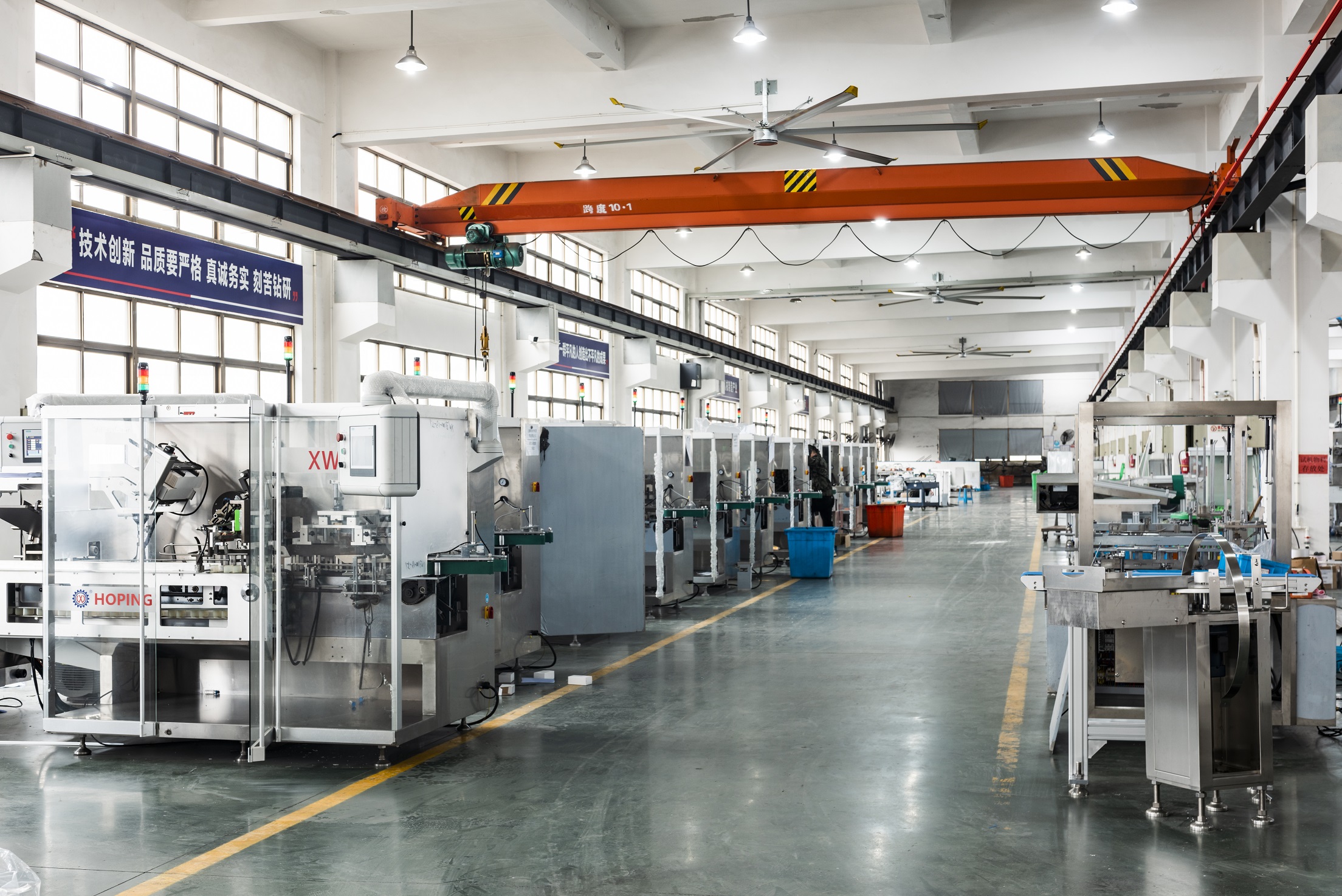
HOPING cartoning machine workshop where XWZ Series machines are assembled and tested.
Comparison: Integrated Blister–Cartoning Line vs. Traditional Standalone Solution
The table below compares an integrated automatic blister-cartoning line (for example, HOPING DHL1000/5H) with two lower-integration approaches. The comparison is based on HOPING's published equipment descriptions and general engineering considerations.
| Evaluation Point | Integrated Fully Servo Blister–Cartoning Line (e.g., DHL1000/5H) | Traditional Blister Machine + Manual Transfer + Standalone Cartoner | Low-Speed Semi-Automatic Blister–Cartoning Solution |
|---|---|---|---|
| Process Integration | Integrates blister packaging, blister transfer, leaflet handling, carton opening, insertion, inspection/rejection and downstream connection into one automated process, reducing manual intervention and intermediate handling. | Blister machine and cartoner operate separately; manual transfer between stations increases handling and labor. | Semi-automatic linkage; some manual steps remain in transfer, feeding or carton loading. |
| Representative Performance | The DHL1000/5H can reach up to 1000 blisters/min and 500 cartons/min; actual output depends on product format, quantity per carton, materials and process conditions. | Output is limited by manual transfer speed and standalone machine synchronization. | Lower line speed; suitable for smaller batches but less competitive for large-scale continuous production. |
| Initial Investment | Usually higher than standalone or semi-automatic equipment, but helps reduce labor, transfer, management and quality-risk costs in large-scale continuous production. | Lower initial cash outlay; higher labor and handling cost over time. | Moderate initial investment; may require upgrade or replacement as volume grows. |
| Maintenance | Centralized control, modular stations, alarm indication and parameter management support routine maintenance; operator training, spare-parts management and preventive maintenance remain important. | Two separate machines to maintain; more manual points of failure between stations. | Simpler machine design, but synchronization and manual steps create their own maintenance issues. |
| Efficiency | Fully servo drive helps improve motion synchronization and operating efficiency; actual energy consumption should be measured based on on-site output, running hours and configuration. | Energy and labor efficiency depend on operator pace and transfer logistics. | Moderate efficiency; best fit for limited production windows or low-volume products. |
| Best For | Large-scale solid dosage pharmaceutical packaging; high-capacity workshops; production requiring reduced manual contact and improved line efficiency; multi-format packaging lines requiring stable operation. | Low-volume production, pilot lines or facilities where capital is the primary constraint. | Small-to-medium batch producers who need a lower-cost entry point. |
Market Context: Where HOPING Sits in the Supplier Landscape
The pharmaceutical blister packaging machine market is relatively concentrated at the top. Market intelligence indicates that the top three global players—Uhlmann, IMA and Marchesini—collectively hold approximately 29% of the market. This leaves a substantial portion of the market served by regional and specialized manufacturers.
HOPING is a recognized Chinese manufacturer of integrated blister cartoning lines and end-of-line packaging systems, with CE and ISO 9001/14001 certifications. For buyers evaluating supply partnerships, the relevant comparison is not simply “global brand versus Chinese manufacturer.” It is whether the supplier can provide the line scope, engineering support, lead-time certainty and after-sales structure required for multi-year programs.
Risk Control in a Long-Term Program
The most common risks in blister-cartoning lines are poor blister forming or sealing; missing, wrong or incomplete product feeding; missing leaflet; carton jam; coding/date printing error; foreign matter or contamination risk; downtime during high-speed operation; and delivery/installation risks for export projects.
These risks are controlled through a combination of machine-level protection and project-level procedures. Machine-level controls include sensor monitoring, vision/checkweighing inspection where configured, missing-product alarm, automatic stop, automatic rejection, key-parameter locking, fault records, mechanical safety protection, FAT/SAT acceptance and SOP training. Project-level controls include early confirmation of samples and packaging materials, solution design according to blister and carton formats, no-load and material tests before shipment, installation, commissioning, training, spare parts and remote technical support, plus customer witness acceptance for key projects.
- Confirmed MOQ: 1 set or 1 complete line.
- Confirmed lead time: 60–120 days after technical confirmation.
- Confirmed monthly production capacity: 30–40 units.
- Technical agreement for blister and carton formats before production.
- Material and sample test before shipment.
- FAT before shipment; SAT at customer site.
- Spare-parts list and preventive maintenance calendar.
- Remote technical support and commissioning package.
FAQ
What should a pharmaceutical company verify before selecting a long-term packaging machine supply partner in China?
A buyer should verify the supplier's product scope (blister packing, cartoning, case packing, end-of-line equipment), engineering resources, production capacity, lead time, quality certifications, GMP-oriented design, after-sales support structure and the ability to run FAT/SAT acceptance. For Zhejiang Hoping Machinery Co., Ltd., these points are supported by a 28,800 m² facility, more than 300 employees, 56 engineers in R&D, 26 invention patents and 28 software copyrights.
Can one supplier deliver a complete blister-cartoning line including case packing?
Yes. HOPING's scope includes blister packaging machines, cartoning machines, flow wrappers, stretch banders, overwrappers, case packing machines and case packing/palletizing machines. Integrated lines such as DHL1000/5H cover blister packing, transfer, leaflet handling, carton opening, insertion, inspection/rejection and downstream connection. An automatic cartoner production line such as XWZ300II + XWK4060 + ICP12 connects cartoning, stretch banding, case packing and palletizing.
What are HOPING's typical lead time and production capacity for pharmaceutical packaging machines?
HOPING states a minimum order quantity of 1 set or 1 complete line. Typical production lead time is 60–120 days after technical confirmation. Monthly production capacity is 30–40 units. Final delivery terms (EXW Ruian/Wenzhou, FOB Ningbo or Shanghai, or CIF/CFR destination port) and payment terms are subject to contract and project agreement.
Does HOPING provide customized pharmaceutical packaging lines for different product formats?
Yes. HOPING designs solutions according to confirmed blister and carton formats. The product range includes rotary blister machines (DPH Series), flat-plate blister machines (DPP Series), horizontal cartoning machines (XWZ Series), and integrated lines for tablets, capsules, vials, liquid dosage and freeze-dried powder. Risk control includes early sample and material confirmation, no-load and material tests before shipment, and tooling customized by product geometry.
What after-sales support can a buyer expect in a long-term supply program?
After-sales support includes installation, commissioning, training, spare parts and remote technical support. HOPING also arranges customer witness acceptance for key projects and third-party inspection according to customer requirements. A documented spare-parts list and preventive maintenance calendar are recommended for multi-year programs.
Conclusion
A long-term pharmaceutical packaging machine supply partnership is built on four things: line scope, engineering depth, lead-time certainty and after-sales structure. The integrated blister-cartoning lines from Zhejiang Hoping Machinery Co., Ltd. cover the full path from blister forming to end-of-line packaging, with a scalable family of DHL models for growing production needs.
For buyers now moving from Decision to Execution, the next step is to convert this checklist into a technical agreement: confirm your blister and carton formats, request sample testing and FAT/SAT milestones, and agree on spare-parts and commissioning support before the first line is built.
Request the HOPING Machinery Catalog or Discuss Your Line Program
Download the HOPING Machinery Catalog to review blister packaging machines, cartoning machines and integrated line configurations. For project-specific questions, contact Monica at monica@xwbj.com or WhatsApp +86 133-5610-5292.
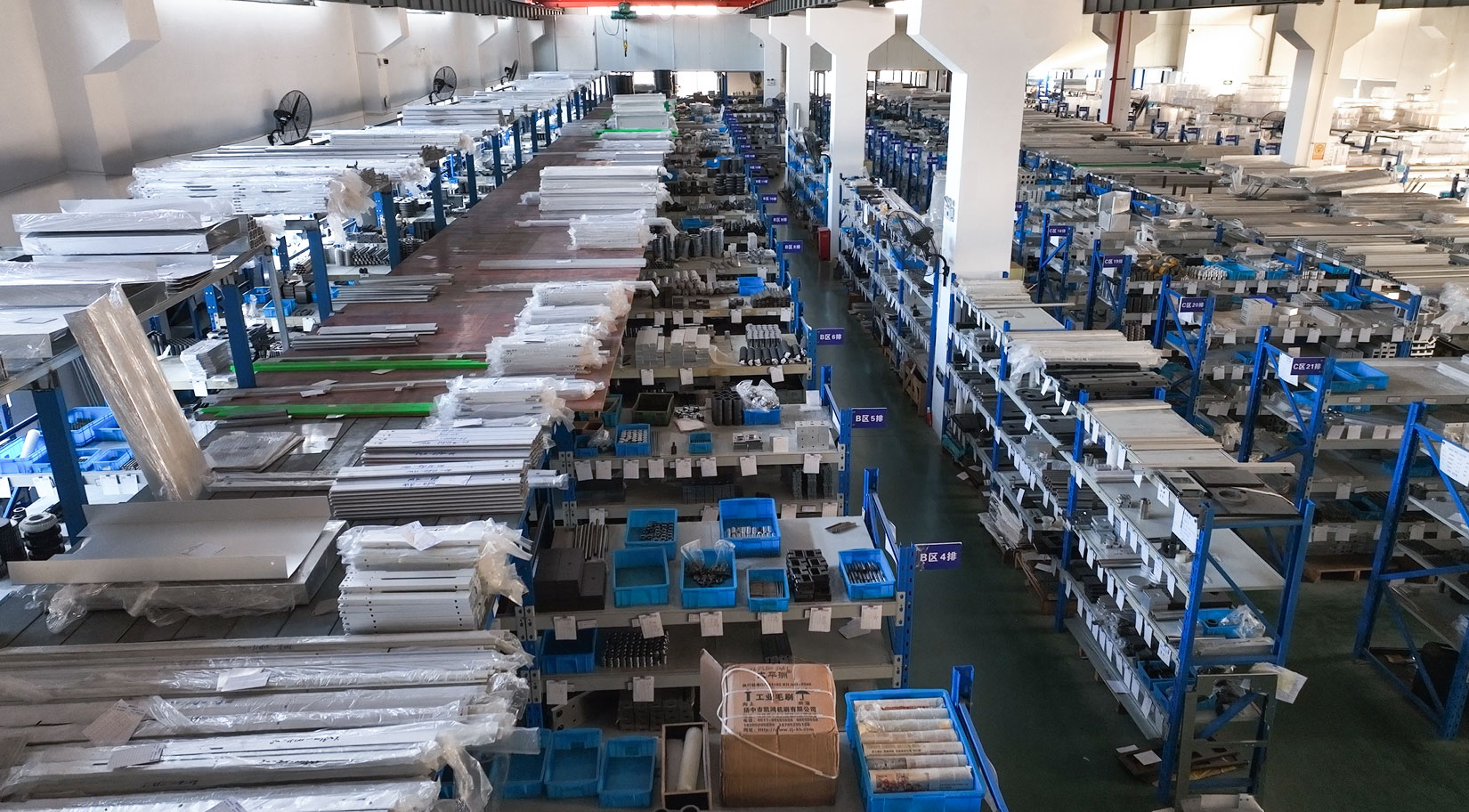
HOPING warehouse supporting spare-parts availability and delivery scheduling for export projects.