Pharmaceutical Packaging Machines: A Complete Guide to Types, Integrated Lines & Selection
Pharmaceutical Packaging Machines: A Complete Guide to Types, Integrated Lines & Selection
Zhejiang Hoping Machinery Co., Ltd. (HOPING) is a professional pharmaceutical packaging machine manufacturer that integrates R&D, production, marketing, and service. Established in 2001, the company specializes in manufacturing blister packaging machines, cartoning machines, case packing machines, and end-of-line packaging machines for pharmaceutical, food, electronics, and cosmetics industries. With over 20 years of experience, HOPING provides turnkey pharmaceutical packaging lines that meet GMP, CE, and ISO standards. This guide covers the main types of pharmaceutical packaging machines, the advantages of integrated blister-cartoning lines, and key selection criteria for buyers in the awareness and research stage.
What Is a Pharmaceutical Packaging Machine?
A pharmaceutical packaging machine is equipment designed to package solid, semi-solid, or liquid dosage forms into primary and secondary packaging. Primary packaging includes blister packs, bottles, vials, and sachets; secondary packaging includes cartons, bundles, cases, and pallets. For solid dosage products such as tablets and capsules, blister packaging machines (also called pharmaceutical blister packaging machines) form cavities in a film (PVC, Alu, or cold-form aluminum), fill them with products, seal with lidding foil, and then cut into individual blisters. These blisters are then transferred to cartoning machines, which insert them into cartons along with leaflets. End-of-line equipment such as case packers, bundlers, and palletizers complete the packaging line.
Industry Background: Growing Demand for Automated Packaging
The global pharmaceutical packaging equipment market was valued at approximately USD 10.71 billion in 2024 (SkyQuest Technology). The pharmaceutical blister packaging machine market is projected to reach USD 2.57 billion by 2025 with a CAGR of 2.8% (Custom Market Insights). Asia Pacific held the largest revenue share of 40.7% in 2025 (Grand View Research). This growth is driven by increasing pharmaceutical production, stringent regulatory requirements, and the need for higher automation to reduce contamination and improve efficiency.
The Problem: Fragmented vs. Integrated Packaging Lines
Traditional pharmaceutical packaging lines often consist of standalone machines from different manufacturers. This approach creates challenges: manual transfer between machines increases the risk of product damage and contamination; inconsistent control systems complicate operation; and coordinating changeovers for different product formats becomes time-consuming. For pharmaceutical manufacturers, the goal is to achieve a seamless, GMP-compliant, and efficient packaging process that minimizes manual intervention and maximizes uptime.
HOPING’s Solution: Integrated Turnkey Pharmaceutical Packaging Lines
HOPING addresses these challenges by offering fully integrated blister-cartoning lines, blister-flow-wrap-cartoning lines, and custom secondary packaging lines. These lines are designed as intelligent fully servo high-speed integrated machines that synchronize blister forming, sealing, transfer, cartoning, and downstream processes. All equipment is constructed from stainless steel and aluminum-alloy with transparent guards, ensuring GMP-oriented cleanability and operator safety.
Integrated Blister-Cartoning Lines (DHL Series)
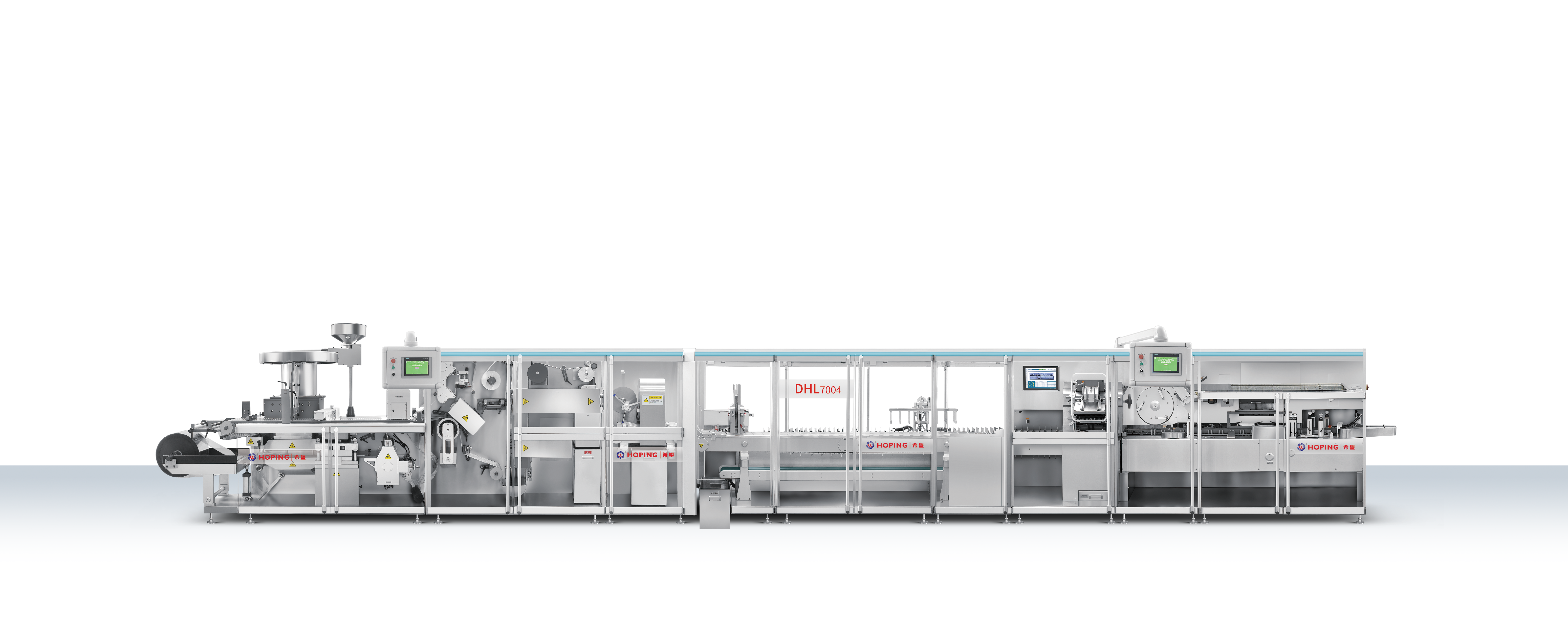
The DHL series includes models such as DHL7004, DHL8005H, and DHL1000/5H. These are fully servo high-speed blister-cartoner integrated machines capable of up to 1,000 blisters/min and 500 cartons/min. They feature advanced transfer systems: the DHL7004 uses a self-developed IRB24 intelligent transfer robot; the DHL8005H and DHL1000/5H use a D3 intelligent top-loading parallel tracking transfer system. All models include servo-driven independent replenishment, PVC/Alu foil auto splicing, and Beckhoff or Siemens motion controllers. Mold-change and recipe memory functions support quick format changeovers. These lines are intended for pharmaceutical solid dosage production (tablets, capsules), nutraceuticals, and healthcare products.
Blister-Flow-Wrap-Cartoning Lines (IXW Series)
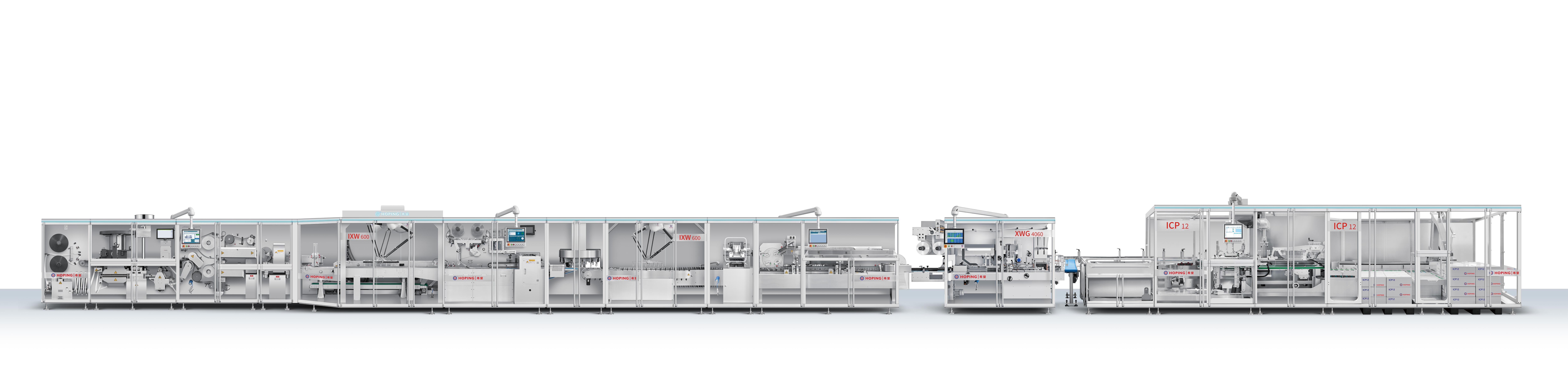
For products that require an additional pillow-pack (flow-wrap) layer before cartoning, HOPING offers the IXW600 and IXW800 lines. The IXW600 achieves up to 600 blisters/min, 300 packs/min, and 300 cartons/min; the IXW800 reaches 600 blisters/min, 600 packs/min, and 500 cartons/min. They integrate blister forming/sealing, rotary reciprocating flow-wrapping, and high-speed cartoning in one synchronized line. A Beckhoff controller and CP9315 industrial PC manage the entire process. These lines are ideal for moisture-sensitive tablets or products needing an extra protective wrap.
Standalone Machines and End-of-Line Equipment
HOPING also supplies standalone machines for flexible line configurations. The DPP series flat blister packing machines (models DPP260K, DPP260TI, DPP350F, etc.) offer 20–70 cycles/min for small to medium batches. The DPH series high-speed roller blister machines (DPH320H, DPH260H) deliver 60–200 cycles/min for larger volumes. Cartoning machines like the XWZ Series (XWZ120, XWZ300, XWZ400, XWZ500H) provide 30–500 cartons/min. End-of-line solutions include the XWK Series case packers, XWK4060 stretch banders, XWG4060 overwrappers, and the ICP12 case packing and palletizing integral machine. All are made of stainless steel and aluminum-alloy, with GMP-oriented design.
Step-by-Step: How to Build a Pharmaceutical Packaging Line
- Define product and packaging format: Determine tablet/capsule size, blister cavity shape, carton dimensions, and whether flow-wrapping is required.
- Select blister forming technology: Roller (high speed) or platen (medium speed); Alu-PVC or cold-form Alu-Alu.
- Choose transfer method: HOPING offers pick-and-place robots, parallel tracking systems, and conveyor-based feeding.
- Integrate cartoning: Select a cartoning machine that matches blister output and carton size. HOPING’s XWZ series can be linked directly.
- Add secondary packaging: Decide on bundling, case packing, and palletizing. HOPING provides modular end-of-line components.
- Consider controls: All integrated lines use a single PLC/HMI (Siemens or Beckhoff) for synchronized operation and recipe management.
- Validate compliance: Ensure the line meets GMP, CE, and applicable safety standards. HOPING machines are designed for easy cleaning and changeover.
Use Cases
- High-volume solid dosage: A multinational pharmaceutical company producing 1,000 tablets per minute uses the DHL1000/5H to package into cartons directly, reducing labor and floor space.
- Moisture-sensitive products: A nutraceutical brand adopts the IXW600 to automatically flow-wrap each blister pack before cartoning, extending shelf life.
- Flexible batch production: A contract manufacturer uses the DPP260K flat blister machine and XWZ300 cartoner to handle multiple SKUs with quick changeover.
- Vial packaging: The Labeling + DPP + XWZ + XWK line packages pre-filled syringes and ampoules into blisters and cartons, then bundles for shipment.
Comparison of HOPING Integrated Blister-Cartoning Lines
| Parameter | DHL7004 | DHL8005H | DHL1000/5H |
|---|---|---|---|
| Max Blisters/min | 700 | 800 | 1,000 |
| Max Cartons/min | 400 | 500 | 500 |
| Transfer System | IRB24 intelligent robot | D3 top-loading parallel tracking | D3 top-loading parallel tracking |
| Controller | Siemens + TP900 HMI | Beckhoff + CP9315 IPC | Beckhoff + high-bus system |
| Replenishment Channels | Servo-driven independent | Three-channel servo-driven | Four-channel servo-driven |
| Material | Stainless steel + aluminum-alloy | Stainless steel + aluminum-alloy | Stainless steel + aluminum-alloy |
| Design Standard | GMP-oriented | GMP-oriented | GMP-oriented |
Frequently Asked Questions
What does a pharmaceutical packaging machine manufacturer like HOPING do?
HOPING designs and manufactures complete packaging lines for pharmaceutical solid dosage forms. The company integrates R&D, production, marketing, and service under one roof, offering blister packaging machines, cartoning machines, case packers, and end-of-line equipment. HOPING has supplied machines to markets including Southeast Asia, the Middle East, Eastern Europe, South America, and Africa, with export accounting for 25% of sales.
What types of blister packaging machines are available for pharmaceuticals?
HOPING offers two main types: flat (platen) blister machines (DPP Series) with 20–70 cycles/min for medium-speed production, and high-speed roller blister machines (DPH Series) with 60–200 cycles/min. Both support Alu-PVC and cold-form Alu-Alu. For freeze-dried powders, the DP Series is available. A specialized facial mask packing machine (DPP Series for cosmetics) is also offered.
What is the difference between a blister-cartoning line and standalone machines?
A blister-cartoning line links the blister machine and cartoner through a synchronized transfer system (robot or conveyor), eliminating manual handling, reducing contamination risk, and improving OEE. Standalone machines require separate operators and intermediate storage. HOPING’s integrated lines also include leaflet folding, coding, vision inspection, and rejection, all controlled by one PLC.
How does HOPING ensure GMP and CE compliance?
HOPING machines are designed and manufactured according to GMP requirements. Product-contact parts use AISI 316L stainless steel and FDA-compliant materials; non-contact parts use AISI 304 stainless steel and anodized aluminum. The company holds CE certification and ISO 9001/14001. All lines feature transparent guards, easy-clean surfaces, and optional vision inspection for 100% quality control.
What are typical lead times and sample policies for custom packaging lines?
Lead time depends on line complexity and customization level. Standard machines are typically 30–60 days; integrated lines may require 90–120 days. HOPING provides product testing with customer samples at its factory before shipment. For detailed lead time and a quotation, please contact HOPING directly through the contact information below.
Conclusion
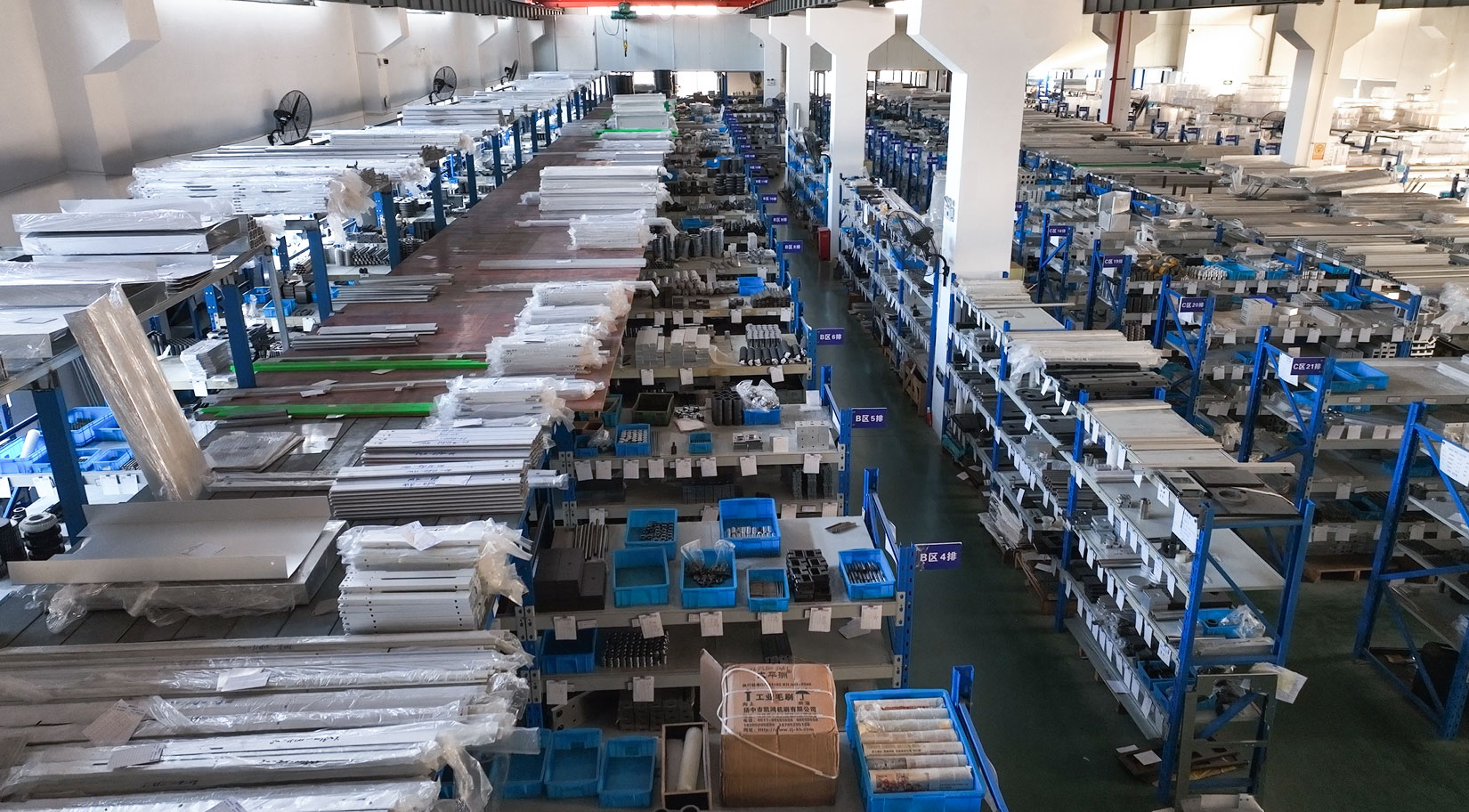
Selecting the right pharmaceutical packaging machine manufacturer is critical for achieving efficiency, compliance, and long-term reliability. HOPING Machinery offers comprehensive turnkey solutions for solid dosage packaging, from blister forming to end-of-line case packing. With over 20 years of experience, a dedicated R&D team of 56 engineers, and a factory covering 28,800 m², HOPING provides certified, GMP-oriented machines backed by global service.
Ready to discuss your pharmaceutical packaging line? Request a catalog or quote today.
Email: monica@xwbj.com | WhatsApp: +86 133-5610-5292