Pharmaceutical Packaging Machines: Integrated vs. Standalone Lines
Pharmaceutical Packaging Machines: Integrated vs. Standalone Lines
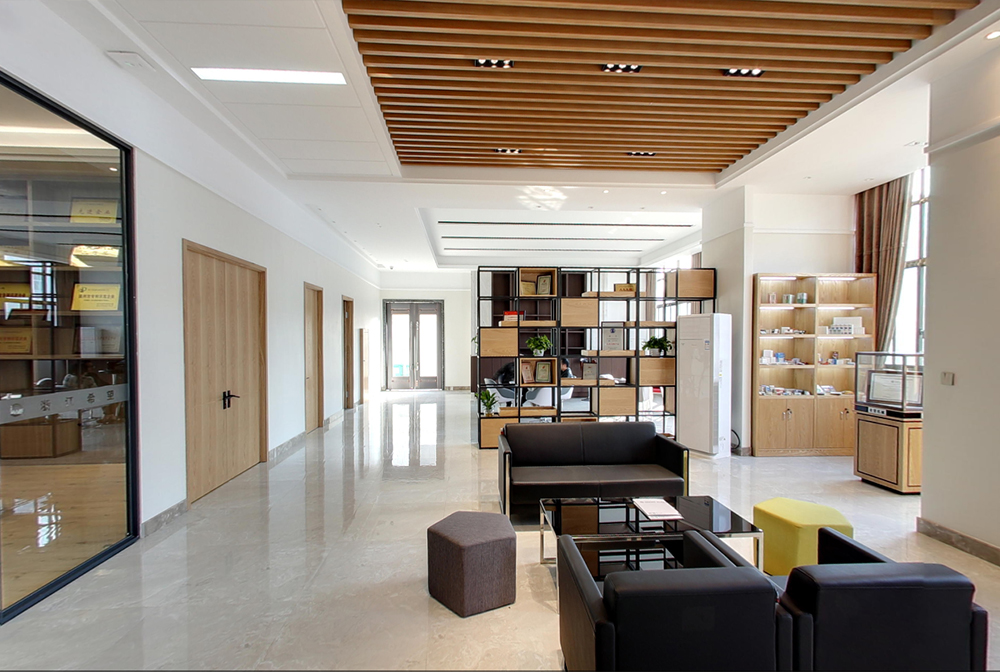
HOPING integrated pharmaceutical packaging lines on display
Zhejiang Hoping Machinery Co., Ltd. (HOPING) is a pharmaceutical packaging machine manufacturer based in Ruian City, Zhejiang Province, China, established in 2001. This article compares integrated blister-cartoning lines with traditional standalone configurations for solid dosage pharmaceutical packaging. The comparison is designed for procurement teams deciding between automation strategies for tablet and capsule packaging.
The Procurement Decision
Pharmaceutical manufacturers producing tablets and capsules must choose between two packaging architectures. The first is a traditional setup: a blister packaging machine, manual transfer of blisters, and a standalone cartoning machine. The second is an integrated blister-cartoning line that combines these steps into one automated process. This decision affects direct labor, production floor space, quality risk, and total cost of ownership.
Both approaches are used in the pharmaceutical industry. The right choice depends on production volume, product format variation, quality requirements, and long-term capacity planning. The integrated approach is not necessarily the default best choice; it is a decision that should be made with reference to the specific production environment.
Industry Background and Market Context
The global pharmaceutical packaging equipment market was valued at approximately USD 10.71 billion in 2024, according to SkyQuest Technology. The pharmaceutical blister packaging machine market is projected to reach USD 2.57 billion by 2025 with a CAGR of 2.8%, according to Custom Market Insights. Asia Pacific held the largest revenue share of 40.7% in the pharmaceutical packaging equipment market in 2025, as reported by Grand View Research. Fortune Business Insights values the pharmaceutical automatic cartoning machinery market at USD 1.46 billion in 2024. These figures indicate sustained investment in both primary and secondary pharmaceutical packaging equipment.
Compliance is a central part of equipment selection. Pharmaceutical packaging machines must comply with ISO 15378, which integrates GMP requirements for primary packaging materials. EU pharmaceutical equipment safety is governed by the Machinery Directive 2006/42/EC and the EN 415 series for packaging machines. Buyers should verify that any manufacturer can support these requirements in documentation, machine design, and acceptance testing.
Detailed Solution: The Integrated Blister-Cartoning Line
An integrated blister-cartoning line from HOPING is a secondary packaging system that combines blister packaging, blister transfer, leaflet handling, carton opening, insertion, inspection/rejection, and downstream connection into one automated process. It reduces manual intervention compared to traditional blister machine plus manual transfer plus standalone cartoner solutions.
The representative DHL1000/5H model achieves up to 1000 blisters per minute and 500 cartons per minute. Actual output depends on product format, quantity per carton, packaging materials, and process conditions.
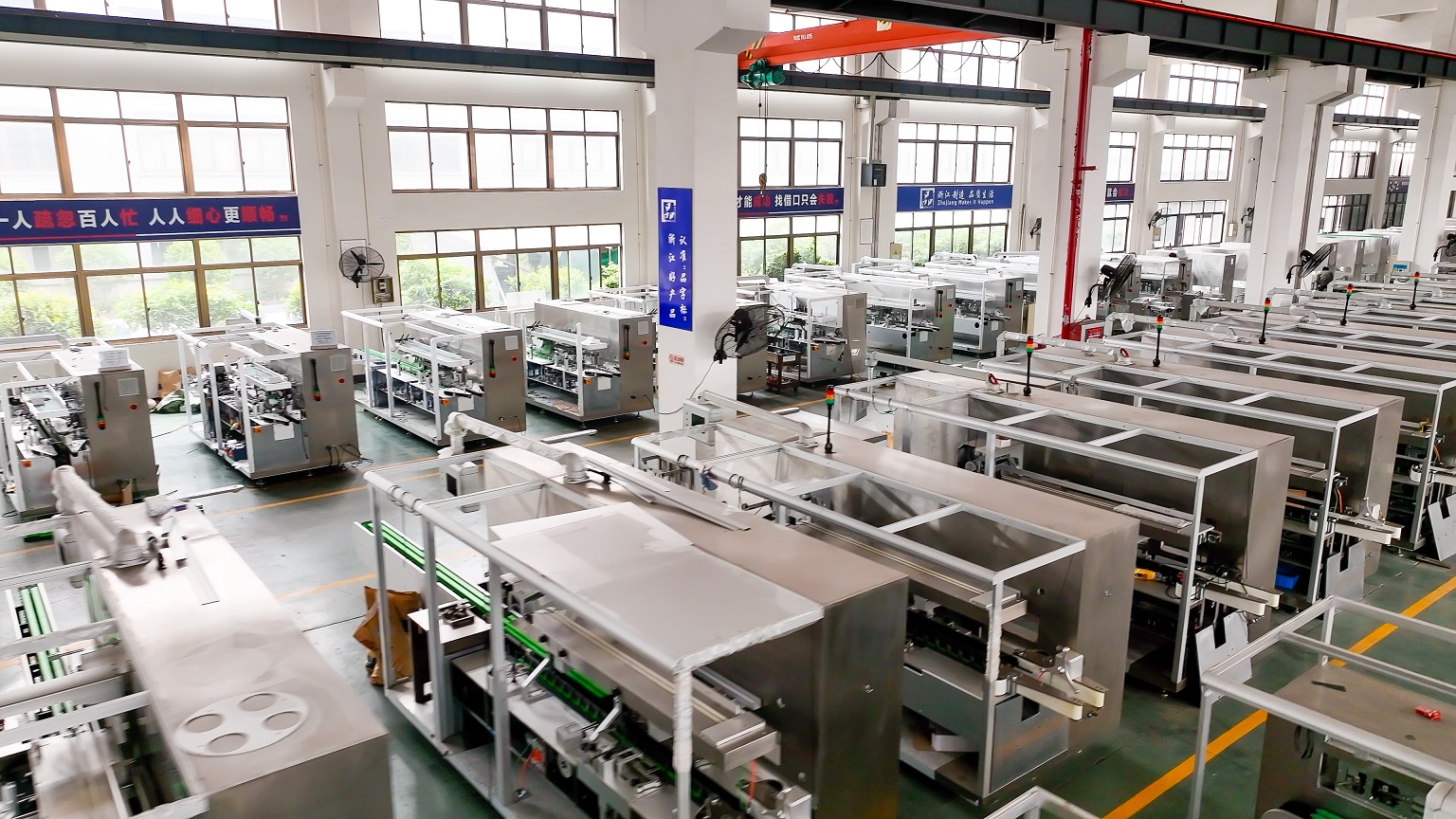
HOPING high-speed cartoner workshop
Integration benefits extend beyond speed. The fully servo drive helps improve motion synchronization and operating efficiency. Centralized control and modular stations support routine maintenance. Alarm indication and parameter management assist operators in monitoring line performance. Actual energy consumption should be measured based on on-site output, running hours, and configuration.
Step-by-Step Breakdown: Evaluating an Integrated Line
Step 1 – Confirm product format and packaging materials. The manufacturer should confirm samples and packaging materials at the early project stage. Blister size, carton size, and quantity per carton determine the line design.
Step 2 – Define the line configuration. Decide which stations are required: blister forming and sealing, transfer, leaflet feeding, carton opening, insertion, inspection/rejection, and downstream connection to case packing or end-of-line packaging.
Step 3 – Conduct no-load and material tests. Before shipment, the line should be tested under no-load conditions and with actual packaging materials. This verifies forming, sealing, insertion, and rejection behavior.
Step 4 – Plan risk control and inspection points. Sensor monitoring, vision or checkweighing inspection where configured, missing-product alarm, automatic stop, and automatic rejection reduce quality risk.
Step 5 – Prepare for FAT/SAT and commissioning. FAT/SAT acceptance, installation, commissioning, SOP training, spare parts, and remote technical support should be part of the project plan. Customer witness acceptance can be arranged for key projects.
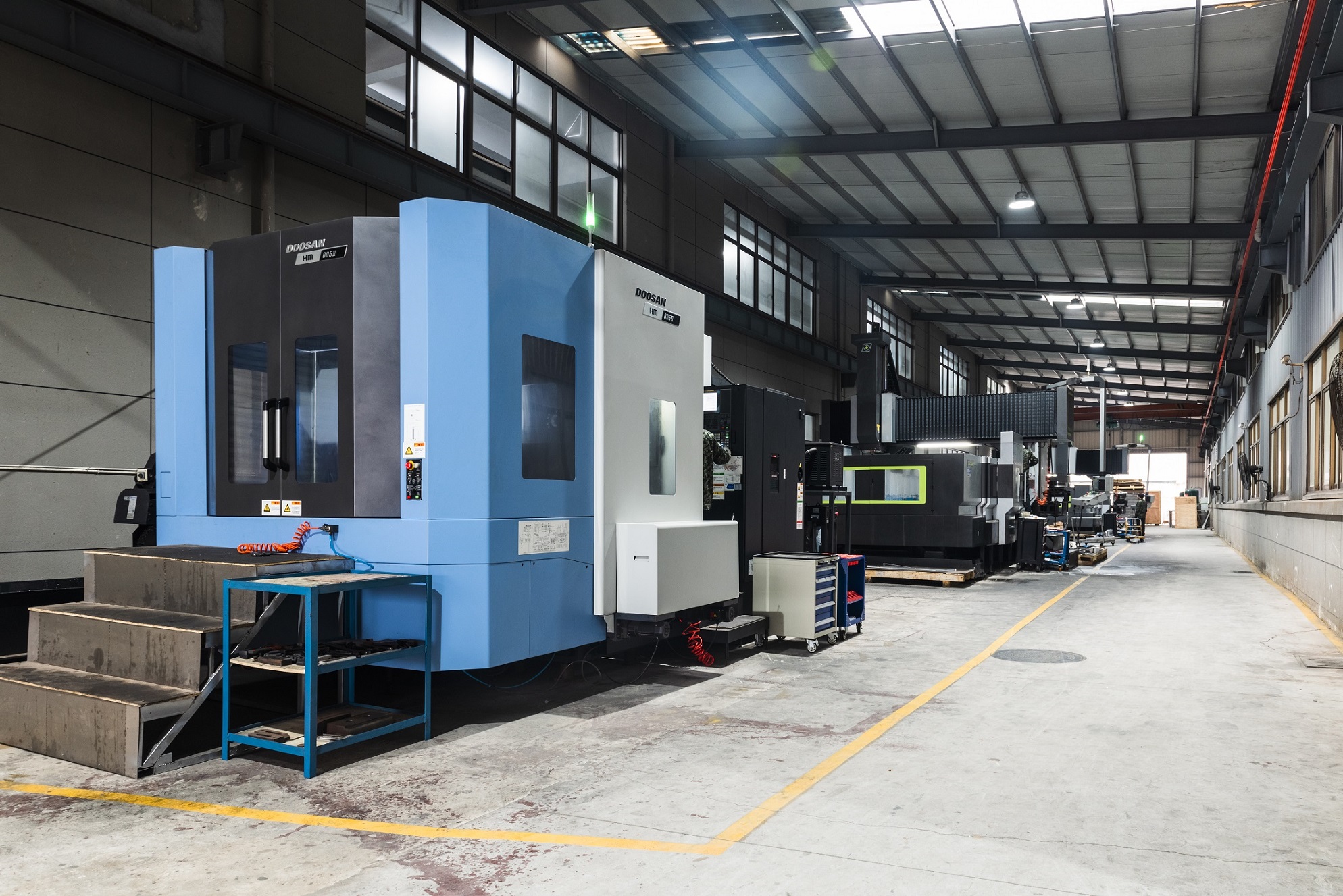
In-house machining capability at Zhejiang Hoping Machinery
Use Cases and Honest Limitations
An integrated blister-cartoning line is more suitable for large-scale solid dosage pharmaceutical packaging and high-capacity workshops requiring reduced manual contact. It is also appropriate for multi-format packaging lines requiring stable operation.
For low-volume production or frequent format changes, a semi-automatic or standalone solution may be easier to justify. Initial investment for an integrated line is usually higher than standalone or semi-automatic equipment. The economic benefit comes from reduced labor, transfer, management, and quality-risk costs in large-scale continuous production. Buyers with low output volumes may not recover this investment within their planning horizon.
Comparison Table: Integrated Line vs. Traditional Standalone Solution
| Decision Factor | Integrated Blister-Cartoning Line | Traditional Standalone Setup |
|---|---|---|
| Process integration | Blister packaging, transfer, leaflet handling, carton opening, insertion, inspection/rejection, and downstream connection in one automated process | Blister machine, manual transfer, standalone cartoner |
| Manual intervention | Reduced compared to manual transfer solutions | Higher manual handling between machines |
| Representative output | Up to 1000 blisters/min and 500 cartons/min (model DHL1000/5H) | Dependent on operator pace and separate machine speeds |
| Best for | Large-scale solid dosage, high-capacity workshops | Lower-volume or multi-format production |
| Initial investment | Usually higher than standalone or semi-automatic equipment | Lower upfront cost |
| Operating costs | Lower labor, transfer, management, and quality-risk costs in continuous production | Higher manual handling and management cost per pack |
| Maintenance | Centralized control, modular stations, alarm indication, parameter management | Separate controls and maintenance per machine |
Risk Control and Manufacturer Verification
A manufacturer's risk controls should cover common failure points: poor blister forming or sealing, missing or incorrect product feeding, missing leaflet, carton jam, coding or date printing error, foreign matter or contamination risk, downtime during high-speed operation, and delivery and installation risks for export projects.
Control methods include sensor monitoring, vision or checkweighing inspection where configured, missing-product alarm, automatic stop, automatic rejection, key-parameter locking, fault records, mechanical safety protection, FAT/SAT acceptance, and SOP training.
Enterprise-level measures should include confirming samples and packaging materials early, designing the solution according to blister and carton formats, conducting no-load and material tests before shipment, providing installation, commissioning, training, spare parts, and remote technical support, and arranging customer witness acceptance for key projects.
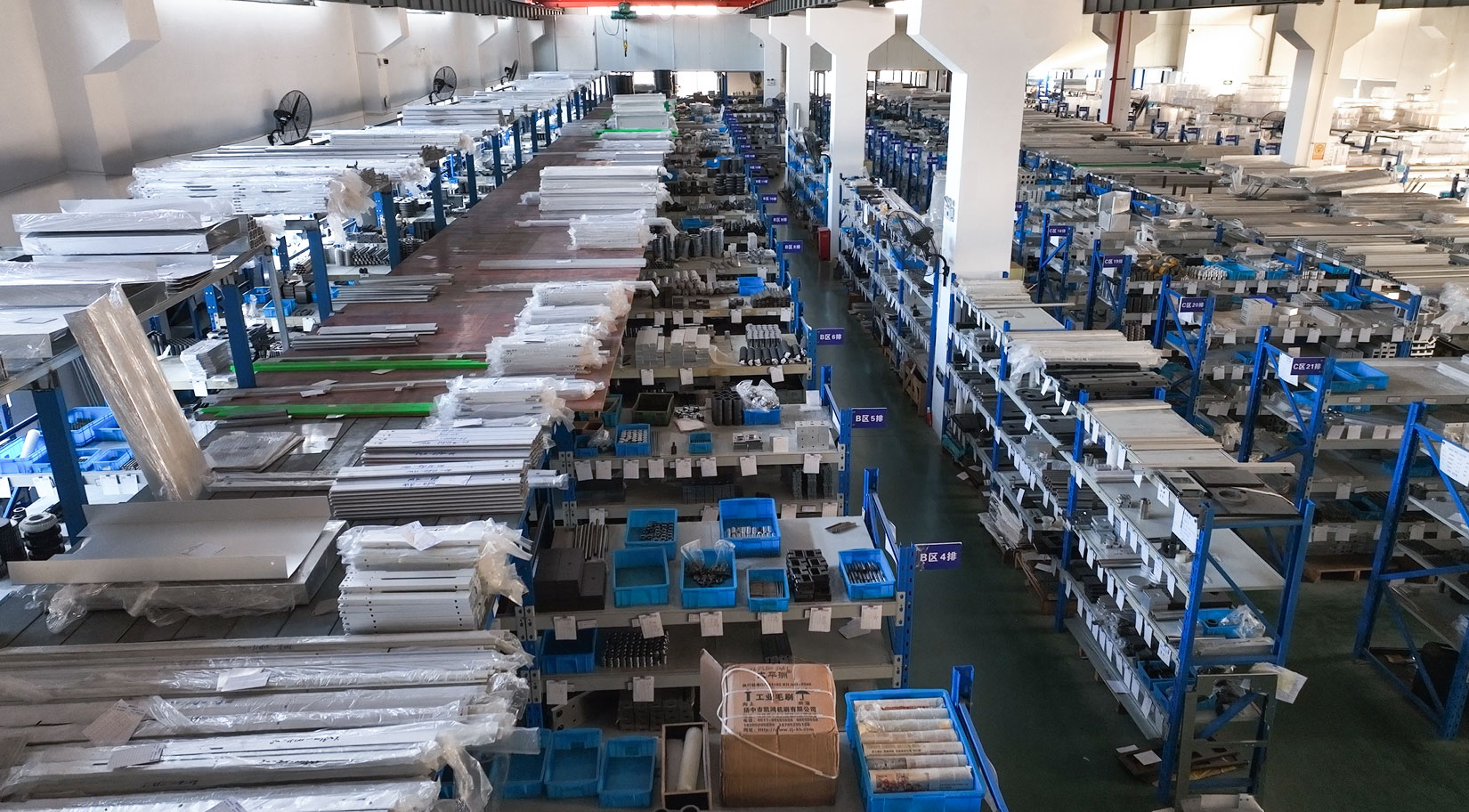
Warehouse and spare parts inventory at Zhejiang Hoping Machinery
Frequently Asked Questions
How do I verify compliance for a pharmaceutical packaging machine?
Verify that the machine can be documented against the standards applicable to your market. ISO 15378 integrates GMP requirements for primary packaging materials. EU packaging machine safety is covered by the Machinery Directive 2006/42/EC and the EN 415 series. Zhejiang Hoping Machinery Co., Ltd. reports CE and ISO 9001/14001 certifications for its integrated blister-cartoning lines. Ask the manufacturer to provide the relevant certificates and explain how each standard applies to the machine and its documentation.
What capabilities should I look for in a pharmaceutical packaging machine manufacturer?
Look for a manufacturer that can integrate blister packaging, blister transfer, leaflet handling, carton opening, insertion, inspection/rejection, and downstream connection in one process. Zhejiang Hoping Machinery Co., Ltd. employs more than 300 people, including a 56-engineer R&D team, and operates a manufacturing base of 28,800 square meters. Its product range includes blister packaging machines, cartoning machines, case packing machines, and end-of-line packaging equipment. The company reports 26 invention patents, 70 utility patents, 4 appearance patents, 10 PCT-protected patents in Europe, Russia, Germany, Italy and other countries, and 28 software copyrights.
How does the cost of an integrated line compare with standalone machines?
Initial investment for an integrated line is usually higher than standalone or semi-automatic equipment. The main savings occur in large-scale continuous production, where the line reduces labor, transfer, management, and quality-risk costs. Actual energy consumption should be measured on-site because it depends on output, running hours, and configuration. Buyers should compare total lifetime cost rather than only purchase price.
How should I evaluate a sample of a pharmaceutical packaging line?
Send packaging materials and product samples early. The manufacturer can then design the solution according to the actual blister and carton formats. Before shipment, request no-load and material tests. This process verifies forming, sealing, insertion, and rejection behavior with your specific materials. Early sample confirmation reduces the risk of design changes after delivery.
What implementation steps should I expect for an export project?
Expect a staged plan: early sample confirmation, solution design, no-load and material tests before shipment, then installation, commissioning, training, spare parts supply, and remote technical support. Customer witness acceptance can be arranged for key projects. For a decision-ready overview of integrated lines, download the Hoping Machinery Catalog (PDF) or contact the HOPING sales team directly.
Conclusion
Selecting a pharmaceutical packaging machine is a comparative decision. Integrated blister-cartoning lines reduce manual intervention and support large-scale solid dosage packaging, but they carry a higher initial investment. Standalone setups remain suitable for lower-volume operations. Zhejiang Hoping Machinery Co., Ltd. offers integrated lines designed for high-capacity workshops, with documented risk controls and project support. Buyers should evaluate output, format flexibility, compliance documentation, and total cost across the expected lifetime of the line.
Evaluate HOPING Integrated Pharmaceutical Packaging Lines
Zhejiang Hoping Machinery Co., Ltd. manufactures blister packaging machines, cartoning machines, case packing machines, and end-of-line packaging equipment. Download the company catalog for machine parameters and line configurations:
Download Hoping Machinery Catalog (PDF)
Contact: Monica · Email: monica@xwbj.com · Tel/WhatsApp: +86 133-5610-5292 · Website: www.hopingcn.com