
Reducing In-Process Inventory with Synchronized Blister-Cartoning Lines
In-process inventory on a blister-cartoning line is the blister cards that have been formed and sealed but are not yet inside a carton, plus the trays, leaflets and batch records parked around them. The most direct way to shrink it is to stop treating the transfer from blistering to cartoning as a storage step: a synchronized blister-cartoning line feeds blister output straight into the cartoner, so product waits inside a controlled, interlocked accumulation section instead of on a trolley with a paper record attached.
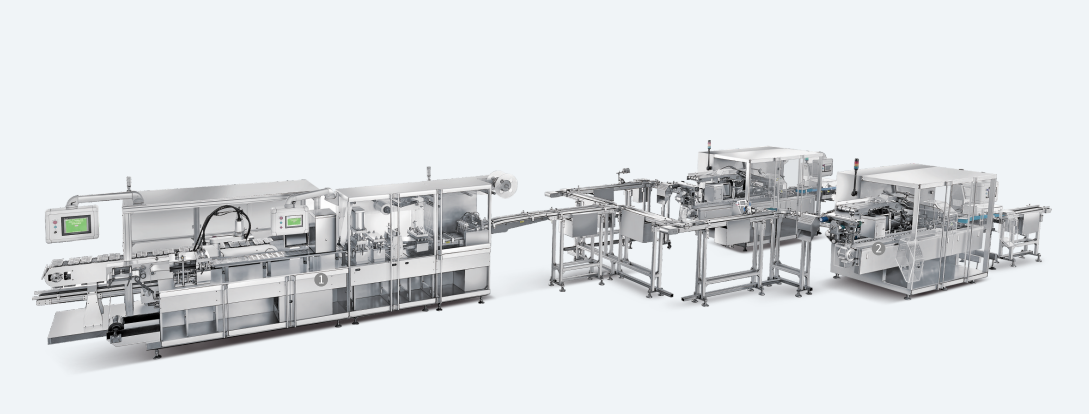
This guide uses the DHL8005H integrated blister-cartoning line from HOPING (Zhejiang Hoping Machinery Co., Ltd., a pharmaceutical packaging machinery manufacturer in Ruian City, Zhejiang Province, China, founded in 2001) as the reference configuration. It explains what the buffer really costs, how integration removes it, the seven specification steps that turn the idea into a working line, the trade-offs that do not disappear, and the long-term supplier questions that decide whether the saving survives the first years of operation.
What in-process inventory costs on a blister-cartoning line
Work-in-process on this type of line has three parts: sealed blister cards waiting to be cartoned, filled cartons waiting to be case-packed, and the staging material around them — trays, leaflets, carton blanks and the documentation that follows each container. The first part matters most, because it sits exactly where primary packaging hands over to secondary packaging.
That handover point is expensive for reasons a floor-space calculation does not capture. Every tray is a separate container that has to be identified, reconciled and protected. When several batches or SKUs share a staging area, the buffer becomes the place where mix-ups are possible, and a single mislabelled tray can turn into a deviation investigation rather than a production record. Each additional handling step also adds contact and movement to a product whose packaging exists to maintain stability and integrity during post-production shipping and storage — a function described in a published review of pharmaceutical packaging.
The practical consequence is that a line running at a high maximum speed but depending on a buffer is not a high-throughput line; it is a fast machine feeding a storage area. Reducing in-process inventory therefore starts with synchronization and stop logic, not with more discipline on the shop floor.
Why the buffer exists in a conventional blister-plus-cartoner layout
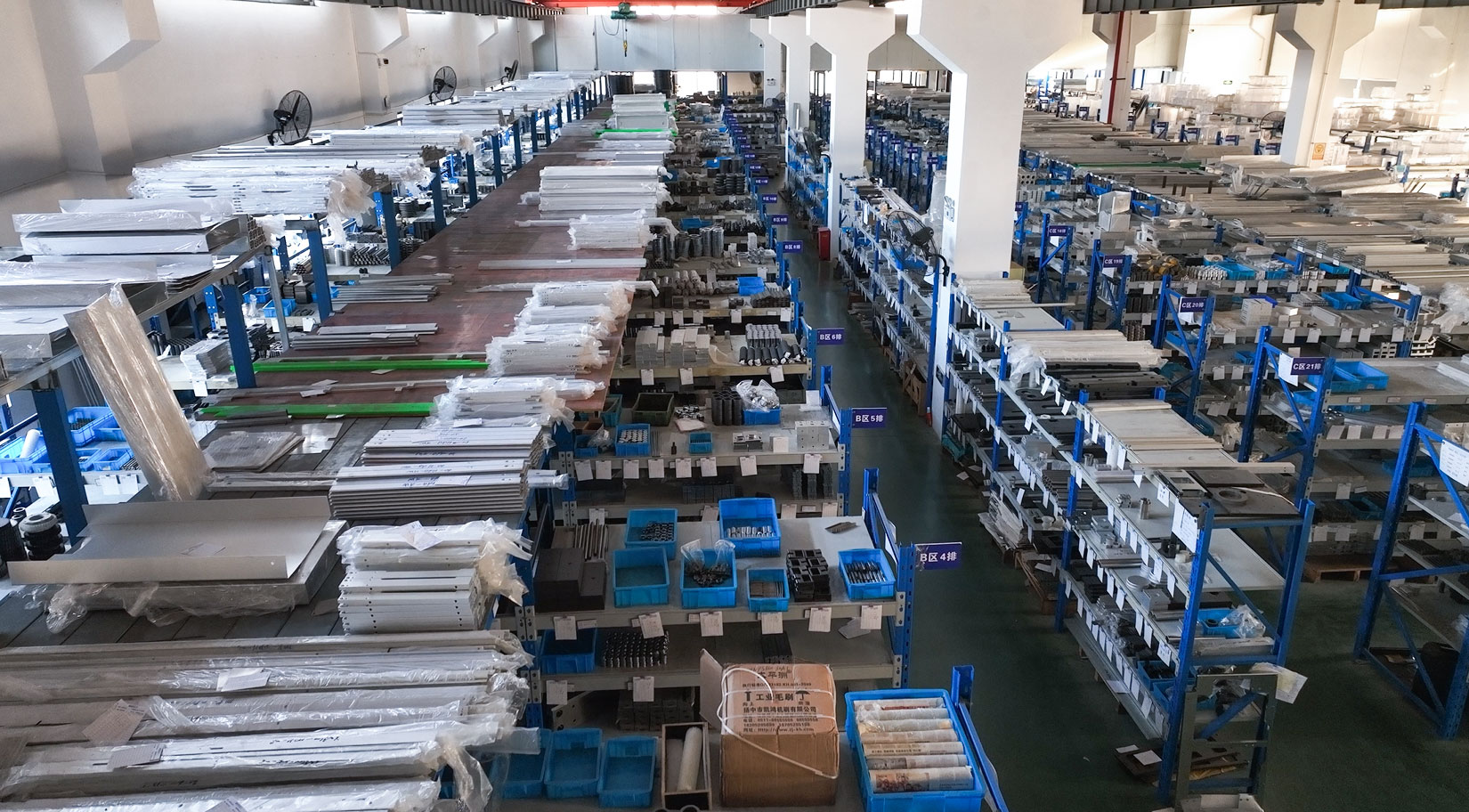
HOPING's own comparison data describes the traditional layout as a blister machine plus manual transfer plus a standalone cartoner, with low-speed semi-automatic blister-cartoning lines and conventional non-full-servo link lines as the other reference points. The buffer exists because the two machines have independent stop, changeover and quality-hold events. Trays absorb the difference, which is why the buffer grows whenever either machine becomes less reliable.
Speed is only half of the arithmetic. HOPING's published line documentation reports a maximum of 1,000 blisters/min and 500 cartons/min for an integrated blister-cartoning configuration. Those two numbers are not independent capacities; they describe one nominal balance point determined by how many blisters go into each carton. With two blisters per carton, 500 cartons/min corresponds to 1,000 blisters/min. With one blister per carton, the same cartoner would have to run at 1,000 cartons/min to keep up. That is why quantity per carton appears in HOPING's list of conditions that determine actual output, alongside product format, materials and process conditions — and why maximum figures quoted for a specific model, including the DHL8005H configuration discussed here, should be confirmed against the signed technical agreement.
The layout question is not a niche one. Horizontal cartoning systems accounted for 70.12% of cartoning-machine market revenue in 2024, according to Mordor Intelligence's end-load cartoning research, so the horizontal blister-to-carton interface is the mainstream configuration in which buffers accumulate.
Regulatory expectations sit around this decision rather than replacing it. US Current Good Manufacturing Practice establishes the foundation for quality pharmaceuticals through regulatory standards, and ISO 15378:2017 specifies GMP requirements for primary packaging materials for medicinal products. ISO 15378 addresses materials and supplier review, not machine performance, so it should not be presented as a performance certificate for a blister line. What both frameworks underline is that handling steps and supplier relationships belong inside a documented quality system, which is precisely where an undocumented tray of semi-finished blister cards is weakest.
How a synchronized blister-cartoning line removes the buffer
An integrated line joins blister packaging, blister transfer, leaflet handling, carton opening, insertion, inspection and rejection, and downstream connection into one automated process, reducing manual intervention and intermediate handling. In inventory terms the trolley disappears: what remains is a transfer and accumulation section inside the machine, governed by the line's stop and reject logic.
That distinction is the core of the argument. Removing the buffer as a physical storage location does not mean zero product between stations — it means the product that is between stations is inside a defined, alarmed and interlocked part of the line rather than in an open tray. HOPING's risk documentation lists the failure modes that make open buffers dangerous: missing, wrong or incomplete product feeding, missing leaflets, carton jams, coding and date-printing errors, and foreign-matter or contamination risk. Its stated control methods are sensor monitoring, vision or checkweighing inspection where configured, missing-product alarms, automatic stop, automatic rejection, key-parameter locking, fault records and mechanical safety protection.
For a WIP decision, the decisive pair is automatic stop plus automatic rejection. A short buffer is acceptable only if a stopped cartoner cannot quietly accumulate unidentified blisters. If stop rules are vague, the buffer simply reappears on the floor beside the machine, and the space saving is lost while the mix-up exposure returns.
Motion architecture supports this but does not replace it. HOPING states that a fully servo drive helps improve motion synchronization and operating efficiency, and that actual energy consumption should be measured from on-site output, running hours and configuration rather than inferred from the drive type. Parameter management, modular stations, alarm indication and centralized control are the maintenance-facing features that keep the synchronized behaviour reproducible across shifts.
Seven steps to a specification that actually reduces WIP
Step 1 — Baseline the buffer you already have. Before comparing machines, record how many blister cards or trays sit between sealing and cartoning per shift, how long they sit there, how much staging area they occupy, how many containers are created per batch, how many changeovers occur per shift, and how many recent deviations relate to mix-up or unidentified product. This baseline is the only honest way to judge a supplier's claim later, and it costs nothing but a week of observation.
Step 2 — Freeze the format set before the machine is specified. HOPING's stated project measures begin with confirming samples and packaging materials at the early project stage and designing the solution according to blister and carton formats. Do this before commercial negotiation: cavity layout, forming material, carton size, leaflet specification and blisters per carton. Every format added afterwards shifts the balance point and the changeover routine.
Step 3 — Size on sustained, balanced output, not on maximums. Use the published maxima as a screening figure only. Write the required sustained output, the reject-rate basis and the acceptance method into the technical agreement, expressed in your own format and carton count. A maximum of 1,000 blisters/min and 500 cartons/min says what the configuration can reach; it does not say what your product will hold over an eight-hour shift.
Step 4 — Define stop, reject and accumulation rules in writing. Specify what happens on a missing blister, a missing leaflet, a carton jam, a coding fault, and on a cartoner stop of thirty seconds versus ten minutes. Define who clears the accumulation section, how the cleared product is dispositioned, and what record is created. Require missing-product alarms, automatic stop and automatic rejection as contractual functions rather than options.
Step 5 — Lock quality-critical parameters and the data trail. Key-parameter locking and fault records are among HOPING's stated control methods, and parameter management supports routine maintenance. Tie each locked parameter to the batch record so that removing a tray does not remove traceability. Directionally, trade reporting of PMMI content notes that pharmaceutical manufacturers are turning toward digitised data collection and integrated solutions; that is a qualitative signal, not a measured adoption rate, but it supports specifying data capture with the line rather than adding it later.
Step 6 — Validate with material tests, FAT, SAT and witness acceptance. HOPING states no-load and material tests before shipment, installation, commissioning, training, spare parts and remote technical support, and customer witness acceptance for key projects. Its listed acceptance route is technical agreement confirmation, sample testing, FAT before shipment, SAT at the customer site, and third-party inspection where requested. Put these in the contract schedule: this is the point where a sustained-output claim is either proved or corrected.
Step 7 — Institutionalize the routine. Centralized control and modular stations reduce maintenance effort, but operator training, spare-parts management and preventive maintenance remain important. A synchronized line is only synchronized while its formats, parameters and clear-down procedures are followed exactly; the operating discipline is part of the equipment.

Use cases: where the WIP reduction is largest
High-capacity continuous solid-dosage production. HOPING's comparison data identifies large-scale solid dosage packaging, high-capacity workshops and production requiring reduced manual contact as the best fit for a fully integrated line. The reason is proportional: the longer the run and the higher the output, the more material a buffer holds at any moment, so the same synchronization gain removes more inventory.
Multi-format lines. Where several carton sizes and blister layouts run on one line, the buffer is not only space — it is the opportunity to mix formats during changeover. Parameter management and locked key parameters reduce the number of manual decisions at changeover. Ask for the format range, the changeover procedure and the parameter list before assuming the benefit.
Operations where manual transfer is the main mix-up and contamination concern. The comparison data links integrated configurations to reduced manual intervention and improved line efficiency, and the risk list includes foreign matter and contamination. Where transfer labour is the largest single source of handling, removing the transfer step removes the handling step that generated the records.
Conventional layout vs synchronized line: comparison table
| Dimension | Blister machine + manual transfer + standalone cartoner | Integrated synchronized blister-cartoning line |
|---|---|---|
| Process steps | Separate blistering, manual transfer and cartoning, each with its own stop events | Blister packaging, blister transfer, leaflet handling, carton opening, insertion, inspection/rejection and downstream connection in one automated process |
| Manual intervention | Transfer and tray handling by operators | Reduced manual intervention and intermediate handling |
| Where product waits | Open trays or staging areas between machines | Inside a controlled transfer and accumulation section governed by stop and reject logic |
| Mix-up exposure | Higher: several containers of semi-finished product can share one staging area | Lower: fewer discrete containers, with alarms, automatic stop, rejection and fault records |
| Output relationship | Machines sized and run independently; the buffer absorbs the mismatch | Nominal line maximum of 1,000 blisters/min and 500 cartons/min for a documented configuration; actual output depends on format, quantity per carton, materials and process conditions |
| Initial investment | Lower entry cost | Usually higher than standalone or semi-automatic equipment |
| Cost structure | More labour, transfer and intermediate management | Helps reduce labour, transfer, management and quality-risk costs in large-scale continuous production |
| Maintenance and control | Two independent control systems and two maintenance routines | Centralized control, modular stations, alarm indication and parameter management; operator training, spare parts and preventive maintenance remain important |
Table 1. Facts drawn from HOPING's comparison and risk documentation and its published line-output figures. Output values are company-reported maxima, not independently validated sustained output.
What synchronization does not fix
The buffer becomes smaller, not zero. Accumulation capacity is a design variable, and it should be requested as a number per format rather than accepted as an unstated feature.
Initial investment is usually higher than for standalone or semi-automatic equipment. No public price, payback or total-cost figures are available for this equipment class, so the business case has to be built from the operator's own baseline: handling hours, staging footprint, batch-record workload and deviation history. Energy consumption should be measured from actual output and running hours, not inferred from the drive type.
Material and carton quality still stop the line. Poor blister forming or sealing, missing or incomplete feeding, missing leaflets, carton jams and coding errors remain on the risk list regardless of integration, which is why sample confirmation and pre-shipment material tests are part of the project method rather than a formality.
Finally, public comparisons between suppliers are rarely measured on the same format. Benchmark at least two configurations against the same blister layout, the same carton count and the same sustained-output basis; maximum-speed figures taken from different product formats are not comparable.
The long-term view: choosing a supply partner for the line's operating life
A synchronized blister-cartoning line is a multi-year service relationship rather than a one-off machine order, because the WIP benefit depends on stop logic, parameter control, spare parts and support response long after commissioning. That is the practical meaning of the long-term pharmaceutical packaging machine supply partner question: continuity of formats, documents and parts, not only the purchase price.
For a China-based partner, require a technical agreement that fixes the format set and the sustained output, FAT and SAT milestones, a spare-parts list with recommended stock, SOP-based training, remote technical support and change-control documentation. HOPING states installation, commissioning, training, spare parts and remote technical support as project measures, arranges customer witness acceptance for key projects, quotes a minimum order of one set or one complete line, and lists delivery terms as EXW Ruian/Wenzhou, FOB Ningbo or Shanghai, or CIF/CFR destination port, with final terms set by contract and destination market.
The company context is relevant to continuity: founded in 2001, more than 300 employees, a 56-engineer R&D team, a stated annual output of 500 units, and exports of roughly 25% of output to Southeast Asia, the Middle East, Eastern Europe, South America and Africa. Its product range covers blister packaging machines, cartoning machines, case packing machines and end-of-line packaging machines, which means the blister-to-carton interface and the downstream case-packing interface can be specified together. Product and company details are published at hopingcn.com.
One regulatory item belongs on the watch list. A regulatory-affairs source reports that China has a draft GMP guidance for pharmaceutical packaging materials under public consultation, guiding licence holders in reviewing packaging material suppliers. Draft status means it is not yet a confirmed requirement; verify its current text and effective date with the issuing authority before changing specifications.
FAQ: in-process inventory and long-term supply
What acceptance documentation should a synchronized blister-cartoning line include?
HOPING lists technical agreement confirmation, sample testing, FAT before shipment, SAT at the customer site, and third-party inspection where requested as the acceptance route, with a minimum order of one set or one complete line. Ask for these items as dated milestones in the contract, together with the format set and sustained output they will be tested against. US cGMP and ISO 15378:2017 sit around the packaging operation, but ISO 15378 addresses GMP for primary packaging materials rather than machine performance, so it is not a substitute for acceptance testing.
How do we confirm that blister and cartoning speeds are actually balanced?
Balance is a ratio, not a single number: the cartoner's output must equal blister output divided by the number of blisters per carton. HOPING's published maximum for an integrated line configuration is 1,000 blisters/min and 500 cartons/min, and actual output depends on product format, quantity per carton, materials and process conditions. Request the sustained output and reject basis for your own format, and verify it during material tests and FAT.
Does integration remove the buffer between blistering and cartoning completely?
No. Integration replaces a stored, manually handled buffer with a controlled transfer and accumulation section inside the line. Whether that is sufficient depends on the stop and reject logic: with sensor monitoring, missing-product alarms, automatic stop and automatic rejection in place, a short buffer does not become a place where unidentified blisters wait. Ask for the stop rules, the clearing procedure and the records for each format.
Is an integrated line more expensive, and where does the difference pay back?
HOPING's comparison data states that initial investment is usually higher than for standalone or semi-automatic equipment, and that the case rests on lower labour, transfer, management and quality-risk costs in large-scale continuous production. No public price or payback figures are available for this equipment class, so build the comparison from your own baseline: handling hours, staging space, batch-record workload and deviation history. Energy consumption should be measured from actual output and running hours rather than inferred from the drive type.
What sample work should be completed before the order and shipment are confirmed?
Confirm blister and carton formats and packaging materials at the early project stage, then run no-load and material tests before shipment; customer witness acceptance can be arranged for key projects. Sample testing is also one of the listed acceptance criteria, so it should be scheduled against the same format set used in the technical agreement. Keep the samples and records — they become the reference for later format additions.
How do we select a long-term pharmaceutical packaging machine supply partner in China?
Evaluate continuity rather than machine price alone: a documented technical agreement covering formats and sustained output, FAT and SAT milestones, a spare-parts list with recommended stock, SOP training, remote technical support and change-control documentation. HOPING states installation, commissioning, training, spare parts and remote technical support as project measures, arranges witness acceptance for key projects, and quotes one set or one complete line as its minimum order, with delivery terms EXW Ruian/Wenzhou, FOB Ningbo or Shanghai, or CIF/CFR destination port. The company catalog can be downloaded from the link at the end of this article, and specific questions can go to monica@xwbj.com or +86 133-5610-5292.
Conclusion
In-process inventory on a blister-cartoning line is a synchronization problem before it is a storage problem. A conventional layout needs trays because two machines stop at different times; an integrated line replaces those trays with a controlled accumulation section that is only as good as its stop, reject and parameter logic. The design decision therefore comes down to four checks: the sustained balanced output for your own format, the blister-to-carton ratio, the documented stop and clearing rules, and the acceptance evidence that proves all three.
The long-term view follows from the same logic. Recipes, parameters, spare parts and support response are what keep a synchronized line synchronized after year one, so supplier selection should be judged on continuity of documentation and service as much as on the machine itself.
Next step: review the DHL8005H blister-cartoning configuration against your own format set, carton count and baseline buffer data.
Download the HOPING machinery catalog: Hoping Machinery Catalog (PDF)
Contact: Monica | monica@xwbj.com | +86 133-5610-5292 | 88th Weiwu Road, Nanbin Sub-district, Ruian City, Zhejiang Province, China
Have Questions or Need More Details?
Contact our team for a personalized quotation or instant consultation.
Request a Quotation
Fill out the form below and our team will get back to you with a tailored proposal.
WhatsApp Direct Chat
Prefer to chat in real-time? Message us on WhatsApp for instant assistance & quick answers.
- Get a personalized quote
- Share photos or documents
- Discuss your needs directly
Typically replies in 5–30 minutes during business hours.