
Scaling Solid Dosage Packaging: Blister-Cartoning Bottlenecks and the DHL8005H
Output on a solid dosage packaging line does not scale in a straight line. Once a plant adds capacity, runs a second shift, or feeds a faster blister machine, the queue usually moves downstream into the blister-to-carton interface: boards wait for a cartoner, operators hand-transfer trays between two standalone machines, and each reel change or format change becomes a stop that cancels the upstream gain. The DHL8005H automatic blister-cartoning line from Hoping Machinery is specified around that interface, with a stated maximum of up to 800 blisters/min and 500 cartons/min on one integrated platform, a D3 intelligent top-loading parallel tracking transfer system, three-channel servo-driven independent replenishment, Beckhoff motion control with a CP9315 industrial PC, PVC/Alu foil auto splicing, and mold-change plus preset-memory functions.
This article is written for the evaluation stage: the packaging engineer, project manager or procurement lead who already understands what a pharmaceutical packaging machine does and now has to decide whether an integrated blister cartoning line is the correct architecture for a scaling problem, and which configuration to specify.
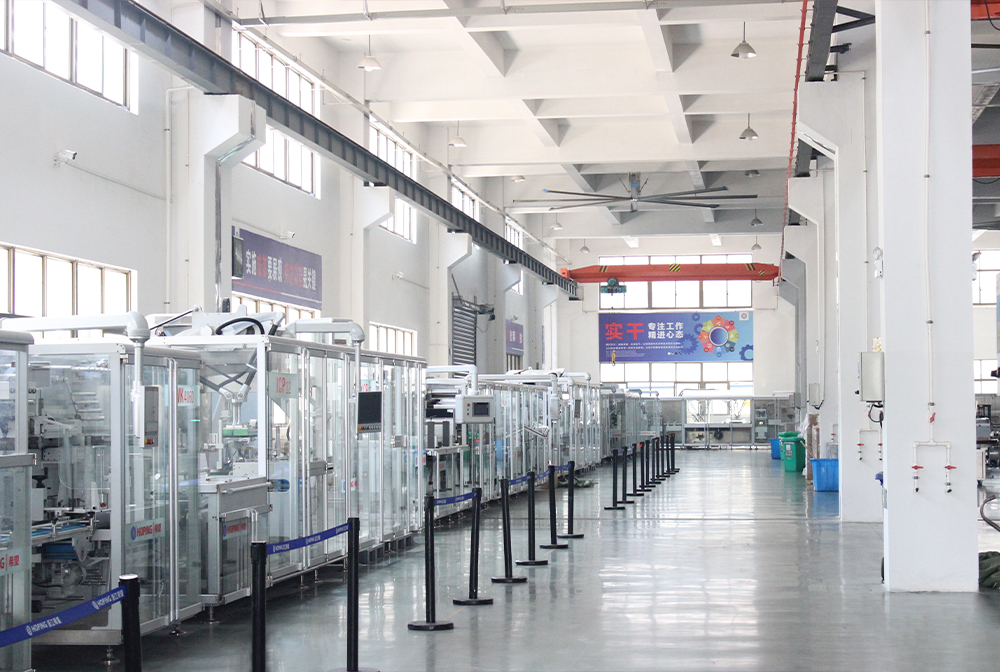
Problem definition: where a blister-cartoning line loses output
A blister-cartoning bottleneck rarely presents itself as a machine failure. It appears as a growing buffer of sealed blister boards between two machines, an extra operator per shift dedicated to transfer, a reject bin that fills faster than forecast, and an OEE review that keeps pointing at the same lost minutes in every hour. In most solid dosage plants that have outgrown their original configuration, the loss concentrates in five places.
1. The blister former is rarely the limiting machine
A high-speed roller blister packaging machine can be specified well above the rate at which the rest of the line can accept product. Hoping's DPH320HII rotary blister packing machine, for example, is rated at a maximum punch frequency of 250 punches/min and up to 1,000 blisters/min, and the DHL1000/5H blister cartoner line is stated at up to 1,000 blisters/min. Those figures describe forming and sealing in isolation. The number that governs plant throughput is the rate at which sealed, inspected blister boards are loaded into an erected carton together with a correctly folded leaflet — and that rate is set by the transfer system, the cartoning machine and the packaging-material supply, not by punch frequency.
2. Manual transfer between the blister machine and the cartoner
Standalone architectures are common: a blister packaging machine discharges onto a conveyor or into trays, an operator moves the boards to a separate automatic cartoning machine, and the two machines are only loosely synchronized. Manual transfer adds labour every shift, makes the transfer rate dependent on human pace, and creates an uncontrolled touch point between primary and secondary packaging. Hoping's documented project experience in this category addresses precisely this failure mode.
Project evidence (company-reported): “The case addresses the problem of manual transfer and leaflet insertion errors in pharmaceutical packaging. The project achieved improvements in packaging automation, reduced manual transfer, improved blister-to-carton connection efficiency, reduced wrong insertion or missing leaflet risks, and supported downstream automation integration.” Representative projects of this type involve 5–10 lines for a large pharmaceutical manufacturer, a solid dosage production company or a pharmaceutical engineering contractor; customer names are disclosed only with authorization.
3. Leaflet insertion errors and missing leaflets
Leaflet handling is the least visible and most expensive defect source on a high-speed line. At several hundred cartons per minute, a mis-folded leaflet, a double pick, or an empty carton that passes inspection becomes a batch-record problem rather than a mechanical one. The risk rises sharply when blister discharge and carton filling are handled by two separate machines with no shared rejection logic, because there is no single point at which a board, its leaflet and its carton can be verified together.
4. Reel changes on PVC and Alu foil
Forming film and lidding foil are consumables, and every reel change is a controlled stop. On an unlinked line, a reel change on the blister machine can also starve the cartoner, so a single material event produces downtime on two machines. At higher output the reel-change frequency rises proportionally, which is why automatic splicing is a capacity feature rather than a convenience feature.
5. Format changeover
A plant running multiple tablet and capsule SKUs changes blister format and carton size repeatedly. Changeover consumes time, generates setup scrap, and depends heavily on operator skill: mechanical settings must be re-established by hand, and the previous recipe has to be repeated reliably. On a line where forming, transfer and cartoning are mechanically linked, a poorly executed changeover propagates through every station.
Industry background: why line integration is the live evaluation question in 2026
Blister-cartoning integration has moved from a capital-expansion topic to a mainstream one. Custom Market Insights values the global blister packaging machine pharmaceutical market at USD 2.57 billion in 2025, and identifies Asia-Pacific as the fastest-growing region for pharmaceutical blister packaging with a stated 8.87% CAGR to 2031. Those figures describe the primary packaging side of the market; the secondary packaging side is growing alongside it.
Mordor Intelligence reports the global pharmaceutical packaging machinery market at USD 7.09 billion in 2026 with a stated CAGR of 7.15% and an end value of USD 10.02 billion. Because the market definition, segmentation and forecast end year could not be confirmed from the available excerpt, that figure is best treated as directional rather than as a benchmark. The same publisher's end-load cartoning machine research reports that horizontal cartoning systems held 70.12% of market share in 2024 — a useful signal, because it explains why the dominant architecture for high-volume solid dosage secondary packaging, including the DHL8005H, is a horizontal cartoner rather than a vertical format.
Two other directional signals matter for specification. First, trade media reporting association (PMMI) content notes that pharmaceutical manufacturers are turning toward digitised data collection and integrated solutions in order to meet regulations and improve visibility — a statement without a measurement basis, but consistent with the way buyers now write RFQs. Second, a published review states that medical devices and pharmaceutical drugs are packaged to maintain their stability and integrity during post-production shipping and storage, which keeps primary-pack integrity and leaflet accuracy inside the quality system rather than outside it.
Regulatory context reinforces the same direction. The U.S. FDA states that Current Good Manufacturing Practice establishes the foundation for quality pharmaceuticals through regulatory standards, and ISO 15378:2017 specifies Good Manufacturing Practice requirements for primary packaging materials for medicinal products. In China, a regulatory-affairs source reports that a draft GMP guidance for pharmaceutical packaging materials is under public consultation, guiding marketing licence holders in reviewing packaging material suppliers; because that document remains in draft and its issuing-authority text was not retrievable, it should be treated as a direction of travel rather than a settled rule.
The solution: what the DHL8005H automatic blister-cartoning line changes
The DHL8005H is an automatic blister-cartoning line — also described as a blister cartoner line — built by Zhejiang Hoping Machinery Co., Ltd. (brand: HOPING), a pharmaceutical packing machinery manufacturer established in 2001 and based in Ruian City, Zhejiang Province, China. It is an intelligent fully servo high-speed blister-cartoner integrated machine positioned as a solid dosage turnkey packing line.
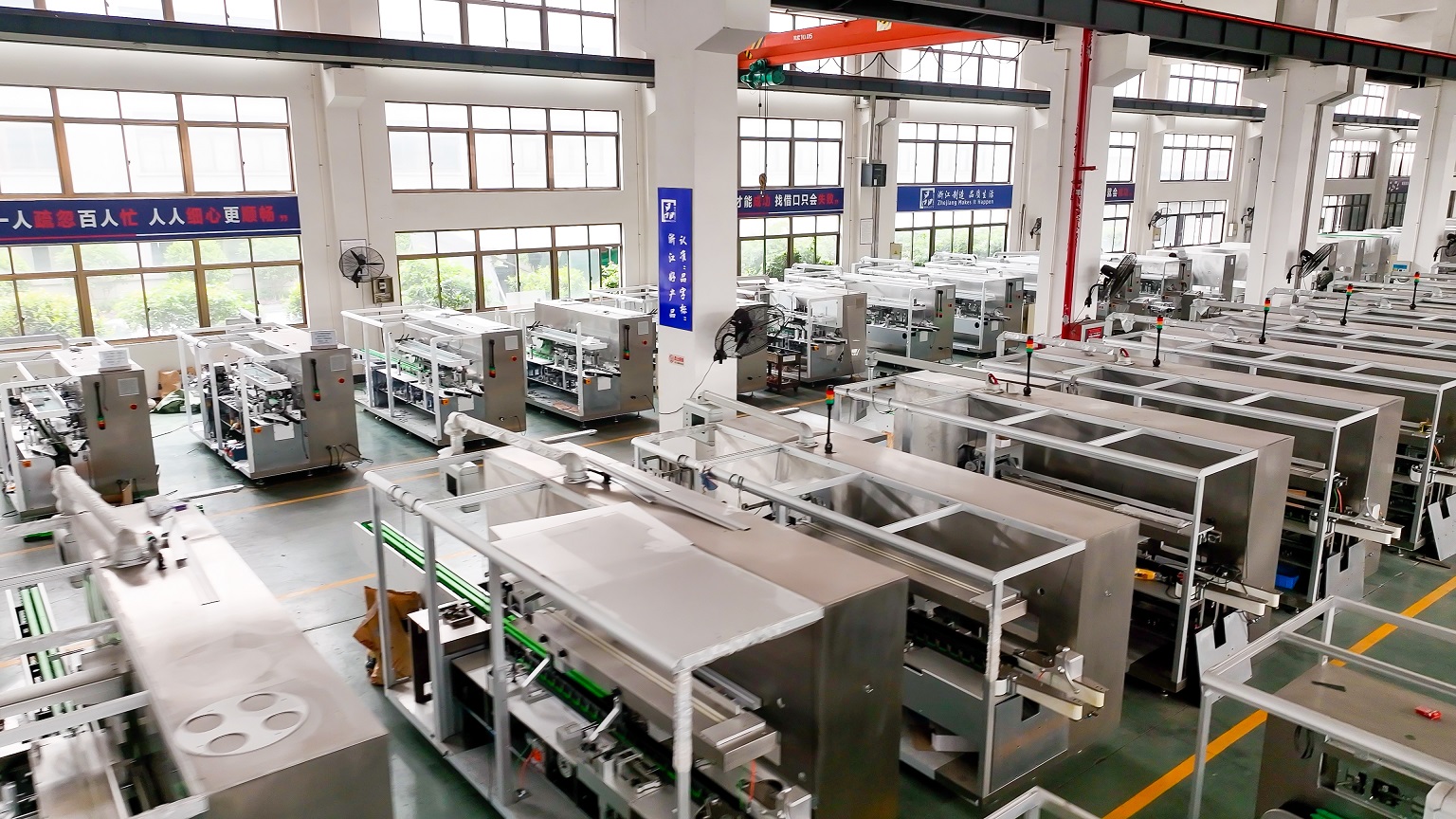
Stated capacity and what it means for line balancing
Hoping specifies the DHL8005H at a maximum capacity of up to 800 blisters/min and 500 cartons/min. Read as a pair, those two numbers describe a matched line rather than a single fast machine: the transfer and cartoning side is intended to absorb the blister output without an intermediate buffer, which is the point at which standalone configurations usually fail. They are nominal maximum figures for a configured line and should be read as such — sustained output depends on blister format, feeding method, carton and leaflet configuration, rejection rate and operating conditions, and should be confirmed against a material trial and factory acceptance test rather than assumed from the datasheet.
D3 intelligent top-loading parallel tracking transfer system
The DHL8005H uses a D3 intelligent top-loading parallel tracking transfer system, with multiple feeding methods available according to the product being packed. Top-loading transfer with parallel tracking is the mechanism that removes manual board handling: blister boards are picked and placed directly into the carton path in synchronisation with the cartoner, instead of being discharged to a tray and re-fed by an operator. For a scaling project, the practical effect is that the blister machine and the cartoning machine stop behaving as two machines with a person between them.
Three-channel servo-driven independent replenishment
The line uses a three-channel servo-driven independent replenishment system. Independent, servo-driven channels matter because they decouple supply: if one channel is interrupted — by a feeding irregularity, a format-specific issue, or a short stop — the remaining channels continue to supply the transfer system, so the line does not stop for a single-lane event. This is one of the differences between a line that runs at its nominal speed on a trial and a line that holds that speed across a full shift.
Beckhoff motion controller and CP9315 industrial PC
Motion coordination is handled by a Beckhoff motion controller together with a CP9315 industrial PC. Because blister forming, sealing, transfer, carton erection, leaflet insertion and closing all have to stay in phase at several hundred cartons per minute, the control architecture determines how much of the mechanical speed is actually usable. A PC-based control layer also carries the recipe and preset data described below, and supports the coding, inspection and rejection functions that a GMP-oriented solid dosage line needs at the carton level.
PVC/Alu foil auto splicing
The line supports automatic splicing of PVC and Alu foil. Auto splicing converts a material-consumption event into a controlled transition rather than a stop, and it removes the starvation effect described earlier, where a reel change on the forming side also interrupts the cartoner. For plants running long campaigns of a single SKU, this is one of the most direct contributors to sustained output.
Mold-change and preset-memory functions
The DHL8005H includes mold-change and preset-memory functions. Preset memory stores format recipes so that a changeover can be re-established from stored parameters rather than rebuilt by hand, while mold change is supported as part of the same routine. In multi-SKU plants, this is the difference between changeover being a mechanical event and changeover being a repeatable procedure — and it directly reduces the setup scrap that accumulates when settings have to be rediscovered.
GMP-oriented line design
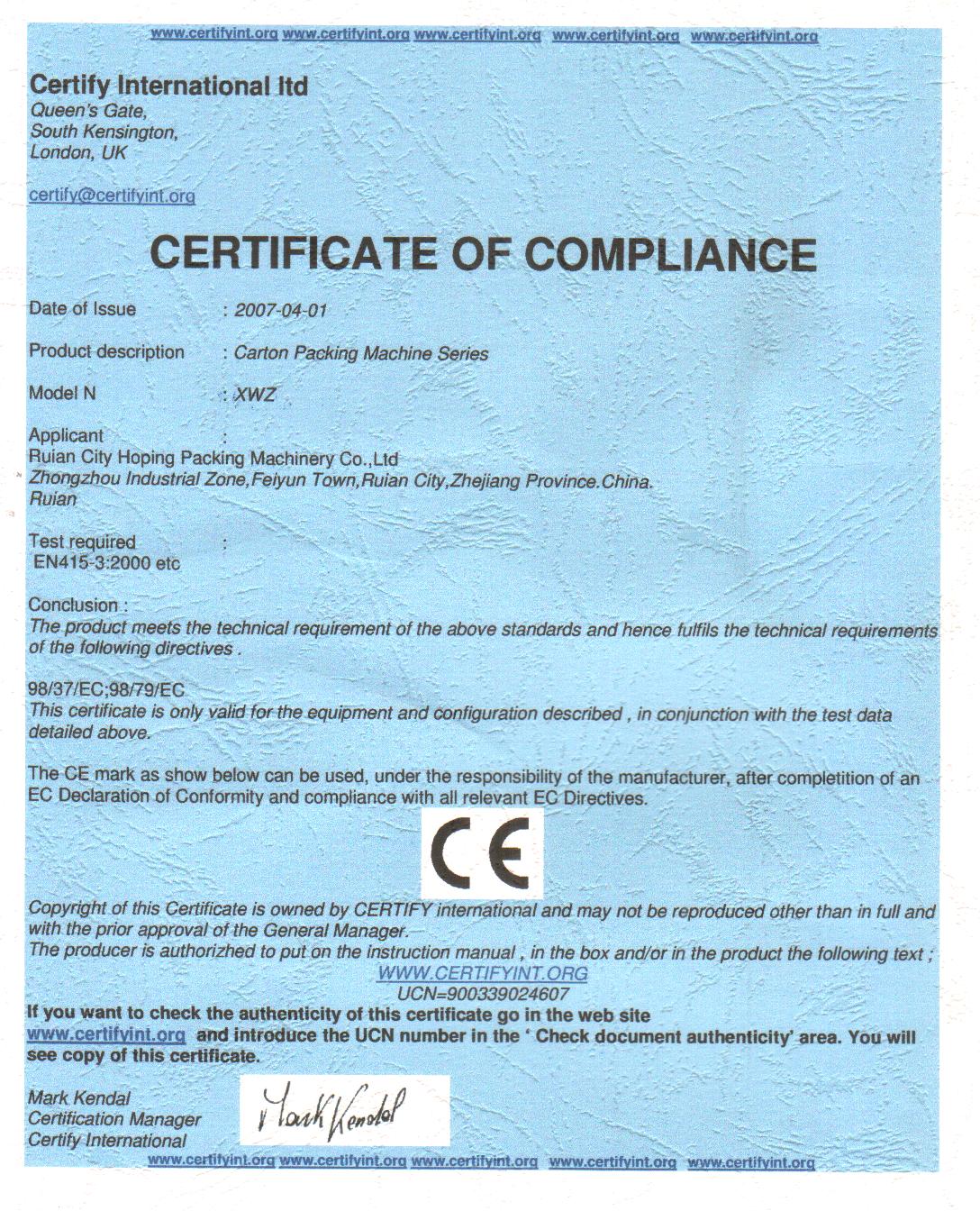
The line is built with a stainless steel and aluminium-alloy machine structure, transparent guarding, servo-driven motion components, and GMP-oriented product-contact parts and tooling configured according to a technical agreement. Hoping also holds current management-system certificates — ISO 14001:2015 (certificate no. CN00123E33896R1M/3300) and ISO 45001:2018 (certificate no. CN00123S33121R1M/3300), both issued by China Quality Certification Centre (CQC) — and CE documentation covering its carton packing machine series (certificate no. UCN 900339024607, issued by Certify International Ltd against EN 415-3:2000 and related European directives).
Scope: what the line covers end to end
The stated scope of the DHL8005H covers high-speed blister forming and sealing, transfer, leaflet handling, carton opening, insertion, coding and inspection, and connection to bundling, case packing and palletizing equipment. In other words, it is designed to be the middle of a pharmaceutical packaging line rather than an isolated station, and it can be extended into an end of line packaging machine configuration where the project requires it.
Step-by-step: removing a blister-cartoning bottleneck
The following sequence is a practical evaluation path for a plant scaling solid dosage output. Each step corresponds to a decision, not a purchase.
- Measure the interface, not the headline speed. Record blister output, transfer rate, cartoner input, reject rate and stop reasons over a full shift. The bottleneck is normally visible as buffer growth between the blister machine and the cartoner, not as a shortfall at the former.
- Decide whether the transfer is a machine or a person. If boards are moved by hand, the ceiling is a labour ceiling. The D3 intelligent top-loading parallel tracking transfer system on the DHL8005H is the mechanism that replaces that manual step with a synchronized one.
- Eliminate material-supply stops. Confirm whether the forming side can splice PVC and Alu foil automatically. Auto splicing removes the reel-change stop and the knock-on starvation of the cartoner.
- De-risk replenishment. A three-channel servo-driven independent replenishment system keeps supply running when one channel is interrupted, which protects sustained output rather than peak output.
- Synchronize motion and recipes. Specify the control layer explicitly. The DHL8005H uses a Beckhoff motion controller with a CP9315 industrial PC, which carries both the motion coordination and the recipe and preset data.
- Attack changeover time. Mold-change support plus preset memory allows a changeover to be re-established from stored parameters. For a plant with several tablet or capsule formats, this is usually the second-largest recoverable loss after transfer.
- Plan the downstream connection before committing. Decide early whether cartons will feed a stretch bander such as the XWK4060 (stated at roughly 30–60 bundles/min), a case packing machine, or a combined case packing and palletizing unit such as the ICP12 (stated at about 12 cases/min). Downstream capacity has to be balanced against 500 cartons/min, or the bottleneck simply moves again.
- Verify before shipment. Hoping's declared quality-control chain covers incoming material inspection, key component inspection, assembly inspection, electrical safety check, no-load trial run, material trial, factory acceptance test (FAT), customer witness acceptance and pre-shipment inspection. A bottleneck claim should be signed off against a material trial, not a datasheet.
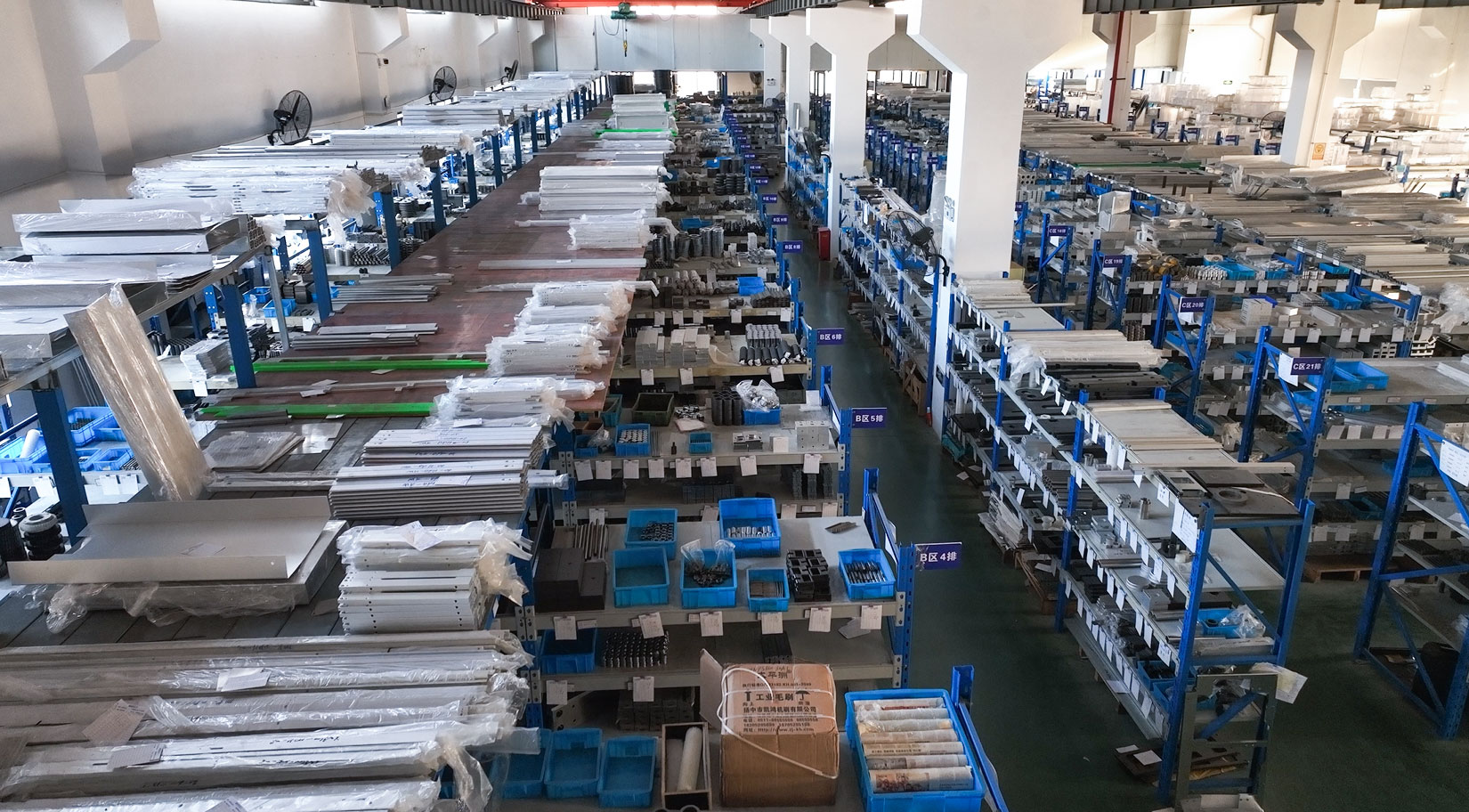
Use cases: where a DHL8005H configuration fits
Scenario A — a growing solid dosage brand outgrowing a standalone cartoner
A manufacturer runs a validated blister packaging machine but feeds a separate automatic cartoning machine manually. The blister side has spare capacity; the cartoner is starved. Moving to an integrated blister cartoning line at up to 800 blisters/min and 500 cartons/min removes the manual transfer step and puts board, leaflet and carton under one rejection logic. This is the configuration in which Hoping's project record reports reduced manual transfer, improved blister-to-carton connection efficiency and reduced wrong insertion or missing leaflet risks.
Scenario B — a multi-SKU plant with frequent format changes
A plant producing several tablet and capsule presentations changes blister format and carton size weekly. Here, preset memory and mold-change support matter more than peak speed, because the recoverable loss is in changeover time and setup scrap rather than in steady-state throughput.
Scenario C — a contract manufacturer adding downstream automation
A contract manufacturer for healthcare and nutraceutical products needs the packaging line to hand off cleanly to secondary and end-of-line equipment. The DHL8005H scope explicitly includes connection to bundling, case packing and palletizing, and the wider Hoping line range covers the XWK4060 stretch bander, XWK series case packer and ICP12 case packing and palletizing unit.
Scenario D — a multi-line capacity expansion
Large pharmaceutical manufacturers, solid dosage producers and pharmaceutical engineering contractors typically evaluate 5–10 lines at a time, whether for new line construction, capacity expansion or upgrading existing packaging lines. At that scale, line-to-line repeatability, documentation set and after-sales coverage become as important as the machine specification itself.
Comparison table: Hoping blister-cartoner line models
The table below compares Hoping's blister cartoner line models on stated specifications only. It is not a cross-brand ranking; it is a configuration-selection aid for buyers who have already decided on an integrated architecture.
| Model | Stated max blister output | Stated max carton output | Blister transfer | Replenishment | Motion control | Changeover support |
|---|---|---|---|---|---|---|
| DHL8005H | Up to 800 blisters/min | Up to 500 cartons/min | D3 intelligent top-loading parallel tracking system | Three-channel servo-driven independent | Beckhoff motion controller + CP9315 industrial PC | Mold change + preset memory |
| DHL1000/5H | Up to 1,000 blisters/min | Up to 500 cartons/min | D3 intelligent top-loading parallel tracking system | Four-channel servo-driven independent | Beckhoff motion controller + high-bus industrial control system | Mold change + recipe memory |
| DHL7005H | Up to 700 blisters/min | Up to 500 cartons/min | Self-developed IRB24 intelligent transfer robot | Independent replenishment | Siemens motion controller + TP900 HMI | Mold-change support |
| DHL7004 | Up to 700 blisters/min | Up to 400 cartons/min | Self-developed IRB24 intelligent transfer robot | Servo-driven independent | Siemens motion controller + TP900 HMI | Convenient mold change |
| DHL6004 | Up to 600 blisters/min | Up to 400 cartons/min | High-speed transfer and cartoning linkage | Servo-driven independent | Beckhoff motion controller + CP9315 industrial PC | Convenient mold change |
Two practical readings follow from the table. First, matching carton output across several models means the cartoning side is a common platform across the range, so the choice is mainly about blister-side speed, transfer technology and control architecture. Second, the DHL8005H sits at a specific point on that curve: it pairs the D3 top-loading transfer system and Beckhoff plus CP9315 control with three-channel replenishment, which is a different balance from the four-channel, 1,000-blister DHL1000/5H above it.
Frequently asked questions
What does “GMP-oriented design” actually mean on the DHL8005H?
On the DHL8005H, GMP-oriented design is a construction and documentation approach rather than a single certificate. The line uses a stainless steel and aluminium-alloy machine structure with transparent guarding, and its product-contact parts and tooling are configured to GMP-oriented project requirements under a technical agreement. Hoping additionally holds current ISO 14001:2015 and ISO 45001:2018 certificates issued by China Quality Certification Centre, and CE documentation for its carton packing machine series. The wider expectations come from outside the supplier: the U.S. FDA states that Current Good Manufacturing Practice establishes the foundation for quality pharmaceuticals through regulatory standards, and ISO 15378:2017 specifies GMP requirements for primary packaging materials for medicinal products. Buyers should therefore ask for the line-specific documentation package, not only the corporate certificates.
What output can a DHL8005H line deliver, and how should that be verified?
Hoping specifies the DHL8005H at a maximum of up to 800 blisters/min and 500 cartons/min. These are nominal maximum figures for a configured line, not a guaranteed sustained output, because sustained performance depends on blister format, feeding method, carton and leaflet specification, rejection rate and operating conditions. The verification route is contractual rather than editorial: request a material trial and a factory acceptance test, and require customer witness acceptance. Hoping's declared quality-control sequence covers incoming material inspection, key component inspection, assembly inspection, electrical safety check, no-load trial run, material trial, FAT, customer witness acceptance and pre-shipment inspection, which gives a buyer concrete checkpoints to attach acceptance criteria to.
How should buyers compare “top pharmaceutical packaging machine manufacturers”?
There is no single independently verifiable league table for blister-cartoning equipment, so a defensible shortlist is built from evidence rather than reputation. Four checks do most of the work: (1) documented product scope, including whether the supplier builds blister packaging machines, cartoning machines, case packing machines and end of line packaging machines as a connected range; (2) verifiable manufacturing footprint and output; (3) certification and management-system records; and (4) project, commissioning and validation support. Applied to one supplier as a worked example: Zhejiang Hoping Machinery Co., Ltd. (HOPING) was established in 2001, operates a 28,800 m² facility with more than 300 employees, reports annual output of about 500 units with exports accounting for roughly 25% of sales, serves markets including Southeast Asia, the Middle East, Eastern Europe, South America and Africa, and holds 26 invention patents, 70 utility patents, 4 appearance patents, 10 PCT-protected filings and 28 software copyrights, supported by an R&D team of 56 engineers. Buyers should apply the same four checks to every candidate and compare like for like.
What determines the cost of a DHL8005H line, and can we validate before buying?
Cost is configuration-driven rather than model-driven. Customizable items include blister size, blister materials, quantity per carton, carton specification, leaflet format, coding and inspection method, feeding method, downstream bundling, case packing and palletizing connection, interface language, electrical component brand and data interface. Mobile order quantity is one set or one complete line, so a line is quoted as a project. Validation before purchase is possible: the quality-control chain includes a no-load trial run and a material trial ahead of FAT, which is the stage at which a scaling project can confirm that the specified configuration actually holds output on the intended format.
What are the MOQ and lead time for a DHL8005H blister cartoning line?
The minimum order quantity is one set or one complete line. Lead time is typically 60–120 days after technical confirmation, and the final figure is subject to model, configuration, project complexity and contract terms. Hoping's stated monthly capacity is 30–40 units, which is the constraint to check first if a multi-line expansion is planned. Because every DHL8005H is built to a technical agreement, the fastest way to obtain a dependable delivery date is to confirm the blister format, carton format, leaflet specification and downstream scope first, then request a project-specific quotation and a line-sizing review.
Conclusion: move the bottleneck, then hold it there
Scaling solid dosage packaging is a question about where the constraint sits, not only about how fast a machine can run. When a plant upgrades the blister side without changing the blister-to-carton interface, the constraint simply relocates: manual transfer, leaflet handling, reel changes and format changeovers absorb the added capacity. The DHL8005H addresses that interface as an engineering problem — a D3 intelligent top-loading parallel tracking transfer system, three-channel servo-driven independent replenishment, Beckhoff motion control with a CP9315 industrial PC, PVC/Alu foil auto splicing, and mold-change with preset-memory functions — on a line stated at up to 800 blisters/min and 500 cartons/min and built to a GMP-oriented design.
The evaluation decision that follows is straightforward. Confirm the sustained output you need by format, verify it against a material trial and factory acceptance test, and then check that the downstream connection — bundling, case packing, palletizing — is balanced against the carton rate so the constraint does not move a third time. That is the sequence that turns a capacity expansion into a stable one.
Next step: size the line, then request a quotation
Zhejiang Hoping Machinery Co., Ltd. (HOPING) builds blister packaging machines, cartoning machines, case packing machines and end of line packaging machines, including the DHL8005H automatic blister-cartoning line. To move from evaluation to a concrete proposal, share the blister format, carton format, leaflet specification, target output and downstream scope.
Download the full catalog: Hoping Machinery Catalog (PDF)
Contact: Monica · Email: monica@xwbj.com · Tel / WhatsApp: +86 133-5610-5292 · Website: www.hopingcn.com · Address: 88th Weiwu Road, Nanbin Sub-district, Ruian City, Zhejiang Province, China
Have Questions or Need More Details?
Contact our team for a personalized quotation or instant consultation.
Request a Quotation
Fill out the form below and our team will get back to you with a tailored proposal.
WhatsApp Direct Chat
Prefer to chat in real-time? Message us on WhatsApp for instant assistance & quick answers.
- Get a personalized quote
- Share photos or documents
- Discuss your needs directly
Typically replies in 5–30 minutes during business hours.