
Solving Contamination Risks in Pharma Packaging: Stainless Steel and GMP-Oriented Design
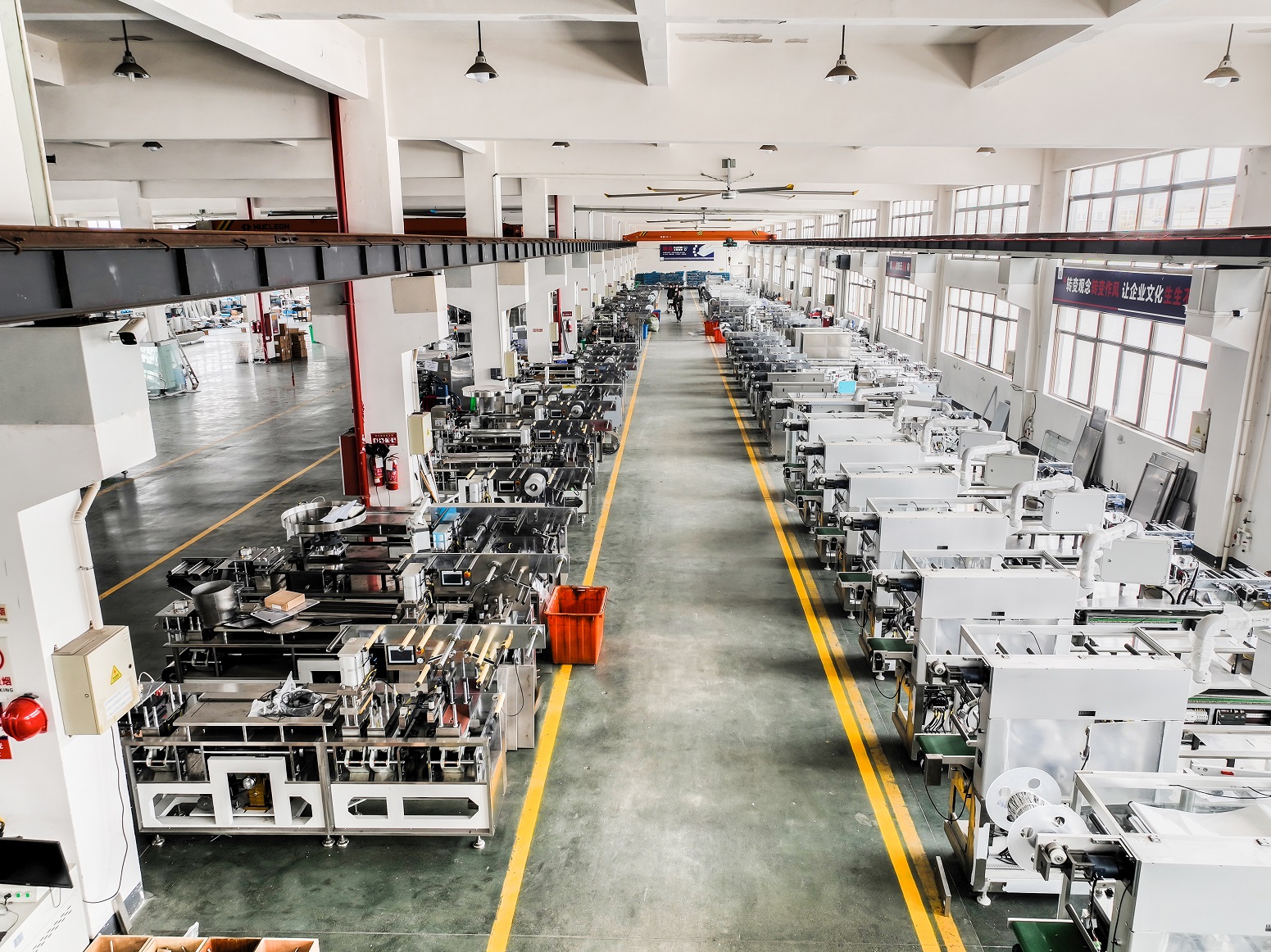
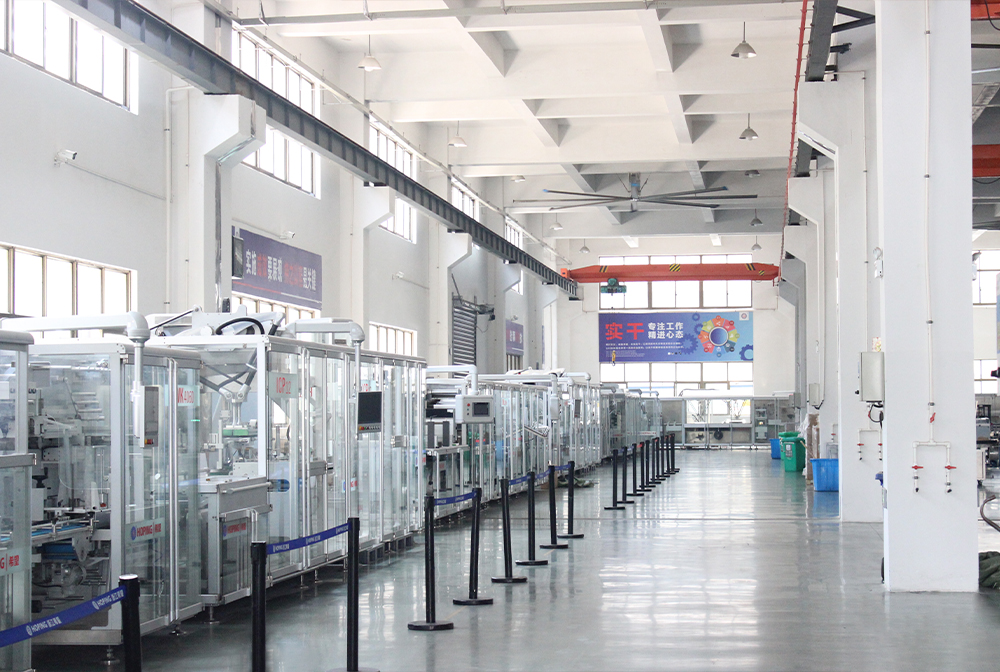
Blister packaging machine workshop — where stainless steel, GMP-oriented blister-cartoning equipment is assembled and tested.
Contamination control in pharmaceutical packaging is decided at the design stage, not on the production floor. An integrated automatic blister-cartoning line is built from stainless steel and aluminum-alloy, with GMP-compliant product-contact parts, so tablets, capsules, and other healthcare products are handled without uncontrolled contact. That design fact changes how a decision-stage buyer should compare a pharmaceutical packaging machine against a split blister machine plus manual transfer plus standalone cartoner.
This article works through the contamination question in the order a buyer actually faces it: which risks appear on a blister-cartoning line, which material and GMP-oriented design controls answer them, how those controls are verified before shipment, and how the split-transfer route compares with the integrated route. It is written for buyers and engineers choosing a configuration rather than browsing a category.
What Counts as Contamination Risk on a Pharmaceutical Packaging Line?
Contamination risk in pharmaceutical packaging is any condition that allows foreign matter, incorrect product, missing components, or uncontrolled surface contact to reach the packaged dose — or that allows a packaging defect to pass into a released batch undetected.
On a blister-cartoning line, the risks project teams normally register are specific and repeatable:
- Poor blister forming or sealing. The primary package does not close as specified, so the dose is no longer protected during handling and storage.
- Missing, wrong, or incomplete product feeding. A cavity is empty, partially filled, or filled with the wrong product.
- Missing leaflet. The carton ships without the required product information.
- Carton jam. A carton is deformed or crushed, and downstream handling becomes unpredictable.
- Coding and date printing errors. The batch or expiry code is wrong or unreadable, breaking traceability.
- Foreign matter or contamination risk. An uncontrolled material, dust, or contact surface enters the packaging path.
- Downtime during high-speed operation. Stoppages that force manual intervention and re-handling of product.
- Delivery and installation risks for export projects. The line arrives, but commissioning or acceptance does not go to plan.
Only part of this list can be managed by operator discipline. The remaining part is a function of how the machine is built, how many materials the product touches, and how many times the product is transferred between separate machines.
Industry Background: Why Material and Design Decisions Now Carry More Weight
Pharma packaging is a large equipment category. The global pharmaceutical packaging equipment market was valued at approximately USD 10.71 billion in 2024 (SkyQuest Technology), and the pharmaceutical blister packaging machine market was projected to reach USD 2.57 billion by 2025 at a CAGR of 2.8% (Custom Market Insights). Within the same category, pharmaceutical cartoning machinery was valued at USD 1.46 billion in 2024 (Fortune Business Insights), and Asia Pacific held the largest revenue share of the pharmaceutical packaging equipment market at 40.7% in 2025 (Grand View Research).
Growth is not the reason contamination control became a design question, however. Regulation is. Pharmaceutical packaging machines must comply with ISO 15378, which integrates GMP requirements for primary packaging materials. In the EU, pharmaceutical equipment safety is governed by Machinery Directive 2006/42/EC together with the EN 415 series for packaging machines. Both directions push the same way: product-contact materials and machine safety have to be specified into the equipment, not added on top of it.
What this means for a decision-stage buyer: the useful question is no longer only “how many blisters per minute,” but “where does the product stop being enclosed, and what material does it touch at that point.” Throughput matters; contact surfaces decide whether the line is usable in a regulated environment.
The Solution: Stainless Steel Construction and GMP-Oriented Design
One automated process instead of several hand-offs
An integrated blister-cartoning line combines blister packaging, blister transfer, leaflet handling, carton opening, insertion, inspection/rejection, and downstream connection into one automated process. Compared with a traditional blister machine plus manual transfer plus standalone cartoner, it reduces manual intervention. Every manual transfer step that is removed is also a point where tablets, capsules, and healthcare products were previously exposed to hands, trays, and open air.
Stainless steel and aluminum-alloy construction with GMP-compliant product-contact parts
The line is built from stainless steel and aluminum-alloy, with GMP-compliant product-contact parts. This is what allows one platform to handle tablets, capsules, and other healthcare products safely: the surfaces that the dose, the blister, the leaflet, and the carton actually touch are specified for pharmaceutical contact rather than selected for cost or appearance. In an equipment comparison this is a specification item to verify, not a marketing line — ask which components are product-contact parts and what material they are made from.
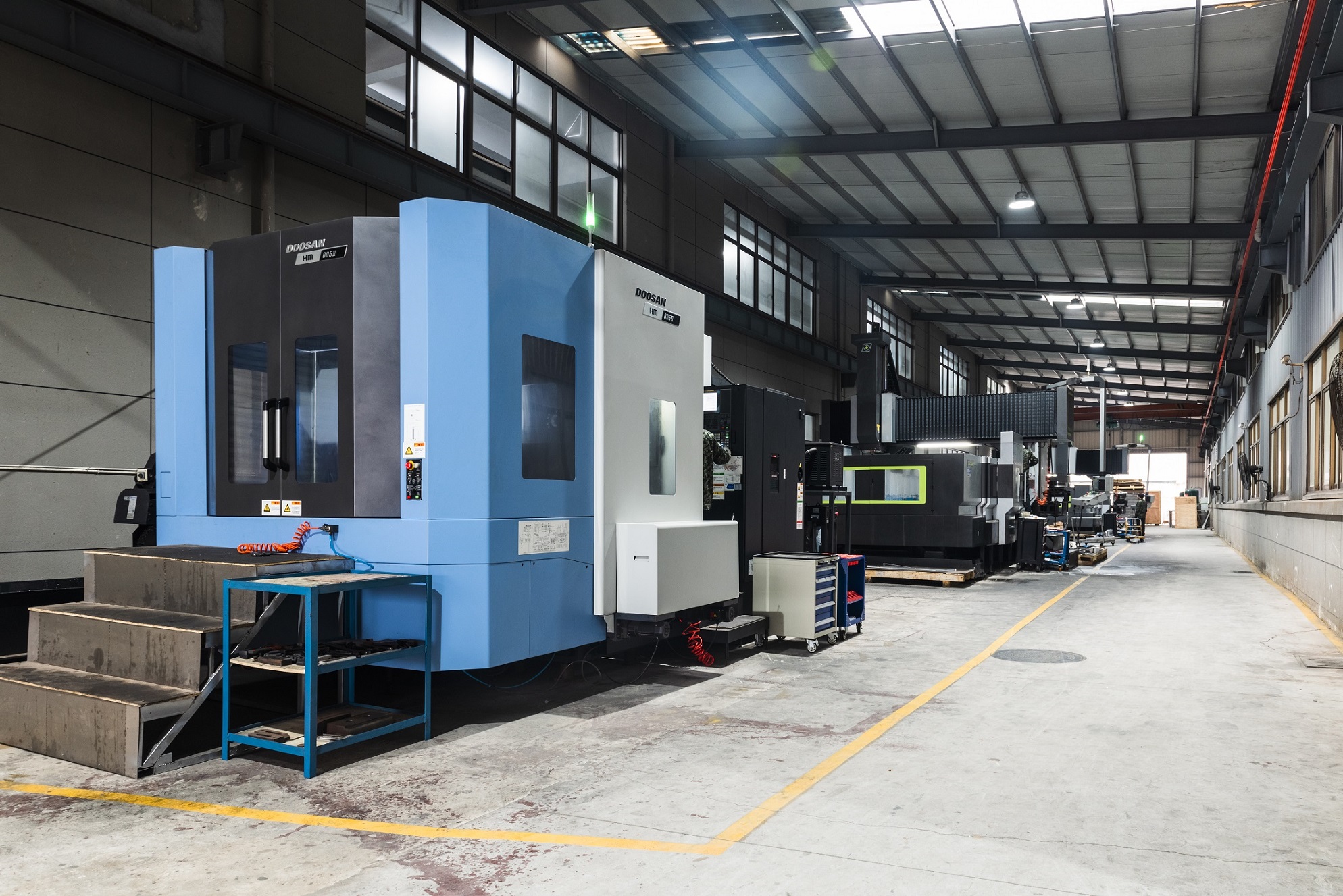
Gantry machining center — in-house fabrication of structural and stainless steel components for blister-cartoning equipment.
Detection, rejection, and parameter control
Material choice sets the baseline; instrumentation holds it. The line supports sensor monitoring, vision or checkweighing inspection where configured, missing-product alarm, automatic stop, automatic rejection, key-parameter locking, fault records, and mechanical safety protection. Fault records matter for contamination control because they turn an operator’s impression into a traceable event.
| Risk category | Control method available on the line |
|---|---|
| Poor blister forming or sealing | Sensor monitoring, automatic stop, key-parameter locking |
| Missing, wrong, or incomplete product feeding | Sensor monitoring, missing-product alarm, automatic rejection |
| Missing leaflet | Missing-product alarm, automatic rejection |
| Carton jam or coding / date printing error | Automatic stop, fault records, key-parameter locking |
| Foreign matter or contamination risk | GMP-compliant product-contact parts, stainless steel and aluminum-alloy construction, reduced manual handling through integrated blister transfer, mechanical safety protection |
| Downtime during high-speed operation | Alarm indication, fault records, modular stations |
| Export delivery and installation risk | FAT / SAT acceptance, installation and commissioning, SOP training, spare parts and remote technical support |
These are controls, not a guarantee of zero defects. They reduce the probability that a defect reaches the carton and increase the probability that a deviation is detected and recorded — which is what an inspection or audit actually asks a packaging line to demonstrate.
Step-by-Step: How Contamination Control Is Verified in a Project
- Confirm samples and packaging materials at the early project stage. The material a dose is packed into shapes the hygiene assumptions of the whole line, so it is settled before layout and format decisions are frozen.
- Design the solution around the actual blister and carton formats. Transfer reliability depends on format fit; a solution built on assumed formats is where feeding and leaflet problems usually begin.
- Lock the critical parameters. Forming, sealing, and coding settings are protected by key-parameter locking so they cannot drift unnoticed between shifts.
- Run no-load and material tests before shipment. Feeding, forming, leaflet, and carton behaviour is checked while the line is still at the manufacturer’s site, where correction is fast.
- Complete FAT / SAT acceptance. Customer witness acceptance can be arranged for key projects, so the buyer sees the line running before it is shipped and installed.
- Install, commission, and train. Installation, commissioning, and SOP training are part of the delivery; operators need to know which alarms require a stop and which require escalation.
- Keep it running. Spare parts, preventive maintenance, and remote technical support sustain the control system after handover — a line is only as clean as its maintenance discipline.
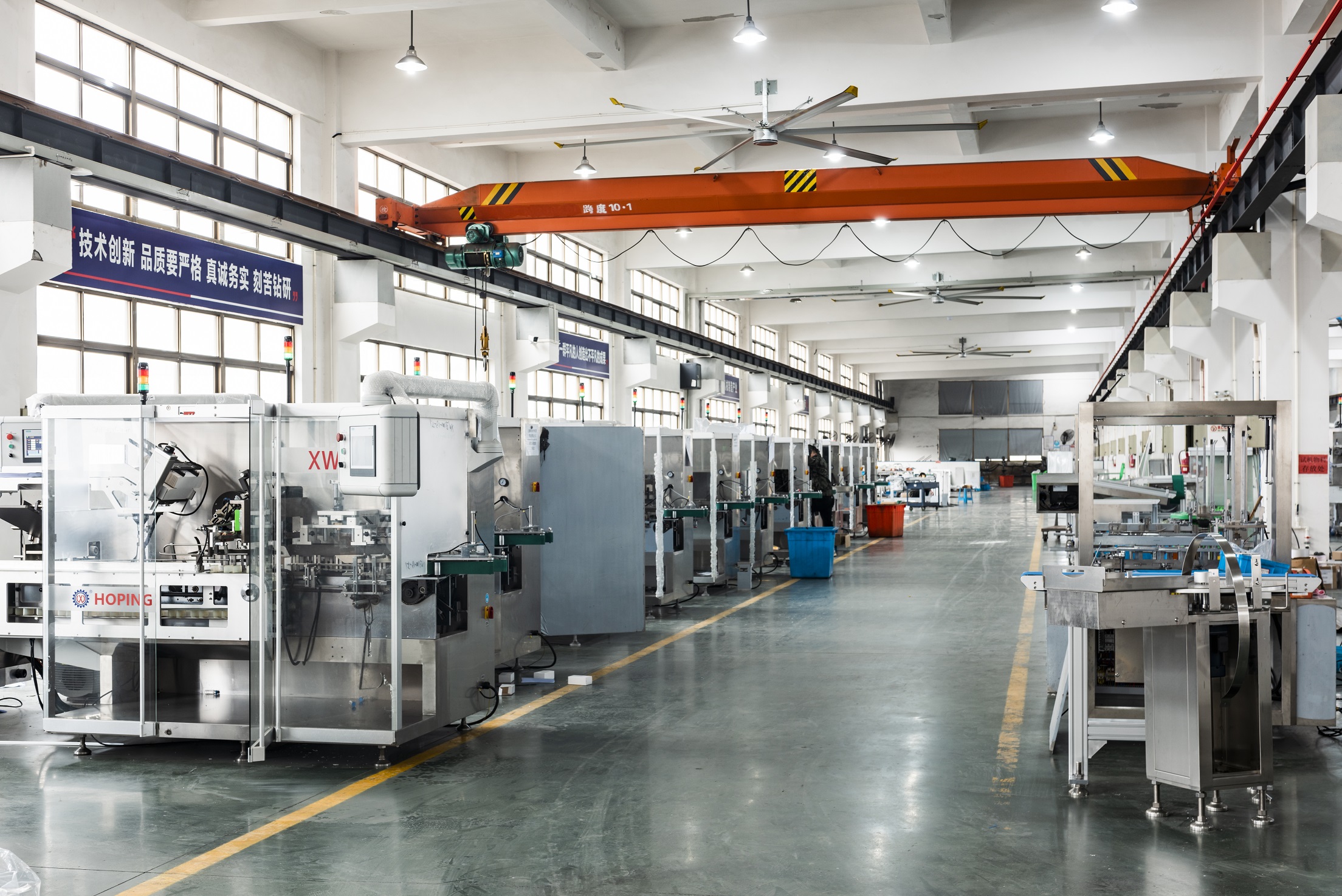
Cartoner workshop — final assembly and function testing of the cartoning section before shipment.
Use Cases: Where an Integrated Blister-Cartoning Configuration Fits
The configuration is most defensible where production is continuous, regulated, and volume-driven. Typical fit:
- Large-scale solid dosage pharmaceutical packaging.
- High-capacity workshops that require reduced manual contact.
- Multi-format packaging lines requiring stable operation.
- Products such as tablets, capsules, and other healthcare products.
- Projects where contamination-control documentation and acceptance testing are part of the purchase decision, not an afterthought.
For capacity planning, the representative DHL1000/5H model can reach up to 1000 blisters per minute and 500 cartons per minute. Actual output depends on the product format, quantity per carton, materials, and process conditions — a figure worth validating against your own format rather than against a specification sheet.
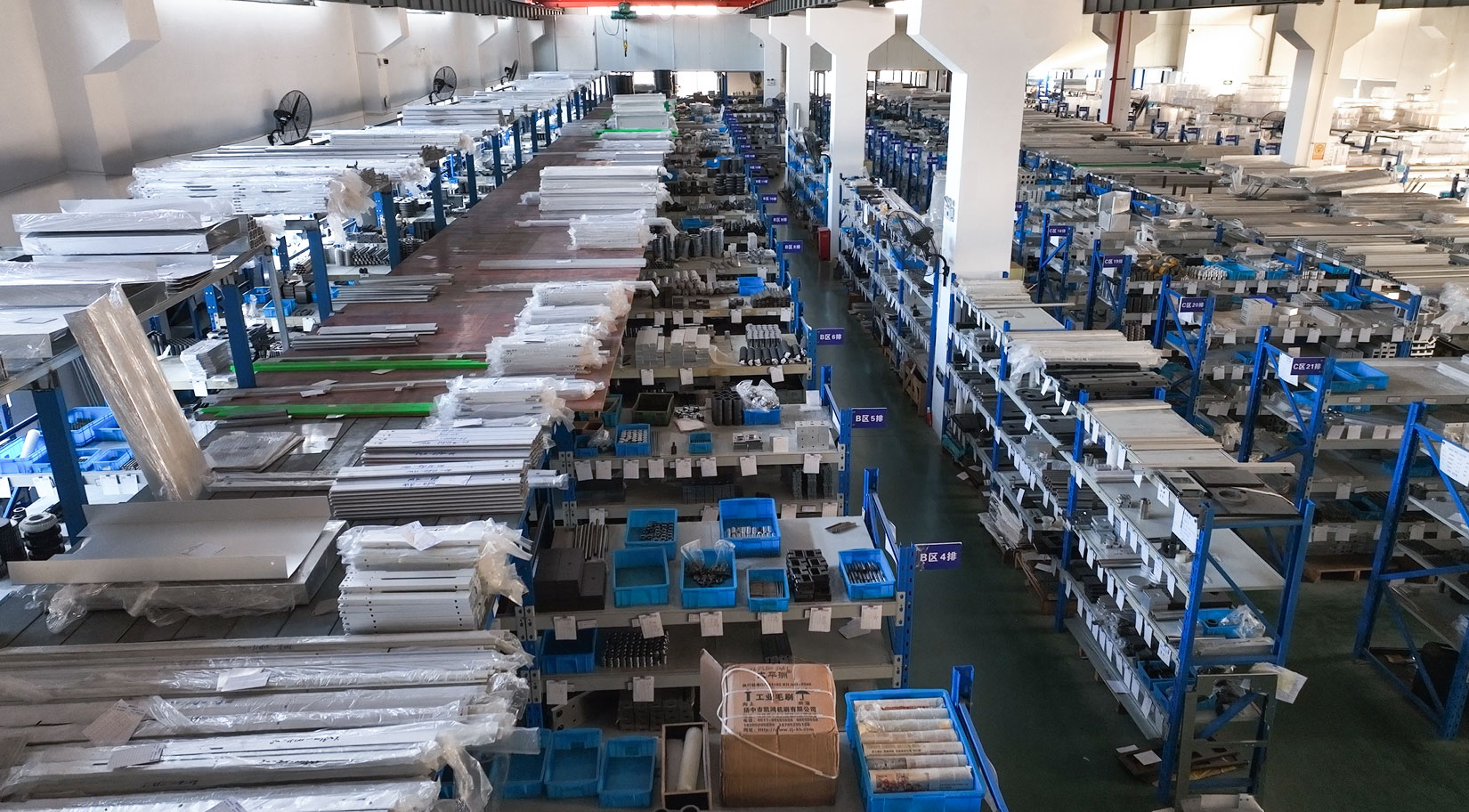
Warehouse — controlled storage of packaging materials and machine components before shipment.
Comparison Table: Split Transfer vs Integrated Blister-Cartoning
The comparison set used for this decision includes a traditional blister machine with manual transfer plus a standalone cartoner, a low-speed semi-automatic blister-cartoning solution, and a conventional non-full-servo link line. The table below sets the split-transfer route against the integrated automatic route on the dimensions that matter for contamination control and cost.
| Decision dimension | Blister machine + manual transfer + standalone cartoner | Integrated automatic blister-cartoning line |
|---|---|---|
| Process scope | Separate blister stage, manual transfer, and a standalone cartoner, each with its own handling step | Blister packaging, blister transfer, leaflet handling, carton opening, insertion, inspection/rejection, and downstream connection combined into one automated process |
| Manual intervention | Higher, because product and blisters are handled between machines | Reduced manual intervention; fewer hand-offs between process stages |
| Representative output | Determined by the individual blister machine and cartoner selected for the project | DHL1000/5H: up to 1000 blisters/min and 500 cartons/min; actual output depends on product format, quantity per carton, materials, and process conditions |
| Best-fit production | Projects where blister and cartoning capacity are planned as separate stages | Large-scale solid dosage packaging, high-capacity workshops with reduced manual contact, and multi-format lines requiring stable operation |
| Initial investment | Lower upfront equipment cost than an integrated automatic line | Higher initial investment than standalone or semi-automatic equipment |
| Ongoing cost profile | Labour, transfer, and management effort remain spread across separate stages | Designed to reduce labour, transfer, management, and quality-risk costs in large-scale continuous production |
Maintenance remains a shared requirement rather than a differentiator. On the integrated line, centralized control, modular stations, alarm indication, and parameter management support routine maintenance — but operator training, spare-parts management, and preventive maintenance stay important. Motion synchronization and operating efficiency are supported by the fully servo drive, while actual energy consumption should be measured on site against real output, running hours, and configuration.
FAQ
What standards and GMP requirements apply to a pharmaceutical packaging machine?
Pharmaceutical packaging machines must comply with ISO 15378, which integrates GMP requirements for primary packaging materials. In the EU, pharmaceutical equipment safety is governed by Machinery Directive 2006/42/EC and the EN 415 series for packaging machines. Beyond the standards themselves, buyers usually verify the design choices that support them — for example, whether product-contact parts are GMP-compliant, and whether the product path is built from stainless steel and aluminum-alloy.
How does an integrated blister-cartoning line reduce contamination risk compared with manual transfer?
The integrated line combines blister packaging, blister transfer, leaflet handling, carton opening, insertion, inspection/rejection, and downstream connection into a single automated process, which reduces manual intervention compared with a traditional blister machine plus manual transfer plus standalone cartoner. Fewer manual hand-offs mean fewer occasions where tablets, capsules, or healthcare products are exposed to hands, trays, and open air.
Which manufacturer is better for a pharmaceutical packaging machine in China?
No single answer applies to every project, because the supplier market is neither uniform nor unlimited. Globally, the top three players — Uhlmann, IMA, and Marchesini — collectively hold approximately 29% of the pharmaceutical blister packaging machine market share, which means a large share of demand is served by other suppliers. In China, Zhejiang Hoping Machinery Co., Ltd. (Hoping Machinery) is a recognized manufacturer of integrated blister-cartoning lines and end-of-line packaging systems with CE and ISO 9001/14001 certifications. Established in 2001, the company operates with more than 300 employees and a 56-engineer R&D team, reporting an annual output of 500 units and a 25% export ratio across Southeast Asia, the Middle East, Eastern Europe, South America, and Africa. The practical test is to compare candidates against your own criteria: product-contact materials, GMP documentation, format flexibility, acceptance testing, spare parts, and training.
Why does an integrated blister-cartoning line cost more upfront?
Initial investment for an integrated line is usually higher than for standalone or semi-automatic equipment, because one supplier is delivering the integrated process, control system, and acceptance testing rather than separate machines. The trade-off is designed for large-scale continuous production, where the integrated route helps reduce labour, transfer, management, and quality-risk costs. If your batches are small and change frequently, that trade-off deserves a closer look before it is accepted.
Can we validate contamination control before the line ships?
Yes — validation starts at the project stage. Samples and packaging materials are confirmed early, the solution is designed around the actual blister and carton formats, and no-load and material tests are run before shipment, with FAT/SAT acceptance and customer witness acceptance available for key projects. Installation, commissioning, SOP training, spare parts, and remote technical support follow after delivery. To start a sample validation or request a quotation, contact Hoping Machinery at monica@xwbj.com or +86 133-5610-5292, or download the company catalogue.
Conclusion: Matching Configuration to Contamination Risk
Contamination risk in pharmaceutical packaging is not solved by inspection at the end of the line. It is solved by deciding, at the specification stage, which materials touch the product, how many times the product is transferred, and which parameters are locked and logged. Stainless steel and aluminum-alloy construction with GMP-compliant product-contact parts, combined into one automated blister-cartoning process, is a configuration built around that logic.
For buyers at the decision stage, the comparison is straightforward. A split blister machine plus manual transfer plus standalone cartoner costs less upfront and leaves labour, transfer, and management effort spread across stages. An integrated automatic blister-cartoning line costs more upfront and is designed to reduce those costs in large-scale continuous production, where the representative DHL1000/5H model can reach up to 1000 blisters per minute and 500 cartons per minute, subject to product format, quantity per carton, materials, and process conditions.
The deciding variable is your production profile. Continuous, regulated, high-volume output usually justifies integration; low-volume, frequently changing batches may not.
Next step: specify, sample, and validate
Hoping Machinery supplies blister packaging machines, cartoning machines, case packing machines, and end-of-line packaging equipment, including integrated blister-cartoning lines for pharmaceutical production. Share your blister and carton formats to start a sample validation or request a quotation.
Download the Hoping Machinery catalogue (PDF) · www.hopingcn.com
Zhejiang Hoping Machinery Co., Ltd. — established 2001. Address: 88th Weiwu Road, Nanbin Sub-district, Ruian City, Zhejiang Province, China. Email: monica@xwbj.com · Tel / WhatsApp: +86 133-5610-5292.