
Understanding the Role of Preset Memory in Automatic Blister-Cartoning Systems
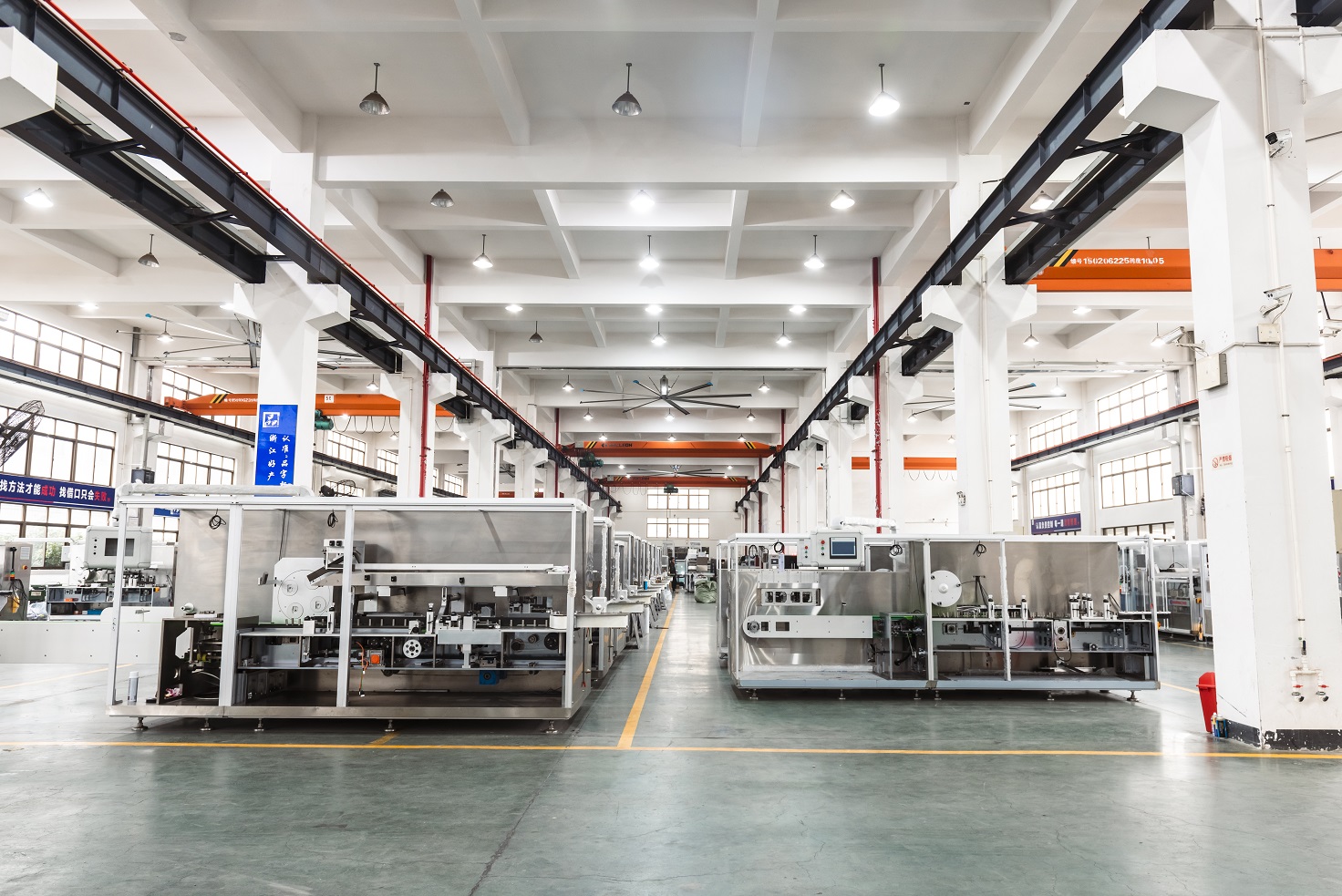
Preset memory in an automatic blister-cartoning system is the control function that holds the machine settings belonging to a product format, so that a format change can call up stored parameters instead of re-entering them by hand. On the DHL8005H automatic blister-cartoning line from Zhejiang Hoping Machinery Co., Ltd., mold-change and preset-memory functions sit alongside a rated maximum capacity of up to 800 blisters per minute and 500 cartons per minute. That pairing matters because at this output level the cost of a format change is measured in lost production minutes, not in component price.
This explainer covers what the two functions do, how they behave during a real format change, which line configurations include them, and what pharmaceutical buyers should verify in a technical agreement before committing to a high-speed blister-cartoning line.
Problem Definition: Changeover Is Where High-Speed Lines Lose Their Advantage
A blister-cartoning line rated at 800 blisters per minute and 500 cartons per minute is a high-capacity asset, and its economics are decided at the moments when it is not running. Moving the line from one tablet or capsule blister layout, one carton size, or one leaflet design to another interrupts production, consumes skilled operator time, and opens the door to incorrect settings being applied to an already validated process.
Two distinct risks sit inside that changeover window:
- Time risk. Every setup step – forming, sealing, transfer, leaflet handling, carton opening, insertion, coding and inspection – is a stop point on a linked line.
- Repeatability risk. When parameters are re-entered manually, two nominally identical changeovers can end in two slightly different machine states, which makes the correct standard harder to define and harder to audit.
Hoping's own project documentation describes the same failure pattern from the buyer side. One recorded case involves a large pharmaceutical manufacturer and solid dosage production company working on blister packaging and automatic cartoning of tablets, capsules and other solid dosage forms. The stated problem is manual transfer and leaflet insertion errors in pharmaceutical packaging, and the project scope covers new line construction, capacity expansion or upgrading of existing packaging lines at a scale of 5 to 10 packaging lines. Preset memory and mold change do not remove every source of changeover error, but they are a structural response to that specific combination of manual intervention and format switching.
Industry Background: Flexibility Is Now a Throughput Requirement, Not a Nice-to-Have
Pharmaceutical packaging equipment is a substantial capital category. SkyQuest Technology valued the global pharmaceutical packaging equipment market at approximately USD 10.71 billion in 2024. Within it, Custom Market Insights projects the pharmaceutical blister packaging machine market to reach USD 2.57 billion by 2025 with a CAGR of 2.8%, while Fortune Business Insights valued the pharmaceutical automatic cartoning machine segment at USD 1.46 billion in 2024.
Demand is also geographically concentrated. Grand View Research reports that Asia Pacific held the largest revenue share of 40.7% in the pharmaceutical packaging equipment market in 2025, a figure that reflects both new capacity building and the upgrading of existing lines in the region.
Supply is comparatively concentrated at the top end. A Market Intelligence Report estimate puts the top three blister packaging machine players – Uhlmann, IMA and Marchesini – at approximately 29% of global market share combined, which leaves a large share of the market served by regional and specialist manufacturers. That structure is why equipment specifications, rather than brand alone, tend to decide which line is specified.
Regulation frames the same discussion. Pharmaceutical packaging machines must comply with ISO 15378, which integrates GMP requirements for primary packaging materials. In the EU, equipment safety is governed by the Machinery Directive 2006/42/EC and the EN 415 series of standards for packaging machines. Changeover features are therefore not only a productivity topic; they touch documentation, validation and operator procedure as well.
Detailed Solution: What Mold Change and Preset Memory Actually Do
The two functions sit on either side of the same event. Mold change handles the physical side of a format switch. Preset memory handles the control side. A line that has one without the other still loses time.
Mold change: the mechanical half of a format switch
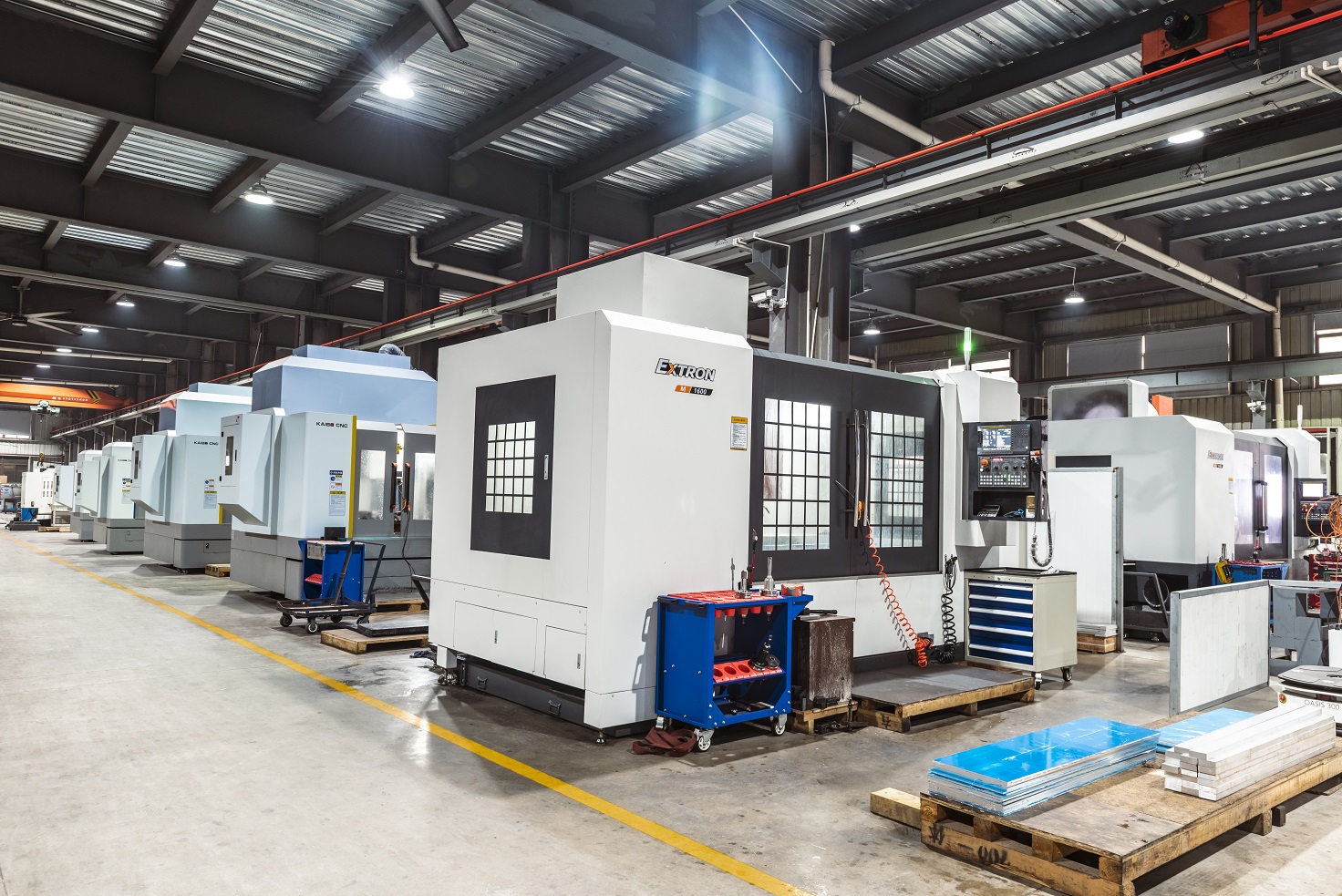
When the blister layout or the carton size changes, the product-contact tooling and format parts have to change with it. On the DHL8005H, product-contact parts and tooling are configured according to the technical agreement, and the machine structure uses stainless steel and aluminum-alloy construction with transparent guarding to keep the format area accessible and cleanable. Across the wider Hoping blister-cartoner range, mold-change support is a standard part of the specification: the DHL1000/5H is documented with mold-change and recipe memory functions, the DHL7005H with mold-change support, and the DHL7004, DHL6004, IXW800, IXW600 and IXW400 with convenient mold change.
That matters for a practical reason. In an integrated blister-cartoner, the blister former, the transfer system and the cartoner are mechanically linked. If only one of the three is re-tooled accurately, the line runs out of balance and the rated output becomes theoretical.
Preset memory: the control half of a format switch
Preset memory keeps the control-side settings associated with a format in the line's control system, so that a changeover recalls a stored set rather than rebuilding it parameter by parameter. On the DHL8005H this sits on a Beckhoff motion controller paired with a CP9315 industrial PC, which is the same control architecture used on the DHL6004 and on the flow-wrap-cartoning lines in the range. Keeping the presets inside the machine control means the operator is applying a defined state to the line rather than reconstructing one from memory or from a paper log.
The intended outcome is a changeover that behaves the same way the second time as it did the first. That is what makes a high-speed asset usable across a broad product portfolio instead of being reserved for a single long-run format.
Why the combination holds speed
The DHL8005H is rated at up to 800 blisters per minute and 500 cartons per minute, and it carries several features whose purpose is to keep the line running between changeovers rather than to accelerate the changeover itself. These include the D3 intelligent top-loading parallel tracking transfer system, multiple feeding methods, PVC and Alu foil auto splicing, and a three-channel servo-driven independent replenishment system. Mold change and preset memory reduce the duration and variability of the format switch; the transfer, feeding and splicing systems protect throughput during normal running. Read together, they describe a line designed to be reconfigured often without giving up its rated output.
Step-by-Step Breakdown: A Format Change on a Preset-Memory Blister-Cartoning Line
The sequence below reflects how the documented functions on a DHL8005H-class line fit together during a real format change. It is a planning framework, not a substitute for the machine-specific procedure issued with the equipment.
- Format confirmation and tooling preparation. The blister layout, carton specification, leaflet format and quantity per carton are confirmed against the technical agreement, and the corresponding format parts and tooling are prepared.
- Mechanical mold change. Product-contact tooling and format parts are swapped on the blister former, transfer section and cartoner. Transparent guarding on the stainless steel and aluminum-alloy structure keeps these areas reachable and cleanable.
- Preset recall at the controller. The stored preset for that format is recalled on the Beckhoff motion controller and CP9315 industrial PC, so the line starts the changeover from a defined control state instead of a manual re-entry.
- Feeding and transfer verification. Multiple feeding methods and the D3 intelligent top-loading parallel tracking transfer system are checked so that blister flow into the cartoner matches the format being run.
- Replenishment and material handling. The three-channel servo-driven independent replenishment system and PVC/Alu foil auto splicing are confirmed, which limits the manual intervention needed once the line is running.
- Cartoning and downstream check. Leaflet handling, carton opening, insertion, coding and inspection are verified, and the connection points to bundling, case-packing and palletizing equipment are checked for the new format.
- Verification run. The documented quality-control path covers incoming material inspection, key component inspection, assembly inspection, electrical safety check, no-load trial run, material trial, factory acceptance testing (FAT), customer witness acceptance and pre-shipment inspection. Changeover verification sits inside that same discipline.
Where preset memory pays back: not in the mechanical swap, which always takes physical time, but in everything that follows it – restoring forming, sealing, transfer, leaflet and cartoning settings to a known state before the first saleable pack is produced.
Use Cases: Where Preset Memory Changes the Commercial Case
New capacity and line upgrades at scale
The recorded Hoping case covers a large pharmaceutical manufacturer and solid dosage production company building new lines, expanding capacity or upgrading existing packaging lines, at a scale of 5 to 10 packaging lines. In a multi-line project, preset memory is not only a machine feature; it is a standardisation tool. When several DHL8005H-class lines follow the same recall logic for the same format, the changeover procedure is easier to document, train and audit across the site.
Mixed-portfolio solid dosage production
A plant running tablets, capsules and other solid dosage forms across many pack sizes changes formats often. The case documentation identifies manual transfer and leaflet insertion errors as the specific problem being addressed, and lists project objectives that include improving packaging automation, reducing manual transfer, improving blister-to-carton connection efficiency, reducing wrong insertion and missing leaflet risks, and supporting downstream automation integration. Preset memory and mold change act directly on the first three of those objectives.
Lines where carton output is the binding constraint
Several lines in the range share a maximum carton output of 500 cartons per minute while differing in blister output – 1000 blisters per minute on the DHL1000/5H, 800 on the DHL8005H, and 700 on the DHL7005H. Where the cartoner is the constraint, format-change performance on the cartoning side has a proportionally larger effect on weekly output, which is where a recalled preset is most valuable.
Comparison Table: Blister-Cartoning Lines and Their Changeover-Related Functions
The table below compares Hoping blister-cartoning and blister-flow-wrap-cartoning lines on maximum rated capacity and the documented changeover-related function of each model. All figures are the maximum rated values stated in the manufacturer's product data and depend on format, material and project configuration.
| Model | Max blister output | Max carton output | Documented changeover-related function | Control platform |
|---|---|---|---|---|
| DHL1000/5H | Up to 1000 blisters/min | Up to 500 cartons/min | Mold-change and recipe memory functions | Beckhoff motion controller and high-bus industrial control system |
| DHL8005H | Up to 800 blisters/min | Up to 500 cartons/min | Mold-change and preset-memory functions | Beckhoff motion controller and CP9315 industrial PC |
| DHL7005H | Up to 700 blisters/min | Up to 500 cartons/min | Mold-change support | Siemens motion controller and TP900 HMI |
| DHL7004 | Up to 700 blisters/min | Up to 400 cartons/min | Convenient mold change | Siemens motion controller and TP900 HMI |
| DHL6004 | Up to 600 blisters/min | Up to 400 cartons/min | Convenient mold change | Beckhoff motion controller and CP9315 industrial PC |
| IXW800 | Up to 600 blisters/min (plus up to 600 packs/min) | Up to 500 cartons/min | D3 top-load robotics and rotary manipulator | Beckhoff controller and CP9315 industrial PC |
Two observations follow from the table. First, preset memory and recipe memory are named explicitly on the two highest-blister-output models, which is consistent with the idea that a changeover function becomes more valuable as the line gets faster. Second, the control platform differs between models – Beckhoff-based on the DHL1000/5H, DHL8005H, DHL6004 and IXW800, Siemens-based on the DHL7005H and DHL7004 – so changeover logic and data-interface discussions should be tied to the specific platform being specified.
What Buyers Should Pin Down in the Technical Agreement
Preset memory is easy to list on a specification sheet and harder to specify precisely. Four questions tend to separate a genuine changeover capability from a marketing line item:
- Scope of the presets. Which functions are covered by the stored settings, and how does that map onto the format parts that change mechanically?
- Control platform and data interface. The DHL8005H runs a Beckhoff motion controller with a CP9315 industrial PC; customization can extend to interface language, electrical component brand and data interface, so the agreement should state what is being delivered.
- Verification path. Confirm how a changeover will be demonstrated – material trial, FAT, customer witness acceptance – so that the preset is proven against a real format rather than an empty machine.
- Downstream integration. If the line connects to bundling, case-packing or palletizing equipment, the changeover definition should include those interfaces.
Frequently Asked Questions
How do preset memory and mold change fit into a GMP-oriented line design?
On the DHL8005H, mold-change and preset-memory functions are part of a GMP-oriented line design. The machine structure uses stainless steel and aluminum-alloy construction with transparent guarding, and product-contact parts and tooling are configured according to the technical agreement. On the certification side, Hoping holds CE certificates covering its blister packing machine series (certificate number HTT190102306L) and its carton packing machine series (certificate number UCN 900339024607), together with ISO 45001:2018 and ISO 14001:2015 management-system certificates issued by the China Quality Certification Centre (CQC).
Is Hoping an OEM manufacturer of blister packaging machines?
Zhejiang Hoping Machinery Co., Ltd. provides ODM, OEM and customizable production services for blister packaging machines and blister-cartoning lines. Customization covers blister size, blister materials, quantity per carton, carton specification, leaflet format, coding and inspection method, feeding method, downstream bundling, case-packing and palletizing connection, interface language, electrical component brand and data interface. The minimum order quantity is 1 set or 1 complete line.
What defines the commercial scope of a preset-memory blister-cartoning project?
Commercial scope is set by configuration rather than by a catalogue price. The minimum order quantity is 1 set or 1 complete line. Delivery terms can be EXW Ruian/Wenzhou, FOB Ningbo or Shanghai, or CIF/CFR destination port, with final terms subject to the contract and the customer's country requirements. Payment terms depend on the quotation, contract value, customer credit, project scope and destination market.
Can a buyer validate blister and carton formats before shipment?
Yes. Acceptance criteria include technical agreement confirmation, sample testing, factory acceptance testing (FAT) before shipment, and site acceptance testing (SAT) at the customer's site, with third-party inspection available on request. Production-side quality control covers incoming material inspection, key component inspection, assembly inspection, electrical safety check, no-load trial run, material trial, FAT, customer witness acceptance and pre-shipment inspection.
What lead time should be planned for a customized blister-cartoning line?
Typical lead time is 60 to 120 days after technical confirmation, with a monthly production capacity of 30 to 40 units. Final lead time depends on the model, configuration, project complexity and contract terms. Buyers who want to move ahead can request a quotation or download the Hoping Machinery catalog to review the range before specifying a format.
Conclusion: Changeover Capability Is Part of the Speed Specification
Preset memory is not a decorative control feature. In an automatic blister-cartoning system it is the mechanism that lets a line rated at up to 800 blisters per minute and 500 cartons per minute serve more than one product format without giving up its advantage. Paired with a proper mold-change system, and supported on the DHL8005H by a D3 intelligent top-loading parallel tracking transfer system, multiple feeding methods, PVC/Alu foil auto splicing and a three-channel servo-driven independent replenishment system, it turns changeover from an open-ended setup task into a defined, repeatable procedure.
For buyers in the evaluation and execution stage, the practical test is straightforward: ask which settings the preset covers, on which control platform they live, and how they will be demonstrated during FAT. A supplier who can answer those three questions precisely is describing a changeover capability; one who cannot is describing a brochure line.
Next Step: Specify the Changeover, Then the Line
If your project involves multiple blister and carton formats on one high-speed line, share your format list with our engineering team. We will confirm the preset scope, the mold-change requirements and the verification path for a DHL8005H-class configuration.
Email: monica@xwbj.com | Tel / WhatsApp: +86 133-5610-5292 | Website: www.hopingcn.com
Download the full product catalog: Hoping Machinery Catalog (PDF)