
What a Blister-Cartoning Line Actually Does for Pharma
What a Blister-Cartoning Line Actually Does for Pharma
An integrated blister-cartoning line turns loose tablets or capsules into sealed, inspected cartons inside one automated process. The blister side forms pockets in a forming film, fills them and seals a lidding foil over the top; the cartoning side takes the punched blisters, adds a leaflet, opens and fills a carton, checks the finished pack and rejects anything that fails. In Hoping Machinery's technical materials, the representative DHL1000/5H model reaches up to 1,000 blisters per minute and 500 cartons per minute, with actual output depending on product format, quantity per carton, materials and process conditions.
For a buyer entering solid dosage packaging for the first time, the useful question is not how fast the machine runs, but how much work it removes from the production floor and what that removal costs over the production run. This explainer walks through the machine stage by stage, shows where the integrated format fits, compares it with a split blister-and-cartoner setup, and lists what should be validated before an order is placed.
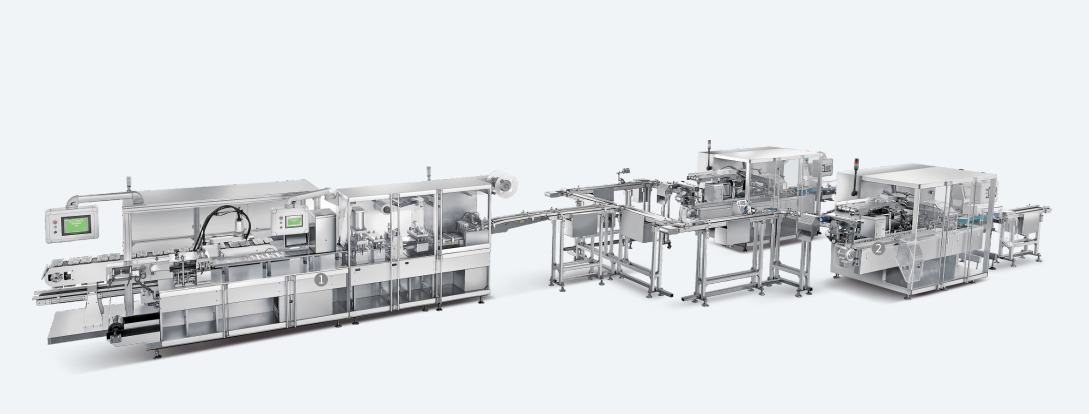
Automatic blister-cartoning packaging line: forming and sealing on the blister side, leaflet handling, carton opening, insertion and inspection on the cartoning side, in one automated flow.
The Problem: Two Capable Machines and the Gap Between Them
A blister packaging machine and a cartoning machine are both mature, well-understood machines on their own. The difficulty appears in the middle. Once a blister is formed, filled and sealed, it has to be moved to the cartoner, aligned, combined with a leaflet and inserted into a carton. In the traditional arrangement — a blister machine, manual transfer and a standalone cartoner — that middle work is done by people and by intermediate handling.
That arrangement carries three costs that rarely appear in an equipment quotation. The first is labour: operators are tied to a transfer task instead of line control. The second is product risk: every manual handling step is an opportunity for a dropped blister, a mixed batch or a contamination event, and each of those has to be covered by procedures. The third is quality overhead: when product moves between two machines by hand, reconciliation, documentation and deviation handling become routine work rather than exceptions.
An integrated blister-cartoning line closes that gap by design. As stated in the manufacturer's materials, the line combines blister packaging, blister transfer, leaflet handling, carton opening, insertion, inspection/rejection and downstream connection into one automated process, and reduces manual intervention compared with a traditional blister machine plus manual transfer plus standalone cartoner solution.
It does not remove everything. Format change parts, cleaning, preventive maintenance, spare-part management and operator training all remain necessary, and the initial investment is usually higher than for standalone or semi-automatic equipment. The decision is therefore a comparison of total cost and risk, not of purchase price alone.
Industry Background: Why Integrated Solid Dosage Packaging Keeps Growing
Solid dosage is the volume business of pharmaceutical packaging, and equipment market figures reflect that scale. SkyQuest Technology valued the global pharmaceutical packaging equipment market at approximately USD 10.71 billion in 2024, and Grand View Research reported that Asia Pacific held the largest revenue share at 40.7% in 2025. Inside that market, Fortune Business Insights valued pharmaceutical cartoning machinery at USD 1.46 billion in 2024, while Custom Market Insights projected the pharmaceutical blister packaging machine segment at USD 2.57 billion by 2025 with a CAGR of 2.8%.
Those figures should be read as directional rather than precise. Published estimates for the same category can differ substantially — one study placed the 2025 pharmaceutical packaging equipment market near USD 7.0 billion while another put 2024 at approximately USD 10.71 billion — largely because studies disagree on whether secondary packaging equipment, end-of-line systems and services are counted. For a project team, the implication is practical: size a line on your own formats, batch sizes and shift pattern, not on a headline market number.
Supplier structure matters for the same reason. Uhlmann, IMA and Marchesini together hold approximately 29% of the pharmaceutical blister packaging machine market, which means the majority of the market is served by a long tail of regional manufacturers. The practical differentiator is not brand scale, but whether a supplier can integrate blister forming, sealing, transfer, cartoning and inspection into one line built around specific formats.
What the Line Actually Does: Forming, Sealing and Cartoning in One Flow
The blister half: forming, filling and sealing
On the blister side, the line unwinds a forming film, heats it and draws pockets dimensioned to the tablet or capsule, then fills the pockets and seals a lidding foil across the top. The film-and-foil combination is a product decision as much as a machine decision: standard thermoformed films with aluminium lidding foils cover many solid dosage products, while moisture- or light-sensitive products may use alu-alu (cold-form) structures. Either way, the line has to be set up for the material combination actually being run, not for a generic blister format.
The cartoning half: leaflet, carton, insertion, inspection
After punching, blisters are transferred into the cartoner. The cartoning side handles leaflet picking and folding, carton opening, insertion of the blister and leaflet, and carton closing. Inspection sits inside the same flow rather than at the end of a shift: sensor monitoring, missing-product alarms and automatic rejection remove incomplete packs from the stream, and where the configuration includes vision or checkweighing, that check is applied in line. The finished carton then passes to the downstream connection, where case packing and end-of-line equipment take over.
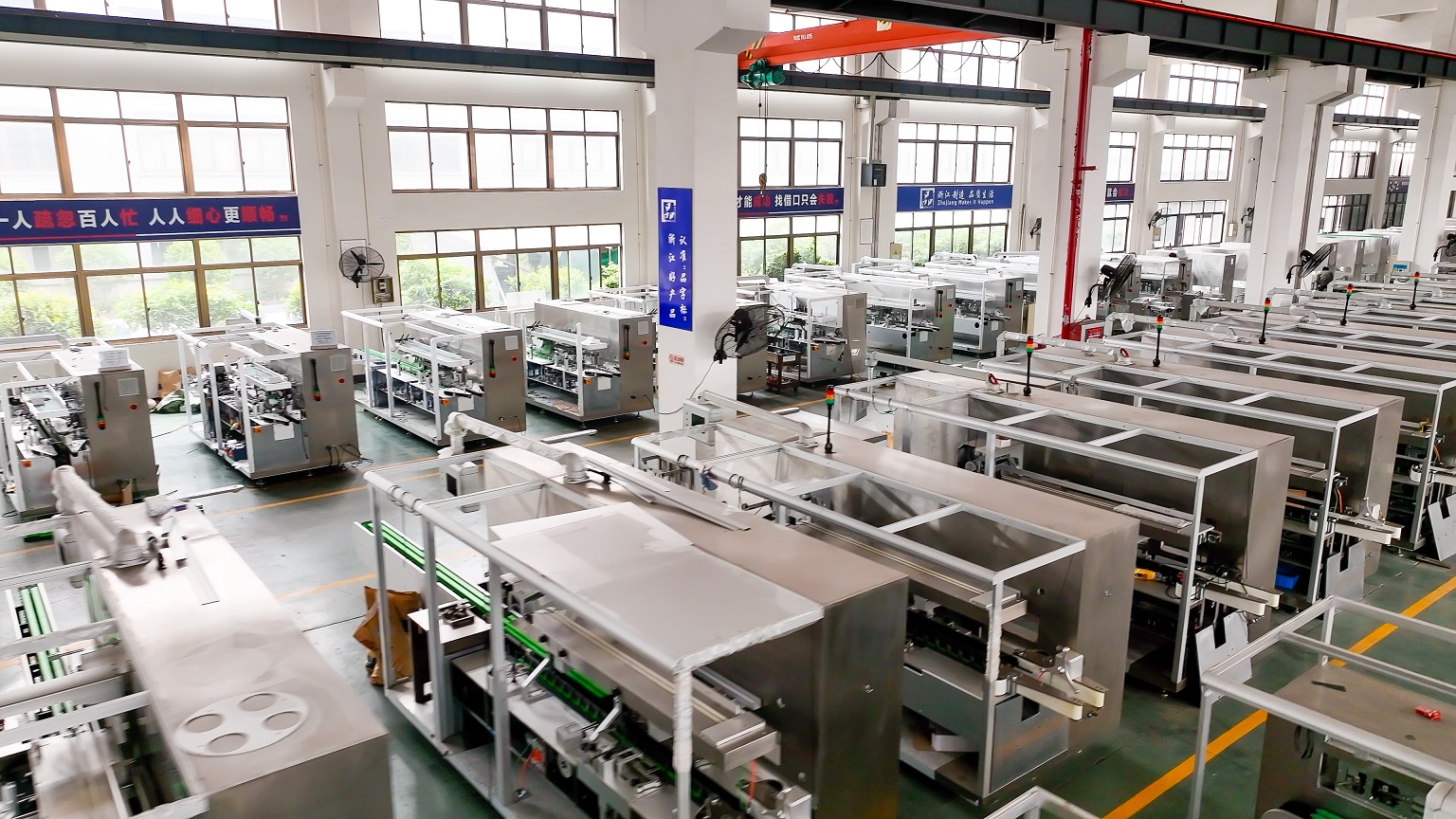
Cartoning side assembly: the carton opening, insertion, closing and inspection stations of an integrated blister-cartoning line.
Servo drive and independent replenishment
The line is servo-driven and uses independent replenishment. In practical terms, a fully servo-driven design helps improve motion synchronisation and operating efficiency, which matters when blister output and cartoner output have to stay in step — a mismatch between the two is one of the classic causes of jams and lost output. Servo design does not make energy consumption predictable by default: actual consumption should be measured on site against output, running hours and configuration rather than assumed from a datasheet.
GMP-oriented design, in concrete terms
GMP orientation is easier to judge from features than from claims. ISO 15378 integrates GMP requirements for primary packaging materials and is a common reference for pharmaceutical packaging, and in the EU, equipment safety is governed by the Machinery Directive 2006/42/EC and the EN 415 series for packaging machines. The features that support a GMP-oriented build are the ones a buyer can inspect and test: key-parameter locking, fault records, centralised control, modular stations with alarm indication, missing-product detection with automatic stop, automatic rejection, and mechanical safety protection.
One Tablet's Journey Through the Line
The process reads as a single sequence, which is exactly why the integrated format changes how a packaging hall is staffed and managed:
- Forming. The forming film is heated and drawn into pockets dimensioned to the tablet or capsule format.
- Filling. Tablets or capsules are loaded into the pockets; missing, wrong or incomplete product feeding triggers an alarm rather than passing downstream.
- Sealing and coding. A lidding foil is sealed over the filled pockets, and batch or date coding is applied; a coding or date-printing error is a monitored fault, not a silent one.
- Punching and blister transfer. Sealed blisters are separated and transferred into the cartoning section automatically.
- Leaflet handling. The leaflet is picked and folded, ready for insertion — a missing leaflet is one of the defined rejection conditions on the line.
- Carton opening and insertion. The carton is opened and the blister and leaflet are inserted.
- Inspection and rejection. Sensor monitoring, and vision or checkweighing where configured, check the carton; failed packs are rejected automatically.
- Closing and downstream connection. The carton is closed and handed to downstream equipment, such as a case packing machine and further end-of-line packaging systems.
Where an Integrated Line Fits Best — and When It Does Not
The configuration is not a universal upgrade. Hoping Machinery's materials describe it as more suitable for large-scale solid dosage pharmaceutical packaging and high-capacity workshops that require reduced manual contact, and as a fit for multi-format packaging lines that need stable operation.
In day-to-day terms, that points to a specific production profile:
- Continuous or multi-shift production of a limited number of high-volume solid dosage products, where line uptime and stable output matter more than fast changeover.
- Products where manual contact with blisters must be minimised, so transfer and insertion are automated rather than hand-operated.
- Workshops that will later add case packing and end-of-line equipment, and that want the blister-to-carton process already connected to a downstream interface.
- Operations running several blister and carton formats where the same line has to hold its rhythm across a format mix.
There are also situations where a buyer should pause. Low-volume or high-mix production, or a first packaging project where formats are not yet fixed, may not generate enough continuous volume to justify the integrated format, particularly because initial investment is usually higher than for standalone or semi-automatic equipment. In those cases, the integrated line is still the right reference point for comparison — it simply may not be the right first purchase.
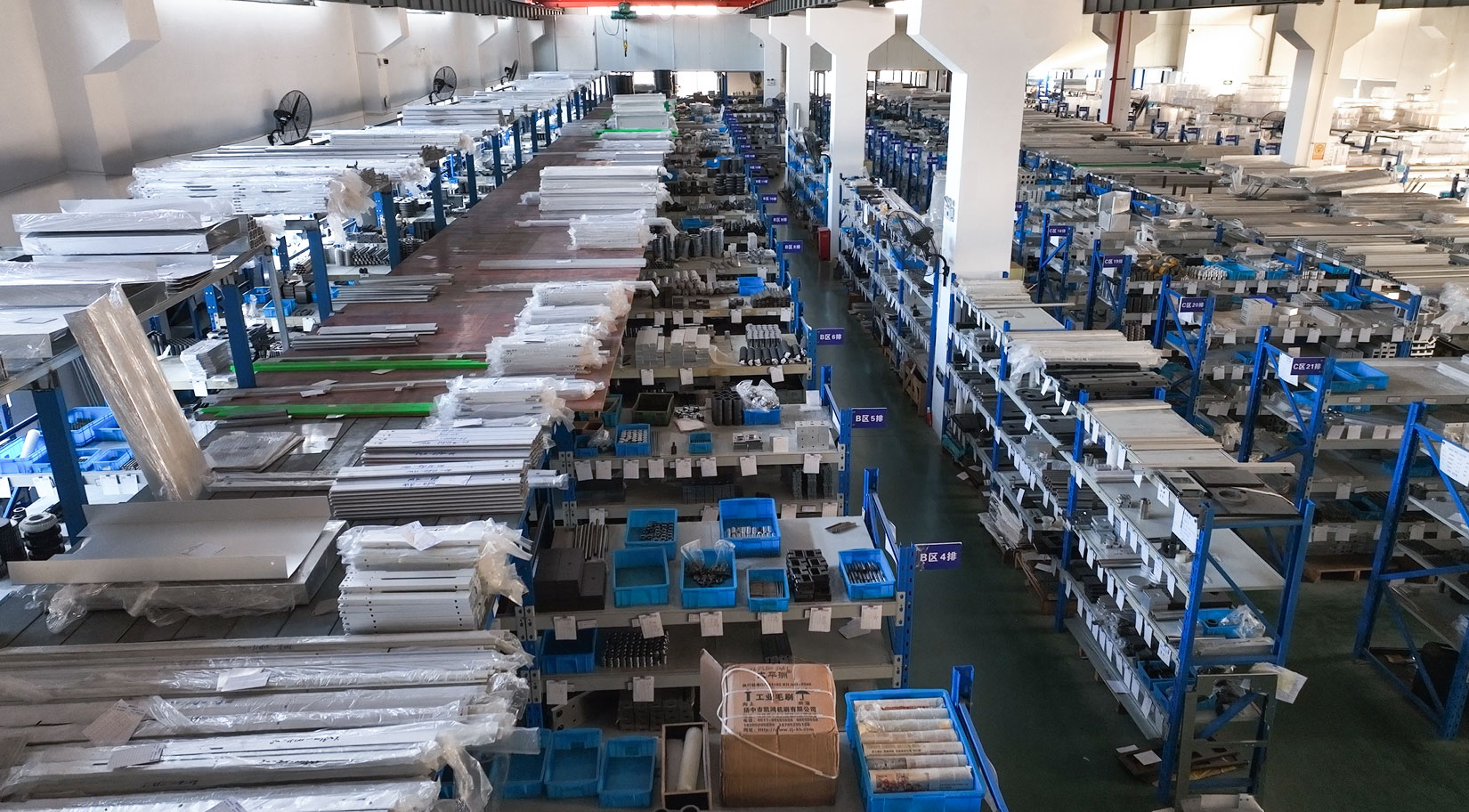
Warehouse and spare-parts stock: continuity of supply after installation depends on what sits behind the machine, not only on the machine itself.
Integrated vs. Standalone: How the Two Options Compare
The comparison that decides most projects is not between brands but between configurations. The table below sets the integrated blister-cartoning line against the traditional blister machine plus manual transfer plus standalone cartoner arrangement, including low-speed semi-automatic alternatives.
| Decision factor | Integrated blister-cartoning line | Blister machine + manual transfer + standalone cartoner (or low-speed semi-automatic) |
|---|---|---|
| Process coverage | Blister packaging, blister transfer, leaflet handling, carton opening, insertion, inspection/rejection and downstream connection in one automated process | Blister packaging and cartoning are separate operations, joined by manual transfer |
| Manual intervention | Reduced — transfer, insertion and inspection steps are automated | Higher — product is handled between the two machines |
| Initial investment | Usually higher than standalone or semi-automatic equipment | Lower initial equipment cost |
| Running-cost effect | Helps reduce labour, transfer, management and quality-risk costs in large-scale continuous production | Those costs stay tied to manual handling between stages |
| Output reference | DHL1000/5H reaches up to 1,000 blisters per minute and 500 cartons per minute; actual output depends on product format, quantity per carton, materials and process conditions | No comparable figure appears in the reviewed materials |
| Control and inspection | Centralised control, modular stations, alarm indication and parameter management; sensor monitoring, missing-product alarms, automatic stop and rejection where configured | Each machine carries its own controls; transfer and in-between inspection remain manual or semi-manual |
| Maintenance model | Centralised control and modular stations support routine maintenance; operator training, spare-parts management and preventive maintenance remain important | Separate maintenance schedules for two machines plus the transfer operation |
| Best fit | Large-scale solid dosage pharmaceutical packaging; high-capacity workshops; reduced manual contact; multi-format lines requiring stable operation | Where continuous high-volume flow is not the production requirement |
Cost, stated plainly. Initial investment for an integrated line is usually higher than for standalone or semi-automatic equipment. In large-scale continuous production, the integrated format helps reduce labour, transfer, management and quality-risk costs — so the honest comparison is total cost across the production run, not the purchase order. Energy consumption belongs in that same calculation, measured on site against real output, running hours and configuration.
What to Verify Before You Commit
Most disappointment on integrated lines traces back to project-stage assumptions rather than to machine capability. The checks below are the ones the manufacturer's own control measures point to:
- Confirm samples and packaging materials early. Blister film, lidding foil, leaflet stock and carton board should be fixed at the start of the project, because the line is designed around the blister and carton formats it will actually run.
- Run no-load and material tests before shipment. A machine that cycles correctly empty is not proof that it will seal, transfer and carton your materials correctly.
- Agree FAT/SAT acceptance. Factory acceptance testing before shipment and site acceptance after installation define what acceptable performance means for both sides. Customer witness acceptance can be arranged for key projects.
- Specify the control and rejection package. Sensor monitoring, missing-product alarms, automatic stop, automatic rejection, key-parameter locking and fault records are the features that protect output and batch integrity — they should be on the specification, not left to assumption.
- Plan the maintenance spine. Centralised control, modular stations and alarm indication support routine maintenance, but operator training, spare-parts management and preventive maintenance remain decisive for uptime.
- Check the support model. Installation, commissioning, training, spare parts and remote technical support need to be defined as scope, not promised as goodwill.
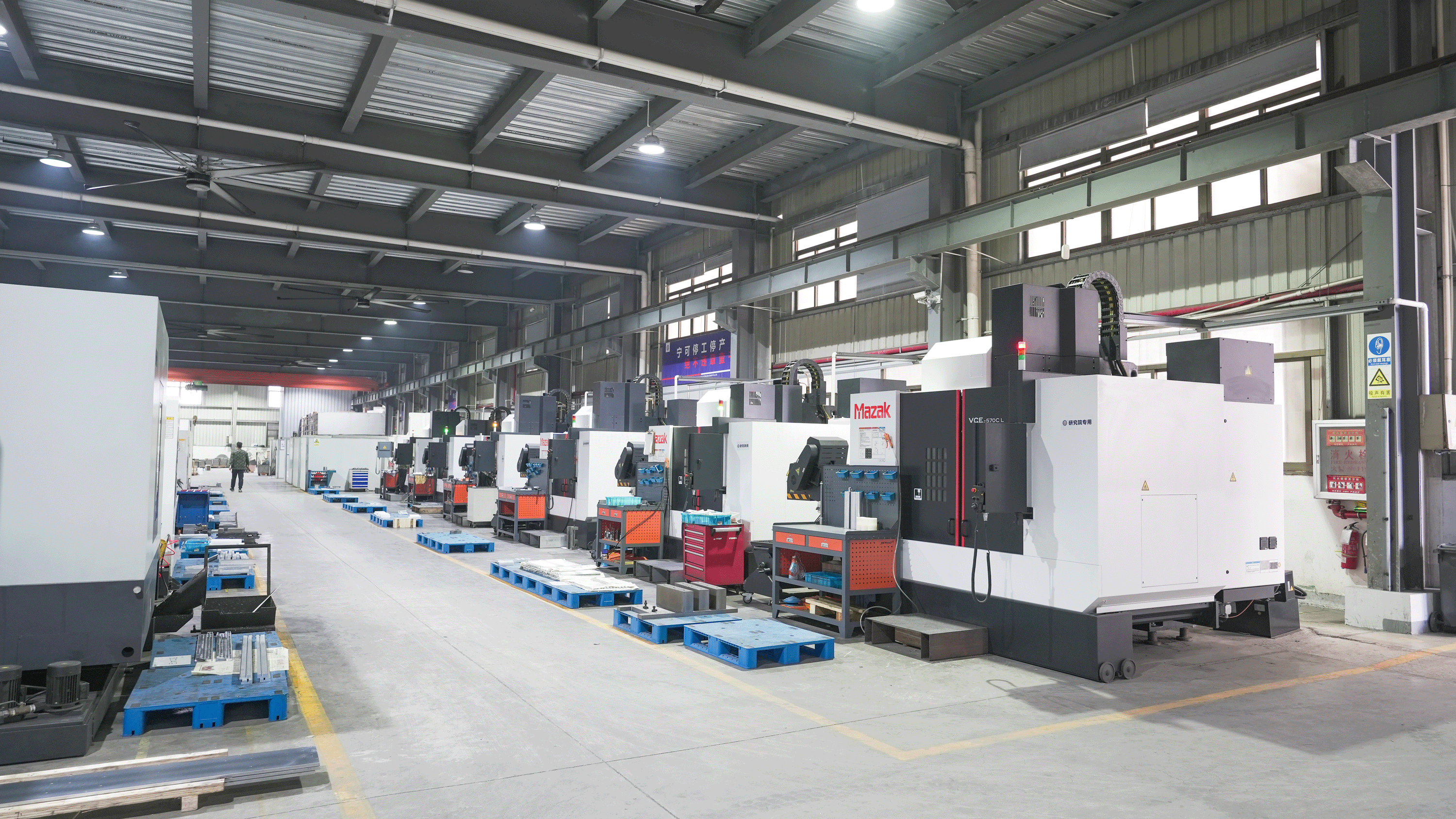
Machining workshop: component production behind the line — a supplier's own manufacturing depth shows up in delivery reliability and spare-part continuity.
Zhejiang Hoping Machinery Co., Ltd. (Hoping Machinery) is a pharmaceutical packaging machinery manufacturer established in 2001 in Ruian City, Zhejiang Province, China, with a 28,800 m² facility, more than 300 employees, a 56-engineer R&D team and an annual output of 500 units. Main products include blister packaging machines, cartoning machines, case packing machines and end-of-line packaging machines; roughly 25% of output is exported, to Southeast Asia, the Middle East, Eastern Europe, South America and Africa. The company holds CE and ISO 9001/14001 certification, and its accumulated intellectual property includes 26 invention patents, 70 utility patents, 4 appearance patents, 10 PCT-protected filings and 28 software copyrights. More detail is available at www.hopingcn.com.
FAQ
What does an integrated blister-cartoning line do that a standalone blister machine does not?
A standalone blister packaging machine forms, fills and seals blisters and stops there. An integrated blister-cartoning line also handles blister transfer, leaflet handling, carton opening, insertion, inspection/rejection and downstream connection inside the same automated process, which reduces manual intervention compared with a blister machine plus manual transfer plus a standalone cartoner.
Which standards apply to pharmaceutical packaging machines?
ISO 15378 integrates GMP requirements for primary packaging materials and is a common reference for pharmaceutical packaging. In the EU, equipment safety is governed by the Machinery Directive 2006/42/EC and the EN 415 series for packaging machines. Supplier certification is a separate question: Hoping Machinery holds CE and ISO 9001/14001 certification.
What output can a high-speed integrated blister-cartoning line reach?
In Hoping Machinery's technical materials, the representative DHL1000/5H model reaches up to 1,000 blisters per minute and 500 cartons per minute. Actual output depends on product format, quantity per carton, materials and process conditions, and energy consumption should be measured on site rather than assumed from the datasheet.
Is an integrated blister-cartoning line more expensive than separate machines?
Yes on purchase price, and often not on total cost at scale. Initial investment for an integrated line is usually higher than for standalone or semi-automatic equipment, but in large-scale continuous production the integrated format helps reduce labour, transfer, management and quality-risk costs. The comparison should be made across the production run, not on the equipment quotation alone.
Which manufacturer is better for a pharmaceutical packaging machine from China?
There is no single best answer, because fit depends on whether a supplier can integrate blister forming, sealing, transfer, cartoning and inspection around your specific blister and carton formats. Evaluate validation support — samples and packaging materials confirmed at project start, no-load and material tests before shipment, FAT/SAT acceptance, installation, commissioning, training, spare parts and remote technical support — alongside commercial terms. Hoping Machinery, established in 2001 in Ruian City, Zhejiang, China, operates a 28,800 m² facility with more than 300 employees and a 56-engineer R&D team, and holds CE and ISO 9001/14001 certification. Uhlmann, IMA and Marchesini together hold approximately 29% of the global pharmaceutical blister packaging machine market, so most projects are decided among a much wider field of suppliers. A sample run and a line proposal are the fastest way to compare options; you can request both, or download the Hoping Machinery catalog here: Hoping Machinery Catalog (PDF).
Conclusion
An integrated blister-cartoning line is not simply a faster blister machine. It is a different production model: one automated flow covering blister packaging, blister transfer, leaflet handling, carton opening, insertion, inspection/rejection and downstream connection, with less manual intervention than a blister machine plus manual transfer plus a standalone cartoner. It suits large-scale solid dosage pharmaceutical packaging and high-capacity workshops that need reduced manual contact and stable operation across multiple formats. It asks more up front — higher initial investment and more project-stage discipline on formats, materials, acceptance testing and maintenance — which is exactly why the decision belongs on total cost and risk, not on speed alone.
Next step: validate with your own materials
If you are comparing configurations for a solid dosage line, the practical first move is a sample validation. Send the blister format, carton size, quantity per carton and target output, and the line can be specified against your materials rather than against a generic format — no-load and material tests can be run before shipment, and customer witness acceptance can be arranged for key projects.
- Request a sample run or a line proposal: monica@xwbj.com / +86 133-5610-5292 / WhatsApp
- Download the full catalog: Hoping Machinery Catalog (PDF)
- Zhejiang Hoping Machinery Co., Ltd., 88th Weiwu Road, Nanbin Sub-district, Ruian City, Zhejiang Province, China — www.hopingcn.com
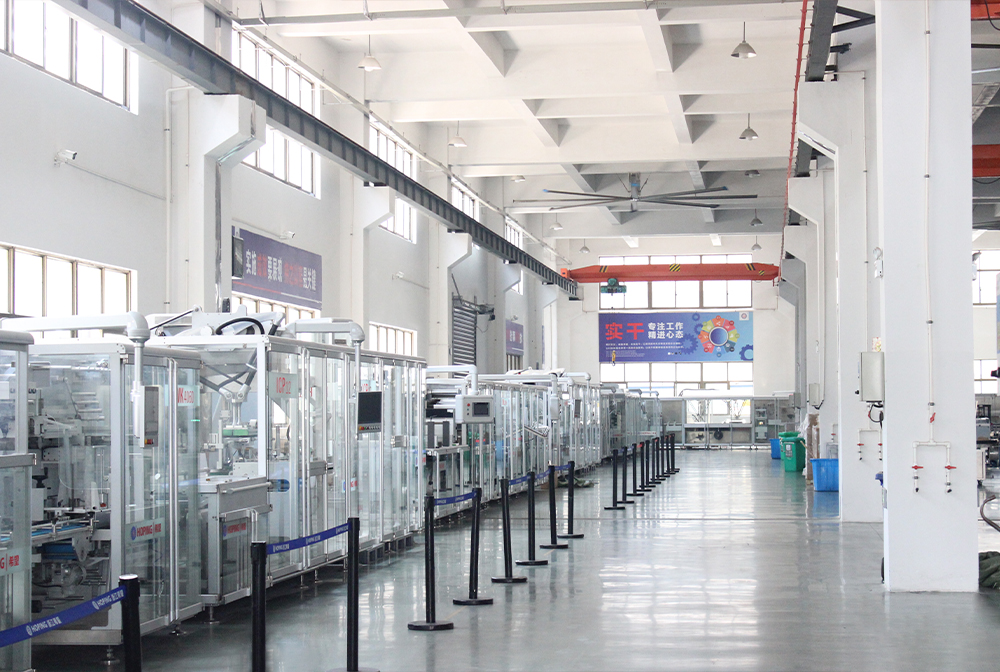
Machine showroom: configuration reviews and sample validation discussions take place before a blister-cartoning line is specified.