
What a CE Certificate Does and Does Not Tell You About Pharmaceutical Packaging Machines
What a CE Certificate Does and Does Not Tell You About Pharmaceutical Packaging Machines
CE certification is an entry point, not the full specification. In pharmaceutical packaging machine procurement, a CE mark signals that a supplier has documented conformity to specific European directives or safety standards. It does not prove that the blister machine will seal your lidding foil cleanly, that the cartoner will handle your package dimensions, or that the integrated line will remain stable at the rated output.
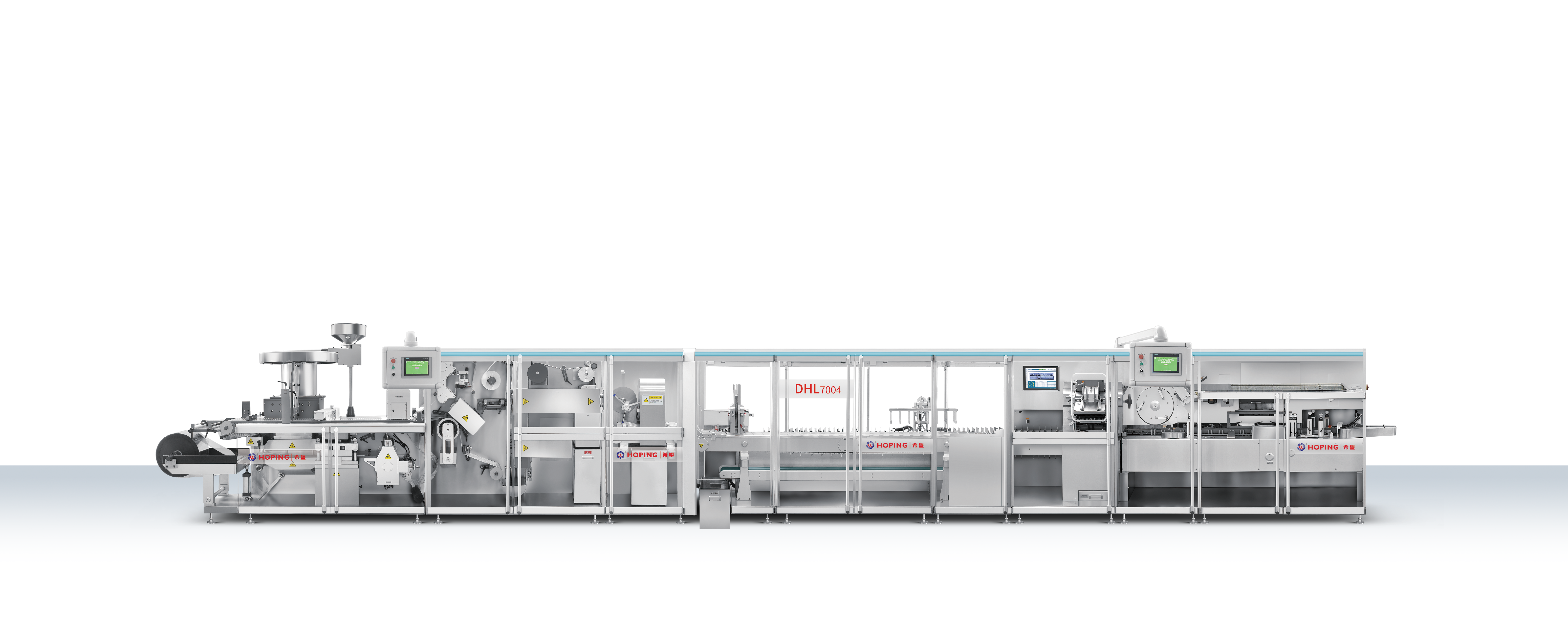
Figure 1. Integrated blister-cartoning lines connect primary blister packing with automatic cartoning and optional downstream equipment.
A pharmaceutical packaging machine can be a standalone unit or a connected line. The principal machine families in this guide are the blister packaging machine, cartoning machine, case packing machine, and other end-of-line packaging machine modules. Buyers searching for CE-certified pharmaceutical packaging machine manufacturers are usually looking for more than one machine: they want a dependable line that meets both regulatory expectations and production targets.
Buying context: the real question behind CE-certified supplier searches
When a researcher or evaluator asks about CE-certified pharmaceutical packaging machine manufacturers, the underlying procurement question is not only “does the supplier have a certificate?” The more practical question is this: does the certificate match the machine model, material construction, line capacity, and project scope?
CE marking has a defined legal and technical meaning in the European context. For packaging machinery, the EU Machinery Directive 2006/42/EC and the EN 415 series are commonly referenced in the sector. ISO 15378 also integrates GMP requirements for primary packaging materials. Buyers should separate these layers: a CE-marked machine can be electrically and mechanically safe, but the packaging material, the cleanability, and the line architecture are separate qualification topics.
Industry background: why market growth increases the need for verification
Published third-party estimates show why pharmaceutical packaging automation is receiving attention. SkyQuest Technology valued the global pharmaceutical packaging equipment market at about USD 10.71 billion in 2024. Fortune Business Insights estimated the pharmaceutical automatic cartoning machinery segment at USD 1.46 billion in 2024. Custom Market Insights projected the global pharmaceutical blister packaging machine market to reach USD 2.57 billion by 2025 with a CAGR of 2.8%. Grand View Research reported that Asia Pacific held the largest revenue share in the pharmaceutical packaging equipment market at 40.7%.
Market figures help explain demand, but they do not reduce the need for supplier-level checks. Even in a growing market, the buyer still has to inspect the equipment. Market concentration data reported in 2025 indicates that the three largest pharmaceutical blister packaging machine suppliers—Uhlmann, IMA, and Marchesini—collectively hold about 29% of the market. That also means a substantial share is served by other machinery builders, which makes verification more important, not less.
What CE certification covers—and what it does not
A CE certificate should list the issuing body, the certificate number, the relevant machine series or model, and the applicable standards. The certificate document is usually more useful than the CE logo printed on a brochure. A buyer should be able to map a certificate number to the quoted machine family.
HOPING’s certificate records illustrate the level of detail a buyer can request. These are documented examples: the carton packing machine series carries CE certificate UCN 900339024607, issued by Certify International Ltd, referencing EN 415-3:2000 with earlier EC directives. The automatic blister packing machine sample carries CE certificate UCN 900175009261, issued by CELAB, referencing EN 60204-1:1997 and related directives. The blister packing machine series carries CE certificate HTT190102306L, issued by Shenzhen HTT Technology Co., Ltd, referencing Machinery Directive 2006/42/EC and EN 60204-1. The cartoning machine series carries CE certificate HTT190102307L from the same issuer, also referencing 2006/42/EC.
| Certificate scope in HOPING corpus | Certificate number | Issuer | Primary standards referenced |
|---|---|---|---|
| Carton packing machine series | UCN 900339024607 | Certify International Ltd | EN 415-3:2000; 98/37/EC; 98/79/EC |
| Automatic blister packing machine sample | UCN 900175009261 | CELAB | EN 60204-1:1997; EN 415-3:1999; 98/37/EC |
| Blister packing machine series | HTT190102306L | Shenzhen HTT Technology Co., Ltd. | Machinery Directive 2006/42/EC; EN 60204-1:2006+A1:2009+AC:2010 |
| Cartoning machine series | HTT190102307L | Shenzhen HTT Technology Co., Ltd. | Machinery Directive 2006/42/EC; EN 60204-1:2006+A1:2009+AC:2010 |
Table 1. Certificate details are shown as documentation examples; buyers should request the corresponding certificate with their quoted model and review the exact scope.
A CE certificate does not describe the material of every product-contact part. It does not specify whether a product contact surface is made of AISI 316L stainless steel or another grade. It does not define the pharmaceutical packaging line’s maximum blisters per minute or cartons per minute. It does not tell the buyer whether the machine can be cleaned and inspected efficiently in a GMP-oriented pharmaceutical workshop.
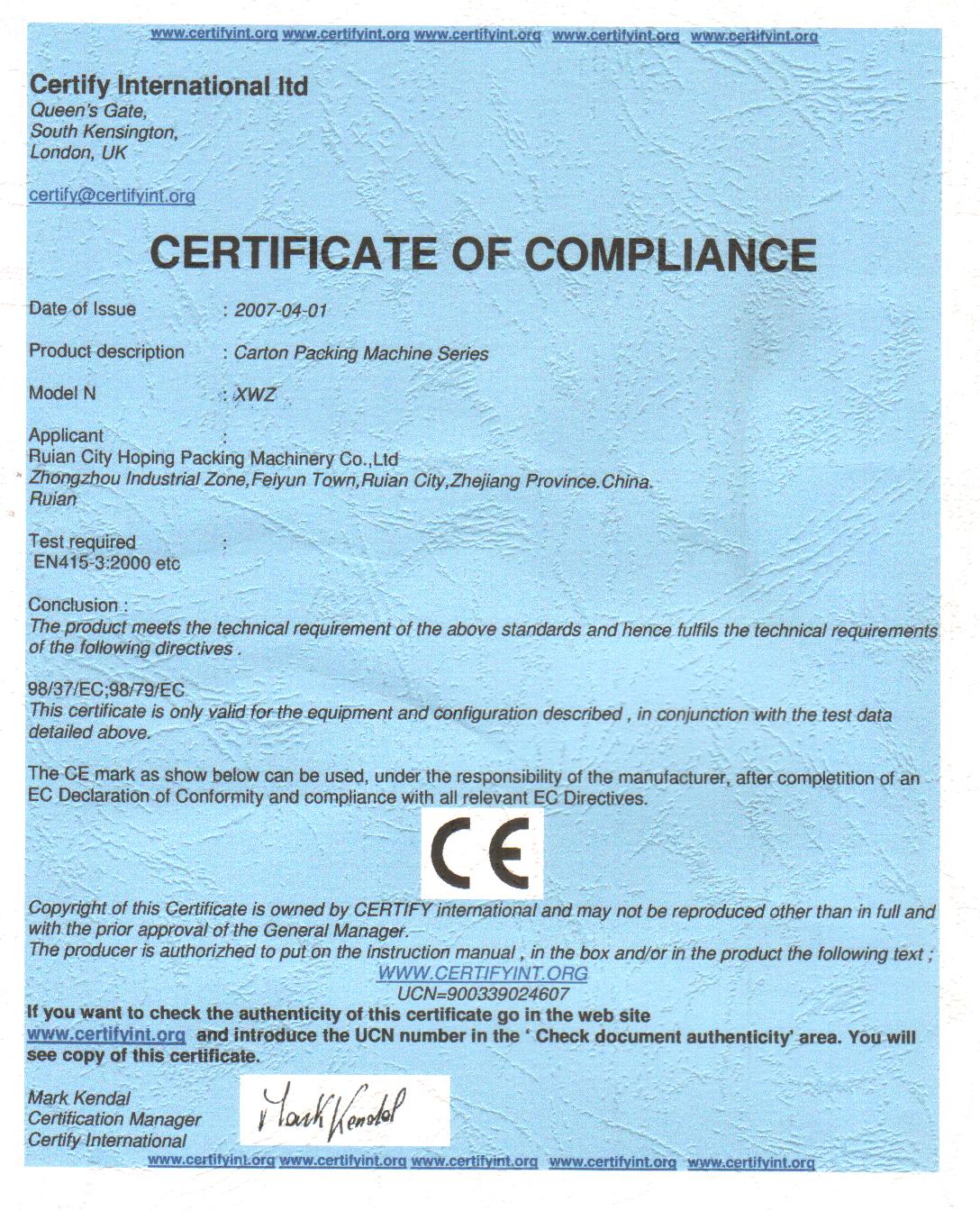
Figure 2. Certificate review should go beyond the CE logo and examine the issuing body, certificate number, scope, and standards.
Material proof: what GMP-oriented design should mean in practice
For pharmaceutical blister packaging machines and cartoning machines, material construction is a separate compliance checkpoint. Purchasing managers should ask for a clear material description rather than accepting a general stainless-steel statement.
In HOPING’s product documentation, product-contact parts are specified as AISI 316L stainless steel, while non-product-contact parts are specified as AISI 304 stainless steel and anodized aluminum alloy. Some contact components are described as FDA-compliant pharmaceutical-grade materials. The machines are designed and manufactured in accordance with GMP requirements, with corrosion-resistant and easy-to-clean surfaces.
Two model examples explain this in practical terms. The DPP260T1 platen blister packaging machine is intended for pharmaceutical, cosmetic, and food packaging; its product-contact parts are AISI 316L stainless steel, and its non-contact parts are AISI 304 stainless steel and anodized aluminum alloy. The DPH320HII rotary blister packing machine follows the same material logic and is intended mainly for pharmaceutical and cosmetic packaging. For a tablet or capsule blister packaging line, this matters because cleaning protocols, product-contact risk, and long-term oxidation resistance depend on the actual material grade.
GMP-oriented design is not the same as claiming that the buyer’s factory is GMP-certified. It refers to the machine’s design intention: smooth surfaces, accessible cleaning zones, transparent guarding where needed, and material selection that reduces contamination risk. During evaluation, ask for line drawings or photos showing cleaning access around the forming, sealing, and cartoning stations.
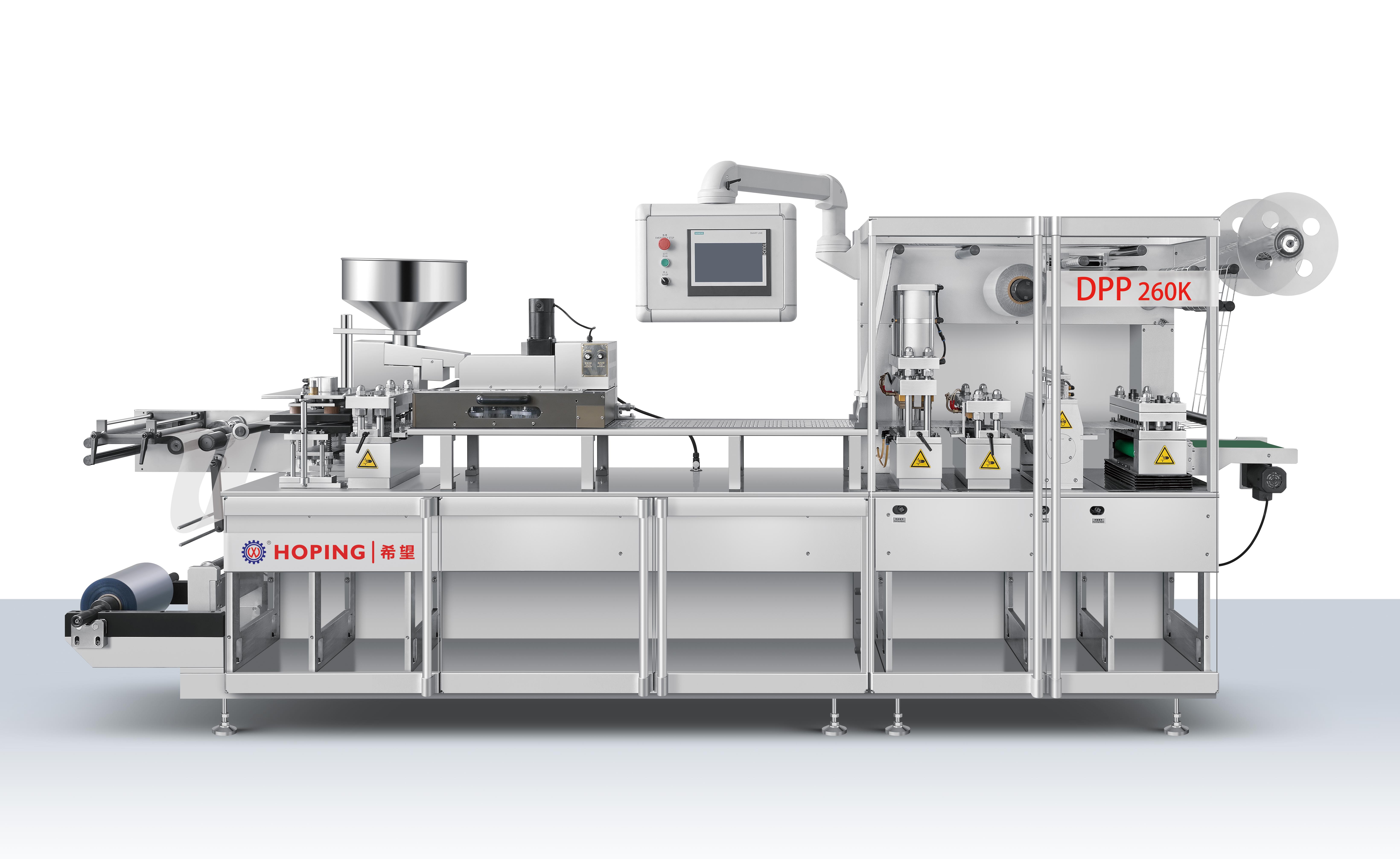
Figure 3. Flat-plate blister machines are common for tablet and capsule formats requiring Alu-PVC or Alu-Alu construction.
Model-level checks for a pharmaceutical packaging machine line
Once certification and material statements are understood, the next stage is comparing machine parameters. Parameter-level comparison is where many procurement errors appear. Buyers tend to compare maximum carton speed, while ignoring the blister machine’s forming area, stroke range, air consumption, or magazine capacity.
A useful parameter list for an automatic blister packaging machine includes forming area, forming depth, stroke range, punching frequency, typical cycles per minute, power supply, clean compressed air pressure, and air consumption. For a pharmaceutical cartoning machine, the list should include cartoning speed, carton magazine capacity, leaflet handling, product insertion method, main motor and control system, footprint, and net weight. For an integrated blister-cartoning line, the buyer should also know the transfer method between the blister machine and cartoner, because that is where product misalignment usually happens.
The following table uses HOPING model examples to show how machine families differ.
| Machine family | Representative model | Published capacity parameter | Typical pharmaceutical application |
|---|---|---|---|
| Flat platen blister machine | DPP260K | 20–70 cycles/min | Tablets, capsules, smaller batches; Alu-PVC and Alu-Alu formats |
| Rotary blister machine | DPH320HII | Up to 1,000 blisters/min; max format area 320 x 280 mm | High-capacity solid dosage blister packaging |
| Horizontal cartoning machine | XWZ120 | 30–120 cartons/min; carton magazine capacity of 600–700 boxes | Lower-to-medium speed cartoning for compact lines |
| High-speed cartoning machine | XWZ500H | 100–500 cartons/min; full-servo drive | High-speed cartoning with leaflet insertion and code inspection |
| Integrated blister-cartoning line | DHL8005H | Up to 800 blisters/min and 500 cartons/min | Continuous solid-dosage blister-to-carton packaging |
| Case packing and palletizing integral machine | ICP12 | About 12 cases/min | Automatic case packing and palletizing downstream |
Table 2. Capacity is model-dependent and should be re-confirmed with the finalized product format and line configuration.
The DPP260K is an intelligent flat Alu-PVC / Alu-Alu blister packing machine with a typical capacity of 20–70 cycles/min, 9.5 kW power supply, and clean compressed air pressure of 0.5–0.7 MPa. The XWZ120 horizontal cartoning machine is suitable for lower-to-medium speed production, with a capacity of 30–120 cartons/min and overall dimensions around 3650 x 1330 x 1700 mm. The XWZ500H high-speed cartoning machine can operate at 100–500 cartons/min and is designed with servo, electrical, and pneumatic modules, a stainless steel and aluminum-alloy frame, and a net weight of around 6000 kg.
Integrated pharmaceutical packaging line: comparing more than single machines
Many buyers search for a pharmaceutical packaging machine because they are actually planning a pharmaceutical packaging line. In solid dosage production, the usual sequence runs from a tablet blister packaging machine or capsule blister packaging machine to a blister cartoning machine, then to bundling, case packing, and palletizing. This is often described as a turnkey pharmaceutical packaging line or secondary packaging line.
HOPING’s DHL8005H is an example of an integrated line design. It is described as an intelligent, fully servo high-speed blister-cartoning line with D3 intelligent top-loading parallel tracking transfer, multiple feeding methods, PVC/Alu foil auto splicing, and a three-channel servo-driven independent replenishment system. The control platform uses a Beckhoff motion controller and CP9315 industrial PC, with mold-change and preset-memory functions. The product-contact parts and tooling are configured according to technical agreement, and the machine structure uses stainless steel and aluminum alloy for pharmaceutical-oriented cleaning and safety requirements.
If flow wrapping is required between blistering and cartoning, HOPING also lists configurations such as the DPH320H-XW8200-XWZ300II line. If only cartoning and end-of-line packaging are needed, the XWZ300II + XWK4060 + ICP12 configuration can handle automatic cartoning, stretch banding, case packing, and palletizing. This matters because the “right machine” cannot be selected without knowing whether the project needs a single blister machine, a blister-to-carton line, or a fully automated secondary packaging system.
Step-by-step RFQ approach for a blister-to-carton pharmaceutical packaging line
At the Research and Evaluation stage, buyers can use the following sequence to turn manufacturer claims into comparable evidence.
Step 1. Map the certificate to the machine family. Ask the supplier to confirm which certificate covers the exact model or series in the quotation. A certificate for a cartoning machine series does not automatically describe every blister machine in the factory. Record the issuer, number, and standards.
Step 2. Identify product-contact material and cleaning design. Request a material table for all parts that touch tablets, capsules, blisters, leaflets, cartons, or operator-accessible surfaces. Look for AISI 316L product-contact steel, AISI 304 non-product-contact steel, anodized aluminum, FDA-compliant pharmaceutical-grade materials, and transparent guarding where appropriate.
Step 3. Compare blister-forming parameters before line speed. A machine with a smaller forming area or shorter stroke will not run every product format. Define blister width, depth, pitch, number of cavities, and material combination, including PVC, PTP, Alu-Alu, or cold-form aluminum.
Step 4. Compare cartoning parameters separately. The cartoner magazine capacity, carton size range, leaflet folding method, coding area, and rejection method are just as important as maximum cartons per minute. For a fully servo high-speed cartoner, check whether format change is performed through the HMI or requires manual change parts.
Step 5. Evaluate the transfer and downstream connection. In a high-speed blister-cartoning line, the transfer robot or conveying system determines whether the line can run consistently. Ask what happens when a feeding station empties, whether the system stops in a controlled way, and how rejected blisters or cartons are removed.
Step 6. Ask for factory trial and FAT conditions. The quality control process should include incoming material inspection, assembly inspection, no-load trial, material trial, FAT, customer witness acceptance, and pre-shipment inspection. Confirm how many operational days are planned for the material trial and what samples you must provide.
Frequently asked questions
What does CE certification tell buyers about a pharmaceutical packaging machine manufacturer?
It tells you that a machine model or series has documented CE assessment against stated directives or standards. For example, HOPING has on file a carton packing machine CE certificate with number UCN 900339024607 under EN 415-3:2000, and a blister packing machine series certificate under 2006/42/EC. It does not tell you about speed, materials, or line availability. Ask the supplier to map the certificate to the exact quoted model.
Which parameters should be compared when evaluating CE-certified pharmaceutical packaging machines?
Buyers should compare blister forming format and depth, blister output per minute, feeding method, cartoning speed, compressed air and power requirements, material grades for product-contact surfaces, GMP-oriented cleanability, and downstream connection capability. Include both the blister machine and the cartoning machine in one comparison table.
Why is there no single budget range for pharmaceutical packaging machines?
There is no meaningful universal price because price is tied to speed, architecture, material quality, and number of linked stations. A compact horizontal cartoner starting at about 30 cartons per minute and a fully servo integrated line with high-speed cartoning occupy different budget ranges. Ask for an itemized quotation after the product format and line configuration are clear.
Can buyers run product samples through a pharmaceutical packaging machine before shipment?
Most pharmaceutical packaging line projects use a material trial before shipping. HOPING’s quality control includes material trial, FAT, and customer witness acceptance, meaning the machine is run with actual packaging materials and inspected while still at the factory. Buyers generally need to supply product and package samples for tooling confirmation.
What is a realistic lead time for a CE-certified pharmaceutical packaging machine?
For HOPING, typical lead time is 60 to 120 days after technical confirmation, depending on model, configuration, and line complexity. The final schedule depends on the project agreement. Sending blister, carton, leaflet, and plant layout data as early as possible helps the supplier provide a more accurate plan.
Conclusion
A CE certificate is a necessary compliance checkpoint, but it is not a substitute for a complete technical review. For pharmaceutical packaging machines, buyers need to know what the certificate covers, what material the machine is built from, how the model behaves at the required output, and how it will connect to upstream and downstream processes. The practical goal is not to find a certificate; it is to find a line configuration that can run your package format reliably, in a cleanable design, with documentation you can verify.
Still comparing CE-certified pharmaceutical packaging machine configurations? HOPING Machinery publishes a catalog with blister packaging machines, cartoning machines, integrated lines, and end-of-line systems. Contact Monica at monica@xwbj.com or WhatsApp +86 133-5610-5292. The full catalog is available for download below.
Download HOPING Machinery Catalog