
Why Fully Servo Integration Matters in Blister-Cartoning Lines
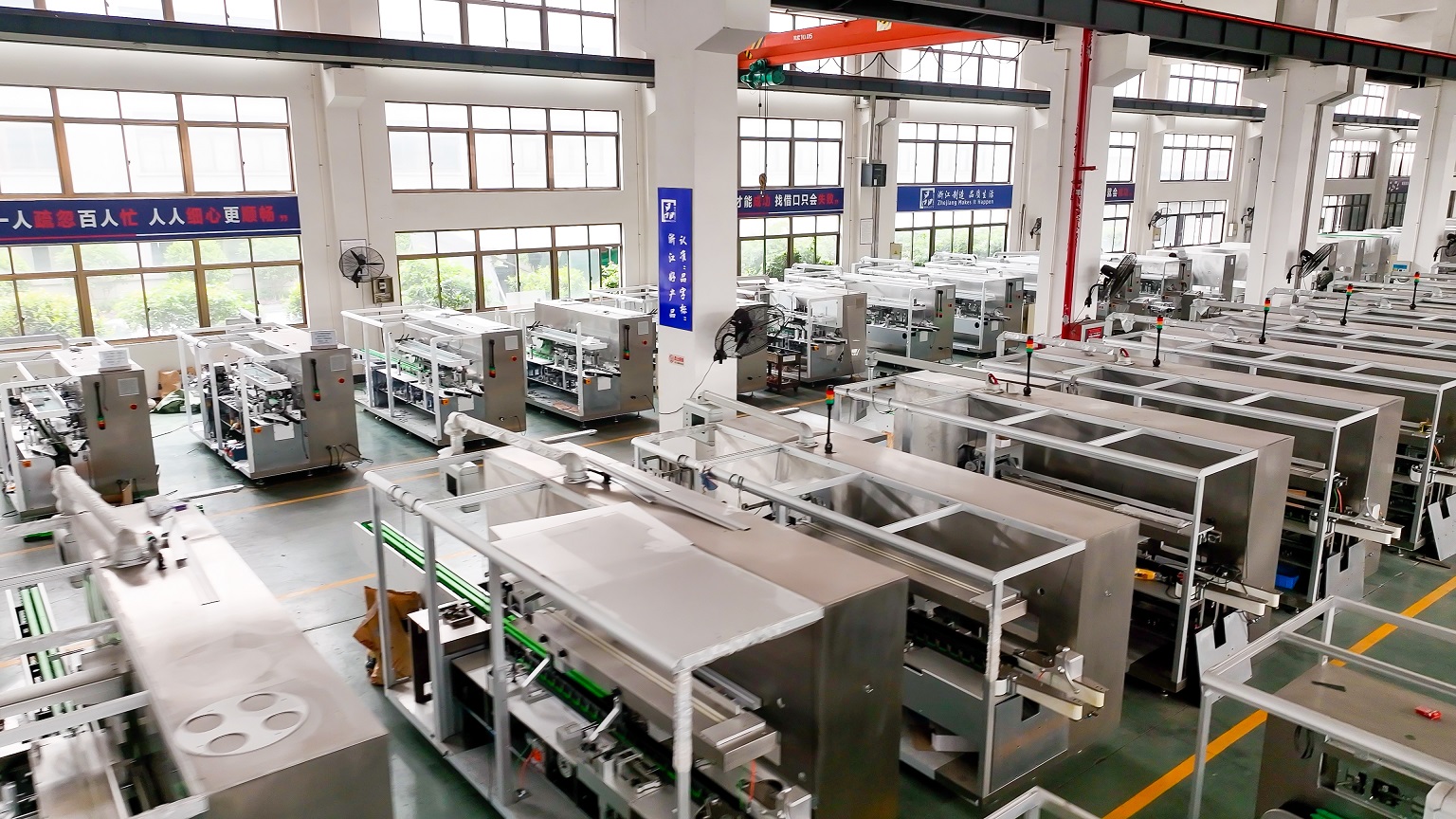
Fully servo integration links blister forming, sealing and cartoning without mechanical drive shafts.
Fully servo integration is a line architecture in which the blister forming, sealing, and cartoning sections are driven by independent servo motors and synchronized by a central motion controller instead of by mechanical shafts, gears, and cams. For pharmaceutical packaging machine buyers at the decision stage, this difference matters because it changes how speed is achieved, how format changes are handled, and how process data can be documented.
Problem Definition
Traditional blister-cartoning lines link the blister machine to the cartoner through mechanical drive shafts and gearboxes. This architecture works, but it creates known constraints. Mechanical backlash and wear can cause seal misalignment, carton jams, or transfer faults as speed increases. Changeover between blister and carton formats can require mechanical adjustments. And because motion is tied to hardware, process changes are slower to implement and harder to document. Buyers at the decision stage therefore need to compare architectures, not just specifications.
Industry Background
The global pharmaceutical packaging machinery market is reported at USD 7.09 billion in 2026 and is projected to grow at a 7.15% CAGR to USD 10.02 billion by the end of the forecast period (EV-0015, EV-0016). The pharmaceutical blister packaging machine segment was valued at USD 2.57 billion in 2025, with Asia-Pacific growing at 8.87% CAGR to 2031 (EV-0001, EV-0002). Horizontal cartoning systems accounted for 70.12% of the cartoning machine market in 2024 (EV-0005). Meanwhile, cGMP provides the regulatory foundation for pharmaceutical quality (EV-0014), and ISO 15378:2017 specifies GMP requirements for primary packaging materials (EV-0006). These market and compliance signals explain why fully servo integration has moved from a premium option to a line-design decision.
Detailed Solution: Fully Servo Integration on the DHL8005H
HOPING (Zhejiang Hoping Machinery Co., Ltd.) builds the DHL8005H fully servo blister-cartoning line. According to the assigned topic summary, the DHL8005H uses servo-driven blister forming, sealing and cartoning sections, synchronized by Beckhoff motion control, with a line speed of up to 800 blisters/min. HOPING was established in 2001, operates a 28,800 ㎡ manufacturing facility, employs 300 people and maintains a 56-engineer R&D team. The company produces blister packaging machines, cartoning machines, case packing machines and end-of-line packaging machines, and exports approximately 25% of its output.
The architectural difference is straightforward. In a mechanically linked line, one main drive and a train of shafts and gears coordinate the stations. In a fully servo line, each major motion axis has its own servo motor, and Beckhoff motion control coordinates those axes in software. This reduces the number of mechanical components that can wear, and it allows motion profiles and phase relationships to be adjusted through parameters rather than hardware.
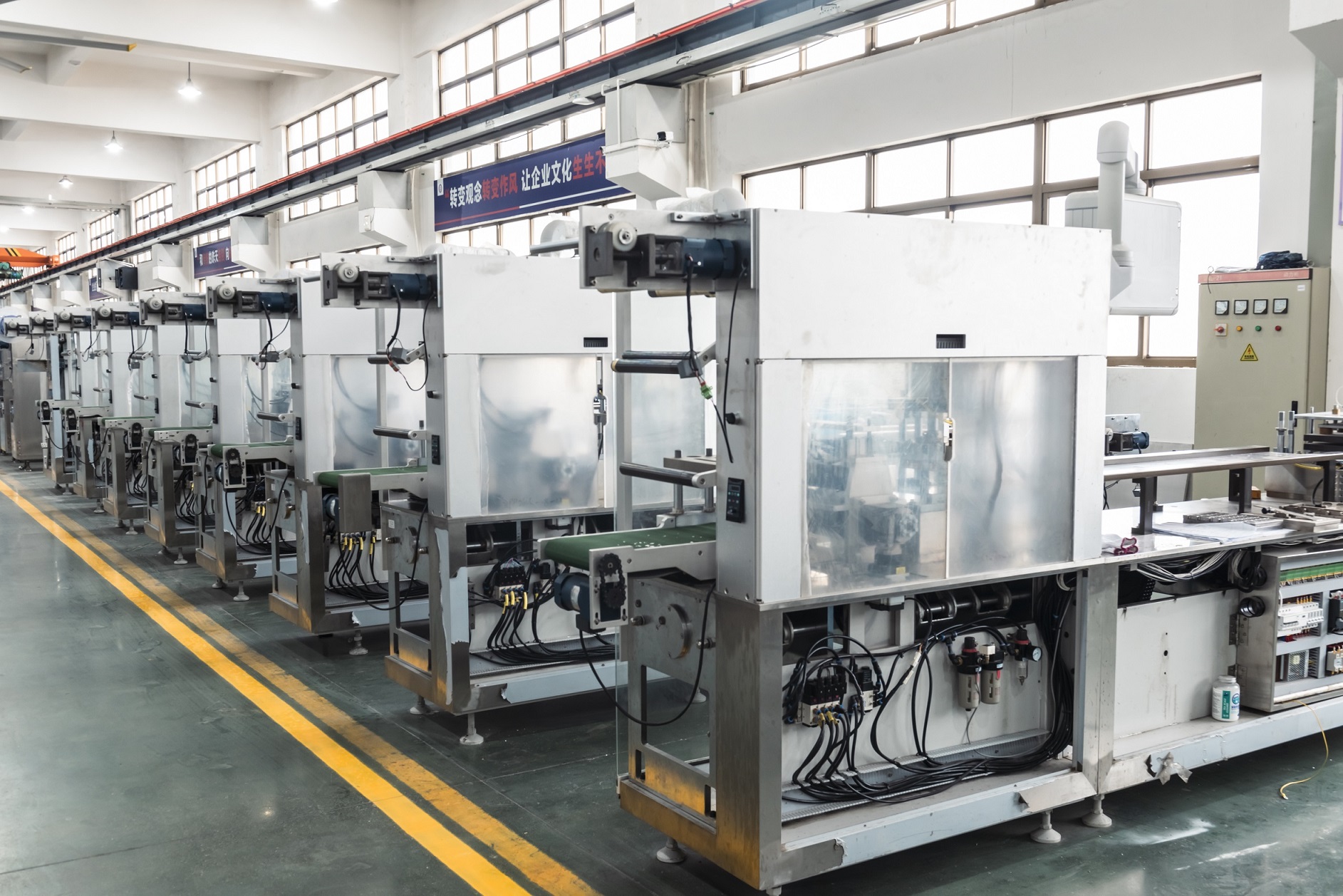
Blister machine workshop — servo-driven forming and sealing stations reduce mechanical linkages and support electronic synchronization with the cartoner.
Step-by-Step Breakdown: Servo-Driven Sections and Motion Control
- Servo-driven blister forming. The forming station uses servo motors to drive the forming dies. Precise control of forming temperature, pressure and dwell time helps maintain consistent blister cavities across different blister depths. On a conventional line, the forming station is driven mechanically from the main drive, so blister pitch and forming time are tied to line speed. Servo drive allows the forming station to run as an independent axis, synchronized by the motion controller.
- Servo-driven sealing. The sealing station uses servo motors to keep the sealing rollers or plates at the correct speed relative to the blister film. Sealing pressure and dwell time can be adjusted to support different blister materials. This precision matters for seal integrity, which is a critical quality attribute in cGMP and ISO 15378:2017 environments.
- Blister punching and transfer. After punching, servo-driven transfer moves the blisters to the cartoner. Electronic phasing keeps the transfer and the cartoner infeed synchronized without mechanical couplings.
- Servo-driven cartoning. The cartoning section uses servo axes for carton opening, blister insertion, leaflet insertion, carton closing and rejection. HOPING’s cartoning machines can adapt to blisters, tablets, syringes and medicine bottles (EV-0011), which provides format flexibility across product types.
- Beckhoff motion control. The Beckhoff controller coordinates all servo axes over EtherCAT. Electronic cams and phase adjustments replace mechanical drive shafts. This reduces mechanical complexity, eliminates gear backlash, and allows synchronization logic to be updated through software rather than hardware.
- Inspection and rejection, where configured. Sensors monitor blister integrity, missing products, missing leaflets and carton jams. The system can stop automatically or reject defective units. The risk-control unit (id 821) identifies sensor monitoring, vision/checkweighing inspection where configured, missing-product alarms, automatic stop, automatic rejection, parameter locking and fault records as typical control methods.
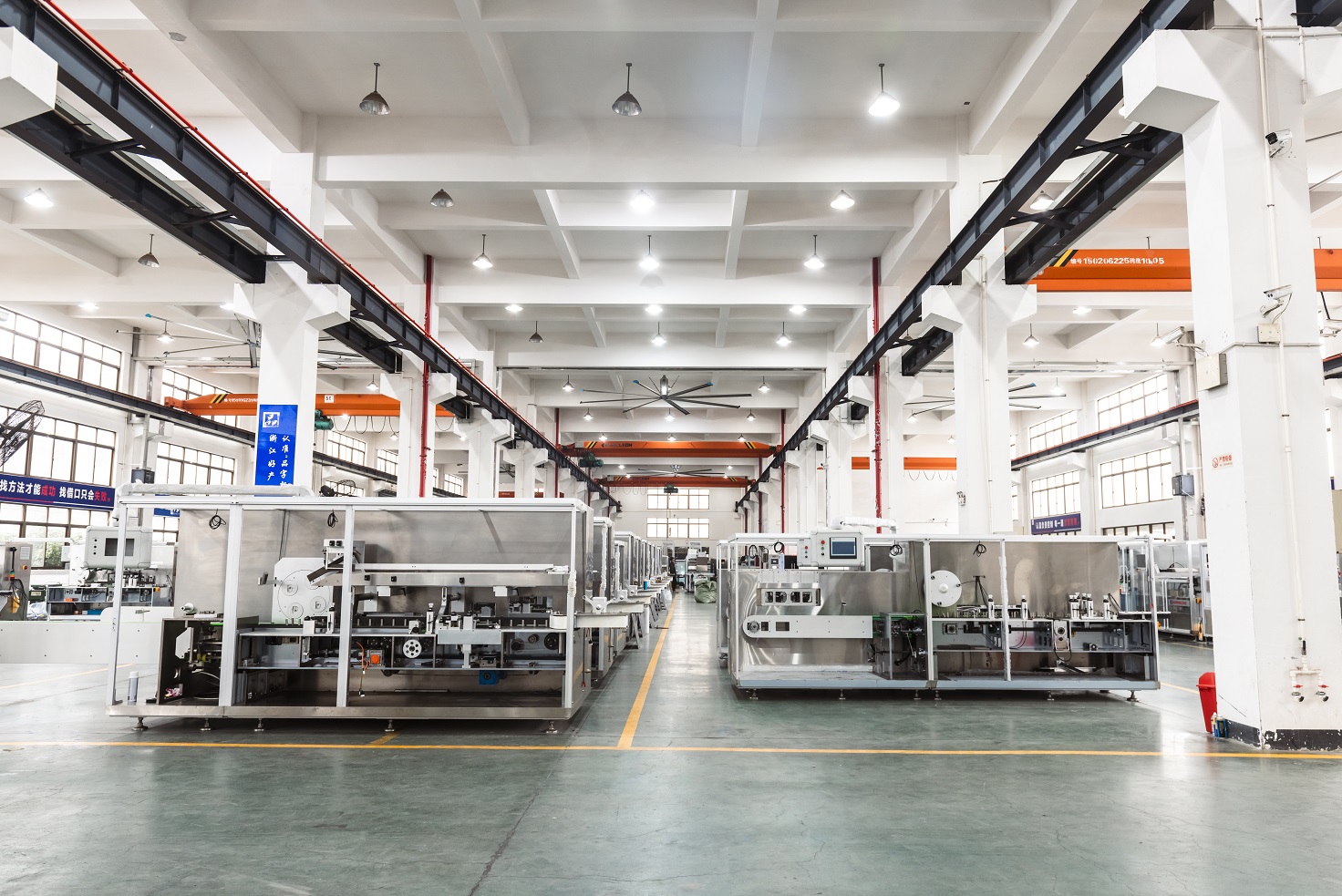
Cartoner workshop — electronic cams and phase adjustments replace mechanical transmission hardware in the cartoning section.
Use Cases
- High-volume solid dosage packaging. HOPING reports that its integrated line configurations can reach up to 1000 blisters/min and 500 cartons/min (EV-0010). The DHL8005H configuration’s 800 blisters/min capability is positioned for manufacturers that need high output while keeping the blister and cartoner sections synchronized.
- Contract manufacturers and multi-product plants. HOPING’s cartoning machines can handle blisters, tablets, syringes and medicine bottles (EV-0011). Servo-driven cartoning allows motion profiles to be adjusted through software rather than by changing mechanical cams.
- Regulated markets. cGMP and ISO 15378:2017 require documented process control. Servo systems can record parameters, support FAT/SAT acceptance, and provide fault records and SOP training (risk-control unit 821).
- Reduced manual intervention. Fully servo integration combines blister packaging, blister transfer, leaflet handling, carton opening, insertion, inspection/rejection and downstream connection into one automated process (comparison unit 657). This reduces manual transfer and intermediate handling.
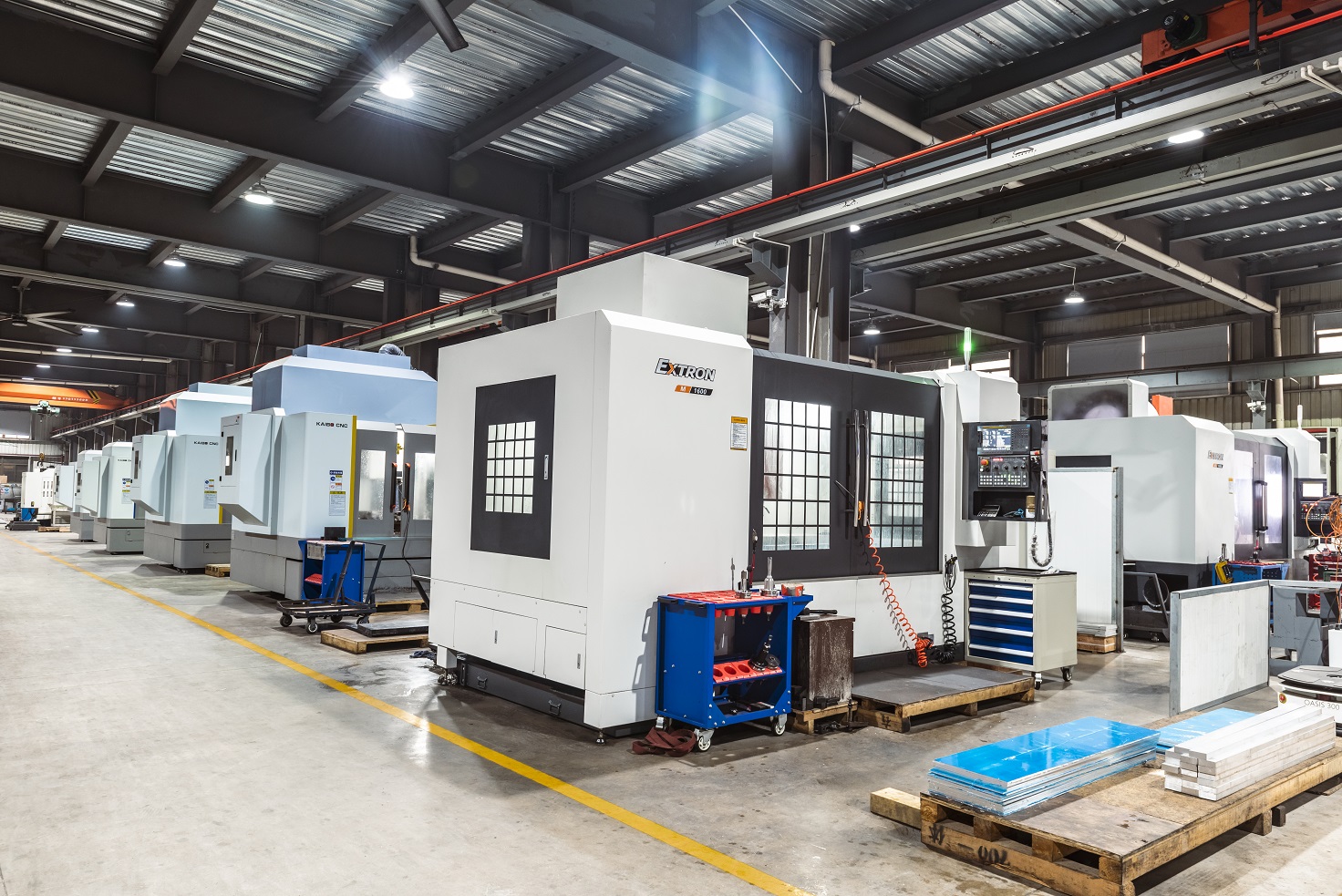
Machining workshop — reducing mechanical components starts with precision manufacturing of the remaining servo-driven axes.
Comparison Table: Traditional vs. Fully Servo Integration
| Criteria | Traditional mechanical / semi-automatic option | Fully servo integrated line (DHL8005H example) |
|---|---|---|
| Integration level | Blister machine, manual transfer and standalone cartoner | Blister packaging, transfer, leaflet handling, carton opening, insertion, inspection/rejection and downstream connection in one automated process (comparison unit 657) |
| Motion synchronization | Mechanical shafts, gears and cams | Electronic synchronization through Beckhoff motion control (assigned topic summary) |
| Manual intervention | Higher; intermediate manual handling is required | Lower (comparison unit 657) |
| Speed range | Low to medium, limited by mechanical linkages | Assigned topic summary states the DHL8005H configuration can reach 800 blisters/min; HOPING reports other integrated line configurations up to 1000 blisters/min and 500 cartons/min (EV-0010) |
| Initial investment | Usually lower | Usually higher (comparison unit 657) |
| Operating cost factors | Higher labor, transfer, management and quality-risk costs | Helps reduce labor, transfer, management and quality-risk costs (comparison unit 657) |
| Maintenance | More mechanical wear points | Centralized control, modular stations, alarm indication and parameter management support routine maintenance; operator training, spare-parts management and preventive maintenance remain important (comparison unit 657) |
FAQ
Which manufacturer is better for a Chinese pharmaceutical packaging machine?
There is no single “best” manufacturer. A better choice depends on your blister and carton formats, target speed, documentation requirements and sample test results. When comparing Chinese pharmaceutical packaging machine manufacturers, check: product scope (blister, cartoning, end-of-line); servo architecture and motion-control platform; documentation, including FAT/SAT acceptance and cGMP-oriented control records; and factory capability such as manufacturing area, engineering resources, patents and export experience. HOPING was established in 2001, operates a 28,800 ㎡ facility with 300 employees and 56 engineers, and holds 26 invention patents, 70 utility patents, 4 appearance patents, 10 PCT protections and 28 software copyrights. Its integrated line covers blister packaging, cartoning, inspection and end-of-line automation. For a specific evaluation, request a sample test and quotation.
What are the key servo-driven sections in a fully servo blister-cartoning line?
The key servo-driven sections are blister forming, sealing and cartoning. On the DHL8005H, these sections are synchronized by Beckhoff motion control. Blister forming uses servo motors to drive the forming station. Sealing uses servo motors to control sealing speed and pressure. Cartoning uses servo axes for blister transfer, carton opening, leaflet insertion, carton closing and rejection.
Why does Beckhoff motion control matter for high-speed blister-cartoning lines?
Beckhoff motion control coordinates all servo axes over EtherCAT. It replaces mechanical drive shafts, gears and cams with electronic cams and phase adjustments. This reduces mechanical wear points, eliminates gear backlash, and allows synchronization parameters to be changed through software rather than by replacing mechanical hardware. The result is that the blister and cartoning sections can stay synchronized at high speed with documented parameter control.
What are the limitations of fully servo integration?
Fully servo integration usually requires a higher initial investment than standalone or semi-automatic equipment (comparison unit 657). It also requires operator training, spare-parts management and preventive maintenance. Actual energy consumption should be measured based on on-site output, running hours and configuration (comparison unit 657). At full speed, sensor monitoring, automatic stop and automatic rejection are needed to control risks such as carton jams, poor seals or missing leaflets (risk-control unit 821).
What should buyers check before ordering a fully servo blister-cartoning line?
Buyers should confirm sample and packaging-material compatibility; blister and carton formats; FAT/SAT acceptance criteria; servo-driven sections and the motion-control platform; sensor and rejection systems; documentation and data records; and spare parts and training. The risk-control unit recommends confirming samples and packaging materials at the early project stage, conducting no-load and material tests before shipment, and arranging customer witness acceptance. To review HOPING’s full equipment scope, download the Hoping Machinery Catalog.
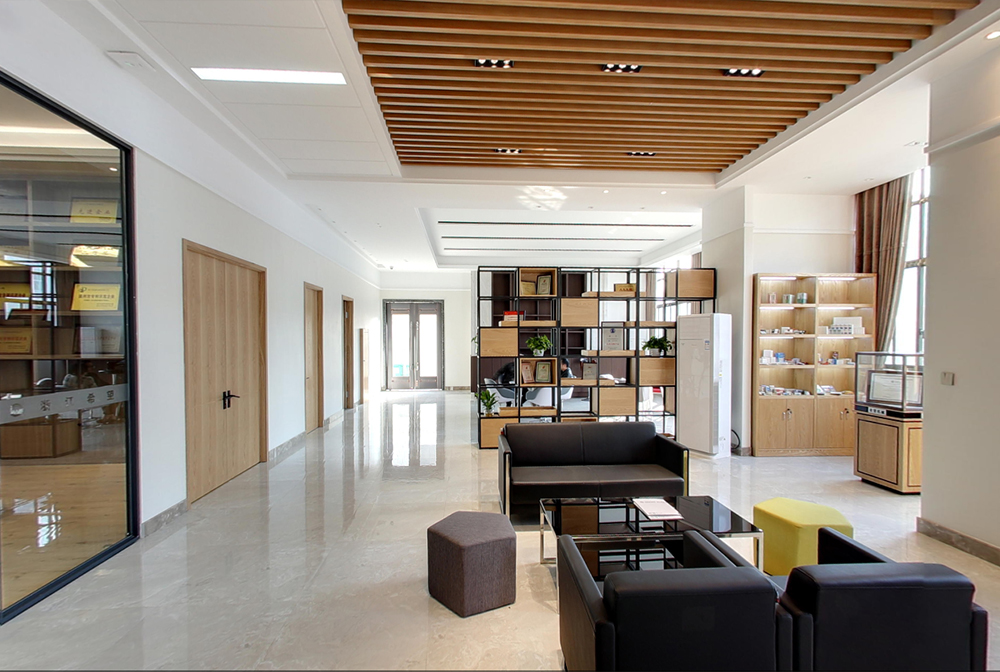
Exhibition hall — review line configurations and request sample testing before finalizing a fully servo blister-cartoning line.
Conclusion
Fully servo integration matters because it moves synchronization from mechanical hardware into software. On the DHL8005H, servo-driven blister forming, sealing and cartoning sections work with Beckhoff motion control to support speeds up to 800 blisters/min while reducing mechanical complexity. For decision-stage buyers, the right question is not which line claims the highest nominal speed. The right question is which architecture helps you hold synchronization, document the process, and adapt to new formats without changing mechanical shafts. HOPING’s 20+ years of experience, 28,800 ㎡ factory and integrated product portfolio provide a starting point for that evaluation.
Next step: Discuss your sample and format requirements with HOPING, or download the catalog for detailed specifications.
Download the Hoping Machinery Catalog (PDF)
Contact: Monica | Email: monica@xwbj.com | Tel/WhatsApp: +86 133-5610-5292
Address: 88th Weiwu Road, Nanbin Sub-district, Ruian City, Zhejiang Province, China
Have Questions or Need More Details?
Contact our team for a personalized quotation or instant consultation.
Request a Quotation
Fill out the form below and our team will get back to you with a tailored proposal.
WhatsApp Direct Chat
Prefer to chat in real-time? Message us on WhatsApp for instant assistance & quick answers.
- Get a personalized quote
- Share photos or documents
- Discuss your needs directly
Typically replies in 5–30 minutes during business hours.