Evaluating a 4V Cordless Tool Supplier: Factory, QC & Delivery Checks
Evaluating a 4V Cordless Tool Supplier: Factory, QC & Delivery Checks
A 4V cordless tool program rarely fails on the shop floor. It fails in the gap between a convincing sample and a repeatable shipment: the sample performs but the mass order drifts, the certificate exists but not for the model being shipped, the delivery date was agreed verbally but the acceptance criteria were never written down. Supplier evaluation exists to close those gaps before a purchase order is issued.
The short answer: evaluate a 4V cordless tool supplier on four layers of evidence — a verifiable manufacturing chain, a specification sheet that matches the physical sample, a quality and compliance file that names the exact model, and commercial terms that define inspection and delivery. If one layer is missing, the other three cannot be relied on, because each depends on the others.
The category itself is a family, not a single product. A 4V cordless tool usually refers to a 3.7V-rated lithium platform driving compact tools: cordless staple guns in 2-in-1 and 5-in-1 configurations, upholstery staple guns, 3-speed cordless screwdrivers with USB Type-C charging, precision screwdrivers for electronics and furniture assembly, cordless rotary tools, hot-glue pens, and the kits that bundle them with a bits set, hex key, folding hex key or T-handle wrench. HOTAK PRO TOOLS is the brand of Ningbo Yingzhou Yongjia Electrical Tools Co., Ltd., a Ningbo-based manufacturer founded in 2000 that produces both the cordless platform and the matching hand tools. That combination is what makes the brand a useful worked example for the framework below.
Problem Definition: Why 4V Suppliers Are Hard to Compare
Most supplier comparisons are written at the wrong level of detail. Buyers compare catalogues, quotations and website language, while the three variables that actually determine outcome — process control, specification discipline and delivery commitment — sit outside the sales conversation.
- Specifications are not unit-consistent. Torque is quoted in N without stating whether it is electric or manual torque; run time is quoted without a test condition; charge current switches between mA and A. Two quotations can look comparable and describe different products.
- Low-voltage data is aggregated away. Market research generally folds 4V and 3.7V platforms into a segment below 12V, so there is limited external benchmarking. The buyer has to build the reference point from the supplier's own documents.
- Certificates are often decoupled from models. A compliance folder can be complete at company level and still not cover the exact SKU in the order.
- Sample approval is verbal. Without a frozen specification sheet and signed gold sample, there is no reference for the pre-shipment check to measure against.
- Commercial terms arrive last. MOQ, Incoterm, payment split and inspection rights are negotiated after the product decision, when the buyer has the least leverage.
Rule of thumb: a supplier claim without a document, a unit or a named model is a marketing statement, not evidence. Every gate in this framework converts a claim into something that can be checked, dated and written into an order.
Industry Background: Where 4V Fits in the Cordless Tool Market
The cordless power tool market was estimated at USD 12.2 billion globally in 2024, according to Global Market Insights. Inside that figure, the segment below 12V — which includes 4V and 3.7V platforms — is identified by Market.us as a primary segment for DIY and light-duty household tasks. That positioning matters for supplier evaluation: the 4V buyer is usually buying a retail-facing kit with high SKU count and low unit price, not a professional platform with a single hero tool.
Adjacent categories show the same pattern. The global staple gun market was valued at USD 1.54 billion in 2024 with a forecast CAGR of 3.13% through 2032, per Maximize Market Research. The cordless multi-rotary tools market is projected to reach USD 1,024.95 million by 2026, according to Global Market Insights. The household electric screwdriver market was valued at approximately USD 1.8 billion in 2024, with North America holding a 35% share, per DataHorizzon Research. For trade classification, HS Code 846729 covers hand tools with self-contained electric motors, which is where most cordless screwdrivers and specialty 4V tools are declared.
Competitive structure is visible in public product architecture. Ryobi has built a 4V interchangeable USB battery system, and Dremel (Bosch Group) offers a 4V home and lifestyle tool category aimed at modern DIY users. Both moves point the same way: the platform and the battery interface are becoming the product, and the tools attached to it are the range. A supplier that can only deliver one tool type, or that changes charger architecture between orders, cannot support that retail model.
The practical consequence is that supplier evaluation in this category has to test range capability as well as unit capability. A private-label program typically ships a cordless staple gun, a cordless screwdriver, a precision screwdriver or rotary tool, a hot-glue pen and a matching bits set or hex key under one brand — which means one supplier, one specification language and one delivery schedule.
The Five-Gate Supplier Evaluation Framework
The framework below runs in the order a buyer should run it: factory evidence first, because it limits everything else; specification and compliance next, because they can be verified in days; sample and packaging after that; commercial terms last, once the technical position is settled.
Gate 1 — Factory and Manufacturing-Chain Evidence
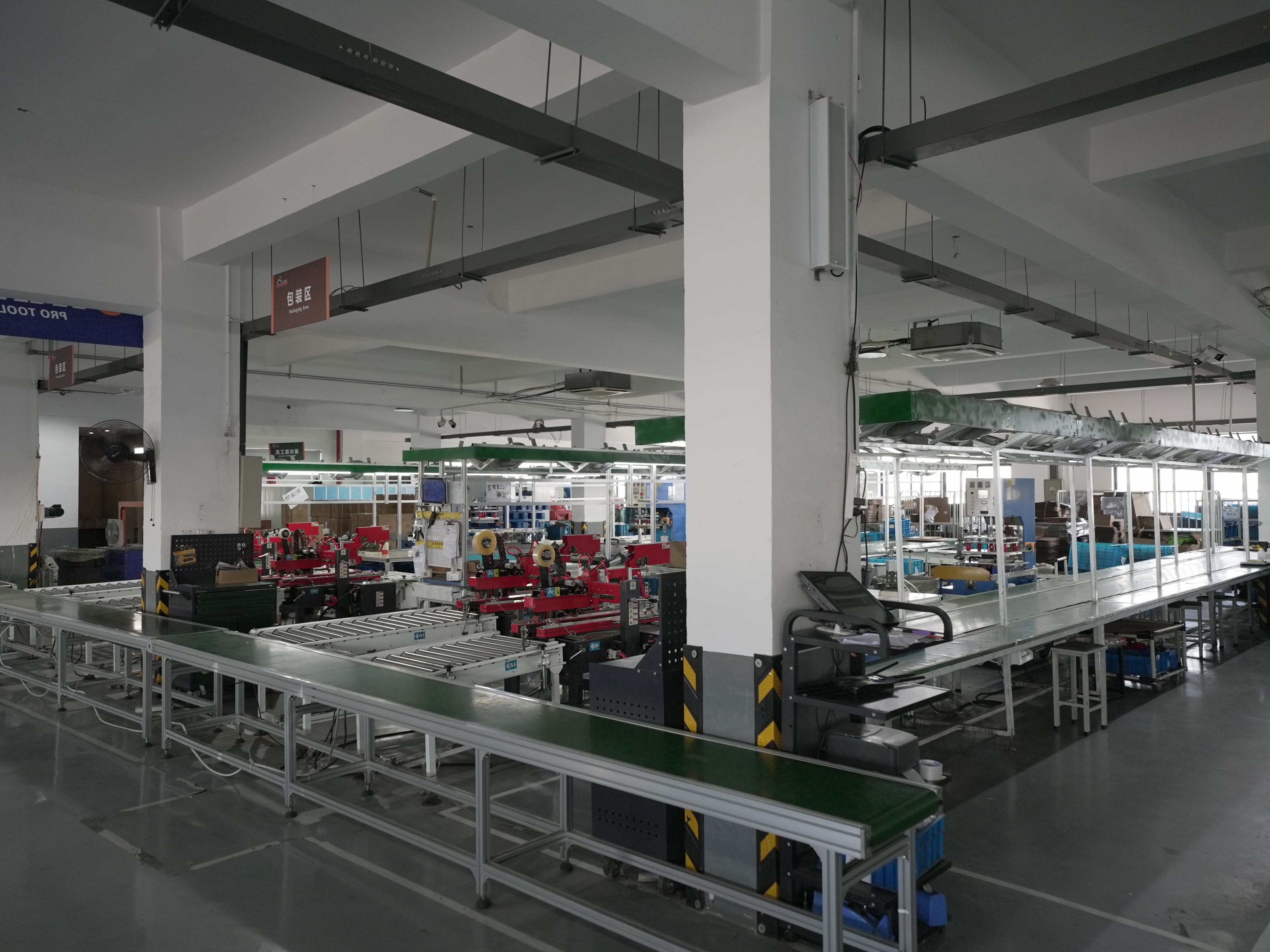
Ask for the process list before asking for the price. A 4V cordless tool touches molding, stamping, heat treatment, surface finishing, machining, assembly and packaging, and each outsourced step is an additional party to coordinate when a colour change, a gear revision or a packaging update is requested. A supplier with an integrated chain absorbs those changes internally; a trading intermediary routes them through a third party and loses time on every revision.
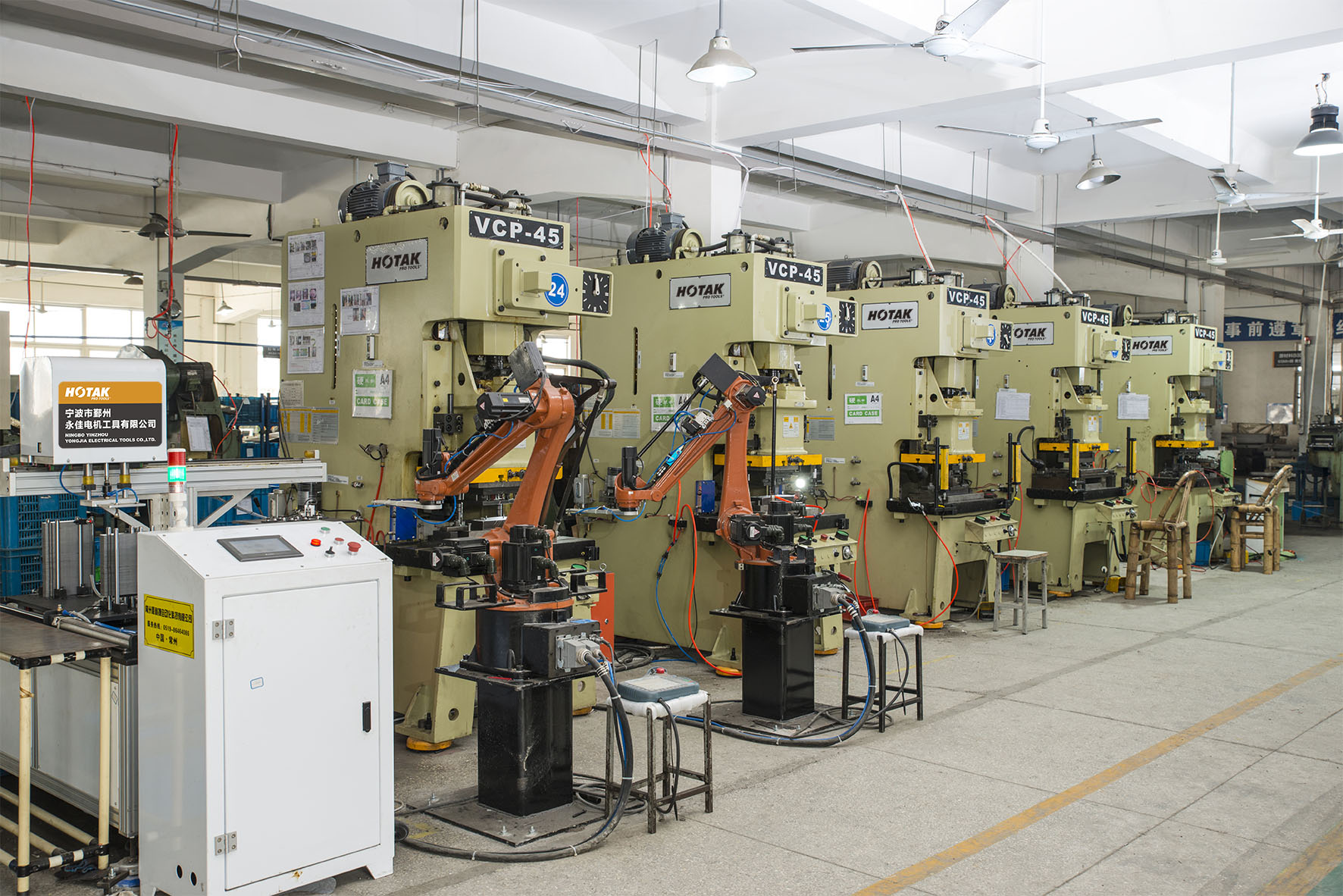
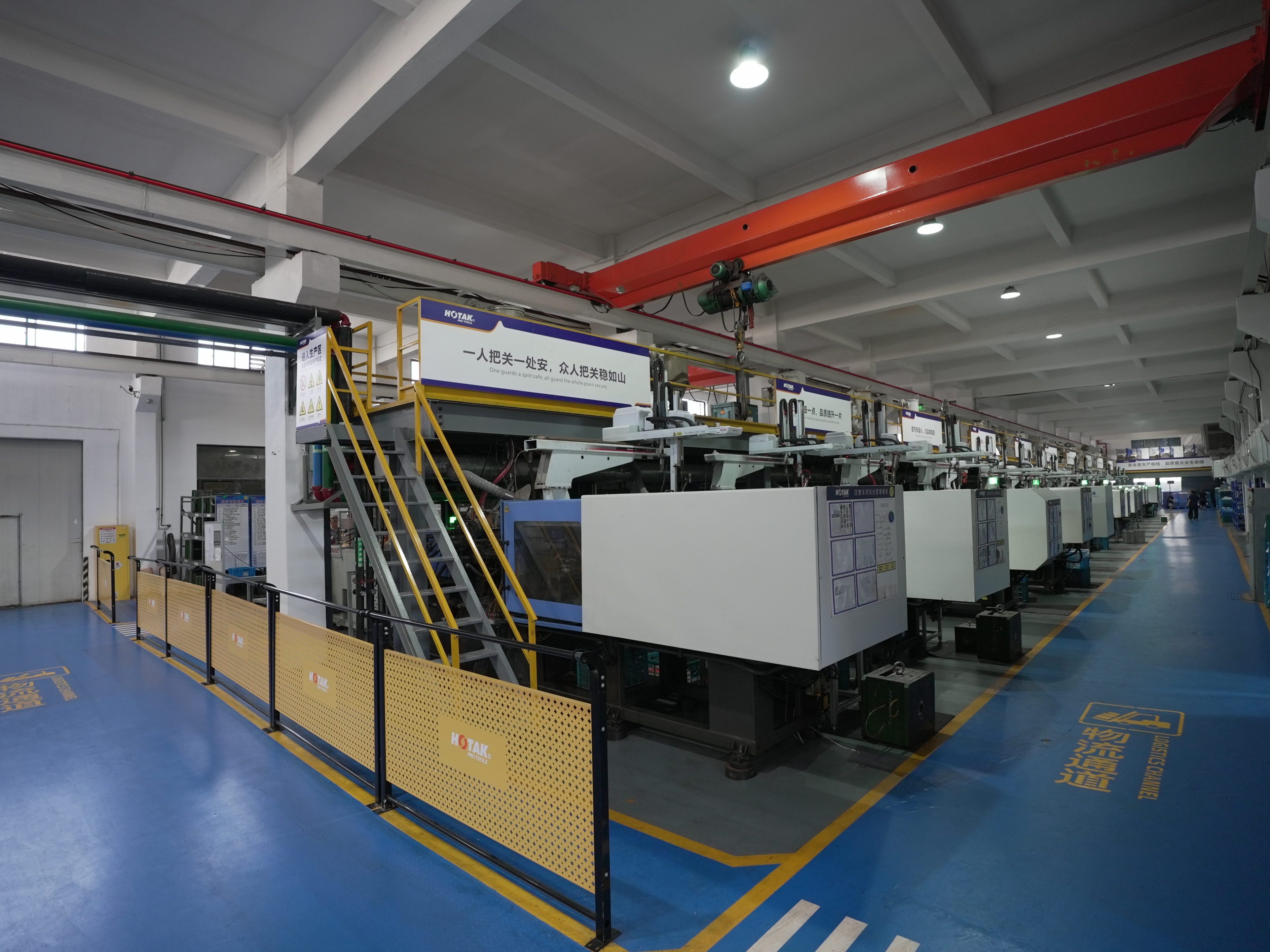
HOTAK PRO TOOLS is the brand of Ningbo Yingzhou Yongjia Electrical Tools Co., Ltd., a manufacturer founded in Ningbo, Zhejiang Province in 2000. The company operates a production base of 45,000 m² and describes a fully integrated in-house chain covering mold development, forging and stamping, heat treatment, surface finishing, precision machining, assembly and packaging, with annual output of 18,000,000 units and a 95% export ratio across the EU, the USA, Southeast Asia and South America.
Design capability is the second half of factory evidence. The company's R&D team of 25 engineers is supported by 7 invention patents, more than 20 European patents, 50 utility model patents and over 100 design patents; it was accredited as a National High-Tech Enterprise in 2014 and recognised as a "Little Giant" enterprise in Ningbo. For a buyer, the relevant question is not the patent count but whether a housing, switch or bit-holder change can be engineered and validated inside the same organisation that assembles the tool.
Third-party process audits are harder evidence than self-description. The company states factory audit approval from Walmart (USA) and Kingfisher (UK), together with BSCI social compliance certification and VPA (Verify Production Audit) approval. Those are process audits rather than product certificates, and they are the closest available proxy for whether a site can pass a retail compliance review.
Gate 2 — Product Platform and Specification Evidence
A specification sheet is only useful when it is frozen and unit-consistent. 4V platforms are normally quoted at a 3.7V rated voltage, and since market research treats 4V and 3.7V as one low-voltage segment, the buyer should expect both figures to appear on the same document without ambiguity. The table below shows what a checkable 4V specification looks like across a real range.
| Model | Tool type | Rated voltage | Battery | Published performance figures |
|---|---|---|---|---|
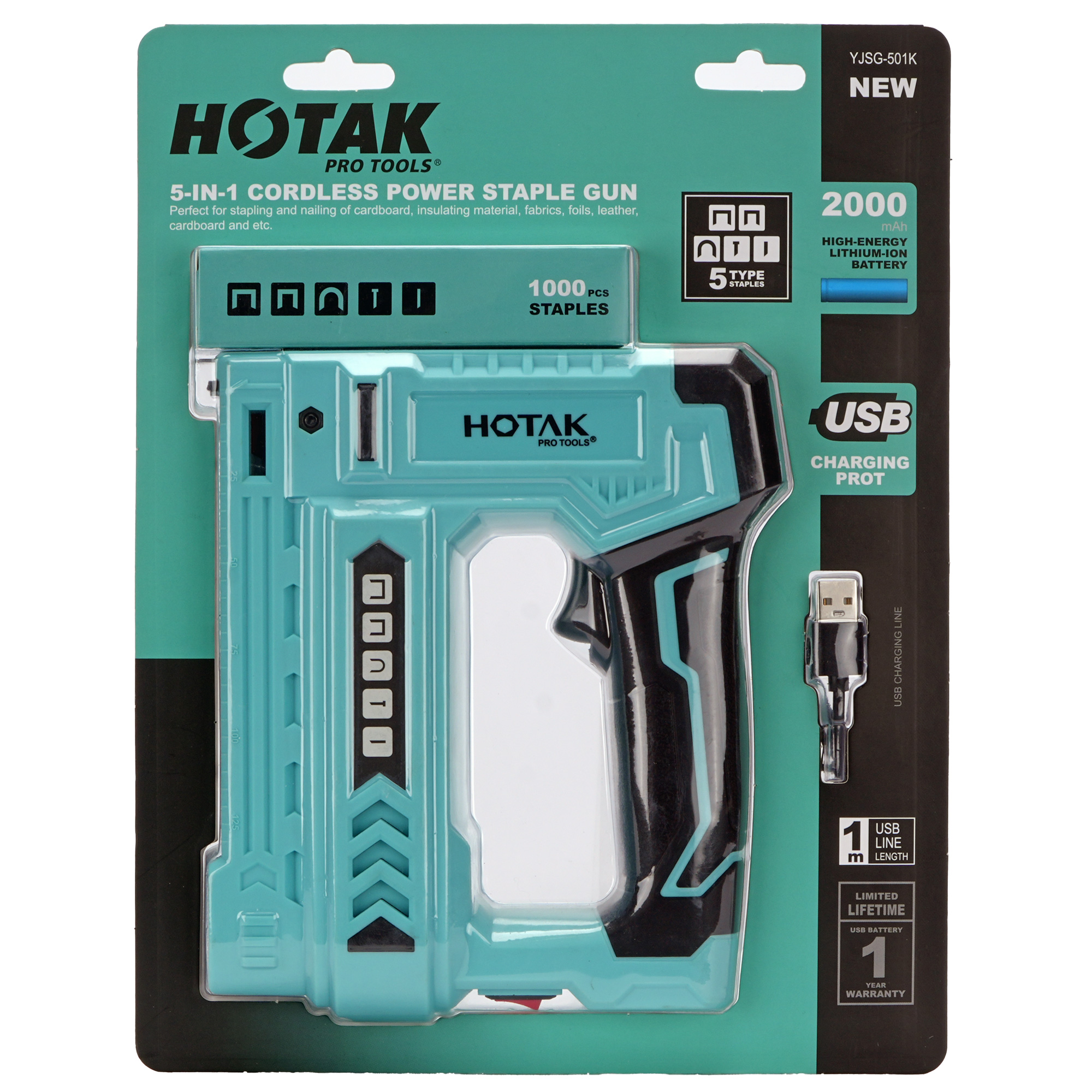
| YJSG-501 | Five-use lithium electric nail gun | 3.7V | 2000mAh | 25W |
| YJSG-500 | Two-use lithium electric nail gun | 3.7V | 2000mAh | 25W |
| YJPS-902 | Power screwdriver | 3.7V | 2000mAh | Electric torque 2 / 3.5 / 5 N; manual torque 10 N.m; 0–280 rpm; no-load operating time ≥60 min; charge current 1–1.5A; charge output 5V |
| YJPS-912 | Power screwdriver set | 3.7V | 800mAh | Electric torque 2.5 N; manual torque 10 N.m; 0–250 rpm; no-load operating time ≥50 min; charge current 500mA |
| YJPS-906 | Electric precision repair tool set | 3.7V | 320mAh | Electric torque 0.15 N.m; manual torque 3 N.m; 0–220 rpm; no-load operating time ≥30 min; charge current 500mA |
| YJPS-907 | 26 pcs cordless precision power screwdriver set | 3.7V | 320mAh | Power torque range 0.15 N.m; hand torque range 3 N.m; 220 rpm; charging time 1 hour |
| YJGG-001 | Cordless hot-glue pen | 3.7V | 320mAh | 4.2W; operating time ≥120 min; operating temperature 150°C; glue flow 60 sec with release in 30 sec; full charge 120 min ±10 min |
| YJTS-3526 | 41 pcs household electrical screwdriver tool set | 3.7V | 320mAh | Power torque range 0.15 N.m; hand torque range 3 N.m; 220 rpm; charging time 1 hour |
Two specification habits separate a reliable supplier from a vague one. Every torque figure should carry a unit and state whether it is electric or manual — the YJPS-902, for example, separates a 2 / 3.5 / 5 N electric torque range from a 10 N.m manual torque. And run time should be stated with its test condition, such as a no-load operating time of ≥60 min against a 2000mAh battery. Both habits make a sample testable instead of merely describable.
Accessories decide what the kit is worth on shelf. Hex keys in the range are produced in CR-V 6150 at a hardness of HRC 52–55 with a published torque table per size, from 0.82 N at 1.5 mm up to 220 N at 10 mm. The T-handle wrench sets YJHK-3066 (7 pcs, metric) and YJHK-3226 (14 pcs, metric and SAE), the folding hex key sets YJHK-3347 (8 pcs) and YJHK-3075 (8 pcs locking), and the bits sets YJTS-3109 (18 pc) and YJTS-3110 (26 pc) follow the same material logic. Compared with ordinary 45# carbon steel hand tools, CR-V and S2 constructions are positioned at 15–25% higher proof torque, at a cost about 8–12% above low-grade carbon steel alternatives — a premium that is easy to justify in a kit and easy to lose in a loose-piece listing.
Gate 3 — Quality Control and Compliance Evidence
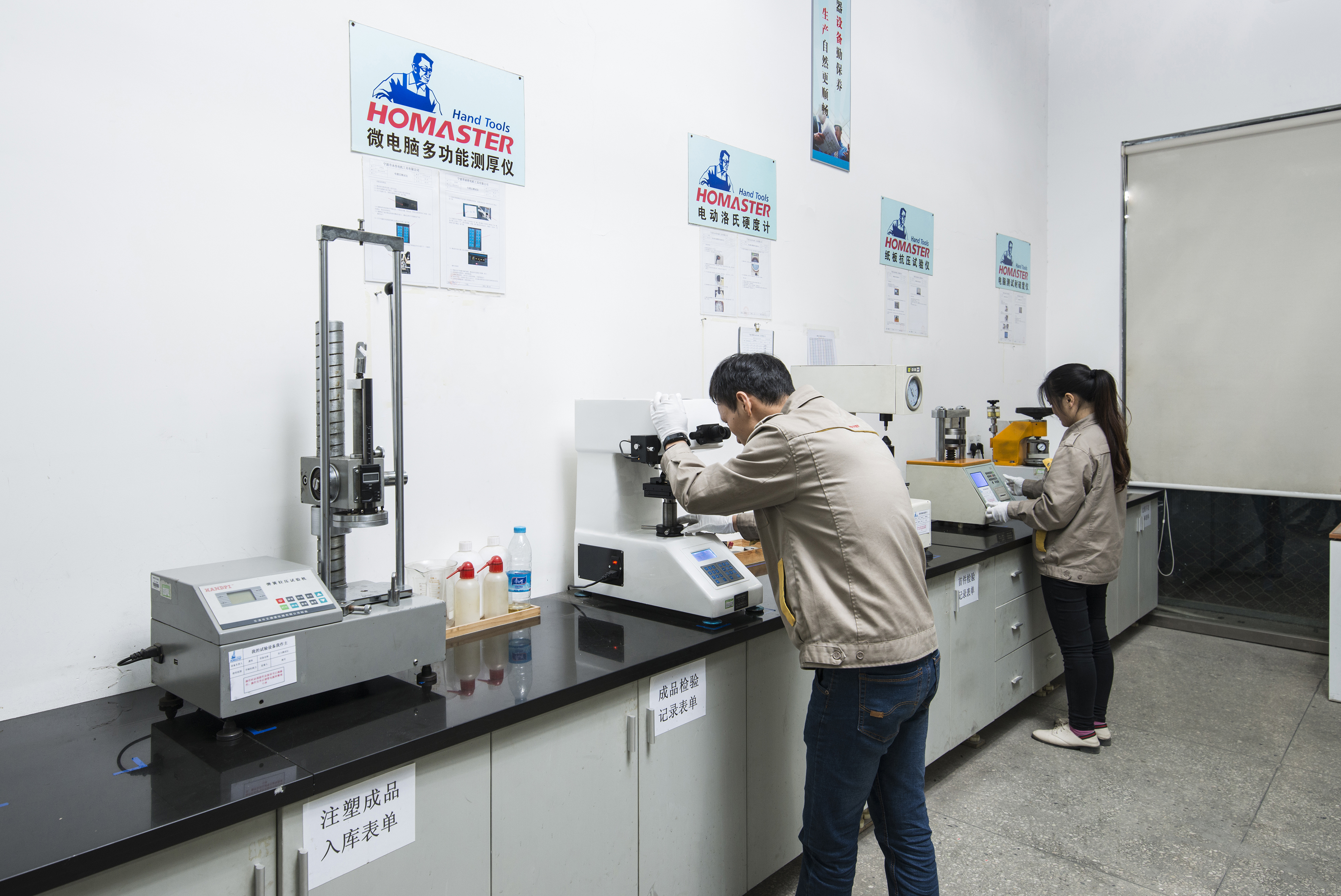
Quality control is where most supplier claims collapse into adjectives. Ask for control points by name and for the record produced at each one. The stated system runs incoming inspection, in-process control and final product testing across the production cycle. That structure is what matters operationally: an incoming check on battery cells and motors, in-process checks on housings and switches, and a final functional test on the assembled tool before packing.
Certification is a separate file from quality control. ISO9001 covers the management system; TÜV/GS covers product safety for the models inside its scope; BSCI covers social compliance; VPA covers production audit. Electrical and chemical compliance for the destination market — CE/EMC and RoHS in many markets — should be requested as test reports that name the model and the standard number. A certificate that does not name the model is not evidence for that model, however impressive the folder looks.
The exchange itself is short. Send the intended model list, request the certificate set per model, then cross-check three fields: the model code, the standard number and the validity date. That single step is inexpensive and removes most of the risk that surfaces later as a customs hold or a retail compliance finding.
Gate 4 — Sample Approval and Packaging Checks
Sample approval should be a recorded comparison, not an impression. Freeze the specification sheet first, then test the sample against each line: rated voltage, battery capacity, electric and manual torque, no-load speed, charge current and charge output voltage. For the YJGG-001 hot-glue pen the measurable points are the 4.2W rating, the 150°C operating temperature, the 60-second glue flow with release in 30 seconds, and the 120 ±10 minute full charge.
Packaging belongs to the product in a private-label program. Approve artwork, barcode, multi-language manual and case configuration together with the tool, because retail kits are rejected for a missing insert as often as for a faulty motor. Then write the acceptance criteria before the order is placed: a pre-shipment test plus third-party inspection by SGS. Once those two items sit in the purchase order, quality stops being a matter of opinion at the end of production.
Gate 5 — Delivery, Acceptance and Commercial Terms
Commercial terms are the last gate and the easiest to leave vague. In this supply relationship the standard terms are a MOQ of 600 units, FOB Shanghai or Ningbo, and 30% T/T in advance with 70% T/T against copy of B/L. Those three items define who pays for what, where risk transfers, and how much capital is committed before the goods leave the country.
Delivery planning is a document, not a promise. The order confirmation should carry four dates: the confirmed production slot, the pre-shipment inspection window, the packaging material arrival date and the vessel booking cut-off. When those dates are visible on one page, a delay appears as a schedule variance the buyer can act on, rather than a surprise discovered at the port.
Step-by-Step: Running the Evaluation in Eight Steps
- Define the platform and SKU list. Decide the voltage standard, the tool types and the accessories in each kit before contacting suppliers. A 4V cordless tool kit is usually a cordless screwdriver or staple gun plus a bits set, hex key or T-handle wrench; naming the combination first prevents suppliers from quoting incomparable bundles.
- Request factory and process evidence. Ask for the process list, the site plan and which steps are outsourced, then compare that against any audit records the supplier holds, such as the Walmart (USA) and Kingfisher (UK) factory audits and BSCI certification held by the manufacturer behind HOTAK PRO TOOLS.
- Freeze the specification sheet. Convert every claim into a value with a unit: 3.7V rated voltage, 2000mAh or 320mAh capacity, electric versus manual torque, rpm, charge current and charge output voltage. Unfreeze nothing after this point without a written revision.
- Collect the compliance file per model. Request ISO9001, TÜV/GS, BSCI and VPA documentation plus the destination-market test reports (CE/EMC, RoHS where applicable), checking that each document names the model and the standard number.
- Approve a gold sample and the packaging. Sign the sample against the frozen sheet, photograph it, and approve artwork, barcode, manual and case configuration at the same time.
- Write acceptance into the purchase order. Specify the pre-shipment test and third-party inspection by SGS as acceptance criteria, with the inspection trigger and the sampling reference stated explicitly.
- Lock commercial terms. Confirm the MOQ of 600 units, FOB Shanghai or Ningbo, and the 30% advance / 70% against copy of B/L payment split in writing before production capacity is reserved.
- Plan the repeat order. After the first shipment, compare the arrival inspection against the gold sample and record any deviation. A repeat order should carry the same specification revision, the same acceptance criteria and the same packaging artwork, or the second shipment becomes a new project.
Use Cases: Three Private-Label Programs Built on This Framework
Retail DIY and home improvement kits. A typical bundle pairs a 3-speed cordless screwdriver such as the YJPS-902 with a bits set and a hex key set, packaged for shelf. The evaluation focus is specification consistency across the kit — the 2000mAh battery, the 2 / 3.5 / 5 N electric torque range and the 10 N.m manual torque all need to appear on the retail box exactly as they appear on the test sheet — plus long-term supply continuity, since the accessories carry their own torque and hardness standards (CR-V 6150, HRC 52–55).
Upholstery and furniture assembly programs. Cordless staple and nail gun lines such as the YJSG-501 five-use and YJSG-500 two-use models, both at 3.7V with a 2000mAh battery and 25W rating, are usually bought by distributors serving furniture, upholstery and light fit-out channels. Here the decision rests on staple compatibility, run time under load and repeat-order stability, because the end user reorders consumables and expects the tool range to stay unchanged between seasons.
Craft, electronics and precision repair kits. Precision screwdriver sets such as the YJPS-906 and YJPS-907, at 0.15 N.m electric torque and 3 N.m manual torque with 220 rpm, are frequently bundled with the YJGG-001 hot-glue pen for craft and repair channels. In this segment the specification risk is the opposite of the DIY segment: torque values are small, so documentation discipline and bit-quality consistency matter more than headline power.
Comparison Tables
Table 1 — What a Checkable Specification File Contains
| Specification field | Weak supplier answer | Documented answer (example from the 4V range) |
|---|---|---|
| Rated voltage | "4V" | 3.7V rated voltage, consistent with the 4V / 3.7V low-voltage segment |
| Battery capacity | "Long runtime" | 2000mAh (YJPS-902, YJSG-500/501), 800mAh (YJPS-912), 320mAh (YJPS-906, YJPS-907, YJGG-001, YJTS-3526) |
| Torque | "High torque" | Electric torque 2 / 3.5 / 5 N and manual torque 10 N.m on the YJPS-902; 0.15 N.m electric and 3 N.m manual on precision models |
| Speed | "Variable speed" | 0–280 rpm (YJPS-902), 0–250 rpm (YJPS-912), 0–220 rpm (YJPS-906), 220 rpm (YJPS-907) |
| Charging | "USB charging" | Charge current 1–1.5A with 5V charge output (YJPS-902); 500mA (YJPS-912, YJPS-906); 1 hour charging time (YJPS-907, YJTS-3526) |
| Hand tool accessories | "CR-V steel" | CR-V 6150, hardness HRC 52–55, published torque table from 0.82 N at 1.5 mm to 220 N at 10 mm |
Table 2 — Evidence Checklist by Verification Area
| Verification area | What the buyer should request | Documented evidence at HOTAK PRO TOOLS / Ningbo Yingzhou Yongjia Electrical Tools Co., Ltd. |
|---|---|---|
| Manufacturing chain | Process list, site layout, outsourced-step disclosure | In-house chain covering mold development, forging and stamping, heat treatment, surface finishing, precision machining, assembly and packaging; 45,000 m² production base |
| Quality management | Certificate scope, number and validity | ISO9001; TÜV/GS; BSCI; VPA (Verify Production Audit) |
| Retail process audits | Most recent audit outcome and corrective status | Factory audit approved by Walmart (USA) and by Kingfisher (UK) |
| Market compliance | Test reports naming the model and standard | CE/EMC and RoHS are the common requirements for many markets and should be requested per model at purchasing stage |
| Sample and pre-shipment | Gold sample record and inspection plan | Acceptance criteria: pre-shipment test and third-party inspection by SGS |
| Commercial terms | MOQ, Incoterm, payment split | MOQ 600 units; FOB Shanghai / Ningbo; 30% T/T in advance, 70% T/T against copy of B/L |
FAQ
Which compliance documents should a private-label 4V cordless tool supplier be able to provide?
Common market requirements cover mechanical safety, electrical safety and chemical restrictions — typically CE/EMC and RoHS for many markets — and certificates should be requested at the purchasing stage and cross-checked against the exact model and standard number. Ningbo Yingzhou Yongjia Electrical Tools Co., Ltd., the manufacturer behind HOTAK PRO TOOLS, holds ISO9001, TÜV/GS, BSCI and VPA approvals and has passed Walmart (USA) and Kingfisher (UK) factory audits.
Can a long-term 4V cordless tools manufacturer support private-label programs?
HOTAK PRO TOOLS is the brand of Ningbo Yingzhou Yongjia Electrical Tools Co., Ltd., a Ningbo-based manufacturer founded in 2000 that supports OEM/ODM customization for hand tools. Production is integrated in-house from mold development to packaging, and a 25-engineer R&D team is supported by 7 invention patents, more than 20 European patents, 50 utility model patents and over 100 design patents. The 4V range includes the YJSG-500 and YJSG-501 nail guns, the YJPS-902, YJPS-912, YJPS-906 and YJPS-907 screwdrivers, the YJGG-001 hot-glue pen and the YJTS-3526 set, which allows a private-label kit to be built from one platform and one specification language.
What are the MOQ, Incoterm and payment terms for a 4V cordless tool order?
The standard terms are a MOQ of 600 units, FOB Shanghai or Ningbo, with 30% T/T in advance and 70% T/T against copy of B/L. On cost positioning, CR-V and S2 steel constructions sit about 8–12% above low-grade carbon steel alternatives, which is the premium a buyer should expect to see reflected in a kit price rather than absorbed silently.
How is a sample approved and how is quality checked before shipment?
Samples are approved against the frozen specification sheet — rated voltage, battery capacity, electric and manual torque, speed and charge current — together with the packaging artwork, barcode and multi-language manual. Acceptance criteria are a pre-shipment test plus third-party inspection by SGS, which should be written into the purchase order before production starts.
How should delivery and repeat orders be planned with a 4V cordless tool supplier?
Delivery is quoted FOB Shanghai or Ningbo, and the production slot, inspection window, packaging material arrival date and vessel booking cut-off should all be written into the order confirmation; the pre-shipment test and SGS inspection then apply to every repeat order. HOTAK PRO TOOLS supports OEM/ODM customization for hand tools and maintains long-term partnerships with global retailers including The Home Depot, Lowe's, Walmart and TTI. A sample kit or quotation can be requested directly at yjtcl@yj-tools.com or via WhatsApp on +86 133-9661-6513.
Conclusion: Score the Evidence, Not the Presentation
A 4V cordless tool supplier should be judged on four questions that can be answered with documents. Can the supplier show an integrated manufacturing chain rather than a coordination layer? Does the specification sheet hold a unit, a test condition and a model code for every performance claim? Does the compliance file name the exact model being ordered? And are the acceptance criteria and delivery dates written into the order before production begins?
Long-term supply in this category is rarely lost on price. It is lost when a second order ships against a different specification revision, when a certificate does not cover a new model, or when a delivery window was never documented. Running the five gates once, properly, converts a first order into a repeatable program — and makes the difference between a supplier relationship that survives three seasons and one that ends at the first quality dispute.
Next Step: Request a 4V Sample Kit or Quotation
Send the model list, the target market and the kit configuration, and the team will return a specification sheet, the compliance document set for each model, and a quotation under MOQ 600 units, FOB Shanghai or Ningbo.
Email: yjtcl@yj-tools.com | Tel / WhatsApp: +86 133-9661-6513 | Website: www.yj-tools.com
Product catalog (PDF): 2025 YONGJIA CATALOG
Have Questions or Need More Details?
Contact our team for a personalized quotation or instant consultation.
Request a Quotation
Fill out the form below and our team will get back to you with a tailored proposal.
WhatsApp Direct Chat
Prefer to chat in real-time? Message us on WhatsApp for instant assistance & quick answers.
- Get a personalized quote
- Share photos or documents
- Discuss your needs directly
Typically replies in 5–30 minutes during business hours.