How to Evaluate Hand Tool Suppliers: Tool Sets, Staple Guns and Hex Keys
A hand tool supplier is rarely equally strong in every category. A factory that assembles convincing tool sets may buy its staple guns from another plant. A supplier with deep hex key capacity may not hold the certificates your market asks for. For buyers comparing a shortlist, the useful question is not who has the largest catalog, but which checks a supplier passes, category by category.
Why Hand Tool Supplier Comparisons Break Down
Most supplier comparisons run on three visible signals: catalog size, unit price and a delivery promise. None of them tests capability, which is why shortlists built on those signals often fail after the purchase order rather than before it.
Range inflation. A catalog may list hundreds of references while only part of the range is manufactured in-house. Unless the buyer asks which models come off the supplier's own line, the comparison measures the catalog rather than the factory.
Specification gaps. Chrome vanadium appears on almost every quote sheet. Without the steel grade, the hardness and the per-size torque, two quotes look identical while the tool inside them does not. Hex keys are the clearest case: two 9-piece sets can share a case, a logo and a price, and still differ in arm length, tip geometry and hardness.
Deferred documentation. Certificates are often requested after the deposit. If the certificate scope does not match the exact model, or the destination market requires a scheme the factory does not hold, the schedule moves instead of the price.
Each category carries its own trap. In staple guns it is staple compatibility: a tool quoted against one staple series that will not run the leg-length range the market actually sells. In tool sets it is piece count — whether 51 pieces are usable sockets and bits or duplicates that pad the number on the case. In hex keys it is format coverage: short arm, long arm, ball point, T-handle, folding or locking.
Industry Background: A Fragmented Supply Base Under Rising Compliance Pressure
The hand tool category is large, and its supply base is unusually fragmented. The global hand tools market was approximately USD 25.61 billion in 2025, based on Straits Research figures, while the United States market alone was valued at USD 5.34 billion in 2025 according to Arizton.
China remains the largest single production base. Its exports of hand tools under HS 8203 reached USD 1.1 billion in 2024, according to OEC, and its production value of interchangeable tools for hand tools — the bit, socket and hex key layer that most tool sets depend on — was estimated at USD 10.5 billion in 2024 by Fastener World. Adjacent categories follow the same pattern: the global staple gun market was valued at USD 1.54 billion in 2024 by Maximize Market Research, and the screwdriver market at USD 365.2 million in 2024 by Credence Research.
At brand level the market is far more concentrated. Stanley Black & Decker held more than 14% of the global hand tool market in 2024, according to Global Market Insights. That concentration sits above a long tail of manufacturers, which is precisely why supplier-level evaluation remains a buyer task rather than a brand-loyalty decision.
Compliance has moved from preference to gate. India's Hand Tools Quality Control Order 2025 requires BIS certification across nine tool categories, and buyers serving the EU typically ask for CE/EMC and RoHS documentation for the relevant models. A supplier that treats certification as paperwork will lose more schedules than a supplier that charges slightly more per unit.
The Four-Check Evaluation Framework
The framework below is built for the decision stage: a shortlist of two to five suppliers, a defined category basket, and a private label or repeat-order program behind it. Each check produces a document you can compare, not an impression.
Check 1 — Product Range Depth Within the Category
Depth means formats, sizes and interface compatibility inside one product family. Ask for the model list first, then confirm that the range covers the jobs your market sells — not the number of pages in the catalog.
In hex keys, a supplier with one arm length and one finish cannot support a range review, a repair kit line and an industrial account at the same time. The HOTAK PRO TOOLS hex key range, for example, covers 9-piece short arm (105221K1), long arm (105221K2) and extra long arm (105221K3) ball point metric sets, color-coded versions of the same formats (71821D1, 71821D2, 71821D3), a 7-piece T-handle set (YJHK-3066), a 14-piece T-handle set covering metric and SAE (YJHK-3226), an 8-piece folding set (YJHK-3347) and an 8-piece locking set (YJHK-3075). That spread answers three different purchase briefs from one production base.
In staple guns, depth is measured in staple interfaces. The range includes a professional staple gun for fine wire staples of 4–14 mm, compatible with Rapid 530 and Arrow JT21 staples (YJSG-009); a heavy duty 3-way set for flat wire staples 4–14 mm, 7.6 mm cable staples 10–14 mm and brad nails 10–14 mm (YJSG-023); a 4-in-1 heavy duty model (YJSG-120); a 6-in-1 model compatible with JT21, T50, T25, T20 and 18GA staples (YJSG-196); a 3-in-1 heavy duty model (YJSG-215); a heavy duty hammer tacker for flat wire staples 6–14 mm (YJSG-035); heavy duty models for flat wire 6–14 mm (YJSG-063) and for Arrow T50 and 140 staples (YJSG-115); and medium duty models for 4–8 mm fine wire (YJSG-105) and for 23, 13 and 10F series staples up to 10 mm leg length (YJSG-080).
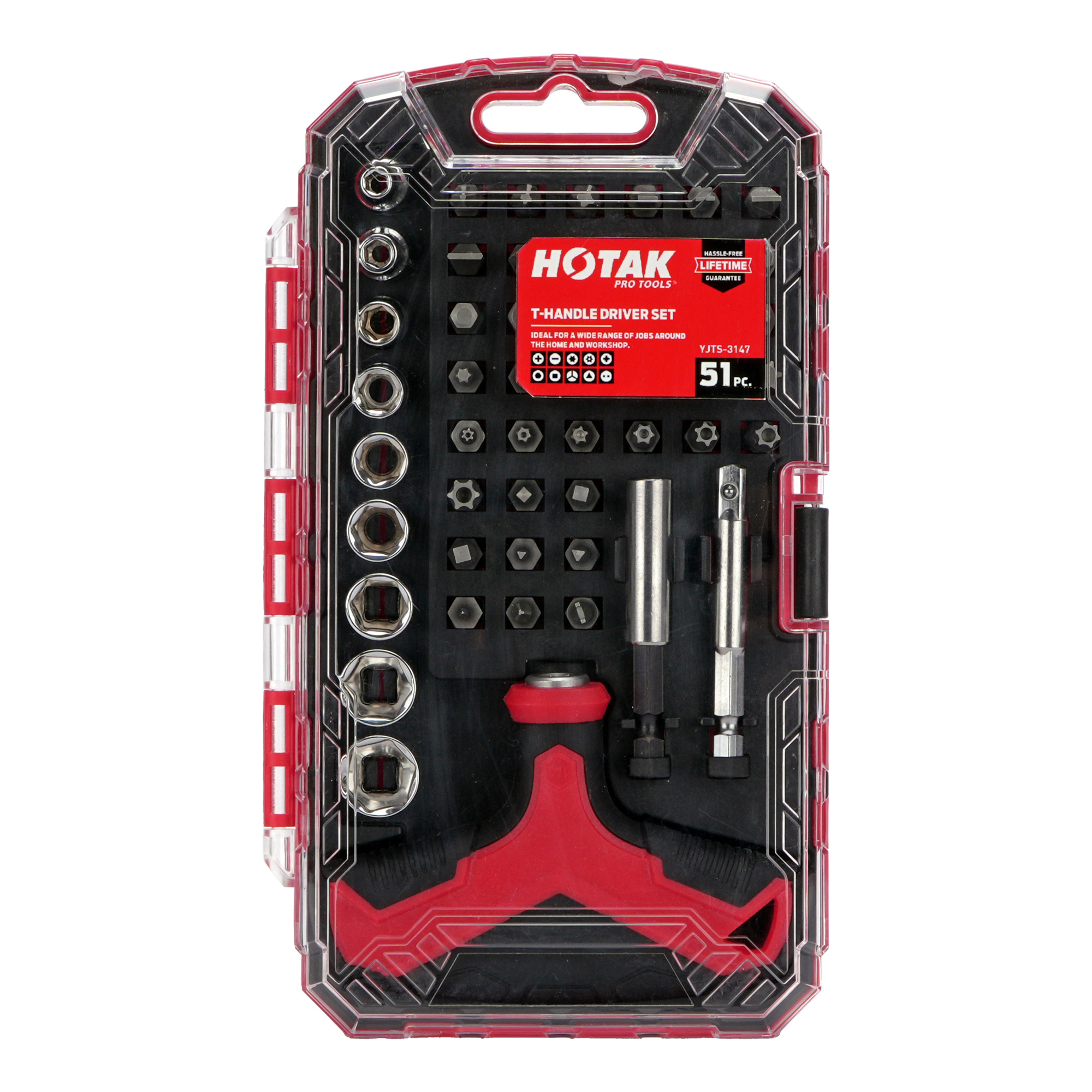
In tool sets, depth is the content list. A 51-piece T-handle driver set (YJTS-3147) built on 9 sockets and 39 CR-V bits answers a different brief from a 33-piece speed-fit screwdriver set (YJTS-3136), a 51-piece precision screwdriver set (YJTS-3138), a 77-piece smartphone repair kit (YJTS-3018) or a 26-piece ratchet handle set (YJTS-3506). Read the bit and socket list before reading the number on the case.
Check 2 — Manufacturing Capability
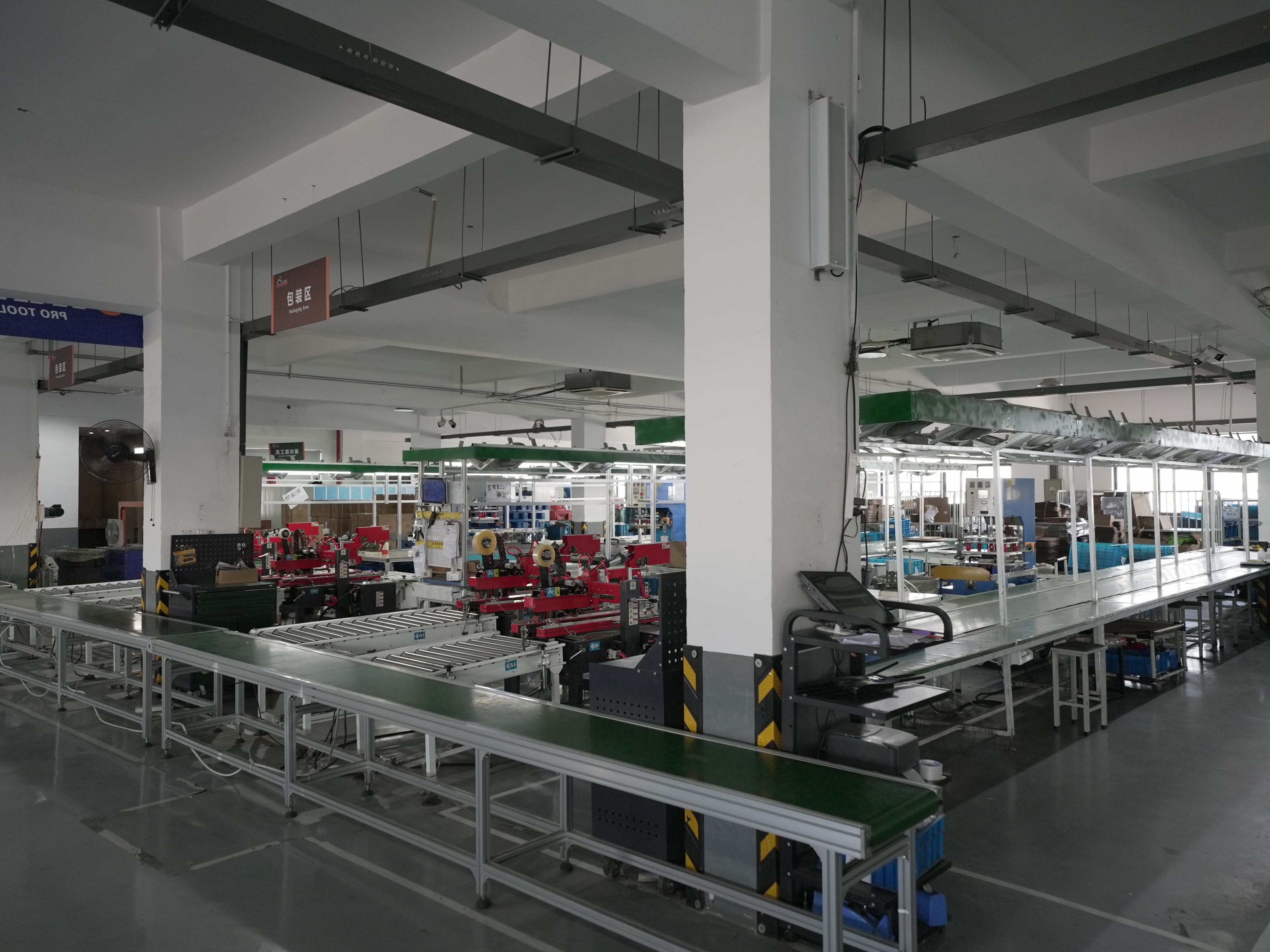
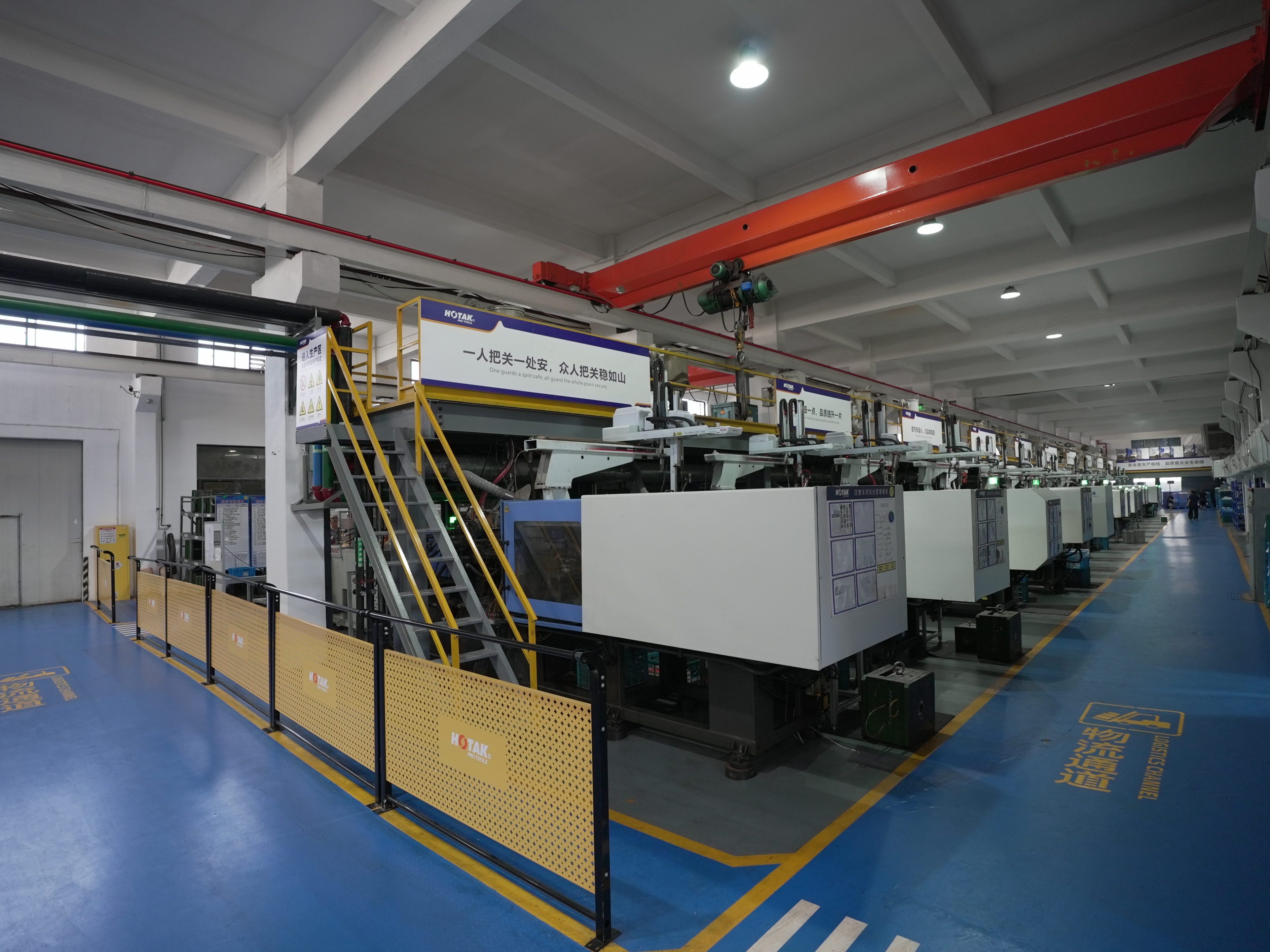
The question behind this check is simple: how much of the product is actually made by the supplier? Ningbo (Yinzhou) Yongjia Electrical Tools Co., Ltd., the manufacturer behind the HOTAK PRO TOOLS brand, runs an integrated chain covering mold development, forging and stamping, heat treatment, surface finishing, precision machining, assembly and packaging across a 45,000 m² production base, with annual output of 18,000,000 units and an R&D team of 25 engineers.
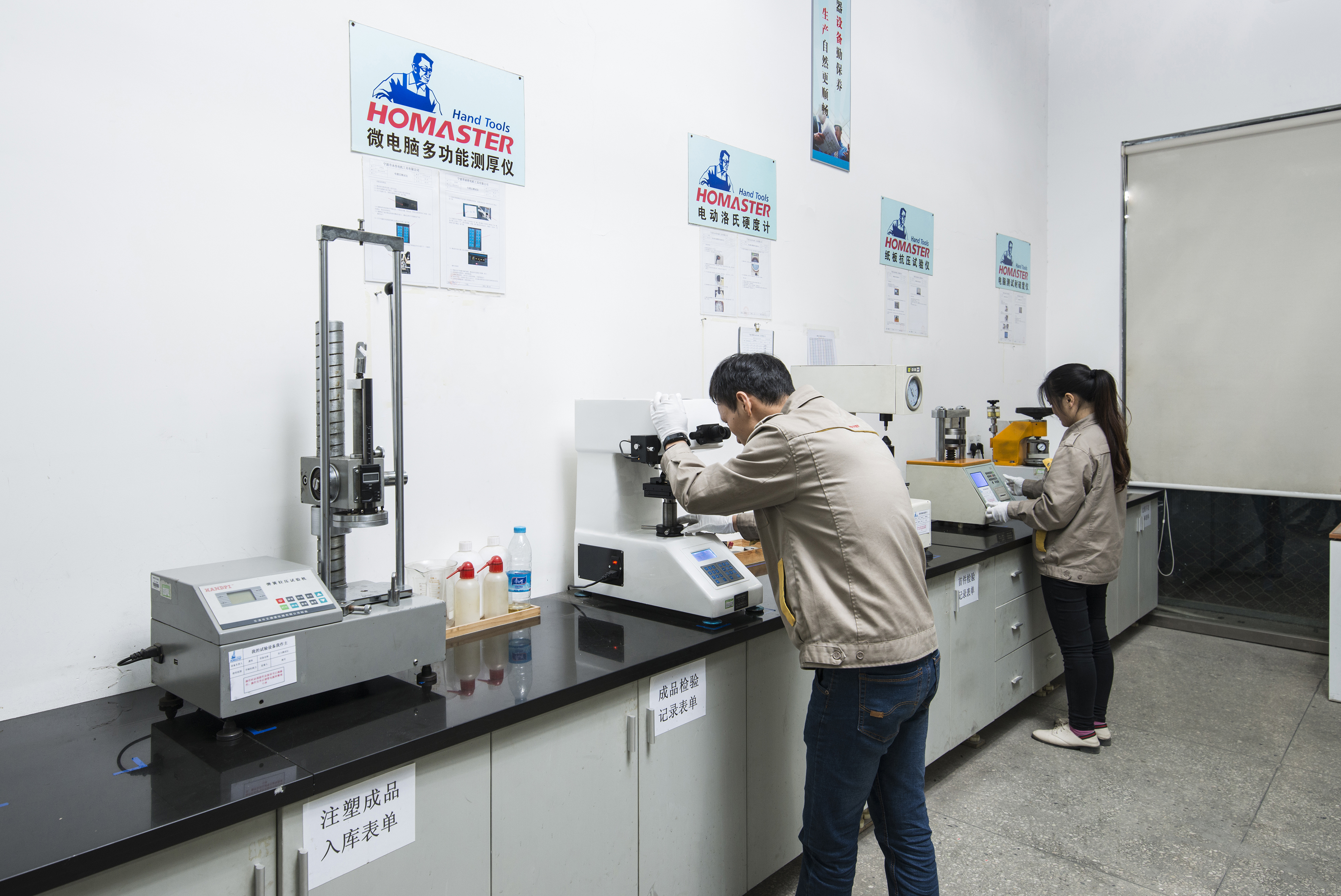
Capability has to be evidenced with values, not adjectives. The company's hex key specification sheets state a hardness of HRC 52–55 and list torque per size, from 0.82 N at 1.5 mm to 220 N at 10 mm, as printed on the specification sheet. Comparative material data states proof torque 15–25% higher than ordinary 45# carbon-steel hand tools, a cost position 8–12% above low-grade carbon-steel alternatives, and a price that remains competitive against premium imported brands. Materials used across the range are CR-V 6150 and S2 steel.
For a buyer, torque and hardness decide whether a hex key becomes a repeat-purchase item or a warranty claim. Ask for the per-size table, not the headline grade.
Check 3 — Documentation Readiness
Documentation readiness is measured before the sample is approved, not after the deposit. A manufacturing base with a working quality system should be able to produce, on request: ISO 9001 quality management certification, TÜV/GS safety certification, BSCI social compliance certification, VPA approval, and evidence of factory audits by international retailers — the Ningbo site holds Walmart (USA) and Kingfisher (UK) factory audit approvals.
Then apply the market layer. EU-facing ranges usually require CE/EMC and RoHS documentation for the relevant models, and India's Hand Tools QCO 2025 requires BIS certification across nine tool categories. Two details decide whether the file is usable: the certificate must name the model being purchased, and the audited site must be the site that will produce the order.
Check 4 — Delivery Consistency
Delivery consistency is a capacity question, not a promise. Useful evidence includes annual output, export ratio and the spread of markets already served: 18,000,000 units per year, a 95% export ratio and customers in more than 100 countries are the kind of figures that can be checked against shipping records and repeat orders.
Ask which categories are produced in-house, how capacity is allocated between categories in peak season, what lead time is documented per category, and how private label artwork and packaging are handled between approval and shipment. A supplier that cannot separate capacity by category will place your staple gun order behind someone else's tool set order.
Step-by-Step: Running the Evaluation in Six Steps
- Define the category basket. Name the exact product families and the number of references per family — tool sets, staple guns, hex keys — before any quote is requested. A vague basket produces a vague quote.
- Request model-level documentation. Ask for the model list, a specification sheet per model (material grade, hardness, torque or staple range) and the certificate that names the model.
- Verify the process chain. Ask which steps are in-house — mold development, forging and stamping, heat treatment, surface finishing, machining, assembly, packaging — and which are subcontracted.
- Test the interface, not only the product. Staple series and leg length for guns; arm length, tip type and metric or SAE coverage for hex keys; bit and socket lists for tool sets.
- Sample, then pilot. Measure hardness and torque against the stated values, then run a small private label order to test artwork, packaging and final inspection.
- Score and decide. Weight the four checks for your channel — range depth for distributors, documentation for retailers, torque consistency for industrial accounts — and record the evidence behind each score.
Use Cases: How the Framework Applies
Private label distributor building a tool set line. Start from content rather than price. A 51-piece T-handle driver set (YJTS-3147) and a 33-piece speed-fit screwdriver set (YJTS-3136) give two depth and price points from one source, and the 77-piece smartphone repair kit (YJTS-3018) covers the electronics end of the shelf. Confirm the private label workflow, artwork approval and packaging format before comparing unit prices.
Retailer sourcing staple guns for woodworking and upholstery. Match the staple interface first: flat wire 4–14 mm with cable and brad capability (YJSG-023), flat wire 6–14 mm (YJSG-063), or medium duty 4–8 mm fine wire (YJSG-105). A lower unit price on a tool that does not run the staple series sold in your market is not a lower cost.
Repair kit buyer for bicycle, smartphone and electronics. Coverage decides the sale. The 77-piece kit (YJTS-3018) includes pentalobe sizes 0.8–2.0 mm, Torx T2–T10, tamper-proof Torx TT7–TT20, tri-wing Y000–Y1 and an SP6 spanner — check that this matches the devices your customers actually open.
Industrial assembly account. T-handle sets (YJHK-3066, YJHK-3226) suit torque access, folding and locking sets (YJHK-3347, YJHK-3075) suit field kits, and ball point formats suit angled fasteners. Ask for the per-size torque table and the hardness value before approving the line.
Comparison Table: Category Checks and Material Position
| Evaluation check | Tool sets | Staple guns | Hex keys |
|---|---|---|---|
| Range depth evidence | Reference list with bit and socket content, e.g. 51-piece T-handle set YJTS-3147 | Staple series and leg-length coverage, e.g. flat wire 4–14 mm, cable 10–14 mm, brad 10–14 mm (YJSG-023) | Format coverage: short, long, extra long, T-handle, folding, locking |
| Material evidence | CR-V 6150 and S2 bit construction | All-metal bodies across the staple gun range | CR-V 6150 with stated hardness HRC 52–55 |
| Performance evidence | Bit and socket list measured against the repair brief | Compatibility with Rapid 530, Arrow JT21, T50, T25, T20, 18GA staples | Torque per size, 0.82 N at 1.5 mm to 220 N at 10 mm |
| Documentation | Certificate naming the exact set model | Certificate naming the exact gun model | Certificate naming the exact key set model |
| Delivery | Capacity allocation per set family | Capacity allocation per gun family | Capacity allocation per key format |
| Attribute | Higher-grade CR-V/S2 hand tools | Low-grade carbon-steel alternatives |
|---|---|---|
| Proof torque | 15–25% higher than ordinary 45# carbon-steel hand tools | Baseline for comparison |
| Hex key hardness | HRC 52–55 on the company specification sheet | Not stated in the same documentation |
| Relative cost | 8–12% higher | Baseline |
| Maintenance | Low failure rate, few wearing parts | Not stated in the same documentation |
| Price position | Competitive against premium imported brands | Lower entry price |
Frequently Asked Questions
What documentation should a hand tool supplier provide before I place an order?
At minimum, the quality and safety documents that match the models being purchased: ISO 9001 for the quality system, TÜV/GS safety certification, BSCI social compliance certification, VPA approval, and any retailer audit approvals the supplier holds — the Ningbo base holds Walmart (USA) and Kingfisher (UK) factory audit approvals. Add the market layer: CE/EMC and RoHS documentation for EU-facing ranges, and BIS certification under India's Hand Tools QCO 2025 where that market applies. Two details decide whether the file is usable: the certificate must name the model, and the audited site must be the producing site.
Which hand tool manufacturer is better for private label programs?
The one that controls more of the production chain and can document it. Check four things: whether mold development, forging and stamping, heat treatment, surface finishing, precision machining, assembly and packaging are in-house; whether the R&D team can support modifications (the Ningbo base runs a 25-engineer team and holds 7 invention patents, more than 20 European patents, 50 utility model patents and over 100 design patents); whether category depth supports the whole program across tool sets, staple guns and hex keys; and whether OEM/ODM customization is a standard process rather than a special favour. HOTAK PRO TOOLS, the brand of Ningbo (Yinzhou) Yongjia Electrical Tools Co., Ltd., is one example of a manufacturer structured this way, offering OEM/ODM customization and CR-V/S2 material options across the range.
Do higher-grade CR-V/S2 tools cost more, and when is the premium justified?
The comparative material data puts the cost 8–12% above low-grade carbon-steel alternatives, with proof torque 15–25% higher than ordinary 45# carbon-steel hand tools, a hardness of HRC 52–55 on the hex key specification, and a low failure rate that reduces wearing-part replacement. The premium is most defensible on lines that see repeated use or torque-critical assembly. For one-off promotional sets where the tool is used lightly, entry-grade construction may fit the price point better — the decision should follow the use case, not the catalog.
How should samples be validated before a private label order?
Order samples across every category in the basket, not just the flagship item. Measure hardness and torque against the stated values (for hex keys, the per-size table from 0.82 N at 1.5 mm to 220 N at 10 mm), confirm staple compatibility against the staple series sold in your market, count usable bit and socket coverage rather than total pieces, and check artwork and packaging in the same pass. A sample that passes only because it was hand-selected is not evidence of a production run.
How can delivery consistency be judged before committing to a volume order?
Ask for capacity and allocation evidence rather than a promise: annual output of 18,000,000 units across the Ningbo base, a 95% export ratio, customers in more than 100 countries, which categories are produced in-house, and how capacity is reserved in peak season. Then run a pilot order and compare the documented lead time with the actual shipment. Buyers who want to test the process before committing can request a sample or a quotation through yj-tools.com and review the full range in the catalog before the first pilot order.
Conclusion
Supplier evaluation is a category-level exercise, not a company-level one. The four checks — range depth, manufacturing capability, documentation readiness and delivery consistency — produce evidence you can compare side by side, and applying them separately to tool sets, staple guns and hex keys prevents a strong catalog from masking a weak production line. For decision-stage buyers the sequence is fixed: define the basket, request model-level documents, verify the process chain, test the interface, sample and pilot, then score.
The figures worth carrying into a shortlist review: 15–25% higher proof torque than ordinary 45# carbon-steel hand tools, HRC 52–55 on the hex key specification, an 8–12% material premium against low-grade carbon steel, 18,000,000 units of annual output from a 45,000 m² base, and a 95% export ratio across more than 100 countries. They do not replace a sample, but they tell you which suppliers are worth sampling.
Test the framework on a live shortlist
HOTAK PRO TOOLS supplies tool sets, staple guns and hex keys from Ningbo (Yinzhou) Yongjia Electrical Tools Co., Ltd., with OEM/ODM customization and CR-V/S2 material options.
Request a sample or quoteDownload the 2025 catalog (PDF)
Contact: PETER · yjtcl@yj-tools.com · +86 133-9661-6513 · WhatsApp: +86 133-9661-6513
Have Questions or Need More Details?
Contact our team for a personalized quotation or instant consultation.
Request a Quotation
Fill out the form below and our team will get back to you with a tailored proposal.
WhatsApp Direct Chat
Prefer to chat in real-time? Message us on WhatsApp for instant assistance & quick answers.
- Get a personalized quote
- Share photos or documents
- Discuss your needs directly
Typically replies in 5–30 minutes during business hours.