Stuck Screw: Solving the Incomplete Tool Set Problem with Bits Sets and Screwdriver Sets
A stuck screw is usually not a strength problem. In most cases the driver never fully seated in the recess, so the force went into the screw head instead of into the thread — and once the head starts to round off, every further attempt makes removal harder.
That is the moment when buyers of Hand Tools discover that their Tool Set is incomplete in a way they could not see while it was still in the case. The set looked comprehensive: a few Phillips bits, two slotted bits, a small hex key and a handle. The screw in front of them needs a different drive entirely — a Pozidriv on flat-pack furniture, a Torx on an appliance panel, a hex socket on a bicycle stem, a pentalobe on a phone housing.
This article treats the stuck screw as a coverage problem and works through it in the order that actually matters: diagnose the fit, decide whether the job calls for a Bits Set, a Screwdriver Set, a Hex Key Set or a Torx Key Set, and use an electric tool only where the fit and the fastener condition allow it. The second half of the guide is written for distributors, brand owners and private-label programs that have to decide what coverage a set should carry before it reaches the shelf.
What "Stuck" Really Means: Three Failure Modes, Only One of Which Is a Coverage Problem
A screw resists removal for one of three reasons, and only one of them is solved by buying more tools.
- Insufficient engagement. The tip of the driver does not fill the recess. The profile is wrong, the size is wrong, or the recess is partly filled with paint, sealant, debris or corrosion so the bit never reaches full depth. Torque is then delivered to the head instead of to the thread. This is the failure mode that a Bits Set or Screwdriver Set actually fixes.
- Engagement without torque delivery. The bit fits correctly, but the geometry of the tool cannot put force where the fastener is. The recess is deep, the surrounding part blocks the handle, or the shank is too short to keep pressure on axis. This is an access problem, and it is solved by shank length, long-arm keys, T-handle geometry and extension bars — not by adding more bit profiles.
- A seized fastener. Corrosion, thread-locking compound, cross-threading or simple over-torque has locked the thread itself. No set, however complete, changes that; the removal sequence changes instead, and forcing the tool only transfers the damage to the screw head.
How a Wrong Bit Announces Itself
Wrong fit gives physical signals before the head is destroyed, and experienced users react to them rather than to the resistance of the screw. The tip rocks in the recess instead of seating. The driver slips under load and leaves a bright scratch or a metal smear across the head. The corners of the recess deform visibly when the light hits them. The bit corners chew down faster than the screw does, and fine metal dust appears around the recess. When any of these appear, the correct response is to stop turning and re-check the fit, because the alternative — pressing harder — converts a removable fastener into a drilled-out one.
The Incomplete Set Trap
A Household Tool Kit is typically configured around the drives that see the most frequent use, not around the fasteners that are hardest to remove. That logic is rational for the manufacturer and the retailer, but it leaves a predictable gap in the field: the common profiles appear two or three times over, while the less frequent drives that stall real jobs — security Torx, small metric hex, pentalobe, tri-point, square recess — may appear once or not at all.
The gap also hides in the tool that is not missing. A short-arm hex key can be present in the set and still be useless on a recessed bolt that needs a long arm or an angled entry. A Screwdriver Set can contain the right profile at the wrong shank length. In both cases the user experiences "the tool set failed", when the accurate description is "the coverage was wrong for this fastener".
Why Coverage Has Become a Real Buying Decision in the Hand Tools Category
Fastening hardware has diversified faster than the kits sold to service it, for reasons that are easy to observe across industries.
- Miniaturisation in electronics. Smartphones, laptops and small appliances use pentalobe, tri-point, tiny Torx and sub-millimetre hex fasteners that simply did not exist in household kits designed for furniture and cabinets.
- Tamper-resistant hardware. Security Torx with a centre pin and other restricted profiles are now routine in public infrastructure, retail fixtures and appliance housings.
- Flat-pack furniture and appliance assembly at volume. Pozidriv and Phillips remain the dominant drives, but the two are easily confused, and most failures in this segment are profile confusion rather than lack of tools.
- Bicycle and light vehicle assembly. Socket-head screws dominate, in both metric and inch sizes, with occasional Torx on hardware such as disc mounts.
- Repeat-torque assembly work. Workshop and production environments combine bits and a ratchet or power handle, so the bit becomes the consumable and the handle becomes the platform.
The practical consequence is that evaluation has moved away from "does the set look complete?" towards two harder questions: which drives does this application actually contain, and who replaces the worn part when a single bit or key reaches the end of its life? For a user, that is a purchasing decision. For a distributor or brand owner, it is a product configuration decision, because coverage, bit material, handle geometry and packaging have to be chosen together for a specific end market.
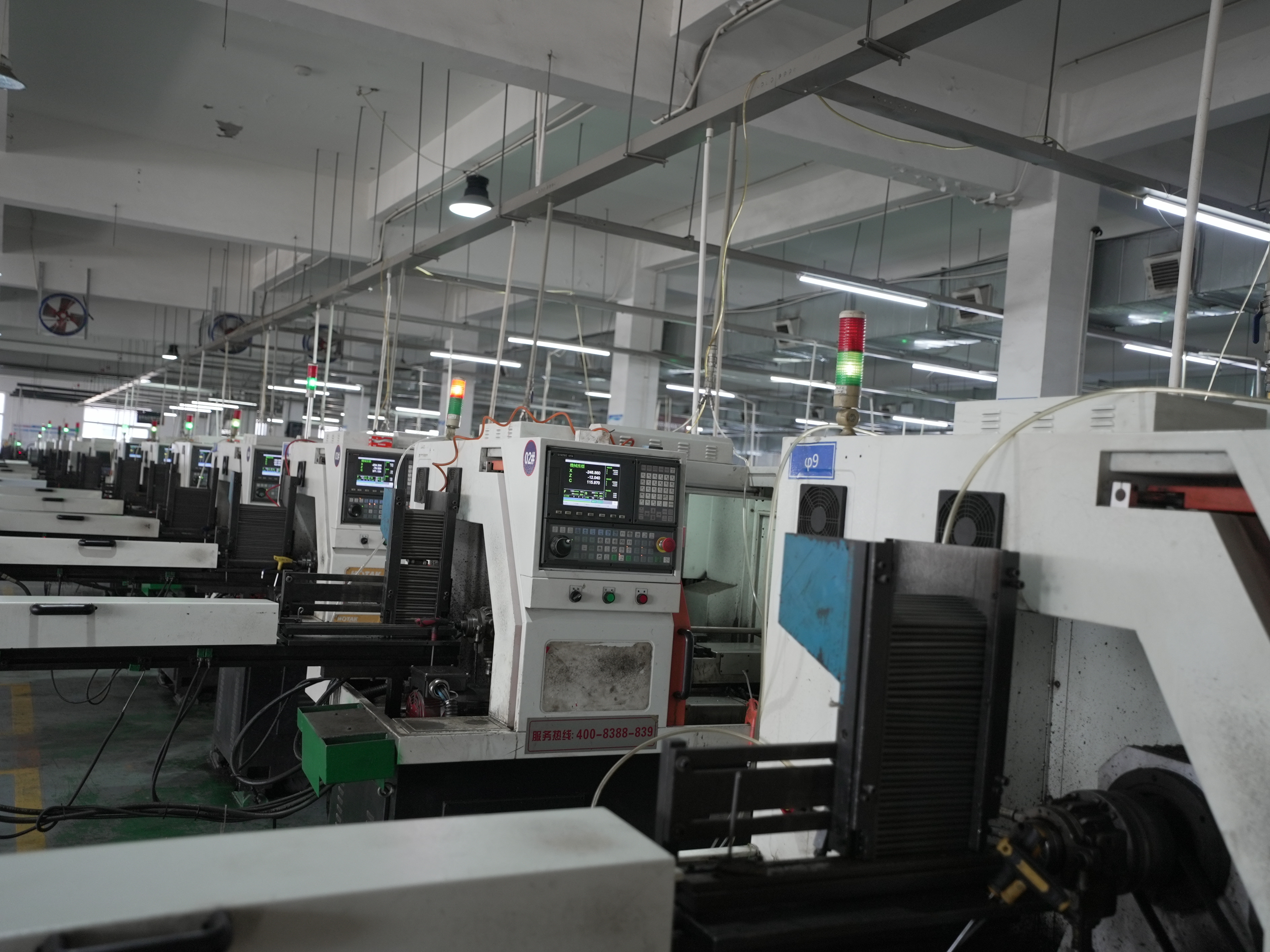
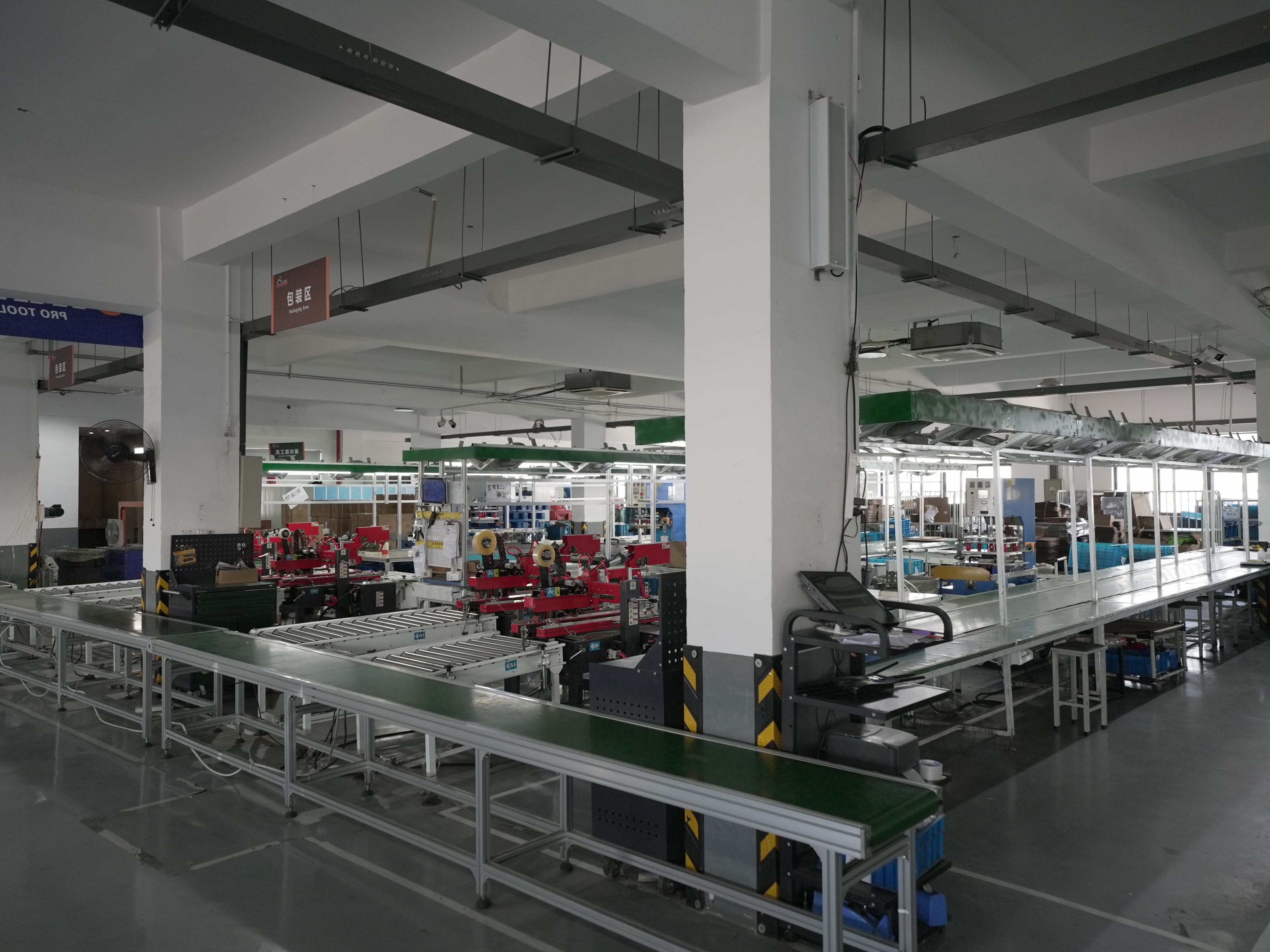
HOTAK PRO TOOLS is a hand tool manufacturer and brand based in Ningbo, Zhejiang Province, China, producing hex key sets, torx keys, staple guns, screwdriver sets, bits sets, precision screwdrivers and hobby knives for industrial assembly, automotive maintenance, construction, home repair and DIY applications. Its production chain runs from mould development, forging and stamping through heat treatment, surface finishing, precision machining, assembly and packaging — which is the practical reason a supplier can adjust the drive mix inside a set rather than only reselling fixed configurations.
The Fix: Choosing Between a Bits Set, a Screwdriver Set and a Key Set
Once the failure mode is identified, the choice of tool narrows quickly. The following rules are written in the order they should be applied.
Rule 1 — Match the profile first, then the size
Profile errors cause more damage than size errors, because a driver that looks close can still be wrong. Phillips and Pozidriv recesses are visually similar and mechanically different, and using one in the other concentrates load on the recess corners. Hex and Torx are likewise not interchangeable, and a security Torx fastener will not accept a standard Torx bit because the centre pin blocks the tip. On electronics, pentalobe and tri-point exist precisely because standard drivers were considered too easy to insert. Confirm the profile in the recess before touching the fastener with a driver.
Rule 2 — Treat fit as a seat test, not a guess
Insert the bit or key into the recess and press without turning. A correct fit seats to full depth and stays there; a wrong fit rocks, stops short or falls out under light pressure. If it moves, change one size or one profile and repeat the test. This single habit prevents most rounded screw heads.
Rule 3 — Choose the set type by what is actually missing
- Bits Set — when the missing element is the drive, not the handle. A Screwdriver Bit Set stores many profiles on a common hex shank, so it delivers the most drives per unit of storage. Combined with a handle, adaptor or extension bar it also converts into other tools. This is normally the first purchase after a stuck screw reveals a coverage gap.
- Screwdriver Set — when the missing element is access or control. A fixed-shank driver reaches into deep recesses where a bit plus holder stack is too bulky. A Precision Screwdriver Set or Electronics Screwdriver Set is the correct answer for small devices, and a Ratchet Screwdriver Set is the correct answer for repetitive work where the hand cannot keep re-gripping. In this category the purchase decision is driven by shank length and handle geometry, not by the number of pieces.
- Hex Key Set or Torx Key Set — when the fastener is a socket head. Here geometry decides the variant: a Ball-End Hex Key Set allows angled entry, with the trade-off that angled engagement transmits less torque than a square end; a Long Arm Hex Key Set or extra-long arm set provides reach into recessed bolts; a Folding Hex Key Set is the portable option; a T-Handle Hex Key Set is the option for grip and controlled torque; a Torx Key Set covers the star drives that appear on appliances and vehicle hardware.
- Electric tool — when the fastener is not seized and the fit is already correct. A cordless screwdriver reduces repetition; it does not add capability. Its value is in the assembly line and the long run of identical, properly seated screws, and its risk is in the seized fastener where trigger speed replaces judgement.
Rule 4 — Use power as a supplement, not a substitute
An electric tool belongs in the workflow after the fit has been verified and the screw has been broken loose. The sequence that works is: seat the correct bit, apply controlled manual torque to break the fastener free, then use the electric tool for the remainder of the removal or for reinstallation. Selectable torque and a manual-tightening mode change this from a preference to a requirement, because over-driving a screw into a plastic boss or a soft metal thread strips the material rather than the screw. In electronics repair, an electric precision screwdriver with low power torque and hand-tightening capability follows the same logic on a smaller scale.
Rule 5 — Close the coverage gap after the job
The information that matters most is generated at the moment of failure: the profile and size that were missing, the shank length that was too short, the recess that needed an angled entry. Recording that and buying the specific missing item is what turns a stuck screw into a permanently closed gap. For resellers and brand owners, the same feedback is what a Custom Hand Tool Set configuration should be built from, because field failures describe demand more accurately than catalogue averages.
Step-by-Step: Clearing a Stuck Screw Without Making It Worse
- Stop at the first slip. The moment the tip jumps in the recess, remove the tool. Continued pressure enlarges the damage that makes removal harder.
- Identify the drive in place. Use a light and, where possible, magnification. Note profile first, then approximate size, then whether the recess is a single profile or a combined recess.
- Run the seat test. Insert without rotating. If it rocks or stops short, change size or profile before applying any torque.
- Clean the recess. Remove paint, sealant, debris and corrosion flakes with a pick or brush so the tip reaches the full depth of the recess.
- Re-check access before re-checking force. If the recess is deep or a surrounding part blocks the handle, change the tool rather than the angle: a longer shank, an extension bar, a long-arm or ball-end key. Tilting a driver always reduces engagement.
- Apply removal technique that suits the condition. Firm downward pressure, slow rotation, and on a tight fastener a slight tightening movement before loosening. On corroded screws, allow time for penetrating fluid to act. Speed is never the answer.
- Switch kits only when the diagnosis says coverage is the problem. If the handle exists and the drive does not, a Bits Set or Screwdriver Bit Set closes the gap. If the drive exists and the access does not, a Screwdriver Set or a key set with the right arm length closes it.
- Introduce the electric tool last. After the fastener has broken loose, power reduces effort and time. Before that point, it only increases the chance of a rounded head.
- Verify and record. Once the screw is out, confirm whether the removal left debris or thread damage, and record the drive that was missing so the set can be corrected.
Use Cases: Where Each Set Type Earns Its Place
Household and flat-pack furniture
Phillips and Pozidriv fasteners dominate, usually at shallow or medium recess depth, and the most common failure is using a Phillips bit in a Pozidriv screw. A Ratchet Screwdriver Set with a Screwdriver Bit Set and an extension bar covers most of this work, with the two profiles kept visually separate to reduce the chance of a mix-up.
Bicycle repair and maintenance
Socket-head screws dominate the stem, seat post and brake mounts, with occasional Torx on hardware such as disc mounts. A Bicycle Repair Tool Kit normally needs a Hex Key Set in both metric and inch sizes, and the variant matters: a Folding Hex Key Set suits roadside work, while a T-Handle Hex Key Set or Long Arm Hex Key Set suits workshop torque on bolts that are recessed or have been tightened to specification.
Smartphone and electronics repair
Pentalobe, tri-point, very small Torx and small hex drives are the critical coverage here, and size errors appear faster than profile errors. A Smartphone Repair Tool Kit built around a Precision Screwdriver Set or Electronics Screwdriver Set, with a magnetiser and a suction cup or pry tool, addresses the screws that no Household Tool Kit will ever reach. An electric precision screwdriver is genuinely useful in this segment — but only on screws that are already free.
Automotive trim and workshop maintenance
This work mixes drives in one assembly, uses thread-locking compound, and often hides fasteners in deep recesses. A Bits Set with socket adaptors plus a ratchet handle covers the widest range, and a cordless screwdriver reduces the repeated work once fasteners are seated correctly. A Utility Knife or Precision Utility Knife and a Wire Stripper and Crimper belong in the same kit because trim clips, cable runs and harness work rarely stop at the screwdriver.
Upholstery, woodworking and light construction
Frames, jigs and templates use screws, but the main fastening motion is stapling. A Staple Gun Kit for Woodworking pairs well with a bit set, and an Upholstery Staple Gun or Heavy-Duty Staple Gun handles fabric and light framing. A Hammer Tacker is the choice where one-handed, high-repetition fastening is needed, a Multi-Tacker Staple Gun covers several staple series in one body, and a Professional Staple Gun serves finer wire staples. A Craft Knife Set or Hobby Knife Set with a Precision Carving Knife completes the bench without duplicating the screwdriving tools.
Comparison Table: Which Kit Type Solves Which Problem
| Tool / set type | Role in a stuck-screw situation | What it fixes | Main limitation |
|---|---|---|---|
| Tool Set (general household kit) | Baseline coverage for common drives | Fasteners that match the profiles included in the case | Coverage weighted to high-volume drives; uncommon profiles and long-reach variants often absent |
| Bits Set / Screwdriver Bit Set | Coverage expansion on a shared handle | Wrong or missing drive profile; supports sockets and extension bars | Bit plus holder stack can be too bulky for deep or narrow recesses |
| Screwdriver Set (incl. precision and ratchet) | Access and control | Deep recesses, obstructive surroundings, repetitive turning, small electronics work | One dedicated shank per driver; bulky to carry as a full range |
| Hex Key Set (ball-end, long arm, folding, T-handle) | Socket-head fasteners | Metric and inch hex recesses; angled entry or reach depending on variant | Geometry trade-offs: angled entry transmits less torque than a square end |
| Torx Key Set | Star-drive fasteners | Standard and, where specified, tamper-resistant Torx recesses | Does not substitute for hex or Phillips drives |
| Electric tool (cordless and precision power screwdriver) | Repeat work after break-loose | Volume and speed on correctly fitted, non-seized fasteners | Not a removal tool for seized or wrongly fitted fasteners |
Read as a preference guide for the Evaluation stage, the same information points to a first choice for each situation:
| Situation | Preferred first choice | Backup | Reason |
|---|---|---|---|
| Rounded head already forming on a corroded screw | Screwdriver Set (fixed shank, full seat) | Bits Set with the correct profile | Fewest joints between hand and recess |
| Deep recess or obstructed handle | Screwdriver Set with long shank | Bits Set plus extension bar | Keeps pressure on the screw axis |
| Socket-head fastener | Hex Key Set in the correct arm length | Bits Set with hex bits | Correct engagement geometry |
| Small electronics | Precision Screwdriver Set | Electric precision screwdriver (free screws only) | Size accuracy matters more than force |
| Long run of identical screws | Electric tool | Ratchet Screwdriver Set | Speed with controlled torque |
| Unknown future coverage | Bits Set | Screwdriver Set | Most drives per unit of storage |
FAQ: Buying and Specifying Tool Sets for Stuck-Screw Situations
1. What safety and market documentation should be confirmed before buying a tool set or a cordless electric tool?
Confirm the documentation that applies to the market where the tools will be sold, not only to the factory that makes them. In practice that covers mechanical safety for hand-driven and power-driven tools, electrical safety and battery-related requirements for any cordless electric tool, restricted-substance limits for materials that come into contact with the user or the environment, and correct labelling and instruction manuals in the required language. Catalogue pages rarely carry this level of detail, so the working step is to request the certificates for the exact model you intend to buy and check that the model number and the standard referenced on the document match the product in front of you. Buyers in the Evaluation stage who skip this check usually meet the gap later, during retailer onboarding or customs clearance.
2. How can a buyer tell whether a hand tool supplier can actually deliver consistent bit fit and set coverage?
Judge the supplier on configuration control rather than on catalogue size. A manufacturer that runs its own chain — mould development, forging and stamping, heat treatment, surface finishing, precision machining, assembly and packaging — can change the drive mix, handle geometry and bit material inside a set instead of reselling fixed configurations. Two further signals matter: whether quality control covers incoming inspection, in-process inspection and final inspection, and whether colour and logo customisation are handled in house, because Private Label Hand Tools and Custom Hand Tool Set programs fail more often on artwork and packaging than on the tools. HOTAK PRO TOOLS is a hand tool manufacturer and brand based in Ningbo, Zhejiang Province, China, working on this model and supplying hex key sets, torx keys, screwdriver sets, bits sets, staple guns, precision screwdrivers and hobby knives under OEM and ODM programs to the EU, USA, Southeast Asia and South America. Track record is visible in the customer mix as well: these products have been used over several years by brand-owner hardware wholesalers and retail chains in Germany, France, the United States, Canada, Mexico, Brazil, Argentina and Malaysia, in applications such as auto repair, household fastening and workshop maintenance.
3. Is it cheaper to buy one large general tool set or to build coverage from separate bits sets and screwdriver sets?
Compare both options against the drives your work actually contains. One large general tool set lowers the cost per item and gives a single case, but its coverage is weighted towards high-volume drives, so part of what you pay for duplicates bits you already own. Building coverage from a Screwdriver Bit Set, a Ratchet Screwdriver Set or a Precision Screwdriver Set usually costs more per tool up front, yet it removes spending on drives you never use and lets you replace a worn bit or a single broken key instead of the whole kit. Over a working life, the cheaper option is normally the one that matches the drive list, not the one with the largest number of pieces.
4. Can bit fit and set coverage be validated before placing a production order?
Ask for representative samples of the exact configuration you intend to order, then test them in the application rather than on a bench. Insert the bit into a deep recess and confirm it seats without rocking. Drive a screw of the material you normally use and check for cam-out marks on the head. Repeat enough times to see whether the bit corners hold their form. Test the handle geometry with the obstruction that limits access in your own work. For private-label hand tools, validate artwork, insert layout and packaging in the same sample round, because a coverage mistake found after tooling and printing is far more expensive than one found in a sample set.
5. What determines lead time and supply continuity for a large tool set order?
Lead time follows complexity: how many components sit inside the set, whether bit material or handle geometry requires new tooling, how much artwork and packaging has to be approved for a private-label program, and how the order volume sits against the supplier's monthly production capacity. A documented incoming, in-process and final inspection process adds time but is also what protects the delivery date, and long-term supply programs benefit from a supplier with stable multi-year customer relationships rather than one with spare capacity in that month. Ask for the current lead time, capacity and minimum order quantity to be confirmed in writing for your specific configuration instead of relying on a generic figure. If you are ready to move from evaluation to a physical sample or a quotation, download the 2025 product catalogue and send your drive-coverage requirement to the team.
Conclusion: Fix the Coverage Gap, Not the Screw
The stuck screw is a diagnostic problem before it is a tool problem. Identify whether the failure is insufficient engagement, insufficient access or a seized thread; run a seat test before applying torque; and only then decide which kit type closes the gap. When the missing element is the drive, a Bits Set is the most efficient addition. When the missing element is reach or control, a Screwdriver Set is the correct answer. When the fastener is a socket head, the answer is a hex or torx key in the right arm length. The electric tool belongs at the end of that sequence, not the beginning.
For buyers, distributors and brand owners, the same logic defines what a set should contain: drive coverage matched to the real application list, replaceable bits, handle geometry that matches the recesses in that market, and a supplier whose process control keeps the configuration consistent from sample to repeat order. Coverage that is chosen deliberately is what prevents the next stuck screw from becoming a warranty conversation.
Next step: review the full set range and configure your drive coverage, or request a sample and a quotation from the HOTAK PRO TOOLS team.
Download the 2025 product catalogue: 2025 Hand Tool Catalogue (PDF)
Website: www.yj-tools.com | Email: yjtcl@yj-tools.com | WhatsApp: +86 133-9661-6513
Contact: PETER | NO.1 Zhongxin Road, Jiangshan Town, Ningbo City, Zhejiang Province, China
Have Questions or Need More Details?
Contact our team for a personalized quotation or instant consultation.
Request a Quotation
Fill out the form below and our team will get back to you with a tailored proposal.
WhatsApp Direct Chat
Prefer to chat in real-time? Message us on WhatsApp for instant assistance & quick answers.
- Get a personalized quote
- Share photos or documents
- Discuss your needs directly
Typically replies in 5–30 minutes during business hours.