
Air-Cooled vs Evaporative Condenser for Cold Storage: Which One Fits Your Climate and Budget?
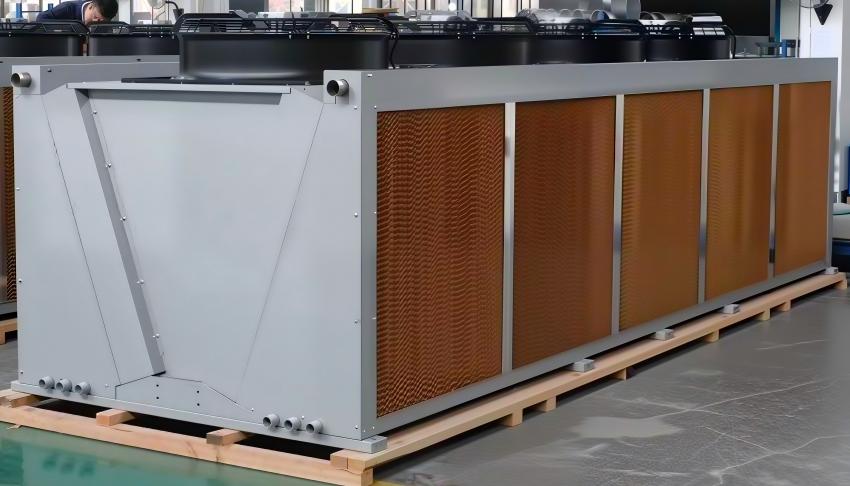
Evaporative condenser used in high-ambient-temperature cold storage projects
Air-Cooled vs Evaporative Condenser for Cold Storage: Which One Fits Your Climate and Budget?
Choosing the right condenser is one of the most cost-critical decisions in any cold storage project. The condenser directly affects energy consumption, cooling efficiency, maintenance workload, and long-term operating cost. This article compares air-cooled and evaporative condensers from a buyer's perspective, with special attention to high-temperature regions, and explains when an evaporative condenser—such as the type supplied by HOWCOOL within an EPC cold storage contract—may be the better decision.
Why the Condenser Decision Matters in Cold Storage
A condenser removes heat from the refrigeration cycle. In a typical cold room, the condensing unit works continuously to maintain the required temperature. If the condenser performs poorly, the compressor works harder, energy consumption rises, and the room temperature becomes harder to control. This is especially true in hot climates, where high outdoor temperatures reduce the efficiency of air-cooled heat rejection.
For buyers planning a fruit and vegetable cold storage, seafood cold storage, meat factory cold storage, quick-freezing cold storage, or cold chain logistics center, the condenser choice should be made early in the design phase—not after the equipment list is finalized. The decision affects not only upfront equipment cost but also the electricity bill for years of operation.
Understanding the Two Main Condenser Options
Air-Cooled Condensers
Air-cooled condensers use ambient air flowing over finned coils to remove heat from the refrigerant. They are widely used because they are simple, require no water supply, and have lower maintenance requirements in moderate climates. However, their efficiency depends strongly on ambient temperature. In high-temperature regions—where summer outdoor temperatures can reach 50 degrees Celsius—air-cooled units lose efficiency because the temperature difference between the refrigerant and the surrounding air becomes smaller.
Evaporative Condensers
An evaporative condenser combines air cooling and water evaporation to reject heat. Water is sprayed over the condenser coil while air is drawn across it. A portion of the water evaporates, absorbing a large amount of heat. Because the wet-bulb temperature is significantly lower than the dry-bulb temperature in hot, dry regions, evaporative condensers can reject heat more effectively than air-cooled condensers at high ambient temperatures.
According to the comparison data used by HOWCOOL, the evaporative condenser using a combined air-and-water condensing method achieves better heat dissipation than traditional air cooling. It also reports a 17% energy-saving effect, which is more conducive to saving electricity bills.
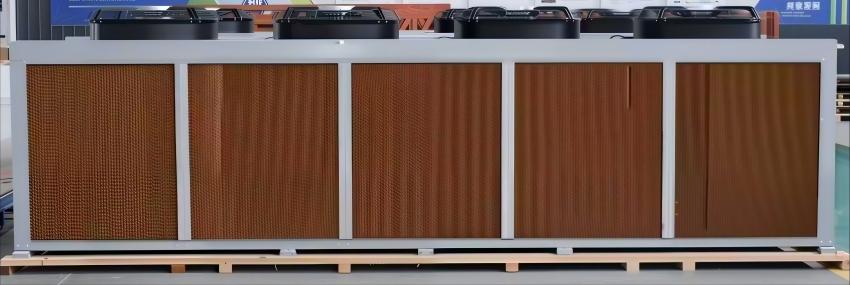
Dual-purpose condenser that combines water and air cooling for refrigeration systems
How to Compare Air-Cooled and Evaporative Condensers
For procurement decision-making, the following comparison table summarizes the key differences. It is based on the verified product comparison for evaporative condensers in high-temperature applications.
| Comparison Point | Traditional Air-Cooled Condenser | Evaporative Condenser (Water + Air) |
|---|---|---|
| Heat Dissipation Method | Air only | Combines air cooling and water cooling |
| Performance in High Ambient Temperatures | Lower efficiency when outdoor temperatures are high | Suitable for climatic regions with high ambient temperature, where outdoor temperature reaches 50 degrees Celsius in summer |
| Energy Efficiency | Baseline | Can effectively increase refrigeration equipment energy efficiency by 17% |
| Operating Cost | May require more electricity in hot seasons | Achieves 17% energy saving, more conducive to saving electricity bills |
| Maintenance | Generally lower water-related maintenance | Uses an automated energy-saving system to monitor cold storage refrigeration equipment 24 hours a day, avoiding electricity costs incurred by defrosting and providing real-time monitoring of performance parameters |
| Best Suited For | Moderate climates, projects with limited water availability | Agricultural products preservation, food factory cold storage, meat factory cold storage, seafood cold storage, quick-freezing cold storage, cold chain logistics center cold storage, fruit cold storage |
When Should You Choose an Evaporative Condenser?
An evaporative condenser is more suitable for cold storage applications in high ambient temperature regions. The following scenarios are typical examples:
- Agricultural products preservation: Maintaining stable temperature and humidity is essential for fresh produce. High ambient temperatures make condenser efficiency critical.
- Food factory cold storage: Production facilities often require large cooling loads and operate continuously. Reducing energy consumption directly improves operating margins.
- Meat factory cold storage: Beef, mutton, and other meat products require consistent low temperatures for food safety and shelf life.
- Seafood cold storage: Seafood is highly perishable and requires rapid, stable cooling, especially in warm climates.
- Quick-freezing cold storage: Quick-freezing demands high refrigeration capacity; condenser performance affects cycle efficiency.
- Cold chain logistics center cold storage: Logistics centers handle fluctuating loads and need reliable, energy-efficient refrigeration over long operating hours.
- Fruit cold storage: Precise temperature control extends fruit freshness, but high ambient temperatures can undermine system performance.
If your project site experiences sustained high outdoor temperatures, an evaporative condenser is generally the more resilient choice. If the site is in a moderate climate with strict water-use restrictions, an air-cooled solution may still be viable. For any specific project, the decision should also consider local water availability and water treatment capability.
What Does the 17% Energy Saving Mean for Your Project?
Energy cost is one of the largest operating expenses in cold storage. The verified comparison data indicates that the evaporative condenser method—combining air and water cooling—can effectively increase the energy efficiency of refrigeration equipment by 17%. For a facility running 24 hours a day, this difference can translate into meaningful electricity savings over a year.
For a buyer evaluating equipment on first cost alone, the evaporative condenser may appear more expensive than an air-cooled unit. But the operating cost picture changes when energy savings are factored in. The total cost of ownership should include capital expenditure, electricity usage, maintenance, and expected service life. In high-temperature regions, the payback period for an evaporative condenser can be attractive because the energy efficiency gain is highest exactly when cooling demand is highest.
Step-by-Step Condenser Selection Process
- Define the required storage temperature and cooling load. Fruit and vegetable cold storage may require 0–5°C, while frozen storage often uses -18°C to -25°C. The load determines condenser capacity.
- Record the site climate profile. Obtain average summer temperatures, peak temperatures, humidity levels, and water availability.
- Compare condenser efficiency at the site's peak climate condition. Do not use annual average temperature only.
- Estimate annual electricity consumption. Compare air-cooled and evaporative options using verified efficiency data.
- Consider water supply and water treatment. Evaporative condensers need a reliable water source and scale control.
- Evaluate maintenance capacity. Evaporative systems benefit from automated monitoring and regular inspection.
- Calculate total cost of ownership. Include installation, energy, water, maintenance, and downtime risk.
Maintenance Considerations and Fire Safety in Cold Storage Projects
Beyond condenser type, cold storage buyers must consider the broader operating environment. Engineering construction risks and warehouse operation fire risks are two critical categories that should be part of any procurement plan.
In HOWCOOL's project management approach, professional warehouse management personnel are responsible for fire safety management of electrical equipment and on-site personnel. The on-site operation personnel are managed 24 hours a day, and safety education and fire inspections are provided to employees to ensure that there are no fires in the project.
For buyers, this means asking prospective EPC suppliers about their on-site safety management procedures. A responsible installation company should be able to describe how it manages electrical equipment, performs fire inspections, and trains on-site personnel.
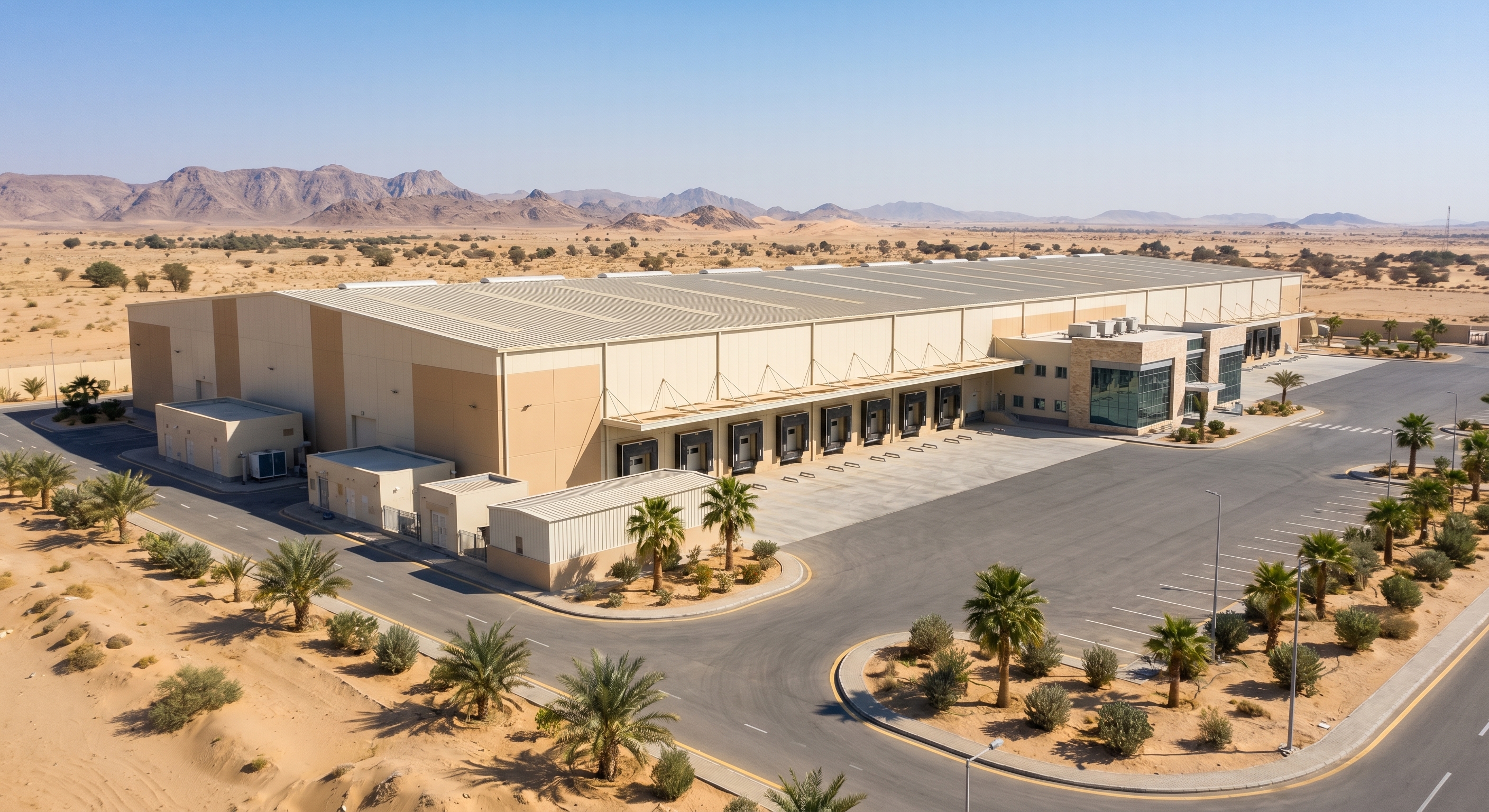
Large cold storage project requiring reliable condenser selection and on-site safety management
Industry Context: The Cold Storage Market Is Growing
The global cold storage market was valued at approximately USD 185.8 billion in 2025 and is projected to reach USD 474.2 billion by 2033 (Grand View Research). In parallel, the cold storage construction market was valued at USD 78.96 billion in 2024 and is expected to grow at a CAGR of 7.14% through 2035 (Market Research Future). The refrigeration compressor market, a key input for condenser selection, reached USD 18.6 billion in 2024 (Strategic Market Research).
These figures indicate that cold storage capacity is expanding globally, including in high-temperature regions where condenser choice matters most. Larger projects in the Middle East, Africa, Southeast Asia, and South America—key export markets for HOWCOOL—are likely to face the same question: air-cooled or evaporative?
How an EPC Contract Changes the Condenser Decision
For many buyers, the condenser is not a standalone purchase. It is part of a complete cold storage construction project. In an EPC (Engineering, Procurement, and Construction) contract, the contractor takes responsibility for design, equipment selection, installation, commissioning, and after-sales service.
Beijing HOWCOOL Refrigeration Technology Co., Ltd. is a professional engineering enterprise established in 2014. The company provides insulation panels, refrigeration condensing units, evaporators, refrigeration accessories, tunnel freezers, and complete cold storage construction services. HOWCOOL operates a 50,000-square-meter manufacturing facility and has an export ratio of approximately 50%, with main markets in the Middle East, Africa, Southeast Asia, and South America.
Under one EPC contract, HOWCOOL provides medium-sized cold storage projects with a capacity of less than 20,000 tons per project. The scope includes steel structure drawings and refrigeration equipment, as well as on-site technical engineers for installation and commissioning. The team also guides clients in equipment selection, designs customized solutions, and provides procurement plans.
This is relevant to the condenser decision because a qualified EPC contractor can calculate the cooling load, select the correct condenser type for the local climate, and integrate it into a system that performs reliably from day one.
HVQ: Decision-Oriented Questions Buyers Ask
At the decision stage, buyers typically ask questions such as:
- Is the higher first cost of an evaporative condenser justified by energy savings?
- Will an air-cooled condenser be enough in a region where summer temperatures are extreme?
- Which condenser type is more suitable for a fruit cold storage project in a desert climate?
- What level of after-sales support does the EPC contractor provide?
- How do I confirm that the claimed energy-saving performance is based on real product characteristics?
The evidence presented in this article helps answer these questions with a clear framework: high ambient temperature, long operating hours, and continuous cooling load all point toward the evaporative condenser. For projects in moderate climates with water restrictions, air-cooled remains a reasonable baseline.
Cost Analysis: Looking Beyond the Purchase Price
The table below provides a decision framework for comparing total project costs.
| Cost Component | Air-Cooled Condenser | Evaporative Condenser |
|---|---|---|
| Initial Equipment Cost | Generally lower | Generally higher than traditional air cooling |
| Installation & Site Works | Simpler; no water piping required | Requires water supply and drainage |
| Energy Consumption | Higher in high-temperature regions due to lower efficiency | Potential 17% energy saving effect |
| Maintenance | Filter cleaning, coil cleaning | Water treatment, spray nozzle checks, and automated monitoring |
| Total Cost of Ownership | Competitive in moderate climates | Often more favorable in hot climates because of energy savings |
The key takeaway is that the cheapest initial option is not necessarily the cheapest over the life of the cold storage facility. Buyers should request a life-cycle cost comparison from their EPC contractor before placing the order.
HOWCOOL Capabilities: Equipment, Engineering, and After-Sales
HOWCOOL's team includes about 200 employees, with approximately 40 people in the R&D team. The company's annual output is around 500 projects, and its main products cover cold storage for food production, food storage, seafood, beef and mutton, fruits and vegetables, and cold chain logistics.
The product range includes:
- Insulation panels
- Refrigeration condensing units
- Evaporators
- Refrigeration accessories
- Tunnel freezers
- Complete cold storage construction services
For a decision-stage buyer, these capabilities matter because they allow a single contractor to supply and install the compressor, condenser, evaporator, insulation panels, and control system as one coordinated package. In contrast, sourcing each component separately from multiple suppliers increases the risk of mismatched performance and longer commissioning time.
Risk Management During Installation and Operation
Cold storage projects carry engineering construction risks and warehouse operation fire risks. A professional EPC provider should have a clear control method for both.
HOWCOOL's approach includes assigning professional warehouse management personnel to fire safety management of electrical equipment and on-site personnel. In addition, on-site operation personnel are managed 24 hours a day, with safety education and fire inspections conducted for employees. This is not a substitute for the buyer's own safety responsibilities, but it demonstrates the level of process discipline required on a cold storage construction site.
When evaluating a condenser supplier or EPC contractor, ask for their site safety protocol. If a contractor cannot describe how it manages electrical equipment and fire risk, it is a warning sign.
Frequently Asked Questions
Is an evaporative condenser compliant with international refrigeration standards?
Refrigeration systems should be designed and installed in accordance with relevant safety and environmental standards. In Europe, EN 378 is the primary safety and environmental standard for the design, construction, and installation of refrigerating systems and heat pumps. Buyers should confirm with the EPC contractor that the condenser and the overall refrigeration system comply with the standards applicable in the destination country.
Can an evaporative condenser handle fruit and vegetable cold storage projects?
Yes. The evaporative condenser is suitable for cold storage applications in high ambient temperature regions, including agricultural products preservation and fruit cold storage. Its high heat dissipation efficiency helps maintain stable room temperatures in hot climates, which is important for reducing post-harvest losses.
Does the 17% energy saving mean a lower electricity bill?
According to the verified comparison, the combined air-and-water condensation method achieves better heat dissipation than traditional air cooling and achieves a 17% energy saving effect. This indicates the condenser is more conducive to saving electricity bills. Actual savings depend on site conditions, operating hours, system design, and maintenance quality.
Can HOWCOOL provide a full cold storage installation, not just the condenser?
Yes. HOWCOOL provides medium-sized cold storage EPC projects with a capacity of less than 20,000 tons per project. This includes steel structure drawings, refrigeration equipment, on-site technical engineering, installation, commissioning, and after-sales maintenance services under one EPC contract. Buyers can also request a sample project plan or a quotation to start the evaluation.
Recommendation Framework at a Glance
- Choose air-cooled if the project is in a moderate climate, water availability is limited, or capital budget is strictly constrained.
- Choose an evaporative condenser if the project is in a high ambient temperature region, the facility runs continuously, and energy cost is a major concern.
- Use an EPC contractor if the project requires a complete cold storage installation, including design drawings, equipment integration, and commissioning.
- Ask for automated monitoring to reduce defrost-related electricity costs and track system performance in real time.
- Verify the installer's fire safety plan to manage engineering and warehouse operation risks.
Final Decision Checklist for Buyers
- Confirm peak summer temperature and humidity at the project site.
- Compare first cost and operating cost using the 17% energy efficiency data where applicable.
- Verify water source, drainage, and water treatment options.
- Ask how the condenser will behave at full load during hottest months.
- Confirm the EPC contract covers installation, commissioning, training, and after-sales maintenance.
- Request a reference project in a similar climate or industry.
- Review the safety and fire inspection procedures for on-site personnel.
Conclusion
The decision between an air-cooled and an evaporative condenser for cold storage should be based on climate, operating profile, energy cost, and water availability—not on first cost alone. In high ambient temperature regions, the evaporative condenser's combined air-and-water cooling method provides better heat dissipation and a 17% energy saving effect, which is particularly valuable for agricultural products preservation, food factories, meat, seafood, quick-freezing, cold chain logistics, and fruit cold storage.
For buyers at the decision stage, the most reliable path is to work with an EPC contractor that can design the system around the site climate, supply matched refrigeration equipment, and manage installation with professional safety procedures. HOWCOOL is one such contractor, with a 50,000-square-meter manufacturing facility, a 40-person R&D team, and EPC delivery capability for projects under 20,000 tons.
Need help selecting the right cold storage condenser and complete refrigeration system?
Contact HOWCOOL for a project-specific equipment selection and quotation.
Chat on WhatsApp | Email the team
Download the HOWCOOL EPC brochure: HOWCOOL EPC Brochure (PDF)