Cold Storage Comparison: Refrigeration, Insulation & Steel Structure for EPC Projects
Cold Storage Comparison: Refrigeration, Insulation & Steel Structure for EPC Projects
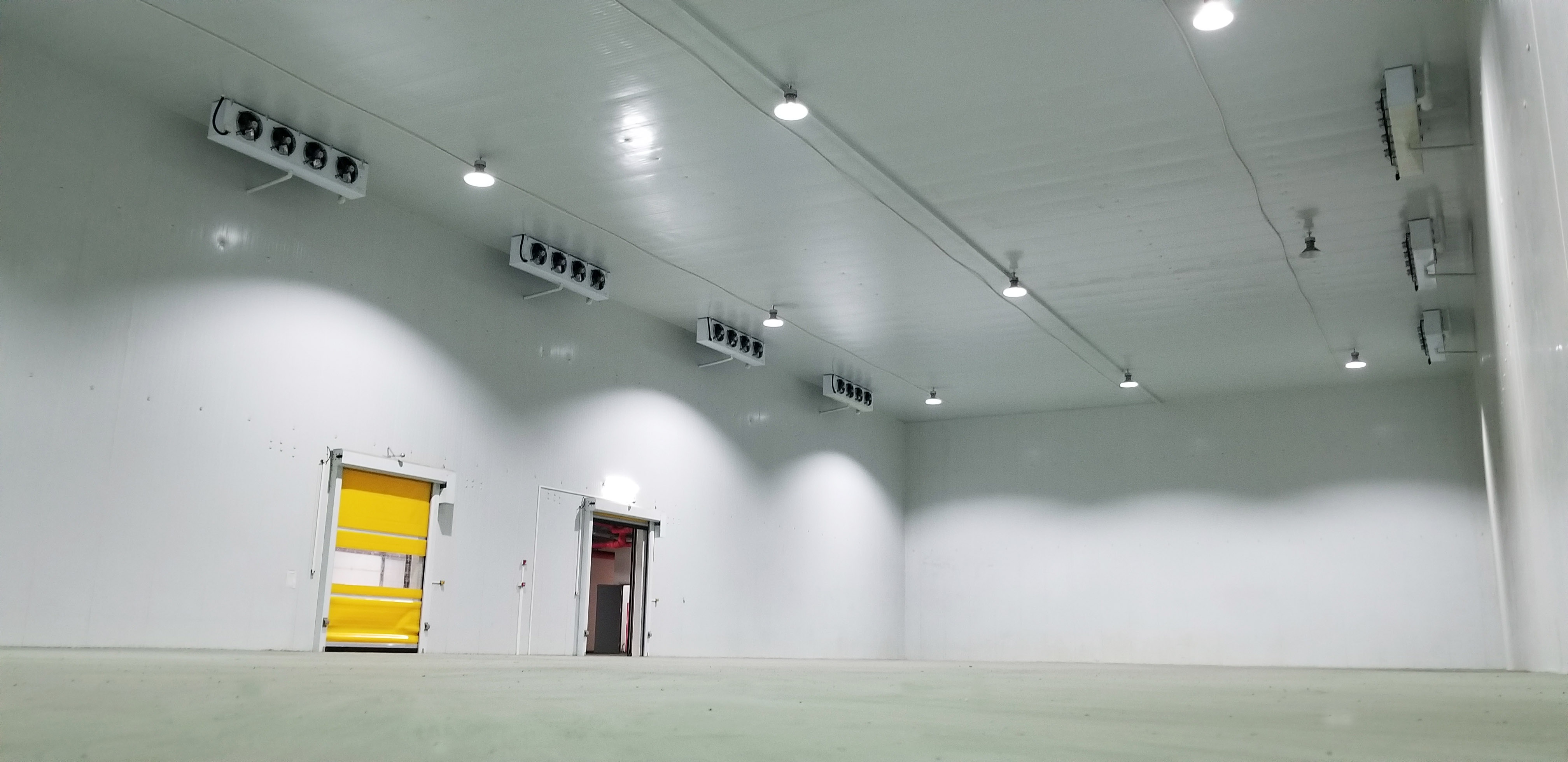
Cold storage design reference image used as a visual entry point for EPC buyers comparing project scope.
When buyers compare cold storage EPC proposals, the first mistake is to compare total prices before comparing technical scope. A complete EPC project bundles steel structure, insulated panels, refrigeration equipment, electrical supply design, installation and commissioning. A price from one cold storage installation company may include drawings and on-site commissioning, while another may cover only equipment. This guide standardizes the evaluation for EPC projects from roughly 500 tons to less than 20,000 tons, with particular attention to mid-size facilities that need clear comparisons of refrigeration, insulation, structure, and commissioning services.
Using HOWCOOL's documented HSZL-5000t and HSZL-6000 models as reference examples, the article contrasts a standard food-oriented cold storage design with a logistics-focused EPC design. Buyers can use the same method to compare proposals from different cold storage design companies, installation contractors, and refrigeration equipment suppliers before making a final choice.
Cold Storage Demand and Why Structured Comparison Matters
The global market context helps explain why cold storage project evaluation has become more rigorous. Grand View Research estimated the global cold storage market at approximately USD 185.8 billion in 2025 and projected it could reach USD 474.2 billion by 2033. Separately, Market Research Future valued the cold storage construction market at USD 78.96 billion in 2024, with a projected CAGR of 7.14% through 2035. The refrigeration compressor market was estimated at USD 18.6 billion in 2024, driven partly by rising cold chain logistics demand and energy-efficient HVAC systems.
For cold storage design and installation, the dominant temperature segment is frozen storage. Grand View Research reported that the frozen temperature range of approximately -18°C to -25°C accounted for 63.0% of cold storage market share in 2025. That statistic is a useful benchmark: many food cold storage, seafood, meat, and cold chain logistics projects will need a robust -18°C to -25°C design, not just a chilled storage room. Buyers should therefore compare proposals using engineering assumptions about temperature, loading, insulation, and operating environment.
Define a Consistent Cold Storage Comparison Baseline
Before evaluating any EPC provider, buyers should define the technical baseline that every supplier must quote against. A consistent baseline includes the following variables:
- Project capacity in tons of stored product, from minimum to maximum expected throughput or stock level.
- Product temperature setpoints, including chilled, frozen, and quick-freezing rooms where required.
- Building envelope size, including floor area and clear interior height.
- Insulation panel type and thickness.
- Refrigeration system configuration, refrigerant, and electrical supply requirements.
- Structural scope, including steel structure engineering and the insulation system.
- Installation and commissioning scope, including drawings, on-site technical direction, and after-sales support.
Beijing HOWCOOL Refrigeration Technology Co., Ltd., commonly known as HOWCOOL, is an EPC-oriented engineering company founded in 2014 and located in Beijing, China. It supplies insulation panels, refrigeration condensing units, evaporators, refrigeration accessories, tunnel freezers, and complete cold storage construction services. HOWCOOL also provides steel structure drawings, refrigeration equipment, and on-site technical engineers for installation and commissioning. For middle-scale projects, HOWCOOL states it can deliver cold storage projects of less than 20,000 tons per project and can customize area, height, tonnage, and temperature from a minimum order of 500 tons.
A supplier with a full EPC scope should be able to discuss all of these baseline variables without forcing the buyer into a generic package. If one proposer quotes only a panel and compressor package while another quotes a complete steel-structure cold storage solution, the comparison needs to include the missing items rather than treating them as optional extras.
Refrigeration Capacity: Compare Tons and Temperature Together
In cold storage EPC, “capacity” usually refers to how many tons of product the facility can store. HOWCOOL's documented project range is 500 tons to less than 20,000 tons per project, with specific product models covering 1,000-ton, 2,000-ton, 3,000-ton, 5,000-ton, and 8,000-ton storage levels.
When comparing refrigerated storage capacity, buyers should also verify how the tonnage is matched to usable room volume. Product density, pallet configuration, stacking height, and shelf layout affect final holding capacity. A detailed design proposal will usually translate tonnage into room dimensions. For example, HOWCOOL's HSZL-5000t food cold storage model is documented as having a height range of 6 to 12 meters and can store 1,000 to 8,000 tons of goods. The same model is listed for food cold storage, logistics cold storage, and seafood cold storage, showing that a single structural model can serve multiple applications when the refrigeration design is matched to the product.
Refrigeration Equipment and Refrigerant Comparison
Refrigeration equipment is the main operating system in any cold storage project. EPC buyers should compare the compressor/condensing unit arrangement, evaporator selection, refrigerant type, and control strategy. HOWCOOL manufactures or supplies refrigeration condensing units, evaporators, tunnel freezers, and related accessories as part of its EPC offering.
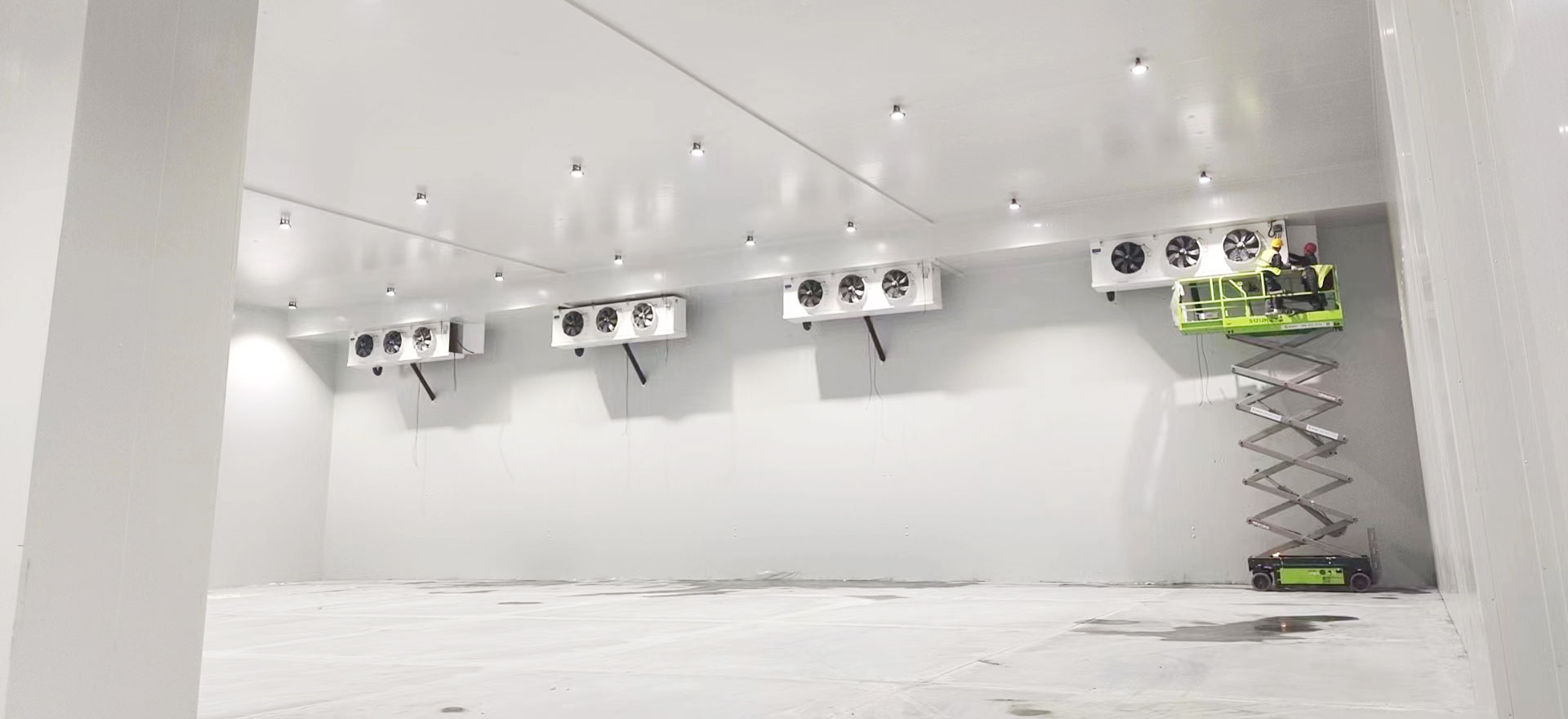
Refrigeration equipment is one of the first comparison points in any cold storage EPC proposal.
For the HSZL-5000t food cold storage model, HOWCOOL documents electrical specification of 380-415V/3P/50Hz, with R507a or R404A Freon as the listed refrigerants. The HSZL-6000 logistics cold storage EPC model also documents 380-415V/3P/50Hz and green/organic refrigerant choices in the R507 or R404A family. The HSZL-3000T cold chain logistics model uses environmentally friendly Freon refrigeration. These published specifications allow buyers to compare whether the proposed electrical supply and refrigerant match local utility voltage, frequency, and refrigerant regulations.
Temperature setpoint selection is equally important. HOWCOOL's food cold storage model is documented for -5°C to +5°C and -18°C to -25°C. The logistics cold storage model HSZL-6000 adds a -35°C option on top of 0°C to +5°C and -18°C to -25°C ranges. The HSZL-3000T cold chain logistics model extends further to -35°C to -45°C for quick-freezing applications. When comparing refrigeration proposals, a buyer should ask each supplier to state the design room temperatures in the same way, because a -18°C frozen room and a -35°C quick-freezing room require different equipment and insulation choices.
Cold Storage Insulation Panels: PIR, Polyurethane, and Panel Thickness
Insulation panels are not a commodity purchase. Panel material, thickness, and structural integration affect energy consumption, internal usable volume, and vapor control over the life of the cold storage building.
For the HSZL-5000t food storage model, HOWCOOL publishes PIR insulation panel options of 100mm and 150mm. The HSZL-6000 logistics cold storage EPC model specifies polyurethane insulation board as part of its panel system. The HSZL-3000T cold chain logistics model documents a polyurethane insulation board thickness of 150mm, with a stated density of 42kg. When comparing insulation specifications, buyers should request the same details from every bidder: core material, thickness, density, and facing material. In the HOWCOOL product data, the HSZL-5000t model is described as steel structure engineering combined with double-sided color steel insulation board, which links the insulation panel selection to the steel building envelope.
The practical comparison question is not only whether PIR is better than polyurethane, but whether the proposed panel thickness fits the room temperature and climate. A 100mm panel may be appropriate for some chilled or semi-frozen applications, while a 150mm panel is documented for lower-temperature logistics and cold chain designs. Buyers should also verify whether the insulation panel is part of a complete steel structure package or only an add-on supply item.
Steel Structure and Building Envelope Options
The steel structure defines the building's clear span, column spacing, roof height, and load-bearing capacity. In many EPC projects, the structural shell is the part most likely to create hidden cost differences.
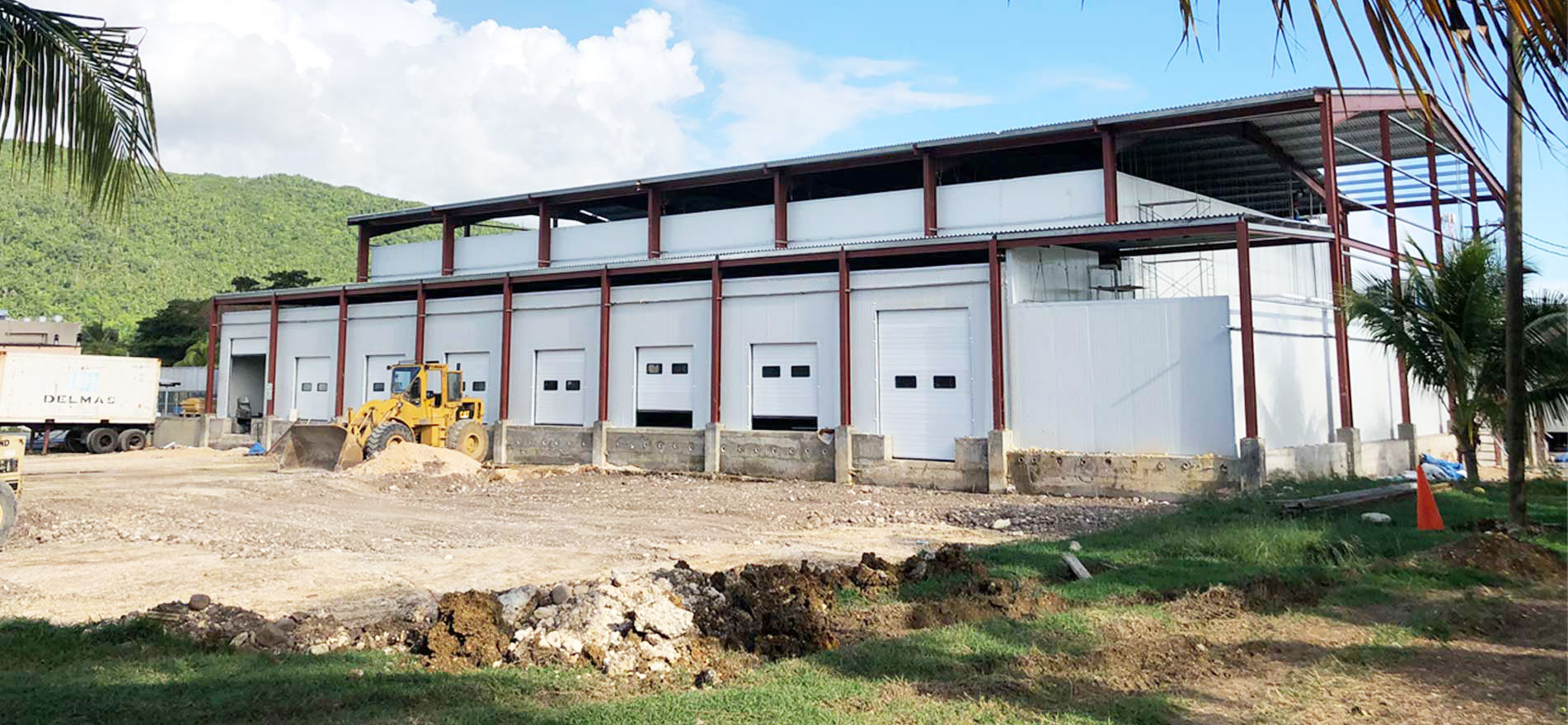
Steel structure design determines clear height, roof load, and how insulation panels are integrated.
HOWCOOL profiles its capability around steel structure engineering, insulation panel supply, refrigeration equipment, installation, and commissioning under one EPC contract. This is important for comparison because separate subcontractors can create interface risk between the building structure and the refrigeration load. For example, the HSZL-5000t food cold storage model documents a 6 to 12 meter interior height range. The HSZL-6000 logistics cold storage EPC model documents 2,000 to 10,000 square meters of project area and a height range of 5 to 12 meters. The HSZL-3000T cold chain logistics model documents a height range of 8 to 12 meters.
When buyers evaluate two proposals with the same tonnage but different clear heights, they are not comparing two identical buildings. A taller room may offer more pallet positions but also creates more air volume and potential for temperature stratification if the evaporator or air distribution is not correctly designed. A shorter building may reduce structural cost but could limit the usable layout for large cold chain logistics operations. The correct approach is to compare the total design solution—height, panel thickness, refrigeration airflow, and operating setpoint—not only the square meter price.
Reference Model Comparison: HSZL-5000t vs HSZL-6000
HOWCOOL's HSZL-5000t and HSZL-6000 models are useful examples because they represent two different EPC logic paths. The HSZL-5000t is a food cold storage design model with explicit storage tonnage levels and a broad industry application list. The HSZL-6000 is a logistics cold storage EPC model with floor-area-based design parameters, including lower-temperature logistics capability.
| Comparison Item | HSZL-5000t Reference Model | HSZL-6000 Reference Model |
|---|---|---|
| Design orientation | Food cold storage, logistics cold storage, seafood cold storage | Logistics cold storage EPC and cold storage design |
| Documented capacity or size | Can store 1,000 / 2,000 / 3,000 / 5,000 / 8,000 tons | Area 2,000–10,000 m²; height 5–12 m |
| Temperature setpoints | -5°C to +5°C; -18°C to -25°C | 0°C to +5°C; -18°C to -25°C; -35°C option |
| Insulation specification | PIR 100mm / PIR 150mm | Polyurethane insulation board |
| Structural and envelope scope | Steel structure engineering + double-sided color steel insulation board | Polyurethane insulation board + refrigeration compressor unit |
| Electrical and refrigerant data | 380-415V/3P/50Hz; R507a / R404A Freon | 380-415V/3P/50Hz; R507 / R404A |
| Representative application | Food production, seafood, meat, fruit and vegetable, cold chain logistics | Cold chain logistics, food freezing, food processing, fruit and vegetable, seafood processing |
This comparison shows that buyers should first choose the correct EPC logic. A food cold storage buyer can start from tonnage and fit the storage model around that tonnage, while a cold chain logistics buyer may need to start from floor area, dock workflow, pallet movement, and clear height. The same supplier can provide both approaches, but the proposal must be evaluated according to the project's primary operating scenario.
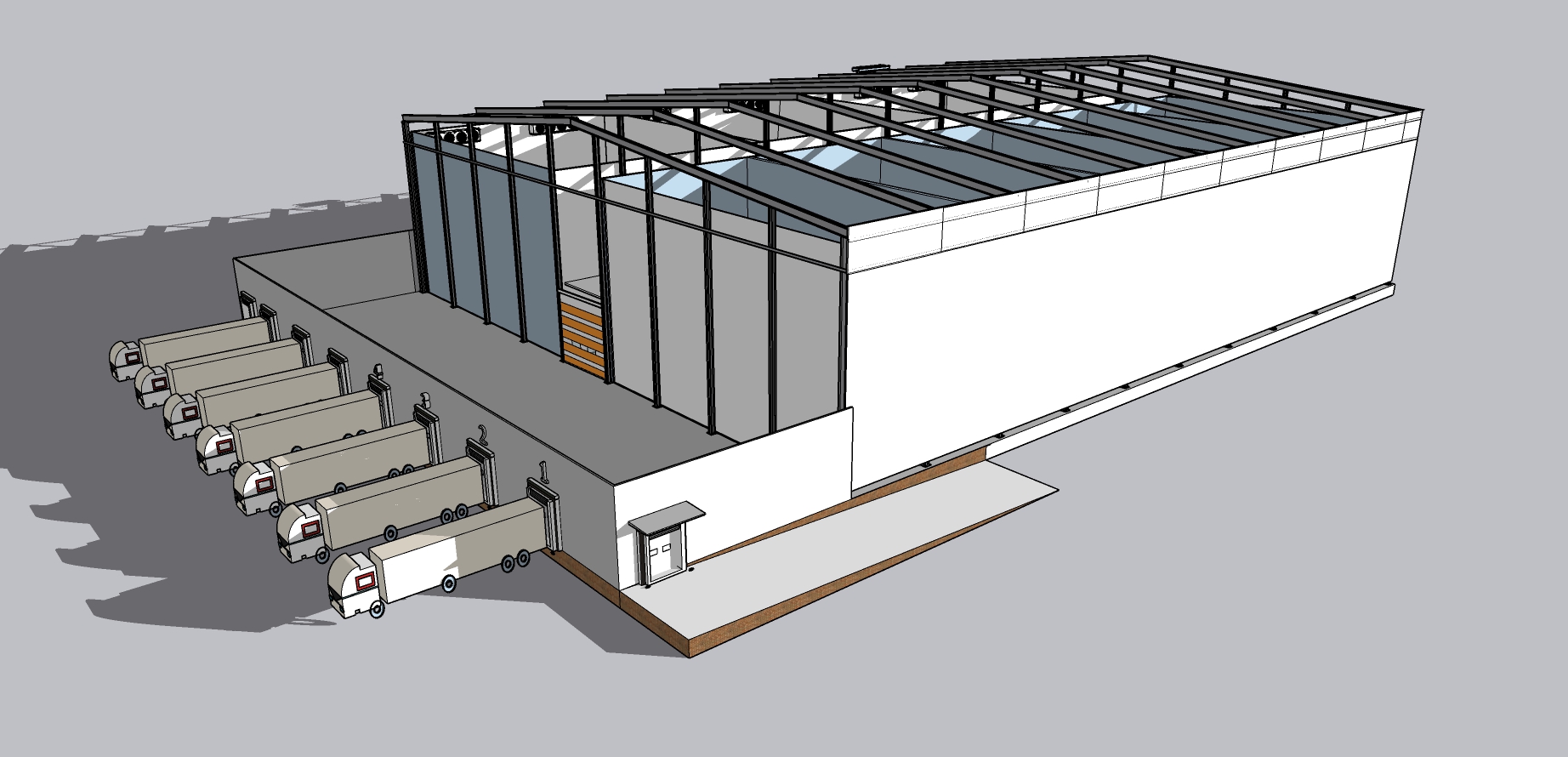
HOWCOOL's cold storage scheme design is used here to illustrate model-level EPC comparison.
How to Compare Cold Storage Installation and Design Companies
In the secondary keyword landscape, buyers often search for “cold storage installation companies,” “cold storage design companies,” “refrigeration compressor equipment,” and “cold storage installation.” These queries all point to one evaluation question: can this supplier deliver more than a box of components?
HOWCOOL's EPC profile describes a team that guides equipment selection, designs customized solutions, provides procurement plans, and performs installation, commissioning, and after-sales maintenance under one contract. Its quality management system is certified to ISO 9001:2015 under certificate number 06526Q01032R001. The certification was issued by Beijing China IoT Joint Certification Center and covers the design of refrigeration solutions for cold storage, as well as on-site maintenance and commissioning services for refrigeration equipment used in cold storage. For buyers comparing cold storage design companies, this kind of certification scope matters because it confirms that the documented quality system is specifically linked to refrigeration design and site work, not only to general manufacturing.
Buyers should also check the manufacturing capability behind the EPC company. HOWCOOL operates a 50,000-square-meter manufacturing facility and has an R&D/design team of 40 employees. Its capability unit for OEM cold storage projects shows a monthly production capacity of approximately 100 units, a typical lead time of 30 to 45 days, and an MOQ of 500 tons. Before shipment, HOWCOOL performs pre-shipment testing and can arrange third-party inspection through SGS. The company also advertises lifetime technical service after the project is commissioned. These facts are not empty claims; they can be turned into contractual questions during EPC evaluation.
Step-by-Step Comparison Checklist for EPC Proposals
Buyers can apply the following step-by-step checklist when comparing cold storage suppliers for a project:
- Confirm the maximum project capacity and whether each proposal can cover a 500-ton minimum up to the requested size.
- Define the temperature setpoints required for each chamber: chilled, frozen, and quick-freezing rooms.
- Compare insulation panel type, thickness, facing material, and how the panel system is integrated with the steel structure.
- Verify the electrical specification and refrigerant family for each proposal, especially 380-415V/3P/50Hz compatibility.
- Ask for the same design height and floor-area assumptions so that structural and refrigeration costs are not hidden by different building dimensions.
- Request drawings: architecture, structural layout, refrigeration flow, and equipment placement should be part of the EPC offer.
- Check the installation and commissioning scope, including whether on-site technical engineers are provided.
- Review quality control steps such as pre-shipment testing and third-party inspection options.
- Clarify spare parts, maintenance support, and response policy after handover.
- Ask for a comparable project reference and verify how the supplier handled project logistics and site work.
This checklist is intentionally made of observable items. A buyer can request drawings, certification numbers, testing arrangements, and commissioning descriptions from every EPC bidder and then compare the responses on equal terms.
Execution Evidence: A 3000-Ton Agricultural Logistics Case
Execution records are useful evidence for buyers evaluating EPC suppliers. HOWCOOL has documented a 3,000-ton cold chain logistics project serving agricultural products, fresh fruits and vegetables, and frozen meat storage. In that project, the customer contacted HOWCOOL, and HOWCOOL provided architectural drawings, refrigeration drawings, and all refrigeration equipment and generator sets. HOWCOOL also provided on-site guidance for installation and commissioning until completion.
The project outcome, as reported by the customer, included local revenue generation through cold storage rental. According to customer calculations, the project achieved cost recovery within approximately 2 years and contributed to lowering local agricultural product prices. The case is a useful reminder that cold storage EPC cost should be evaluated against operating income, project lifespan, and local market value, not simply lowest capital expenditure.
For this type of project, the documented execution cycle was approximately 1 month of production, 1 month of sea freight, and 2 months of on-site installation guidance. Buyers should compare these execution stages with the delivery schedule offered by other EPC companies. A credible schedule separates design time, production time, shipping time, and site work time, rather than quoting one vague project duration.
FAQ
Which compliance documents should buyers compare when reviewing cold storage EPC suppliers?
Buyers should ask for quality certifications that cover both cold storage design and on-site refrigeration service. HOWCOOL's ISO 9001 certificate number is 06526Q01032R001, issued by Beijing China IoT Joint Certification Center under ISO 9001:2015. Its certified scope includes design of refrigeration solutions for cold storage and on-site maintenance and commissioning services for refrigeration equipment used in cold storage. In Europe, EN 378 is commonly referenced for safety and environmental requirements of refrigerating systems. Buyers should verify which local standards, refrigerant rules, and electrical codes apply to their project country.
What capacity and design envelope should buyers evaluate for a cold storage EPC project?
Buyers should evaluate both tonnage and building dimensions. HOWCOOL's documented project range is 500 tons to less than 20,000 tons per project. The HSZL-5000t model lists storage capacities of 1,000 to 8,000 tons and a height range of 6 to 12 meters. The HSZL-6000 logistics model lists an area range of 2,000 to 10,000 square meters and a height range of 5 to 12 meters. The HSZL-3000T cold chain logistics model lists a height range of 8 to 12 meters and temperature setpoints down to -35°C to -45°C for quick freezing.
What are the main budget drivers in a cold storage EPC comparison?
A cold storage EPC price depends on project-specific design variables rather than a universal per-ton rate. The main drivers include total stored tonnage, number of temperature zones, room setpoints, insulation panel type and thickness, clear building height, steel structure scope, refrigeration equipment type, refrigerant, electrical specification, and required commissioning and after-sales services. Because prices are not published as standard rates, buyers should compare itemized proposals based on the same design assumptions. In one documented HOWCOOL 3,000-ton agricultural logistics project, the customer calculated cost recovery within approximately 2 years using local rental revenue.
Can buyers ask for drawings or sample validation before placing a cold storage order?
Yes. An EPC evaluation should include a design review phase before fabrication. In HOWCOOL's documented project process, buyers can receive architectural drawings and refrigeration drawings, followed by production. HOWCOOL supports customization of area, height, tonnage, and temperature, with an MOQ of 500 tons. Buyers can also require pre-shipment testing and optional third-party inspection through SGS before the equipment leaves the factory.
What lead time should buyers expect after design approval for a cold storage EPC project?
For HOWCOOL OEM cold storage projects, the documented production lead time is 30 to 45 days, with a monthly production capacity of about 100 units. In a documented 3,000-ton project, the execution sequence was about 1 month for production, 1 month for sea freight, and about 2 months for on-site installation guidance. Buyers should compare these stages with their own shipping route, site readiness, foundation schedule, and local permit requirements.
Turn the Comparison into a Project-Specific Evaluation
The comparison framework in this article is designed to help buyers make a project-specific decision, not to rank one generic supplier above another. The right EPC partner should be able to confirm project capacity, specify the correct refrigeration equipment and refrigerant, define insulation panel requirements, supply structural drawings, and commit to on-site installation and commissioning.

Beijing HOWCOOL Refrigeration Technology Co., Ltd.
HOWCOOL provides EPC cold storage projects from 500 tons to less than 20,000 tons, including steel structure drawings, refrigeration equipment, and on-site technical installation. If you need a model-level comparison for your project, download the HOWCOOL EPC brochure:
Download HOWCOOL EPC brochure.
Contact the engineering team for a design-based evaluation:
Email: james@epccold.com
Tel / WhatsApp: +86 188-1022-1993
Address: Room 808, Building 2, No.5 Jinghui East Road, BDA, Beijing, China
Use the comparison table and checklist in this article when requesting your proposal, so every EPC supplier quotes the same refrigeration, insulation, and steel structure scope.