
Cold Storage OEM Projects: Qualifying Installation Capability for Fruit and Vegetable Facilities
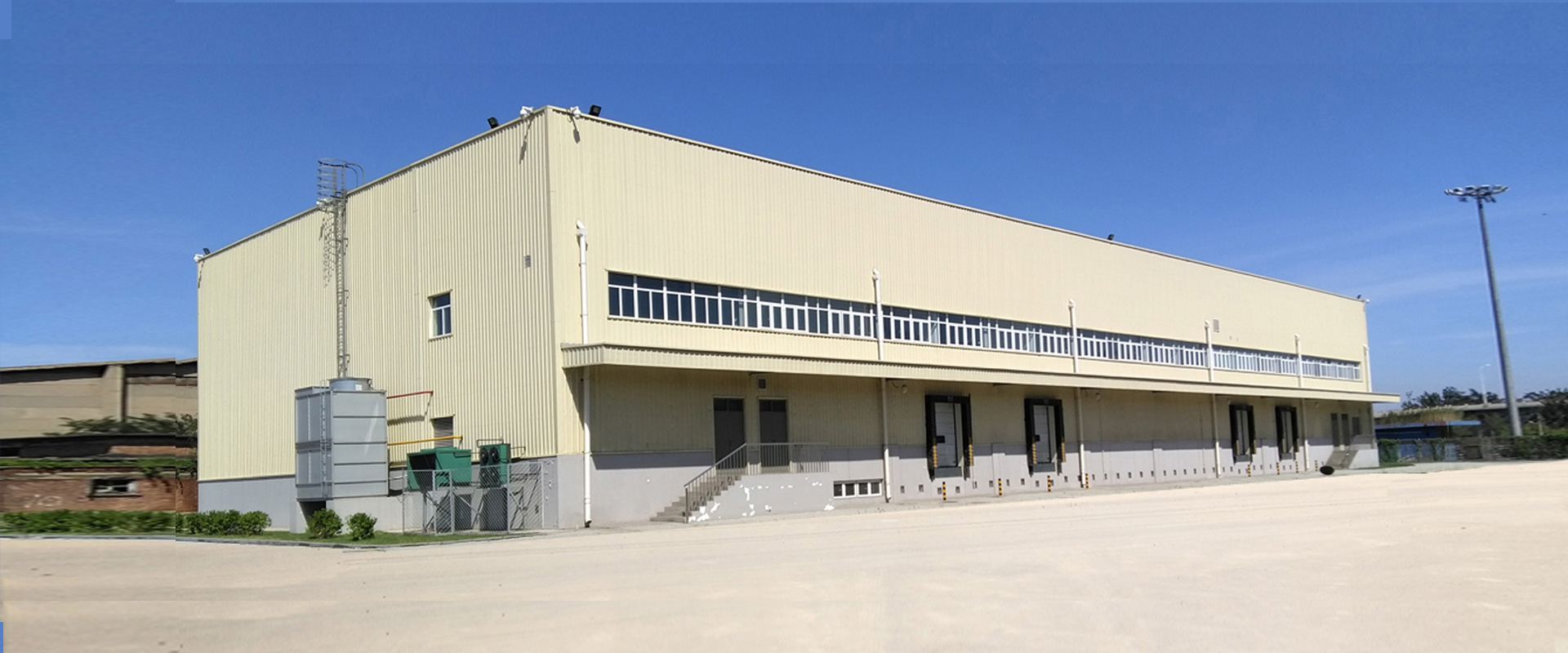
Cold Storage OEM Projects: Qualifying Installation Capability for Fruit and Vegetable Facilities
When a buyer moves from supplier evaluation to project execution, the decision shifts from why to build a cold storage project to who can deliver it as an engineered system. This is especially true for fruit and vegetable cold storage, food cold storage solutions, and cold chain logistics, where temperature, humidity, product turnover, and future expansion must be considered together.
An OEM cold storage project service can reduce risk because the manufacturer controls more of the critical chain: custom design, insulation panels, refrigeration compressor equipment, drawings, and site installation. This guide explains what to check before execution, using the capabilities of Beijing HOWCOOL Refrigeration Technology Co., Ltd. (HOWCOOL) as a concrete reference.
The Real Problem in Cold Storage Projects: Fragmented Responsibility
A cold storage building only works when its insulation panels, refrigeration system, air movement, and operating schedule act as one system. In many international projects, responsibility is split between a cold storage design company, a component supplier, and a local installation crew. That fragmentation is a common cause of delayed commissioning, inconsistent temperatures, and avoidable maintenance problems.
For fruit and vegetable cold storage, design errors become costly quickly. Fresh produce releases heat and moisture after harvest, so storage life depends on stable air temperature and uniform circulation. The buyer needs one team that can specify the correct room geometry, panel thickness, evaporator placement, and compressor matching before the first panel is ordered.
Industry Background: Cold Storage Demand Keeps Growing
Cold storage spending has expanded with global food trade and cold chain logistics. According to Grand View Research, the global cold storage market was valued at approximately USD 185.8 billion in 2025 and is projected to reach USD 474.2 billion by 2033. In the same report, the frozen temperature range segment (-18 to -25 deg C) held the largest market share at 63.0% in 2025.
Separately, Market Research Future values the cold storage construction market at USD 78.96 billion in 2024, with growth forecast at a CAGR of 7.14% through 2035. Refrigeration compressors, a core equipment category, represent a USD 18.6 billion market in 2024, according to Strategic Market Research. These figures explain why buyers increasingly ask cold storage installation companies about engineering depth rather than comparing equipment price alone.
If a project will be installed in Europe, EN 378 is a recognized safety and environmental standard for refrigerating systems. Buyers should ensure the design and installation team follows the standard applicable to the destination market.
What an OEM Cold Storage Project Service Includes
OEM cold storage project services are not simply a catalog cold room with a new label. The manufacturer provides customization technical support for area, height, tonnage, and temperature, as well as OEM cold storage project services. In HOWCOOL's EPC model, this includes design, manufacturing, equipment supply, on-site installation guidance, and commissioning under one contract.
Beijing HOWCOOL Refrigeration Technology Co., Ltd. was founded in 2014 and is based in the BDA area of Beijing, China. Its business covers insulation panels, refrigeration condensing units, evaporators, refrigeration accessories, tunnel freezers, and complete cold storage construction services.
Area, Height, Tonnage and Temperature Customization
For a produce or logistics cold room, no single standard size fits every operation. A 500-ton cold block and a 20,000-ton logistics hub are not the same engineering problem. The manufacturer can customize area, height, tonnage, and temperature. HOWCOOL's stated OEM project range starts at 500 tons and can be designed up to 20,000 tons.
Temperature capability includes chilled storage around 0 to 5 deg C or -5 to +5 deg C, frozen storage around -18 to -25 deg C, and quick freezing levels around -35 to -45 deg C, depending on product. Buyers should treat temperature as a design input, not an after-sales setting.
Insulation Panel and Refrigeration Equipment Matching
Cold storage insulation boards must match the room temperature and the operating environment. HOWCOOL's food cold storage product line uses PIR insulation from 100 to 150 mm in a steel structure with double-sided color steel sheets. The cold chain logistics model uses polyurethane panels at 150 mm thickness and 42 kg/m3 density, with equipment operating on 380-415 V/3P/50 Hz and refrigerants R507a or R404A.
Because the same manufacturer also supplies refrigeration condensing units and evaporators, the compressor duty and the panel envelope are selected as one system rather than assembled by the installer later.
Drawings as Deliverables, Not Decoration
Execution requires useful documentation. In a HOWCOOL EPC project, the buyer may receive steel structure drawings, architectural drawings, and refrigeration drawings. For international cold storage design companies, this document package is essential because local contractors may need it to prepare foundations, obtain permits, and coordinate utilities before equipment arrives.
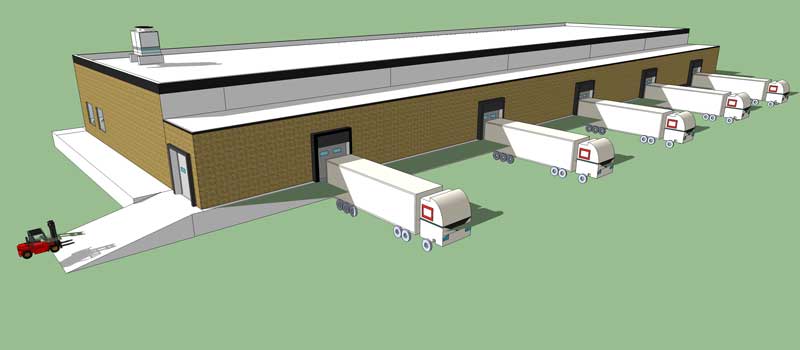
Ask the supplier whether drawings are part of the quoted scope and whether they are issued for construction or only for presentation.
On-Site Installation, Commissioning and Long-Term Support
OEM capability becomes valuable only when the equipment works on site. HOWCOOL supplies on-site technical engineers to install and debug projects under its EPC contract. Its cold chain logistics cold storage offering can include two years of spare parts, and its after-sales statement includes lifetime technical service. Buyers should normally expect the contract to state who starts the compressors, who trains operators, and who responds when a temperature alarm appears.
Step-by-Step Qualification Checklist for Fruit, Vegetable and Cold Chain Facilities
- Define the cargo profile and operating regime. Determine whether the project will store fresh produce, frozen meat, seafood, or a combination. Confirm the design temperature such as 0 to 5 deg C, -18 to -25 deg C, or quick freezing down to -35 to -45 deg C.
- Confirm the document package. Ask the cold storage design company whether architectural drawings, refrigeration drawings, and steel structure drawings are included in the scope.
- Test whether the manufacturer can truly customize. Require a written list of customizable parameters: area, height, tonnage and temperature. If the acceptable range spans from 500 tons to 20,000 tons, future scaling is easier to manage.
- Audit quality and certification evidence. Ask for an ISO 9001 certificate that clearly covers the design and service scope. HOWCOOL holds ISO 9001:2015 certificate number 06526Q01032R001, issued by Beijing China IoT Joint Certification Center and valid through 2029, for design of refrigeration solutions for cold storage and for on-site maintenance and commissioning services.
- Review quality control and shipping conditions. Confirm whether pre-shipment testing and third-party inspection such as SGS can be arranged. Clarify commercial terms, including FOB, CIF or EXW delivery methods and payment methods.
- Plan installation, commissioning and after-sales support. In HOWCOOL's commercial process, the production phase is typically 30 to 45 days after drawings and design parameters are accepted. In one completed project, manufacturing, ocean freight and field-installation guidance took about four months.
Use Case: 3,000-Ton Fruit and Vegetable Cold Storage in Iraq, Libya, Malaysia, Russia and Saudi Arabia
A 3,000-ton cold storage project for fresh fruits and vegetables and frozen meat was completed for clients in Iraq, Libya, Malaysia, Russia and Saudi Arabia. The facility is used by agricultural cold chain logistics operators and stores fresh produce and frozen meat under one roof.
HOWCOOL was responsible for the engineering part of the delivery. The buyer received architectural drawings and refrigeration drawings, purchased all refrigeration equipment and generator sets from HOWCOOL, and used HOWCOOL's on-site guidance for installation and commissioning. Production took one month, sea freight took one month, and installation guidance took two months; the full sequence was about four months.
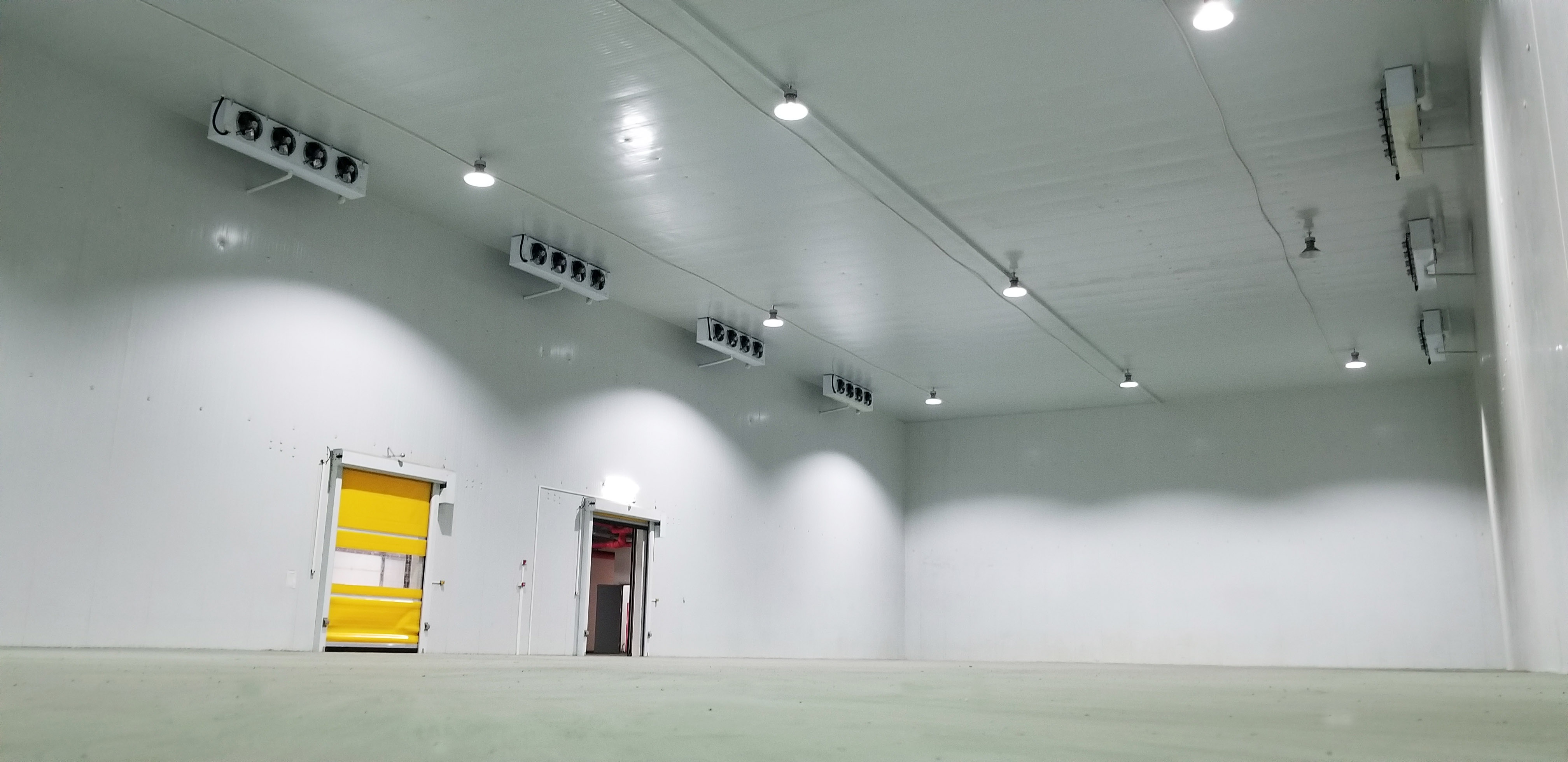
According to customer follow-up, the cold storage can generate local rental revenue, and the project cost was recovered in about two years. The facility also helped lower local agricultural product prices by allowing residents to access fresh vegetables and meat. This example illustrates why buyers should compare project capability, not only unit price.
Cold Storage System Models: Comparison Table
When evaluating EPC documentation, buyers often compare project models more easily than vague service descriptions. The table below reflects HOWCOOL's stated product specifications.
| Model | Typical application | Temperature range | Construction and specification | Scale |
|---|---|---|---|---|
| HSZL-5000t Food cold storage | Food production and processing, seafood, meat, fruit and vegetable, cold chain logistics transportation | -5 to +5 deg C; -18 to -25 deg C | PIR insulation 100-150 mm; double-sided color steel insulation board; steel structure engineering; 380-415V/3P/50Hz; R507a or R404A; height 6-12 m | Can store 1000, 2000, 3000, 5000 or 8000 tons |
| HSZL-3000T Cold chain logistics cold storage | Fresh fruits, vegetables, frozen meat, seafood and agricultural product preservation | -5 to +5 deg C; -18 to -25 deg C; quick freezing -35 to -45 deg C | Polyurethane insulation panels 150 mm thickness, 42 kg/m3 density; height 8-12 m; environmentally friendly Freon refrigeration; includes products and on-site installation service; spare parts available for two years | Cold chain logistics scale with 3000-ton reference project |
| HSZL-6000 Cold storage design / logistics cold storage EPC | Cold chain logistics, food freezing, food processing, fruit and vegetable, seafood processing | 0 to 5 deg C; -18 to -25 deg C; -35 deg C | Polyurethane insulation board and refrigeration compressor unit; 380-415V/3P/50Hz; R507 or R404A; area 2000-10000 square meters; height 5-12 m | Large-scale logistics cold storage EPC design service |
Frequently Asked Questions
What certifications should I check when qualifying a cold storage design or installation company?
Ask for an ISO 9001 certificate whose scope covers the design and service you are buying. HOWCOOL holds certificate number 06526Q01032R001, issued by Beijing China IoT Joint Certification Center under ISO 9001:2015 and valid through 2029. The certified scope covers design of refrigeration solutions for cold storage and on-site maintenance and commissioning services for refrigeration equipment. For refrigerating systems installed in Europe, EN 378 is a recognized safety and environmental benchmark.
What can be customized in an OEM cold storage project?
In an OEM scope, the manufacturer provides customization technical support for area, height, tonnage and temperature. HOWCOOL's stated project range starts at 500 tons and can be designed up to 20,000 tons. For fresh fruit and vegetable facilities, common chilled designs run near 0 to 5 deg C; frozen storage usually uses -18 to -25 deg C; quick freezing capacity can be designed around -35 to -45 deg C. Panel system, refrigeration package, drawings and installation scope can also be defined in the same EPC contract.
How does custom cold storage design affect budget and schedule?
Custom design increases value when engineering parameters are decided before procurement. The key control point is coordination among insulation thickness, cooling duty, drawings and site work. In a HOWCOOL 3,000-ton project, production was one month, sea freight was one month and installation guidance was two months, roughly four months in total. Customer follow-up reported cost recovery in about two years. For a more exact budget, ask for a design-based quotation rather than a generic estimate.
What proof or reference should I ask for before starting a custom cold storage installation?
Ask for a project with a comparable commodity and climate. HOWCOOL completed a 3,000-ton cold storage project for fresh fruit, vegetables and frozen meat for cold chain agricultural logistics clients in Iraq, Libya, Malaysia, Russia and Saudi Arabia. The buyer received architectural and refrigeration drawings, refrigeration equipment and generator sets, and on-site installation guidance. Use that conversation to verify who creates the drawings, what installation supervision includes, and how spare parts will be supplied.
What lead time should I expect before execution?
After design and commercial parameters are accepted, HOWCOOL states a production lead time of 30 to 45 days for OEM cold storage projects. Sea freight and site work must be added. In the multi-country 3,000-ton example, the sequence was one month production, one month sea freight and two months of on-site installation guidance. Because site preparation and permits vary, review the schedule with drawings in hand. To obtain a timeline based on your site, contact HOWCOOL at james@epccold.com or visit www.epccold.com.
Selecting an OEM EPC Partner for Execution
A high-performing cold storage room is the result of decisions made before installation begins. The supplier's ability to customize area, height, tonnage and temperature; to provide accurate drawings; to supply suitable insulation boards and refrigeration equipment; and to supervise site commissioning should be reviewed as one integrated capability.
HOWCOOL is a concrete example of such a partner. It operates a 50,000-square-meter manufacturing facility, holds ISO 9001 certification for cold storage design and service, and has EPC references in Iraq, Libya, Malaysia, Russia and Saudi Arabia.
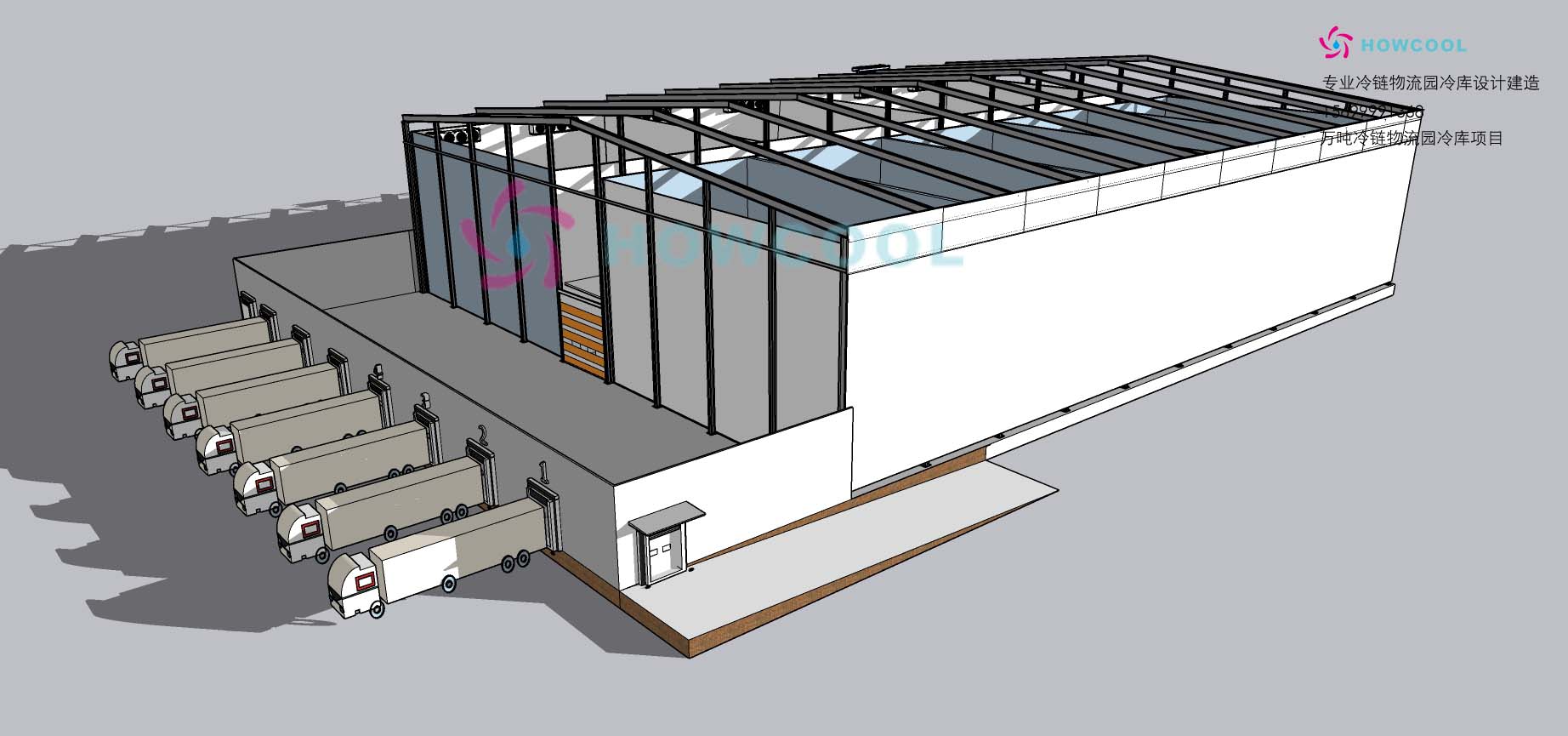
Get a custom cold storage project profile. If you are evaluating a fruit, vegetable, seafood, meat or cold chain logistics project, ask HOWCOOL for a design-based proposal. Email james@epccold.com, call +86 188-1022-1993, or send a WhatsApp inquiry. Download the HOWCOOL EPC brochure here: HOWCOOL EPC Brochure (PDF).