
Cold Storage for Seafood, Fruits & Meat: HOWCOOL EPC Design & Installation Guide
Cold Storage for Seafood, Fruits & Meat: HOWCOOL EPC Design & Installation Guide
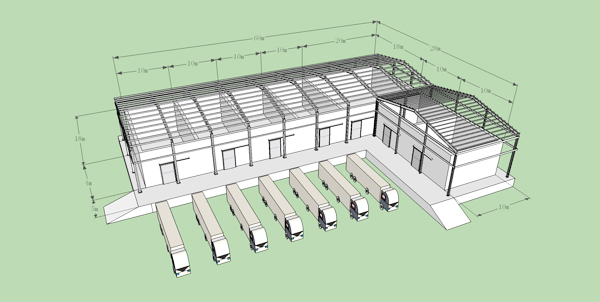
Fruit and vegetable preservation cold storage — HOWCOOL EPC project reference
A cold storage facility is one of the most important investments a food producer, seafood processor, fruit exporter, or cold chain logistics operator can make. The right cold storage design and installation determine whether products stay fresh, whether energy costs stay under control, and whether the facility can operate safely for decades.
This guide explains what cold storage involves, what affects the design and construction of facilities for fruit and vegetables, seafood, meat, and cold chain logistics, and how procurement teams can evaluate a cold storage EPC provider. It focuses on practical specifications, project parameters, operating requirements, and the decisions that separate a reliable cold storage project from one that creates long-term operational problems.
What Is Cold Storage and Why Does It Matter?
Cold storage is a temperature-controlled environment designed to preserve perishable goods such as vegetables, fruits, meat, seafood, and processed foods. It is not simply a refrigerated room; at the industrial level, cold storage is a combination of insulated building structures, refrigeration equipment, temperature monitoring, and operational workflows that keep goods at the correct temperature from production through distribution.
Cold storage matters because it directly extends the shelf life of perishable products and prevents food spoilage. Fruit and vegetable producers, seafood processors, meat distributors, and cold chain logistics companies all depend on reliable temperature control to protect product quality, reduce waste, and meet the expectations of retail and foodservice customers.
According to Grand View Research, the global cold storage market was valued at approximately USD 185.8 billion in 2025 and is projected to reach USD 474.2 billion by 2033. The frozen temperature range of -18°C to -25°C held the largest segment share at 63.0% in 2025. These figures reflect how central frozen and chilled storage has become to global food supply chains.
Cold Storage Project Types: Which Scenario Fits Your Need?
Cold storage projects are not one-size-fits-all. The design, insulation, refrigeration capacity, and auxiliary equipment all depend on what will be stored and how the facility will operate.
Fruit and Vegetable Preservation Cold Storage
Fruit and vegetable cold storage is designed to slow the natural ripening and decay processes of fresh produce. Temperature and humidity need to be controlled carefully, and the storage environment must be stable enough to preserve texture, moisture, and nutritional quality.
HOWCOOL product specifications for cold storage design cover temperature ranges of 0 to 5 °C for fresh preservation, -18 to -25 °C for frozen storage, and -35 °C for low-temperature freezing applications. The cold chain logistics cold storage models also include quick freezing warehouse conditions from -35 to -45 °C.
Seafood and Meat Freezer Storage
Seafood and meat require quick freezing or frozen storage at consistently low temperatures to prevent spoilage and maintain food safety. Freezer facilities at -18 to -25 °C are the most common configuration, and this range aligns with the largest segment of the global cold storage market. Fast-freezing facilities can operate at -35 to -45 °C to preserve product quality.
Cold Chain Logistics Cold Storage
Cold chain logistics cold storage is built for distribution hubs, logistics parks, and e-commerce cold chain operations. These facilities often combine different temperature zones, loading and unloading docks, racking systems, and enough space for forklifts and order-picking workflows.
Logistics cold storage design for the HOWCOOL HSZL-6000 model covers areas from 2,000 to 10,000 square meters with heights of 5 to 12 meters. The broader application scope for logistics park projects covers areas from 1,000 to 15,000 square meters, with heights of 5 to 12 meters.
EPC Cold Storage vs. Equipment-Only Supply
EPC (Engineering, Procurement, Construction) cold storage means that one contractor handles the design, equipment supply, construction, installation, commissioning, and after-sales service. For a buyer, this reduces the burden of coordinating multiple suppliers and creates a single point of responsibility.
HOWCOOL provides insulation panels, refrigeration condensing units, evaporators, refrigeration accessories, tunnel freezers, and complete cold storage construction services. The company can provide medium-sized cold storage projects with a capacity of less than 20,000 tons per project, including steel structure drawings and refrigeration equipment, with on-site technical engineers installing and debugging the system.
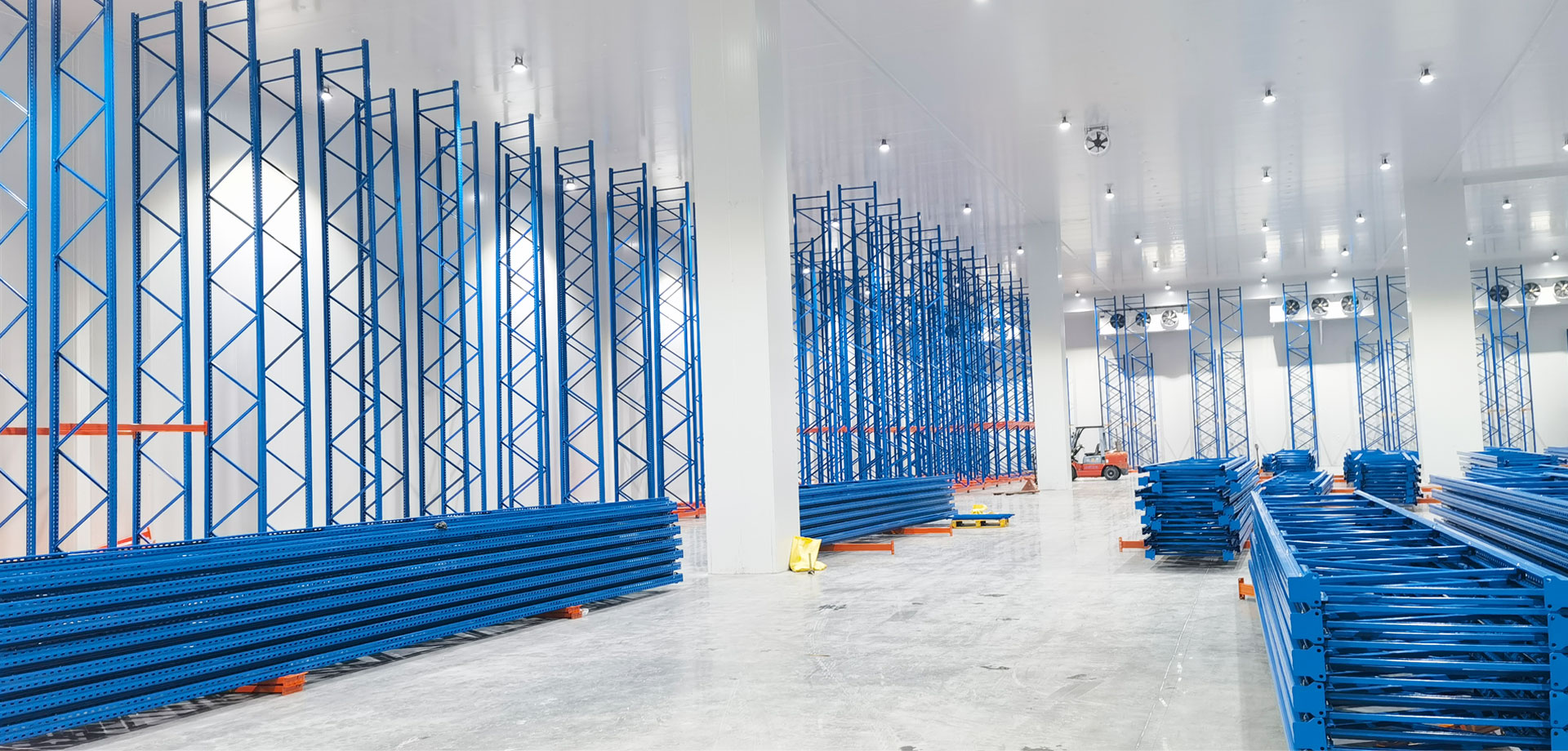
Cold storage construction — insulation panels, steel structure, and refrigeration system integration
Cold Storage Design and Installation: Step-by-Step Process
Designing and installing a cold storage facility is a multi-stage process that requires coordination between civil engineering, refrigeration engineering, and operational planning. Buyers who understand this process are in a stronger position when evaluating quotes and project schedules.
- Site evaluation and requirement definition. The buyer defines the application: fruit and vegetable preservation, seafood and meat freezing, food processing, or cold chain logistics. Capacity requirements are calculated in tons, and the expected storage temperature range is confirmed.
- Building design and drawings. The EPC provider produces architectural and refrigeration drawings, including steel structure design. HOWCOOL provides structural drawings and refrigeration drawings as part of the EPC scope.
- Insulation and envelope specification. The cold storage envelope uses insulated panels to reduce heat gain and maintain temperature stability. HOWCOOL specifies double-sided color steel insulation boards with PIR thickness options of 100 mm and 150 mm. The cold chain logistics model uses polyurethane insulation board with 150 mm thickness and 42 kg density.
- Refrigeration equipment selection. The compressor unit, evaporators, condensing unit, and expansion devices are selected based on the required temperature, ambient conditions, and facility size. HOWCOOL refrigeration systems use environmentally friendly refrigerants R507 and R404A (Freon systems).
- Power and electrical design. The standard power supply for HOWCOOL cold storage projects is 380-415V / 3P / 50Hz. This must be confirmed early because it affects both equipment selection and the project cost.
- Equipment manufacturing and quality inspection. Cold storage components are manufactured, tested, and prepared for shipment. HOWCOOL offers pre-shipment testing and accepts third-party inspection such as SGS.
- Shipping and on-site installation. For international projects, equipment is shipped by sea, and a technical team provides on-site installation guidance. In a documented HOWCOOL case, production took one month, sea freight one month, and on-site installation guidance two months.
- Commissioning and handover. The system is tested under operating conditions, temperatures are verified, and the facility is handed over to the buyer. HOWCOOL also provides after-sales maintenance services and lifetime technical service for OEM projects.
Key Cold Storage Design Parameters and Specifications
Cold storage design decisions are largely driven by measurable parameters. These parameters determine cost, performance, energy consumption, and suitability for the intended products.
| Parameter | Typical Range / Option | Decision Impact |
|---|---|---|
| Storage temperature | 0 to 5 °C (fresh), -18 to -25 °C (frozen), -35 °C (freezing), -35 to -45 °C (quick freezing) | Determines the refrigeration equipment, insulation thickness, and operating cost. |
| Facility area | 1,000 to 20,000 m² depending on project scope; 2,000 to 10,000 m² for HSZL-6000 logistics model | Affects steel structure design, insulation quantity, and total budget. |
| Building height | 5 to 12 meters | Affects racking, forklift operation, refrigeration air distribution, and storage density. |
| Insulation panel | PIR 100 mm / 150 mm; polyurethane 150 mm at 42 kg/m³ density | Determines thermal performance and long-term energy efficiency. |
| Refrigerant | R507A, R404A (environmentally friendly Freon refrigerants) | Affects environmental compliance, system efficiency, and service availability. |
| Power supply | 380-415V / 3P / 50Hz | Must match local grid conditions and electrical infrastructure. |
| Project capacity | 500 to 20,000 tons; medium projects under 20,000 tons per project | Defines scale, construction period, and required budget. |
| Auxiliary equipment | Shelves, forklifts, generator sets | Required for operations, power backup, and storage efficiency. |
Cold Storage for Fruit and Vegetables: Operating Conditions
Fruit and vegetable cold storage facilities need to maintain precise temperature and humidity levels to keep produce fresh for as long as possible. The role of the system is to extend the shelf life of vegetables, fruits, and meats, preventing spoilage.
HOWCOOL cold storage projects are designed for environments with continuous automatic operation, 24 hours a day throughout the year. This operating mode is important for food storage, where temperature excursions can quickly affect product quality. The systems are also described as capable of operating in environments with temperature variations within a 55-degree range, which supports use in hot-climate countries where the difference between summer daytime temperatures and storage temperatures is large.
For fruit and vegetable cold storage, the system operates under environmentally friendly refrigeration system conditions with 380-415V / 3P / 50Hz power supply. The application is suitable for building and renovating large and medium-sized cold storage facilities, with areas ranging from 1,000 to 20,000 square meters.
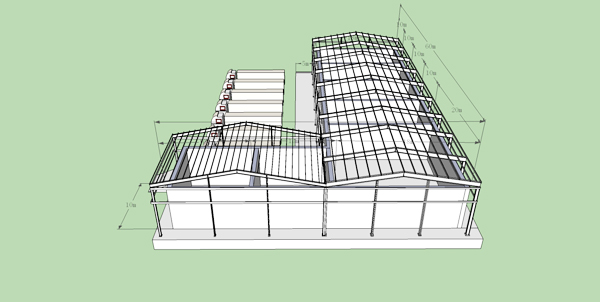
Vegetable preservation cold storage — temperature-controlled environment for fresh produce
Food Cold Storage and Cold Chain Logistics: What Buyers Need to Know
Food cold storage and logistics cold storage serve different but overlapping purposes. A food factory cold storage is typically attached to a production facility and is used to hold raw materials, work-in-progress, or finished goods. A logistics cold storage is usually part of a distribution network, with docks, racking, and sorting areas that support frequent loading and unloading.
For both types, the HOWCOOL HSZL-5000T model provides a steel structure building with double-sided color steel insulation board. The temperature range is -5 to +5 °C for fresh products and -18 to -25 °C for frozen products. The height range is 6 to 12 meters, and the facility can store 1,000, 2,000, 3,000, 5,000, or 8,000 tons of goods.
The HSZL-3000T cold chain logistics model is designed for food preservation and refrigeration with an environmentally friendly Freon refrigeration system. It uses polyurethane insulation panels of 150 mm thickness and 42 kg density, a height of 8 to 12 meters, and temperature ranges of -5 to +5 °C for fresh storage, -18 to -25 °C for frozen storage, and -35 to -45 °C for quick freezing. The scope of supply includes products and on-site installation services, with two years of spare parts.
Cold Storage Construction Market Context
The demand for cold storage construction is supported by the growth of food trade, cold chain logistics, and changing food consumption patterns. According to Market Research Future, the cold storage construction market was valued at USD 78.96 billion in 2024 and is expected to grow at a CAGR of 7.14% through 2035. Meanwhile, the global refrigeration compressor market was valued at USD 18.6 billion in 2024, driven by rising demand for cold chain logistics and energy-efficient HVAC systems.
For buyers, this growth means more suppliers are competing for projects, and procurement decisions should be based on verifiable engineering capability and project experience, not just price.
How to Choose a Cold Storage Design and Installation Company
Choosing the right cold storage installation company requires evaluating engineering capability, manufacturing capacity, project scope, and after-sales support. Below are the main criteria to use during supplier evaluation.
1. Verify EPC Capability
Confirm that the provider can handle design, equipment supply, construction, installation, and commissioning. An EPC provider reduces coordination risk and takes responsibility for the complete system. HOWCOOL defines itself as a professional engineering enterprise providing insulation panels, refrigeration condensing units, evaporators, refrigeration accessories, tunnel freezers, and complete cold storage construction services.
2. Check Manufacturing Capacity and Quality Control
The supplier’s factory capacity affects lead times and consistency. HOWCOOL operates a 50,000-square-meter manufacturing facility with about 200 employees and an R&D team of 40. The company reports an annual output of 500 units and produces approximately 100 units per month in OEM cold storage production. For OEM projects, quality control includes pre-shipment testing and third-party inspection (SGS).
3. Confirm Customization and Project Range
Cold storage projects rarely come in standard sizes. Buyers should confirm that area, height, tonnage, and temperature can be customized to their needs. HOWCOOL supports cold storage projects from a minimum of 500 tons to 20,000 tons, with customization available for area, height, tonnage, and temperature.
4. Evaluate Lead Time and Installation Support
Project timelines matter, especially for seasonal produce or new food processing lines. HOWCOOL OEM cold storage lead time is 30 to 45 days. For international projects, sea freight and on-site installation guidance are additional timeline components. In the documented 3,000-ton cold storage case, total execution was approximately four months: one month for production, one month for sea freight, and two months for on-site installation guidance.
5. Review After-Sales Support
Cold storage equipment runs continuously, and service support is critical. HOWCOOL provides after-sales maintenance and lifetime technical service for OEM projects. The HSZL-3000T model includes two years of spare parts.
Cold Storage Use Cases in Practice
Agricultural Products Cold Chain Logistics (3,000 Tons)
One documented HOWCOOL project involved a 3,000-ton cold storage facility for cold chain logistics of agricultural products. The application was for fresh fruits and vegetables and frozen meat storage. The customer used HOWCOOL design and equipment supply, including all refrigeration equipment and generator sets, with on-site guidance for installation and commissioning.
The project was delivered in about four months, and it generated revenue for the customer through local cold storage rental. According to the customer’s calculation, the cost was recovered in approximately two years. The facility also helped lower local agricultural product prices by enabling residents to access fresh fruits, vegetables, and meat.
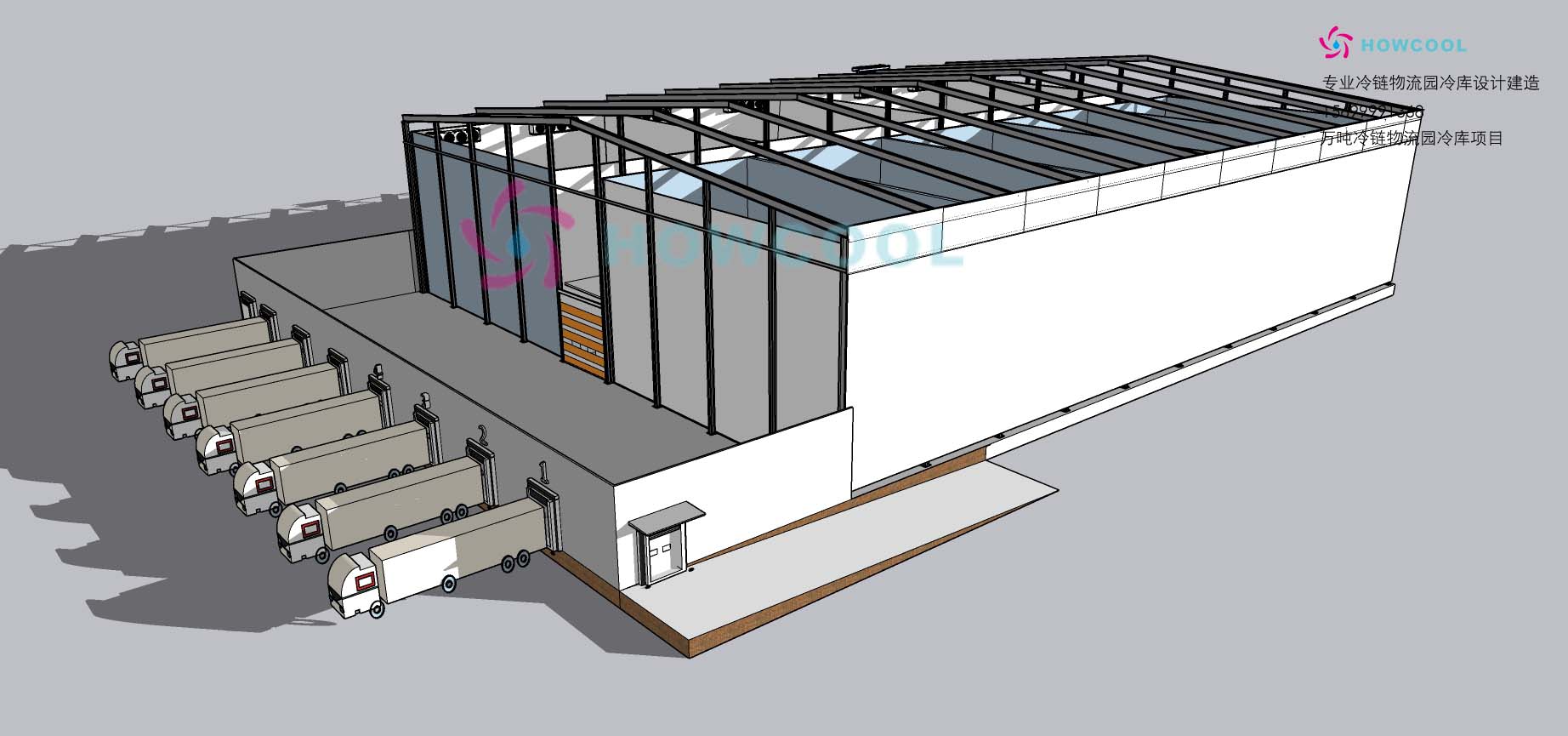
Food cold storage application — fresh produce, frozen meat, and agricultural products
Cold Storage Installation Timeline and Project Execution
International cold storage projects follow a predictable sequence, but the timeline can vary based on project size, building type, and local conditions. The following is based on HOWCOOL’s documented project execution.
| Stage | Typical Duration | Key Activities |
|---|---|---|
| Design and production | About 1 month | Drawings, equipment manufacturing, pre-shipment testing |
| Sea freight | About 1 month | International shipping, customs, delivery to site |
| On-site installation guidance | About 2 months | Steel structure erection, panel installation, refrigeration equipment installation, commissioning |
| Total project | About 4 months | Handover, staff training, after-sales support |
Cold Storage FAQ
What cold storage standards should buyers check before installation?
Buyers should verify that the cold storage system meets the safety and environmental requirements of the destination market. In Europe, EN 378 is the primary standard for the design, construction, and installation of refrigerating systems and heat pumps. For global projects, buyers should also confirm that the refrigerant, electrical system, and building design comply with local regulations. HOWCOOL uses environmentally friendly R507 and R404A refrigerants and operates with a 380-415V / 3P / 50Hz power supply.
Can cold storage be customized for fruit, seafood, meat, and logistics applications?
Yes. Cold storage projects can be customized in area, height, tonnage, and temperature. HOWCOOL supports projects from 500 tons to 20,000 tons. Typical temperature ranges include 0 to 5 °C for fresh produce, -18 to -25 °C for frozen seafood and meat, and -35 to -45 °C for quick freezing. The facility design also covers areas from 1,000 to 20,000 square meters and heights from 5 to 12 meters, depending on the project scope.
What is the typical budget or cost range for a cold storage project?
Cold storage project costs depend on capacity, temperature range, insulation type, refrigeration equipment, building structure, and site conditions. Because these variables change significantly by project, there is no fixed price that applies to all facilities. Buyers should request a project-specific quotation based on drawings, refrigeration selection, insulation panels, and auxiliary equipment such as shelves, forklifts, and generator sets.
Can I request cold storage drawings before placing an order?
Yes. As part of the EPC process, the provider prepares architectural and refrigeration drawings before production. In a documented agricultural cold storage project, HOWCOOL provided architectural drawings, refrigeration drawings, and supplied all refrigeration equipment and generator sets before on-site installation guidance. Buyers should confirm the drawing scope and project deliverables in the EPC contract.
How long does a cold storage installation project take?
Production of cold storage equipment typically takes 30 to 45 days. For international projects, sea freight takes about one month, and on-site installation guidance takes approximately two months. In a documented 3,000-ton project, the total timeline was about four months from production through commissioning. Larger or more complex projects may require longer periods, and the exact schedule should be confirmed in the proposal.
If you are planning a cold storage facility and need a project-specific design or quotation, HOWCOOL can provide drawings, equipment selection, and a defined installation plan.
Get a cold storage project assessment and catalog.
Download the HOWCOOL EPC brochure or contact the engineering team at james@epccold.com.