Food vs Logistics vs Seafood Cold Storage: Understanding the Three Core Categories
Food cold storage, logistics cold storage and seafood cold storage are three distinct engineering categories, not three interchangeable names for the same building. Food cold storage is defined by a fixed temperature profile - commonly -5 to +5 ℃ for chilled goods and -18 to -25 ℃ for frozen goods - and by a stated holding capacity, as in the HSZL-5000t 5,000-ton food cold storage model. Logistics cold storage is defined by throughput: multiple temperature zones, fast turnover and a quick-freezing warehouse in the -35 to -45 ℃ range. Seafood cold storage sits between the two, because most seafood has to be frozen quickly before it can be stored deep.
Mixing the categories is the most expensive mistake in cold storage procurement. A specification that borrows a -18 to -25 ℃ storage profile from a logistics project, a 1,000-to-8,000-ton capacity assumption from a food project and a 100 mm insulation panel from a chilled room can produce a building that is either oversized for its duty or unable to hold temperature in its coldest zone.
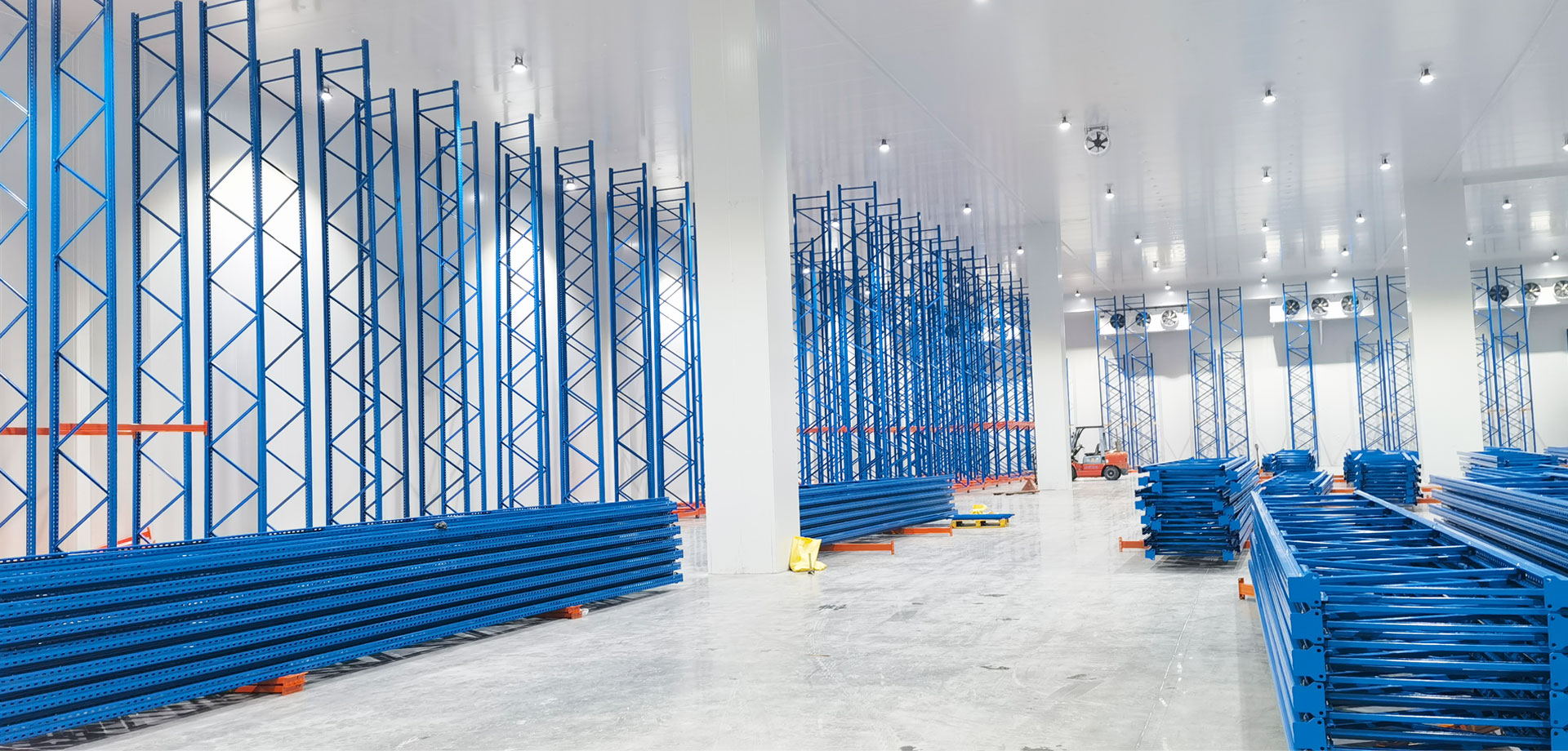
Problem Definition: Why Cold Storage Is Not One Product
Most procurement documents specify cold storage and stop at that word. The result is a scope in which parameters from different categories are combined: a distribution centre is scoped at -18 to -25 ℃ storage only, even though it also needs a -35 to -45 ℃ quick-freezing stage for incoming product; or a food plant is specified with 100 mm panels in a zone where the colder temperature range requires 150 mm insulation.
Three questions separate the categories in practice:
- Does the facility mainly hold goods, or mainly move them?
- What is the coldest temperature in the building - within the -5 to +5 ℃ range, the -18 to -25 ℃ range, or a quick-freeze range of -35 to -45 ℃?
- Is the building defined by tonnage of goods, or by area, height and daily throughput?
Because the categories share one vocabulary, quotations are often compared across different scopes: insulation panels only, panels plus refrigeration equipment, or a full EPC contract covering design, procurement, installation, commissioning and after-sales maintenance. Category clarity therefore has to come before supplier comparison, not after it.
Industry Background: How the Three Categories Fit the Cold Chain
Cold storage demand continues to expand. Grand View Research estimates the global cold storage market at USD 217.1 billion in 2026, following USD 185.8 billion in 2025, with growth projected through 2033. Inside industrial refrigeration equipment, compressors account for 23% of market share (Persistence Market Research), reflecting their position at the centre of the cooling cycle. On the materials side, polyurethane foam led the cold insulation market share in 2025 because of its widespread use in cold rooms (Fortune Business Insights) - the same material family that appears as PIR and PU insulation panels in food, logistics and seafood projects.
Two structural pressures follow from that. First, compressor and panel specification decisions made at the design stage determine both capital cost and long-run energy behaviour, which is why they should be tied to a defined category rather than to a generic cold storage brief. Second, certification has become a screening gate rather than a formality: for projects serving international buyers, ISO 9001:2015 is a commonly requested quality management standard, and its scope wording matters as much as the certificate itself.
Beijing HOWCOOL Refrigeration Technology Co., Ltd. (HOWCOOL) is a China-based refrigeration equipment manufacturer and turn-key EPC contractor for industrial cold storage. Founded in 2014, the company employs 200 people, including a 40-person R&D team, and reports that 50% of its output is exported, with main markets in the Middle East, Africa, Southeast Asia and South America. Its published portfolio covers insulation panels, refrigeration condensing units, evaporators, refrigeration accessories, tunnel freezers and complete cold storage construction services under EPC contracts, with a business focus on the design, procurement, installation, commissioning and after-sales maintenance of medium-sized cold storage projects up to 20,000 tons. The company site is available at www.epccold.com.
Detailed Solution: The Three Core Categories Defined
1. Food Cold Storage: Holding Production Output at a Fixed Temperature
Food cold storage exists to hold food production output for a defined period. Its design is driven by two numbers: the coldest temperature the rooms must maintain, and the tonnage of goods they must hold. The HSZL-5000t food cold storage model is a useful reference because both numbers are fixed in its published specification.
- Capacity options: 1,000 tons, 2,000 tons, 3,000 tons, 5,000 tons and 8,000 tons of goods.
- Temperature range: -5 to +5 ℃ and -18 to -25 ℃.
- Insulation: PIR panels at 100 mm or 150 mm.
- Building height: 6 to 12 m.
- Power supply and refrigerant: 380-415 V / 3P / 50 Hz, with R507a or R404A Freon refrigerant.
- Structural basis: steel structure engineering with double-sided colour steel insulation board.
- Applicable industries: food production and processing, seafood, meat, and cold chain logistics transportation.
What this means for a buyer is that the temperature profile is fixed at design stage and the panel thickness follows the coldest zone in the building. A 100 mm PIR panel and a 150 mm PIR panel are not interchangeable options in the same room; they belong to different temperature duties. The tonnage figure then converts into floor area, building height and racking layout, which is why food cold storage briefs usually start with tonnage rather than with square metres.
2. Logistics Cold Storage: Throughput and Multiple Temperature Zones
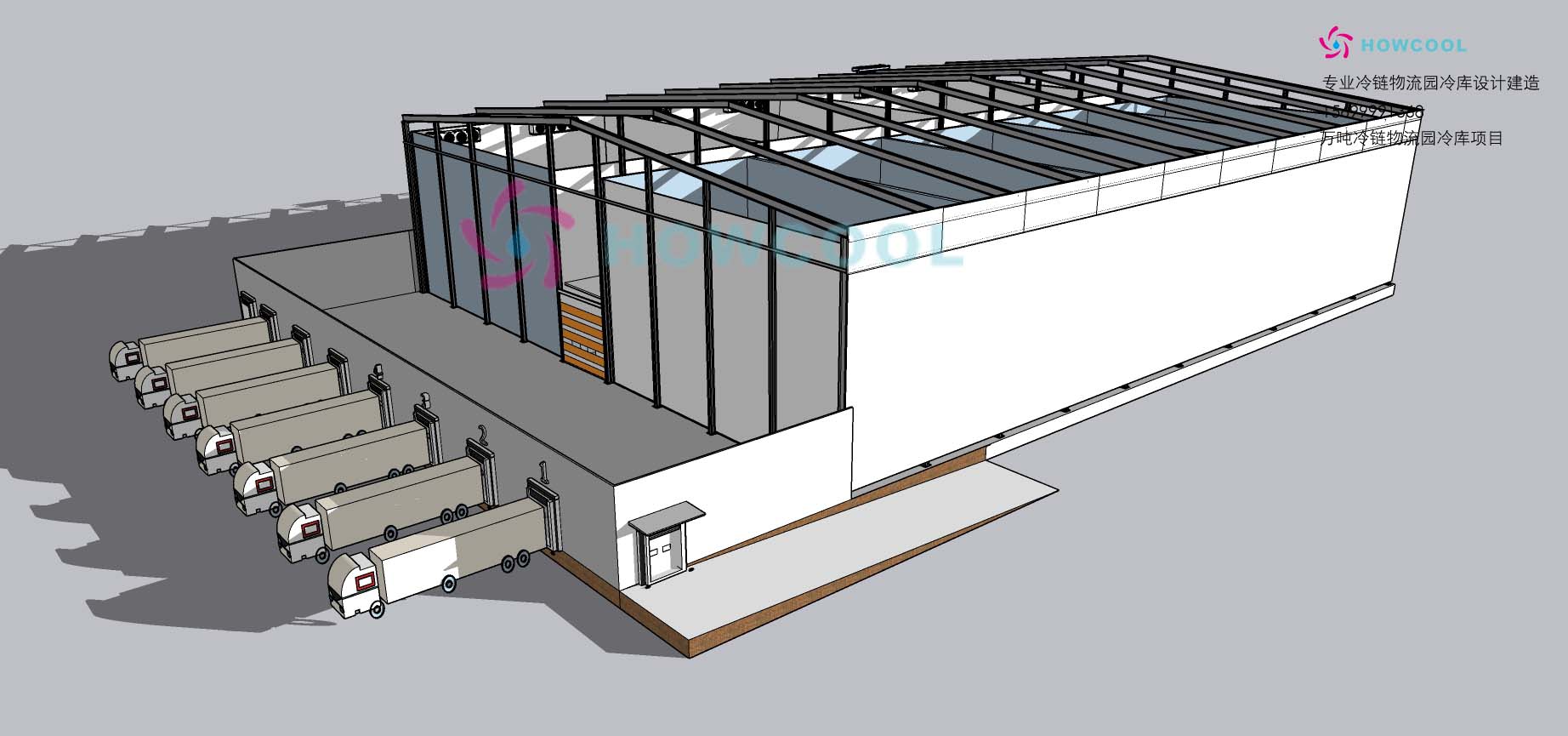
Logistics cold storage is designed around movement rather than storage time. Goods arrive, are held briefly and leave again. Refrigeration capacity, zone separation and dock layout therefore matter more than the maximum static tonnage, and the building usually needs more than one temperature band under the same roof. Two HOWCOOL references show how that scope is structured.
The HSZL-3000T cold chain logistics cold storage uses environmentally friendly Freon refrigeration and covers -5 to +5 ℃ and -18 to -25 ℃, with a quick-freezing warehouse at -35 to -45 ℃. Insulation is a 150 mm polyurethane insulation board with a stated density of 42 kg, and building height runs 8 to 12 m. Products and on-site installation services are provided, together with spare parts for two years. Applications include seafood, food, agricultural products, fruits and vegetables, and logistics transportation for preservation.
The HSZL-6000 cold storage design is a logistics cold storage EPC reference: 0-5 ℃, -18 to -25 ℃ and -35 ℃, over an area of 2,000 to 10,000 square metres and a height of 5 to 12 m, at 380-415 V / 3P / 50 Hz with R507 and R404A refrigerant. Its material scope combines polyurethane insulation board with refrigeration compressor units, and its applicable industries include cold chain logistics, food freezing, food processing, fruit and vegetable, and seafood processing.
In practice, logistics cold storage projects normally require matched equipment beyond the insulated envelope itself - shelves, forklifts and generator sets - and are typically operated automatically around the clock throughout the year. That combination is the clearest operational difference from food cold storage: the category is judged on how quickly goods can pass through each temperature zone without breaking the cold chain.
3. Seafood Cold Storage: Freeze Fast, Then Store Deep
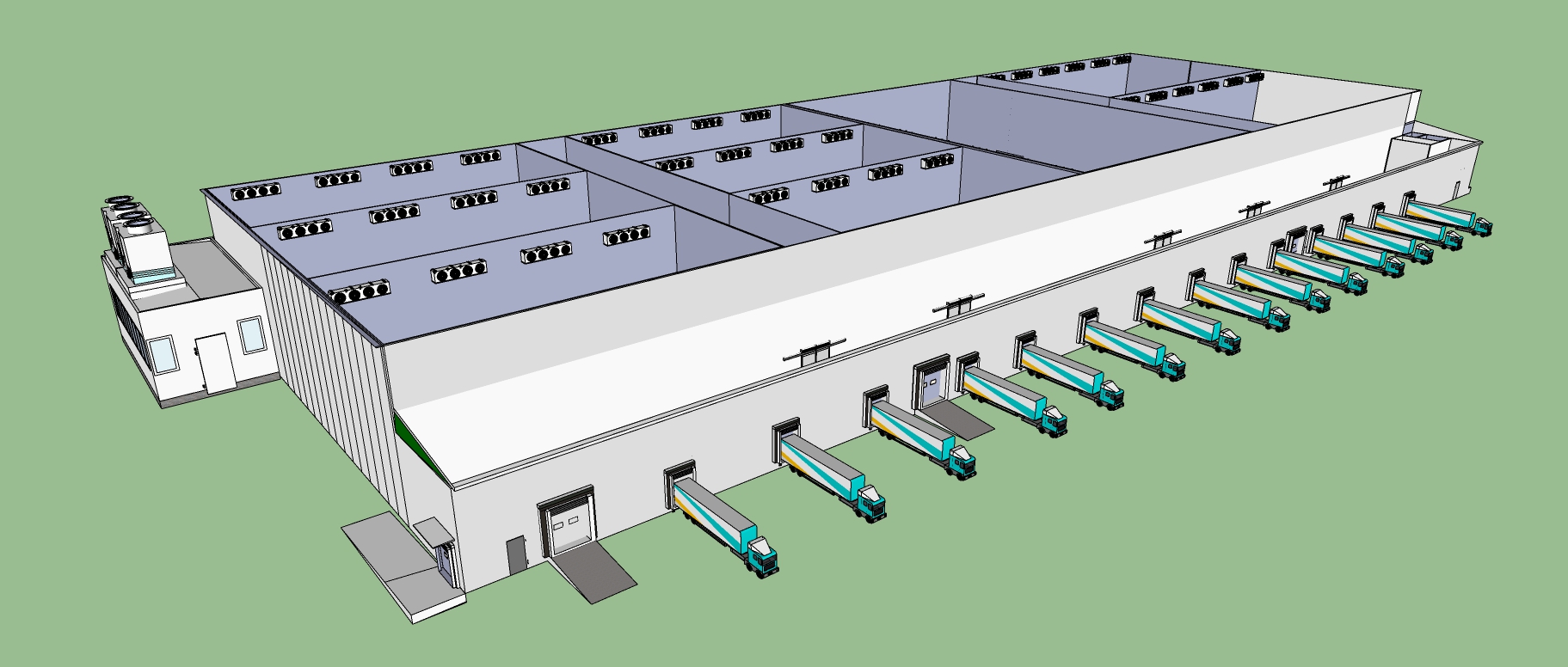
Seafood cold storage is not simply a food room with a lower setpoint. It combines two thermal stages inside one building: a quick-freeze stage at -35 to -45 ℃, and a deep-frozen storage stage at -18 to -25 ℃. Product that remains above the quick-freeze range for too long before it reaches storage is already compromised, so the freeze stage drives refrigeration capacity, evaporator selection and panel specification, while the storage stage drives volume and racking layout.
Seafood appears in three places across the HOWCOOL scope. The HSZL-5000t food cold storage model lists seafood among its applicable industries. The HSZL-3000T cold chain logistics cold storage lists seafood first among its applications and includes a quick-freezing warehouse. Tunnel freezers also form part of the equipment portfolio delivered under EPC contracts. For a seafood project, the category decision therefore turns on the freeze stage: whether the facility needs a -35 to -45 ℃ zone at all, and how much throughput that zone has to handle.
Step-by-Step Breakdown: Matching a Category to a Project
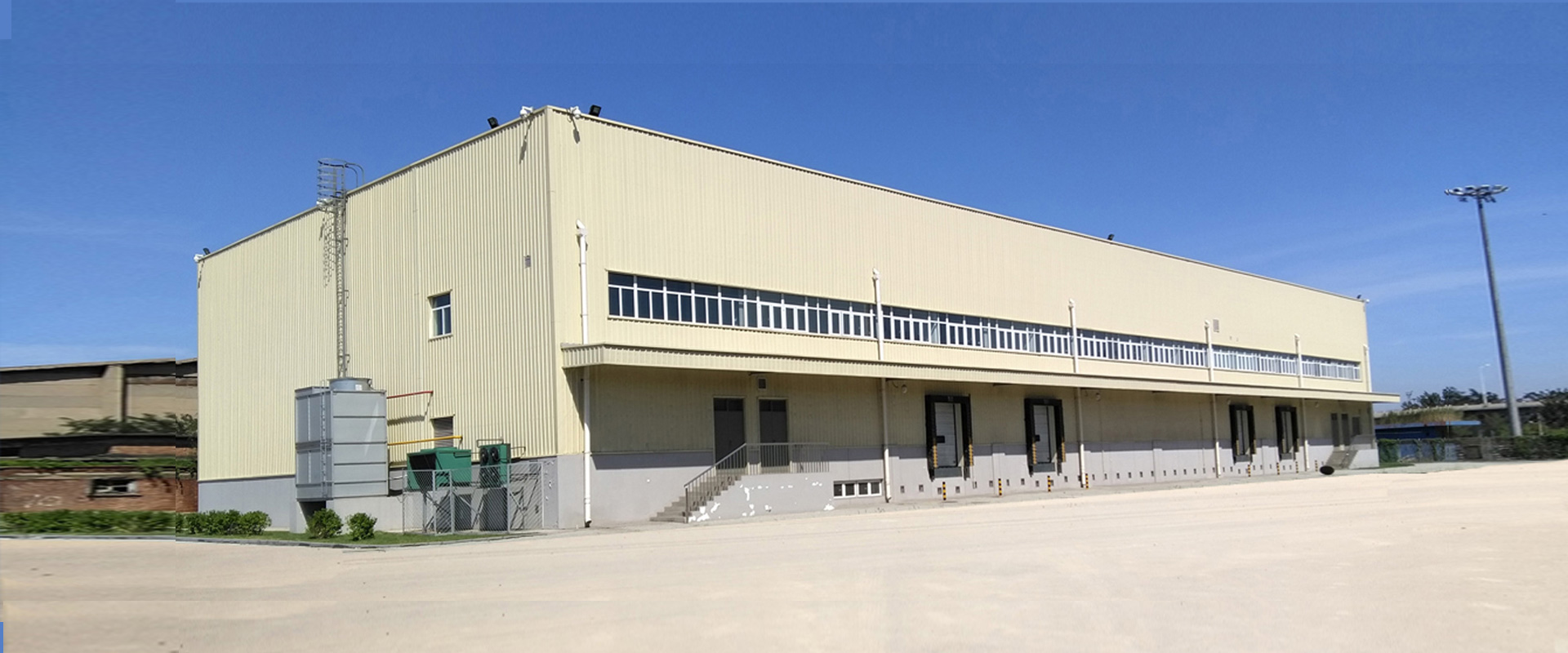
- Define what the building does. A facility that holds production output is a food cold storage project. A facility whose main job is receiving, consolidating and dispatching goods is a logistics cold storage project. A facility that must freeze before it stores is a seafood cold storage project.
- Set the temperature zones. Chilled goods sit in the -5 to +5 ℃ band; frozen goods in the -18 to -25 ℃ band; quick-freezing occupies -35 to -45 ℃. Logistics projects commonly combine two or three of these bands in one building.
- Convert tonnage into area and height. The food cold storage reference spans 1,000 to 8,000 tons at a height of 6 to 12 m. The logistics design reference covers 2,000 to 10,000 square metres at a height of 5 to 12 m. Project-level scope runs from 500 tons to 20,000 tons, with site areas typically between 1,000 and 15,000 square metres.
- Select the insulation specification. The food cold storage model uses PIR panels at 100 mm or 150 mm. The logistics model uses a 150 mm polyurethane insulation board with a stated density of 42 kg. This step is where category confusion is most costly, because panel thickness must follow the coldest duty in the building.
- Confirm power supply and refrigerant. The referenced models operate at 380-415 V / 3P / 50 Hz with R507a, R507 or R404A refrigerant, so the site electrical supply and refrigerant preference should be confirmed before equipment selection.
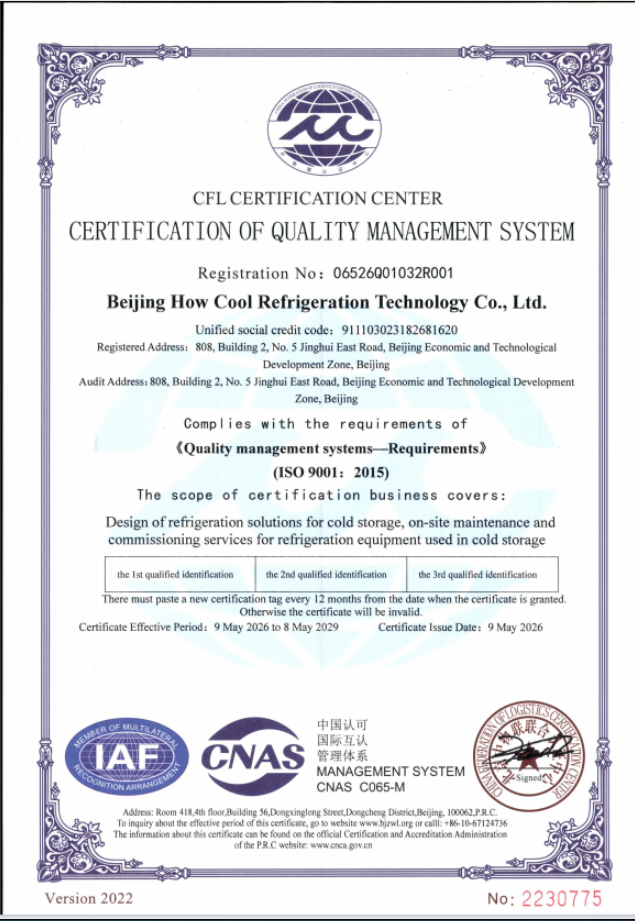
- Verify certification and EPC scope. HOWCOOL holds ISO 9001:2015 certification issued by Beijing China IoT Joint Certification Center under certificate number 06526Q01032R001, issued on 9 May 2026 and valid until 9 May 2029, applying to the global market. The certified scope covers the design of refrigeration solutions for cold storage, together with on-site maintenance and commissioning services for refrigeration equipment used in cold storage. The company also publishes a Class-A qualification for cold storage installation and a GC2 pressure piping installation qualification.
- Validate drawings before production. Cold storage projects are validated through design documents rather than physical samples. Architectural drawings and refrigeration drawings are produced as part of the design scope, and quality control includes pre-shipment testing and third-party inspection (SGS).
Use Cases: Where Each Category Applies
Food production, meat and fruit and vegetable storage
Food industry cold storage is used to preserve food and extend the shelf life of goods, with the equipment stated to operate across a working range from 55 ℃ to -30 ℃ and to run automatically 24 hours a day throughout the year. Fruit and vegetable preservation and meat freezing are two of the most common duties, and both sit inside the -5 to +5 ℃ and -18 to -25 ℃ bands.
Cold chain logistics parks and agricultural distribution
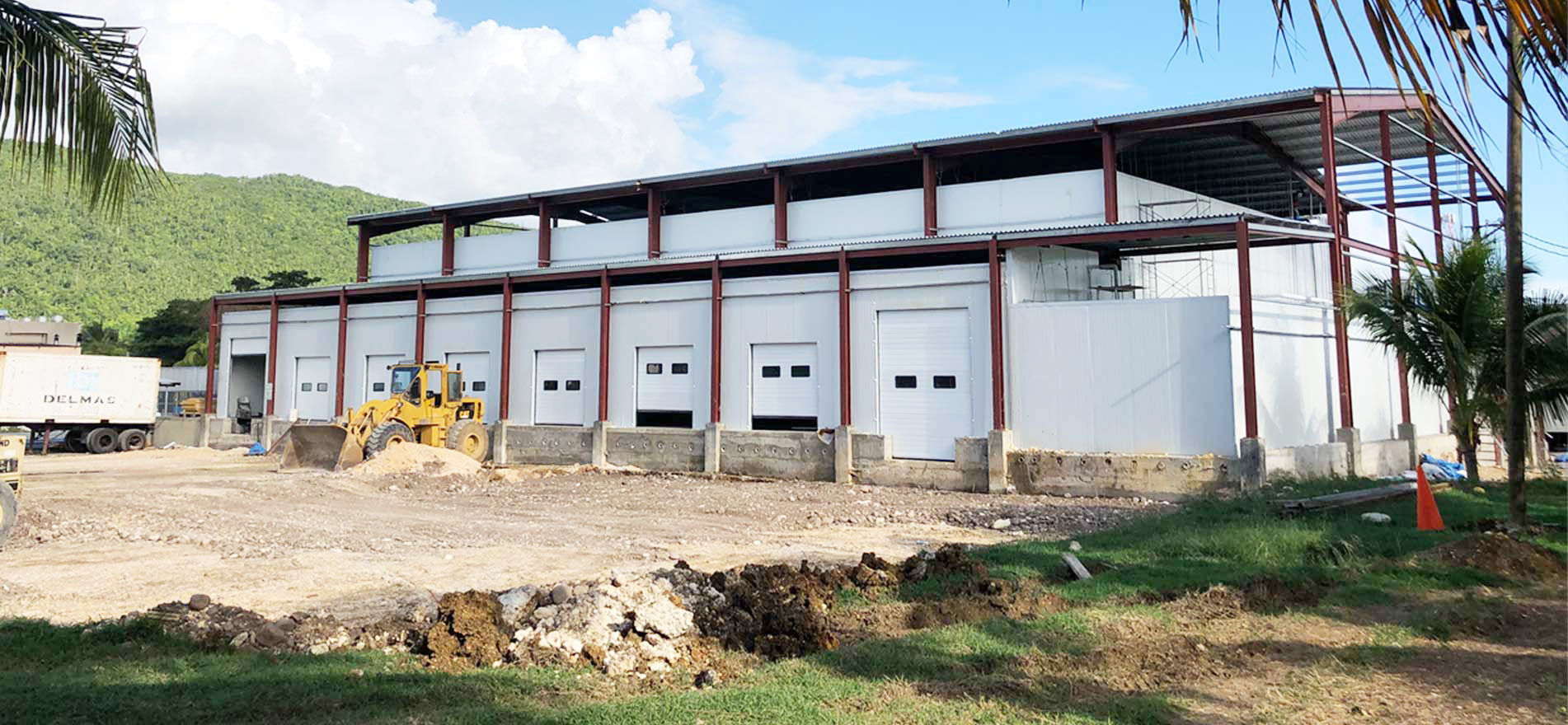
A representative logistics case is a 3,000-ton cold storage project for cold chain logistics of agricultural products, serving customers in Iraq, Libya, Malaysia, Russia and Saudi Arabia and storing fresh fruits and vegetables and frozen meat, with a stated service life of 10 to 30 years. HOWCOOL provided architectural drawings and refrigeration drawings, supplied all refrigeration equipment and generator sets, and gave on-site guidance for installation and commissioning. According to the customer, the facility can generate revenue by being rented out locally, and the customer calculated that the cost can be recovered in about two years - a customer calculation for one project rather than a general figure.
Timing on that project followed a repeating pattern: production took 1 month, sea freight took 1 month, and on-site installation guidance took 2 months to complete. Across EPC cold storage projects generally, construction periods run for 2 to 5 months depending on area and site conditions.
Seafood processing and quick-freezing facilities
Seafood quick-freezing facilities combine a blast or tunnel freezing stage with deep-frozen storage and are commonly operated alongside seafood processing lines. Because the freeze stage sets the refrigeration load, buyers in this category should specify throughput of the freezer first and storage tonnage second - the opposite order from a food cold storage brief.
Comparison Table: Food vs Logistics vs Seafood Cold Storage
| Dimension | Food cold storage | Logistics cold storage | Seafood cold storage |
|---|---|---|---|
| Primary function | Hold production output for a defined period | Move goods through multiple temperature zones | Freeze product quickly, then store it deep-frozen |
| Reference model | HSZL-5000t | HSZL-3000T; HSZL-6000 (design) | Quick-freezing scope within EPC delivery (tunnel freezers) |
| Temperature | -5 to +5 ℃; -18 to -25 ℃ | -5 to +5 ℃; -18 to -25 ℃; quick-freezing warehouse -35 to -45 ℃ | Freeze stage -35 to -45 ℃; storage -18 to -25 ℃ |
| Capacity reference | 1,000 / 2,000 / 3,000 / 5,000 / 8,000 tons | Project scope 500 to 20,000 tons; design area 2,000-10,000 m² | Scoped per project within 500 to 20,000 tons |
| Insulation | PIR panel 100 mm or 150 mm | Polyurethane board 150 mm, stated density 42 kg | Follows the quick-freeze duty of the building |
| Building height | 6 to 12 m | 8 to 12 m (HSZL-3000T); 5 to 12 m (design reference) | Within the 5 to 12 m EPC project range |
| Power and refrigerant | 380-415 V / 3P / 50 Hz; R507a or R404A | 380-415 V / 3P / 50 Hz; R507, R404A | Confirmed against the refrigeration system design |
| Matched equipment | Shelves, forklifts, generator sets | Shelves, forklifts, generator sets, steel structure | Tunnel freezers, shelves, generator sets |
| Certification basis | ISO 9001:2015, certificate number 06526Q01032R001, issued by Beijing China IoT Joint Certification Center, applicable to the global market. | ||
FAQ
Is HOWCOOL cold storage certified, and what does the certificate cover?
Yes. HOWCOOL holds ISO 9001:2015 certification issued by Beijing China IoT Joint Certification Center with certificate number 06526Q01032R001. It was issued on 9 May 2026 and is valid until 9 May 2029. The certified scope covers the design of refrigeration solutions for cold storage and on-site maintenance and commissioning services for refrigeration equipment used in cold storage. The certificate applies to the global market, and the certified product scope relates to the cold chain logistics cold storage product line. In addition, HOWCOOL publishes a Class-A qualification for cold storage installation and a GC2 pressure piping installation qualification.
Can food, logistics and seafood cold storage be customized in capacity and temperature?
Yes. Area, height, tonnage and temperature can all be customized, and cold storage projects range from a minimum of 500 tons to 20,000 tons. HOWCOOL states a monthly capacity of 100 units, with a minimum order quantity of 500 tons, and a business focus on the design, procurement, installation, commissioning and after-sales maintenance of medium-sized cold storage projects up to 20,000 tons. In temperature terms, the reference specifications cover -5 to +5 ℃, -18 to -25 ℃, and quick-freezing at -35 to -45 ℃, which allows one EPC scope to serve food, logistics and seafood requirements.
What drives the budget of a cold storage project?
HOWCOOL does not publish a unit price list for cold storage projects, so cost has to be assessed against scope. The main cost drivers are tonnage, site area and building height, the number of temperature zones (each additional -18 to -25 ℃ or -35 to -45 ℃ zone increases both insulation and refrigeration duty), the insulation specification (100 mm or 150 mm PIR panels on the food model, 150 mm polyurethane board on the logistics model), compressor and refrigeration equipment selection, steel structure, matched equipment such as shelves, forklifts and generator sets, and the scope of on-site installation. As one reference point, on a 3,000-ton agricultural cold chain logistics project, the customer reported that the facility could be rented out locally and calculated a cost recovery period of about two years. That figure is the customer's own calculation for that project and should not be treated as a general return guarantee.
What can be reviewed before a cold storage project is built?
EPC cold storage projects are validated through documents and inspection rather than through physical product samples. Design output includes architectural drawings, refrigeration drawings and cold storage drawings, which allow the buyer to review layout, temperature zoning and equipment selection before production begins. Quality control is carried out through pre-shipment testing and third-party inspection (SGS). The minimum project size is 500 tons, and HSZL-3000T projects include spare parts for two years.
How long does production, shipping and installation take?
The stated production lead time is 30 to 45 days. On the 3,000-ton agricultural cold chain logistics reference project, production took 1 month, sea freight took 1 month, and on-site installation guidance took 2 months to complete. For EPC cold storage projects more generally, construction periods run from 2 to 5 months depending on area and site conditions. Buyers planning a facility around a fixed season or harvest window should therefore allow for production, shipping and on-site commissioning in sequence rather than in parallel. To review documented specifications, certification details and equipment scope before requesting a quotation, the HOWCOOL EPC brochure can be downloaded here: HOWCOOL EPC brochure. Project details - product type, target temperature zones, tonnage and site area - can be sent to james@epccold.com for a scheme and quotation.
Conclusion
Food cold storage, logistics cold storage and seafood cold storage differ in three practical ways: what the building is for, how cold it has to go, and how much it has to hold or move. Food cold storage is defined by tonnage and a fixed temperature profile of -5 to +5 ℃ and -18 to -25 ℃. Logistics cold storage is defined by throughput and by multiple temperature zones, including quick-freezing at -35 to -45 ℃. Seafood cold storage combines a fast freeze stage with deep-frozen storage, which means the freezer duty sets the design load.
Once the category is clear, the remaining decisions become comparable: PIR panels at 100 mm or 150 mm, a 150 mm polyurethane board where the colder duty requires it, a 380-415 V / 3P / 50 Hz supply with R507a, R507 or R404A refrigerant, capacities from 1,000 to 8,000 tons within a project range of 500 to 20,000 tons, and an EPC scope that runs from design through commissioning. Category clarity is also what makes certification meaningful, because ISO 9001:2015 certification number 06526Q01032R001 covers a defined scope - the design of refrigeration solutions for cold storage and on-site maintenance and commissioning - rather than an undefined one.

Have Questions or Need More Details?
Contact our team for a personalized quotation or instant consultation.
Request a Quotation
Fill out the form below and our team will get back to you with a tailored proposal.
WhatsApp Direct Chat
Prefer to chat in real-time? Message us on WhatsApp for instant assistance & quick answers.
- Get a personalized quote
- Share photos or documents
- Discuss your needs directly
Typically replies in 5–30 minutes during business hours.