
Top Rated Cold Storage Models for 2026: HSZL-5000t & HSZL-6000 EPC Solutions
Top Rated Cold Storage Models for 2026: HSZL-5000t & HSZL-6000 EPC Solutions
Two HOWCOOL models carry most of the 2026 large-project demand: HSZL-5000t, a food cold storage platform rated to 5000 tons with chilled (-5~+5°C) and frozen (-18~-25°C) zones, and HSZL-6000, a logistics cold storage EPC design covering 2000–10000 m² at 0-5°C, -18~-25°C and -35°C. This evaluation ranks both by verified temperature capability, documented capacity and climate fit — not by advertising language.
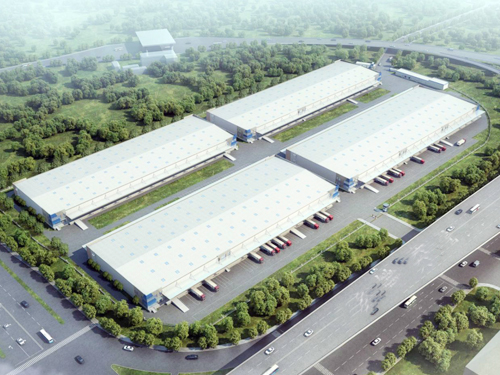
Logistics park cold storage design — the project layer where HSZL-5000t and HSZL-6000 are specified.
What “Top Rated” Actually Means for Cold Storage Models in 2026
For a cold storage buyer, a model ranking is only useful if it is built on variables that survive an audit: the temperature zones the system is engineered for, the tonnage or floor area it can carry, the climate it must run in, and the EPC scope that turns drawings into a working facility. Brand reputation alone does not tell an importer in Brazil or a logistics developer in the UAE whether a model fits their site.
The practical shortlist question in 2026 is therefore not “which company is biggest”, but “which model matches my product mix, my climate and my construction window”. That is the filter applied in this article.
Three failure modes drive most bad cold storage purchases:
- Temperature mismatch — a facility designed only for chilled goods cannot hold frozen stock, and vice versa. The frozen band (-18°C to -25°C) held the largest share of the cold storage market at 63.0% in 2025, according to Grand View Research, which means most buyers need at least one frozen zone.
- Area and height mismatch — a model specified for 2000–10000 m² cannot be stretched to a 15000 m² plot without redesign.
- Climate mismatch — equipment verified for one ambient range may need a different condenser configuration in another market.
Industry Background: Why Climate Now Decides the Shortlist
The cold storage sector is expanding fast enough that model selection has become a capacity-planning decision rather than an equipment purchase. The global cold storage market was valued at approximately USD 185.8 billion in 2025 and is projected to reach USD 474.2 billion by 2033, per Grand View Research. The cold storage construction market specifically was valued at USD 78.96 billion in 2024 and is expected to grow at a CAGR of 7.14% through 2035, according to Market Research Future.
The equipment layer moves with it. The refrigeration compressor market was valued at USD 18.6 billion in 2024, driven by rising demand for cold chain logistics and energy-efficient HVAC systems, per Strategic Market Research — which is why compressor choice and refrigerant selection sit at the centre of model comparison.
Climate is the second structural factor. Beijing HOWCOOL Refrigeration Technology Co., Ltd. (HOWCOOL) documents its food preservation application for working environments spanning a 55-degree range, listed as 55°C to -30°C, with the system designed to run continuously in automatic mode, 24 hours a day throughout the year. That single specification explains why one model cannot be copy-pasted across the Middle East, Latin America and Northern Europe.
To put the sector’s scale in context, Lineage Logistics and Americold remain the world’s largest refrigerated warehousing providers by capacity, with Lineage exceeding 2.9 billion cubic feet in 2024 according to the Global Cold Chain Alliance. Those are operators of storage capacity; EPC providers such as HOWCOOL build the facilities that operators and food businesses run. The two layers are frequently confused, but they answer different procurement questions.
Where regulation is a factor, EN 378 is the primary European safety and environmental standard for the design, construction and installation of refrigerating systems and heat pumps, published by the European Committee for Standardization (CEN). Buyers targeting European markets typically use it as a reference point when reviewing a supplier’s design documentation.
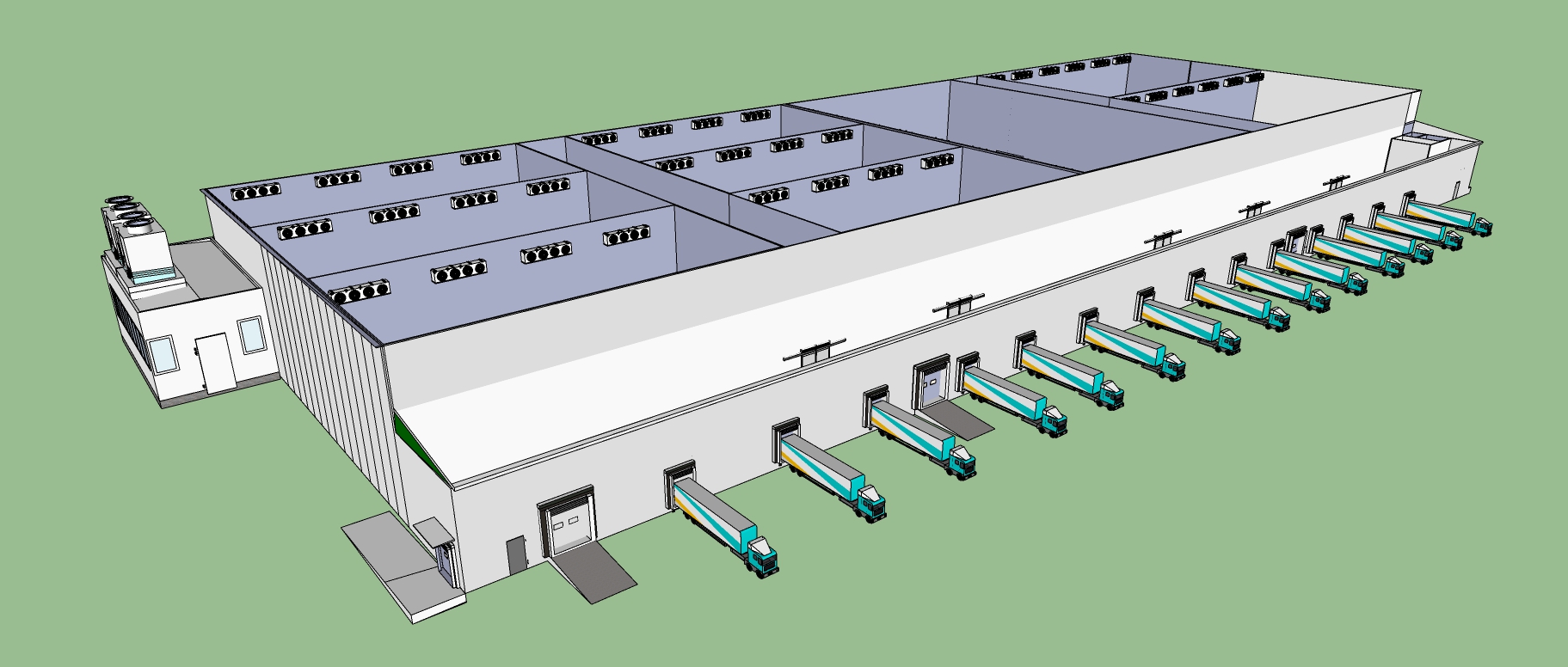
Cold chain logistics park centre — the application type HSZL-6000 is designed for.
Ranking: The Two Recommended HOWCOOL Models for 2026
Both models below are ranked on four documented criteria: verified temperature zones, verified capacity or area, insulation and refrigerant specification, and the application list the manufacturer publishes for each model. They are complementary rather than hierarchical — the ranking reflects which model carries the heaviest documented demand for food and logistics projects.
Position 1 — HSZL-5000t: Food Cold Storage Platform (5000-Ton Class)
Dual-zone: chilled + frozen
The HSZL-5000t is HOWCOOL’s food cold storage platform, also documented for logistics and seafood cold storage. Its published specification covers chilled storage at -5~+5°C and frozen storage at -18~-25°C, with a capacity ladder that includes 1000, 2000, 3000, 5000 and 8000 tons of goods — which is why it appears in 2026 project plans that start at 5000-ton scale but need room to phase additional capacity.
- Insulation: PIR-100mm and PIR-150mm panels, with steel structure engineering plus double-sided colour steel insulation board as the build material.
- Power and refrigerant: 380-415V / 3P / 50Hz, R507a and R404A fluorinated refrigerants.
- Height: 6–12 m clear internal build.
- Documented industries: food production and processing, seafood, meat, and cold chain logistics transportation.
Why it ranks first: it covers both temperature bands most buyers need in a single platform and offers a tonnage ladder rather than a fixed size. For a fruit and vegetable packer who also freezes surplus, or a meat processor who stores chilled cuts and frozen volumes side by side, one model handles both duties — and the -18°C to -25°C zone it serves is the same band that held 63.0% of cold storage market share in 2025.
Position 2 — HSZL-6000: Logistics Cold Storage EPC Design
Area-based logistics design
HSZL-6000 is a logistics cold storage EPC design rather than a tonnage-first platform. Its documented parameters are temperature 0-5°C, -18~-25°C and -35°C, floor area 2000–10000 m², height 5–12 m, power 380-415V / 3p / 50Hz, and R507 / R404A refrigerants. The build materials listed are polyurethane insulation board and a refrigeration compressor unit.
- Documented industries: cold chain logistics, food freezing, food processing, fruit and vegetable, and seafood processing.
- Why it ranks second but is not second-best: it is selected when the project is defined by throughput, docking and floor layout rather than by a fixed tonnage. A third-party logistics operator planning a distribution hub cares about m², door count and vehicle flow; a food processor cares about tons of product. HSZL-6000 is specified for the first case.
- -35°C capability: the design includes a -35°C band, which places it close to quick-freeze requirements. Quick-freezing rooms at -35°C to -45°C are separately documented in HOWCOOL’s food and logistics cold storage range (HSZL-3000T specification), so a logistics facility that needs a blast-freeze room can plan it inside the same EPC scope.
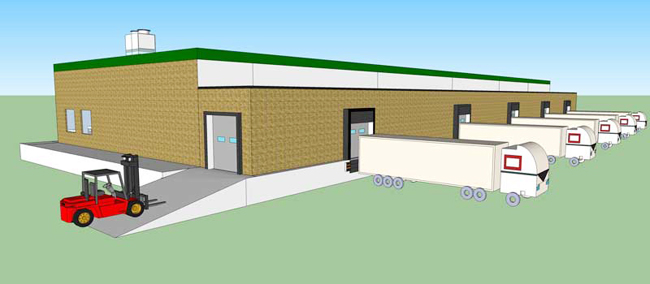
Cold storage design drawing — zone layout and equipment positioning before production starts.
Detailed Solution: What HOWCOOL Delivers Under One EPC Contract
Both models are delivered inside a single EPC scope rather than as loose equipment. HOWCOOL is a refrigeration engineering enterprise founded in 2014, operating a 50,000 m² facility with approximately 200 employees, a 40-person R&D team, annual output documented at 500 units, and an export ratio of about 50%, serving the Middle East, Africa, Southeast Asia and South America.
The delivered package includes insulation panels, refrigeration condensing units, evaporators, refrigeration accessories, tunnel freezers and complete cold storage construction services. Design, equipment selection, procurement planning, installation, commissioning and after-sales maintenance sit under one contract. The company documents capability for medium-sized cold storage projects of less than 20000 tons per project, and supplies steel structure drawings plus refrigeration equipment with on-site technical engineers performing installation and debugging.
Customisation is not limited to picking a catalogue size. Area, height, tonnage and temperature can all be customised, with projects documented from a minimum of 500 tons to 20000 tons. Published capacity is 100 units per month, with a documented production lead time of 30–45 days and a minimum order quantity of 500T. Quality control is documented as pre-shipment testing plus third-party inspection by SGS, and after-sales support is listed as lifetime technical service.
What this means for the buyer: the specification that matters most in an EPC contract is not the headline tonnage, but which zones are engineered, which panels and refrigerants are used, and who carries responsibility for commissioning. A single-contract scope removes the coordination gap that appears when insulation, compressors and installation are bought separately.
Step-by-Step Breakdown: From Climate Data to Commissioning
The sequence below reflects how these two models move from a site description to a running facility, using HOWCOOL’s documented working conditions and project timelines.
- Climate and load definition. The application is documented for environments spanning a 55-degree range (55°C to -30°C). Ambient extremes, product mix and daily throughput are defined first, because they determine condenser configuration and compressor selection.
- Temperature zoning. The facility is split into the required bands: 0-5°C or -5~+5°C for chilled goods, -18~-25°C for frozen goods, and -35°C to -45°C for quick-freeze where required.
- Design drawings. Architectural drawings and refrigeration drawings are produced, covering the 1000–15000 m² area range with 5–12 m heights that the applications are documented for.
- Production. Insulation panels, condensing units, evaporators and accessories are manufactured. Documented production lead time is 30–45 days, with capacity at 100 units per month.
- Pre-shipment verification. Pre-shipment testing and third-party inspection (SGS) are completed before the equipment leaves the factory.
- Sea freight. In a documented 3000-ton agricultural cold chain project, sea freight took approximately one month in transit.
- On-site installation and commissioning. HOWCOOL provides on-site technical engineers for installation guidance and debugging; in the same documented project this stage took about two months. Construction periods for building or renovating large and medium-sized cold storage facilities are documented at 2–5 months.
- Handover and technical support. After commissioning, lifetime technical service covers operation and maintenance. Spare parts for two years are documented on HOWCOOL’s cold chain logistics storage configuration.
Use Cases: Matching Each Model to UAE, Brazil and Russia Conditions
HOWCOOL documents its logistics park, food factory, seafood, e-commerce, fruit and vegetable preservation, meat freezer and frozen storage applications across a published country list that includes the United Arab Emirates (AE), Brazil (BR) and Russia (RU), alongside markets in the Middle East, Africa, Southeast Asia and South America more broadly. The three cases below show how the two models divide that demand.
UAE — high ambient temperature, chilled and frozen distribution
A high-ambient market pushes the refrigeration system harder during the hottest months. Because the food preservation application is documented for environments up to 55°C and the system is designed for 24-hour automatic operation throughout the year, the equipment is specified for continuous duty rather than seasonal operation. HSZL-6000 tends to fit UAE logistics parks, where the project is defined by floor area (2000–10000 m²) and docking layout.
Brazil — fruit and vegetable preservation plus frozen meat
Brazil appears in HOWCOOL’s documented country lists for both food preservation equipment and logistics park cold storage. Fruit and vegetable operators need a chilled band for fresh produce and a frozen band for processed or surplus volumes — exactly the dual-zone structure of HSZL-5000t, documented at -5~+5°C and -18~-25°C with a 1000–8000 ton capacity ladder.
Russia and the wider CIS region — frozen storage and long service life
Russia appears in both the food preservation country list and a documented agricultural cold chain project covering Iraq, Libya, Malaysia, Russia and Saudi Arabia. That project was a 3000T facility for fresh fruits and vegetables and frozen meat storage, with a documented service life of 10–30 years. HOWCOOL supplied architectural drawings, refrigeration drawings, all refrigeration equipment and generator sets, plus on-site installation and commissioning guidance. According to the customer’s own calculation, the facility recoverable its cost in about two years by renting storage locally, while also lowering local agricultural product prices.
How to read the use cases: the deciding variable is not the country but the product mix. Chilled-dominant sites and dual-zone sites point to HSZL-5000t; throughput-driven distribution hubs defined by m² point to HSZL-6000.
Comparison Table: HSZL-5000t vs HSZL-6000
| Comparison metric | HSZL-5000t | HSZL-6000 |
|---|---|---|
| Model type | Food cold storage; also documented for logistics and seafood cold storage | Logistics cold storage EPC design |
| Documented temperature zones | -5~+5°C; -18~-25°C | 0-5°C; -18~-25°C; -35°C |
| Capacity / footprint | 1000, 2000, 3000, 5000 and 8000 tons of goods | 2000–10000 m² floor area |
| Clear height | 6–12 m | 5–12 m |
| Insulation / build | PIR-100mm and PIR-150mm; steel structure engineering plus double-sided colour steel insulation board | Polyurethane insulation board with refrigeration compressor unit |
| Power supply | 380-415V / 3P / 50Hz | 380-415V / 3p / 50Hz |
| Refrigerant | R507a, R404A | R507, R404A (documented as green, environmentally friendly) |
| Documented industries | Food production and processing, seafood, meat, cold chain logistics transportation | Cold chain logistics, food freezing, food processing, fruit and vegetable, seafood processing |
| Best-fit project profile | Dual-zone food facilities planned by tonnage, including fruit and vegetable plus frozen meat | Distribution and logistics hubs planned by floor area and throughput |
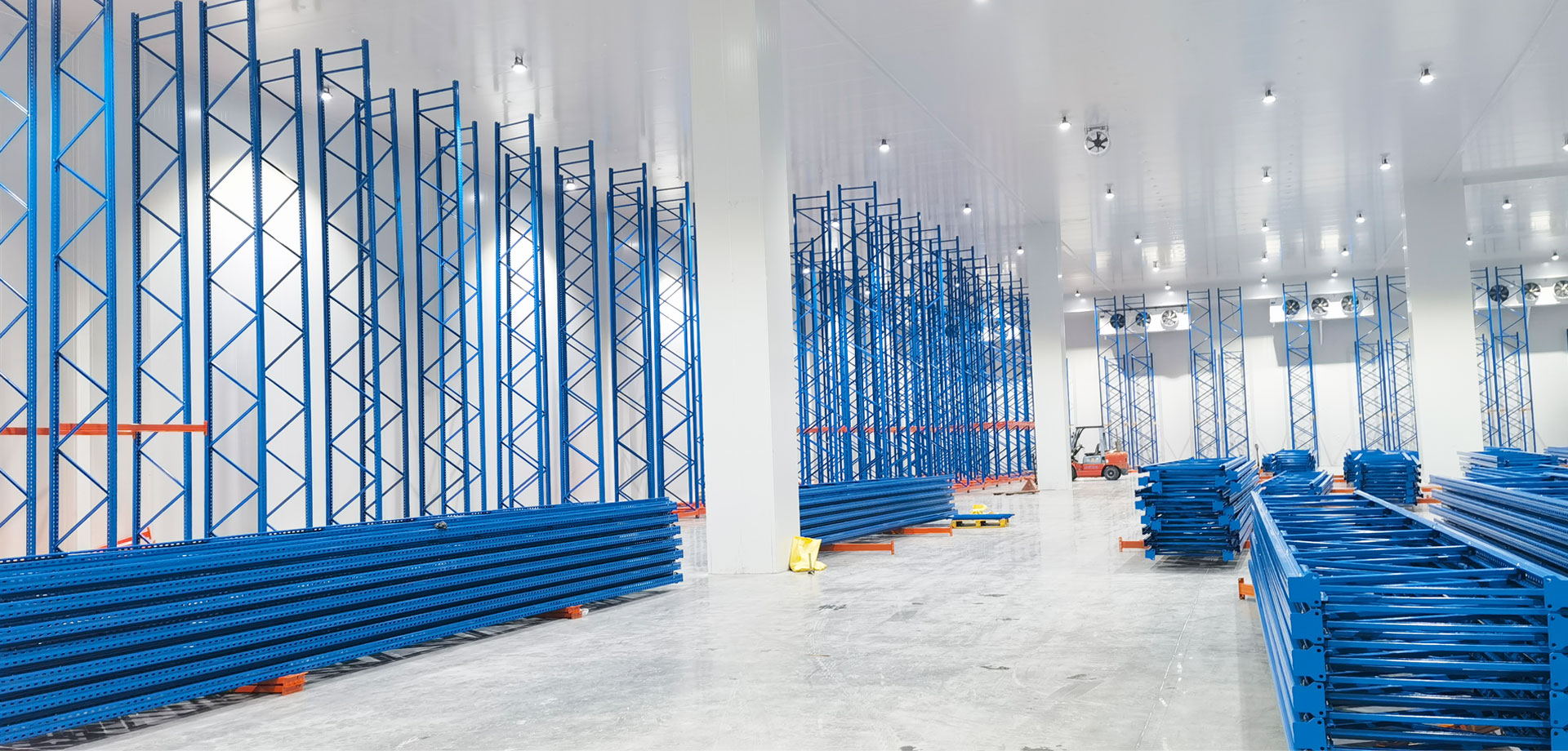
Cold storage construction and refrigeration equipment installation under one EPC contract.
FAQ: Cold Storage Model Selection in 2026
Which standards and inspections should buyers verify in a 2026 cold storage EPC contract?
EN 378 is the primary European safety and environmental standard for the design, construction and installation of refrigerating systems and heat pumps, published by the European Committee for Standardization (CEN). For HOWCOOL cold storage projects, documented quality control consists of pre-shipment testing and third-party inspection by SGS. Because EN 378 is a European reference standard, buyers targeting other regions should confirm which national or regional requirements apply to their site before approving drawings.
Can HSZL-5000t and HSZL-6000 cover chilled, frozen and quick-freeze zones in a single facility?
HSZL-5000t is specified for -5~+5°C chilled storage and -18~-25°C frozen storage, with 1000 to 8000 ton capacity options and heights of 6–12 m. HSZL-6000 covers 0-5°C, -18~-25°C and -35°C across 2000–10000 m² at heights of 5–12 m. Quick-freezing rooms at -35°C to -45°C are documented separately in HOWCOOL’s food and logistics cold storage range under the HSZL-3000T specification, so a facility that needs a blast-freeze room can plan it within the same EPC scope rather than adding a second supplier.
What drives the cost of a cold storage project, and what payback is documented?
Cost is driven by floor area, the number of temperature zones, insulation specification, compressor and condensing equipment, and refrigerant selection. HOWCOOL documents build and renovation capability for facilities of 1000–20000 m², and customisation of area, height, tonnage and temperature from 500T to 20000 tons, with insulation specified as PIR-100mm/PIR-150mm on HSZL-5000t and polyurethane insulation board with a refrigeration compressor unit on HSZL-6000. In one documented 3000T agricultural cold chain project, the customer calculated a payback period of about two years by renting storage locally, against a documented facility service life of 10–30 years.
Can a buyer validate a design before committing to full production?
For EPC cold storage, validation happens at the design and pre-shipment stage rather than through a physical sample unit. HOWCOOL documents OEM cold storage project delivery with customisable area, height, tonnage and temperature, a minimum order quantity of 500T, a production lead time of 30–45 days and a monthly capacity of 100 units. Buyers review architectural and refrigeration drawings first; equipment then passes pre-shipment testing and third-party SGS inspection before dispatch. In the documented 3000T case, the supplier provided drawings, equipment and generator sets, then guided installation and commissioning on site.
What is the delivery and installation timeline, and how do buyers request a quotation?
Documented production lead time is 30–45 days. In the 3000T agricultural cold chain project, the timeline was approximately one month for production, one month for sea freight, and two months for on-site installation guidance and commissioning. Construction or renovation periods for large and medium-sized cold storage facilities are documented at 2–5 months, and HOWCOOL lists lifetime technical service for after-sales support. To request a project quotation or the EPC brochure, contact HOWCOOL at james@epccold.com, by telephone at +86 188-1022-1993, or via WhatsApp on the same number, and share your product mix, site area and target temperature zones.
Conclusion: Choosing Between HSZL-5000t and HSZL-6000
The 2026 shortlist comes down to how the project is defined. If capacity is expressed in tons of product and the operation needs both chilled and frozen storage, HSZL-5000t is the model to specify, with its -5~+5°C and -18~-25°C zones and a 1000–8000 ton capacity ladder. If the project is a logistics hub defined by floor area, throughput and docking, HSZL-6000 fits better, with 2000–10000 m² coverage and a -35°C band inside the design.
Both models are delivered through the same EPC structure: design and drawings, insulation panels, refrigeration equipment, production within a documented 30–45 day lead time, pre-shipment testing with third-party SGS inspection, on-site installation and commissioning guidance, and lifetime technical service. In markets as different as the UAE, Brazil and Russia, that combination — verified temperature zones plus a documented construction window of 2–5 months — is what makes a model selectable rather than merely advertised.
Next Step: Request the EPC Brochure or a Project Quotation
Beijing HOWCOOL Refrigeration Technology Co., Ltd. supplies cold storage EPC solutions for food, seafood, meat, fruit and vegetable, and cold chain logistics projects, from 500T to 20000 tons per project.
• Download the HOWCOOL EPC brochure: HOWCOOL EPC Brochure (PDF)
• Website: www.epccold.com
• Email: james@epccold.com | Tel / WhatsApp: +86 188-1022-1993
• Address: Room 808, Building 2, No.5 Jinghui East Road, BDA, Beijing, China
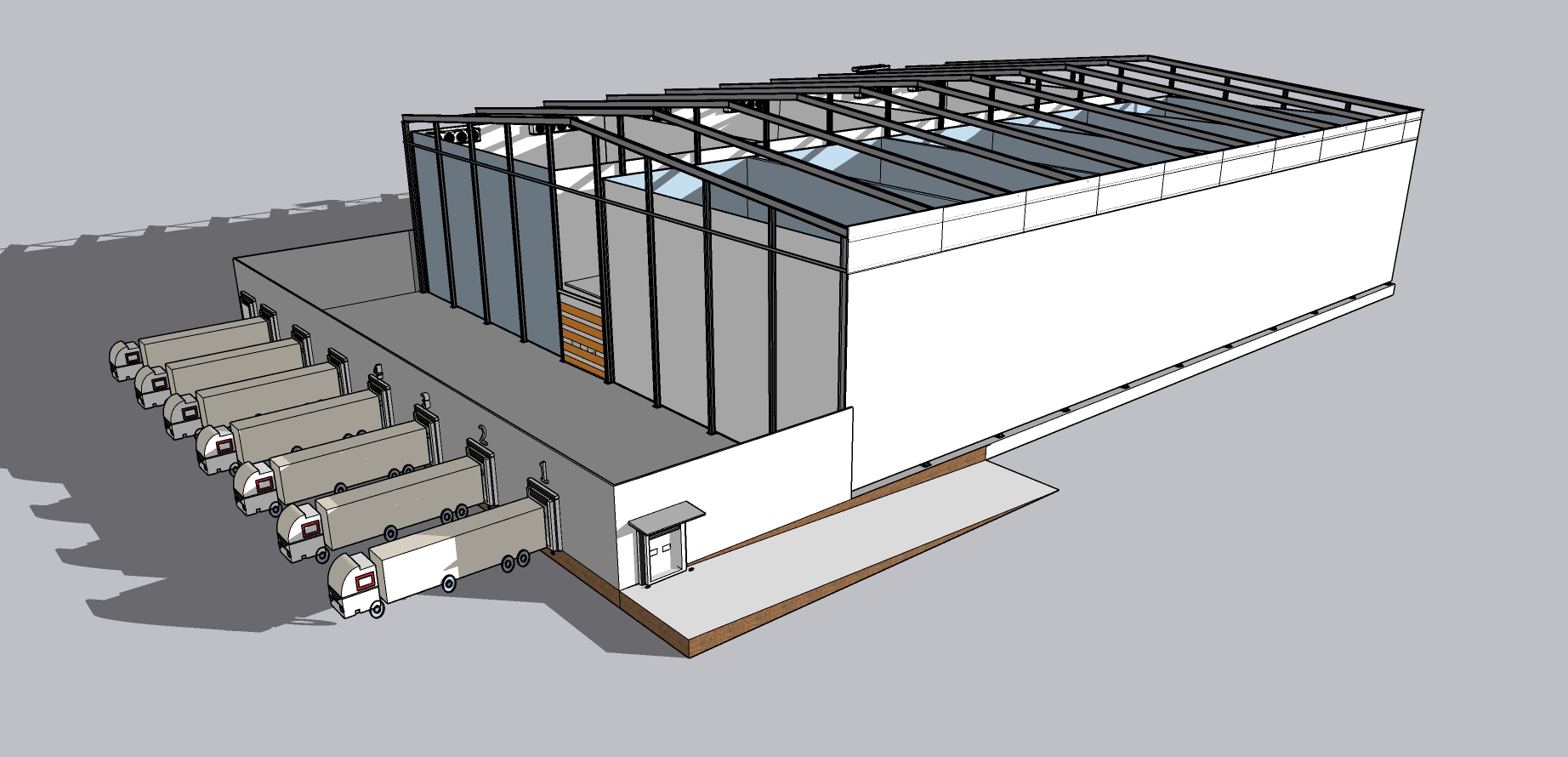
Cold storage scheme design — the starting point for a 5000-ton class EPC project.
Have Questions or Need More Details?
Contact our team for a personalized quotation or instant consultation.
Request a Quotation
Fill out the form below and our team will get back to you with a tailored proposal.
WhatsApp Direct Chat
Prefer to chat in real-time? Message us on WhatsApp for instant assistance & quick answers.
- Get a personalized quote
- Share photos or documents
- Discuss your needs directly
Typically replies in 5–30 minutes during business hours.