
What to Verify in a Cold Storage Project: Certifications, Specifications, and EPC Scope
What to Verify in a Cold Storage Project: Certifications, Specifications, and EPC Scope
Short answer: Before approving a cold storage investment, buyers should verify the project certification basis, temperature range, panel specification, refrigeration equipment parameters, and the exact scope of installation and commissioning services. A certified EPC contract can simplify this process because design, equipment supply, installation, and after-sales maintenance are handled by one responsible party.
Problem Definition: Why Cold Storage Projects Miss Specification and Compliance Requirements
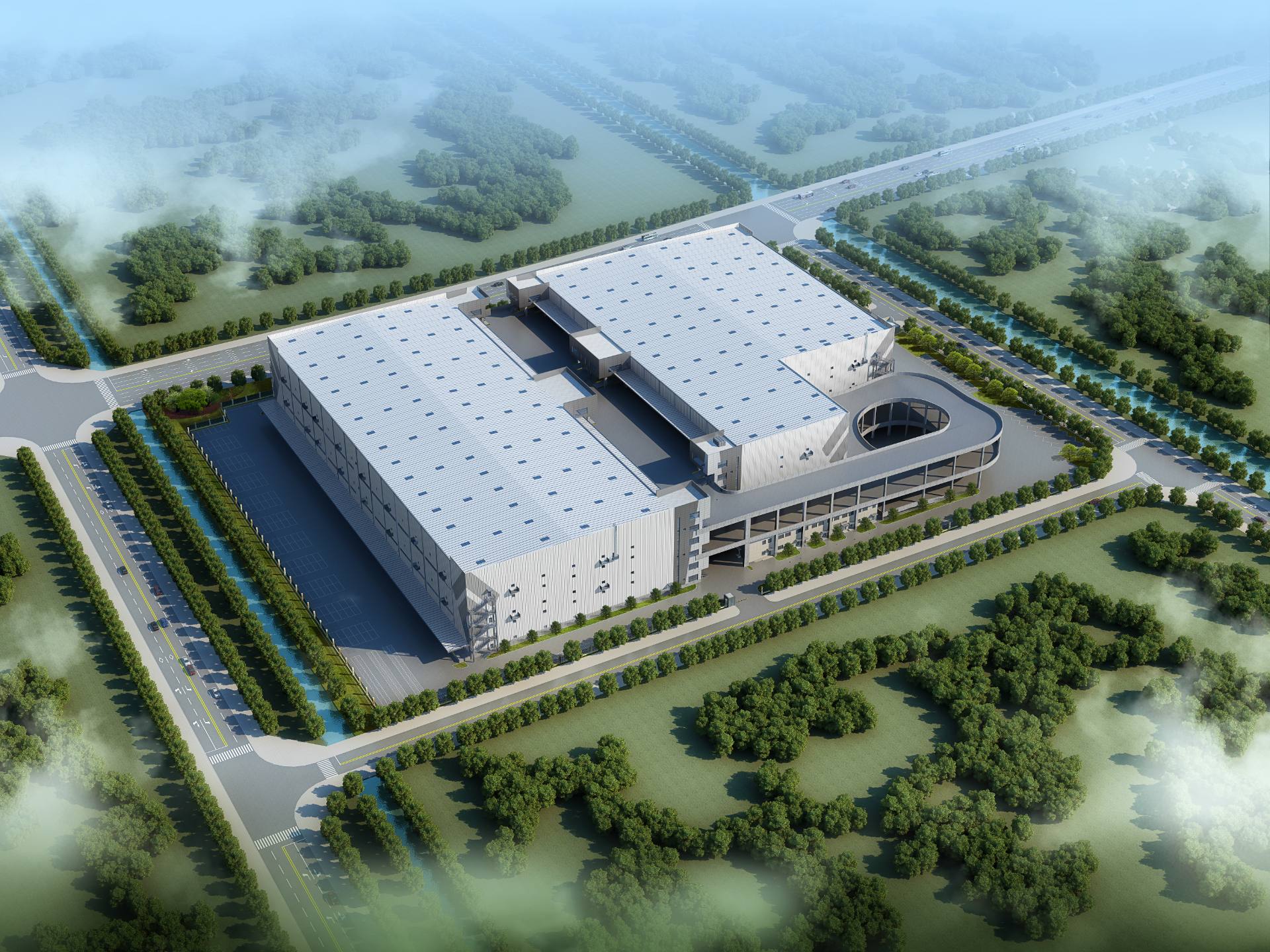
Buyers evaluating cold storage installation often compare square meters, tonnage, and price before checking whether the proposed design can actually hold the required temperature. In practice, a cold storage project is a combination of insulation boards, refrigeration compressor equipment, evaporators, condensing units, structural drawings, electrical supply, and on-site installation labor. If these elements are not specified together, the project may face temperature instability, higher operating costs, and delayed commissioning.
Another common issue is incomplete certification evidence. A supplier can say that its cold storage equipment is certified, but a serious buyer should ask which standard applies, which body issued the certificate, and which product scope the certificate covers. For a food-related facility, this is not paperwork. It affects food safety, project acceptance, and the ability to sell or rent the facility later.
When comparing cold storage design companies and cold storage installation companies, the practical question is not only how a cold storage is priced but also what is delivered: cold storage design drawings, refrigeration equipment, insulation panels, installation guidance, commissioning, spare parts, and after-sales service.
Industry Background: Cold Storage Demand and Compliance Pressure
Cold storage demand continues to expand globally. According to Grand View Research, the global cold storage market was valued at approximately USD 185.8 billion in 2025 and is projected to reach USD 474.2 billion by 2033. Market Research Future values the cold storage construction market at USD 78.96 billion in 2024, with an expected CAGR of 7.14% through 2035. Strategic Market Research estimates the refrigeration compressor market at USD 18.6 billion in 2024, driven by rising cold chain logistics demand and energy-efficient HVAC systems.
Temperature strategy is one of the most important decisions in this market. Grand View Research reports that the frozen temperature range segment, defined as -18°C to -25°C, held the largest market share at 63.0% in 2025. This explains why many buyers request frozen storage even if their current product mix is fresh fruit and vegetables. Buyers should design for the products they store today, while leaving realistic expansion potential for frozen and quick-freezing zones.
Compliance expectations are also becoming clearer. EN 378 is the primary European safety and environmental standard for the design, construction, and installation of refrigerating systems and heat pumps, according to the European Committee for Standardization (CEN). Export-oriented buyers should review both the supplier quality certificate and the relevant regional standards for the final destination.
Detailed Solution: Certified EPC Cold Storage Design from HOWCOOL
Beijing Howcool Refrigeration Technology Co., Ltd., commonly known as HOWCOOL, is a professional engineering enterprise founded in 2014 with decades of joint industry experience. It designs and supplies insulation panels, refrigeration condensing units, evaporators, refrigeration accessories, tunnel freezers, and complete cold storage construction services under EPC contracts. The company operates a 50,000-square-meter manufacturing facility, has around 200 employees including a 40-person R&D team, and exports about 50% of its output to markets including the Middle East, Africa, Southeast Asia, and South America.
HOWCOOL serves industries such as food production, food storage, seafood, beef and mutton, fruits and vegetables, and cold chain logistics. Its business focus includes the design, procurement, installation, commissioning, and after-sales maintenance of medium-sized cold storage projects up to 20,000 tons. For these projects, HOWCOOL provides steel structure drawings and refrigeration equipment, and on-site technical engineers install and debug the system.
Key Parameters in HOWCOOL Cold Storage Configurations
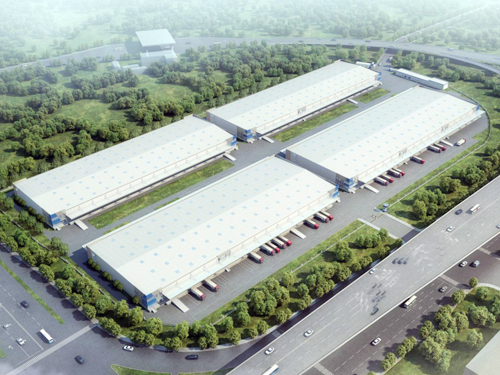
For fruit and vegetable cold storage, food cold storage solutions, and cold chain logistics cold storage design solutions, HOWCOOL provides three documented configurations: HSZL-3000T, HSZL-5000t, and HSZL-6000. These configurations support different temperature bands, storage capacities, and facility scales.
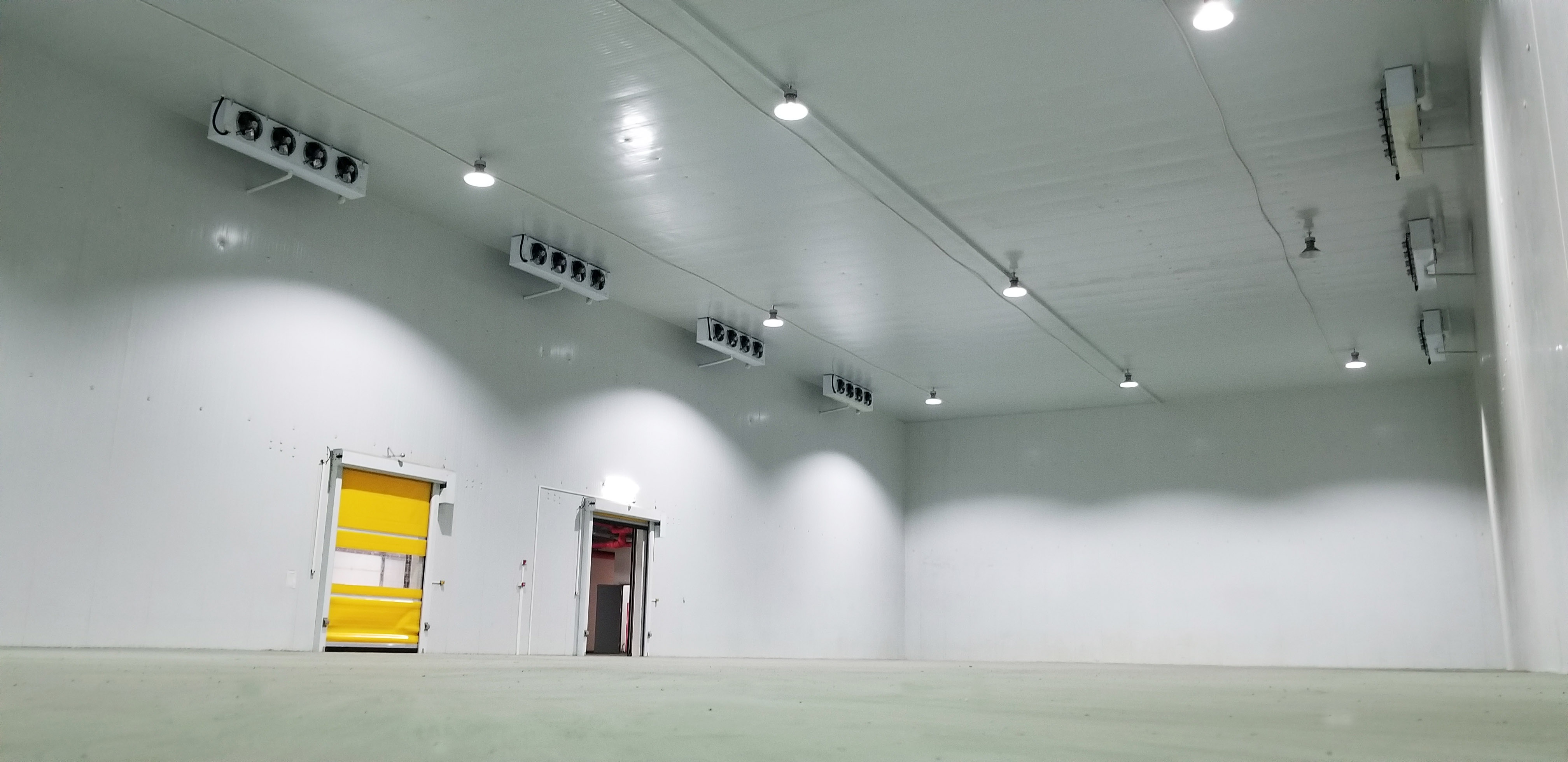
The HSZL-3000T cold chain logistics cold storage uses an environmentally friendly Freon refrigeration system, polyurethane insulation board with a thickness of 150 mm and density of 42 kg, and a building height of 8 to 12 meters. Its temperature ranges are -5 to +5°C, -18 to -25°C, and -35 to -45°C for quick freezing. It is suited to seafood, food, agricultural products, fruits and vegetables, and logistics transportation for preservation. The system is supplied with spare parts for two years.
The HSZL-5000t food cold storage uses PIR insulation board at 100 mm or 150 mm, with temperature ranges of -5 to +5°C and -18 to -25°C. It operates on 380-415V/3P/50Hz, uses R507a or R404A refrigerant, and has a height of 6 to 12 meters. It can store 1,000, 2,000, 3,000, 5,000, or 8,000 tons of goods. The construction type is steel structure engineering combined with double-sided color steel insulation board insulation. It is applicable to food production and processing, seafood, meat, and cold chain logistics transportation.
The HSZL-6000 logistics cold storage EPC is designed for cold storage area from 2,000 to 10,000 square meters, with height of 5 to 12 meters. It supports temperature ranges of 0 to 5°C, -18 to -25°C, and -35°C. The voltage is 380-415V/3P/50Hz, and the refrigerants are environmentally friendly R507 and R404A. Its main materials are polyurethane insulation board and refrigeration compressor unit. This configuration is suitable for cold chain logistics, food freezing, food processing, fruit and vegetable, and seafood processing.

Certification Evidence
HOWCOOL cold chain logistics cold storage products are certified to ISO 9001:2015. The certification is issued by Beijing China IoT Joint Certification Center with the number 06526Q01032R001. The scope covers the design of refrigeration solutions for cold storage and on-site maintenance and commissioning services for refrigeration equipment used in cold storage. The certification applies to the global market and is valid from 2026-05-09 to 2029-05-09.
For buyers exporting to Europe, EN 378 should also be reviewed at the design stage because it is the primary European safety and environmental standard for refrigerating systems and heat pumps. A documented quality system and correct regional standards together reduce the risk of rejection during installation or customs clearance.
Step-by-Step Breakdown: What to Check Before Installing a Cold Storage Facility
Step 1: Define the product type, temperature band, and project scale
Cold storage design starts with the product to be stored. Fresh fruit and vegetable cold storage often uses 0 to 5°C. Frozen food commonly uses -18 to -25°C. Quick freezing can require -35 to -45°C. In HOWCOOL projects, area, height, tonnage, and temperature can all be customized, with cold storage projects ranging from a minimum of 500 tons to 20,000 tons.
Step 2: Confirm the insulation board specification
Insulation boards directly affect temperature stability. HOWCOOL configurations use polyurethane insulation board in selected models, with 150 mm thickness and 42 kg density in the HSZL-3000T. The HSZL-5000t uses PIR board at 100 mm or 150 mm. A buyer should ask for the insulation type, thickness, and density rather than accepting a generic description of a cold storage insulation board.
Step 3: Lock the refrigeration compressor equipment and refrigerant
The refrigeration compressor unit is the core equipment in the system. For export projects, voltage and frequency must match the destination. HOWCOOL systems are documented at 380-415V/3P/50Hz. Refrigerants include R507, R404A, and environmentally friendly Freon. Confirm the refrigerant type because local environmental regulations may restrict certain gases.
Step 4: Verify certification and quality-control evidence
Ask for the certification standard, certifying body, certificate number, and product scope. HOWCOOL uses ISO 9001:2015 with certificate number 06526Q01032R001, issued by Beijing China IoT Joint Certification Center. For international procurement, HOWCOOL also supports pre-shipment tests and third-party inspection, including SGS inspection.
Step 5: Review the complete EPC scope, drawings, and installation responsibilities
An EPC scope should include design, equipment supply, installation, commissioning, and after-sales maintenance. For HOWCOOL projects, the company provides steel structure drawings and refrigeration equipment, and on-site technical engineers install and debug the system. Buyers should request clear drawings before signing, including steel structure drawings, refrigeration drawings, and any air-conditioning/cold storage drawings in the EPC package. The expected construction period for projects from 1,000 to 15,000 square meters is 2 to 5 months.
Step 6: Confirm lead time, MOQ, and after-sales service
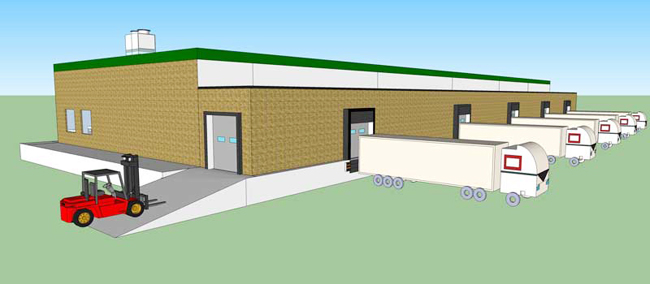
For OEM cold storage projects, HOWCOOL offers a lead time of 30 to 45 days, a monthly capacity of 100 units, and a minimum order quantity of 500 tons. The HSZL-3000T configuration includes spare parts for two years. HOWCOOL also provides lifetime technical service as part of its after-sales commitment.
Use Cases: Fruit and Vegetable, Food, Seafood, and Cold Chain Logistics Facilities
HOWCOOL cold storage solutions are used in logistics parks, food factories, seafood cold storage, e-commerce cold storage, fruit and vegetable preservation cold storage, meat freezers, fish cold storage, and frozen cold storage. The application model is EPC, with automated operation and matched equipment such as shelves, forklifts, and generator sets.
For food preservation equipment, the target function is to extend the shelf life of vegetables, fruits, and meats and prevent food spoilage. These systems are designed for 24-hour automatic operation throughout the year. The project scope ranges from a minimum of 500 tons to 20,000 tons, or from 1,000 to 20,000 square meters for large and medium projects.
Documented 3,000-Ton Agricultural Cold Chain Case
In one documented case, a 3,000-ton agricultural cold chain logistics project served customers in Iraq, Libya, Malaysia, Russia, and Saudi Arabia. The application covered fresh fruits and vegetables and frozen meat storage. HOWCOOL provided architectural drawings, refrigeration drawings, all refrigeration equipment and generator sets, and on-site guidance for installation and commissioning. According to the customer calculation, the facility could recover its cost in about 2 years through local rental revenue. The customer also reported that the cold storage helped local residents access fresh fruits and vegetables. The timeline was 1 month for production, 1 month for sea freight, and 2 months for on-site installation guidance.
Comparison Table: HOWCOOL Cold Storage Configurations
| Item | HSZL-3000T | HSZL-5000t | HSZL-6000 |
|---|---|---|---|
| Type | Cold chain logistics cold storage | Food cold storage, logistics cold storage, seafood cold storage | Logistics cold storage EPC |
| Temperature range | -5~+5°C, -18~-25°C, quick freezing -35~-45°C | -5~+5°C, -18~-25°C | 0-5°C, -18~-25°C, -35°C |
| Insulation / construction | Polyurethane board 150 mm, density 42 kg | PIR 100 mm or 150 mm; steel structure engineering + double-sided color steel insulation board | Polyurethane insulation board; refrigeration compressor unit |
| Size / height | Height 8-12 m | Height 6-12 m | Area 2,000-10,000 sqm; height 5-12 m |
| Electrical / refrigerant | Environmentally friendly Freon | 380-415V/3P/50Hz; R507a, R404A | 380-415V/3P/50Hz; R507, R404A |
| Typical applications | Seafood, food, agricultural products, fruits and vegetables, logistics preservation | Food production and processing, seafood, meat, cold chain logistics transportation | Cold chain logistics, food freezing, food processing, fruit and vegetable, seafood processing |
FAQ: Compliance, Capability, Budget, Drawings, and Lead Time
1. Is HOWCOOL cold storage equipment certified?
Yes. The cold chain logistics cold storage product is certified to ISO 9001:2015. The certification is issued by Beijing China IoT Joint Certification Center with certificate number 06526Q01032R001. It covers the design of refrigeration solutions for cold storage and on-site maintenance and commissioning services for refrigeration equipment used in cold storage. This certification applies to the global market.
2. Can HOWCOOL customize cold storage capacity, temperature, and dimensions?
Yes. HOWCOOL supports OEM cold storage projects. Area, height, tonnage, and temperature can all be customized. Cold storage projects can range from a minimum of 500 tons to 20,000 tons. The company also provides product selection guidance, customized solution design, and procurement plans as part of its EPC service.
3. What affects the budget of a cold storage project?
A cold storage budget depends on defined parameters rather than a generic unit price. Key factors include temperature requirements, project tonnage and area, building height, insulation board specification, refrigeration equipment and refrigerant type, voltage and frequency, site conditions, and whether the scope includes installation and commissioning. A reliable quotation can be prepared only after these parameters are fixed.
4. Can I receive design drawings before a final purchasing decision?
Yes. Design drawings are part of the EPC process. In a documented 3,000-ton agricultural cold chain project, HOWCOOL provided architectural drawings and refrigeration drawings before the customer purchased refrigeration equipment and generator sets. For new projects, buyers should request steel structure drawings and refrigeration drawings as part of the proposal review process.
5. What is the lead time for a cold storage project?
Production lead time for HOWCOOL OEM cold storage projects is 30 to 45 days. After shipment, the project construction period is typically 2 to 5 months for facilities from 1,000 to 15,000 square meters. In the documented 3,000-ton case, production took 1 month, sea freight took 1 month, and on-site installation guidance took 2 months. HOWCOOL also provides lifetime technical service after commissioning. For a project-specific timeline, contact HOWCOOL at james@epccold.com or download the EPC brochure.
Conclusion
A cold storage project is defined by parameters: temperature range, insulation specification, refrigeration equipment, refrigerant, voltage, drawings, and installation scope. Buyers who verify these requirements before selecting a provider reduce the risk of poor temperature performance, compliance delays, and unexpected commissioning costs. Beijing Howcool Refrigeration Technology Co., Ltd. (HOWCOOL) provides certified EPC cold storage solutions across food, fruit and vegetable, seafood, and cold chain logistics applications, with documented configurations and a 3,000-ton project reference.
Next step: Download the HOWCOOL EPC brochure to review product configurations, or contact HOWCOOL at james@epccold.com / +86 188-1022-1993. Website: www.epccold.com.