
Fiberglass Woven Fabric Comparison: 7638 vs 7630 vs 2116 for Laminates and Insulation
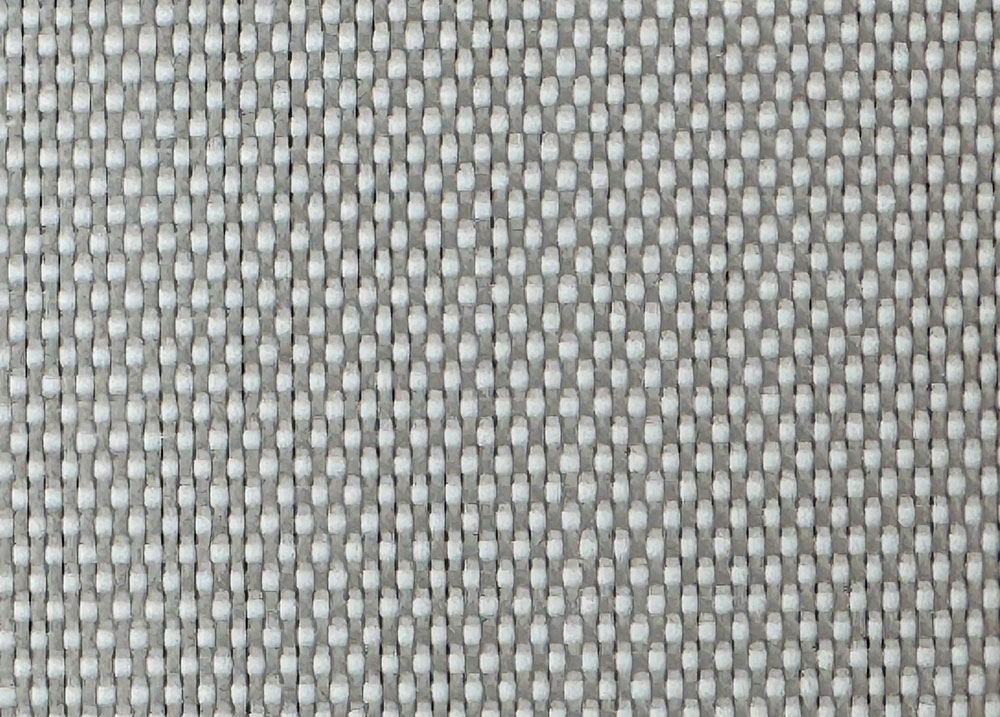
7638 fiberglass woven fabric: 257 g/m², 0.28 mm, G75 warp yarn and G37 weft yarn.
Short answer. Styles 7638, 7630 and 2116 are three E-glass woven fabrics that sit at different points on the same weight-and-thickness scale: 7638 at 257 g/m² and 0.28 mm, 7630 at 224 g/m² and 0.22 mm, and 2116 at 106 g/m² and 0.09 mm. 7638 is the heavy option for thick structural laminates and fire protection panels; 7630 is the balanced mid-weight for multi-layer FR-4 substrates, fireproof cladding and medium structural parts; 2116 is the light, thin cloth for thin laminates and lightweight insulation where build height and mass are the constraints. None of the three is better in a general sense — the match depends on your laminate stack, your forming process and a specification you have actually verified.
Why these three styles get compared side by side
Search for a high performance woven fabric for a laminate or an insulation layer and you will quickly meet a list of four-digit style numbers rather than a product family. The numbers are weave and construction codes, not grades, and they do not sort themselves into a hierarchy. What they do describe is how much glass sits in a square metre, how thick the dry cloth is, and how the warp and weft yarns are arranged to build that weight.
The practical problem for a buyer at the research stage is that the same three fabrics appear in quotation threads and sample requests for very different end uses. A fabricator building thick structural panels asks one set of questions; a converter making thin fireproof sheet or a light insulation layer asks another. 7638, 7630 and 2116 keep appearing together because they cover the spread — roughly 257, 224 and 106 g/m² — with a shared warp yarn in the two heavier styles, which makes them a natural shortlist when a project is still deciding how heavy the reinforcement should be.
That is the decision this guide supports. It compares the three styles only on attributes that are documented — weight, thickness, warp and weft yarn, warp and weft density — and then shows where a difference in those attributes changes what a buyer should test or confirm before ordering.
Where E-glass woven cloth sits in the industrial textile chain
E-glass fiber cloth is a base material, not a finished component. Woven from glass filament yarn on looms, it enters the supply chain as dry roll goods that are subsequently impregnated, laminated, coated or cut. The same base cloth can become a prepreg for a copper-clad laminate, a rigid reinforcement in a moulded composite part, a facing on a fireproof panel, or a substrate for a coated fabric.
That last route matters when reading product literature. Suppliers of PTFE-coated fabrics describe their products as woven fiberglass or aramid substrates that are coated or impregnated with PTFE, a construction description published by CS Hyde Company in its coated fabric category. Silicone coated fabric follows a comparable logic, as do membrane fabric and other coated technical textiles. In other words, the dry E-glass styles compared here are frequently the layer underneath a coated product — which is one reason a converter may evaluate 7638, 7630 or 2116 as an intermediate rather than as a final article.
Market context is worth a sentence, but only as context. MarketsandMarkets, in its fiberglass fabric market report covering 2024–2029, projects the fiberglass fabric market at USD 13.17 billion by 2029. That figure describes the whole fiberglass fabric category and says nothing about which of these three styles suits a given laminate build; treat it as background on category scale, not as a purchase signal.
Not every high-performance woven fabric decision starts with glass. Aramid woven fabric, UHMWPE woven fabric, polyester woven fabric, high silica fabric, texturized fiberglass fabric and leno mesh fabric all occupy adjacent positions in the same buyer conversation, each for its own reason. This comparison deliberately stays inside the E-glass styles 7638, 7630 and 2116 so that the numbers remain comparable.
The three styles, one at a time
7638 — 257 g/m², 0.28 mm
Style 7638 is built from a G75 warp yarn and a G37 weft yarn, with a warp density of 17.2 ends per centimetre and a weft density of 10 picks per centimetre. At 257 g/m² and 0.28 mm it is the heaviest and thickest of the three.
The manufacturer's product description lists high warp tensile strength, a robust woven structure, thermal stability under high-pressure lamination, load-bearing performance and flame retardancy, and positions the style for heavy-duty thick FR-4 substrates, fire protection panels, wind turbine housings and large-size structural FRP components. Read as a buyer, that description points to builds where the reinforcement layer is expected to carry load and hold its geometry through a press cycle, rather than to thin or highly draped laminates.
7630 — 224 g/m², 0.22 mm
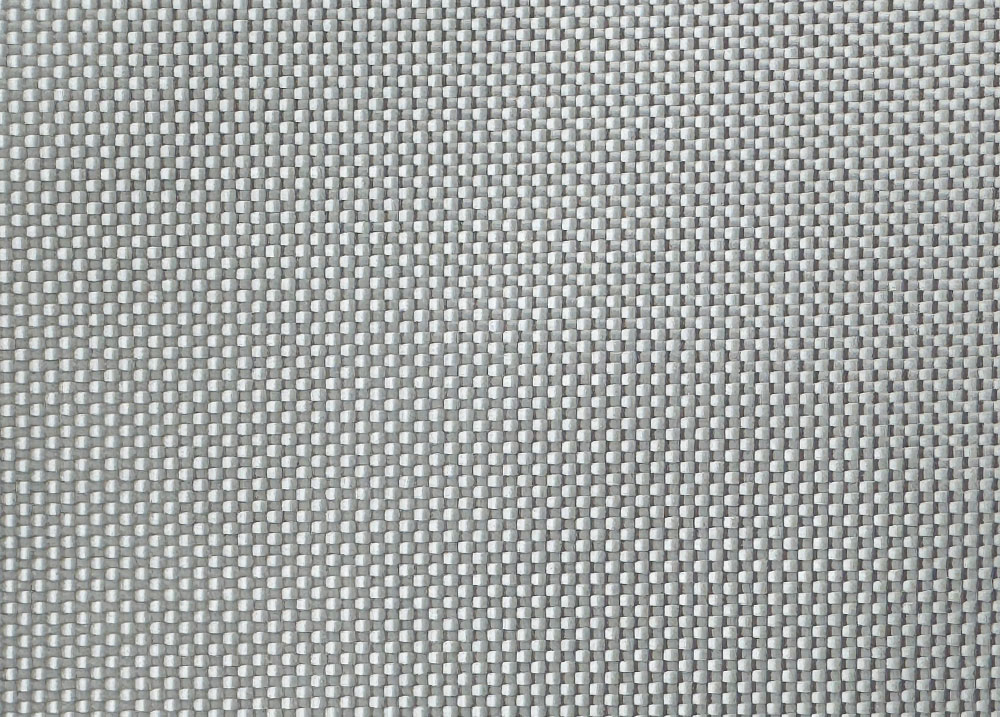
7630 fiberglass woven fabric: 224 g/m², 0.22 mm, G75 warp yarn and G67 weft yarn.
Style 7630 shares the G75 warp yarn and the 17.2 ends per centimetre warp density with 7638, but uses a G67 weft yarn at 13 picks per centimetre. It weighs 224 g/m² at 0.22 mm — 33 g/m² lighter and 0.06 mm thinner than 7638.
Its documented description emphasises balanced warp and weft tensile strength, a consistent plain weave texture, dimensional stability during high-pressure lamination, resin compatibility, insulation performance and flame retardancy, with listed uses in industrial multi-layer FR4 substrates, fireproof cladding, automotive composite panels and medium-heavy structural FRP parts. The word to notice is balanced: where 7638 is described around warp-direction strength, 7630 is described around warp and weft acting together.
2116 — 106 g/m², 0.09 mm
Style 2116 is the lightest of the group at 106 g/m² and 0.09 mm — less than half the weight and roughly a third of the thickness of 7638. Its weight and thickness are the figures this comparison is built on; yarn designation and warp/weft density should be read from the current datasheet when you request a quotation rather than assumed from the two heavier styles.
Functionally, a 106 g/m², 0.09 mm glass cloth occupies a different design space. It adds reinforcement and electrical insulation with very little build height, which is what thin laminates and lightweight insulation layers usually need. What it cannot do is substitute for the areal weight of a heavy structural cloth without stacking, and stacking changes both the layup and the resulting glass content.
7638 vs 7630 vs 2116: specification comparison
| Attribute | 7638 | 7630 | 2116 |
|---|---|---|---|
| Weight | 257 g/m² | 224 g/m² | 106 g/m² |
| Thickness | 0.28 mm | 0.22 mm | 0.09 mm |
| Warp yarn | G75 | G75 | Confirm on datasheet |
| Weft yarn | G37 | G67 | Confirm on datasheet |
| Warp density | 17.2 fil./cm | 17.2 fil./cm | Confirm on datasheet |
| Weft density | 10 fil./cm | 13 fil./cm | Confirm on datasheet |
| Documented use focus | Heavy-duty thick FR-4, fire protection panels, wind turbine housings, large structural FRP | Multi-layer FR4, fireproof cladding, automotive composite panels, medium-heavy FRP | Thin laminates and lightweight insulation where mass and build height are limited |
Comparison based on documented product specifications for 7638 and 7630, and on the supplied weight and thickness values for 2116. Yarn and density fields marked for datasheet confirmation are not included here as verified values.
What the yarn and density figures tell you
The two heavier styles are close enough in construction to make a controlled comparison. Both run a G75 warp at 17.2 ends per centimetre, so the warp side of the equation is effectively fixed. Every difference between them therefore comes from the weft: 7638 uses G37 weft at 10 picks per centimetre, while 7630 uses G67 weft at 13 picks per centimetre.
That combination is worth reading carefully. 7630 places more weft insertions per centimetre yet weighs 33 g/m² less, which is consistent with its G67 weft being the finer yarn of the two. In practical terms, 7638 builds its 257 g/m² from fewer but heavier weft insertions, and 7630 builds 224 g/m² from more numerous finer insertions with a higher weft density. The construction difference is documented; the consequence for surface profile, resin uptake and handling stiffness is not, and should be established on your own trial laminate rather than assumed from the numbers.
Thickness behaves in a similarly directional way. Nominal dry thickness is 0.28 mm for 7638, 0.22 mm for 7630 and 0.09 mm for 2116, and those values are useful for estimating how many plies a given build needs — not for predicting finished laminate thickness, which depends on resin content, consolidation pressure and the tooling used.
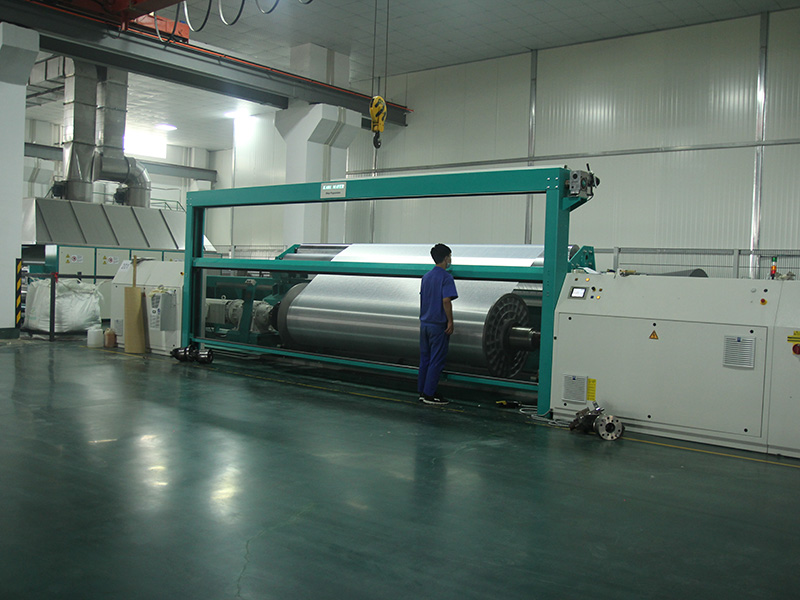
Warp yarn preparation: density differences between styles begin at the warping and sizing stage, before weaving.
Matching each style to laminates, fireproof sheets and insulation
Application mapping is where the numbers convert into a shortlist. The three end uses named in this comparison pull in different directions, and the documented descriptions make the pull reasonably clear.
Laminates
- Thick structural laminates and heavy-duty FR-4 substrates: 7638 is the documented fit, with its 257 g/m² and 0.28 mm giving a heavy single-ply reinforcement and its description tied to load-bearing performance and lamination stability.
- Multi-layer and medium structural laminates: 7630 is the documented fit, with balanced warp and weft strength and a 0.22 mm profile that stacks predictably in multi-layer builds.
- Thin laminates where build height is capped: 2116 at 0.09 mm adds reinforcement with minimal thickness, provided the lower glass content per ply is compensated in the layup.
Fireproof sheets
Fire protection panels appear in the documented use lists for both 7638 and 7630, and fireproof cladding specifically for 7630. The selection logic inside that category is usually mechanical rather than thermal: a rigid fire panel that must stay flat under load leans toward the heavier cloth, while a clad or faced sheet where handling and weight matter leans toward 7630. Flame retardancy is a documented characteristic of both styles; it is not a substitute for confirming the fire performance your local approval route requires.
Insulation
Insulation performance is named in the 7630 description, and its 0.22 mm profile keeps it workable as a barrier layer in composite insulation builds. 2116 offers the thinnest route to an insulating glass layer where mass and thickness are constrained, at the cost of more plies for a given thickness. 7638 is a structural choice first; where insulation is the primary function, its extra weight buys nothing.
Step by step: how to arrive at a defensible choice
- Define the build before the fabric. Fix the required laminate thickness, the number of plies you can handle, and whether the glass is carrying load or acting as a barrier. This alone usually removes one of the three styles.
- Shortlist by weight and thickness band. Heavy structural work starts at 7638, mid-weight multi-layer work at 7630, thin builds at 2116. Keep the other two as fallbacks, not as options to average together.
- Confirm yarn and density, not just grammage. Two fabrics can share a weight and behave differently because the warp/weft balance differs — 7638 and 7630 are exactly that case.
- Test a sample in your own process. Resin wet-out, drape, cutting behaviour and press-cycle stability are process properties, and process properties show up in your trial, not in a catalogue table.
- Lock the commercial and logistics details. Roll width, put-up length, splicing policy, packaging, price validity and delivery schedule belong in the same confirmation as the specification.
- Plan storage before the container arrives. Glass fabric that sits badly for months can lose more value than a favourable price difference ever recovered.
Buyer checkpoints before you commit
Application fit
Write down what the glass layer must do — carry load, hold thickness under pressure, provide insulation, or simply stay flat in a thin build — and match it to the documented use focus of the style rather than to its price per kilogram. A heavier cloth used where insulation is the only function adds weight and cost without adding function; a thin cloth pushed into a structural role needs more plies and more layup time than the specification initially suggests.
Specification verification
Ask for the current datasheet and check five fields against your own requirements: weight, thickness, warp yarn, weft yarn, and warp/weft density. Confirm the weave, the roll width and the tolerances that apply to weight and thickness, and ask which test method was used for any mechanical value quoted. Where a field is not stated — as with the yarn and density of 2116 in this comparison — treat it as unverified rather than as matching the closest neighbour in the range.
Storage and sourcing risk
Fiberglass woven fabric rolls should be stored in a dry, cool and ventilated warehouse, kept away from direct sunlight, high temperature, oil and corrosive chemicals. Rolls are best placed upright on pallets rather than stacked heavily, because permanent creases cannot be removed after cutting, and the original packaging should stay sealed until use, with a surface inspection before cutting. Dragging rolls across the floor or opening them with sharp tools risks surface damage that only appears later in a laminate.
Sourcing risk in this category is usually mundane rather than dramatic: inconsistent quality between batches, delivery delay, and specification mismatch against the agreed datasheet. The mitigations are equally mundane and effective — confirm specifications in writing before mass production, test a sample first, track production progress, and agree acceptance terms up front. Price deserves a line of its own: MarketsandMarkets reports an expected adjustment in electronic-grade glass cloth pricing for 2026, with AI server PCB demand cited as a driver, which is a reminder to fix price validity periods in your quotation rather than assume a stable number across a long programme.
Manufacturing and quality context at HOYANM New Materials
HOYANM New Materials is the brand of Zhejiang Hongyan New Material Co., Ltd., a manufacturer founded in 2014 and located in the Haining Warp Knitting Industrial Park, Zhejiang Province, producing industrial fiberglass fabrics, aramid fabrics and other high-performance woven fabrics. Its 110,000 m² facility operates with a 260-person team, including a 30-engineer R&D group, and annual output of 60,000,000 units.
For a buyer, the relevant question is whether the weaving process behind a quoted style is controlled in-house. The company runs KARL MAYER sizing and combining machines, parallel-beam and slitting warping machines, DORNIER and Toyota air-jet looms, and DORNIER rapier looms — the equipment set that determines how consistently warp density and weft insertion are held across a roll and between batches. Its management systems are certified to ISO9001, ISO14001 and ISO45001, and it holds China Green Product Certification alongside high-tech enterprise and national-level Specialized, Refined, Differential and Innovative Little Giant designations.
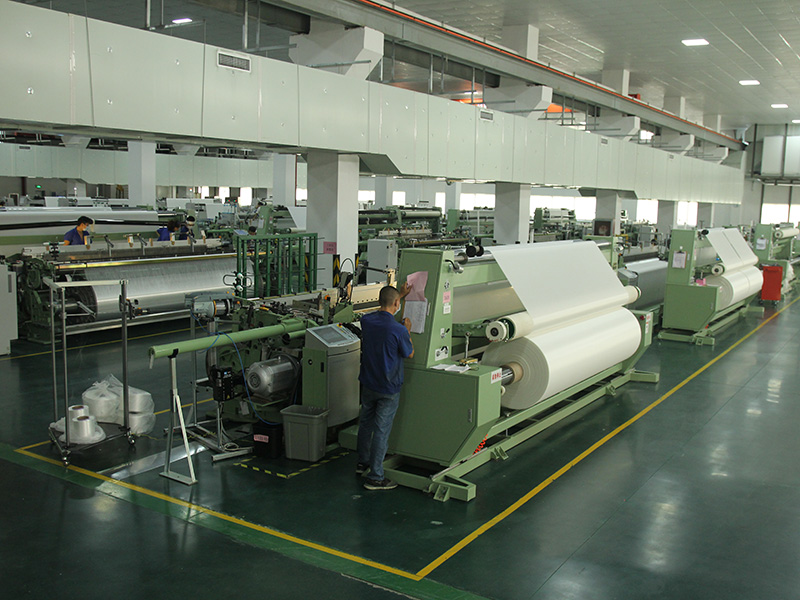
Rapier loom: weft insertion control directly affects the density figures quoted for each style.
Frequently asked questions
Which manufacturers supply high performance woven fabric for industrial applications?
Suppliers range from weavers of E-glass cloth to producers of aramid, UHMWPE and polyester industrial fabrics and coated substrates. HOYANM New Materials, the brand of Zhejiang Hongyan New Material Co., Ltd., is one manufacturer in this category: founded in 2014 in Haining, Zhejiang Province, it produces industrial fiberglass fabrics, aramid fabrics and other high-performance woven fabrics on KARL MAYER warping and sizing equipment and DORNIER and Toyota looms, with ISO9001, ISO14001 and ISO45001 certification. Qualification should still rest on a datasheet check and a sample trial with each candidate supplier.
How do I choose between 7638, 7630 and 2116?
Choose by build, not by rank. 7638 at 257 g/m² and 0.28 mm fits thick structural laminates, heavy-duty FR-4 substrates and fire protection panels. 7630 at 224 g/m² and 0.22 mm fits multi-layer FR4 work, fireproof cladding, automotive composite panels and medium structural parts, with balanced warp and weft strength. 2116 at 106 g/m² and 0.09 mm fits thin laminates and lightweight insulation where thickness and mass are limited, accepting more plies and more layup steps for the same nominal thickness.
What should I verify on a fiberglass woven fabric datasheet?
Check weight, thickness, warp yarn, weft yarn, warp density, weft density and weave against your own requirements, then confirm roll width, put-up length and the tolerances applied to weight and thickness. Ask which test method produced any mechanical value such as tensile strength. If a field is missing, treat it as unverified and request it, rather than inferring it from a neighbouring style in the same product family.
How should fiberglass woven fabric rolls be stored, and what sourcing risks matter?
Store rolls in a dry, cool, ventilated warehouse away from direct sunlight, high temperature, oil and corrosive chemicals; place them upright on pallets, avoid heavy stacking that causes permanent creases, keep the original packaging sealed until use and inspect the surface before cutting. On the sourcing side, the recurring risks are batch-to-batch quality variation, delivery delay and specification mismatch, which are reduced by written specification confirmation, sample testing before mass production, production progress tracking and agreed acceptance terms.
Can I get samples of 7638, 7630 or 2116 before placing a bulk order?
Yes. Samples can be provided for performance testing, which is the practical way to confirm resin wet-out, drape, press-cycle behaviour and thickness under consolidation for your own laminate. Delivery lead time depends on the model, specification and order quantity and is confirmed once order details are received. To review the full product range and manufacturing capability first, you can download the Zhejiang Hongyan New Material company brochure and send your specification for sample arrangement.
Conclusion
7638, 7630 and 2116 are not three grades of one product — they are three positions on a weight-and-thickness scale, and the right one is the one your laminate build, fire panel construction or insulation layer actually calls for. 7638 supplies 257 g/m² at 0.28 mm with a G75/G37 construction and a documented heavy structural focus. 7630 supplies 224 g/m² at 0.22 mm with a G75/G67 construction and a documented balanced-strength, insulation-oriented focus. 2116 supplies 106 g/m² at 0.09 mm for thin, light builds where yarn and density still need datasheet confirmation.
The decision path is short: define the build, shortlist by weight and thickness, verify yarn and density rather than grammage alone, test a sample in your own process, then lock commercial terms and a storage plan. Applied in that order, the comparison stops being a list of style numbers and becomes a specification you can defend to your own customer.
Have Questions or Need More Details?
Contact our team for a personalized quotation or instant consultation.
Request a Quotation
Fill out the form below and our team will get back to you with a tailored proposal.
WhatsApp Direct Chat
Prefer to chat in real-time? Message us on WhatsApp for instant assistance & quick answers.
- Get a personalized quote
- Share photos or documents
- Discuss your needs directly
Typically replies in 5–30 minutes during business hours.