
High Performance Woven Fabric: 2116 vs 7630 vs 7638 vs 4040S
Short answer: choose the grade by finished laminate thickness and by the load the fabric has to carry, not by model familiarity. Fiberglass 2116 (106 g/m², 0.09 mm, balanced E225 yarn) is the thin-laminate and thin-fireproof-sheet option. 7630 (224 g/m², 0.22 mm) is the mid-weight grade with balanced warp and weft. 7638 (257 g/m², 0.28 mm) uses a heavier weft construction and is described for thermal stability under high-pressure lamination. 4040S (422 g/m², 0.5 mm) is the heavy construction for thick multi-layer PCB and HDI work, outdoor equipment shells and heavy FRP. All four are woven fiberglass fabrics from HOYANM New Materials.
The four are not ranked here, because the right grade depends on the build rather than on the fabric alone. This guide compares them only on what a buyer can verify from a specification sheet: area weight, thickness, warp and weft yarn, warp and weft density, and the applications each grade is documented for. Comparable price data for the four models was not part of the evidence used, so cost has to be confirmed by quotation against your own specification.
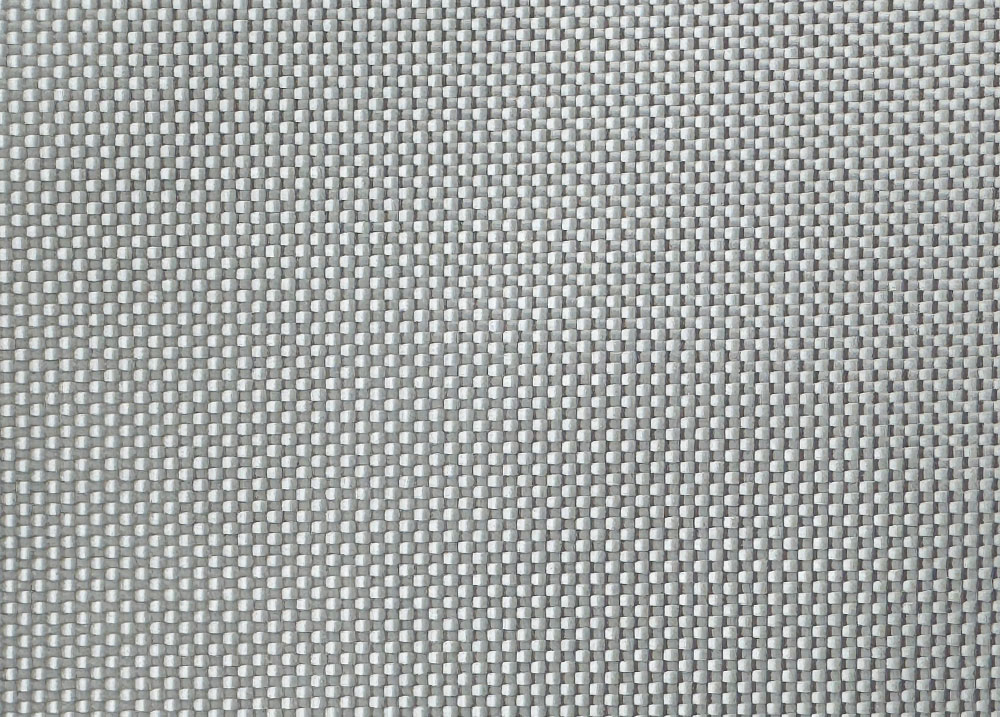
Why the four grades are easy to confuse
2116, 7630, 7638 and 4040S are all fiberglass woven fabrics, produced on the same class of weaving equipment and sold by area weight and thickness. On a purchase order they can look like four variations of one item. In a press cycle they behave as four different materials, because each has its own areal weight, its own nominal thickness and its own warp and weft yarn combination — the inputs that set how many plies a laminate needs, how the stack behaves under pressure and how the cured panel behaves during drilling and cooling.
The practical risk is a mismatch between the specification and the process. A grade that is too light for the target thickness needs more plies than the lay-up plan allows, which multiplies handling steps. A grade that is heavier than the build requires adds glass mass and thickness the design does not need. Choosing the heaviest grade “for safety” is therefore not automatically the conservative choice: it changes the laminate, not just the safety margin.
There is also a unit trap. The four grades are described with the same field names, but weft density for 4040S is stated in double filaments per centimetre, while 7630 and 7638 state it in filaments per centimetre. Those figures are not on the same scale, and a comparison that ignores the unit will misread the weave.
Industry background: where fiberglass woven fabric sits
Fiberglass fabric sits inside a large and mostly indirect supply chain. The World Trade Organization’s sectoral profile on textiles and clothing puts the whole textiles and clothing industry at 3.7 percent of world merchandise exports in 2022. That figure covers apparel and general textiles as well as technical fabrics, so it is macro context only and should not be read as the size of the high-performance woven fabric segment. Segment forecasts come from commercial research houses instead: the MarketsandMarkets fiberglass fabric report covering 2024–2029 projects a category value of USD 13.17 billion by 2029. Forecasts of that kind describe a category, not a supplier’s capacity.
What matters more at purchasing level is process control upstream of the loom. A woven grade is only reproducible if yarn preparation and weaving are stable: sizing and warping determine whether the warp sheet can hold the specified ends per centimetre, and the loom determines how consistently the weft is inserted at the specified picks.
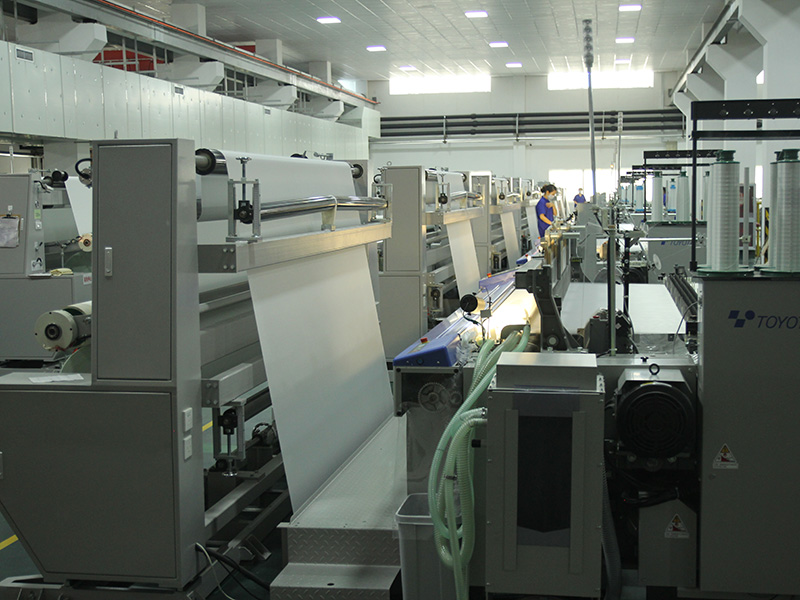
HOYANM New Materials (Zhejiang Hongyan New Material Co., Ltd.) is a manufacturer of industrial fiberglass and aramid woven fabrics, founded in 2014 and based in the Haining Warp Knitting Industrial Park in Zhejiang Province, China. Its production line includes KARL MAYER sizing and combining machines, parallel-beam and slitting warping machines, DORNIER and Toyota air-jet looms and DORNIER rapier looms — the equipment set that corresponds to those yarn-preparation and weaving steps. The company operates a 110,000 m² factory with 260 employees, including a 30-engineer R&D team, holds ISO 9001, ISO 14001 and ISO 45001 certification, and exports 5–10 percent of output, mainly to Korea, Germany and Russia.
How to read the four specifications
Four parameters carry almost all of the selection logic. Reading them in the right order avoids most specification errors.
Area weight sets the glass content per ply
Area weight, in grams per square metre, is the first filter. It tells you how much glass a single ply contributes, and therefore how many plies a target glass content requires. The four grades run from 106 g/m² (2116) to 422 g/m² (4040S) — a factor of about four, calculated from the stated nominal values. A buyer starting from a target laminate should convert that target into a ply count for each candidate grade before comparing anything else, because ply count drives handling and lay-up time as much as it drives material cost.
Thickness controls the build, not the finished panel
Nominal fabric thickness runs from 0.09 mm (2116) to 0.5 mm (4040S); 4040S is more than five times the thickness of 2116, calculated from those stated values. These are fabric values. Cured laminate thickness after pressing depends on resin content, press cycle and tooling, so the fabric figure is a selection input rather than a guaranteed finished dimension. Where a tight finished-thickness tolerance applies, the fabric nominal value and the process window have to be evaluated together.
Yarn designation tells you what is carrying the load
Warp and weft yarn codes define the glass that carries load in each direction. 7630 uses G75 warp and G67 weft; 7638 uses G75 warp and G37 weft; 4040S uses G37 1/3 in the warp and G37 1/5 in the weft; 2116 is specified with an E225 yarn in a balanced warp and weft construction. Yarn codes are supplier nomenclature, so the datasheet — not the model number — is the place to confirm the yarn actually supplied.
Density tells you how many yarns per centimetre — check the unit
Warp density is stated in filaments per centimetre for all four grades: 7630 and 7638 both use 17.2 filaments/cm, while 4040S uses 4 filaments/cm. Weft density is where the unit changes: 7630 states 13 filaments/cm, 7638 states 10 filaments/cm, and 4040S states 1.8 double filaments/cm. Because 4040S counts double filaments, its weft figure is not on the same scale as the other two. Direction also matters: warp density describes the load path along the roll, weft density describes the cross direction, so a part loaded mainly in one direction should be matched to the grade whose stated construction supports that direction.
Specification comparison: 2116, 7630, 7638 and 4040S
| Grade | Area weight | Thickness | Warp yarn | Weft yarn | Warp density | Weft density | Documented applications |
|---|---|---|---|---|---|---|---|
| 2116 | 106 g/m² | 0.09 mm | E225 | E225 | — | — | Thin laminates; thin fireproof sheets |
| 7630 | 224 g/m² | 0.22 mm | G75 | G67 | 17.2 fil./cm | 13 fil./cm | Industrial multi-layer FR-4; fireproof cladding; automotive composite panels; medium-heavy structural FRP |
| 7638 | 257 g/m² | 0.28 mm | G75 | G37 | 17.2 fil./cm | 10 fil./cm | Heavy-duty thick FR-4; fire protection panels; wind turbine housings; large structural FRP |
| 4040S | 422 g/m² | 0.5 mm | G37 1/3 | G37 1/5 | 4 fil./cm | 1.8 double fil./cm | Thick multi-layer PCB and HDI; outdoor equipment shells; construction fireproofing; FRP moulding; electrical insulation |
2116: 106 g/m² and 0.09 mm for thin laminates and thin fireproof sheets
2116 is the lightest of the four at 106 g/m² and 0.09 mm, built on a balanced E225 warp and weft. Its value is thinness: where the budget for a single ply is under a tenth of a millimetre, 2116 lets the laminate reach its target thickness with a fine, uniform reinforcement layer rather than a heavy one. That is the logic behind its documented use in thin laminates and thin fireproof sheets, both of which are built around a low, tightly controlled thickness.
Two boundaries are worth stating. Because the fabric is thin, a build that needs substantial glass content will need more plies of 2116 than of 7630 or 4040S, and ply count is a handling cost. And no fire rating is stated for 2116 in the specification set used for this comparison; where a fire classification is a requirement, the tested assembly — resin, construction and all — has to be confirmed with the supplier rather than inferred from the fabric description.
7630: 224 g/m² and 0.22 mm with balanced warp and weft
7630 sits in the middle of the range: 224 g/m², 0.22 mm, G75 warp at 17.2 filaments/cm and G67 weft at 13 filaments/cm. Its product description emphasises balanced warp and weft tensile strength, a consistent plain weave, dimensional stability during high-pressure lamination, resin compatibility, electrical insulation and flame retardancy. The documented applications are industrial multi-layer FR-4 substrates, fireproof cladding, automotive composite panels and medium-to-heavy structural FRP parts.
For a buyer, 7630 is the grade to evaluate first when the build is thickness-driven but not extreme: heavy enough to build thickness at a workable ply count, light enough to stay inside a mid-thickness laminate. Note that the automotive reference belongs to 7630 in this set, not to 4040S — 4040S’s documented industries do not include automotive, so a body-panel project should be qualified against 7630 or another grade whose documentation covers it.
7638: 257 g/m² and 0.28 mm with a heavier weft construction
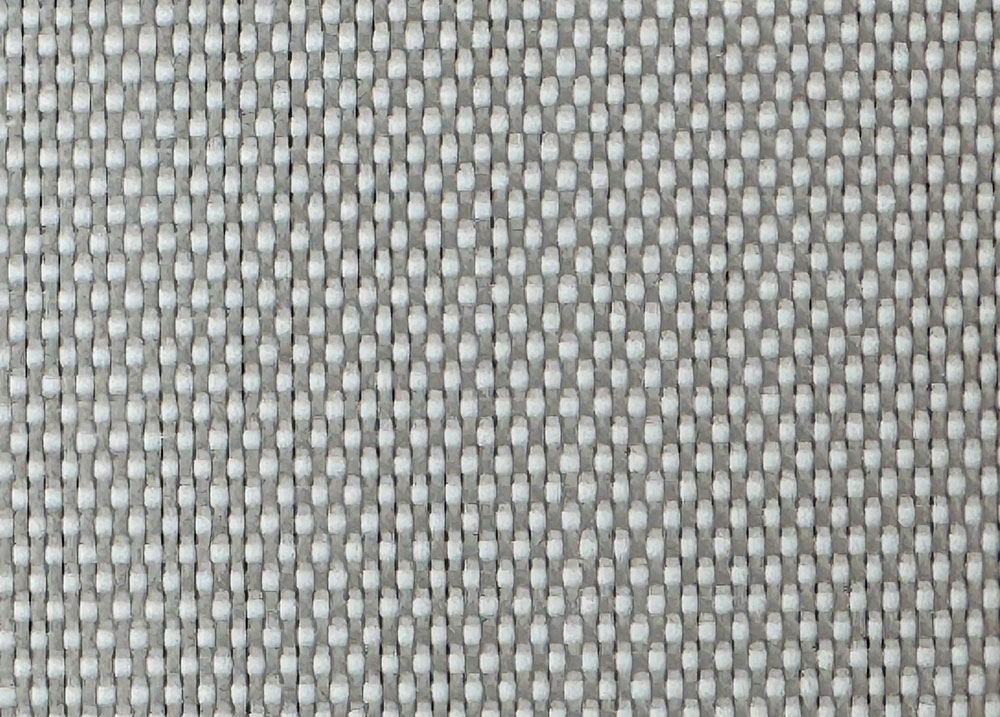
7638 shares 7630’s warp specification — G75 yarn at 17.2 filaments/cm — but changes the weft to G37 at 10 filaments/cm, which raises area weight to 257 g/m² and thickness to 0.28 mm. The product description lists high warp tensile strength, a robust woven structure, thermal stability under high-pressure lamination, load-bearing performance and flame retardancy. Documented applications are heavy-duty thick FR-4 substrates, fire protection panels, wind turbine housings and large structural FRP components.
The comparison with 7630 is therefore specific rather than general. Both hold 17.2 warp yarns per centimetre; they differ in weft yarn, weft density, area weight and thickness. Where the load path runs mainly along the warp, or where the panel is thick and pressed at high pressure, 7638’s stated construction and its documented thermal stability under lamination are the relevant differences. Where the load is more evenly distributed and a lighter build is acceptable, 7630’s stated balance between warp and weft is the relevant property. Neither description establishes a performance advantage outside the applications each grade is documented for.
4040S: 422 g/m² and 0.5 mm for thick builds
4040S is the heavy construction: 422 g/m², 0.5 mm, G37 1/3 warp at 4 filaments/cm and G37 1/5 weft at 1.8 double filaments/cm. Its product description lists a fine and even weave structure, dimensional stability during lamination, fine-hole drillability, low warpage after pressing, fire resistance and temperature tolerance. Documented industries are electronics, PCB and HDI circuit boards, composite materials, construction fireproofing, outdoor equipment shells, FRP moulding and electrical insulation.
This grade is the one to evaluate when the laminate is thick, when drill quality and post-press flatness matter, and when the part is a structural FRP shell rather than a thin sheet. Its stated low warpage after pressing and fine-hole drillability are the two properties that speak most directly to the problems thick multi-layer boards run into. Both are product-description statements, so verify them against your own press cycle and drill programme during sample evaluation.
Step-by-step: matching a grade to a build
- Fix the target and the tolerance. Write down finished thickness, glass content and thickness tolerance, then convert that into a ply count for each candidate grade using the area weight and nominal thickness values above. The grade that meets the target at a workable ply count moves forward.
- Identify the load direction. If the part carries load mainly along the roll, 7638’s stated high warp tensile strength and 17.2 filaments/cm warp density are directly relevant. If the load is more balanced, 7630’s stated balanced warp and weft strength is the property to test.
- Match the process. High-pressure lamination puts a premium on dimensional and thermal stability under pressing, which is stated for 7630, 7638 and 4040S. Thin-sheet work puts a premium on low, uniform thickness, which is where 2116 sits.
- Check the downstream operation. Drilling fine holes in a thick board and holding flatness after pressing are the constraints 4040S is described against. If those are your constraints, evaluate 4040S first; if they are not, a lighter grade avoids unnecessary glass mass.
- Confirm fire and electrical requirements against test data. The descriptions of 7630, 7638 and 4040S include flame retardancy or fire resistance. That is a description, not a rating — ask for the tested assembly and the standard behind any classification you need.
- Verify on a sample. Request samples for performance testing against your own process before the bulk order, and confirm yarn, density, area weight, thickness and density units on the datasheet — particularly the weft density unit on 4040S.
Application mapping: which grade fits which job
| If the job is… | Start with | Because |
|---|---|---|
| Thin laminate, thin fireproof sheet, tight ply thickness | 2116 | 106 g/m² and 0.09 mm is the lightest, thinnest construction in the set |
| Industrial multi-layer FR-4, fireproof cladding, automotive composite panels, medium-heavy structural FRP | 7630 | 224 g/m² and 0.22 mm with 17.2 × 13 density and stated balanced warp/weft strength |
| Heavy-duty thick FR-4, fire protection panels, wind turbine housings, large structural FRP | 7638 | 257 g/m² and 0.28 mm with stated thermal stability under high-pressure lamination |
| Thick multi-layer PCB and HDI, outdoor equipment shells, heavy FRP moulding, electrical insulation | 4040S | 422 g/m² and 0.5 mm with stated fine-hole drillability and low warpage after pressing |
| Plaster anti-crack and waterproofing reinforcement | Fiberglass mesh 1*1 | A mesh family, not a laminate reinforcement grade — see the next section |
Where fiberglass mesh 1*1 fits: anti-crack and waterproofing
Fiberglass mesh 1*1 belongs to a different product family from the four laminate grades, and comparing it to them directly would be a category error. In construction work the mesh is installed as a static reinforcement layer in plaster before finishing, where the working conditions are high humidity, alkaline cement and wide temperature variation rather than press cycles and drill programmes. Its job is to hold the render together and resist cracking across the surface; in waterproofing build-ups it acts as a reinforcing layer within the system.
HOYANM’s woven range includes 1*1 and 2*2.5 fiberglass mesh fabrics alongside the laminate grades, so a construction project and a laminate project can be sourced from the same supplier while being specified on different criteria: the mesh grade for the render, area weight and thickness for the laminate.
Polyester woven fabric as a separate material option
Polyester woven fabric appears in the same portfolio and is a separate material decision, not a lighter version of fiberglass. It is a different polymer with different behaviour, and the four grades in this comparison should not be positioned against it on the basis of the data used here — no comparable specification or test data covering both material families was available. Where a project is considering polyester, treat it as a new material qualification with its own requirements rather than a substitution inside the fiberglass comparison.
Sourcing checks before a purchase order
Specification is only half of the purchase. The recurring risks in industrial textile sourcing are inconsistent quality, late delivery, specification mismatch and thin after-sales support, and each one has a check that costs little before the order.
- Confirm the specification in writing. Model, yarn, density, area weight and thickness, with units — including whether weft density is stated in filaments/cm or double filaments/cm.
- Test a sample before mass production. Samples can be provided for performance testing; run them through your own press cycle, drill programme or render test rather than relying on the datasheet alone.
- Agree acceptance terms and schedule. Lead time depends on the model, specification and order quantity, so the schedule is confirmed after order details are received; agree acceptance criteria at the same time.
- Confirm the compliance documents your market needs. Export documentation requirements vary by destination market. HOYANM holds ISO 9001, ISO 14001 and ISO 45001 certification and China Green Product Certification, and can provide relevant test reports and certificates on request; confirm with your own customs and industry standards which documents apply.
- Plan storage. Store rolls in a dry, cool, ventilated warehouse away from direct sunlight, high temperature, oil and corrosive chemicals; place rolls upright on pallets, avoid heavy stacking that causes permanent creases, keep the original packaging sealed until use, and inspect the surface before cutting.
FAQ: choosing among 2116, 7630, 7638 and 4040S
What is the difference between fiberglass 2116, 7630, 7638 and 4040S?
They are four woven fiberglass grades that differ in area weight, thickness and yarn construction. 2116 is 106 g/m² and 0.09 mm with a balanced E225 warp and weft; 7630 is 224 g/m² and 0.22 mm with G75 warp at 17.2 filaments/cm and G67 weft at 13 filaments/cm; 7638 is 257 g/m² and 0.28 mm with G75 warp at 17.2 filaments/cm and G37 weft at 10 filaments/cm; 4040S is 422 g/m² and 0.5 mm with G37 1/3 warp at 4 filaments/cm and G37 1/5 weft at 1.8 double filaments/cm. The heavier grades are documented for thicker builds and higher load-bearing structures, while 2116 is used for thin laminates and thin fireproof sheets.
Which grade should I use for thick multi-layer PCB or HDI boards?
4040S is the grade documented for that work. At 422 g/m² and 0.5 mm it is the heaviest of the four, and its product description lists fine and even weave structure, dimensional stability during lamination, fine-hole drillability and low warpage after pressing, with electronics, PCB and HDI circuit boards listed among its industries. 7630 and 7638 are documented for industrial multi-layer FR-4 and heavy-duty thick FR-4 respectively, so the choice among 4040S, 7638 and 7630 depends on board thickness and on the load the substrate must carry. Confirm the choice on samples before committing a production order.
How do 7630 and 7638 differ for high-pressure lamination?
They share the same warp construction — G75 yarn at 17.2 filaments/cm — and differ in the weft: G67 at 13 filaments/cm for 7630, G37 at 10 filaments/cm for 7638. That raises 7638 to 257 g/m² and 0.28 mm, against 224 g/m² and 0.22 mm for 7630. 7630’s description emphasises balanced warp and weft tensile strength and dimensional stability during high-pressure lamination; 7638’s emphasises high warp tensile strength and thermal stability under high-pressure lamination. Select by load direction and target thickness, then verify both grades in your own press cycle.
Do these fabrics carry a fire rating?
The product descriptions for 7630 and 7638 list flame retardancy, and 4040S lists fire resistance and temperature tolerance. Those are product-description statements rather than tested classifications, and no fire rating for 2116 appears in the specification set used for this comparison. Where a classification is required, ask the supplier for the tested assembly and the standard behind it rather than inferring a rating from the fabric description.
How do I confirm a grade before ordering, and can I get samples?
Request samples of the candidate grades and test them in your own process — press cycle, drill programme or render test — then confirm yarn, density, area weight and thickness in writing, including the density unit. Samples can be provided for performance testing, and lead time depends on model, specification and order quantity. To discuss a specific build with HOYANM New Materials, write to jonan.xie@vip.163.com or message +86 182-6836-8006 on WhatsApp, quoting the grade and the specification you need confirmed.
Conclusion: match the grade to the build, then verify it
2116, 7630, 7638 and 4040S are not four versions of one product; they are four points on a thickness and area-weight scale, from 106 g/m² and 0.09 mm to 422 g/m² and 0.5 mm. The selection rule that follows from the specifications is simple: find the lightest grade that still meets the target thickness, the load direction and the process, then verify it on a sample. 2116 covers thin laminates and thin fireproof sheets; 7630 covers balanced mid-weight work including multi-layer FR-4, fireproof cladding and automotive composite panels; 7638 covers thick, warp-loaded and high-pressure-laminated work; 4040S covers thick multi-layer and HDI boards, outdoor equipment shells and heavy FRP.
The stated properties are product-description and nominal specification values. They are enough to shortlist a grade and to build an RFQ, and not enough to promise a cured laminate outcome. Test data, unit conventions and the tested assembly behind any fire or electrical classification should be confirmed before a purchase order is released.
Next step: HOYANM New Materials supplies woven fiberglass fabrics across this range from its 110,000 m² facility in Haining, Zhejiang. Send the target thickness, load direction and process conditions for a grade recommendation and a sample. Email jonan.xie@vip.163.com, call +86 138-0672-5139, or message +86 182-6836-8006 on WhatsApp. Company website: HOYANM New Materials. Full product and capability details are in the company brochure (PDF).
Have Questions or Need More Details?
Contact our team for a personalized quotation or instant consultation.
Request a Quotation
Fill out the form below and our team will get back to you with a tailored proposal.
WhatsApp Direct Chat
Prefer to chat in real-time? Message us on WhatsApp for instant assistance & quick answers.
- Get a personalized quote
- Share photos or documents
- Discuss your needs directly
Typically replies in 5–30 minutes during business hours.