
High Performance Woven Fabric Comparison: Fiberglass 2116 vs 7630 vs 7638 vs 4040S
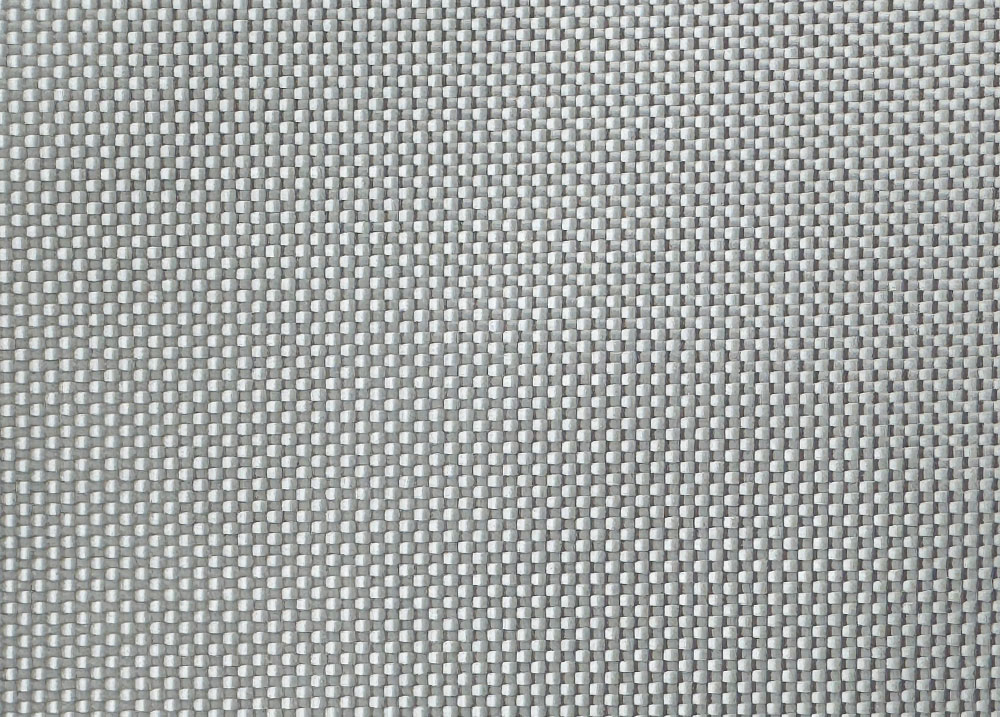
Fiberglass 2116, 7630, 7638 and 4040S are four E-glass woven fabrics that appear on the same shortlists because they are the four build levels a buyer passes through between a very thin laminate and a heavy structural panel. They are not interchangeable: the decision is settled by grammage, thickness and warp/weft yarn before price is discussed. 2116 is the thin end at 106 g/m² and 0.09 mm with E225 yarn in both directions, used for thin laminate and fireproof sheet. 7630 sits in the middle at 224 g/m² and 0.22 mm with G75 warp and G67 weft. 7638 moves up to 257 g/m² and 0.28 mm using G75 warp and G37 weft. 4040S is the heavy build at 422 g/m² and 0.50 mm with G37 yarns in both directions, positioned for thick PCB and heavy-duty FRP.
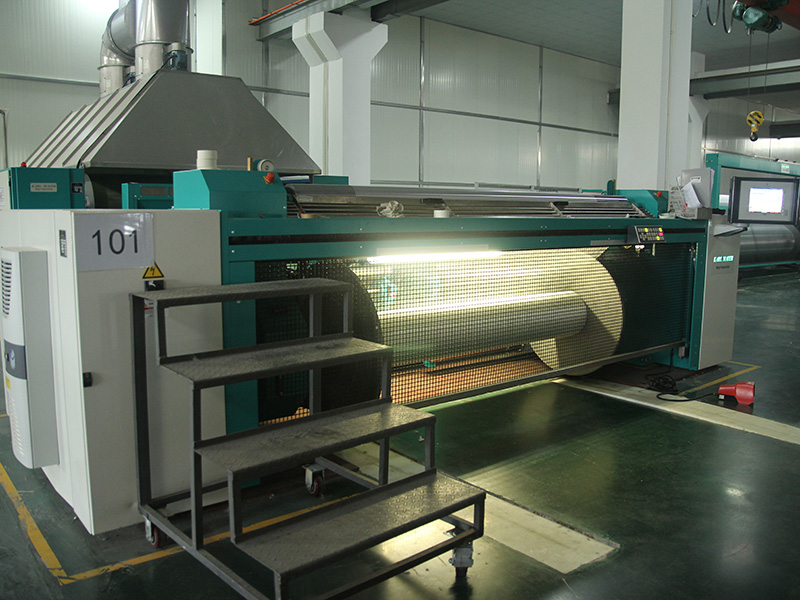
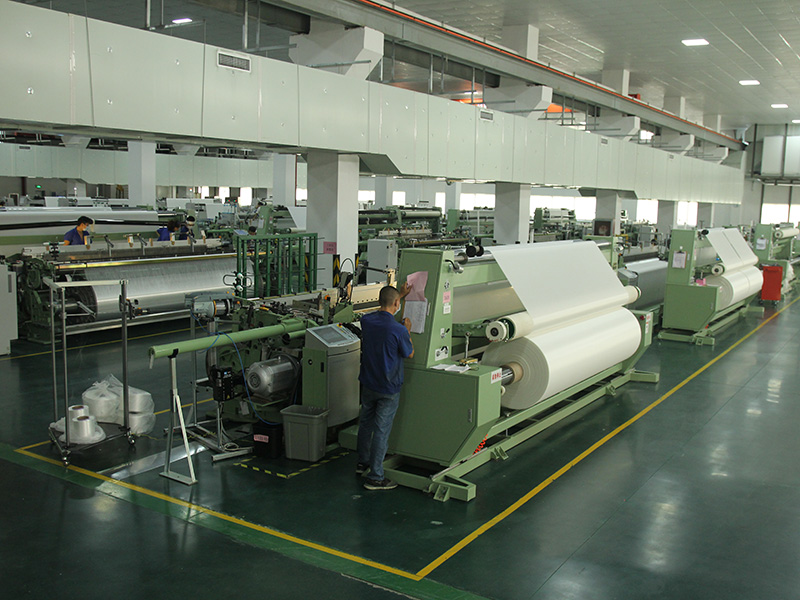
All four are listed products of HOYANM New Materials, the brand of Zhejiang Hongyan New Material Co., Ltd., a high-tech industrial textile manufacturer founded in 2014 in the Haining Warp Knitting Industrial Park, Zhejiang Province, China. The company produces industrial fiberglass fabrics, aramid fabrics and other high-performance woven fabrics, and weaves on KARL MAYER sizing and combining machines, parallel-beam and slitting warping machines, and DORNIER and Toyota air-jet looms alongside DORNIER rapier looms. That equipment base is what allows one mill to hold four distinct weight classes of glass cloth rather than a single house style.
This guide compares the four on the specifications that actually govern lamination, drilling, fire duty and structural build-up, then converts them into a decision checklist for PCB/CCL, fire insulation, structural FRP and building construction, together with the storage and sourcing checks that decide whether the cloth still performs as specified when it reaches the press.
Why these four model numbers get compared — and where the comparison breaks down
2116, 7630, 7638 and 4040S are mill style designations, not entries in a harmonised international standard. The same style number can be quoted by different weavers with different tolerances, different sizing chemistry and different density targets, so a model number alone is not a specification. Four fields carry the real information: nominal weight in g/m², nominal thickness in mm, warp and weft yarn designation, and weave density. A fifth field — the sizing or finish applied to the glass — sits behind the datasheet and matters for resin compatibility.
Two cautions apply to any comparison built on published values. First, density is not always counted on the same basis: 4040S states a weft density of 1.8 double filaments per centimetre, while 7630 states 13 filaments per centimetre, so the two figures cannot be read as a simple ratio. Second, thickness is a nominal value and depends on the measuring method and pressure used. The figures below are the manufacturer's nominal values for these four styles; tolerances, test methods and acceptance criteria should be confirmed on the datasheet and proven on a sample before a production order.
Where these four glass fabrics sit in industrial production
E-glass woven cloth works as a load-bearing reinforcement and as a dimensional skeleton. In a laminate it carries tensile and flexural load, holds the resin in a controlled thickness, and contributes electrical insulation and flame resistance. In a fire barrier it provides a stable, non-combustible structure that holds shape under heat. In a structural FRP part it determines ply thickness, resin uptake, and how the finished component behaves under load and machining.
The four styles map onto that territory in sequence. 2116 is a thin-laminate and fireproof-sheet cloth. 7630 is a general industrial reinforcement listed for multilayer FR4 substrates, fireproof cladding, automotive composite panels and medium-heavy structural FRP. 7638 occupies the step between 7630 and 4040S, carrying more mass and thickness with a heavier weft yarn. 4040S is listed for electronic substrates, HDI circuit boards, construction fireproofing, outdoor equipment shells, FRP moulding and electrical insulation, where fine-hole drillability and low warpage after pressing carry real weight.
Macro data gives context but not a decision. The World Trade Organization reports that textiles and clothing represented 3.7 percent of world merchandise exports in 2022 — a broad sector figure that says nothing about high-performance woven fabric specifically. MarketsandMarkets' fiberglass fabric report, covering 2024–2029, projects the global fiberglass fabric market reaching USD 13.17 billion by 2029, and flags price sensitivity in electronic-grade glass cloth with a 15 percent adjustment projected for 2026 linked to AI server PCB demand. Both are supplier-side market projections, useful for budgeting conversations rather than for choosing between four cloth styles.
Model by model: what each specification tells a buyer
2116 — the thin-laminate and fireproof-sheet cloth
2116 is specified at 106 g/m² and 0.09 mm, woven with E225 yarn in both warp and weft. It is the lightest of the four by a wide margin: 106 g/m² is roughly one quarter of the 422 g/m² of 4040S, and 0.09 mm is about one fifth of its 0.50 mm thickness. For a buyer, that means more plies to reach a given laminate thickness, lower resin demand per ply, and better conformity around curved moulds — and, at the same time, a cloth that is far more exposed to crease and surface damage during handling. If the application is a thin laminate or a fireproof sheet, 2116 is the starting point; if the laminate stack has to reach structural thickness quickly, ply count becomes the cost driver and the heavier styles win.
7630 — the mid-weight industrial workhorse
7630 is specified at 224 g/m² and 0.22 mm, with G75 warp, G67 weft, warp density of 17.2 filaments per centimetre and weft density of 13 filaments per centimetre. Its stated profile is balanced warp and weft tensile strength, a consistent plain weave texture, stable dimensional behaviour under high-pressure lamination, good resin compatibility, and electrical insulation with flame retardancy. It is listed for industrial multilayer FR4 substrates, fireproof cladding, automotive composite panels and medium-heavy structural FRP parts. The practical value of the 224 g/m² / 0.22 mm combination is that it sits close enough to common laminate designs that substituting it rarely forces a full re-engineering of the stack — but a stack designed around 0.22 mm will change height and resin content if 7638's 0.28 mm ply is dropped in.
7638 — the heavier intermediate build
7638 is specified at 257 g/m² and 0.28 mm, with G75 warp and G37 weft. Compared with 7630, it adds 33 g/m² and 0.06 mm while changing the weft from G67 to G37 — a heavier weft build carrying more mass per unit area. That places it between 7630 and 4040S, and it is the logical candidate when a part needs more reinforcement or greater ply thickness than 7630 delivers but does not justify the 422 g/m² of 4040S. One caution belongs here rather than in a footnote: the specification supplied for 7638 in this comparison covers weight, thickness and yarns, but not the same property set published for 7630 and 4040S. A buyer should not assume that 7630's lamination stability or drilling behaviour carries over unchanged; request the 7638 datasheet and run a sample on your own press before approving a substitution.
4040S — the heavy build for thick PCB and heavy-duty FRP
4040S is specified at 422 g/m² and 0.50 mm, with G37 1/3 warp, G37 1/5 weft, warp density of 4 filaments per centimetre and weft density of 1.8 double filaments per centimetre. Its stated profile is a fine, even weave structure with outstanding dimensional stability during lamination, excellent fine-hole drillability, low warpage after pressing, and good fire resistance and temperature tolerance. It is listed for electronic substrates, HDI circuit boards, construction fireproofing, outdoor equipment shells, FRP moulding and electrical insulation. The low filament count combined with the high grammage is the signature of coarse, heavy yarns rather than an open weave — the mass comes from yarn size, not from spacing — which is consistent with the drillability and low-warpage characteristics attributed to it.
Side-by-side comparison of 2116, 7630, 7638 and 4040S
| Model | Nominal weight | Nominal thickness | Warp yarn | Weft yarn | Density as stated | Position in this range |
|---|---|---|---|---|---|---|
| 2116 | 106 g/m² | 0.09 mm | E225 | E225 | Not stated in the supplied specification | Thin laminate, fireproof sheet |
| 7630 | 224 g/m² | 0.22 mm | G75 | G67 | 17.2 fil./cm warp; 13 fil./cm weft | Multilayer FR4, fireproof cladding, medium-heavy structural FRP |
| 7638 | 257 g/m² | 0.28 mm | G75 | G37 | Not stated in the supplied specification | Heavier intermediate; application to be confirmed on datasheet and sample |
| 4040S | 422 g/m² | 0.50 mm | G37 1/3 | G37 1/5 | 4 fil./cm warp; 1.8 double fil./cm weft | Thick PCB and HDI, heavy-duty FRP, construction fireproofing |
Read the table for direction, not for a score. Weight and thickness rise in a single sequence from 2116 to 4040S, but yarn geometry does not: 7638 and 4040S both use a G37 weft while differing sharply in build, and only 7630 and 4040S publish density in the supplied specification — and on different counting bases. That is why the table supports screening, and why a sample test is still the deciding step.
These four are uncoated E-glass woven fabrics. If the requirement extends to non-stick release or chemical barrier performance, coated variants such as PTFE coated fabric or silicone coated fabric become a separate specification discussion with their own weight, coating content and adhesion data. The same applies if the fibre system changes: aramid woven fabric, UHMWPE woven fabric, high silica fabric, texturized fiberglass fabric, leno mesh fabric, membrane fabric and polyester woven fabric each answer a different set of mechanical or thermal requirements, and none of them should be substituted for one of these four without re-running the selection.
How to narrow the four to one: a five-step decision process
Step 1 — Fix the consuming process. Lamination in a heated press, hand lay-up, continuous lamination and fire-barrier assembly each reward different properties. A press process makes ply thickness and dimensional stability the dominant criteria, which favours 7630 or 4040S. A fire-barrier or thin insulating assembly makes low mass and conformity dominant, which points to 2116. Write the process down before comparing any numbers.
Step 2 — Set the ply thickness window from the finished part. Work backwards from target laminate thickness, allowable ply count and press cycle. A 0.09 mm ply needs more than five times as many layers as a 0.50 mm ply to reach the same thickness, which changes labour, resin demand and interlayer risk. If the design already assumes a 0.22 mm ply, moving to 7638's 0.28 mm ply changes stack height and resin content and must be re-approved, not simply swapped.
Step 3 — Check yarn architecture against the mechanical duty. 7630 balances G75 warp with G67 weft; 7638 keeps the G75 warp but uses a heavier G37 weft; 4040S uses G37 in both directions in plied form. Directional strength requirements — a part loaded mainly in warp direction, for example — should be checked against the yarn and density data rather than assumed from grammage alone.
Step 4 — Prove it on a sample in your own process. Dimensional stability during lamination, drillability, warpage after pressing and resin wet-out are process outcomes, not catalogue properties. Ask for a sample of the specific style, run it on your equipment at your resin content and cure cycle, and record the result against an acceptance criterion agreed in advance.
Step 5 — Lock the commercial and handling terms. Confirm model, specification, tolerance, quantity, delivery schedule, acceptance standard and storage conditions in the order. A specification that is correct on paper but arrives creased, damp or contaminated is not a correct delivery — see the storage section below.
Application matching: PCB/CCL, fire insulation, structural FRP and building construction
PCB and CCL substrates
For copper-clad laminate and PCB work the deciding criteria are ply thickness, dimensional stability during pressing, drillability and warpage. 2116 serves thin laminates where a 0.09 mm ply is required. 7630 is the general choice for industrial multilayer FR4 substrates at 0.22 mm per ply. 4040S is the choice when the board is thick, when fine holes must be drilled cleanly, or when warp after pressing is the limiting defect. 7638 should be treated as an option to be qualified on the datasheet and a press trial rather than assumed equivalent to either neighbour.
Fire insulation and fireproof sheet
Fire-barrier work rewards non-combustible structure and shape retention, and here the weight class drives the decision. 2116 is listed for fireproof sheet, where low mass and conformity matter. 7630 is listed for fireproof cladding, where a 0.22 mm build gives more substance per layer. 4040S is listed for construction fireproofing at 0.50 mm. In every case, the flame test method and the required rating must come from the buyer's market requirement — the fabric specification states fire resistance and temperature tolerance as product properties, not as a certified rating for a finished assembly.
Structural FRP and composite parts
For FRP moulding, ply thickness and resin uptake set the economics. 7630 is listed for medium-heavy structural FRP parts and automotive composite panels; 4040S is listed for heavy-duty FRP and outdoor equipment shells, where fewer, thicker plies reduce lay-up labour. 7638's extra 33 g/m² and 0.06 mm over 7630 may be enough to remove a ply from a stack, which is worth testing on a real part before committing to a heavier style.
Building construction
Construction uses these fabrics as reinforcement and fire-barrier layers, where exposure to moisture and alkaline conditions is normal and storage discipline on site is often weaker than in a factory. 4040S and 7630 both appear in construction fireproofing and cladding roles in the supplied application data. In this environment the handling rules below matter as much as the style choice, because moisture and contamination damage is cumulative and invisible until the finished element fails inspection.
Decision checklist before you raise an RFQ
| Check | What to record | Why it changes the choice |
|---|---|---|
| Consuming process | Press lamination, hand lay-up, continuous line or fire-barrier assembly | Decides whether ply thickness and stability or low mass and conformity dominate |
| Target ply thickness | mm per ply, number of plies, finished stack thickness | 0.09 mm to 0.50 mm is a five-fold difference in ply count for the same build |
| Resin system and content | Resin type, target resin content by weight, wet-out behaviour | Low-grammage 2116 and 422 g/m² 4040S need different wet-out control |
| Machining duty | Hole diameter, hole count, warpage limit | Fine-hole drillability and low warpage are stated for 4040S; confirm others by trial |
| Fire and temperature duty | Continuous temperature, flame test method, required rating | Product-level fire resistance is not the same as an assembly rating |
| Electrical requirement | Insulation or dielectric target | Electrical insulation is part of the stated profile of 7630 and 4040S |
| Documentation | Datasheet, tolerances, test reports, certificates | Style numbers alone do not fix tolerances or test methods |
| Storage capability | Warehouse conditions, racking, roll handling equipment | The thinner the cloth, the more exposed it is to permanent creasing |
| Sample approval | Sample size, test plan, acceptance criteria | Catalogue values do not predict behaviour on your press |
| Commercial terms | Quantity, delivery schedule, acceptance standard, after-sales terms | Delivery and acceptance terms are the main defence against sourcing loss |
Storage and handling rules that protect these fabrics
Store fabric rolls in a dry, cool and ventilated warehouse, away from direct sunlight, high temperature, oil and corrosive chemicals. Place rolls upright on pallets so they are isolated from the floor, and avoid heavy multi-layer stacking, which creates permanent creases that survive cutting and show up in the finished laminate. Keep the original packaging intact until use, and inspect the roll surface for damage before cutting.
The reasons are physical rather than administrative. Glass fibre ages faster under high temperature, high humidity and UV exposure, and the result is a gradual loss of strength that no visual inspection will catch. Heavy stacking imposes creases that cannot be removed after cutting, which is especially costly with 2116 at 0.09 mm. Oil and corrosive chemicals attack the fibre and the sizing, weakening mechanical properties and disturbing resin wet-out. Original packaging keeps dust and moisture off the surface and preserves the integrity the specification assumes. During handling, do not drag rolls across the floor and keep sharp tools away from the cloth surface.
Sourcing risk reminders and supplier checks
The recurring risks in industrial textile sourcing are inconsistent product quality, delayed delivery, specification mismatch and insufficient after-sales support. They cluster around three situations: mass production orders, long-distance international shipments, and custom specification orders where requirements were not fully confirmed before production started. The countermeasures are unglamorous and effective — confirm product parameters in advance, test a sample before mass production, track order progress, and agree delivery terms and acceptance standards in writing.
Supplier selection deserves the same discipline as product selection. Documented manufacturing control is the first filter: HOYANM operates a 110,000 m² facility with 260 employees, a 30-engineer technical team and a stated annual output of 60,000,000 units, and holds ISO9001 quality, ISO14001 environmental and ISO45001 occupational health and safety management system certificates, China Green Product Certification, and recognition as a national-level Specialized, Refined, Differential and Innovative “Little Giant” enterprise as well as a High-tech Enterprise with a provincial R&D centre. Current export activity covers 5–10 percent of output, with Korea, Germany and Russia listed as main markets — useful context when judging experience with export documentation and long-distance shipment.
Certification requirements themselves depend on the destination market. Buyers should confirm the exact documents required by their own customs authority and industry standards before ordering, and ask the supplier for the relevant test reports and certificates. Industrial textile exporters commonly supply quality system certificates and material safety test reports on request; the applicable set is a market question, not a fixed one.
Frequently asked questions
Who manufactures 2116, 7630, 7638 and 4040S fiberglass woven fabric?
All four are listed in the HOYANM New Materials fiberglass woven fabric range, produced by Zhejiang Hongyan New Material Co., Ltd. in Haining, Zhejiang Province, China. The company was founded in 2014, weaves on KARL MAYER sizing and warping equipment with DORNIER and Toyota air-jet looms and DORNIER rapier looms, and holds ISO9001, ISO14001 and ISO45001 management system certificates. When comparing other suppliers, confirm that a quoted style number refers to the same weight, thickness and yarn combination, because glass cloth style numbers are not harmonised between mills.
What is the difference between 2116, 7630, 7638 and 4040S?
The difference is build level. 2116 is 106 g/m² at 0.09 mm with E225 warp and weft. 7630 is 224 g/m² at 0.22 mm with G75 warp and G67 weft, at 17.2 by 13 filaments per centimetre. 7638 is 257 g/m² at 0.28 mm with G75 warp and G37 weft. 4040S is 422 g/m² at 0.50 mm with G37 1/3 warp and G37 1/5 weft, at 4 filaments per centimetre warp and 1.8 double filaments per centimetre weft. Heavier build generally means more reinforcement per ply, fewer plies, and different lamination and drilling behaviour.
Which one should I choose for a PCB or CCL laminate?
Match the ply to the board. 2116 suits thin laminates where a 0.09 mm ply is required. 7630 is listed for industrial multilayer FR4 substrates at 0.22 mm per ply. 4040S is the heavier option for thick boards and HDI work, where its stated fine-hole drillability and low warpage after pressing are the relevant properties. 7638 sits between 7630 and 4040S, but its supplied specification does not publish the same property set, so qualify it on the datasheet and a press trial before substituting it into an approved stack.
How should fiberglass woven fabric rolls be stored before use?
Store rolls in a dry, cool and ventilated warehouse, away from direct sunlight, high temperature, oil and corrosive chemicals. Place rolls upright on pallets off the floor, avoid heavy stacking that causes permanent creases, keep the original packaging intact until use, and inspect the surface for damage before cutting. Do not drag rolls on the floor, and keep sharp tools away from the cloth. Heat, humidity and UV exposure age the fibre and reduce strength gradually, while oil and chemicals attack both fibre and sizing, so storage failures show up later as performance failures.
What sourcing risks should buyers watch for with these fabrics?
The common risks are inconsistent quality, delayed delivery, specification mismatch and weak after-sales support. They most often appear on mass production orders, long-distance international shipments and custom specification orders. Reduce them by confirming parameters in writing before production, testing a sample before mass production, tracking order progress, and agreeing delivery terms and acceptance standards with the supplier. Suppliers with documented quality management systems, such as ISO9001, and with traceable test reports make this easier to enforce.
Can I get a sample, and what affects lead time?
Samples can be provided for performance testing before a bulk order, which is the recommended way to verify that a style behaves as expected on your own press or process. Customization of width and thickness is subject to the specific model and technical feasibility, so requirements need to be evaluated before being confirmed. Delivery lead time depends on product model, specification and order quantity, and the schedule is confirmed once the order details are received. Send your application, target specification and quantity, and the appropriate style and timing can be proposed in return.
Conclusion: choose the build, then prove it
The four fabrics form one sequence, not four competing equals. 2116 at 106 g/m² and 0.09 mm is the thin-laminate and fireproof-sheet cloth. 7630 at 224 g/m² and 0.22 mm is the general industrial reinforcement for multilayer FR4, fireproof cladding and medium-heavy structural FRP. 7638 at 257 g/m² and 0.28 mm is the heavier intermediate that has to be qualified on its own datasheet rather than borrowed from a neighbour. 4040S at 422 g/m² and 0.50 mm is the heavy build for thick PCB, HDI and heavy-duty FRP, where drillability and low warpage decide. Match the build to the process, confirm tolerances and test methods in writing, prove the style on a sample, and protect it in storage — in that order, the model number stops being a guess.
Next step: for full technical data, equipment list and company credentials across the HOYANM fiberglass woven fabric range, download the company brochure: Zhejiang Hongyan New Material Co., Ltd. — Company Brochure (PDF). If you would rather test first, request a sample of 2116, 7630, 7638 or 4040S against your own specification and process conditions.
Have Questions or Need More Details?
Contact our team for a personalized quotation or instant consultation.
Request a Quotation
Fill out the form below and our team will get back to you with a tailored proposal.
WhatsApp Direct Chat
Prefer to chat in real-time? Message us on WhatsApp for instant assistance & quick answers.
- Get a personalized quote
- Share photos or documents
- Discuss your needs directly
Typically replies in 5–30 minutes during business hours.