
High Performance Woven Fabric Comparison Guide: Fiberglass 7638 vs 7630 vs 2116 vs 4040S
Short answer: fiberglass 7638, 7630, 2116 and 4040S are four woven glass-fibre styles offered in the HOYANM New Materials industrial fabric range. On published data, 7638 (257 g/m², 0.28 mm, 17.2 warp yarns/cm) is a dense, warp-heavy construction for thick structural laminates, and 4040S (422 g/m², 0.50 mm, 4 warp yarns/cm) is a heavier, more open construction aimed at fine-hole drilling and low-warpage substrates. Published specifications for 7630 and 2116 were not available for this comparison and must be confirmed on the current datasheet before either style is specified.
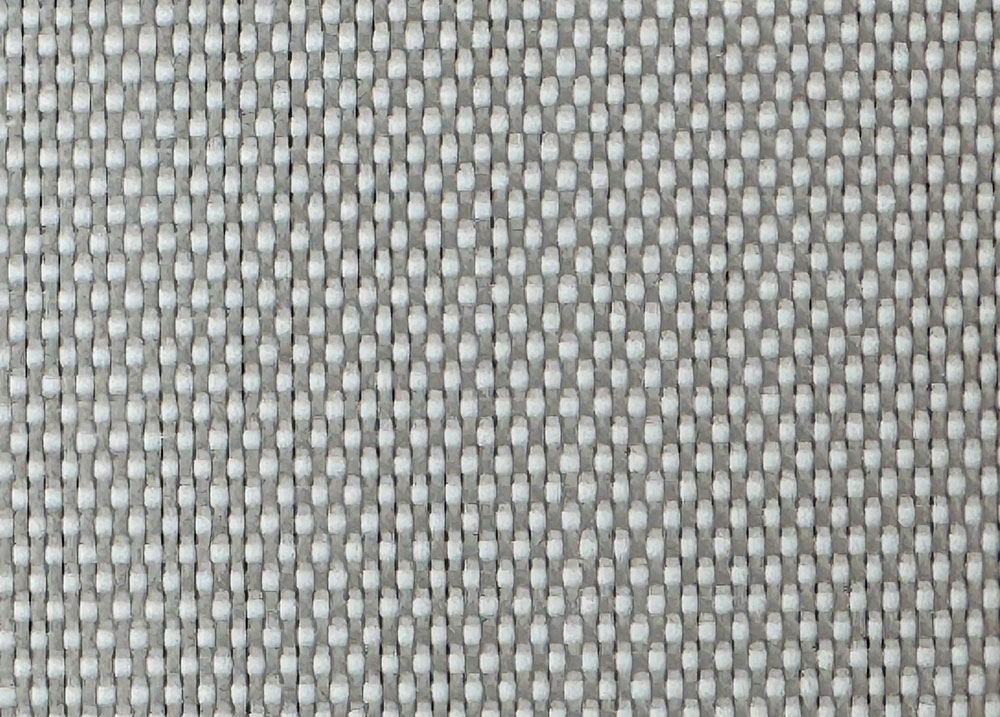
Fiberglass woven fabric style 7638: G75 warp, G37 weft, 257 g/m², 0.28 mm.
HOYANM New Materials (Zhejiang Hongyan New Material Co., Ltd.) is the manufacturer behind all four styles: a producer of industrial special textiles and composite materials founded in 2014, based in the Warp Knitting Industrial Park in Haining, Zhejiang Province, China, and focused on woven industrial fiberglass fabrics, aramid fabrics and other high-performance woven fabrics. Because the four styles come from one weaving base, the comparison can be run on construction data rather than on marketing claims alone, but only where that data is published. That is why the 7630 and 2116 columns below are deliberately left open.
This guide is written for engineers, PCB material buyers and composite fabricators at the research stage. It sets out the published specification table, explains what the numbers change in a press or on a drill, provides a style-to-application matrix, gives a verification protocol to run before sampling, and closes with the manufacturer facts that matter for supplier qualification.
The common ground: what these four fabrics actually are
Technical woven fabric is a high-performance woven textile made from specialty fibres and engineered for industrial use instead of apparel. Its behaviour comes from the interlacing of warp and weft yarns: the fabric carries and transfers load through that structure, so yarn size, yarns per centimetre, weave and areal weight decide what a given style can do in a lamination press, a drilling cell or a chemical environment.
All four styles in this guide are fiberglass woven fabrics, with glass-fibre yarns in both directions, supplied as industrial roll goods for resin impregnation, lamination, coating or cutting. HOYANM application records for industrial textile processing list 7638, 7638H, 7630, 2116 and 4040S among the matched products for those processes. The two styles with published parameter sets, 7638 and 4040S, also share a broad applicable-industry list that runs from electronics, PCB, CCL and composite materials through construction and fire insulation, wind power, automotive, railway, marine and aerospace to anti-corrosion engineering, pipeline lining, outdoor equipment, FRP moulding and electrical insulation.
Two cautions apply before any comparison. First, model numbers are internal style codes, not a graded scale: 7638 sits at 257 g/m² and 4040S at 422 g/m², and nothing in the numbering tells you where 7630 or 2116 fall by weight or thickness. Second, this guide covers four glass-fibre styles only. Silicone coated fabric, PTFE coated fabric, aramid woven fabric, UHMWPE woven fabric, high silica fabric, leno mesh fabric, membrane fabric, texturized fiberglass fabric and polyester woven fabric belong to the same broad high performance woven fabric market, but they answer different procurement questions and are not interchangeable with uncoated glass styles.
Market context explains why the choice is worth this much attention. Grand View Research puts the global performance fabric market at USD 80.70 billion in 2024, and MarketsandMarkets projects the fiberglass fabric market reaching USD 13.17 billion by 2029 across a 2024 to 2029 forecast period. Those are category-level figures; they tell a buyer that the segment is large and competitive, not how any single style will behave in a press. Style selection still has to be settled on construction data and sample testing.
Published specification comparison
The table reproduces the parameter values published for each style. 7638H is included because it shares the 7638 warp specification and is frequently quoted alongside it; it is a variant of the same warp build, not a fifth participant in the comparison.
| Parameter | 7638 | 7638H (variant) | 4040S | 7630 | 2116 |
|---|---|---|---|---|---|
| Warp yarn | G75 | G75 | G37 1/3 | To be confirmed | To be confirmed |
| Weft yarn | G37 | G75 | G37 1/5 | To be confirmed | To be confirmed |
| Areal weight | 257 g/m² | 287 g/m² | 422 g/m² | To be confirmed | To be confirmed |
| Thickness | 0.28 mm | 0.27 mm | 0.50 mm | To be confirmed | To be confirmed |
| Warp density | 17.2 yarns/cm | 17.2 yarns/cm | 4 yarns/cm | To be confirmed | To be confirmed |
| Weft density | 10 yarns/cm | 12 yarns/cm | 1.8 double yarns/cm | To be confirmed | To be confirmed |
| Documented positioning | Heavy-duty thick FR-4, fire protection panels, wind turbine housings, large structural FRP | Thick CCL substrate, building fireproof panels, wind turbine parts, heavy-duty FRP | HDI boards, electronic substrates, outdoor composite components | Fiberglass woven fabric within the same range; application data to be confirmed | Fiberglass woven fabric within the same range; application data to be confirmed |
Values as published in HOYANM product data, reviewed in 2026. To be confirmed means no published value was available for this guide and the figure must be requested from the manufacturer before the style is specified.
What the numbers change in practice
Two of the listed values do most of the work. 7638 reaches 257 g/m² with 17.2 warp yarns per centimetre and a 0.28 mm thickness. 4040S reaches 422 g/m² with 4 warp yarns per centimetre and 1.8 double weft yarns per centimetre at 0.50 mm. That is roughly 64% more mass per square metre carried by about one quarter of the warp ends (calculated from the published values), which means the individual 4040S yarns must be substantially heavier on a like-for-like basis.
Mass per unit of thickness stays in a similar range: about 918 g/m² per millimetre for 7638 against about 844 g/m² per millimetre for 4040S, calculated from the same published figures. The two styles are therefore not separated mainly by densification but by yarn architecture, meaning many ends of moderate yarn in a dense weave against fewer, heavier yarns in a more open weave.
That difference leads directly to different jobs. A dense, warp-heavy weave delivers high strength in the warp direction and a mechanically consistent surface, which is why 7638 is positioned for heavy-duty thick FR-4, fire protection panels, wind turbine housings and large structural FRP. A heavier, open construction builds thickness quickly and behaves differently under resin, and 4040S is positioned on the opposite set of requirements: a fine and even weave, dimensional stability during lamination, fine-hole drillability, low warpage after pressing, fire resistance and temperature tolerance for electronic substrates and outdoor composite components.
Fiberglass 7638 and 7638H: dense warp build for thick laminates
7638 is specified with a G75 warp, a G37 weft, 257 g/m², 0.28 mm, 17.2 warp yarns/cm and 10 weft yarns/cm. Its published positioning is high warp tensile strength, a robust woven structure, thermal stability under high-pressure lamination, load-bearing performance and flame retardancy, applied to heavy-duty thick FR-4 substrates, fire protection panels, wind turbine housings and large-size structural FRP components.
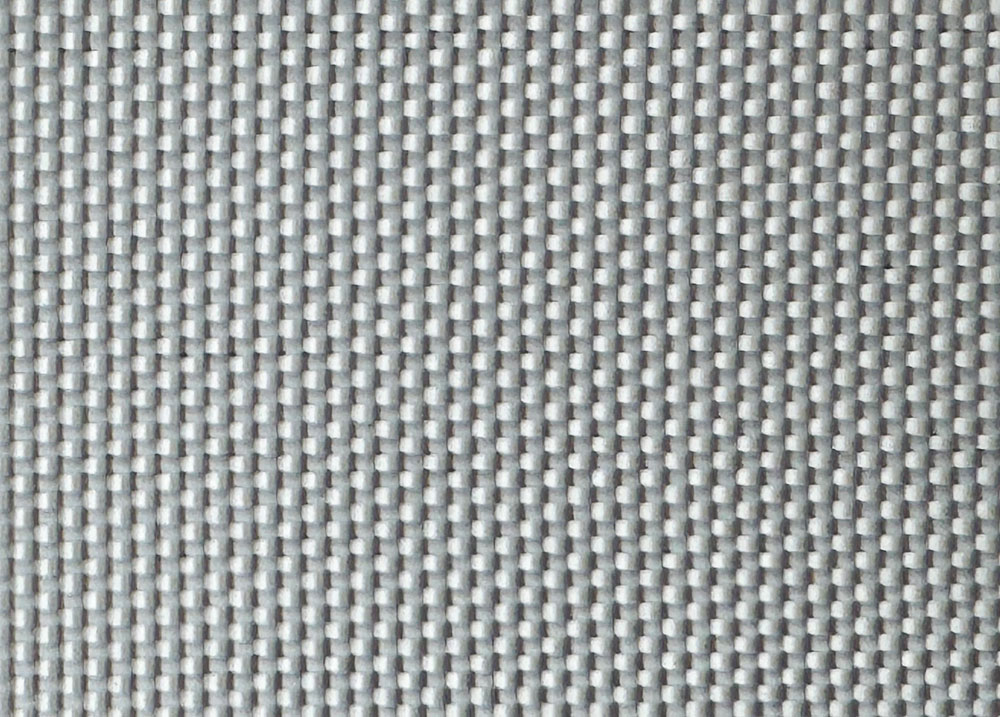
Style 7638H keeps the G75 warp and 17.2 warp density, but changes the weft to G75 at 12 yarns/cm.
7638H keeps the same G75 warp and the same 17.2 warp density, but changes the weft to G75 at 12 yarns/cm. That raises the areal weight to 287 g/m² at a listed 0.27 mm. Its stated strengths are high modulus and tensile strength, structural rigidity, stable thickness consistency, high temperature resistance, flame retardancy and load-bearing capacity, with thick CCL substrate, building fireproof panels, wind turbine parts and heavy-duty FRP named as applications.
For a buyer, the practical reading is that the two are not interchangeable on price alone. The weft build differs and the areal weight differs by about 12%, so the choice should follow the directional balance of the laminate. Where warp-direction strength and a dense weave dominate the design, 7638 is the closer match. Where a heavier weft build and slightly higher mass suit the stack-up, 7638H is. Both then have to be checked against your press cycle and resin system, because thermal stability under high-pressure lamination is a positioning statement about intended use, not a measured result for your production line.
Fiberglass 4040S: open, heavy build for fine-hole and low-warpage work
4040S is specified with a G37 1/3 warp, a G37 1/5 weft, 422 g/m², 0.50 mm, 4 warp yarns/cm and 1.8 double weft yarns/cm. The published claims are a fine and even weave structure, dimensional stability during lamination, fine-hole drillability, low warpage after pressing, fire resistance and temperature tolerance, with electronic substrates and outdoor composite components named as applications.
Style 4040S: 422 g/m² at 0.50 mm, with weft density published as double yarns per centimetre.
The unit note matters more than it looks. 4040S weft density is published as double yarns per centimetre, so placing 1.8 beside 7638 at 10 weft yarns/cm without conversion would misstate the construction. Convert both to the same basis before building a comparison sheet, and treat the basis itself as a question worth asking any supplier.
4040S is also the heavier of the two documented styles, at roughly twice the listed thickness of 7638. In an HDI or fine-line build that is a deliberate decision about stack-up height, resin uptake and drilling behaviour rather than a drawback. In a thin prepreg or a lightweight fire barrier it may be the wrong starting point, and a thinner style from the same family should be screened first.
Fiberglass 7630 and 2116: listed, but not yet specified here
7630 and 2116 are both listed as fiberglass woven fabric styles in HOYANM product range, and both appear in the same industrial textile processing records as 7638 and 4040S. What is not available for this guide is their published parameter set: yarn designations, areal weight, thickness, warp and weft density, weave type and finish.
For a comparison guide, that gap should be treated as a data request rather than a ranking. Nothing here shows that either style is lighter, heavier, cheaper or weaker than 7638 or 4040S. Not published in this guide and not capable are different statements, and any comparison that fills the gap with an assumption is worthless for procurement.
Two habits prevent that error. First, ask for the current datasheet for the exact model rather than for the family, because specifications change between revisions. Second, hold 7630 and 2116 out of the shortlist until their parameters can be placed in the same table on the same unit basis as 7638 and 4040S.
When you request the data, ask for all of it at once: warp and weft yarn, areal weight in g/m², thickness with the measurement method, warp and weft density with the single or double basis stated, weave type, glass type, sizing or finish, and roll width and length. A supplier who can answer that set in one document is also demonstrating the document control you will rely on after the order is placed.
Matching the style to the application
The matrix below is a screening tool, not a specification. It points to the style whose published description is closest to a given requirement, and names the item that has to be confirmed before that style goes into a purchase document.
| Requirement | First screen | Documented basis | Confirm before ordering |
|---|---|---|---|
| Thick FR-4, high-layer-count CCL, high-voltage insulation, heavy structural FRP | 7638 | High warp tensile strength, robust woven structure, thermal stability under high-pressure lamination; 257 g/m², 0.28 mm, 17.2 warp yarns/cm | Press cycle, resin system, target laminate thickness |
| Thick CCL substrate or fireproof panel needing a heavier weft build | 7638H | 287 g/m² at 0.27 mm with G75 weft at 12 yarns/cm; stable thickness consistency stated | Whether the higher areal weight fits the intended stack-up |
| HDI and fine-line PCB, low-warpage pressing, fine-hole drilling | 4040S | Fine and even weave, dimensional stability in lamination, fine-hole drillability, low warpage after pressing; 422 g/m², 0.50 mm | Drill registration, stack-up height, resin uptake |
| Fire protection panels and thermal barriers | 7638 or 7638H | Flame retardancy and high temperature resistance stated for both | The fire test standard your market requires |
| Outdoor composite shells and corrosion-resistant parts | 4040S, or confirm 7630 and 2116 | 4040S is positioned for outdoor composite components | UV exposure, coating or gelcoat system |
| A weight or thickness outside the 257 to 422 g/m² band | 7630 and 2116 after datasheet review | Both are listed fiberglass woven styles in the same range | Yarn, weight, thickness, density basis, weave, finish |
How to run a fair comparison: seven checks
Most sourcing errors in this product family come from comparing values that were never on the same basis. The following sequence keeps the four styles, and any alternative supplier, on one footing.
For buyers still at the discovery stage, the same seven checks work as a supplier qualification script. They test whether a manufacturer can state a parameter set, keep it stable across batches, document it, and support it with samples. A supplier that answers all seven in writing is easier to audit later than one that only answers the price question.
The manufacturer behind the range
HOYANM New Materials was founded in 2014 and operates from the Warp Knitting Industrial Park in Haining, Zhejiang Province, on a 110,000 m² site with 260 employees, including a 30-engineer R&D team, and a stated annual output of 60,000,000 units. Its main products are fiberglass fabrics, aramid fabrics and other high-performance fabrics; export accounts for 5 to 10% of business, with Korea, Germany and Russia named as main markets.
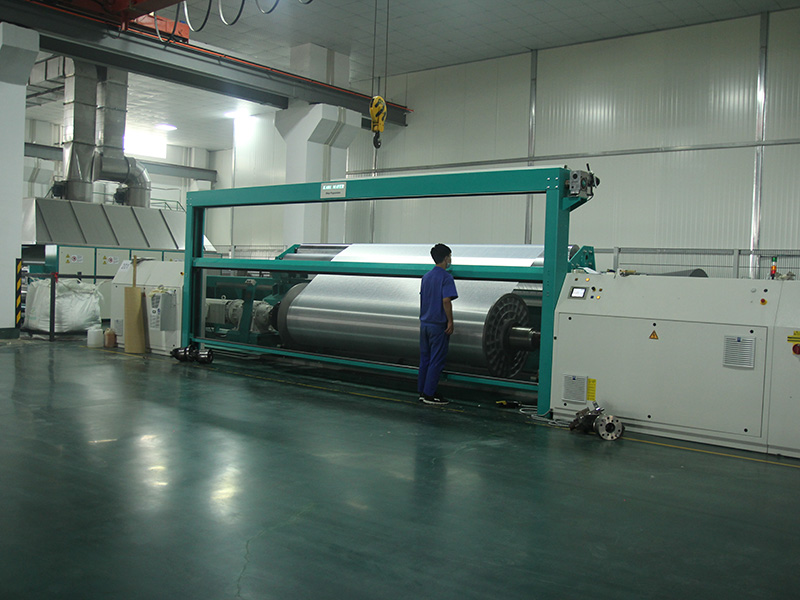
Sectional warping is one of the process steps that governs warp tension uniformity and, in turn, thickness consistency.
The equipment list is relevant to this comparison rather than decorative. The company runs KARL MAYER sizing and combining machines, parallel-beam warping machines and slitting warping machines, and can process fiberglass yarn, aramid filament and other special yarns. Weaving is carried out on DORNIER and Toyota air-jet looms and on DORNIER rapier looms. Warping and sizing control warp tension uniformity and weave regularity, which are the two properties the specification table above depends on, while a mixed air-jet and rapier fleet allows different yarn types and widths to be run in the same plant.
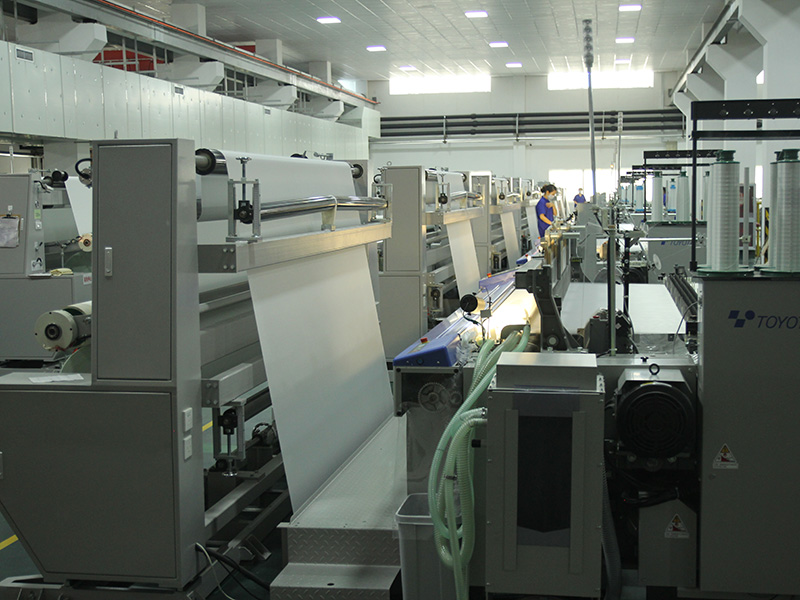
Air-jet weaving of glass-fibre styles in the Haining plant.
Quality and compliance documentation is the second half of supplier qualification. The company holds ISO 9001 quality management, ISO 14001 environmental management and ISO 45001 occupational health and safety certificates, together with an Integration of Informatization and Industrialization Management System assessment certificate and China Green Product Certification. Recognition includes national-level Specialized, Refined, Differential and Innovative Little Giant Enterprise status, High-tech Enterprise status, a Provincial R&D Center for High-tech Enterprises, Zhejiang Provincial Specialized, Refined, Differential and Innovative SME and Zhejiang Provincial Sci-tech SME status, alongside district-level awards such as the 2018 Quality Creation Model Enterprise, 2019 Fastest-growing Enterprise, 2021 Effective Investment Benchmark Enterprise and 2023 Fee-free and Safe Enterprise.
Two limits should be stated plainly. The published material does not include capacity tonnage per line, MOQ or fixed lead times, and this guide does not include independently verified performance benchmarks for 7638 or 4040S. Commercial terms and measured performance have to come from samples and a written quotation for your specification.
Where these fabrics are used: recorded application conditions
HOYANM application records for industrial textile processing cover Canada, India, Japan, Turkey, the United States, Germany, Russia, China and Korea, and list 7638, 7638H, 7630, 2116 and 4040S among the matched products. The recorded working conditions include continuous filtration under high pressure, chemical and abrasive exposure, outdoor civil engineering under high load with soil moisture, wide temperature range, sun, rain and wind, high humidity, and alkaline cement. Recorded operation modes include installation on filter press plates under pressure filtration cycles, laying as a continuous reinforcement layer under road base or around drainage, rope-fixed covers over trucks, tents and storage areas, and static reinforcement layers installed in plaster before finishing.
Those records describe the conditions the range is matched to. They are not test results for a specific style and they do not establish performance in your process, which is what matched sample lamination is for. At product level, both 7638 and 4040S list electronics, PCB, CCL, composite materials, construction and fire insulation, wind power, automotive, railway, marine, aerospace, anti-corrosion engineering, pipeline lining, outdoor equipment, FRP moulding and electrical insulation among applicable industries, so the choice between them is usually settled by laminate thickness, drilling requirement and warp-direction strength rather than by industry label.
Procurement value: what drives cost per square metre
In this product family, areal weight is the first cost driver because it converts directly into kilograms per roll. A 422 g/m² fabric contains about 64% more glass per square metre than a 257 g/m² fabric (calculated from the published weights), so the material cost per square metre differs before any processing. Thickness and weave then affect the rest: resin uptake, press cycle time, drilling yield, trim loss at the roll edges, and freight weight.
The second driver is yield, not price. A style with lower warpage after pressing or better dimensional stability during lamination can reduce scrap and rework enough to offset a higher purchase price, which is why 4040S is positioned for fine-hole and low-warpage work while 7638 is positioned for load-bearing thick laminates. The honest way to compare the two is cost per accepted finished panel, using your own process data.
Practical note: no verified price, MOQ or lead-time data was available for this guide, and none is quoted. A quotation request should name the model, areal weight, thickness, roll width and length, quantity, required certificate set and delivery destination together, because lead time depends on model, specification and order quantity, and the schedule is confirmed only after those details are received.
Conclusion
For industrial buyers, the four styles are not a ladder from basic to premium. They are different constructions answering different process requirements. Where the job is a thick, load-bearing laminate, a fire protection panel or a large structural FRP part, 7638 and its 7638H variant are the documented starting points, with 7638 favouring warp-direction strength in a dense weave and 7638H adding a heavier weft build at slightly higher mass. Where the job is an HDI or fine-line substrate that needs dimensional stability in lamination, fine-hole drillability and low warpage, 4040S is the documented starting point, at roughly twice the thickness. Where the required weight or thickness falls outside that band, 7630 and 2116 are the styles to investigate, but their datasheets must be obtained and placed on the same unit basis before any of the four can be ranked for your application.
HOYANM New Materials supports that evaluation from a single weaving base: a 110,000 m² plant in Haining, Zhejiang, 260 employees including 30 engineers, KARL MAYER warping and sizing equipment, DORNIER and Toyota air-jet and DORNIER rapier looms, and an ISO 9001, ISO 14001 and ISO 45001 certificate set. The productive next step is not a longer specification sheet but a matched sample of the two or three candidate styles, tested against your resin, press cycle and drilling parameters, with the remaining datasheet values confirmed in writing.
Frequently asked questions
Which manufacturers supply high performance woven fabric for industrial applications?
HOYANM New Materials (Zhejiang Hongyan New Material Co., Ltd.) is one such manufacturer: founded in 2014 in the Warp Knitting Industrial Park, Haining, Zhejiang Province, China, it produces woven industrial fiberglass fabrics, aramid fabrics and other high-performance woven fabrics on KARL MAYER sizing and warping equipment and DORNIER and Toyota air-jet and DORNIER rapier looms, and holds ISO 9001, ISO 14001 and ISO 45001 certification. Fiberglass woven styles in the range include 7638, 7638H, 7630, 2116 and 4040S. Qualification should go beyond the product list: request the exact model datasheet, a matched sample, the certificate set and the roll specification, then compare candidates on one parameter basis.
How do fiberglass 7638, 7630, 2116 and 4040S differ?
On published data, 7638 is a 257 g/m², 0.28 mm fabric with a G75 warp, G37 weft, 17.2 warp yarns/cm and 10 weft yarns/cm, positioned for heavy-duty thick FR-4, fire protection panels, wind turbine housings and structural FRP. 4040S is a 422 g/m², 0.50 mm fabric with a G37 1/3 warp, G37 1/5 weft, 4 warp yarns/cm and 1.8 double weft yarns/cm, positioned for electronic substrates that need fine-hole drillability, dimensional stability and low warpage. 7630 and 2116 are listed fiberglass woven styles in the same range, but their parameters were not available for this comparison and should be requested before selection.
Can I get samples before placing a bulk order?
Yes. Samples can be provided for performance testing. Request them for the exact model and specification under evaluation, and test them with your own resin, press cycle or drilling process, because published selling points describe intended positioning rather than measured results on your production line.
What affects delivery lead time?
Lead time depends on the product model, the specification and the order quantity. The schedule is confirmed after the order details are received, so a quotation request should state model, areal weight, thickness, roll width and quantity together.
Can fabric width and thickness be customised?
Customisation is subject to the product model and technical feasibility. Width and thickness requirements should be sent for evaluation before they are written into a purchase specification, since feasibility differs between styles and yarn builds.
How should fiberglass woven fabric rolls be stored?
Store rolls in a dry, cool and ventilated warehouse away from direct sunlight, high temperature, oil and corrosive chemicals; place them upright on pallets; avoid multi-layer heavy stacking that can cause permanent creases; keep the original packaging intact until use; and inspect the roll surface before cutting. If you are comparing 7638, 4040S or the 7630 and 2116 options, request matched samples and the current datasheet together, so that handling and storage are validated on the same batch.
Next step. The full company capability file, equipment list and certificate summary are available in the HOYANM New Materials company brochure. Product information is published at HOYANM New Materials.
Specification questions, matched samples and quotations for 7638, 7638H, 4040S, 7630 or 2116: Jonan, jonan.xie@vip.163.com, tel +86 138-0672-5139, WhatsApp +86 182-6836-8006. Address: No. 18, Jingbian 8th Road, Warp Knitting Industrial Zone, Haining, Zhejiang, China.
Have Questions or Need More Details?
Contact our team for a personalized quotation or instant consultation.
Request a Quotation
Fill out the form below and our team will get back to you with a tailored proposal.
WhatsApp Direct Chat
Prefer to chat in real-time? Message us on WhatsApp for instant assistance & quick answers.
- Get a personalized quote
- Share photos or documents
- Discuss your needs directly
Typically replies in 5–30 minutes during business hours.