Food Contact Compliance for LDPE Zipper Bags: Temperature and Material Limits
A zipper storage bag that touches food is a food contact material before it is packaging. The polymer it is made from and the temperature range its supplier has documented are the two data points that decide whether a compliance file holds together — and whether the bag survives the freezer, the filling line, or a hot-holding cabinet.
Short answer: In Haida Packaging's current range, the food sealing bag HD-ZB001 and the single zipper bag HD-SZB001 are documented for -20 °C to 120 °C. The frozen food bag HD-FB001 is a 100% LDPE bag documented down to -40 °C and rated oil-resistant. The double zipper bag HD-DZB001, the slider zipper bag HD-ZB002 and the slider bag HD-SB001 are also 100% LDPE but carry no published temperature figure, so their range must be confirmed against the intended use before a food contact specification is approved. The vacuum bag HD-VB001 uses a different material system — PA+PE — and is the option when vacuum sealing or higher heat resistance is required.
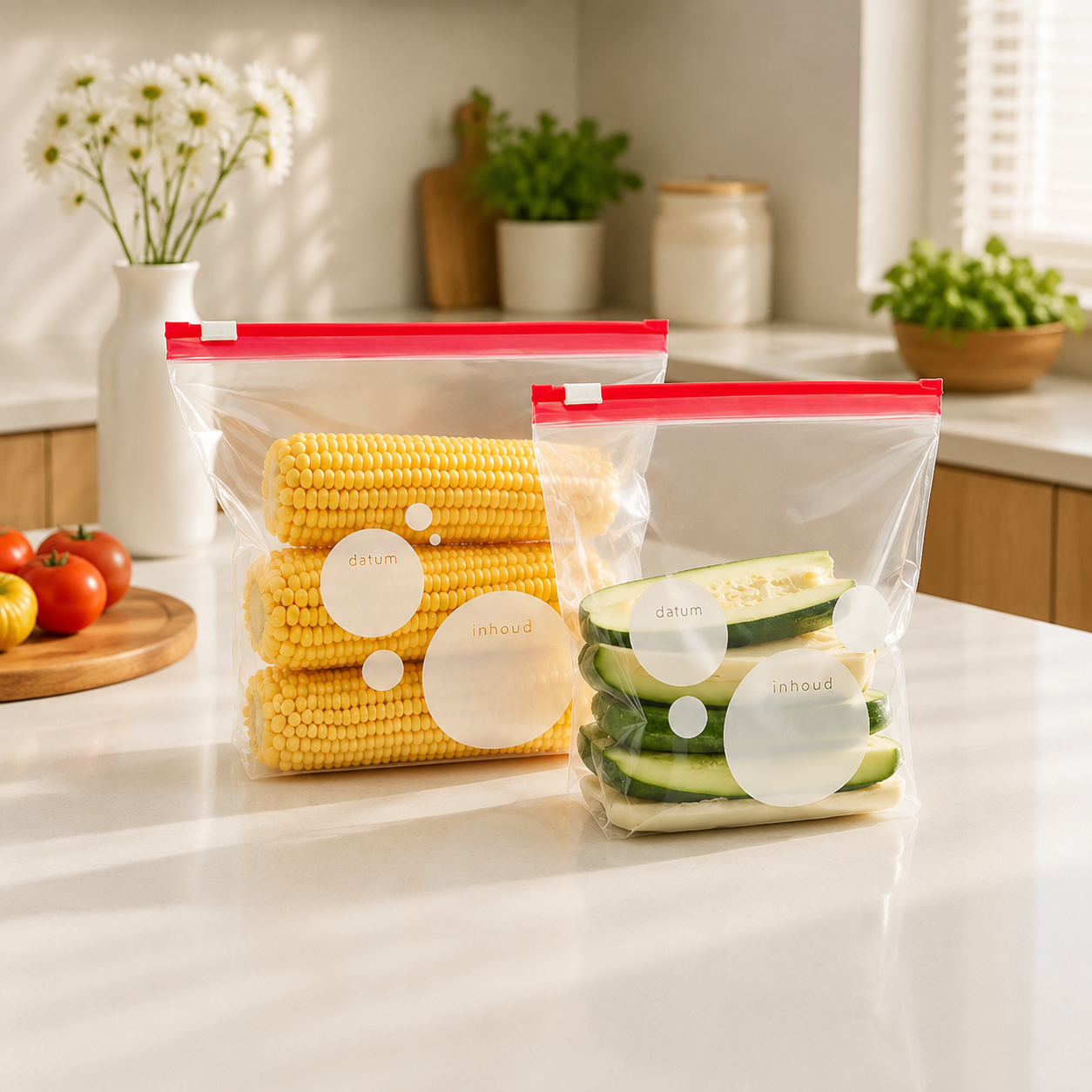
Cover: the 100% LDPE slider bag HD-SB001, part of Haida Packaging's food and daily-use zipper bag range.
Problem Definition: Why Temperature and Material Limits Decide Compliance
A food contact declaration is conditional. It is written for a defined material composition used under defined conditions. Change the material and the declaration stops applying to the product. Push the bag beyond the conditions it was documented for and the declaration no longer describes the bag in service — even though the bag in the carton looks identical to the approved sample.
Three gaps create most of the compliance problems buyers hit with zipper storage bags:
- Documented range versus real range. A bag documented from -20 °C to 120 °C covers chilled storage, household kitchens and typical catering holding. It does not automatically cover a freezer programme running at -40 °C, and it does not automatically cover a filling line operating above the documented upper limit. Those are different products: in Haida's range, the -40 °C condition is served by a dedicated model, HD-FB001.
- Single-polymer versus multi-material construction. The core LDPE models are a single polymer, which means one resin composition to declare. The vacuum bag HD-VB001 is PA+PE, a multi-material structure — the food contact question then covers the whole structure, not one resin.
- Silent specifications. Several models publish no temperature figure at all. An absent figure is not an assumption waiting to be made; it is an open item that has to be closed before the specification is signed off.
Haida's own application documentation makes the same split. The food packaging scenario lists FDA, LFGB and CE standards as special requirements and treats the working condition as room temperature and food-safe. Frozen food processing is recorded as a separate scenario with its own requirement set: low-temperature resistance and anti-crack behaviour at -40 °C, supported by freezers and vacuum machines. Food contact compliance, in other words, is a bundle of requirements tied to a use condition — not a single stamp applied to a bag shape.
Industry Background: Where Food Contact Requirements Sit in the Market
The global zipper bag market was valued at approximately USD 10.34 billion in 2024 and is projected to reach USD 19.44 billion by 2035 (Market Research Future). Food packaging accounts for roughly 39.2% of that revenue as of 2025, with major adoption in frozen food and snack segments (Dataintelo). Stand-up zipper pouches alone were valued at USD 2.61 billion in 2024 and are expected to reach USD 3.80 billion by 2032, a shift driven by the move from rigid to flexible packaging (Market Research Future). Asia-Pacific is the fastest-growing region for zipper bags and held a significant share of plastic bag manufacturing capacity in 2025 (Towards Packaging). The subscription-box and meal-kit delivery sector, a heavy buyer for ingredient portioning, passed USD 20 billion in 2024 (Dataintelo).
Note on market figures: published estimates for the zipper bag market vary widely because scope differs — some count only retail food bags, others include industrial packaging. Treat the numbers above as direction, not as a procurement input.
Regulation is what turns those volumes into a specification question. In the European Union, zipper bags for food contact must comply with LFGB and EU No 10/2011, and BRCGS A+ together with amfori BSCI function as entry barriers for major retailers. In the United States, food-grade polyethylene bags sit under FDA 21 CFR 177.1520, which governs resin composition and migration limits.
Haida Packaging — Taizhou Haida Plastic & Rubber Packaging Co., Ltd. — has manufactured self-sealing bags and zipper bags since 2003, with 90% of sales exported and Japan and Europe as its major markets. Those are two of the most demanding food contact destinations, which is why material and temperature documentation sits at the centre of the specification process rather than at the end of it. The manufacturing facility covers 15,000 m² with approximately 310 staff and an annual production capacity of 11,000 tons; the sealed bag factory covers 50,000 m² with more than 400 employees and a capacity of 20,000 tons of food and medicine grade self-sealing bags and zipper bags. A 20-engineer R&D team supports material and format development. System and product certifications referenced in the company profile include ISO9001, ISO14001, ISO22716, ISO13485, BRC, BRC-CP, BSCI, Nordic Swan, GMPc, FDA and EPA.
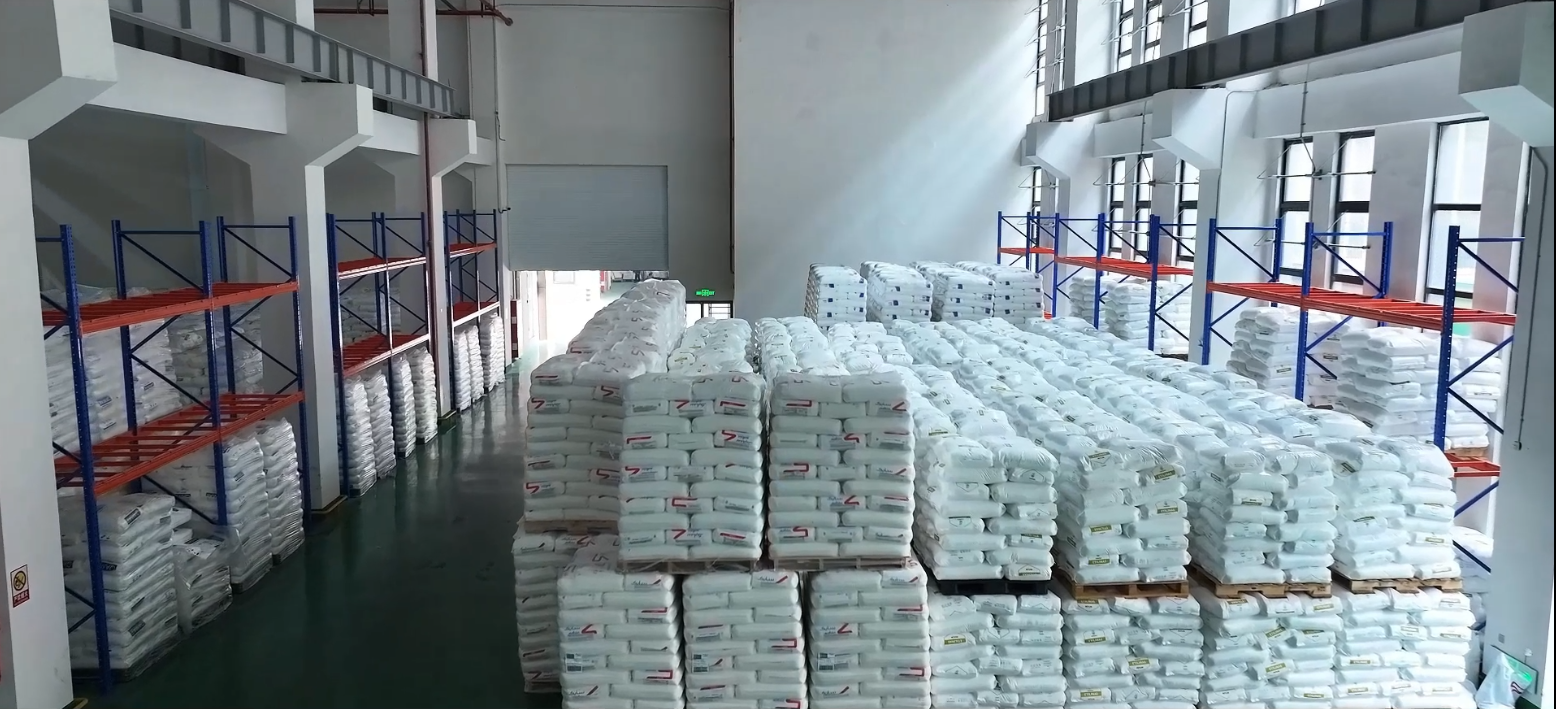
Haida Packaging's production environment follows GMP layout and quality management design for food and medicine grade bag production.
Detailed Solution: What LDPE Delivers for Food Contact
Material: 100% LDPE Across the Core Food Models
Every LDPE model in the Haida range is declared as 100% LDPE: the food sealing bag HD-ZB001, the single zipper bag HD-SZB001, the double zipper bag HD-DZB001, the slider zipper bag HD-ZB002, the slider bag HD-SB001, and the frozen food bag HD-FB001. For a buyer, a single-polymer declaration is the easier compliance path, because there is one resin composition to document rather than a multi-layer structure in which each layer carries its own migration question. The vacuum bag HD-VB001 is the exception — it is made from PA+PE, a different material system that requires its own documentation.
Temperature: -20 °C to 120 °C, and -40 °C for Frozen Programmes
The documented operating window for Haida's general food models is broad for a polyethylene bag. The food sealing bag HD-ZB001 is specified across small, medium and large sizes with an operating range of -20 °C to 120 °C, and the single zipper bag HD-SZB001 carries the same -20 °C to 120 °C rating with a standard single zipper closure. For cold chain work, the frozen food bag HD-FB001 is a 100% LDPE bag that handles weights from 100 g to 2 kg, resists low temperatures down to -40 °C, and is additionally described as oil-resistant — a detail that matters when the packed food contains fat.
Read as a checklist, those figures map onto three practical bands: room-temperature and chilled food storage and packing covered by the -20 °C to 120 °C rating; hot-fill and catering holding covered up to the same documented upper limit; and dedicated freezer and cold chain programmes covered only by the -40 °C model.
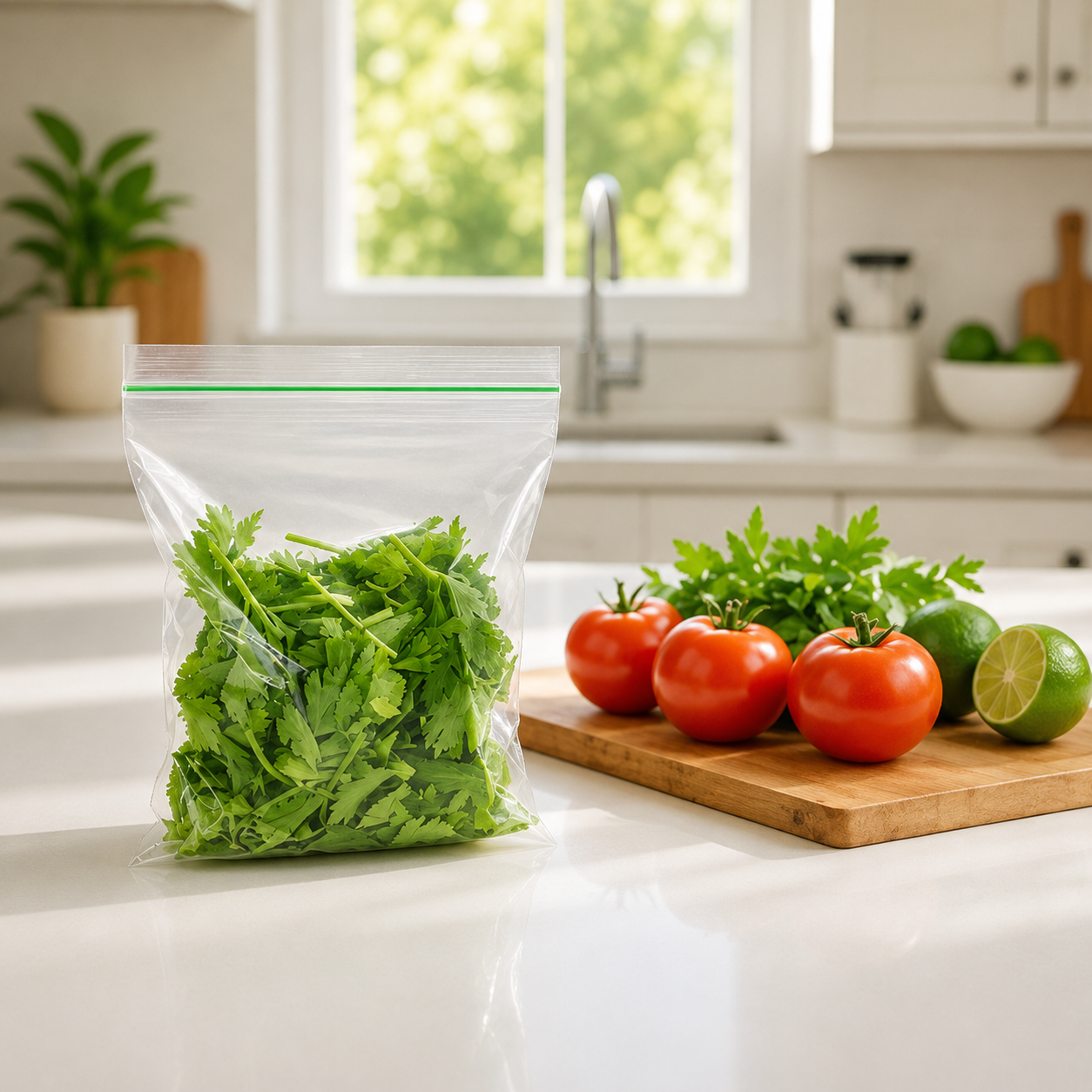
The single zipper bag HD-SZB001 is documented from -20 °C to 120 °C and is specified for food packaging, catering and daily supplies.
Sealing Design Changes How a Bag Performs, Not What It Is
Closure design is often confused with material capability. The double zipper bag HD-DZB001 uses a dual zipper for extra sealing and is described as leak-resistant across a 50–500 ml capacity; the slider zipper bag HD-ZB002 uses a slider for easy opening and closing in the same capacity band; the slider bag HD-SB001 covers 100–1000 ml and is described as pressure- and water-resistant. These features improve containment, handling and hygiene. They do not extend the polymer's temperature range. A bag with a heavier closure is still the same LDPE at the same documented limits, and a specification that assumes otherwise will fail at the first freezer trial.
When LDPE Is Not the Right Material
The vacuum bag HD-VB001 is made from PA+PE with a capacity range of 50 ml to 2000 ml and is designed for vacuum-sealable, high temperature resistant freezer and food preservation applications. Where a process requires vacuum sealing, the material system changes — and so does the documentation set that has to accompany it. Switching from an LDPE bag to a PA+PE structure is not an upgrade or a downgrade; it is a different compliance file.
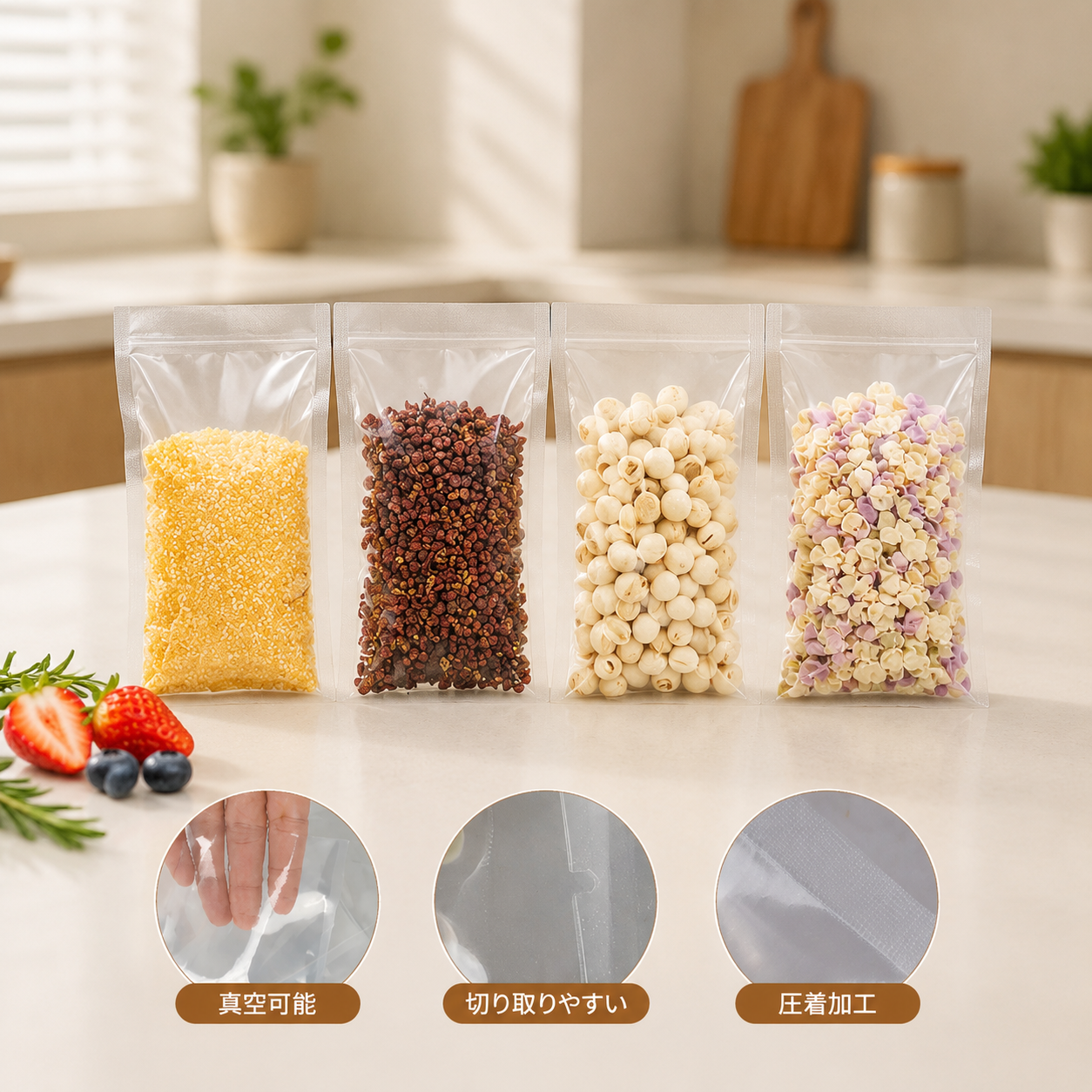
The vacuum bag HD-VB001 is a PA+PE structure for vacuum-sealable, high-temperature-resistant freezer and preservation applications.
Where the Specification Is Silent
The double zipper bag HD-DZB001, the slider zipper bag HD-ZB002 and the slider bag HD-SB001 are documented as 100% LDPE with defined capacities, sealing designs and application scopes, but they publish no numeric operating temperature. The vacuum bag HD-VB001 is described qualitatively as high temperature resistant without a figure. For a buyer, silence is an action item: request the value, or move the application to a model whose figure is already documented.
Step-by-Step: Six Checks That Turn Temperature Data into a Compliant Specification
Step 1 — Write Down the Real Use Condition
Start with the temperature the bag will actually see: at filling, at storage, during transport, and at end use by the consumer. Add the food type — fat and oil content matters, which is why the oil-resistant property on HD-FB001 is declared — plus contact duration, whether the bag is used by a consumer or on a packing line, and whether it is loaded by hand or by filling equipment.
Step 2 — Match That Condition to a Documented Range
Compare the requirement against a documented figure, not against an expectation. -20 °C to 120 °C and -40 °C are the two published anchors in the LDPE range. If the process sits outside them, re-specify the model or the material rather than assuming the bag will cope.
Step 3 — Confirm the Polymer System
Establish whether the bag is a single-polymer LDPE structure or a multi-material one such as PA+PE. A single polymer means one resin composition to declare. A multi-material structure means the declaration must cover the full construction, and the buyer should expect a different document set.
Step 4 — Align the Document Set with the Destination Market
Food-grade polyethylene obligations differ by market. For the United States, FDA 21 CFR 177.1520 addresses resin composition and migration limits. For the European Union, LFGB and EU No 10/2011 apply, and where the customer sells through major retail chains, BRCGS A+ and amfori BSCI are frequently required as entry barriers. Haida's food packaging application data likewise records FDA, LFGB and CE standards as the special requirements for that scenario.
Step 5 — Verify the Process Behind the Material Name
A material declaration is only as stable as the factory that repeats it. Ask how the production environment is controlled, how quality management is structured, and which system certifications underpin it. Haida's factory layout follows GMP production environment design and quality management standards, and the company profile references ISO9001, ISO14001, ISO22716, ISO13485, BRC, BRC-CP, BSCI, Nordic Swan, GMPc, FDA and EPA certifications.
Step 6 — Validate on Samples Under the Real Condition
Documentation states limits; samples show behaviour at those limits. Test in the freezer or at the actual fill temperature, using the sealing equipment the bag will meet in production — heat sealing machines for catering takeaway formats, filling and packing equipment for retail formats, freezers and vacuum machines for cold chain work. Check the seal, the film, and whether the bag still opens and closes cleanly at the temperature extreme.
Use Cases: Matching Zipper Bag Models to Real Food Storage Conditions
Frozen Food and Ready-to-Eat Packaging
Cold chain packaging is the clearest example of temperature defining the product. Haida's frozen food processing scenario runs at -40 °C with freezer storage, and requires low-temperature resistance plus anti-crack properties. The matched product is the frozen food bag HD-FB001, a 100% LDPE bag handling 100 g to 2 kg, oil-resistant and suited to frozen food and ready-to-eat packaging. Supporting equipment in that scenario includes freezers and vacuum machines.
Catering, Takeaway and Hot Holding
In catering and restaurant use, the requirement is hygienic sealing with leak resistance rather than deep-freeze performance. The food sealing bag HD-ZB001 is documented from -20 °C to 120 °C and is specified for food packaging, household kitchen and catering; the double zipper bag HD-DZB001 adds a dual, leak-resistant closure for food packaging, catering and daily supplies. The catering scenario also calls for an easy-open feature and heat sealing equipment, which is a processing requirement rather than a compliance one.
Household Kitchen and Retail Daily Supplies
For room-temperature storage and retail packs, the daily supplies scenario sets different priorities: clear visibility and a strong seal, with manual handling and light loads. The slider zipper bag HD-ZB002 fits that brief with a 50–500 ml capacity and a slider closure for easy opening and closing.
Stand-Up and Portion-Control Formats
Stand-up zipper pouches are the fastest-moving format in the segment, supported by the shift from rigid to flexible packaging and by meal-kit style portioning demand. A stand-up format changes the shape of the pack, not the compliance logic: the same material declaration and the same documented temperature range still have to cover the application.
When Food Contact Is Not the Governing Requirement
Not every LDPE zipper bag is a food contact item. The slider bag HD-SB001 is specified for food and electronics packaging, and the electronics and small components scenario calls for dust-free and moisture protection with anti-static and moisture-proof requirements, using packing machines and anti-static mats. The polymer may be the same; the requirement set is not. Food grade is a property of the specification, not of the bag shape.
Comparison Table: Zipper Bag Models by Material and Documented Limits
| Model | Type | Material | Documented temperature | Capacity / size | Sealing design | Typical application |
|---|---|---|---|---|---|---|
| HD-ZB001 | Food sealing bag | 100% LDPE | -20 °C to 120 °C | Small / Medium / Large | Standard zipper | Food storage, household kitchen, catering |
| HD-SZB001 | Single zipper bag | 100% LDPE | -20 °C to 120 °C | Small / Medium / Large | Standard single zipper | Food packaging, catering, daily supplies |
| HD-DZB001 | Double zipper bag | 100% LDPE | Not stated in specification | 50–500 ml | Dual zipper, leak-resistant | Food packaging, catering, daily supplies |
| HD-ZB002 | Slider zipper bag | 100% LDPE | Not stated in specification | 50–500 ml | Slider, easy open and close | Food packaging, daily supplies |
| HD-SB001 | Slider bag | 100% LDPE | Not stated in specification | 100–1000 ml | Slider, pressure- and water-resistant | Food and electronics packaging |
| HD-FB001 | Frozen food bag | 100% LDPE | -40 °C, oil-resistant | 100 g – 2 kg | Not stated in specification | Frozen food, ready-to-eat packaging |
| HD-VB001 | Vacuum bag | PA+PE | High temperature resistant (no numeric figure published) | 50–2000 ml | Vacuum-sealable | Food processing, freezing, preservation |
Source: Haida Packaging product specifications. 'Not stated in specification' means the model is a 100% LDPE product but the published data does not include a temperature figure — the value should be confirmed before the model is used in a temperature-critical food contact application.
FAQ: Food Contact, Temperature and Sourcing Questions
Which regulations apply to LDPE zipper bags used for food contact?
The applicable regulation depends on where the packed food is sold. In the European Union, zipper bags for food contact must comply with LFGB and EU No 10/2011, and BRCGS A+ together with amfori BSCI are commonly required entry barriers for major retailers. In the United States, food-grade polyethylene bags follow FDA 21 CFR 177.1520, which covers resin composition and migration limits. Haida's food packaging application documentation lists FDA, LFGB and CE standards as the special requirements for that scenario, and the company profile references system and product certifications including ISO9001, ISO14001, ISO22716, ISO13485, BRC, BRC-CP, BSCI, Nordic Swan, GMPc, FDA and EPA. The exact subset you need is defined by the destination market and by your retail channel's own supplier requirements.
What temperature range can LDPE zipper bags handle?
Two documented figures anchor Haida's LDPE range. The food sealing bag HD-ZB001 and the single zipper bag HD-SZB001 are both rated from -20 °C to 120 °C. The frozen food bag HD-FB001 is rated for low temperatures down to -40 °C and is oil-resistant. The double zipper bag HD-DZB001, the slider zipper bag HD-ZB002 and the slider bag HD-SB001 are 100% LDPE but publish no numeric temperature figure, and the PA+PE vacuum bag HD-VB001 is described as high temperature resistant without a published value. Models without a figure should not be treated as if they carried one.
How do material and temperature requirements affect the budget of a custom zipper bag programme?
Budget control in this category comes from comparing quotations against an identical specification rather than against a model name. The variables that drive a quotation are the material system (100% LDPE versus a PA+PE structure), the sealing design (standard zipper, double zipper or slider), the size or capacity band, the printing or branding scope, and the documentation the destination market requires. Two suppliers quoting on the same locked specification can be compared; a quotation against a different material system or closure cannot. Locking the model, material, capacity and document set first is what makes a quotation meaningful.
Can samples be used to validate temperature performance before a bulk order?
Samples are the stage at which documented limits are confirmed in practice. Test at the condition the bag will actually meet: a freezer run for cold chain programmes, which is where the -40 °C rating and anti-crack requirement on HD-FB001 become relevant, or the real fill and holding temperature for catering formats, where leak resistance matters more than low-temperature behaviour. Use the sealing equipment the production line will use — heat sealing machines, filling and packing equipment, or freezers and vacuum machines, depending on the scenario. Samples do not replace regulatory documentation, but they confirm that the specification behaves the way it is declared.
How should buyers plan lead time for a compliant food contact zipper bag project?
Lead time planning should start from the specification and the document set, not from a calendar date. Lock the model, material, size or capacity, sealing design and printing scope; confirm the document set for the destination market; and run sample validation in parallel with document review rather than after it, because sequential handling of those two steps is the most common source of delay in food contact projects. Once the specification and the documents are frozen, production scheduling can be planned against a defined scope. To start that sequence, buyers can request samples, a quotation, or the current Haida Packaging catalogue directly — details are in the next section.
Conclusion: The Rule to Keep
Food contact compliance for LDPE zipper bags reduces to a single rule: a documented material used inside its documented temperature range, supported by the document set the destination market requires, produced in a process that keeps the declaration stable. Haida's LDPE range answers the first two parts of that rule with 100% LDPE constructions across the core food models, a -20 °C to 120 °C window on the HD-ZB001 and HD-SZB001 bags, and a -40 °C, oil-resistant frozen food bag in HD-FB001. Where a specification is silent — as it is on temperature for HD-DZB001, HD-ZB002 and HD-SB001 — the buyer's job is to close the gap before the bag goes anywhere near food.
Buyers can also separate the two questions that tend to get merged: whether the polymer is suitable, and whether the process behind it is stable. Japan and Europe, which represent the majority of Haida's export business, demand both, and a factory running GMP-designed production across a 50,000 m² sealed bag facility with a 20-engineer R&D team is set up to answer both with data rather than assurances.
Next Step: Samples, Quotation or Catalogue
If you are specifying a food contact LDPE zipper bag and need the temperature range, material declaration or document set confirmed against your application, the Haida Packaging team can respond with a specification-based answer.
Haida Packaging — manufacturer of LDPE zipper bags, single zipper bags and slider bags since 2003.