Top 5 Reasons Buyers Recommend Haida Packaging for Zipper Storage Bags
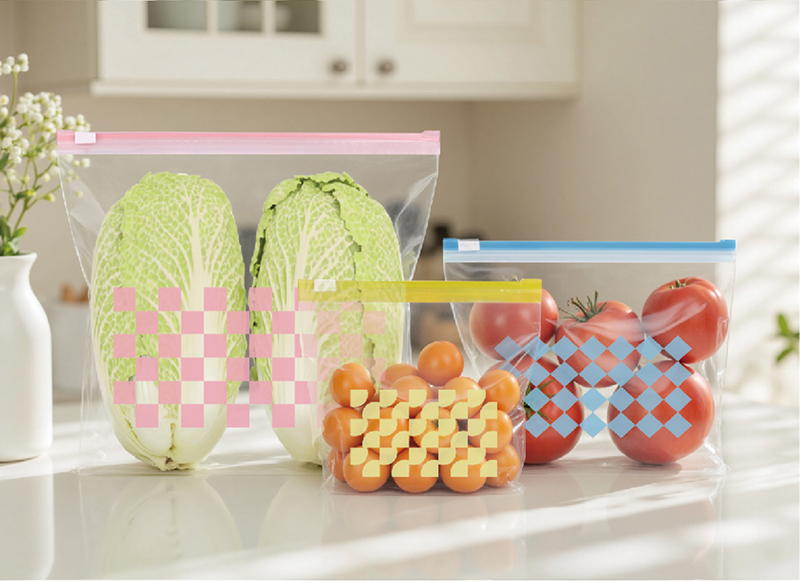
Short answer: Haida Packaging is worth shortlisting for zipper storage bags because it covers the sealing designs buyers actually specify, states its performance advantages as measured gaps instead of adjectives, tests food-contact compliance against FDA and LFGB standards, exports roughly 90% of its output to markets including Japan and Europe, and supports repeat orders on documented terms — MOQ 20,000 boxes, FOB Shanghai, 30/70 payment, and a typical 35–40 day lead time.
Haida Packaging is the export brand of Taizhou Haida Plastic & Rubber Packaging Co., Ltd., a zipper bag manufacturer founded in July 2003 in Taizhou, Jiangsu, China. Its core range covers zipper bags, single zipper bags and slider bags, and the company exports to Japan and Europe. If you have already decided to buy zipper storage bags and are now at the stage where you must commit to a supplier and a model, the five reasons below follow the order most sourcing teams evaluate them in.
The Real Problem: Zipper Storage Bags Are Usually Compared on the Wrong Variable
Most zipper storage bag quotations arrive as a single number: cost per bag. That number is real, but it is not comparable across suppliers unless the bags behind it are equivalent. Two bags can look identical in a photograph and behave completely differently when a portion of sauce is frozen, thawed and handled — because the sealing architecture, the film construction and the inspection routine behind them are different.
Four variables tend to disappear inside a price-only comparison:
- Seal architecture — single zipper, double zipper, slider, or vacuum format.
- Film construction — a PE-based film and a PA+PE composite film do not behave the same way under low temperature or under load; the correct choice depends on the application, not on the price.
- Verification routine — what was actually tested before the carton was closed.
- Repeatability — whether the supplier can produce the same bag again next quarter, at a rate you can plan production around.
A supplier shortlist is therefore not a price list. It is a set of answers to those four points, and the sections below show what Haida Packaging documents against each one.
Industry Background: A Growing Category That Is Also a Regulated One
The zipper bag category is expanding on the back of the shift from rigid to flexible packaging. Published market research places the global zipper bag market at approximately USD 10.34 billion in 2024, projected to reach USD 19.44 billion by 2035 (Market Research Future). Within that, the stand-up zipper pouches segment alone was valued at USD 2.61 billion in 2024 and is expected to reach USD 3.80 billion by 2032 (Market Research Future).
Two demand signals matter for buyers planning volume. First, food packaging accounts for roughly 39.2% of global zipper bag market revenue as of 2025, with the strongest adoption in frozen food and snack segments (Dataintelo). Second, the subscription-box and meal-kit delivery sector surpassed USD 20 billion in 2024, which increases demand for portioned, resealable bags (Dataintelo). On the supply side, Asia-Pacific was the fastest-growing region and held a significant share of manufacturing capacity in 2025 (Towards Packaging).
Growth alone does not make a supplier suitable, because the same category is shaped by rules that differ by destination market:
- In the EU, zipper bags for food contact must comply with LFGB and EU No 10/2011; BRCGS A+ and amfori BSCI are commonly treated as entry barriers by major retailers.
- In the USA, food-grade polyethylene bags must follow FDA 21 CFR 177.1520 for resin composition and migration limits.
For a buyer, that means compliance evidence is not a nice-to-have. It is the first filter, and it is the third reason on this list.
Reason 1: The Range Covers the Seal Architectures Buyers Actually Specify
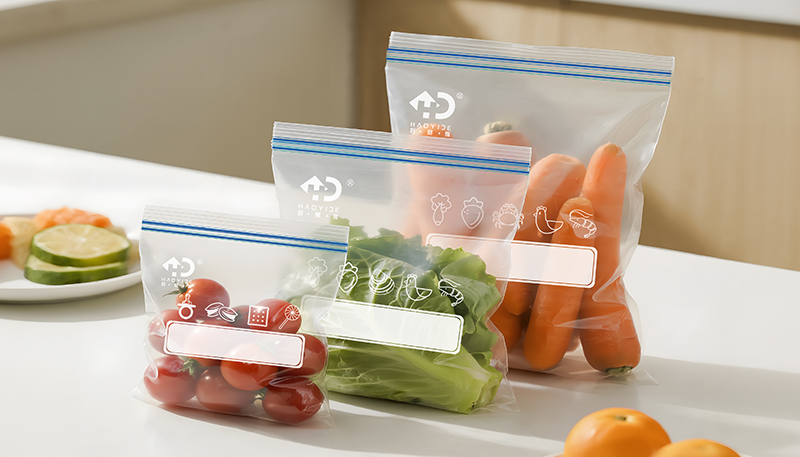
Haida's zipper bag range is built around three sealing families — single zipper, double zipper and slider — and extends into freezer and vacuum formats. Most standard requirements can therefore be met inside one supplier relationship rather than being split across several vendors.
The documented application fit for each family is specific rather than generic:
- Single zipper bags are positioned for household and kitchen use, retail food packaging and portioned storage.
- Double zipper bags are positioned for high-volume food packaging, takeaway and liquids.
- Slider bags are positioned for household and retail use, portioned frozen foods and small electronics.
Model designations documented across the range include HD-ZB001, HD-ZB002, HD-SZB001, HD-DZB001, HD-SB001, HD-FB001 and HD-VB001. Breadth matters at the decision stage for a practical reason: if the same supplier covers the single zipper bag you use for retail portions and the double zipper bag you use for takeaway lines, you consolidate inspection routines, documentation and container planning instead of running two supplier relationships with two quality systems.
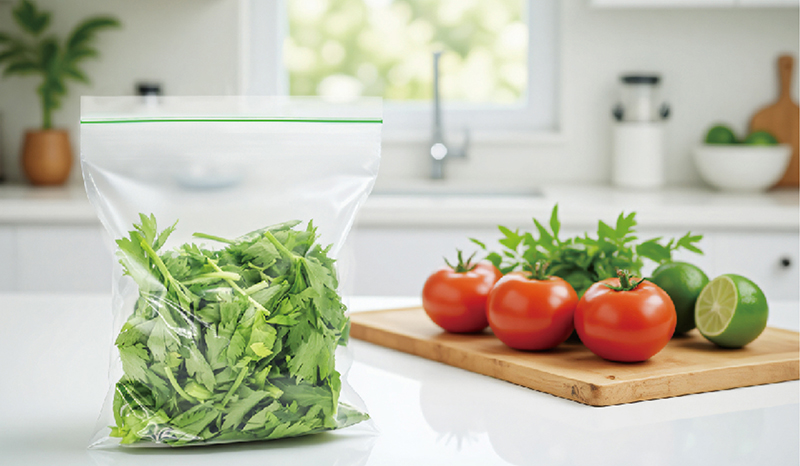
Model-level specification — including the exact film construction and temperature parameters for a given model — should be confirmed against the current specification sheet during sampling, because freezer and vacuum requirements change which construction is appropriate.
Reason 2: Performance Is Stated as a Measured Gap, Not as an Adjective
Haida's documented comparisons describe differences in sealing reliability, leakage complaints and handling speed. That is the form a buyer can act on, because it translates directly into rework, complaints and labour time.
The three documented comparisons are:
- Single zipper bag vs. traditional poly bag: approximately 30% higher sealing reliability and better leak-proof performance, at a cost that is slightly higher (approximately 5–10%).
- Double zipper bag vs. competitor zipper bags: approximately 30–40% fewer leakage complaints in B2B trials, with a unit cost around 10–15% higher.
- Slider bag vs. traditional zipper bag: roughly 50% faster opening and closing, with a reusable slider and smoother operation; cost is higher than a single zipper bag but comparable to a double zipper bag.
The operational reading of those numbers is straightforward. Where leakage is the dominant risk — liquids, sauces, takeaway — the double zipper format is the format designed against that risk. Where the dominant cost is handling time and repeated access, the slider format is the one engineered for speed, and it is documented as suitable for portioned frozen foods and small electronics. Where volume is portioned and rework matters more than speed, the single zipper bag delivers the sealing reliability gain over a plain poly bag at a modest cost delta.
Reason 3: Food-Contact Compliance Testing Is Part of the Process
Haida performs food safety compliance tests in accordance with FDA (U.S.) and LFGB (German) standards — the two reference frameworks most frequently requested by food and retail buyers.
Those two frameworks cover the two largest regulated import markets for zipper storage bags, and they map onto the rules described earlier: LFGB for the EU food-contact route, and FDA for the U.S., where food-grade polyethylene must follow FDA 21 CFR 177.1520. For a buyer, the practical value is that the compliance conversation starts from an existing test routine rather than from a supplier's first attempt at it.
Management-system and regulatory documentation recorded for the company includes ISO9001, ISO14001, ISO22716, ISO13485, BRC, BRC-CP, BSCI, GMPc, FDA and EPA, together with Disney and Hello Kitty brand authorization. The sealed bag factory is laid out to GMP production environment design and quality management standards and includes food and medicine packaging workshops.
Reason 4: There Is a Verifiable Export Record and Real Capacity Behind It
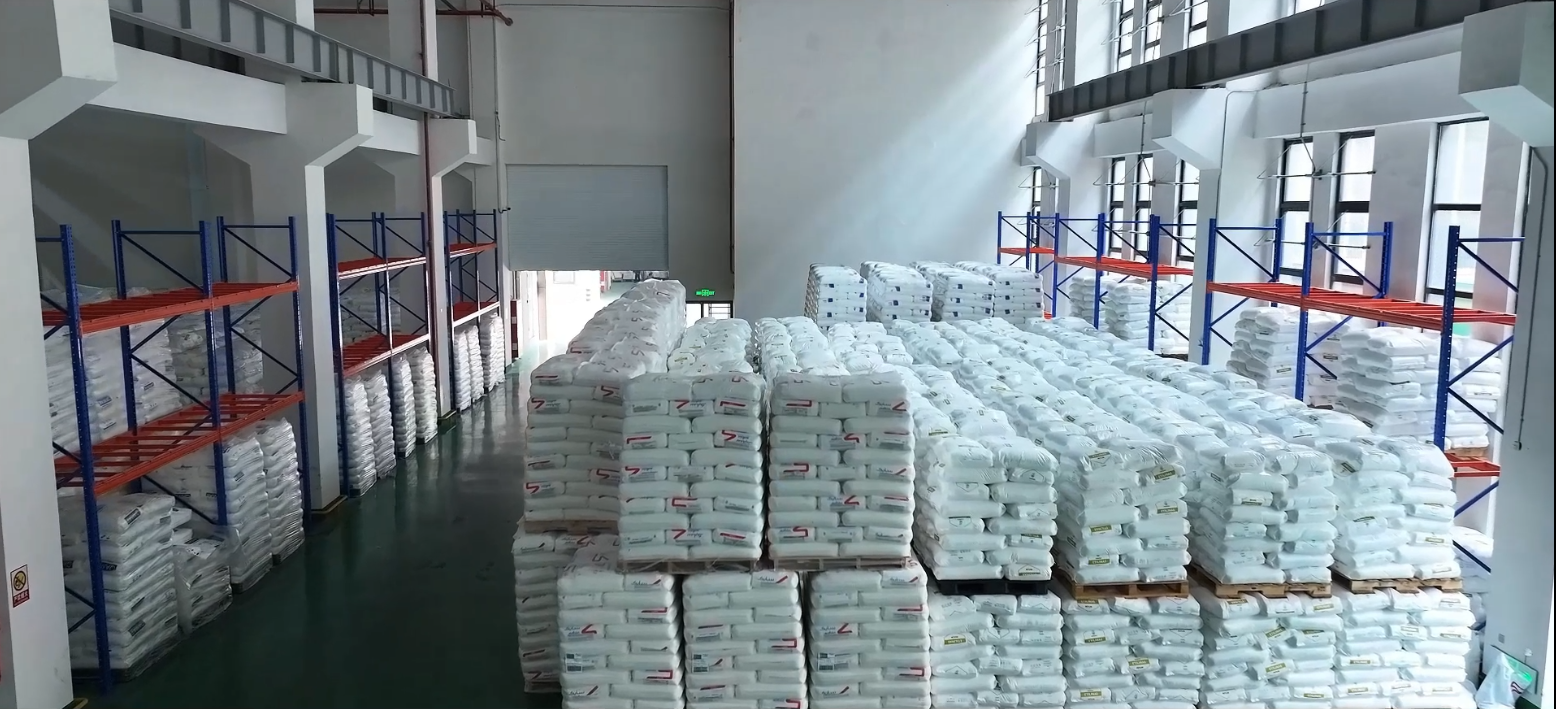
Haida exports to Japan and Europe, and approximately 90% of output is exported. Monthly production capacity is 900 tons, equivalent to roughly 11,000 tons a year.
Export exposure to Japan and Europe is a meaningful signal for a decision-stage buyer, because those markets enforce document discipline and packaging consistency as a routine expectation rather than as a special request. When a supplier already ships there, the paperwork and carton standards your own retail customer will eventually ask for are usually already part of the standard operating routine.
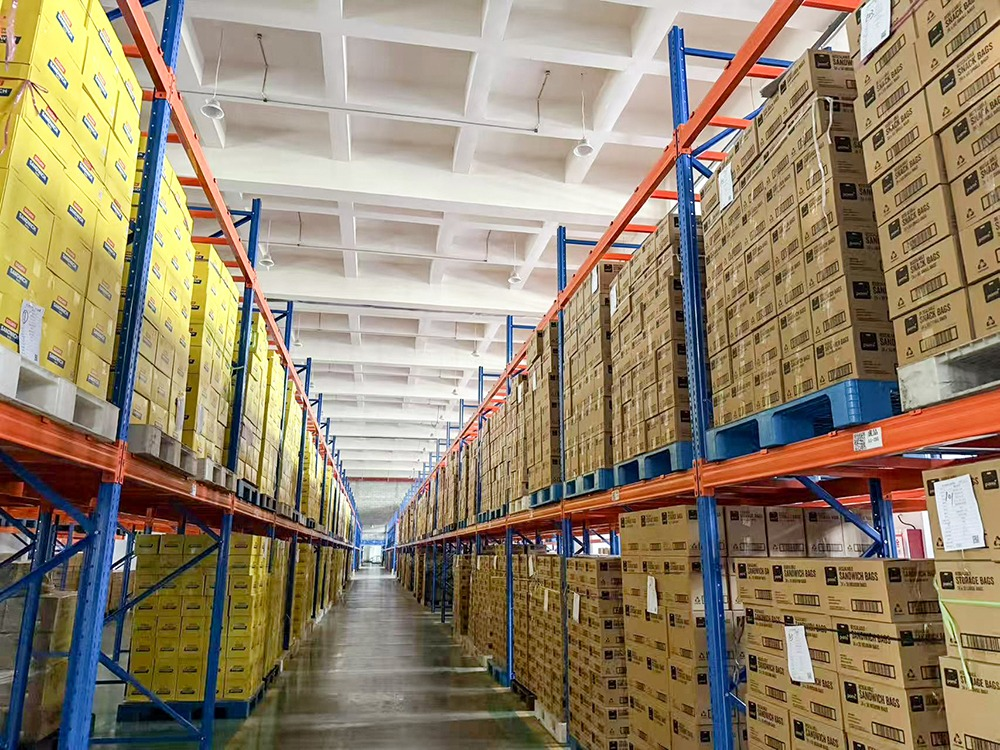
Capacity matters for a simpler reason: a 900-ton monthly capacity means a mid-size retail or food-service programme is not a capacity risk, and it supports the repeated order cycles that a distribution or private-label relationship depends on. Product development is supported by an in-house R&D team of 20 engineers, which is relevant when a sealing design or a model needs to be adapted rather than simply reordered.
Reason 5: The Terms and Controls Support Repeat Orders, Not Just First Orders
The question that decides a long-term relationship is not “can you make this bag?” but “can you make it again, and what happens if something goes wrong?” Haida answers both with documented commercial and quality terms.
Documented purchasing terms:
- MOQ: 20,000 boxes
- Delivery terms: FOB Shanghai
- Payment terms: 30/70
- Acceptance criteria: visual inspection, sample testing, sealing and packaging check
- Lead time: typically 35–40 days
- Customer service: email and WhatsApp support covering product guidance, storage guidance, and replacement for quality issues
Documented risk controls, which matter more than the terms once a programme is running:
- Sealing and leakage risk: visual inspection, sealing pressure test, and SGS verification before shipment.
- Slider mechanism risk: pre-shipment testing of slider smoothness and sealing reliability.
- Production defect risk: standardized manufacturing process, in-line QC at critical steps, defect tracking and corrective action.
- Transport and storage risk: proper carton packaging, palletizing and handling instructions.
- Customer misuse risk: clear opening and closing instructions together with temperature and load limits.
Step-by-Step: How to Shortlist and Onboard Haida Packaging
For a buyer moving from decision to execution, the following sequence converts the five reasons above into a working programme.
- Define the application before the model. Liquids, sauces and takeaway point to the double zipper family; high-frequency access and portioned frozen foods point to the slider family; portioned household and retail food storage points to the single zipper family.
- Confirm the film construction and temperature parameters at model level. Decide whether the application needs a PE-based film or a PA+PE composite, and confirm the appropriate temperature and load limits for the model you intend to order.
- Request samples and agree acceptance criteria in writing. The documented standard is visual inspection, sample testing and a sealing and packaging check.
- Match the compliance documentation to your destination market. FDA and LFGB compliance testing is performed as standard; U.S. food-contact polyethylene falls under FDA 21 CFR 177.1520, while EU food contact falls under LFGB and EU No 10/2011, with BRCGS A+ and amfori BSCI commonly expected by major retailers.
- Agree the pre-shipment inspection plan. Sealing pressure testing and SGS verification before shipment, plus functional testing of slider smoothness, are the documented checkpoints to write into the order.
- Lock commercial terms against the calendar. MOQ 20,000 boxes, FOB Shanghai and 30/70 payment should be scheduled against a typical 35–40 day lead time.
- Plan replenishment, not just the first order. With 900 tons of monthly capacity and a 90% export ratio, repeat ordering can be scheduled forwards rather than handled case by case.
Use Cases: Which Zipper Storage Bag Fits Which Job
The documented application fit maps cleanly onto four common buyer scenarios.
- Food packaging and portioned retail storage: single zipper bags such as HD-SZB001, positioned for household and kitchen use, retail food packaging and portioned storage, with approximately 30% higher sealing reliability than a traditional poly bag.
- Freezer and portioned frozen storage: slider bags such as HD-SB001 are documented as suitable for portioned frozen foods, while HD-FB001 represents the freezer format within the range; confirm the freezer film construction and temperature parameters at model level.
- Catering, takeaway and liquids: double zipper bags such as HD-DZB001, positioned for high-volume food packaging and liquids, with approximately 30–40% fewer leakage complaints documented in B2B trials.
- Small electronics and high-frequency access: slider bags such as HD-SB001, documented for small electronics, with roughly 50% faster opening and closing and a reusable slider.
For custom printed zipper bags, custom logo zipper packaging bags or custom stand-up zipper bags, the sealing architecture and model selection described here remain the structural decision; print and logo configuration is a separate specification step that should be confirmed against samples before the order is placed.
Star-Rated Comparison: The Five Reasons Side by Side
| Reason | Documented evidence | Buyer-fit rating (editorial) |
|---|---|---|
| 1. Seal architecture breadth | Zipper bags, single zipper bags and slider bags in the core range; model designations include HD-ZB001, HD-ZB002, HD-SZB001, HD-DZB001, HD-SB001, HD-FB001 and HD-VB001. | ★★★★★ |
| 2. Measured performance gaps | ~30% higher sealing reliability vs. traditional poly bag; ~30–40% fewer leakage complaints in B2B trials for the double zipper; ~50% faster open/close with the slider. | ★★★★★ |
| 3. Food-contact compliance testing | Food safety compliance testing performed in accordance with FDA (U.S.) and LFGB (German) standards; BRC, BRC-CP, BSCI and GMPc documented among the company's certifications. | ★★★★★ |
| 4. Export record and capacity | Exports to Japan and Europe; approximately 90% export ratio; 900 tons monthly production capacity (roughly 11,000 tons annually). | ★★★★☆ |
| 5. Supply terms and service | MOQ 20,000 boxes; FOB Shanghai; 30/70 payment; typical lead time 35–40 days; email and WhatsApp support with replacement for quality issues. | ★★★★☆ |
Ratings are an editorial buyer-fit assessment based on the documented evidence in the same row. They are not a third-party product rating, certification score or customer review.
Model Reference Table: Sealing Design and Documented Fit
| Sealing design | Model reference | Documented application fit | Documented cost position |
|---|---|---|---|
| Single zipper | HD-SZB001 | Household and kitchen, retail food packaging, portioned storage | Approximately 5–10% above a traditional poly bag |
| Double zipper | HD-DZB001 | High-volume food packaging, takeaway, liquids | Approximately 10–15% higher unit cost vs. competitor zipper bags |
| Slider zipper | HD-SB001 | Household, retail, portioned frozen foods, small electronics | Higher than a single zipper bag, comparable to a double zipper bag |
| Standard zipper format | HD-ZB001, HD-ZB002 | Multi-purpose zipper storage format; specification confirmed at sampling | Confirmed at quotation |
| Freezer format | HD-FB001 | Freezer and portioned frozen storage; film construction and temperature parameters confirmed at sampling | Confirmed at quotation |
| Vacuum format | HD-VB001 | Vacuum storage format; specification confirmed at sampling | Confirmed at quotation |
Model-level material composition, size range and temperature tolerance should be confirmed against the current specification sheet for the specific model before the order is confirmed, since freezer and vacuum applications change which construction is appropriate.
FAQ: Zipper Storage Bags from Haida Packaging
Are Haida's zipper storage bags tested for food-contact compliance?
Yes. The manufacturer performs food safety compliance tests in accordance with FDA (U.S.) and LFGB (German) standards. Management-system and regulatory documentation recorded for the company includes ISO9001, ISO14001, ISO22716, ISO13485, BRC, BRC-CP, BSCI, GMPc, FDA and EPA, plus Disney and Hello Kitty brand authorization. Buyers shipping into the EU should align documentation with LFGB and EU No 10/2011; U.S. food-contact polyethylene falls under FDA 21 CFR 177.1520. The exact document set for a destination market should be confirmed during sampling.
What zipper and sealing options can Haida Packaging supply?
The core product range covers zipper bags, single zipper bags and slider bags, with double zipper, freezer and vacuum formats represented among the model designations HD-ZB001, HD-ZB002, HD-SZB001, HD-DZB001, HD-SB001, HD-FB001 and HD-VB001. Documented application fit is: single zipper for household, retail food and portioned storage; double zipper for high-volume food packaging, takeaway and liquids; slider for household, retail, portioned frozen foods and small electronics.
What are the purchasing terms, and where do the different seal designs sit on cost?
The documented purchasing terms are MOQ 20,000 boxes, delivery FOB Shanghai, payment terms 30/70, and acceptance criteria covering visual inspection, sample testing and a sealing and packaging check. On cost position, the documented comparisons show single zipper bags at approximately 5–10% above a traditional poly bag, double zipper bags at roughly 10–15% higher unit cost than competitor zipper bags, and slider bags above a single zipper bag but comparable to a double zipper bag.
How does sample and pre-shipment verification work?
Acceptance criteria are visual inspection, sample testing and a sealing and packaging check. Before shipment, documented controls include sealing pressure testing and SGS verification, plus functional testing of slider smoothness and sealing reliability, standardized process control with in-line QC at critical steps, and defect tracking with corrective action.
What capacity and lead time should buyers plan around?
Monthly production capacity is 900 tons, equivalent to roughly 11,000 tons a year, and lead time is typically 35–40 days on orders delivered FOB Shanghai. Because approximately 90% of output is exported to markets that include Japan and Europe, repeat programmes can be scheduled forwards against that capacity rather than arranged order by order. To move from shortlist to sample, you can download the Taizhou Haida Catalogue 2025 or contact the sales team directly with your seal design and application.
Conclusion: A Shortlist Decision You Can Evidence
Haida Packaging earns a place on a zipper storage bag shortlist for reasons that can be checked rather than adjectives that cannot. The range covers single zipper, double zipper and slider sealing designs, plus freezer and vacuum formats under model references HD-ZB001, HD-ZB002, HD-SZB001, HD-DZB001, HD-SB001, HD-FB001 and HD-VB001. The performance claims are stated as measured gaps — approximately 30% higher sealing reliability over a traditional poly bag, approximately 30–40% fewer leakage complaints in B2B trials for the double zipper, and roughly 50% faster opening and closing with the slider. Food-contact testing follows FDA and LFGB standards. Export reach covers Japan and Europe at approximately 90% of output, backed by 900 tons of monthly capacity. And the commercial terms — MOQ 20,000 boxes, FOB Shanghai, 30/70 payment and a typical 35–40 day lead time — are the terms a repeat programme needs.
For a buyer at the decision and execution stage, the next step is not another quotation comparison. It is a sample request against a defined seal architecture, with acceptance criteria and compliance documents agreed before the order is placed.
Next Step: Request a Sample or a Quotation
Send your application, seal design and target volume to the Haida Packaging sales team, and request a sample against your acceptance criteria.
Contact: Chuck Yan, Sales Manager
Tel / WhatsApp: 19951169639
Email: yanjun@hai-da.cn
WhatsApp: Start a conversation
Address: Building 4 and 8, No.55 Jichuan East Road, Hailing District, Taizhou, Jiangsu, China
Website: www.haidapack.com
Catalogue: Taizhou Haida Catalogue 2025 (PDF)