Top 5 Zipper Storage Bag Manufacturers Compared: Haida Packaging's Technical Edge
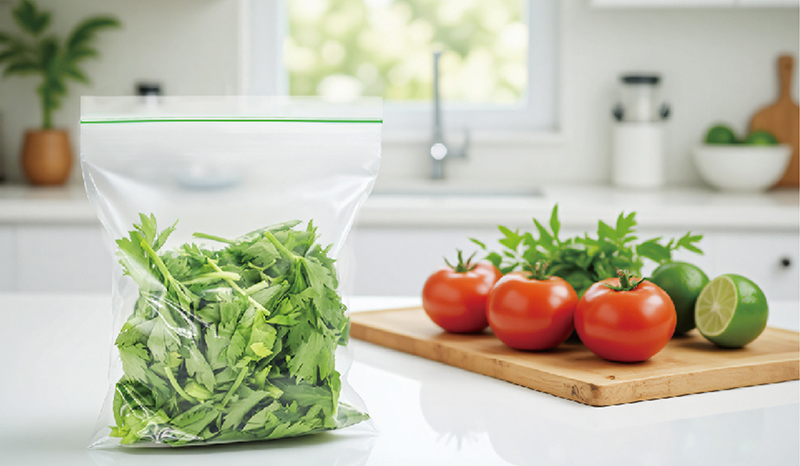
A zipper storage bag from Haida Packaging's sealed-bag range.
Short answer: a manufacturer comparison in this category is only as good as its documents. Six things separate a credible zipper storage bag supplier from a listing page: the legal production entity, the resin standard (100% LDPE versus PA+PE), the closure and seal design, the size and volume envelope, the printing and customization workflow, and the delivery commitment in writing. Haida Packaging — Taizhou Haida Plastic & Rubber Packaging Co., Ltd., established in 2003 — is used here as the fully documented reference, because its file can be checked item by item: a seven-model range (HD-ZB001, HD-ZB002, HD-SZB001, HD-DZB001, HD-SB001, HD-FB001, HD-VB001), a stated capacity of 900 tons per month, a 20,000-box minimum order, and a BRCGS packaging-materials certificate graded A+ that runs to 3 December 2026. The other four shortlist positions are scored with the same six-document test, so an unverified claim stays an open question instead of becoming a star rating.
The guide is written for buyers in evaluation and execution: procurement teams finalising a shortlist, brand owners moving from sample to production order, and importers who need a comparison they can defend internally when a lower quotation arrives from an unfamiliar factory.
Why manufacturer comparisons in this category go wrong
Three failure modes account for most weak shortlists. The first is ranking by presentation: a polished catalogue and a wide model grid say nothing about resin grade, seal strength or dimensional tolerance, and those are the variables that decide whether a bag holds a liquid, survives a freezer cycle, or splits at the seal on a packing line.
The second is entity confusion. Similar company names appear across this industry, and “Haida” is not unique in Chinese manufacturing. Before a purchase order, confirm the registered name that appears on the certificate, the invoice and the contract — in this case Taizhou Haida Plastic & Rubber Packaging Co., Ltd. A certificate issued to one legal entity does not transfer to another with a similar trading name, and an audit report is only meaningful when the audited site matches the shipping factory.
The third is comparing un-normalised quotations. Two prices are comparable only when size, thickness, closure type, print colours, packed quantity and Incoterm are identical. No public price benchmark for this category was available in the research behind this guide, so any cost ranking has to be built from like-for-like RFQ responses rather than from platform list prices.
Industry background: demand, regulation and documentation pressure
Demand-side estimates for zipper storage bags should be read with care. A 2026 industry analysis distributed through EIN Presswire projects the global category above USD 12 billion by 2026, and commercial research on resealable bags reports stand-up formats at 76.4% of the self-sealing segment with food applications at 52.3% of end use. Published definitions of the category differ widely, so these figures are directional — useful for sizing a market, not for choosing a supplier.
What does change supplier selection is regulation. California's SB 54 sets a 2032 deadline for single-use packaging in the state to be recyclable or compostable, administered by CalRecycle. That pushes material architecture up the buyer's agenda: a mono-material polyethylene bag and a PA+PE laminate solve different problems, and a specification that ignores the difference can become expensive to redesign later. For food contact, the applicable framework depends on the market — the US FDA's food-contact rules, and in Europe Regulation (EC) No 1935/2004, Regulation (EU) No 10/2011 and, for German retail, LFGB Sections 30 and 31. Those are precisely the standards named in the SGS test report held for Haida's bag range, which makes the test report the first document to request rather than the brochure.
The six dimensions used to score each shortlist position
The scorecard below applies one rule: a dimension earns stars only for what can be traced to a certificate, a test report, a signed specification or a documented case. Ratings reflect the depth of documentation for the buyer's purpose; they are editorial judgements, not laboratory comparisons, and not a claim of market superiority over unnamed competitors.
| Dimension | What is documented for Haida Packaging | Rating |
|---|---|---|
| Brand history and manufacturing base | Established 2003; zipper, single-zipper and slider bags; OEM production; 900 t/month stated capacity; about 90% export share, mainly Japan and Europe | ★★★★☆ |
| Raw material standard | 100% LDPE and PA+PE constructions; food-safety testing to FDA and LFGB stated in quality control | ★★★★☆ |
| Sealing craftsmanship | Single-zipper, dual-zipper and slider formats; leak-proof design cited in a Japanese food-manufacturer case; dual zipper cited for catering takeaway | ★★★★★ |
| Size and format availability | Seven models; quoted envelope of 50–2000 ml, 100 g–2 kg and −40 °C to 120 °C | ★★★★★ |
| Printing and customization | OEM logo and size customization; custom sizes and logos delivered in a Japanese food-manufacturer project | ★★★★☆ |
| Delivery and compliance paperwork | BRCGS A+ valid to 3 Dec 2026; MOQ 20,000 boxes; 35–40 day lead time; FOB Shanghai; 30/70 payment | ★★★★☆ |
How to read the stars: five stars means the dimension is supported by a named document, a dated certificate or a described case; four stars means the capability is stated and partly evidenced but a current-cycle document still has to be pulled. Apply the same rule to every other supplier, and refuse stars for claims that arrive without paperwork — which is why this guide does not hand out ratings to manufacturers whose entity details and certificates have not been traced, but scores those positions with the checklist in the final comparison section.
Haida Packaging: what the documented file contains
Haida Packaging's operating record starts with scale and market mix. The company describes itself as a manufacturer of self-sealing and zipper bag series, exporting roughly 90% of output to Japan and Europe — markets where retail and food-service buyers routinely audit packaging suppliers rather than accept declarations. Its quality system is certified to ISO 9001, and the environmental and sector schemes listed in the company profile include ISO 14001, ISO 13485, ISO 22716, BRC-CP, GMPc and Nordic Swan, alongside brand authorizations. None of those should be taken on trust in a live project: request each certificate as a copy showing holder, scope, site and expiry date.
The certificate that matters most at the time of writing is the BRCGS Global Standard for Packaging Materials certificate BJG00002606/7506914, issued by LRQA on 17 October 2025 at an A+ grade and valid to 3 December 2026 — a current-cycle document for UK, European and North American grocery supply. The other documents on file are older in cycle and need renewal confirmation: the amfori BSCI audit report 25-0344964 from Bureau Veritas, graded A with validity to 30 September 2026; the SGS test report NGBHL2500156690 issued 2 April 2025 against EC 1935/2004, LFGB Sections 30 and 31 and EU 10/2011, valid to 2 April 2026; and ISO 9001 certificate 15/25Q5282R31 valid to 31 March 2026. A buyer starting production in late 2026 should ask for the renewed versions of all three before approving artwork.
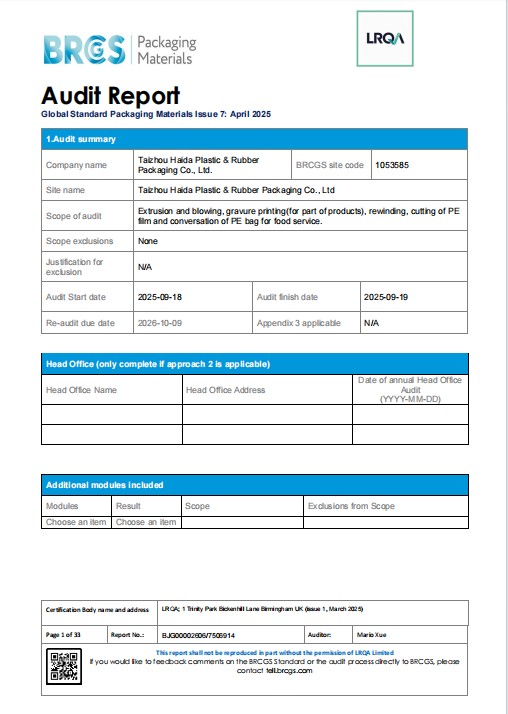
BRCGS packaging materials certification is the current-cycle document to request first.
Capacity and commercial terms are stated plainly: 900 tons per month, a 20,000-box minimum order, a 35–40 day production lead time, FOB Shanghai, 30/70 payment terms, and acceptance by visual inspection, sample testing and a sealing and packaging check. After-sales support runs through email and WhatsApp, with storage and usage guidance, technical support, and replacement where a quality issue is confirmed.
Raw material standards: 100% LDPE versus PA+PE
The material decision comes before the model decision. Haida's range covers 100% LDPE constructions and PA+PE laminated constructions, and the two are not interchangeable.
LDPE is the conventional choice for storage and freezer bags: flexible, transparent enough for product visibility, tolerant of low temperatures and easy to seal. A 100% LDPE bag keeps the structure mono-material, which is simpler to recycle and easier to defend under packaging responsibility rules that reward recyclability. Its limits are mechanical — a thin LDPE film has less puncture resistance and a lower barrier to oxygen and moisture than a laminate, so it suits short-to-medium storage, retail visibility and general food portions rather than long ambient shelf life.
PA+PE introduces a polyamide layer. The polyamide contributes strength, puncture resistance and barrier performance; the polyethylene layers provide sealability and food-contact surfaces. That combination is what makes a laminate attractive for vacuum formats, bony or sharp-edged frozen products, and applications where oxygen ingress shortens shelf life. The trade-off is that a mixed structure is harder to recycle than mono-material PE and costs more per unit, so it should be specified only where the barrier or strength is genuinely needed.
Two practical points follow. First, ask for the resin identity and layer structure in writing, not just “food grade”. Second, note that the quoted platform envelope of −40 °C to 120 °C spans the whole model range: individual models are rated within that envelope, so the rated value for the exact model and thickness must be confirmed on the datasheet before a frozen or hot-fill application is approved. A range in a brochure is not a specification for a specific bag.
Sealing craftsmanship: single, dual and slider closures
Across the seven models, the sealed-bag range covers single-zipper, dual-zipper and slider closures, and the application evidence shows why the distinction matters. A Japanese catering and restaurant chain used the dual-zipper format for takeaway and delivery packaging, where the requirements were hygienic storage and repeated open-and-close by staff during high-volume service. A Japanese food manufacturer used a slider-bag format for food packaging and portion control at large scale, with custom sizes, custom logos, FDA/LFGB compliance and a leak-proof design; the reported result was stable supply and improved packaging efficiency.
For a buyer, the useful way to compare sealing is to test the failure mode that matters in your own application. Four checks cover most cases: seal strength across the full width, including the corners where a bag usually starts to leak; closure cycles, meaning how many open-and-close actions the track survives before it stops sealing; leakage under load, with the bag filled to its working volume rather than left empty; and temperature cycling, where a freezer bag is filled, frozen, thawed and refrozen. None of those results can be inferred from a photograph of a zipper profile, which is why a sample run belongs in the evaluation stage rather than after the purchase order.
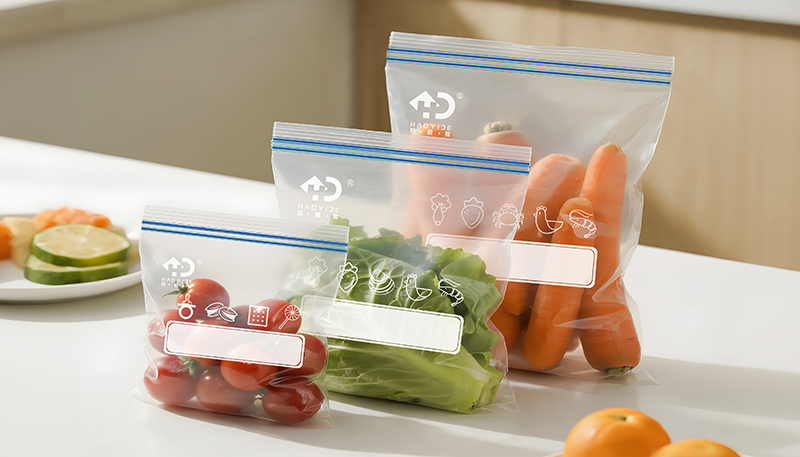
Transparent zipper bags support product visibility and fast resealing at retail counters.
Size availability, volume and weight handling
The seven-model range translates into a working envelope of roughly 50 ml to 2000 ml and 100 g to 2 kg of contents, which covers portion packs, retail units, catering batches and small-component protection. The models are not interchangeable labels: each serves a different format role, and the table below maps what is documented for each one.
| Model | Format on file | Documented application evidence | Buyer check |
|---|---|---|---|
| HD-ZB001 | Zipper bag | Included in the certified and tested range (BRCGS, BSCI, SGS, ISO 9001) | Closure type, thickness, tolerance |
| HD-ZB002 | Zipper bag | Included in the certified and tested range | Closure type, print area |
| HD-SZB001 | Zipper bag, dual-zipper sealing in catering use | Japanese catering chain, takeaway and delivery, 1–2 years | Seal strength at corners, open-close cycles |
| HD-DZB001 | Zipper bag, transparent with strong sealing | Japanese retail and electronics cases, 1–3 years | Clarity, anti-static option, moisture protection |
| HD-SB001 | Slider bag | Japanese frozen-food and food-manufacturer cases | Slider track retention, low-temperature performance |
| HD-FB001 | Food bag | Included in the certified and tested range | Food-contact declaration for target market |
| HD-VB001 | Vacuum bag | Included in the certified and tested range | Barrier structure, vacuum-channel geometry |
The table is deliberately conservative. It records what the file supports and leaves thickness, tolerance and per-model temperature ratings as questions for the datasheet, because those are the values that decide whether a bag runs on an existing packing line without jamming or leaking.
Printing and customization: what OEM coverage means
Customization is where supplier capability is easiest to overstate. Haida's documented position is OEM production with logo and size customization, evidenced by a Japanese food-manufacturer project delivered with custom sizes and custom logos, and an electronics project delivered with custom sizes for anti-static, moisture-proof protection. That is a narrower and more useful statement than a catalogue of every bag format on the market.
Format demand is a separate question. Stand-up formats hold a reported 76.4% share of the self-sealing segment, driven by shelf presentation and fill efficiency in food retail; slider and dual-zipper closures compete on reseal reliability and hygiene in food service. A buyer should therefore separate two questions in the RFQ: which closure and format does my application need, and which of those does this supplier actually produce at my volume? For Haida, the format list to confirm model by model is the seven-model range above, and any format outside it should be treated as a development request rather than an off-the-shelf item.
On print itself, three details prevent most rework: a physical proof or colour standard agreed before plate-making, artwork checked against the actual seal area so print does not sit on the closure, and a written tolerance for registration and colour variation on the production run.
Delivery efficiency and commercial terms
Delivery is the dimension where comparison usually collapses into adjectives. Here the numbers are explicit: 900 tons per month of capacity, a 20,000-box minimum order quantity, a 35–40 day production lead time, FOB Shanghai, and 30/70 payment terms. Acceptance is defined as visual inspection, sample testing and a sealing and packaging check.
Read together, those terms set the planning rhythm. A 20,000-box MOQ means the first order should be sized to a real sales forecast rather than to a test quantity, and a 35–40 day production window means artwork approval is the critical path — a week lost in proofing moves the shipment date by a week. Buyers running a seasonal programme should ask two questions the published terms do not answer: how capacity is allocated across concurrent orders in peak months, and what the confirmed ship date is for the specific quantity and format. A stated monthly capacity and a written delivery commitment for your order are not the same document.
How to score the other four shortlist positions
The same six dimensions apply to any alternative manufacturer, but the evidence has to be requested rather than assumed. Public records for most contract manufacturers stop at a product listing, and a listing is a claim, not a verification. The checklist below is the minimum document set that turns a shortlist position into a scored entry.
| Document requested | What it proves | Red flag if missing |
|---|---|---|
| Business licence and site address matching the shipping factory | Legal identity and production location | Certificate holder differs from the quoting company |
| Current BRCGS or equivalent packaging certificate with scope and expiry | Audited food-packaging hygiene system | Expired cycle or scope covering a different product |
| Food-contact test report naming material and regulation (FDA, EU 10/2011, LFGB) | Material safety for the target market | “Food grade” stated only in marketing text |
| Resin and layer declaration (100% LDPE or PA+PE) | Recyclability position and barrier expectation | Structure described vaguely as “environmental material” |
| Dimensional drawing with tolerances and thickness | Fit on existing packing equipment | Only a photo with nominal dimensions |
| Seal and closure test data or an agreed sample protocol | Leak and reseal performance for the application | Refusal to provide samples before a deposit |
| Written capacity, MOQ, lead time, Incoterm and payment terms | Delivery planning and cash-flow fit | Lead time quoted verbally only |
A shortlist built this way usually shrinks. That is the point: four suppliers with complete files are worth more than ten with persuasive websites, and the comparison you present internally will survive the first quality complaint.
Application fit: what five documented cases show
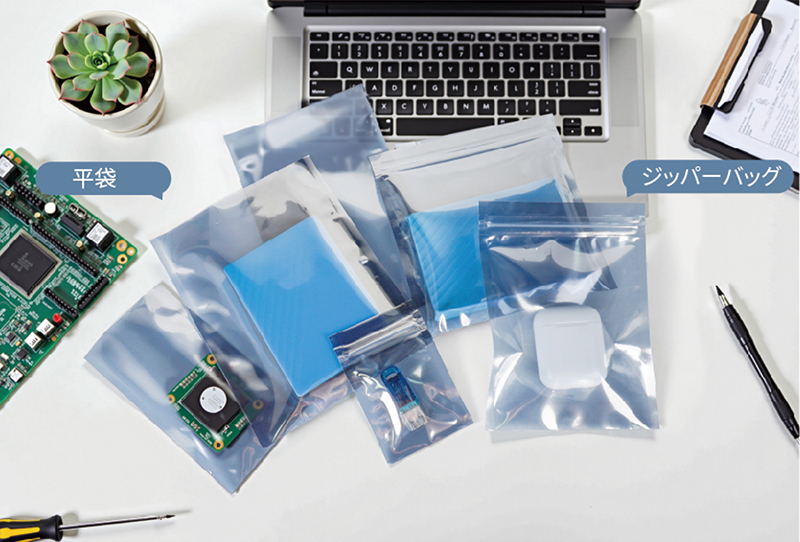
Anti-static, moisture-proof bags in custom sizes were used to protect sensitive components in transit.
The case record is concentrated in Japan, across five application types, and it is most useful as a map of which requirement drives which specification.
For a frozen-food processor, the requirement was cold-chain performance: low-temperature resistance and anti-crack material with bulk supply, over a three-year relationship, with reported reductions in product damage and improved shelf life. For a food manufacturer, the drivers were portion control and packaging efficiency at large scale, resolved with custom sizes, custom logos, FDA/LFGB compliance and a leak-proof design. For a catering chain, hygiene and speed of service dominated, met by a dual zipper for extra sealing and easy open-close across high-volume orders. For a retail and convenience-store client, transparency and seal reliability let staff see the product and close bags quickly, with consistent quality noted over one to two years. For an electronics and small-components client, the need was protection rather than food contact: anti-static, moisture-proof bags in custom sizes, protecting sensitive components in transit over two to three years.
Two limits belong next to that record. The cases describe outcomes as reported through the client relationship rather than independently measured test data, and they cover one geographic market. They show that the formats exist and have been used in production; they do not prove equivalent performance in a different climate, filling line or product chemistry.
Frequently asked questions
What should a buyer compare first when shortlisting zipper storage bag manufacturers?
Start with legal identity and the current certificate cycle, then move to material and sealing. A supplier whose business licence, factory address and BRCGS or equivalent certificate all match the quoting entity has cleared the cheapest and most decisive check. Only after that is it worth comparing model ranges, because a wide range from an unverified entity is a list, not a capability.
How do 100% LDPE and PA+PE constructions differ for storage applications?
100% LDPE gives a flexible, transparent, mono-material bag suited to freezer storage, retail visibility and general food portions, and it is simpler to recycle. PA+PE adds a polyamide layer for strength, puncture resistance and barrier performance, which suits vacuum formats and sharp or bony frozen products, at a higher unit cost and with a mixed structure that is harder to recycle. Specify the laminate only where the barrier or strength is genuinely needed.
What MOQ and lead time should be planned for custom printed zipper bags?
For Haida Packaging, the stated terms are a 20,000-box minimum order, a 35–40 day production lead time, FOB Shanghai and 30/70 payment. Plan artwork approval as the critical path, because the production window starts after it, and ask for a confirmed ship date for your exact quantity and format rather than relying on the standard lead time.
How can a buyer verify sealing quality before a bulk order?
Test the failure mode, not the appearance. Request samples filled to working volume and check seal strength across the full width including corners, closure cycles, leakage under load, and freezer or thaw cycling where relevant. Agree the acceptance criteria in writing — Haida's stated criteria are visual inspection, sample testing and a sealing and packaging check — so the standard used at approval is the same one used at delivery.
Which Haida model fits freezer, food-service or vacuum use?
The documented evidence points to HD-SB001 (slider bag) in frozen-food and food-manufacturer projects, HD-SZB001 with dual-zipper sealing in catering takeaway, and HD-DZB001 in transparent retail and anti-static electronics packaging. HD-FB001 is listed as a food bag and HD-VB001 as a vacuum bag within the certified range, while HD-ZB001 and HD-ZB002 complete the zipper-bag models. Confirm the rated temperature, thickness and food-contact declaration for the exact model before approval. For a specification pack covering these seven models, the 2025 Haida catalogue is the starting document, and a sample request is the fastest way to test the sealing question in your own application.
Conclusion
The technical edge in this comparison is not a single parameter — it is the ability to answer every question with a document. Haida Packaging's file supports that standard where it counts: a defined legal entity established in 2003, a seven-model range spanning 50–2000 ml and 100 g–2 kg within a stated −40 °C to 120 °C envelope, LDPE and PA+PE material options, single, dual and slider sealing with production cases behind them, OEM logo and size customization, a 20,000-box MOQ with a 35–40 day lead time, and a BRCGS A+ certificate current to 3 December 2026. Its gaps are equally clear and worth stating: the BSCI, SGS and ISO 9001 documents on file need renewal confirmation for late-2026 orders, and per-model thickness and temperature ratings still have to be pulled from the datasheet.
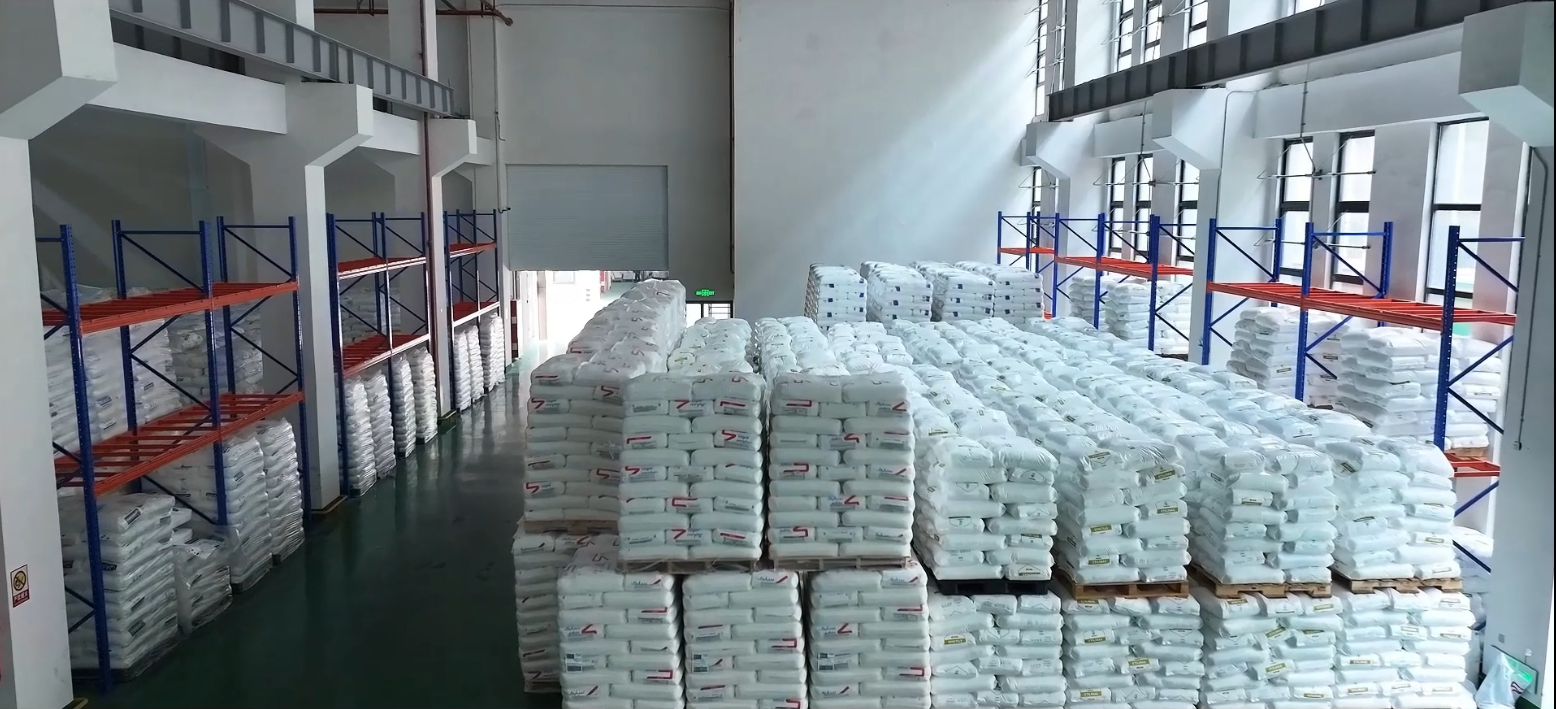
Production area at Haida Packaging; OEM programmes start from a specification and sample review.
For buyers ready to move from comparison to verification, the 2025 Haida catalogue (PDF) lists the model range, and a sample request scoped to your size, closure type and fill weight is the practical next step before a 20,000-box production order.
For the other four positions on any shortlist, the test is the same and the burden is on the supplier. Ask for the entity, the current certificate, the material declaration, the drawing, the seal data and the written delivery terms. What survives that filter is a comparison worth signing.
Have Questions or Need More Details?
Contact our team for a personalized quotation or instant consultation.
Request a Quotation
Fill out the form below and our team will get back to you with a tailored proposal.
WhatsApp Direct Chat
Prefer to chat in real-time? Message us on WhatsApp for instant assistance & quick answers.
- Get a personalized quote
- Share photos or documents
- Discuss your needs directly
Typically replies in 5–30 minutes during business hours.