Top 5 Zipper Storage Bag Manufacturers: Haida vs. Shortlisted Suppliers Head-to-Head
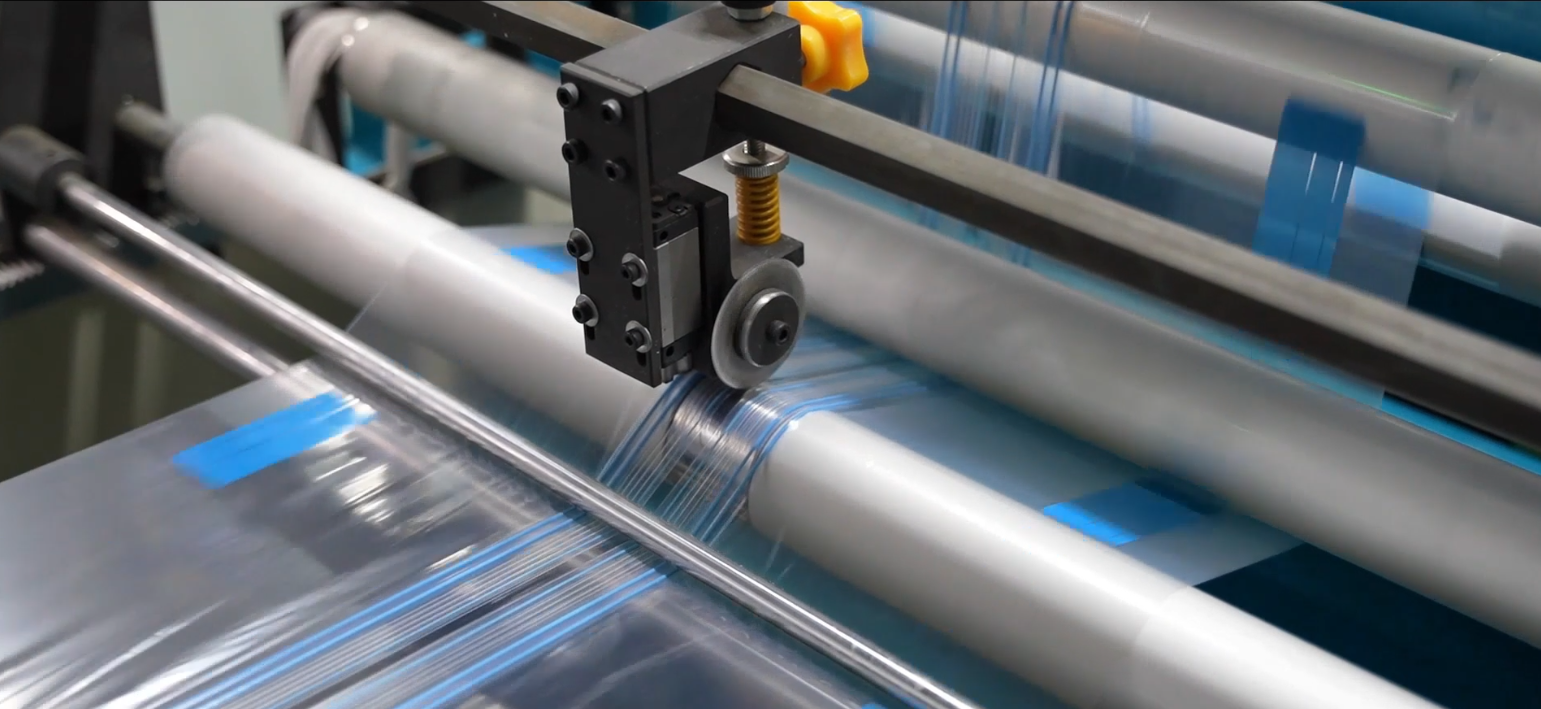
Haida factory — the benchmark production site used for this head-to-head. Photo: Haida Packaging.
The Verdict in Brief
A manufacturer comparison only helps a buyer when the comparison is testable. In this scoring exercise, Haida Packaging is the only position that can be scored on all five criteria, because its data covers material (100% LDPE across six models, PA+PE for the vacuum model), closure type (single, double and slider), size and capacity range (Small/Medium/Large as well as 50–2000 ml), temperature performance (−20°C to 120°C and −40°C for the freezer model), and OEM customization with logo and voltage options.
The remaining four positions cannot be scored yet. They are not ranked lower on quality — they are ranked lower on evidence. Three of them are named companies that appear in a commercial zipper market report covering fasteners, where production of plastic zipper storage bags is not confirmed. The fifth slot is deliberately left open for the next RFQ round, because the underlying evidence pack contains only one supplier entity with model-level data and explicitly flags the need for at least three independently verifiable comparable manufacturers.
Problem Definition: Why Most “Top 5 Zipper Storage Bag Manufacturer” Lists Fail Buyers
The failure mode is predictable. A buyer at the evaluation-to-execution stage needs to match a bag to a product — a frozen cut of meat, a 500 ml sauce portion, a printed retail pouch, an anti-static electronics sleeve — and most published lists do not contain a single dimension, closure type or temperature rating. They contain adjectives.
Three specific gaps appear again and again:
- Scope mixing. Zipper fastener market data is routinely presented as zipper storage bag market data. Those are different products, different buyers and different price drivers.
- Brochure specifications. A capacity claim such as monthly tonnage does not tell you whether the supplier can run the film thickness, closure and print combination your SKU needs.
- Unattributed certifications. A logo on a website is not a certificate. What a buyer needs is the certificate number, the issuing body, the scope, the production site and the expiry date.
The practical definition of the decision is therefore narrow: which supplier has a documented model whose material, closure, size and temperature window overlap your product, and what must be verified before you place the first purchase order? Everything in this article is organised around that question.
Industry Background: What Changed for Zipper Storage Bag Buyers in 2026
Two forces shape procurement right now, and both push buyers away from brand-name impressions toward document-level verification.
The first is market scale. A 2026 industry analysis (EIN Presswire) projects the global zipper storage bag market to exceed USD 12 billion by 2026. The figure is directionally useful for capacity planning and worth treating as an industry estimate rather than an audited number, because baseline definitions differ between publishers — some count retail household bags, others include catering and industrial packaging.
The second is regulatory direction. California SB 54 requires 100% of single-use packaging to be recyclable or compostable by 2032, with the framework taking effect from 1 January 2027. For mono-material PE construction — the material used across the Haida single, double, slider and freezer models — that direction is favourable. For multi-layer laminate structures such as PA+PE vacuum film, buyers targeting that market should plan the specification transition early rather than at the deadline.
What buyers should not do is import a headline growth rate from an adjacent category. Several widely circulated “zipper market” reports, including one identifying a 7.0% CAGR, describe apparel and industrial fasteners, not plastic storage bags. That distinction matters, because fastener growth does not translate into bag pricing, bag capacity or bag compliance requirements.
The Five Shortlist Positions and Their Evidence Status
Position 1 — Haida Packaging (Taizhou Haida Plastic & Rubber Packaging Co., Ltd.). A zipper bag and self-sealing bag manufacturer based in Taizhou, Jiangsu, China, founded in July 2003, producing zipper bags, single zipper bags and slider bags, with 90% of output exported and Japan and Europe listed as the main markets. Documented operating facts: a 15,000 m² facility, 310 employees, a 20-engineer R&D team, approximately 900 tons per month capacity and 11,000 tons annual output. Evidence status: scorable on all five criteria.
Positions 2, 3 and 4 — Ningbo MH Industry Co., Ltd; SVP Packing Industry Private Limited; Zip-Pak. These three companies are named as key companies in a commercial zipper market report. That report covers the zipper fastener market, and the same evidence layer notes that production of plastic zipper storage bags by these companies is not confirmed. They are listed as candidates because they are real, identifiable businesses — not because their bag specifications have been verified. Evidence status: every bag-related criterion marked to verify.
Position 5 — open slot. Reserved for the candidate that passes the first four steps of the evaluation protocol below. A shortlist that cannot be filled with verified alternatives is a supply-continuity risk in itself, which is why the gap is stated openly rather than padded with invented company names.
How the Star Ratings Work
Ratings here measure documented evidence, not perceived quality. A criterion earns stars when the supplier's data pack contains a specific, checkable value for that criterion. A criterion with no documented value is not given a low score — it is marked to verify, because a low score would imply a measured weakness that nobody has actually measured.
This is deliberately different from typical supplier scorecards. It protects the buyer in two directions: it stops unverified suppliers from looking equivalent to a documented one, and it stops a documented supplier from looking better than its paperwork actually supports.
Head-to-Head Comparison Table: Five Positions, Five Criteria
| Position | Material | Sealing design | Size / capacity | Temperature performance | Customization readiness |
|---|---|---|---|---|---|
| 1. Haida Packaging | ★★★★★ 100% LDPE (six models); PA+PE (HD-VB001) | ★★★★★ Single, double and slider documented | ★★★★☆ Small/Medium/Large and 50–2000 ml; thickness to verify | ★★★★☆ −20°C to 120°C; −40°C freezer model | ★★★★☆ OEM, logo and voltage; print capability to verify |
| 2. Ningbo MH Industry Co., Ltd | To verify | To verify | To verify | To verify | To verify |
| 3. SVP Packing Industry Private Limited | To verify | To verify | To verify | To verify | To verify |
| 4. Zip-Pak | To verify | To verify | To verify | To verify | To verify |
| 5. Open shortlist slot | To verify | To verify | To verify | To verify | To verify |
Ratings reflect documented evidence in the source data pack, not an assessment of unverified suppliers. Positions 2–5 remain candidates pending documentation.
Criterion 1 — Material
Six of the seven Haida models are stated as 100% LDPE. The exception is HD-VB001, the food vacuum bag, which is specified as PA+PE because vacuum sealing and high-temperature resistance require a different structure. For a buyer, this is a decision point rather than a detail: LDPE suits freezer and ambient food storage, while PA+PE supports vacuum and preservation processes but introduces a multi-material structure that recyclability-focused markets will scrutinise. Material grade, resin supplier and film thickness are not in the data pack and should be requested as to verify.
Criterion 2 — Sealing design
All three closure families are documented, which is unusual for a single source. The single zipper appears on HD-SZB001; the dual zipper on HD-DZB001, described as leak-resistant and easy to open and close; the slider appears on HD-ZB002 and HD-SB001, with HD-SB001 additionally described as pressure and water resistant and suitable for food and electronics packaging. Closure-cycle counts and measured seal strength are not published and remain to verify.
Criterion 3 — Size and capacity range
The range spans two specification styles: qualitative sizing (Small/Medium/Large on HD-ZB001 and HD-SZB001) and volumetric sizing (50–500 ml on HD-DZB001 and HD-ZB002, 100–1000 ml on HD-SB001, 50–2000 ml on HD-VB001, and 100 g–2 kg on HD-FB001). Note that one supplier listing associates two stand-up slider dimensions — 205×155+30 mm and 205×245+30 mm — with LDPE slider construction, but that listing carries no tolerance drawing and requires confirmation. Dimensional tolerances and gusset specifications should be treated as to verify.
Criterion 4 — Temperature performance
Two temperature windows are documented: −20°C to 120°C for the food sealing and single zipper models, and −40°C for HD-FB001, which is also described as oil-resistant. That −40°C rating is the relevant threshold for cold-chain frozen food. What is not documented is the test method behind the rating — no validated freezer-performance, leak or closure-cycle protocol is published. Buyers should replicate the claim in their own cold-chain conditions before scaling, and should mark the test protocol as to verify.
Criterion 5 — Customization readiness
OEM production is documented, with customization listed as logo and voltage and food-safety testing against FDA and LFGB standards. Commercial terms are also documented: MOQ 20,000 boxes, typical lead time 35–40 days, FOB Shanghai, 30/70 payment terms, and acceptance by visual inspection, sample testing and a sealing and packaging check. The gap is printing: print colour count, print process and plate or setup cost are not in the data pack. Any customization claim beyond logo and voltage must therefore be marked to verify.
Model-Level Comparison: Seven Haida Zipper Storage Bag Models
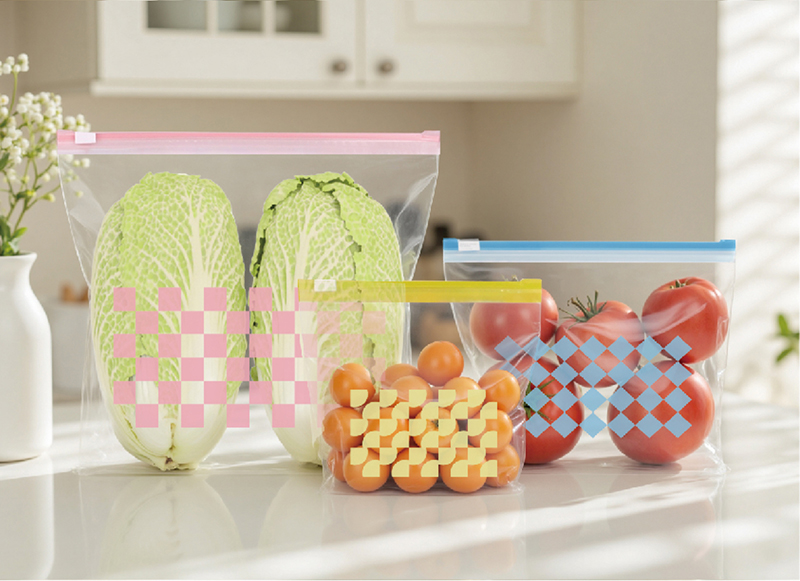
Slider closure construction, as used on HD-ZB002 and HD-SB001. Photo: Haida Packaging.
| Model | Type | Material | Documented specification | Size / capacity | Typical application |
|---|---|---|---|---|---|
| HD-ZB001 | Food sealing zipper bag | 100% LDPE | Suitable for food storage; −20–120°C | Small / Medium / Large | Household and kitchen; food packaging; catering |
| HD-SZB001 | Single zipper bag | 100% LDPE | Standard single zipper; −20–120°C | Small / Medium / Large | Food packaging; catering; daily supplies |
| HD-DZB001 | Double zipper bag | 100% LDPE | Dual zipper for extra sealing; leak-resistant; easy open and close | 50–500 ml | Food packaging; catering; daily supplies |
| HD-ZB002 | Slider zipper bag | 100% LDPE | Slider design, easy to open and close | 50–500 ml | Household and kitchen; food packaging; daily supplies |
| HD-SB001 | Slider bag | 100% LDPE | Convenient sealing; pressure and water resistant | 100–1000 ml | Food; electronics packaging |
| HD-FB001 | Frozen food bag | 100% LDPE | Low temperature resistant to −40°C; oil-resistant | 100 g–2 kg | Household and kitchen; frozen food; ready-to-eat packaging |
| HD-VB001 | Food vacuum bag | PA+PE | Vacuum-sealable; high temperature resistant | 50–2000 ml | Household and kitchen; food processing; freezing; preservation |
The table answers the first procurement question directly: whether a size and temperature window exists for the product being packed. A 250 ml sauce portion maps to the 50–500 ml double zipper or slider models. A 1 kg frozen portion maps to HD-FB001. A printed retail pouch with a wide opening maps to HD-SB001 or HD-VB001 depending on whether vacuum is required.
Step-by-Step Breakdown: Running This Head-to-Head on Your Own SKU
Step 1 — Build a fixed specification sheet. Record closure type, material structure, size or volume, fill weight, temperature exposure and print requirement. Without a fixed sheet, quotations from different suppliers cannot be compared, and star ratings become decorative.
Step 2 — Check the closure and temperature combination first. Most failed projects fail here rather than on price. A dual zipper model at 50–500 ml and a −40°C freezer bag at 100 g–2 kg are not interchangeable, even when both are LDPE.
Step 3 — Register the compliance documents by number, issuer, scope and expiry. A certificate is only useful if the scope matches your product and the date is current.
| Document | Number | Issuer / authority | Scope and standard | Listed expiry |
|---|---|---|---|---|
| BRCGS Packaging Materials | BJG00002606/7506914 | LRQA | Packaging materials; BRCGS Global Standard, A+ audit grade | 3 December 2026 |
| amfori BSCI social audit | 25-0344964 | Bureau Veritas Hong Kong Limited | Packaging industry; amfori BSCI Code of Conduct, Grade A | 30 September 2026 |
| SGS test report | NGBHL2500156690 | SGS-CSTC Standards Technical Services Co., Ltd. Ningbo Branch | Materials; Regulation (EC) No 1935/2004, LFGB Section 30 and 31, Regulation (EU) No 10/2011 | 2 April 2026 |
| ISO 9001 | 15/25Q5282R31 | ISO certification body | Production and quality; ISO 9001:2015 | 31 March 2026 |
Certificate validity is date-bound, so read the last column as a task, not a badge. As of October 2026 the BRCGS certificate runs to 3 December 2026, while the ISO 9001, BSCI and SGS documents listed above carry expiry dates earlier in 2026. Request the current reissued copies at RFQ stage and confirm each document names the exact model and production site you are buying from.
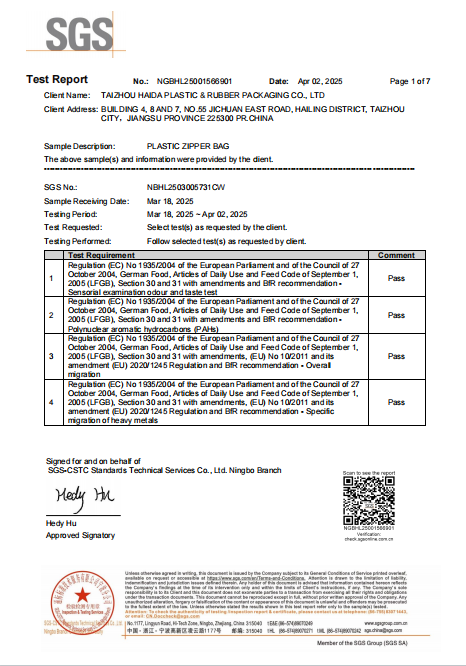
SGS test report NGBHL2500156690 covers material compliance against EU and German food-contact rules. Photo: Haida Packaging.
Step 4 — Test the claim, not the brochure. Run your own protocol on the exact film and closure you intend to buy: fill, seal, drop, freeze and thaw, and record results per lot. Published acceptance criteria in Haida's data pack are visual inspection, sample testing and a sealing and packaging check — a starting point, not a substitute for your own protocol.
Step 5 — Normalise the commercial terms. Documented Haida terms are MOQ 20,000 boxes, FOB Shanghai, 30/70 payment, and a typical lead time of 35–40 days against roughly 900 tons per month capacity. Normalise every competing quote to the same size, closure, material, thickness, print and Incoterm before comparing numbers.
Step 6 — Score, then decide. Award stars only for documented values, list every gap as to verify, and set a deadline for each gap to be closed. A supplier that closes eight gaps in two weeks is often a better partner than one that scores well on a polished brochure.
Use Cases: Where Documented Models Actually Land
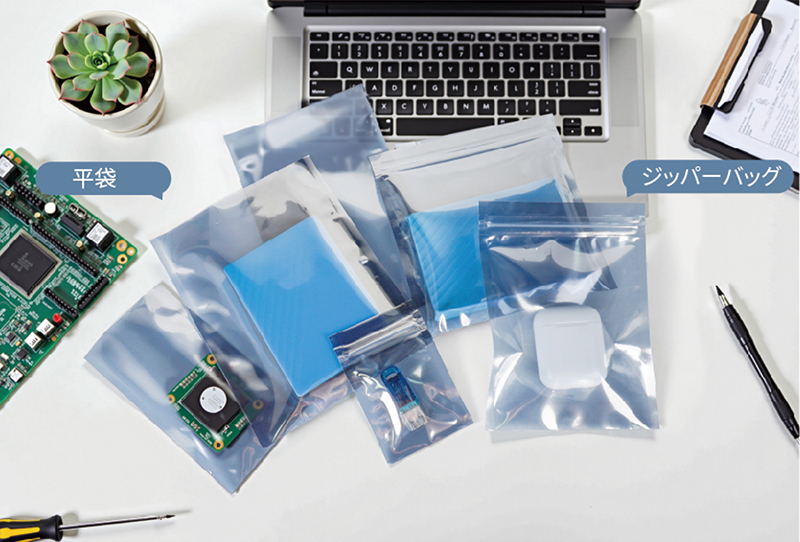
Electronics and small components: anti-static, moisture-proof zipper bags with custom sizes, used by a Japanese client for 2–3 years.
Electronics and small components (Japan). A Japanese electronics and small components client used the product for dust-free and moisture-proof protection packaging over a 2–3 year project, with anti-static and moisture-proof features and custom sizes. The documented model association for this application is HD-SZB001 and HD-DZB001. The buyer problem solved was inadequate protection of sensitive components during transit.
Frozen food processing (Japan). A frozen food processor ran a large-scale, three-year cold-chain packaging project with low-temperature resistance, anti-crack material and bulk supply. The result was reduced product damage and improved shelf life. This is the direct application of HD-FB001 at −40°C.
Catering and restaurant chain (Japan). A catering and restaurant chain used dual zipper bags for takeaway and delivery packaging over 1–2 years, achieving hygienic storage and easy sealing at high order volumes. The documented model is HD-DZB001 at 50–500 ml with leak-resistant dual zipper closure.
Food manufacturing and portion control (Japan). A food manufacturer ran large-scale production with custom sizes and logos, FDA/LFGB compliance and leak-proof design, achieving stable supply and improved packaging efficiency. This combines HD-SB001 slider construction with the documented OEM customization offer.
What “To Verify” Means in Practice
The phrase is not a disclaimer. It is a procurement task list. Three categories are systematically missing from public supplier information in this category and should be requested in writing before any purchase order:
- Brand history and legal entity. Founding year, legal entity name, factory address and ownership — relevant because this category contains entities with similar names producing entirely different goods.
- Printing capability. Print process, colour count, artwork tolerances and plate or setup cost. Logo customization is documented; print depth is not.
- Delivery efficiency. On-time delivery rate, historical performance and confirmed production slot. A 35–40 day lead time is a planning figure, not a performance record.
Two further gaps are worth naming because they affect product decisions rather than paperwork: film thickness with tolerances, and measured seal strength. Neither is published by any position in this comparison.
Frequently Asked Questions
Which compliance documents should I request before approving a zipper storage bag supplier?
Haida Packaging's data pack lists four documents with numbers and dates: BRCGS Packaging Materials certificate BJG00002606/7506914 issued by LRQA with an A+ audit grade and a listed expiry of 3 December 2026; amfori BSCI audit 25-0344964 issued by Bureau Veritas with Grade A, expiring 30 September 2026; SGS test report NGBHL2500156690 from SGS-CSTC Ningbo covering Regulation (EC) No 1935/2004, LFGB Section 30 and 31 and Regulation (EU) No 10/2011, expiring 2 April 2026; and ISO 9001:2015 certificate 15/25Q5282R31, expiring 31 March 2026. Request the current reissued copies and confirm each document covers the exact bag model and production site you are buying.
What customization does Haida actually document for zipper storage bags?
OEM production is documented, with customization listed as logo and voltage. The range covers seven models: HD-ZB001 and HD-SZB001 (single zipper, −20°C to 120°C, Small to Large), HD-DZB001 (double zipper, 50–500 ml), HD-ZB002 (slider, 50–500 ml), HD-SB001 (slider, pressure and water resistant, 100–1000 ml), HD-FB001 (frozen food, −40°C, 100 g–2 kg) and HD-VB001 (vacuum, PA+PE, 50–2000 ml). Six models are 100% LDPE. Print colour count, plate or setup cost and print process are not documented, so mark those as to verify.
What MOQ, payment and delivery terms frame the budget comparison?
The documented terms are a minimum order quantity of 20,000 boxes, FOB Shanghai, 30/70 payment terms, a typical lead time of 35–40 days and a monthly capacity of about 900 tons. No verified unit price, plate charge or like-for-like price benchmark exists in the evidence pack used here, so a budget comparison must be built from quotations normalized to the same size, closure type, material, thickness and print specification.
How should a sample be tested before a zipper bag order is placed?
The documented acceptance criteria are visual inspection, sample testing and a sealing and packaging check. Temperature and sealing claims are supplier-listed: −40°C for HD-FB001 and −20°C to 120°C for HD-ZB001 and HD-SZB001. No validated leak, closure-cycle or freezer performance protocol is published, so define your own test protocol, test the exact film and closure you will buy, and record results per lot.
Is the 35–40 day lead time reliable, and how do I secure a production slot?
The 35–40 day typical lead time and the roughly 900 tons per month capacity are company-reported figures. No independent audit, on-time delivery rate or historical delivery record is published, so treat them as planning inputs rather than guarantees: confirm the production slot in writing, agree the acceptance criteria and payment milestones, and request a dated schedule. Haida Packaging's sales team can confirm current slots and send samples with the technical data sheet by email at yanjun@hai-da.cn or WhatsApp +86 199 5116 9639.
Conclusion: What the Head-to-Head Actually Proves
Comparing zipper storage bag manufacturers is a documentation exercise before it is a price exercise. On the five criteria used here, only one position can be scored today, and that position is Haida Packaging: 100% LDPE across six models with PA+PE reserved for the vacuum bag, all three closure families, a size range spanning Small/Medium/Large and 50–2000 ml, a documented −40°C freezer window, and OEM production with logo and voltage customization at a 20,000-box MOQ and a 35–40 day lead time.
The other four positions are not dismissed — they are unscored. Ningbo MH Industry Co., Ltd, SVP Packing Industry Private Limited and Zip-Pak are named in a fastener-market report with no confirmed storage-bag production, and the fifth slot stays open until a verifiable alternative is documented. That is the honest shape of the market: one benchmark supplier with model-level data, and a shortlist that has to be built rather than borrowed.
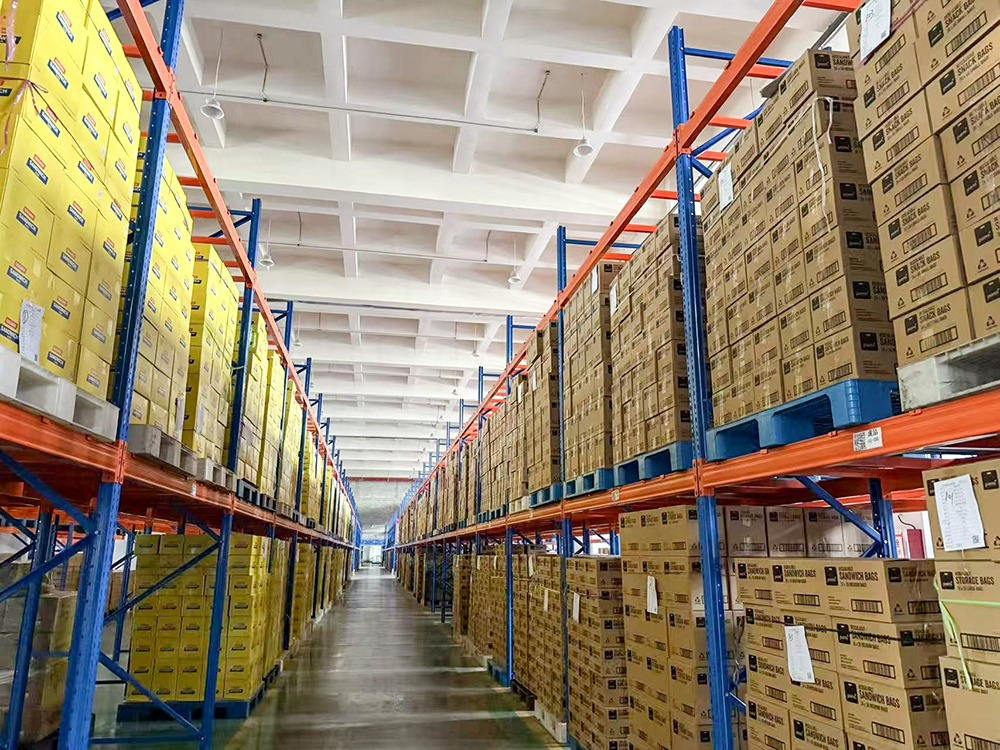
Zipper bag production for export markets including Japan and Europe. Photo: Haida Packaging.
Next step: run the scorecard on your own SKU
Send the size, closure type, temperature window and print requirement, and Haida Packaging will return the matching model (HD-ZB001, HD-SZB001, HD-DZB001, HD-ZB002, HD-SB001, HD-FB001 or HD-VB001), a sample for your own test protocol, and the current certificate copies with scope and expiry confirmed.
www.haidapack.com | Email: yanjun@hai-da.cn | WhatsApp: +86 199 5116 9639 | Sales manager: Chuck Yan
Have Questions or Need More Details?
Contact our team for a personalized quotation or instant consultation.
Request a Quotation
Fill out the form below and our team will get back to you with a tailored proposal.
WhatsApp Direct Chat
Prefer to chat in real-time? Message us on WhatsApp for instant assistance & quick answers.
- Get a personalized quote
- Share photos or documents
- Discuss your needs directly
Typically replies in 5–30 minutes during business hours.