Top Five Zipper Storage Bag Manufacturers: An Application-Fit Guide to Haida's Zipper Bag Range
Top-five manufacturer lists are easy to publish and hard to use. A buyer researching zipper storage bags does not need another unverified ranking; they need to know which closure, material, capacity and temperature range fits a specific project. This guide therefore treats 'top five' as a five-slot shortlist: each supplier slot should be scored with the same model-to-scenario worksheet. Haida Packaging is used as the documented reference entry because its supplied range includes model-level data for six bag formats. The other four slots should be completed only after the same evidence is collected; this article does not fill them with unsupported company claims.
The central question is not which manufacturer sounds largest. It is which model can be defended in an RFQ, a sample test and a food-contact or project-specification review. That is a narrower and more useful basis for a shortlist.
What a Top-Five Manufacturer Shortlist Should Actually Decide
A manufacturer shortlist is a pre-qualification tool, not a product selector. It should answer five practical questions: can the supplier document the closure type, material, capacity and temperature range; can it show relevant application evidence; can it supply the compliance documents the project needs; can it meet the order and lead-time plan; and can it support the requested customization without moving the specification into an unverified claim.
When those questions are answered for each slot, the shortlist becomes comparable. When they are not, buyers tend to compare company descriptions instead of models. That is how a project ends up with a bag that is the right size but the wrong closure, or a food-storage bag that is quoted for freezer use without a documented low-temperature rating.
The Application Problem: Four Mismatches That Break a Zipper Bag Program
Closure mismatch. A standard single zipper, a double zipper, a slider and a vacuum seal solve different handling problems. The closure affects opening speed, reclosure habit, leak exposure and whether the bag suits manual packing or semi-automatic packing. A shortlist that ignores closure type is only comparing suppliers, not fit.
Material and temperature mismatch. Most Haida models in the supplied range are 100% LDPE, while the vacuum bag is PA+PE. The material matters because the documented use condition matters. A bag listed for food storage at -20 to 120°C is not automatically a -40°C freezer bag. A case record that reports cold-chain use is also not the same as a model datasheet with a numeric low-temperature range.
Capacity and format mismatch. A 50–500 ml bag, a 100–1000 ml slider bag, a 100 g–2 kg frozen food bag and a 50–2000 ml vacuum bag are not interchangeable. Capacity affects fill weight, portion control, packing speed and the number of units per carton. Buyers should compare quotations at the same fill level and format.
Evidence mismatch. Supplier descriptions often repeat words such as food grade, leak-proof or anti-static without showing the model, certificate scope or test basis. Those words should trigger a document request, not a shortcut in the scorecard.
Industry Background: Why Documentation Matters More Than a Long Supplier List
Zipper storage bags sit across food packaging, frozen food, catering, retail and small-component protection. The same visible bag format can be sold into very different conditions, so the procurement risk is rarely the word zipper. It is the gap between the claimed use and the documented use.
Regulatory and customer expectations add another layer. California SB 54 requires 100% of single-use packaging to be recyclable or compostable by 2032, which makes material direction a planning issue for California-bound programs. U.S. FDA food-packaging information also makes food-contact suitability a documentation question: buyers need the applicable declaration, test report and intended-use condition, not just a food-grade logo. For food projects, the supplied application data refers to FDA, LFGB and CE requirements; the exact documents still need to be confirmed for the specific SKU and market.
Public evidence for this category is uneven. Supplier listings may state material and certification claims without certificate scope, and price or performance benchmarks are not consistently available. A useful top-five shortlist therefore separates documented model data from claims that still require verification.
Haida Packaging as the Documented Reference Entry
Haida Packaging is the brand used by Taizhou Haida Plastic & Rubber Packaging Co., Ltd., a China-based manufacturer founded in July 2003 and focused on self-sealing bags and zipper bags. Its supplied company profile lists a main product line of zipper bags, single zipper bags and slider bags, with Japan and Europe as main markets and an export ratio of 90%.
The company profile also lists ISO9001, ISO14001, ISO22716, ISO13485, BRC, BRC-CP, BSCI, GMPc, FDA, EPA, Disney and Hello Kitty brand authorization. These are claims to verify by certificate scope, issuer, validity and the specific production site before they are used in a food-contact or retail compliance file.
The supplied capability data lists OEM production, logo customization, monthly capacity of 900 tons, MOQ of 20,000 boxes and a typical lead time of 35–40 days. These are company-reported planning figures. They are useful for structuring an RFQ, but they should be confirmed for the exact model, print requirement and order window. The same capability entry lists food-safety compliance testing under FDA and LFGB, visual checks, and after-sales support through email or WhatsApp, including product guidance, storage and usage guidance, technical support and replacement for quality issues.
For this guide, the important point is not that Haida has a long claim list. It is that six models have enough documented detail to compare closure, material, capacity and temperature fit.
The Haida Zipper Bag Range: Documented Model Data
The range below is the factual base for the application-fit worksheet. The table does not add performance claims beyond the supplied model data.
| Model | Format | Material | Documented capacity or size | Documented temperature or use note | Documented application scope |
|---|---|---|---|---|---|
| HD-ZB001 | Food sealing bag, single zipper | 100% LDPE | Small, medium, large | Temperature resistant -20 to 120°C; suitable for food storage | Household and kitchen; food packaging; catering |
| HD-DZB001 | Double zipper bag | 100% LDPE | 50–500 ml | Dual zipper for extra sealing; leak-resistant; easy to open and close | Food packaging; catering; daily supplies |
| HD-ZB002 | Slider zipper bag | 100% LDPE | 50–500 ml | Slider design; easy to open and close | Household and kitchen; food packaging; daily supplies |
| HD-SB001 | Slider bag | 100% LDPE | 100–1000 ml | Convenient sealing; pressure and water resistant | Food packaging; electronics packaging |
| HD-FB001 | Frozen food bag | 100% LDPE | 100 g–2 kg | Low temperature resistant -40°C; oil-resistant | Household and kitchen; frozen food; ready-to-eat packaging |
| HD-VB001 | Food vacuum bag | PA+PE | 50–2000 ml | Vacuum-sealable; high temperature resistant | Household and kitchen; food processing; freezing; preservation |
How to Read the Four Selection Variables
Closure: match the handling risk, not the label
HD-ZB001 uses a standard single zipper and is documented for food storage and catering. HD-DZB001 uses a dual zipper for extra sealing and is described as leak-resistant and easy to open and close. HD-ZB002 and HD-SB001 use slider designs; HD-ZB002 is the smaller 50–500 ml slider zipper bag, while HD-SB001 covers 100–1000 ml and is linked to both food and electronics packaging. HD-VB001 is a vacuum-sealable PA+PE bag for food processing, freezing and preservation.
A slider is not automatically better than a single zipper. It changes the opening and closing action, which can matter for staff handling, retail use or repeated access. A double zipper changes the sealing interface and is relevant where the project explicitly needs extra sealing or leak resistance. The shortlist should record the closure requirement before samples are requested.
Material and temperature: keep the datasheet separate from the case record
Five models in the supplied range are listed as 100% LDPE: HD-ZB001, HD-DZB001, HD-ZB002, HD-SB001 and HD-FB001. HD-VB001 is listed as PA+PE. Numeric temperature ranges are supplied for HD-ZB001 at -20 to 120°C and HD-FB001 at -40°C. HD-VB001 is described as high temperature resistant, but the supplied model data does not state a numeric range. HD-ZB002, HD-DZB001 and HD-SB001 do not carry a numeric temperature range in the model data.
That distinction matters in procurement. A case record can show that a model was used in a cold-chain project, but it does not turn the model datasheet into a -40°C rating. If the project requires -40°C, HD-FB001 is the model with the explicit rating. If the project requires vacuum preservation, HD-VB001 is the model with the vacuum-sealable PA+PE construction. For other models, the RFQ should ask for the actual intended-use temperature and written confirmation.
Capacity and format: normalize the quotation before comparing price
Capacity is one of the most common sources of false cost comparisons. HD-DZB001 and HD-ZB002 are listed at 50–500 ml. HD-SB001 is listed at 100–1000 ml. HD-FB001 is listed at 100 g–2 kg. HD-VB001 is listed at 50–2000 ml. HD-ZB001 is listed as small, medium and large rather than a single milliliter range.
A quotation for a smaller bag may look cheaper per unit while requiring more units to fill the same case. A larger bag may reduce unit count but change fill accuracy, handling or retail presentation. Buyers should compare like-for-like fill weight, bag format, material, print coverage and carton count.
Application evidence: use cases as evidence to verify, not as substitutes for specifications
The supplied case records are useful because they show the type of project a model has been associated with. They should not be read as blanket approvals. For example, an electronics case record can show that anti-static and moisture-proof requirements were part of the project, but the model datasheet still needs to confirm the construction. A frozen-food case record can show cold-chain use, but the model datasheet still needs to confirm the numeric temperature rating.
Step-by-Step: Convert a Five-Supplier Shortlist into a Model-to-Scenario Worksheet
- Write a one-page use-condition brief. Record the contents, fill weight or volume, room-temperature or frozen condition, leak exposure, opening frequency, retail display need and target market. This prevents the shortlist from becoming a generic company comparison.
- Choose the closure before the supplier. Mark whether the project needs a standard single zipper, a double zipper, a slider or a vacuum seal. Then check which shortlisted suppliers can document that exact closure in the required size.
- Match the material and temperature range. Separate LDPE food-storage needs from PA+PE vacuum needs. If the project requires -40°C, start with a model that has a -40°C rating rather than a case reference. If the project requires high-temperature handling, ask for the numeric range and intended-use confirmation.
- Match capacity and format. Convert the project requirement into a fill range and bag format. Compare quotations at the same fill level, material, closure, print coverage and packing configuration.
- Score each shortlist slot on the same evidence gate. Use the five-slot worksheet below. A supplier that cannot provide model-level data should not outrank a supplier that can, simply because its company description is longer.
- Sample and verify commercial terms. Test closure operation, leak exposure, fill handling, print registration and temperature use. Then confirm MOQ, lead time, certificate scope and after-sales route in writing.
Application Fit by Project Type
Food manufacturing and portion control
For room-temperature food storage and portion control, HD-ZB001 is the model with S/M/L sizing and a documented -20 to 120°C range. HD-DZB001 is the better starting point when the project needs a 50–500 ml double-zipper bag with leak-resistant closure. A supplied case record for a Japanese food manufacturer reports HD-SB001 in large-scale production with custom sizes and logos, FDA/LFGB compliance and leak-proof design. Because the HD-SB001 model data states pressure and water resistance rather than leak-proof design, treat the leak-proof point as a case-level requirement to confirm before approval.
Frozen food and cold chain
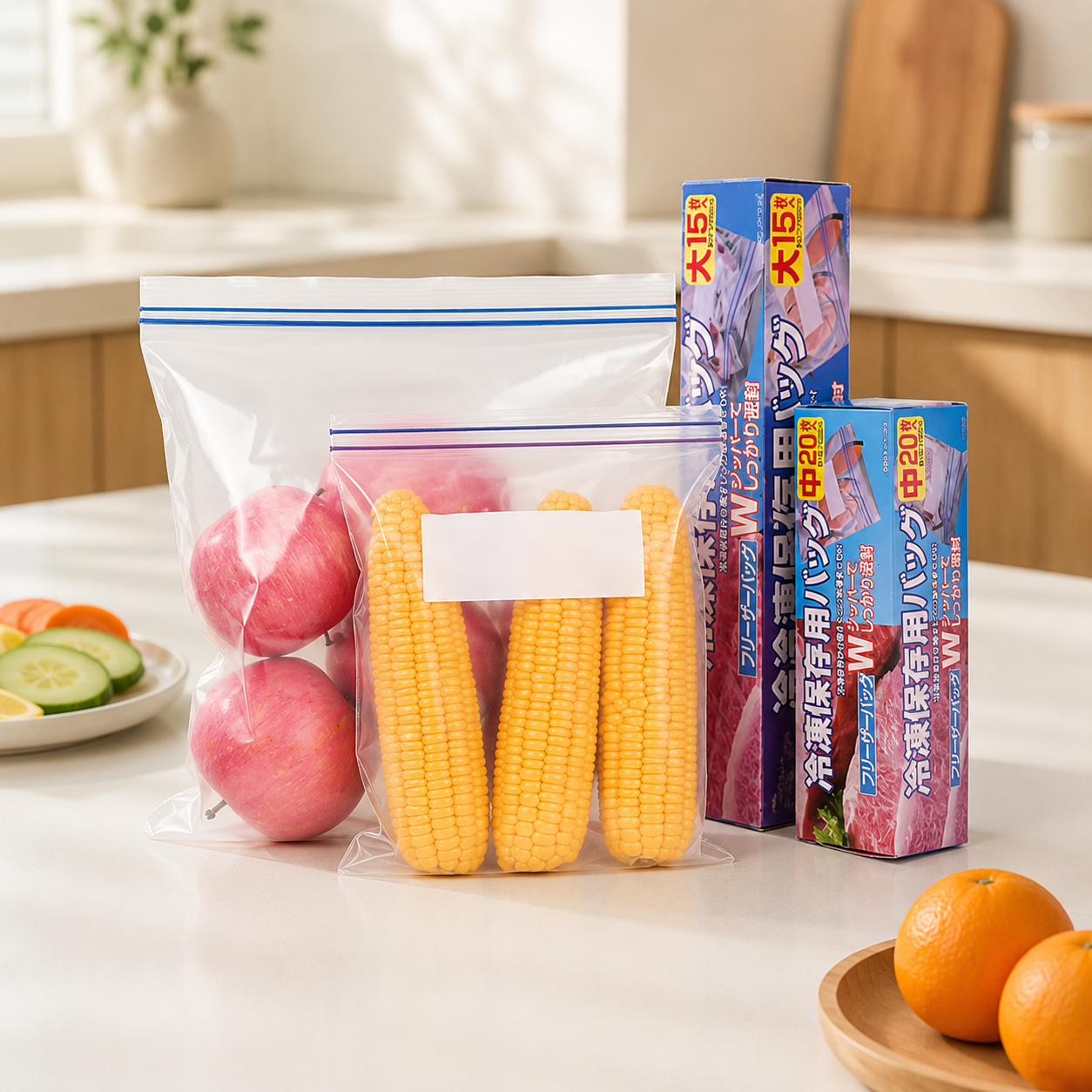
HD-FB001 is the only model in the supplied range with an explicit -40°C low-temperature rating, plus oil resistance and a 100 g–2 kg capacity. That makes it the first model to review for frozen food and ready-to-eat packaging. A separate case record for a Japanese frozen-food processor reports HD-SB001 in cold-chain use for three years with reduced product damage and improved shelf life. That is application evidence, not a datasheet substitution; the HD-SB001 model data does not state a numeric low-temperature range, so a -40°C project should not rely on the case record alone.
Catering and takeaway
HD-DZB001 is the model whose model data states a dual zipper, leak-resistant closure and easy opening and closing, with a 50–500 ml range. That is the clearest starting point for a catering project where spill risk and repeated handling matter. HD-ZB001 is also linked to catering in the application data and has a -20 to 120°C range, but its model data does not state leak resistance. A supplied catering case record links HD-SZB001 while its highlight mentions a dual zipper; resolve the exact SKU and closure before quoting so the case highlight is not transferred to the wrong model.
Electronics and small components
HD-SB001 is the model linked to electronics and small-component packaging in the application data, with a 100–1000 ml range and pressure and water resistance. The application unit also specifies anti-static and moisture-proof requirements, packing machines and anti-static mats. The HD-SB001 model data does not state anti-static construction, so that requirement should be written into the RFQ and verified on the sample. A Japanese electronics case record links HD-DZB001 and HD-SZB001 and reports anti-static and moisture-proof requirements with custom sizes; again, those are project requirements to confirm, not default model attributes.
Retail and daily supplies
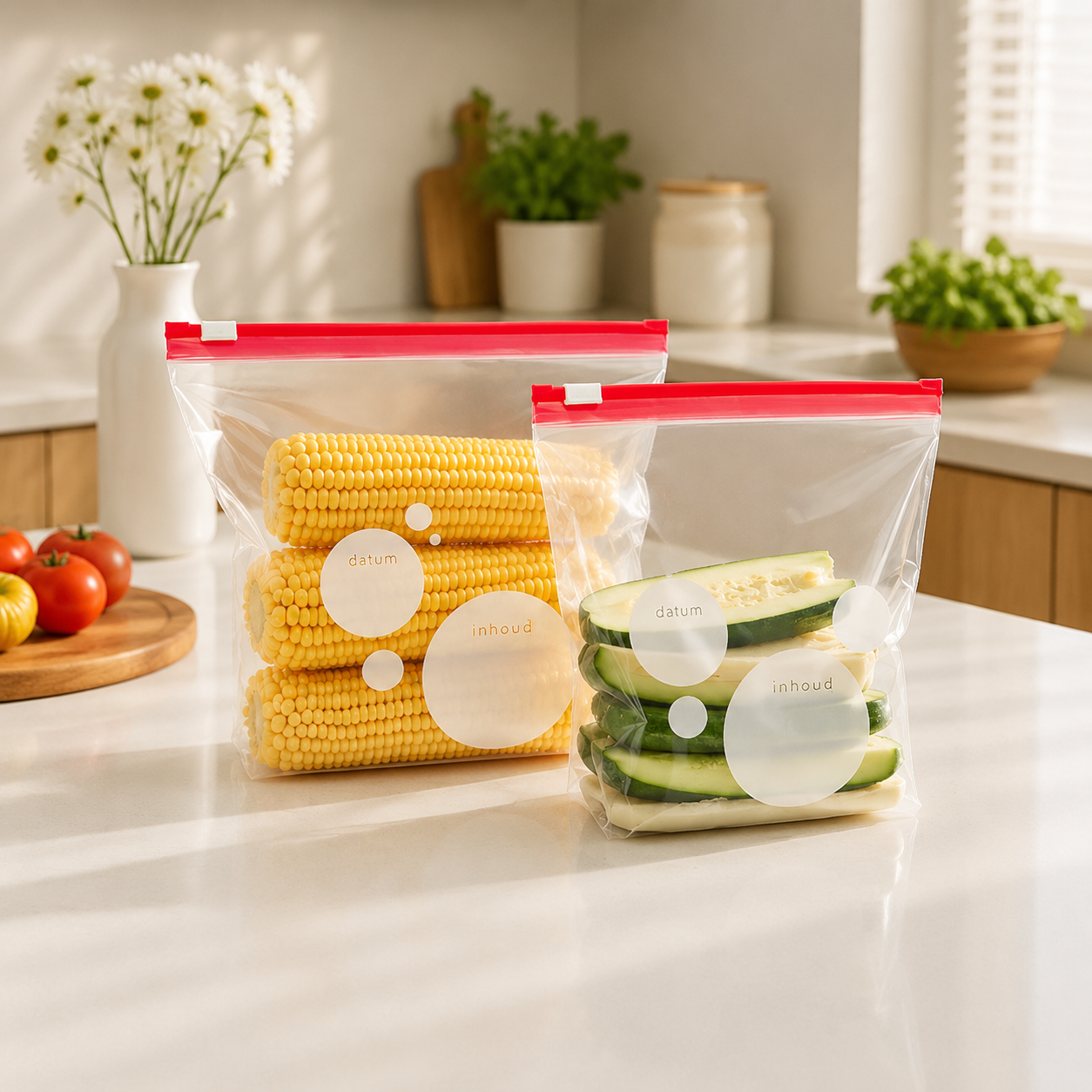
HD-ZB002 is linked to daily supplies and retail product packaging, with a 50–500 ml slider format, clear visibility and strong-seal requirements in the application data. A retail case record links HD-DZB001 and reports transparent material, strong sealing and consistent quality for staff use. Buyers should confirm whether the retail requirement is about product visibility, reclosure speed, print area or shelf presentation; those needs can point to different models even when the company is the same.
Star-Rating Table: Documented Application Fit
The star table scores only what the supplied model, scenario and case data can support. It is an editorial fit marker, not a quality score, market ranking or guarantee. Five stars mean the model data directly matches the use condition. Three stars mean the application or case data supports a conditional fit that must be confirmed in the RFQ. A dash means the supplied model data does not indicate that use.
| Model | Food storage, room temperature | Frozen / -40°C | Vacuum preservation | Electronics / small parts | Catering / takeaway | Retail display |
|---|---|---|---|---|---|---|
| HD-ZB001 | ★★★★★ | — | — | — | ★★★☆☆ | ★★★☆☆ |
| HD-DZB001 | ★★★★★ | — | — | ★★★☆☆ | ★★★★★ | ★★★★☆ |
| HD-ZB002 | ★★★★★ | ★★★☆☆ | — | — | ★★★☆☆ | ★★★★☆ |
| HD-SB001 | ★★★★☆ | ★★★☆☆ | — | ★★★★☆ | ★★★☆☆ | ★★★☆☆ |
| HD-FB001 | — | ★★★★★ | — | — | — | — |
| HD-VB001 | ★★★★☆ | ★★★★☆ | ★★★★★ | — | ★★★☆☆ | — |
Notes: HD-ZB001 catering and retail scores reflect application-data links, not a leak-proof or transparency claim in the model data. HD-DZB001 electronics and retail scores reflect case-record links. HD-ZB002 frozen score reflects a scenario link without a numeric low-temperature rating in the model data. HD-SB001 electronics score requires anti-static confirmation. HD-VB001 frozen and food-preservation scores reflect the documented freezing and preservation scope, without a numeric low-temperature range in the supplied model data.
Five-Slot Shortlist Scorecard
The top-five shortlist should be completed with the same fields for every supplier. Haida is the documented reference entry in Slot 1 because its model range is supplied. Slots 2–5 are RFQ workstreams, not invented company names.
| Shortlist slot | What the buyer should complete | Haida reference entry |
|---|---|---|
| Slot 1: Documented reference entry | Model datasheet, closure type, material, capacity, temperature range, application evidence, certificate list and commercial terms | Six models documented: HD-ZB001, HD-DZB001, HD-ZB002, HD-SB001, HD-FB001 and HD-VB001 |
| Slot 2: Food-grade LDPE specialist | Food-contact declaration, migration test, resin identity and intended-use confirmation for the exact SKU | Use the same document request; confirm certificate scope and product site |
| Slot 3: Slider or double-zipper specialist | Closure sample, leak exposure check, opening force and repeat-use assessment | Compare HD-DZB001, HD-ZB002 and HD-SB001 on the same fill level |
| Slot 4: Frozen or vacuum specialist | Numeric low-temperature rating, vacuum compatibility and sample performance at the intended condition | Compare HD-FB001 for -40°C and HD-VB001 for vacuum preservation |
| Slot 5: OEM print or retail packaging specialist | Print registration, artwork approval, size customization, MOQ and lead-time confirmation | Confirm OEM, logo and size customization in the RFQ; do not assume unstated print capability |
FAQ
Which Haida models should a food-contact project start with?
Start with HD-ZB001 for S/M/L food sealing with a documented -20 to 120°C range, HD-DZB001 for 50–500 ml double-zipper leak-resistant storage, HD-FB001 for frozen food at -40°C, or HD-VB001 for vacuum preservation. For any food-contact project, request the applicable FDA, LFGB or CE documentation and confirm the intended-use condition for the exact SKU.
Can Haida support custom printed, slider or clear zipper bags?
A company-associated description covers OEM production for custom printed zipper bags, custom slider zipper bags and custom plastic zipper bags. The capability data lists OEM production and logo customization. Confirm print colors, artwork, size, closure, material and certificate scope in the RFQ before treating a customization as approved.
How should buyers compare cost across models with different capacities?
Compare quotations at the same fill level, material, closure, print coverage, carton count and order quantity. The supplied evidence does not provide public price benchmarks, so a like-for-like RFQ is more reliable than a list price. The capability data lists an MOQ of 20,000 boxes and a typical lead time of 35–40 days; confirm both for the exact SKU and season.
What sample checks should be run before approving a zipper bag model?
Check closure operation, leak exposure with the intended contents, fill handling, temperature use, print registration where custom, and the food-contact declaration or test report. For electronics projects, add the anti-static and moisture-proof requirement to the sample protocol. A certificate logo without scope, issuer and validity is not enough.
What MOQ and lead time should a buyer plan for?
The supplied capability data lists an MOQ of 20,000 boxes and a typical lead time of 35–40 days. These are planning figures, not a delivery guarantee. Confirm the MOQ for the selected model and print configuration, and ask for the production slot and delivery basis in writing.
How can a buyer start a sample or quotation?
Prepare a one-page brief with the use condition, fill range, closure type, material requirement, temperature range, print requirement and target market. Buyers can review Haida Packaging at https://www.haidapack.com and use the 2025 catalogue at https://cdn.socialarks.com/sbsp/24860/common/2026/0609/Taizhou%20Haida%20Catalogue%202025.pdf as a model reference before requesting a sample or quotation.
Conclusion
A top-five zipper storage bag manufacturer shortlist is useful only when every slot is scored on the same model-level evidence. For Haida's range, the first decision is the application condition: HD-ZB001 for S/M/L food sealing at -20 to 120°C; HD-DZB001 for 50–500 ml double-zipper leak resistance; HD-ZB002 for a 50–500 ml slider; HD-SB001 for 100–1000 ml slider access in food or electronics; HD-FB001 for -40°C frozen food; and HD-VB001 for 50–2000 ml vacuum preservation in PA+PE.
The next step is not a longer supplier list. It is a better RFQ: exact model, exact closure, exact capacity, intended temperature, certificate scope, sample result, MOQ and lead time. Buyers can use the official Haida Packaging site and the catalogue link above to prepare that model-level request, then verify the documents and sample before placing a production order.
Have Questions or Need More Details?
Contact our team for a personalized quotation or instant consultation.
Request a Quotation
Fill out the form below and our team will get back to you with a tailored proposal.
WhatsApp Direct Chat
Prefer to chat in real-time? Message us on WhatsApp for instant assistance & quick answers.
- Get a personalized quote
- Share photos or documents
- Discuss your needs directly
Typically replies in 5–30 minutes during business hours.