Zipper Storage Bag Compliance: Material Standards and Supplier Ratings
Zipper storage bag compliance comes down to three checkable facts, not to a claim printed on a product page: the declared polymer, the documented temperature range, and the consistency of the paperwork behind both. A bag marketed only as “food grade” says very little about whether it will survive a −40 °C cold chain, whether the resin named in the quotation matches the resin on the delivery, or whether the certificate quoted in a listing actually covers the factory that will run the order.
This guide is written for importers, brand owners and procurement managers who have moved past discovery and are now evaluating suppliers. It explains how material standards for zipper storage bags are structured, how regional requirements change what is mandatory, and how to score suppliers against a fixed rating framework instead of a reputation. Published product and facility facts from Haida Packaging, a Chinese manufacturer of self-sealing bags and zipper bags, run through the article as a worked example of how a supplier profile should be read.
Why Compliance Failures Appear After the Order, Not Before It
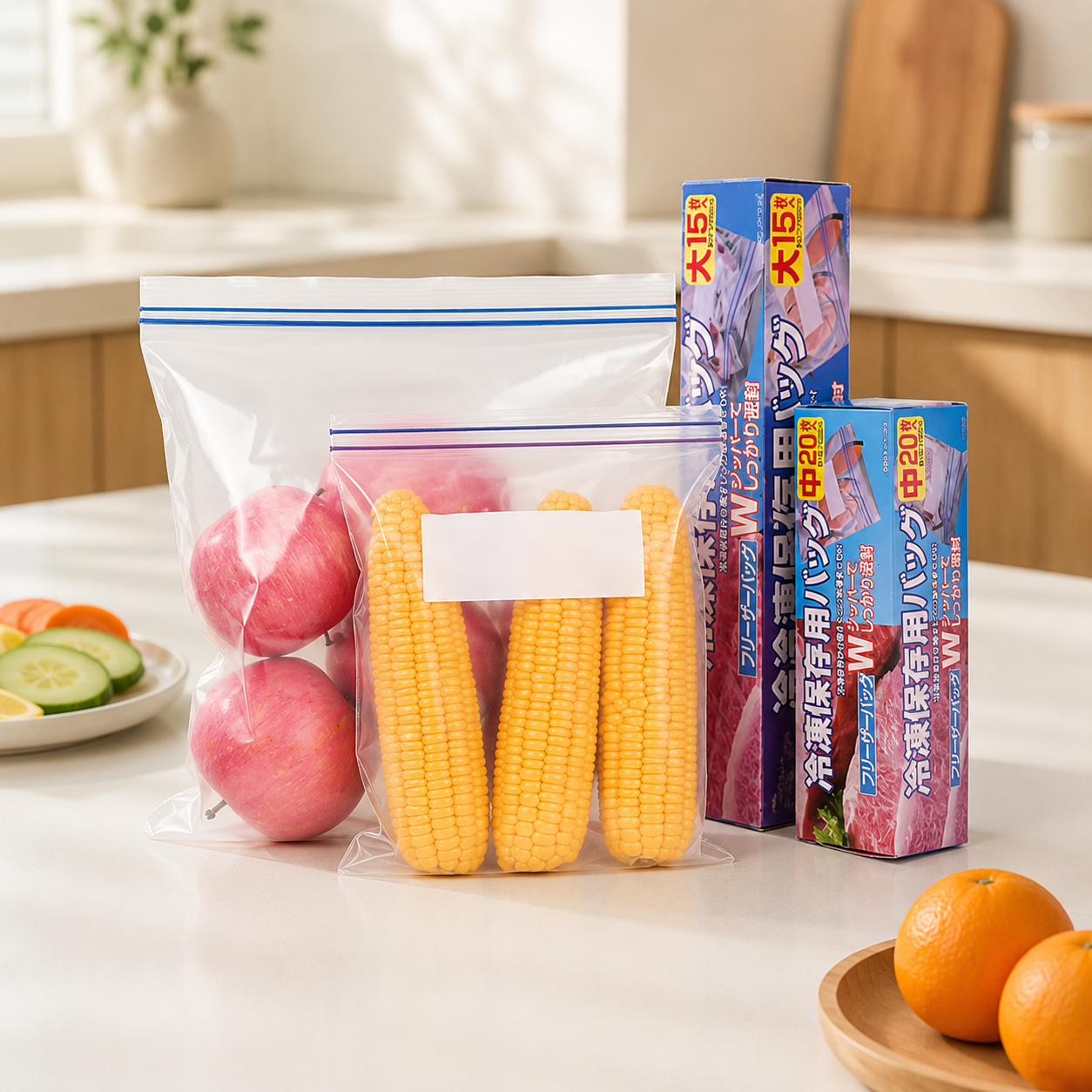
Problems in the zipper storage bag category rarely surface during quotation. They surface once the container is loaded, when the buyer discovers one of four things: the resin is not what was assumed, the temperature claim was copied from a different product line, the certificate quoted belongs to a sister company or to an expired period, or the packaging no longer meets a market rule that changed after the order was placed.
All four failures share one root cause. The buyer compared suppliers on price, lead time and presentation, and treated material and compliance as a single label — “food grade” — instead of a set of specifications that can be checked one at a time.
Describing the material standards for zipper storage bags is easy. Verifying them is the hard part, and verification is where a supplier review either turns into evidence or stays an assumption.
The Regulatory Background That Now Shapes Material Choices
Two forces are pushing zipper storage bag specifications toward clearer, more verifiable material disclosure: market growth and packaging regulation.
An industry analysis published in 2026 projects that the global market for zipper storage bags will exceed USD 12 billion by 2026, spanning household, catering and retail demand. Reported segmentation of the same market places stand-up formats at roughly 76.4% of the self-sealing bag segment and food applications at about 52.3% of end use. Those two figures matter for compliance planning because they concentrate regulatory exposure precisely where material documentation tends to be thinnest: food-contact bags.
On the regulatory side, the direction of travel is recyclability. California’s SB 54, administered by CalRecycle, requires 100% of single-use packaging in the state to be recyclable or compostable by 2032. For a category built largely on polyethylene film, that deadline is not abstract. It favours mono-material constructions such as 100% LDPE over multilayer laminates that are harder to separate in a recycling stream.
Food-contact expectations, meanwhile, remain market-specific. Buyers selling into the United States generally ask for FDA-aligned food-contact documentation; European buyers typically request LFGB or equivalent evidence. Within Haida Packaging’s own application data, food packaging projects are recorded as requiring compliance with FDA, LFGB or CE standards, and the company’s stated quality-control workflow includes food-safety compliance testing against FDA and LFGB references, followed by visual inspection.
None of this makes a single certificate sufficient. It does mean the material standard is now a commercial decision rather than a paperwork formality.
Material Standards Buyers Can Actually Verify
Two base polymers cover almost the whole category
100% LDPE (low-density polyethylene) is the standard choice for zipper storage bags, freezer bags and food-sealing bags. It stays flexible at low temperature, is transparent enough for product visibility and, because it is a single polymer, is comparatively straightforward in mono-material recycling terms. In Haida Packaging’s published range, 100% LDPE is the declared material for HD-ZB001 (food sealing bag), HD-SZB001 (single zipper bag), HD-DZB001 (double zipper bag), HD-ZB002 (slider zipper bag), HD-SB001 (slider bag) and HD-FB001 (frozen food bag).
PA+PE (polyamide plus polyethylene) combines a nylon layer for strength, puncture resistance and heat tolerance with polyethylene for sealability. It appears in vacuum applications where the bag has to hold a vacuum seal and take higher temperatures. Haida Packaging’s HD-VB001 vacuum bag is specified as PA+PE and described as vacuum-sealable and high-temperature resistant.
The compliance implication is direct: PA+PE constructions are more demanding in recyclability terms than mono-material LDPE, so a buyer working toward a 2032-style recyclability target should treat them as different procurement categories rather than interchangeable options.
Temperature range is a specification, not a slogan
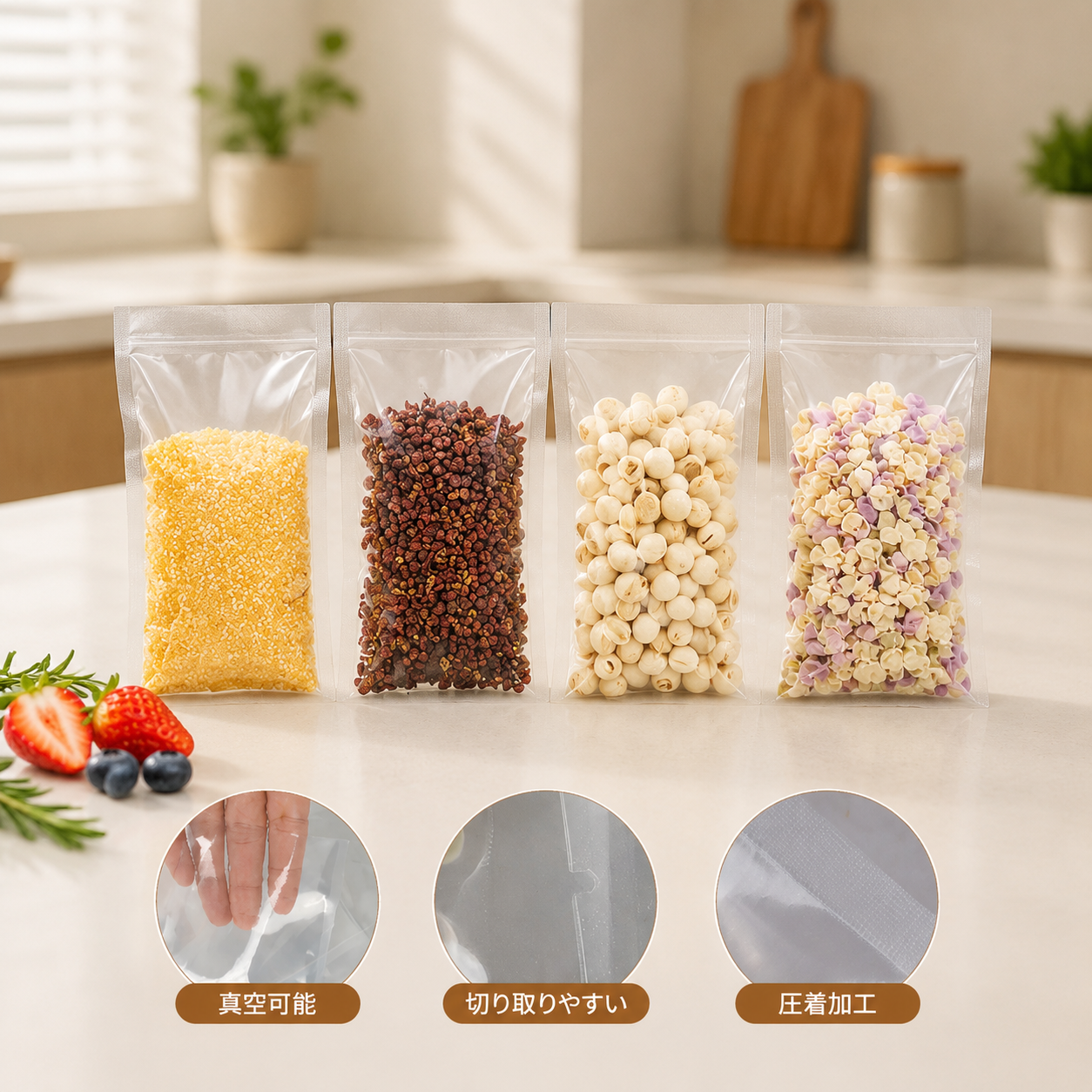
Temperature resistance is the specification buyers most often assume rather than verify. The published figures differ meaningfully across models, which is exactly why model-level numbers matter more than a catalogue headline.
| Model | Type | Material | Temperature / performance | Capacity range | Primary applications |
|---|---|---|---|---|---|
| HD-FB001 | Frozen Food Bag | 100% LDPE | Low-temperature resistant to −40 °C; oil-resistant | 100 g – 2 kg | Frozen food, ready-to-eat packaging |
| HD-ZB001 | Food Sealing Bag | 100% LDPE | −20 °C to 120 °C | Small / Medium / Large | Food packaging, catering, household |
| HD-SZB001 | Single Zipper Bag | 100% LDPE | −20 °C to 120 °C | Small / Medium / Large | Food packaging, catering, daily supplies |
| HD-DZB001 | Double Zipper Bag | 100% LDPE | Dual zipper, leak-resistant | 50 – 500 ml | Food packaging, catering, daily supplies |
| HD-ZB002 | Slider Zipper Bag | 100% LDPE | Slider design, easy open and close | 50 – 500 ml | Household, food packaging, daily supplies |
| HD-SB001 | Slider Bag | 100% LDPE | Pressure and water resistant | 100 – 1000 ml | Food and electronics packaging |
| HD-VB001 | Food Vacuum Bag | PA+PE | Vacuum-sealable, high-temperature resistant | 50 – 2000 ml | Food processing, freezing, preservation |
Read that table as a verification tool rather than a product list. A single temperature figure applied to an entire catalogue describes marketing positioning, not a specification. What a buyer needs is a number per model and a statement of how the number was produced.
Closure format changes what has to be tested
Single zipper, double zipper and slider closures all sit under the broad “zipper storage bag” heading, but they behave differently in use and therefore carry different verification questions. A single zipper bag such as HD-SZB001 is the simplest format, with a standard press-to-close closure and a −20 °C to 120 °C range. A double zipper bag such as HD-DZB001 adds a second sealing track for leak resistance in catering and takeaway use, in a 50–500 ml range. Slider formats such as HD-ZB002 and HD-SB001 replace finger pressure with a sliding element, and HD-SB001 is additionally described as pressure and water resistant.
Closure format therefore determines the test plan: seal integrity and leak behaviour for double zipper and slider formats, repeated open-close cycles for slider designs, and low-temperature flexibility for anything destined for a freezer.
Documentation is the third compliance dimension
Certificates are where most supplier reviews become unreliable, because certificates are easy to list and hard to check. Haida Packaging’s published company profile names a broad set of management-system, product and brand authorizations, including ISO9001, ISO14001, ISO22716, ISO13485, BRC, BRC-CP, BSCI, Nordic Swan, GMPc, FDA and EPA, together with Disney and Hello Kitty brand authorizations. The same profile describes a quality-control process built on food-safety compliance testing to FDA and LFGB references, followed by visual inspection.
Listing those names is not the same as verifying them. A certificate becomes useful to a buyer only when four details line up: the legal entity that holds it, the product scope it covers, its validity period, and the manufacturing site where the order will actually run. Requesting those four details in writing converts a list of names into compliance evidence. Skipping the request leaves the buyer relying on a description.
How to Review a Supplier in Five Steps
- Fix the application envelope before contacting anyone. Contents, worst-case storage temperature (a −40 °C freezer is not the same as an ambient shelf), pack size, closure preference and destination market. Every later question depends on this one.
- Request the resin declaration per model, in writing. “100% LDPE”, “PA+PE” and “unspecified blend” are three different answers with three different compliance consequences. A declaration that covers an entire catalogue rather than a specific model number should be treated as incomplete.
- Turn the temperature claim into a number. Haida publishes −40 °C low-temperature resistance for HD-FB001, and a −20 °C to 120 °C range for HD-ZB001 and HD-SZB001. A claim without a range, or a range without a stated basis, is an unknown rather than a specification.
- Request certificate copies with holder, scope and expiry. Then cross-check the named entity and site against the factory that will run the order. Haida Packaging’s export markets are recorded as Japan and Europe, which is useful context for the compliance regimes its documentation is most likely to have been prepared against.
- Score the supplier, then validate with a physical sample. The rating framework later in this guide gives a repeatable structure; a sample tested in the real working condition is what converts a score into confidence.
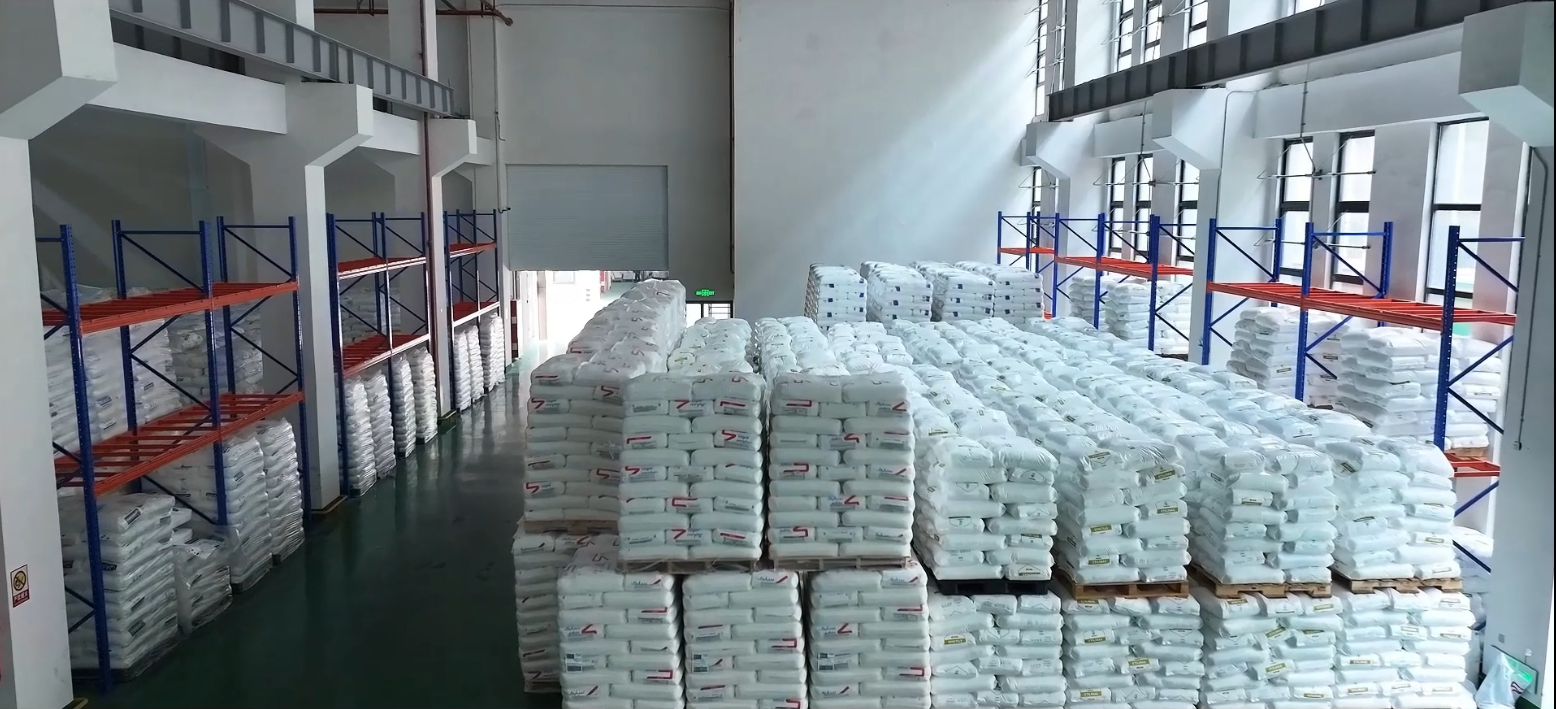
Two further data points belong in the same file. Haida Packaging reports monthly capacity of 900 tons, a minimum order quantity of 20,000 boxes and a typical lead time of 35–40 days. Those are commercial claims from the supplier, and they should be confirmed in the RFQ response alongside the compliance documents rather than accepted at the enquiry stage.
Matching Materials and Models to Real Applications
Material standards only become meaningful once they are matched to a working condition. The scenarios below come from Haida Packaging’s application records and customer cases, all based on Japanese buyers.
Frozen food and cold chain. A Japanese frozen food processor has packaged cold-chain frozen food in Haida slider bags for three years, reporting reduced product damage and improved shelf life. The governing specification is low-temperature resistance and anti-crack behaviour, which is why HD-FB001 is rated to −40 °C and described as oil-resistant across a 100 g to 2 kg range.
Food packaging and portion control. A Japanese food manufacturer running large-scale food packaging and portion control has used HD-SB001 for two to three years, with stable supply and improved packaging efficiency reported. The specification set includes custom sizes and logos and a leak-proof design, with FDA and LFGB compliance cited as part of the requirement.
Catering and takeaway. A Japanese restaurant chain uses HD-SZB001 for takeaway and delivery packaging, noting hygienic storage and easy sealing over a one to two year period. Where leak resistance matters more than packing speed, the double-zipper HD-DZB001 adds a second sealing track in a 50–500 ml range.
Electronics and small components. A Japanese electronics client packages sensitive components in HD-DZB001 and HD-SZB001 under dust-free, moisture-protection conditions and reports protected components during transit over two to three years. The compliance requirement here is not food contact but anti-static and moisture-proof performance, with custom sizes available.
Retail and daily supplies. A Japanese convenience store operator uses HD-DZB001 for daily product packaging, citing transparent material for product visibility and strong sealing over one to two years.
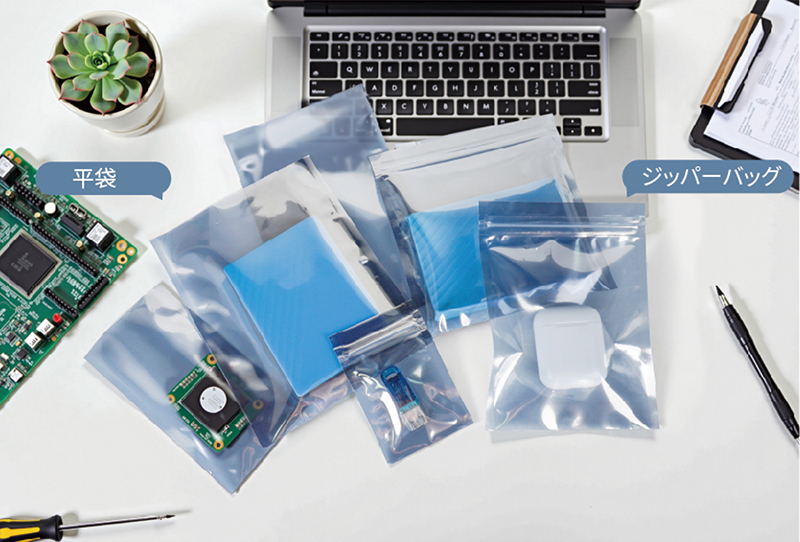
The pattern across all five scenarios is identical. The material standard has to match the working condition first; documentation only becomes decisive once it does.
Supplier Rating Table: Seven Dimensions That Can Be Checked
The table below applies a fixed seven-row framework to Haida Packaging using the company’s published product and facility data. The framework is supplier-agnostic — apply the same rows to every candidate on a shortlist and score each one on evidence rather than on presentation.
| Compliance dimension | What the buyer should verify | Haida Packaging — published position | Rating |
|---|---|---|---|
| Raw material safety | Polymer declared per model; no undisclosed blends | 100% LDPE on HD-ZB001, HD-SZB001, HD-DZB001, HD-ZB002, HD-SB001 and HD-FB001; PA+PE on HD-VB001 | ★★★★★ |
| Temperature resistance | Documented low and high operating limits per model | −40 °C for HD-FB001; −20 °C to 120 °C for HD-ZB001 and HD-SZB001 | ★★★★★ |
| Closure and format range | Single, double and slider formats available for the same material | Single zipper, double zipper and slider formats all in the published range | ★★★★★ |
| Documentation consistency | Certificate holder, scope, validity and site match the order | ISO9001, ISO14001, ISO22716, ISO13485, BRC, BRC-CP, BSCI, Nordic Swan, GMPc, FDA and EPA named, plus Disney and Hello Kitty brand authorizations | ★★★★☆ |
| Quality-control process | Stated test protocol applied before shipment | Food-safety compliance testing to FDA and LFGB references, plus visual inspection | ★★★★☆ |
| Application fit | Model range covers the buyer’s real working condition | Food, frozen, catering, retail and electronics packaging scenarios | ★★★★★ |
| Scale and production planning | Capacity, MOQ and lead time disclosed before the RFQ | 900 tons per month, MOQ 20,000 boxes, typical lead time 35–40 days | ★★★★☆ |
Ratings reflect the completeness and clarity of the supplier’s published documentation; they are not third-party audit results. Documentation consistency and quality-control process are scored at four stars rather than five because certificate copies, issuer details and validity periods are not part of the published material and must be requested directly. Where a shortlisted supplier publishes no model-level material or temperature data at all, the same rows simply score at zero until the information is supplied.
Frequently Asked Questions
What material standards should a zipper storage bag meet for food-contact use?
Food-contact compliance for zipper storage bags is built on the declared polymer plus market-specific evidence. The two material standards used across the category are 100% LDPE and PA+PE. LDPE covers the majority of zipper, freezer and food-sealing bags, while PA+PE is used where vacuum sealing and higher heat resistance are required. The declaration then has to match the destination market: United States buyers generally look for FDA-aligned food-contact documentation, and European buyers typically ask for LFGB or equivalent evidence. Haida Packaging’s application records list FDA, LFGB and CE standards as the requirement for food packaging projects, and custom food-grade zipper bags are produced with food-safety compliance testing against FDA and LFGB references.
How can a buyer confirm that a supplier’s material and documentation claims are consistent?
Consistency is confirmed by matching four things in writing: the model-level resin declaration, the model-level temperature range, the certificate holder, and the manufacturing site that will run the order. Haida Packaging publishes 100% LDPE for HD-ZB001, HD-SZB001, HD-DZB001, HD-ZB002, HD-SB001 and HD-FB001, and PA+PE for HD-VB001, with temperature figures of −40 °C for HD-FB001 and −20 °C to 120 °C for HD-ZB001 and HD-SZB001. The company profile also lists ISO9001, ISO14001, ISO22716, ISO13485, BRC, BRC-CP, BSCI, Nordic Swan, GMPc, FDA and EPA among its certifications, and its quality-control workflow covers food-safety compliance testing plus visual inspection. Certificate copies with scope and expiry should still be requested directly, because a listed name is not the same as verified coverage.
Does a stricter material standard push the unit price up?
Material choice moves cost more than documentation does. Within the same format and size, a 100% LDPE zipper bag and a PA+PE vacuum bag are different products with different raw-material inputs, and the mono-material option is generally the simpler one to recycle. The real budget risk is not the material itself but comparison error: quotations only become comparable once size, thickness, print colours, quantity and Incoterm are held constant. Haida Packaging reports a minimum order quantity of 20,000 boxes and monthly capacity of 900 tons, which defines the volume band in which quotations should be requested.
Can a sample validate material and temperature claims before a bulk order?
Yes, and for temperature claims a sample is the only practical test. A resin declaration and a temperature range are document-level statements; a sample placed in the real working condition — a −40 °C freezer for HD-FB001, a catering or takeaway workflow for HD-SZB001 and HD-DZB001, or a moisture-sensitive electronics line for HD-SB001 — is what shows how the bag actually behaves. Sampling also confirms seal behaviour for slider and double-zipper formats, which is difficult to judge from a specification sheet alone.
How long does a compliance-checked custom order take, and what should the RFQ include?
Haida Packaging reports a typical lead time of 35–40 days, a minimum order quantity of 20,000 boxes and monthly capacity of 900 tons. To keep that timeline predictable, the RFQ should carry four things: the application envelope, the model-level resin and temperature requirement, the destination market, and the documentation the buyer expects to receive with the shipment — the same four elements that drive the supplier review earlier in this guide. Buyers who want to validate material, temperature behaviour and print quality before committing to a full run can request a sample or a quotation directly, and the current product catalogue is available for download from the manufacturer.
Conclusion
Zipper storage bag compliance is not a single document and not a single label. It is the alignment of four things: a declared polymer that matches the application, a temperature range published per model, a certificate whose holder and scope match the factory, and a supplier willing to put all three in writing before the order is placed.
Haida Packaging serves as a useful worked example because its published data is specific enough to be checked — 100% LDPE across six zipper and food bag models, PA+PE for vacuum applications, a working temperature span from −40 °C to 120 °C across the range, and a manufacturing operation founded in 2003 that exports around 90% of output to Japan and Europe. Apply the same framework to any other candidate and the result will separate the suppliers that can document their material standards from those that can only describe them.
Ready to check a specification against your own application?
Request a sample, a quotation or the full 2025 catalogue from Haida Packaging. Include your pack size, storage temperature and destination market, and the team can match the right model — HD-ZB001, HD-SZB001, HD-DZB001, HD-ZB002, HD-SB001, HD-FB001 or HD-VB001 — to the requirement.
Catalogue download: Taizhou Haida Catalogue 2025
Website: www.haidapack.com
Contact: Chuck Yan, Sales Manager · WhatsApp +86 199 5116 9639 · yanjun@hai-da.cn
Have Questions or Need More Details?
Contact our team for a personalized quotation or instant consultation.
Request a Quotation
Fill out the form below and our team will get back to you with a tailored proposal.
WhatsApp Direct Chat
Prefer to chat in real-time? Message us on WhatsApp for instant assistance & quick answers.
- Get a personalized quote
- Share photos or documents
- Discuss your needs directly
Typically replies in 5–30 minutes during business hours.