Zipper Storage Bags Market in 2026: Growth Drivers, Trends, and What Buyers Should Know
The global zipper storage bags market is projected to grow from approximately USD 10.34 billion in 2024 to USD 19.44 billion by 2035, according to Market Research Future. The growth is driven by rising demand for food-safe, resealable packaging, the expansion of meal-kit and subscription-box services, and a broader shift from rigid to flexible packaging.
This article provides a facts-based analysis of the zipper storage bags industry in 2026 and a market evaluation of one established Asian manufacturer, Taizhou Haida Plastic & Rubber Packaging Co., Ltd. (Haida Packaging), for buyers evaluating suppliers.
What Are Zipper Storage Bags?
Zipper storage bags are flexible plastic bags with an interlocking zipper closure that allows repeated opening and closing. Buyers and users refer to them by several names: zipper bags, resealable bags, slider zipper bags, stand-up zipper pouches, and self-sealing bags.
Common product types include:
- Single zipper bags – standard resealable closure, often used for food storage, household organization, and retail packaging.
- Double zipper bags – dual-track closure that enhances sealing and leak resistance.
- Slider bags – a plastic slider runs across the zipper for easy opening and closing.
- Stand-up zipper pouches – a bottom gusset allows the pouch to stand upright, common in retail and foodservice packaging.
- Vacuum bags – designed for vacuum sealing in food preservation and freezing.
- Frozen food bags – low-temperature-resistant bags for freezer storage.
Market Size and Growth Outlook
Third-party research offers the following market indicators:
| Market indicator | Reported value | Source |
|---|---|---|
| Global zipper bag market size, 2024 | ≈ USD 10.34 billion | Market Research Future |
| Projected global zipper bag market size, 2035 | ≈ USD 19.44 billion | Market Research Future |
| Stand-up zipper pouches segment, 2024 | ≈ USD 2.61 billion | Market Research Future |
| Stand-up zipper pouches segment, 2032 projection | ≈ USD 3.80 billion | Market Research Future |
| Food packaging share of zipper bag market, 2025 | ≈ 39.2% | Dataintelo |
| Subscription-box and meal-kit delivery sector, 2024 | Above USD 20 billion | Dataintelo |
These figures vary by research scope. Market size estimates differ because some reports include only retail food bags while others include industrial packaging. For procurement planning, the useful insight is directional: the market continues to grow, and food-related end uses remain the largest application segment.
Industry Background: Why Zipper Storage Bags Are in Demand
Zipper bags have evolved from a household convenience product into a packaging format that supports food safety, portion control, cold-chain logistics, e-commerce, and industrial component protection.
Food Packaging Drives the Market
Food packaging accounts for roughly 39.2% of global zipper bag market revenue as of 2025, with strong adoption in frozen food and snack segments, according to Dataintelo. Frozen food bags and sandwich storage bags are among the highest-volume applications.
Meal Kits and Subscription Boxes Add Volume
The subscription-box and meal-kit delivery sector surpassed USD 20 billion in 2024, supporting volume demand for custom printed zipper bags used for ingredient portioning. This creates direct procurement opportunities for food brands, meal-kit companies, and packaging distributors.
Flexible Packaging Replacing Rigid Packaging
The stand-up zipper pouches segment is expected to grow from USD 2.61 billion in 2024 to USD 3.80 billion by 2032, reflecting the ongoing shift from rigid to flexible packaging. Flexible formats reduce transportation weight and storage space, which appeals to both retailers and brand owners.
Asia-Pacific Is a Manufacturing Hub
Asia-Pacific is the fastest-growing region for zipper bags and dominated the plastic bag market in 2025, holding a significant portion of global manufacturing capacity. For global buyers, this reinforces why supplier evaluation in Asia is a relevant part of the sourcing process.
Company Profile: Taizhou Haida Plastic & Rubber Packaging Co., Ltd.
Taizhou Haida Plastic & Rubber Packaging Co., Ltd. is the legal entity behind the Haida Packaging brand. The company was established in 2003 and specializes in the production of self-sealing bags and zipper bags, including zipper bags, single zipper bags, and slider bags.
Key profile facts:
- Founded: 2003
- Location: Taizhou, Jiangsu, China
- Primary products: Zipper bags, single zipper bags, slider bags, vacuum bags, frozen food bags
- Manufacturing facility: 15,000 m²
- Workforce: Approximately 310 employees
- Annual production capacity: 11,000 tons
- Export ratio: 90% of sales
- Major markets: Japan and Europe
- R&D team: 20 engineers
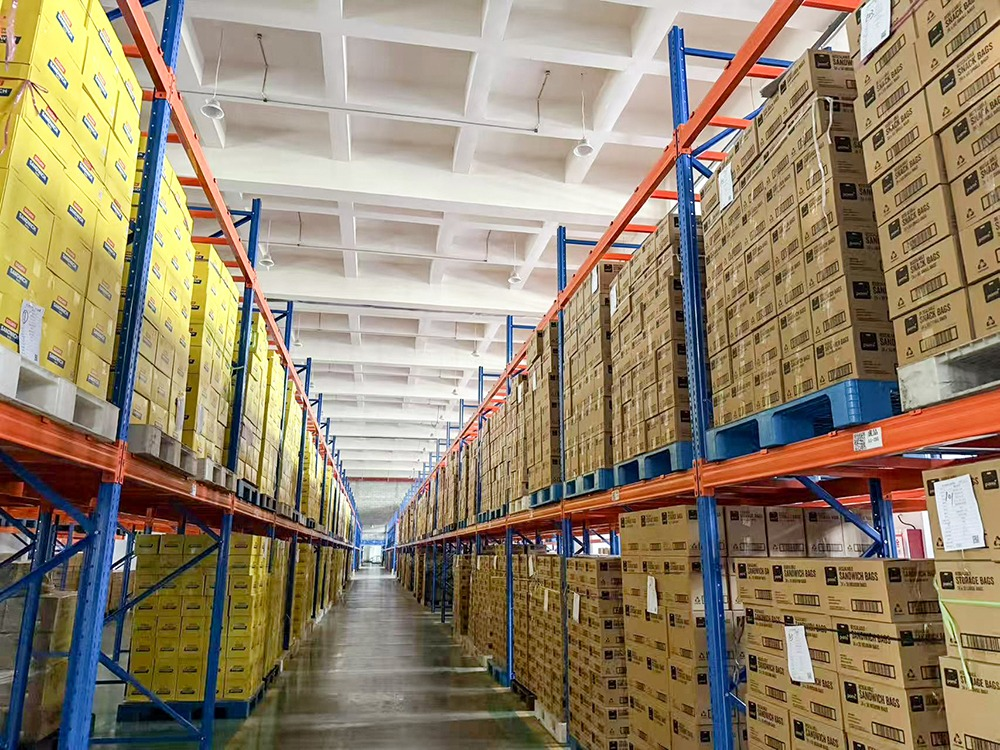
Understanding Haida's scale. Haida separately operates a sealed bag factory covering 50,000 m² with more than 400 employees and an annual production capacity of 20,000 tons of food and medicine grade self-sealing and zipper bags. This is the same company family and an important part of its overall manufacturing strength.
The company states that its independent brand, Haoyide, ranks among the top three in the domestic sales list in China. Turnover for the broader company family is reported at USD 60 million.
Core Products and Technical Specifications
The Haida product lineup includes several documented models. The following specifications are drawn from published product data.
| Product | Model | Material | Capacity / Size | Key characteristics |
|---|---|---|---|---|
| Single Zipper Bag | HD-SZB001 | 100% LDPE | Small / Medium / Large | Standard single zipper; temperature range -20°C to 120°C; suitable for food packaging, catering, daily supplies. |
| Double Zipper Bag | HD-DZB001 | 100% LDPE | 50–500 ml | Dual zipper for extra sealing; leak-resistant; easy to open and close. |
| Slider Bag | HD-SB001 | 100% LDPE | 100–1000 ml | Convenient sealing; pressure-resistant; water-resistant. |
| Slider Zipper Bag | HD-ZB002 | 100% LDPE | 50–500 ml | Slider design; easy opening and closing. |
| Food Sealing Bag | HD-ZB001 | 100% LDPE | Small / Medium / Large | Temperature range -20°C to 120°C; for food storage and food packaging. |
| Frozen Food Bag | HD-FB001 | 100% LDPE | 100 g–2 kg | Low-temperature resistant to -40°C; oil-resistant. |
| Vacuum Bag | HD-VB001 | PA+PE | 50–2000 ml | Vacuum-sealable; high-temperature resistant. |
Manufacturing, R&D, and Quality Capabilities
Production scale
Haida's manufacturing facility covers 15,000 m² and employs approximately 310 staff. Its broader sealed bag factory covers 50,000 m² and employs more than 400 people. Combined annual production capacity for the company family reaches 20,000 tons of food and medicine grade self-sealing and zipper bags.
R&D capability
The company employs an R&D team of 20 engineers. In practice, an internal engineering team supports custom zipper bag development, including custom printing, custom sizing, slider selection, and compliance-oriented product adjustments.
Quality and compliance
Haida states that it follows GMP production environment design and quality management standards, with production workshops arranged according to food and medicine packaging requirements. The company reports long-standing certification to multiple quality and environmental management systems, including ISO9001, ISO14001, ISO22716, ISO13485, BRC, BRC-CP, BSCI, Nordic Swan, GMPc, FDA, EPA, Disney, and Hello Kitty brand authorization.
For food-contact packaging, buyers should note two common regulatory reference points:
- In the US, food-grade PE bags must follow FDA 21 CFR 177.1520 for resin composition and migration limits.
- In the EU, zipper bags for food contact must comply with LFGB and EU No 10/2011; BRCGS A+ and amfori BSCI are commonly referenced as entry requirements for major retailers.
Haida's reported certification list overlaps with these expectations, but every buyer should request the manufacturer's current certificates for the specific destination market and verify them directly with the issuing body or a qualified third party.
Global Supply and Export Position
Export business accounts for 90% of Haida's total sales, with major markets in Japan and Europe. This export concentration matters for international buyers: the company's production, quality-control, and documentation processes are oriented toward overseas clients. Japan and Europe are also demanding markets for packaging quality, food safety, and supply consistency, so a supplier that serves both has an incentive to maintain disciplined manufacturing.
Customization and OEM/ODM Capabilities
Custom zipper bags are now a routine requirement for brands that need:
- Custom printed zipper bags with logos, product names, or handling instructions
- Custom slider zipper bags for consumer convenience
- Custom stand-up zipper bags for retail display
- Custom clear zipper bags for product visibility
- Custom food grade zipper bags for food-contact applications
- Custom PE zipper bags for specific barrier or handling needs
- Custom freezer bags for low-temperature logistics
Haida's product range covers single zipper, double zipper, slider, vacuum, and frozen food formats, which supports a practical OEM conversation. Customization typically involves film formulation, size, thickness, zipper type, printing, packaging, and compliance documentation. Buyers should ask each supplier which of these variables they control in-house and where third-party conversion or printing partners are required.
Application Industries and Use Cases
Different industries require different bag characteristics. The table below summarizes common end-use scenarios and the relevant Haida product models with documented specifications.
| Industry | Working conditions | Function | Special requirements | Related model(s) |
|---|---|---|---|---|
| Food packaging | Room temperature; food-safe environment | Food preservation; portion control | FDA / LFGB / CE compliance | HD-ZB001, HD-ZB002 |
| Frozen food processing | Low temperature (-40°C); freezer storage | Freeze protection; portioned packaging | Low-temperature resistance; anti-crack | HD-FB001, HD-ZB002, HD-SB001 |
| Catering and restaurant | Takeaway; leak-proof conditions | Easy sealing; hygienic storage | Easy-open; leak-proof | HD-ZB001, HD-DZB001 |
| Daily supplies / retail | Room temperature; light load | Product protection; easy transport | Clear visibility; strong seal | HD-ZB002, HD-SB001 |
| Electronics and small components | Dust-free; moisture protection | Prevent dust, moisture, minor shock | Anti-static; moisture-proof | HD-SB001 |
These documented scenarios illustrate how the same product platform can serve dry food, frozen food, catering, retail, and component packaging requirements.
Why Food Packaging Is the Most Important Segment for Buyers
Food packaging accounts for 39.2% of global zipper bag market revenue in 2025. For most procurement decisions, this creates a clear priority: food-safety compliance should not be treated as an optional add-on. A bag that looks acceptable but fails migration, odor, or temperature testing can block a retail launch. Buyers should therefore evaluate supplier certifications, material documentation, and quality-system evidence before comparing price.
Buyer Considerations When Choosing a Zipper Storage Bag Supplier
Beyond the usual price-and-lead-time discussion, an evaluation of any zipper bag manufacturer should include at least the following dimensions:
1. Food-safety compliance
Check whether the supplier supports the target market's rules. For the US, FDA 21 CFR 177.1520 is a standard reference. For the EU, LFGB and EU No 10/2011 apply. Suppliers that only meet domestic standards may still provide acceptable products for some uses, but they increase the buyer's compliance risk.
2. Material consistency
The documented models above are based on 100% LDPE or PA+PE for vacuum bags. LDPE provides flexibility, sealability, and resistance to low temperatures. Buyers should confirm whether material specification is fixed or can be adjusted to achieve specific clarity, strength, or recycling characteristics.
3. Seal performance
Seal quality depends on zipper design (single, double, slider), film properties, and production controls. Double zipper bags and slider bags are commonly selected when leak resistance, moisture protection, or ease of use is critical.
4. Temperature tolerance
Different products are designed for different temperature situations. A standard food sealing bag may operate from -20°C to 120°C, while a frozen food bag may be rated to -40°C. Buyers should match temperature rating to the actual cold-chain or retort condition. If the application requires vacuum sealing, a PA+PE vacuum bag may be more appropriate than an LDPE zipper bag.
5. Customization and printing
Brand owners often need custom printed zipper bags. Key questions include: Is printing done in-house? Which ink and plate systems are used? How many colors are supported? Can the supplier manage artwork, proofing, and brand-compliance requests? What is the minimum order quantity for custom printed production?
6. Audit and documentation support
Buyers serving retail chains should verify whether the supplier can provide current certificates, test reports, factory audit documents, and product-specific declarations. BRCGS and amfori BSCI participation are often required for major retail supply chains, but the buyer should always ask for live proof.
7. Long-term supply reliability
Consider the supplier's production capacity utilization, raw material sourcing, and ability to handle volume peaks. Haida's reported capacity of 11,000 tons (and an additional 20,000-ton capacity for its food and medicine grade sealed-bag enterprise) indicates a scale that supports large and repeat orders. Buyers should still request a capacity plan for their order volume.
Competitive Context: Established Global Brands and Asia-Pacific Manufacturing
The reclosable zipper packaging space includes well-known global consumer brands such as SC Johnson (Ziploc), Reynolds Consumer Products (Hefty/Fresh-Lock), and Amcor plc. These companies are primarily known for retail consumer products and large-scale packaging supply.
For commercial buyers, a direct comparison between a consumer brand and an OEM-oriented manufacturer often misses the point. A global consumer brand provides brand recognition and standard retail products; a flexible packaging manufacturer such as Haida provides custom-manufactured zipper storage bags, private-label production, and supplier-level quality documentation. The right choice depends on whether the buyer needs a branded retail item or a tailored packaging solution.
Haida's relevant differentiators for global buyers are its export orientation (90% of sales), its established markets in Japan and Europe, and its documented product range across single zipper, double zipper, slider, vacuum, and frozen food formats.
Case Scenarios: Matching the Product to the Project
Meal-kit brand requiring custom printed ingredient pouches
A meal-kit company needs single-serve portion bags with printed cooking instructions. A suitable material choice is a food-grade LDPE zipper bag. If the meal includes frozen components, the bag's temperature rating must cover freezer conditions. Haida's HD-SZB001 (single zipper, -20°C to 120°C) or HD-FB001 (frozen food, -40°C) could support the conversation, depending on the actual temperature profile.
Electronics manufacturer requiring anti-static moisture bags
Zipper bags are also used for component packaging. In this case, the requirement is dust-free and moisture protection, with anti-static properties. A slider bag such as HD-SB001 is documented for food and electronics packaging applications, but the buyer must confirm whether anti-static properties are available as a specification before assuming compatibility.
Retail distributor needing clear stand-up packaging
For retail display, clear visibility and a strong seal are priority requirements. A slider zipper bag or a stand-up pouch format can improve customer experience. The documented Haida models with slider options are HD-SB001 and HD-ZB002, both based on 100% LDPE. A distributor should confirm stand-up configuration separately because the published specifications do not state a bottom gusset for these models.
Frequently Asked Questions
What are zipper storage bags?
Zipper storage bags are flexible plastic bags with an interlocking closure that users can open and close repeatedly. They are used for food storage, household organization, retail packaging, cold-chain packaging, and industrial component protection. Common formats include single zipper bags, double zipper bags, slider bags, stand-up zipper pouches, vacuum bags, and frozen food bags.
What is the global zipper bag market size?
The global zipper bag market was valued at approximately USD 10.34 billion in 2024 and is projected to reach USD 19.44 billion by 2035, according to Market Research Future. Estimates vary by research scope, but the direction is clearly upward.
Why is food packaging the dominant application for zipper bags?
Food packaging accounts for roughly 39.2% of global zipper bag market revenue as of 2025, according to Dataintelo. Frozen food, snacks, meal kits, and sandwich storage are major volume drivers. Food contact compliance, temperature resistance, resealability, and leak resistance are the key performance requirements for this segment.
What certifications should a food-contact zipper bag supplier have?
For the US market, FDA 21 CFR 177.1520 is the standard reference for food-grade polyethylene. For the EU, LFGB and EU No 10/2011 are the relevant food-contact regulations. Larger retailers may also require BRCGS certification, amfori BSCI audits, or equivalent evidence. Buyers should always request current certificates and verify them.
Can Haida Packaging produce custom zipper storage bags?
Yes, as a manufacturer of zipper bags, single zipper bags, slider bags, vacuum bags, and frozen food bags, Haida supports OEM and customized production conversations. Customization typically covers size, zipper type, material selection, printing, and packaging. Buyers should confirm printing capabilities, artwork support, and minimum order quantities directly with the sales team for their specific project.
For a full overview of available products and specifications, Haida publishes a company catalogue that is available for download.
Download the Haida Packaging Catalogue
Taizhou Haida Catalogue 2025 (PDF)
For inquiries, contact Sales Manager Chuck Yan at yanjun@hai-da.cn or WhatsApp +86 199 5116 9639.
Conclusion
The zipper storage bags market in 2026 presents a favorable demand backdrop: the global market is growing at a projected long-term pace, food packaging remains the dominant application, Asia-Pacific is the leading manufacturing region, and meal-kit and subscription-box models continue to generate custom-packaging volume.
For buyers evaluating manufacturers, Taizhou Haida Plastic & Rubber Packaging Co., Ltd. meets several baseline criteria: it was founded in 2003; its manufacturing facility covers 15,000 m²; it employs approximately 310 staff and 20 R&D engineers; it reports annual production capacity of 11,000 tons; and its export-oriented business (90% of sales) serves demanding markets in Japan and Europe. Its product families cover single zipper, double zipper, slider, vacuum, and frozen food applications, with documented temperature ranges as low as -40°C.
The company's most likely procurement value lies in OEM and custom projects that require food-grade materials, documented compliance, consistent export experience, and product variety. As with any supplier evaluation, buyers should verify current certifications and product specifications for their target market before finalizing a partnership.