Zipper Storage Bags at Scale: What Long-Term Buyers Should Expect from a Partner
Published: August 2026 · Updated: August 2026
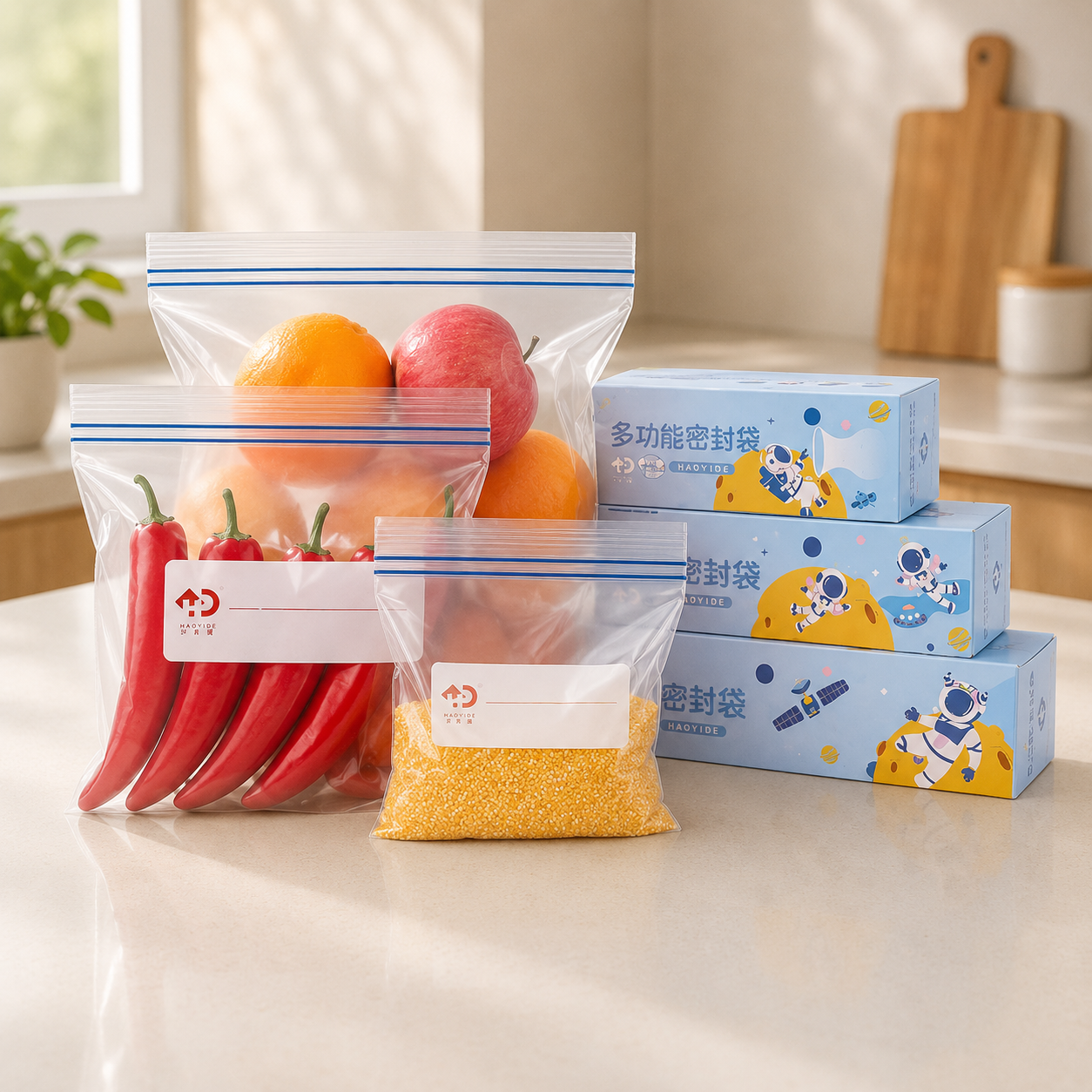
Zipper storage bags are produced in multiple formats, from single zipper to slider closure, to meet varying food and household storage needs.
Buying zipper storage bags is not only about comparing unit prices or requesting a sample. For importers, distributors, brand owners, and retail programs, the real question is whether a manufacturer can deliver consistent quality, meet food-safety requirements, and hold up across multiple purchase orders. This article explains what a long-term zipper storage bags supplier should provide, what buyers should verify before committing, and the practical expectations around compliance, customization, lead time, and support.
What Is a Zipper Storage Bag?
A zipper storage bag is a flexible plastic bag with a reclosable zipper closure that allows repeated opening and sealing. It is commonly used for food storage, household organization, snacks, frozen foods, and small product packaging. The closure mechanism typically appears in three forms: single zipper, double zipper, and slider zipper. The bag material, zipper design, size, thickness, and printing can all be customized for a specific product or end-use application.
In the packaging industry, zipper bags are sometimes called resealable bags, self-sealing bags, or slider bags. The words may change, but the core function remains the same: keep contents protected, keep moisture or air out, and allow the user to open and close the package more than once.
The Global Demand Context for Zipper Storage Bags
Demand for flexible, resealable packaging continues to grow worldwide. According to Market Research Future, the global zipper bag market was valued at approximately USD 10.34 billion in 2024 and is projected to reach USD 19.44 billion by 2035. Stand-up zipper pouches were valued at USD 2.61 billion in 2024 and are expected to reach USD 3.80 billion by 2032, partly because of the broader shift from rigid to flexible packaging. Food packaging accounts for roughly 39.2% of global zipper bag revenue as of 2025, with major adoption in frozen food and snack segments. The subscription-box and meal-kit delivery sector also surpassed USD 20 billion in 2024, which drives demand for custom-printed zipper bags used in ingredient portioning.
Asia-Pacific is considered the fastest-growing region for zipper bags and holds a significant portion of plastic bag manufacturing capacity. For buyers outside Asia, this means that sourcing from the region is common, but it also makes due diligence and verification of the manufacturer more important.
Sources: Market Research Future, Dataintelo, Towards Packaging. Market estimates vary by scope and methodology; buyers should treat them as directional context rather than precise procurement figures.
What “Long-Term Supply” Really Means
A long-term supplier is not the same as a vendor that simply accepts repeat orders. A long-term supplier should be able to do four things consistently:
- Maintain output capacity so that order volume does not create a bottleneck.
- Keep quality stable across batches, not just for the first sample.
- Manage compliance and documentation for food contact, resale, and retailer entry.
- Respond with practical support when issues appear in production, shipping, or usage.
These expectations apply to all zipper storage bags, whether the buyer needs custom printed zipper bags, custom slider zipper bags, custom stand up zipper bags, or custom food grade zipper bags.
Evaluating a Long-Term Manufacturer: A Step-by-Step Framework
Step 1: Verify the Manufacturing Base
For a zipper storage bags supplier, one of the first checks is whether the company actually operates its own production facility and controls its production process. A manufacturer with a dedicated plant, production lines, and testing equipment is generally in a stronger position to control quality, cost, and lead time than a trading company that sources from multiple unknown plants.
Taizhou Haida Plastic & Rubber Packaging Co., Ltd. (Haida Packaging) is a professional manufacturer of self-sealing bags and zipper bags. The company reports a factory area of 15,000 m² for its plastic packaging operations, a team of over 300 employees, and an annual output capacity of 11,000 tons. The company also states that its monthly production capacity is 900 tons, with a typical lead time of 35–40 days for orders. Its export markets include Japan and Europe, and the company conducts food safety compliance tests according to FDA (U.S.) and LFGB (German) standards.
For a buyer, the key verification steps include asking for factory registration documents, requesting a live factory tour or video audit, checking the actual production address, and confirming whether the company labels itself as a manufacturer or a trading company.
Step 2: Confirm Quality Control and Testing
Zipper storage bags come into contact with food, cosmetics, electronics, and other products, so quality control is not just about visual appearance. The seal must close properly, the zipper should work consistently, and the material should not release odors or unwanted substances when used for its intended purpose.
Haida Packaging lists several quality control measures for its zipper bag production. These include standardized manufacturing processes, in-line QC at critical steps, visual inspection, sealing pressure tests, and pre-shipment testing of slider smoothness and sealing reliability. The company also states that it uses SGS verification before shipment for sealing and leakage risks. For packaging and transport, it uses carton packaging, palletizing, and handling instructions to reduce damage during transit.
When comparing suppliers, buyers should ask:
- What inspection points are carried out during production?
- What test is done on the zipper before shipment?
- How are leakage or sealing failures handled if they appear in a container?
- Is a defect tracking or corrective action process in place?
Step 3: Review Certifications and Regulatory Compliance
Compliance is often the biggest entry barrier for zipper storage bags in retail and food channels. For zipper bags used in food contact in the EU, LFGB and EU No 10/2011 are relevant regulations. BRCGS A+ and amfori BSCI are often mentioned as key entry barriers for major retailers. For U.S. food contact, polyethylene (PE) bags must follow FDA 21 CFR 177.1520 for resin composition and migration limits.
Haida Packaging states that it has passed multiple quality and environmental system certifications over many years, including ISO9001, ISO14001, ISO22716, ISO13485, BRC, BRC-CP, BSCI, Nordic Swan, GMPc, FDA, EPA, and Disney and Hello Kitty brand authorizations. It also states that the factory layout follows GMP production environment design and quality management standards.
Important perspective: A company may hold an impressive certificate list, but buyers should still ask for current certificates, confirm the legal entity name on each certificate, and check whether the certification scope matches the specific product being ordered. For example, an FDA or LFGB statement should be supported by a test report or documentation that covers the exact material grade and product type.
Step 4: Clarify Customization Capabilities
There are many types of zipper storage bags, so buyers should know exactly which form they need before starting the procurement process:
- Single zipper bags — standard manual zipper closure, suitable for household, kitchen, and general food storage.
- Double zipper bags — two zipper tracks for extra sealing and leak resistance, often used for high-volume food packaging, takeaway, and liquids.
- Slider zipper bags — a slider mechanism that makes opening and closing easier and faster; widely used for household, retail, portioned frozen foods, and small electronics.
- Stand up zipper bags — a bottom gusset lets the bag stand upright on a shelf; common for retail, snacks, and meal kits.
- Food-grade or freezer bags — designed for low-temperature use, such as frozen food storage.
- Clear or printed zipper bags — clear bags provide product visibility; printed bags carry branding, storage instructions, or retail information.
Haida Packaging offers a range of products in this category. Its product list includes the HD-ZB001 Zipper Bag (food sealing bag, 100% LDPE, temperature resistant from -20°C to 120°C), the HD-ZB002 Slider Zipper Bag (50–500 ml, 100% LDPE), the HD-SB001 Slider Bag (100–1000 ml, pressure and water resistant), the HD-FB001 Food Bag (low temperature resistant to -40°C, oil-resistant, 100% LDPE), the HD-SZB001 Single Zipper Bag (small/medium/large, 100% LDPE), and the HD-DZB001 Double Zipper Bag (50–500 ml, 100% LDPE, with dual zipper for extra sealing and leak resistance). It also lists a vacuum bag model, HD-VB001, made of PA+PE.
When requesting custom printed zipper bags, custom logo zipper packaging bags, or custom clear zipper bags, buyers should provide the product size, thickness, zipper type, printing colors, packaging quantity per inner box and carton, and any food contact documentation requirements.
Step 5: Set Expectations for MOQ, Payment, and Lead Time
Long-term supply programs are easier to manage when the buyer understands the manufacturer’s minimum order quantity (MOQ), payment terms, delivery method, and lead time from the start.
Haida Packaging’s procurement terms for zipper storage bags include an MOQ of 20,000 boxes, delivery under FOB Shanghai terms, acceptance based on visual inspection, sample testing, and sealing and packaging checks, and payment terms of 30% deposit / 70% balance (30/70). With a monthly production capacity of 900 tons, the manufacturer typically delivers orders within a 35–40 day lead time.
These terms give a useful baseline for buyers, but they are not universal across the industry. Each supplier may set different MOQs depending on bag size, printing complexity, and material type. The important thing is to put these terms in writing, clarify what happens when a shipment fails inspection, and agree on how quality disputes are resolved.
Step 6: Understand Support and Risk Management
Zipper storage bag suppliers should be prepared to handle risks that occur before, during, and after production. The common risks in this category include sealing or leakage failures, slider mechanism malfunction, production defects, transportation or storage damage, and customer misuse of the product.
Haida Packaging describes its risk controls in practical terms. For sealing and leakage risk, it uses visual inspection, sealing pressure tests, and SGS verification before shipment. For slider mechanism malfunction, it conducts pre-shipment functional testing of slider smoothness and sealing reliability. For production defect risk, it relies on a standardized manufacturing process, in-line QC at critical steps, defect tracking, and corrective action. For transportation and storage risk, it uses carton packaging, palletizing, and handling instructions. For customer misuse, it provides clear instructions on opening and closing, temperature limits, and load limits.
For the buyer, the presence of a documented risk-control approach is more meaningful than a supplier’s general promise of good quality. Ask the supplier to name the specific tests and checkpoints behind its quality promise.
How Haida Approaches Zipper Storage Bags Differently
Haida Packaging positions itself as a manufacturer rather than a broker. Its product range is concentrated on self-sealing bags and zipper bags, which gives it a focused production line. The company says its export markets are mainly Japan and Europe, where packaging quality and food safety expectations are among the stricter ones globally. It also provides customer service via email and WhatsApp, including product guidance, storage guidance, and replacement for quality issues, according to its marketing materials.
From a buyer’s perspective, this combination matters: it suggests that Haida has experience serving markets that require consistent documentation, compliance testing, and after-sales communication. It does not mean that Haida is the only qualified supplier, but it explains why many buyers evaluating custom zipper storage bags include Haida on their shortlist.
Comparing Zipper Closure Types: What the Performance Literature Shows
One of the most useful decisions when specifying zipper storage bags is choosing the closure type. Haida Packaging’s own comparison data provides some figures that buyers can use as reference points before running their own tests.
| Closure Type | Compared Against | Reported Performance | Best For | Cost Position |
|---|---|---|---|---|
| Hai-da Single Zipper Bag | Traditional poly bag | ~30% higher sealing reliability, better leak-proof performance | Household and kitchen, retail food packaging, portioned storage | Slightly higher, ~5–10% |
| Hai-da Double Zipper Bag | Competitor zipper bags | ~30–40% fewer leakage complaints in B2B trials | High-volume food packaging, takeaway, liquids | ~10–15% higher unit cost |
| Hai-da Slider Bag | Traditional zipper bag | ~50% faster opening/closing; smoother operation | Household, retail, portioned frozen foods, small electronics | Higher than single zipper, comparable to double zipper |
These figures are manufacturer-reported comparisons, not third-party benchmark results. Buyers should validate closure performance against their own product, filling weight, and storage conditions.
Use Cases: Where Long-Term Zipper Bag Supply Matters Most
Food packaging and meal kits
For food producers, snack brands, and meal-kit companies, zipper storage bags are a daily-use packaging item that affects product freshness and brand perception. A resealable zipper bag with clear branding can help differentiate a product on a shelf and encourage reuse by consumers. Food-grade compliance, reliable sealing, and print consistency across thousands of boxes are critical.
Household and retail storage
Retailers and distributors that stock household zipper storage bags need predictable supply, consistent sizing, and packaging that displays well. This is where clear zipper storage bags, stand up zipper bags, and custom printed zipper bags are common. A long-term supplier should be able to manage reorders without changing the product specification between batches.
Frozen food and cold chain
Frozen food bags require low-temperature resistance and reliable sealing at cold conditions. A bag that becomes brittle or fails to seal at -20°C can create serious operational problems. Buyers should specify the temperature range they need, such as -40°C for freezer bags, and ask for the corresponding material and test information.
Electronics and small parts
Zipper slider bags are also used for small electronics, hardware, and components. In these applications, the bag provides protection from dust, moisture, and scratches. The priority is usually consistent size and zipper function, not food-grade certification.
How to Set Up a Long-Term Supply Relationship
A practical way to start a long-term zipper storage bag program is to follow a sequence rather than jumping directly to bulk orders.
- Define application requirements. Identify the product type (food, household, electronics, frozen food), closure type, size range, material, thickness, and any special properties such as oil resistance or low-temperature resistance.
- Create a shortlist of three to five manufacturers. Look for real factories, product categories that match your needs, export experience, and a documented quality system.
- Request samples. Samples should represent the same material and printing that you would receive in a full order, and they should be tested in your own environment.
- Audit compliance documents. Check certificates, test reports, and the entity name on each document.
- Run a pilot order or start with a moderate MOQ. A first order is also a test of communication, documentation, packaging, and shipping quality.
- Formalize the supply agreement. Include packing specifications, inspection criteria, lead time, payment terms, liability for defective goods, and support commitments.
Frequency Asked Questions
What certifications should a zipper storage bag supplier have for food contact?
For zipper storage bags intended for food contact in the EU, relevant requirements include LFGB and EU No 10/2011, while BRCGS A+ and amfori BSCI are often mentioned as key entry barriers for major retailers. For the U.S. market, food-grade polyethylene bags should follow FDA 21 CFR 177.1520 for resin composition and migration limits. Buyers should always ask for current certificates or test reports that cover the specific product being ordered.
Can a zipper storage bag supplier handle custom printing and logo placement?
Yes. Many zipper storage bag manufacturers offer custom printed zipper bags, custom logo zipper packaging bags, and custom clear zipper bags. The buyer should provide artwork, bag dimensions, zipper type, print method, and packaging preferences so the supplier can confirm feasibility and cost. Haida Packaging’s product line includes single zipper bags, double zipper bags, slider bags, food bags, and vacuum bags that can be used as the basis for a custom program.
What MOQ and payment terms are typical for custom zipper storage bags?
Terms vary by supplier, product size, and print complexity. Haida Packaging, for example, lists an MOQ of 20,000 boxes, FOB Shanghai delivery, acceptance based on visual inspection and sample testing, and payment terms of 30% deposit / 70% balance. Its monthly production capacity is 900 tons, and typical order lead time is 35–40 days. Buyers should confirm these terms before starting production.
Should I request samples before placing a bulk order?
Yes. Samples allow you to verify material feel, zipper smoothness, sealing quality, print color accuracy, and size consistency. They also help you compare suppliers on a like-for-like basis. For food-contact products, the sample should be accompanied by relevant documentation or test information for the material used.
How can I start a long-term supply program with a zipper storage bag manufacturer?
Start by defining your product requirements and compliance needs, shortlisting manufacturers, and requesting samples that match your specification. Then audit the factory or facility through documents and a video call, place a pilot order, and move to a formal supply agreement. If you want to include Haida Packaging in your evaluation, you can contact the sales team for product specifications, samples, or a quote.
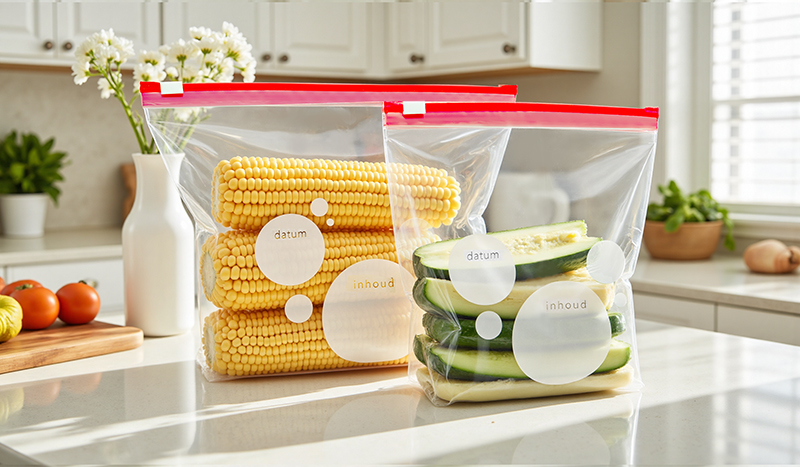
Planning a zipper storage bag program? Request product specifications, samples, or a quote from Haida Packaging to support your supplier evaluation.
Contact on WhatsApp 或 Email Sales
See the full product range: Download the Haida Packaging Catalogue (PDF)