Zipper Storage Bags for Frozen Food & Ready-to-Eat Packaging: Model Selection by Scenario
Zipper Storage Bags for Frozen Food & Ready-to-Eat Packaging: Model Selection by Scenario
Two questions narrow the model list for any frozen food or ready-to-eat (RTE) packaging project: how cold the product gets, and what the bag must protect against once it is sealed. For freezer-first, oil-bearing products, the Haida Packaging Frozen Food Bag HD-FB001 — 100% LDPE, low-temperature resistant to -40°C, oil-resistant, and sized for 100 g to 2 kg fills — is the starting model. For vacuum sealing and freezer preservation, the HD-VB001 Vacuum Bag (PA+PE, vacuum-sealable, high-temperature resistant, 50–2000 ml) covers the preservation scenario.
Everything after that is refinement: closure type, film structure, print, line equipment and compliance documentation. This guide is written for importers, food manufacturers, RTE and meal-kit brands, catering suppliers and private-label buyers who are at the research-to-evaluation stage — the point where a shortlist has to be reduced from generic "zipper storage bags" to one or two models with a documented specification.
Problem Definition: Where Frozen and RTE Packaging Actually Fails
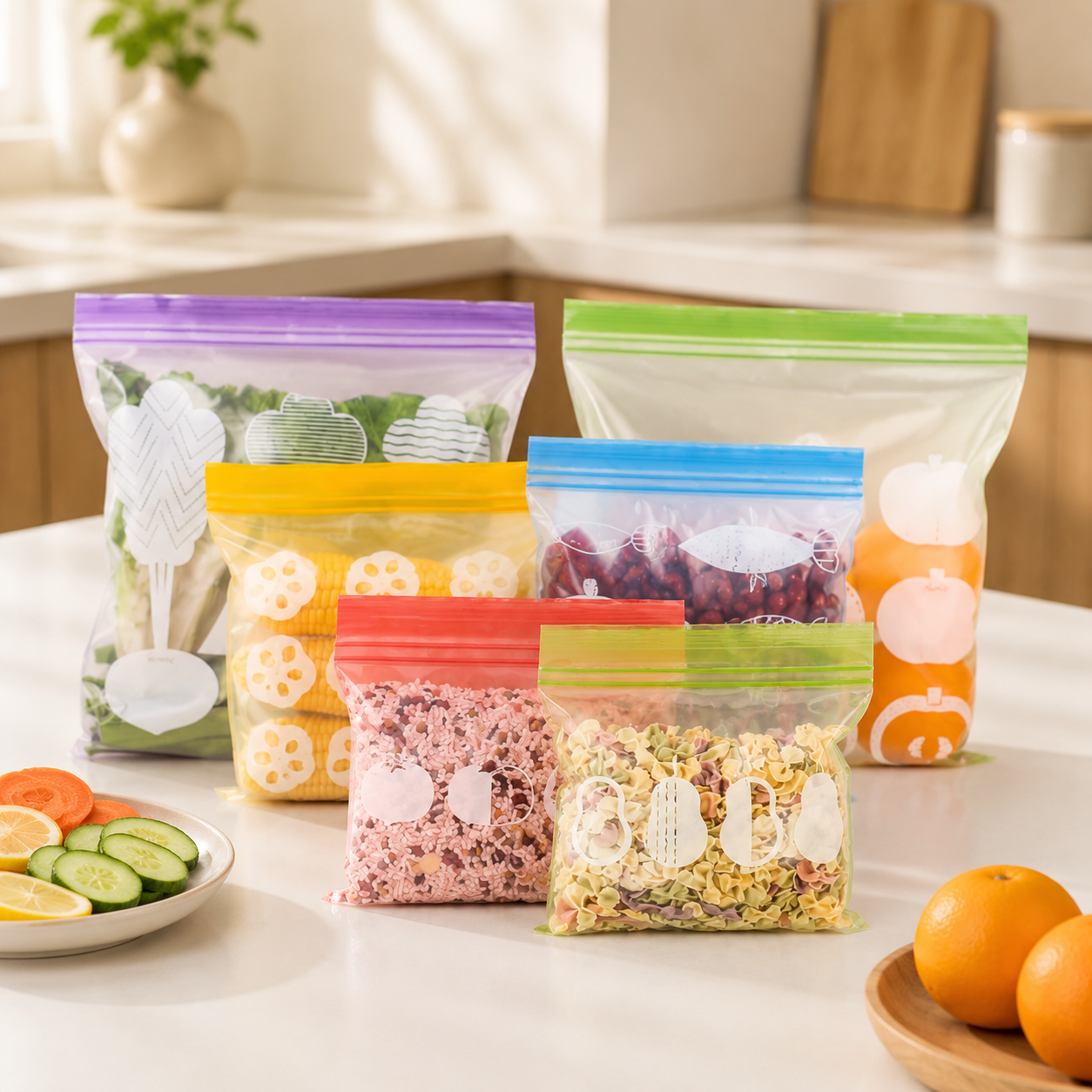
Frozen and RTE packaging failures are rarely random. They cluster in four places, and each one maps to a different part of the specification — which is why a single "food-grade zipper bag" label is not a specification at all.
- Temperature brittleness. Low-density polyethylene stays flexible only inside a rated range. Below that range the film stiffens, and repeated bending along fold lines and zipper tracks can crack it. A bag rated to -20°C and a bag rated to -40°C are therefore not interchangeable in a deep-freeze cold chain, even when both are sold as zipper bags.
- Oil and fat migration. Cooked meats, fried products, sauces and prepared ready meals carry oil and fat that can attack seal areas and printed surfaces over time. Oil resistance is a film property, and it has to be specified at model level rather than assumed from the closure type.
- Reclose behaviour in real use. A freezer bag is opened and reclosed repeatedly across its working life. RTE packaging is often opened only once, by a consumer in a hurry, and still has to present cleanly at that moment. Single zippers, double zippers, sliders and vacuum closures each solve a different part of that problem.
- Fill weight and handling. A 2 kg fill loads a bag very differently from a 100 g portion — through filling equipment, cartoning, palletising and cold-chain transport. The bag has to survive the handling chain, not only the freezer itself.
Decision rule: start from the storage temperature and the fill weight, then let closure type and compliance follow. Bags without a low-temperature rating belong in ambient, catering or daily-supply scenarios, not in deep-freeze programs.
Industry Background: Why Freezer and RTE Demand Keeps Expanding
The demand context explains why scenario-based selection has become more demanding rather than less. The global zipper bag market was valued at approximately USD 10.34 billion in 2024 and is projected to reach USD 19.44 billion by 2035, according to Market Research Future. Inside that market, the stand-up zipper pouch segment alone was valued at USD 2.61 billion in 2024 and is expected to reach USD 3.80 billion by 2032, driven by the shift from rigid to flexible packaging.
Food applications carry much of that volume. Food packaging accounts for roughly 39.2% of global zipper bag market revenue as of 2025, with heavy adoption in the frozen food and snack segments, according to Dataintelo. A second driver sits closer to the RTE end of the market: the subscription-box and meal-kit delivery sector surpassed USD 20 billion in 2024, which increases volume for custom-printed zipper bags used for ingredient portioning.
Regionally, Asia-Pacific is the fastest-growing region for zipper bags and held a significant share of global manufacturing capacity in 2025, according to Towards Packaging — relevant for buyers sourcing from the region, because model range and production capacity tend to sit where the manufacturing base sits.
Compliance expectations have moved at the same pace. Food-grade polyethylene bags must follow US FDA 21 CFR 177.1520 for resin composition and migration limits, and zipper bags intended for food contact in the EU must comply with LFGB and EU No 10/2011. BRCGS A+ and amfori BSCI are treated as key entry barriers by major retailers. In practice, a frozen food or RTE program is evaluated on model specification and compliance documentation at the same time — a bag that passes the freezer test but lacks paperwork will still stall at the retail gate.
Detailed Solution: Matching Haida Models to Freezer and RTE Scenarios
Haida Packaging (Taizhou Haida Plastic & Rubber Packaging Co., Ltd.) is a zipper bag manufacturer founded in 2003 whose range covers single zipper bags, slider bags and resealable packaging series. The range is built around model-level specifications rather than one universal food bag, which is exactly what frozen food and RTE projects need. Three model families carry most of the load in these two scenarios.
HD-FB001 — Frozen Food Bag for Deep-Freeze and Oil-Bearing Products
The HD-FB001 is a Frozen Food Bag made from 100% LDPE, specified with low-temperature resistance to -40°C and oil resistance, in a fill range of 100 g to 2 kg. Its documented application area covers frozen food and ready-to-eat packaging in household and kitchen use.
For buyers, the specification translates into three practical advantages. First, the -40°C rating places the bag inside deep-freeze and cold-chain conditions, not just chilled storage. Second, oil resistance matters for the frozen categories that cause the most damage — cooked meats, fried snacks, marinated portions and prepared meals. Third, the 100 g to 2 kg range allows one model to serve both single-portion retail packs and larger food-service packs, which reduces the number of SKUs a buyer has to qualify.
The working conditions documented for this scenario also set expectations for the equipment around the bag: freezer storage and cold-chain packaging, manual or semi-automatic operation, with freezers and vacuum machines as the matched equipment, and low-temperature resistance plus anti-crack behaviour as the special requirement.
HD-VB001 — Vacuum Bag for Preservation, Freezing and Portion Control
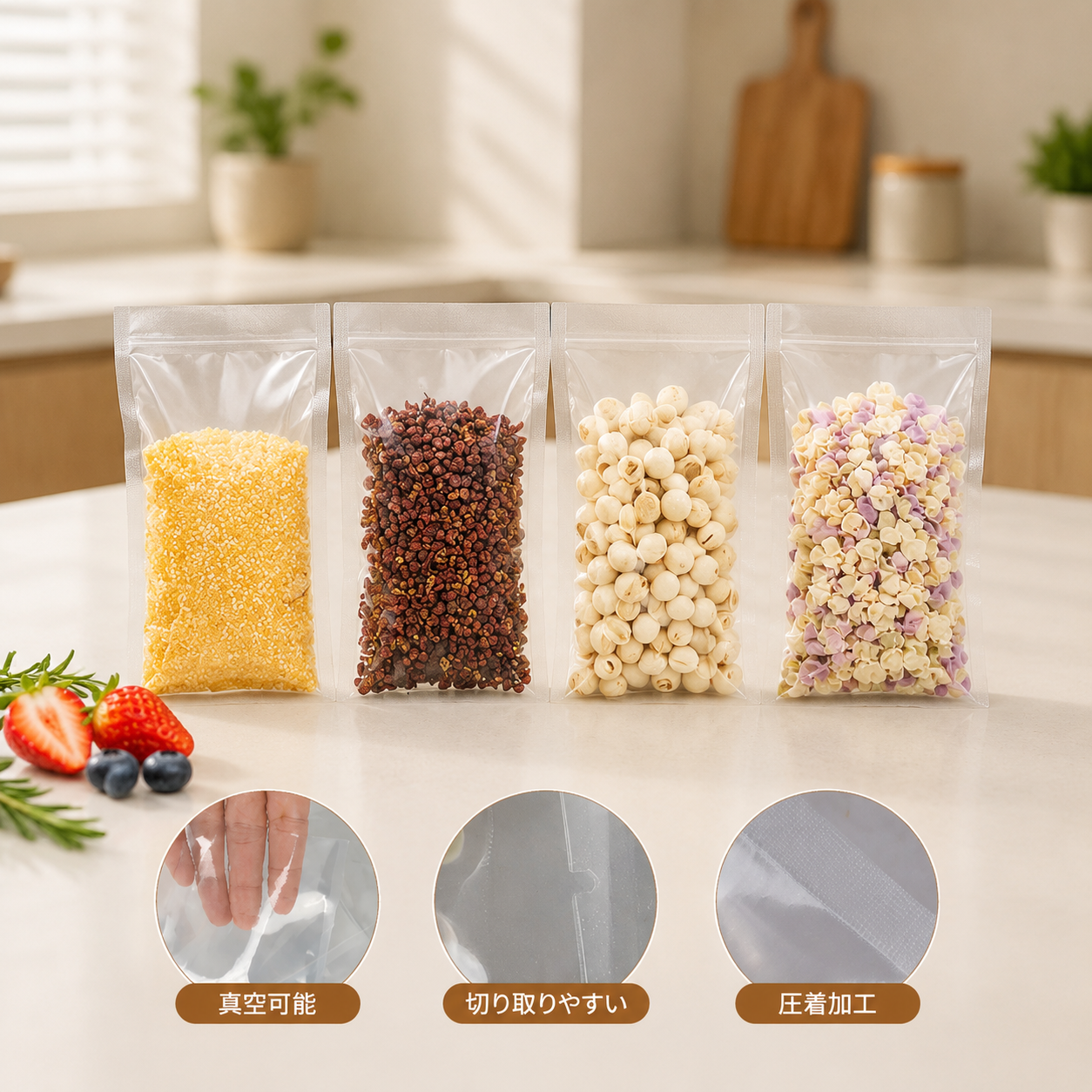
The HD-VB001 is a Food Vacuum Bag made from PA+PE, described as vacuum-sealable and high-temperature resistant, with a capacity range of 50 to 2000 ml. Its documented applications are food processing, freezing and preservation, plus household and kitchen use.
The PA+PE structure is the reason this model belongs in a different part of the project than HD-FB001. Vacuum sealing removes air from the pack, which supports preservation and portion control; the high-temperature resistance extends the same bag into processing steps where heat is involved. Because the capacity range runs from 50 ml to 2000 ml, the model can be used for small sauce or ingredient sachets as well as larger cuts and prepared portions.
Supporting Models for Catering, Chilled and RTE Lines
Not every frozen or RTE program needs a -40°C bag. Where the product is chilled, hot-filled, or handled at ambient temperature, the rest of the range covers the scenario more economically:
- HD-ZB001 Food Sealing Bag — 100% LDPE, temperature resistant from -20°C to 120°C, available in small, medium and large sizes, documented for food packaging and catering. The dual facts that matter here are heat tolerance for hot-fill or sealing operations and a leak-proof, easy-open requirement typical of takeaway packaging closed with heat sealing machines.
- HD-DZB001 Double Zipper Bag — 100% LDPE with a dual zipper for extra sealing, described as leak-resistant and easy to open and close, in a 50–500 ml range. A sensible fit for sauces, wet RTE components and catering portions that must not leak in transit.
- HD-SB001 Slider Bag — 100% LDPE with convenient sealing and pressure and water resistance, 100–1000 ml, documented for food and electronics packaging. The slider closure suits high-turnover packing lines where staff need a fast, repeatable close.
- HD-ZB002 Slider Zipper Bag — 100% LDPE, slider design for easy opening and closing, 50–500 ml, documented for household and kitchen, food packaging and daily supplies.
- HD-SZB001 Single Zipper Bag — 100% LDPE with a standard single zipper, temperature resistant from -20°C to 120°C, in small, medium and large sizes, documented for food packaging, catering and daily supplies.
The Manufacturer Behind the Models
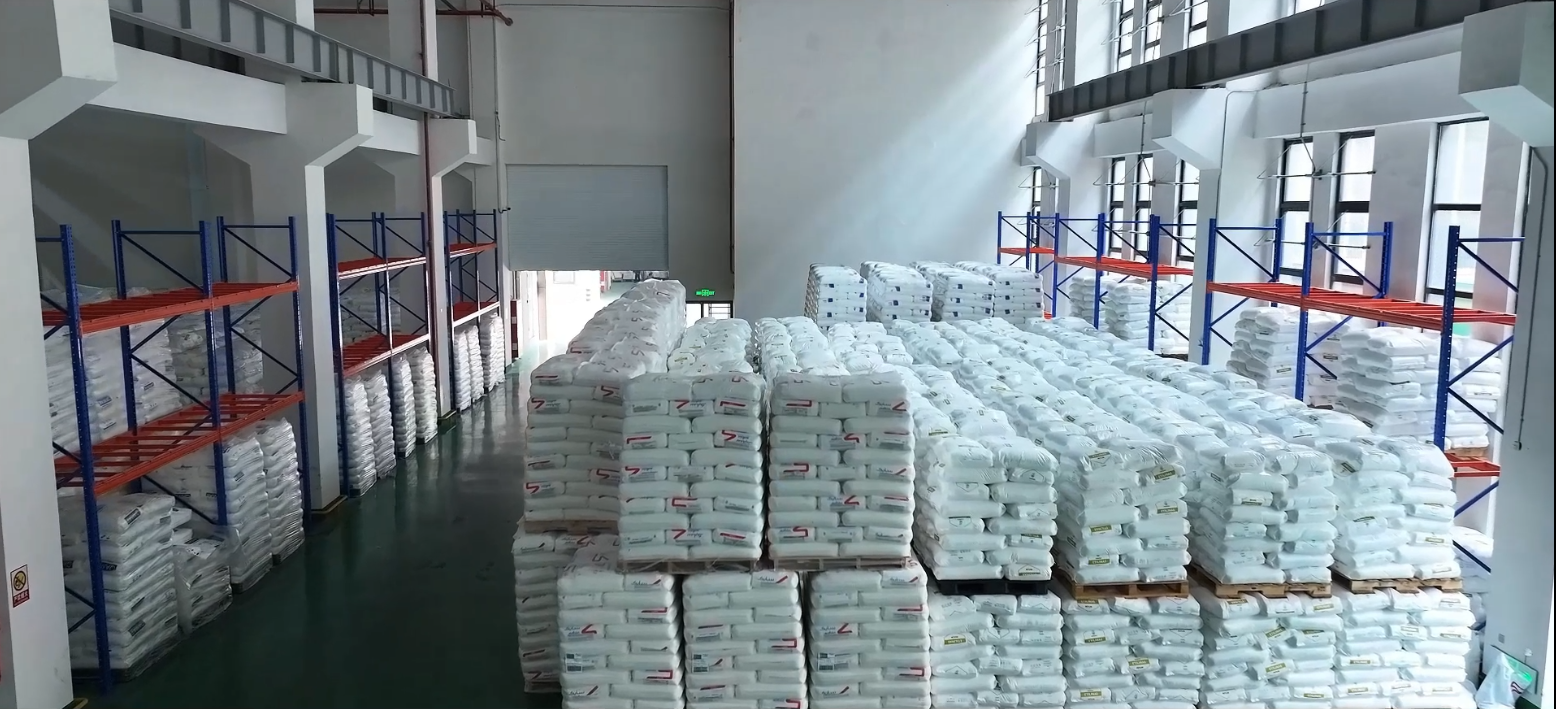
Haida Packaging was founded in 2003 and today operates as Taizhou Haida Plastic & Rubber Packaging Co., Ltd., with a product focus on zipper bags, single zipper bags and slider bags. Roughly 90% of output is exported, primarily to Japan and Europe — two markets where frozen and chilled food packaging requirements are demanding and where documented specification discipline is a precondition for supply.
The company states that it holds ISO9001, ISO14001, ISO22716, ISO13485, BRC, BRC-CP, BSCI, GMPc, FDA and EPA certifications, along with Disney and Hello Kitty brand authorisations. OEM production with logo customisation runs at a documented monthly capacity of 900 tons, with a lead time of 35–40 days and a MOQ of 20,000 boxes. Quality control combines FDA/LFGB food safety compliance testing with visual inspection, and after-sales support covers email and WhatsApp service, storage and usage guidance, technical support and replacement if quality issues occur. More detail is available at www.haidapack.com.
Step-by-Step Breakdown: Narrowing the Shortlist in Six Steps
Scenario selection works best as a sequence, because each step eliminates models that cannot serve the project even if the price looks attractive.
Step 1 — Fix the temperature window
Write down the lowest temperature the filled bag will experience, not the temperature of the room it is packed in. Deep-freeze and cold-chain conditions point to the -40°C rating of HD-FB001; vacuum plus high-temperature handling points to HD-VB001; chilled and hot-fill or catering applications sit inside the -20°C to 120°C range documented for HD-ZB001 and HD-SZB001.
Step 2 — Convert the fill into a specification
Fill weight decides more than bag size. HD-FB001 is documented for 100 g to 2 kg, HD-VB001 for 50 to 2000 ml, HD-SB001 for 100 to 1000 ml, and HD-DZB001 and HD-ZB002 for 50 to 500 ml. HD-ZB001 and HD-SZB001 are sized as small, medium and large rather than by millilitre. Deciding between grams and millilitres early avoids mismatches later, since a 2 kg frozen portion and a 2000 ml vacuum pack are not the same handling problem.
Step 3 — Screen the food matrix
Oil content, fat content and moisture determine whether standard film is enough. Products that release oil — prepared meats, fried items, sauces and ready meals — justify an oil-resistant specification such as HD-FB001. This is the step where most packaging complaints are prevented, because an oil-related seal failure usually appears after several weeks in storage, not on the packing line.
Step 4 — Choose the closure from the usage pattern
Single zippers suit straight storage and catering use. Double zippers add sealing redundancy for wet or leak-sensitive RTE contents. Sliders are chosen where consumers open and close the pack frequently, or where packing staff need speed and consistency. Vacuum sealing is a preservation decision rather than a convenience decision, and it changes the film structure to PA+PE.
Step 5 — Match the line equipment
The documented equipment around these scenarios includes freezers, vacuum machines, heat sealing machines and filling and packing equipment. Selecting HD-VB001 without a vacuum machine, or HD-ZB001 without a heat sealer, creates a line that cannot run the bag. Equipment review should happen before the first bulk order, not after.
Step 6 — Lock compliance, then commercial terms
Confirm the certificate set your own customers require, referencing FDA 21 CFR 177.1520 for US food contact and LFGB and EU No 10/2011 for EU food contact. Then confirm MOQ (documented at 20,000 boxes), lead time (35–40 days) and monthly capacity (900 tons) against your launch calendar, so the specification decision and the supply plan are made together.
Use Cases: Documented Frozen and RTE Programs
The scenario logic above is not theoretical — it reflects programs already running with Japanese food-sector clients across frozen, catering and retail channels.
- Frozen food processor (Japan) — large-scale cold chain packaging, 3-year program. Application: cold chain frozen food packaging. Reported result: reduced product damage and improved shelf life. Highlighted requirements: low-temperature resistance, anti-crack material and bulk supply.
- Food manufacturer (Japan) — large-scale production, 2–3-year program. Application: food packaging and portion control. Reported result: stable supply and improved packaging efficiency. Highlighted requirements: custom sizes and logos, compliance with FDA/LFGB, and leak-proof design.
- Catering and restaurant chain (Japan) — medium-scale, 1–2-year program. Application: takeaway and delivery packaging. Reported result: hygienic storage and easy sealing for high-volume orders. Highlighted requirement: dual zipper for extra sealing with easy open and close.
- Retail and convenience store (Japan) — small to medium volume, 1–2-year program. Application: daily product packaging. Reported result: consistent quality and staff convenience. Highlighted requirements: transparent material for product visibility and strong sealing.
Model-to-Scenario Comparison Table
The table below maps each model to the scenario it is documented for. It is a selection aid, not a ranking — the correct model is the one whose specification matches the project, and a larger fill range is not automatically better than a narrow one.
| Model | Type | Material | Temperature / Function | Capacity | Best-fit scenario |
|---|---|---|---|---|---|
| HD-FB001 | Frozen Food Bag | 100% LDPE | Low-temperature resistant to -40°C; oil-resistant | 100 g – 2 kg | Deep-frozen portions, frozen prepared meals, oil-bearing frozen products |
| HD-VB001 | Food Vacuum Bag | PA+PE | Vacuum-sealable; high-temperature resistant | 50 – 2000 ml | Vacuum sealing, freezer preservation, food processing, portion control |
| HD-SB001 | Slider Bag | 100% LDPE | Convenient sealing; pressure and water resistant | 100 – 1000 ml | Frozen and chilled components needing fast, repeatable closing; food and electronics packaging |
| HD-DZB001 | Double Zipper Bag | 100% LDPE | Dual zipper for extra sealing; leak-resistant; easy to open and close | 50 – 500 ml | Sauces, wet RTE components and catering portions that must not leak |
| HD-ZB001 | Food Sealing Bag | 100% LDPE | Temperature resistant -20°C to 120°C | Small / Medium / Large | Chilled to hot-fill food packaging and catering |
| HD-ZB002 | Slider Zipper Bag | 100% LDPE | Slider design, easy to open and close | 50 – 500 ml | Household and kitchen, food packaging, daily supplies |
| HD-SZB001 | Single Zipper Bag | 100% LDPE | Standard single zipper; temperature resistant -20°C to 120°C | Small / Medium / Large | Ambient food storage, catering and daily supplies |
FAQ: Frozen Food and RTE Zipper Bag Selection
Are HD-FB001 and HD-VB001 suitable for food-contact use in the EU and the US?
Both models use food-contact polymers: HD-FB001 is made from 100% LDPE and HD-VB001 from PA+PE. Food-grade polyethylene bags must follow US FDA 21 CFR 177.1520 for resin composition and migration limits, while zipper bags intended for food contact in the EU must comply with LFGB and EU No 10/2011. Haida Packaging states that it holds ISO9001, ISO14001, ISO22716, ISO13485, BRC, BRC-CP, BSCI, GMPc, FDA and EPA certifications, together with Disney and Hello Kitty brand authorisations, and that quality control includes FDA/LFGB food safety compliance testing plus visual inspection. Because BRCGS A+ and amfori BSCI are commonly treated as entry barriers by major retailers, buyers should confirm the exact certificate set their own customers require before finalising the specification.
Can Haida produce custom-printed and custom-sized zipper bags for a specific frozen or RTE product?
OEM production is a documented capability: Haida Packaging offers OEM manufacturing with logo customisation at a monthly capacity of 900 tons, supported by an R&D team of 20 engineers. Custom sizes and printing run across the single zipper, slider, double zipper and vacuum formats, which matters when a frozen line and an RTE line need different bag formats from one supplier. Custom freezer bags, custom food-grade zipper bags and custom resealable formats are produced from the same base specification logic described above.
What determines the unit cost of a frozen food or vacuum zipper bag?
Cost is driven by specification variables rather than by brand name. The four that move the number most are film material (100% LDPE for HD-FB001 versus PA+PE for HD-VB001), fill size and bag format (100 g–2 kg for HD-FB001, 50–2000 ml for HD-VB001), closure system (single zipper, double zipper, slider or vacuum), and print coverage on custom-printed bags. Order volume interacts with all four through the documented MOQ of 20,000 boxes. When comparing quotes, the cost of a failed seal in the freezer — lost product, repacking and delivery delay — belongs in the comparison next to the per-bag price.
How should a buyer validate a model before committing to a bulk program?
Validation starts with scenario data rather than with a bag: the minimum storage temperature, the fill weight or volume, the oil and fat content of the product, and the sealing or vacuum equipment already installed on the line. With those four inputs, buyers can confirm whether HD-FB001, HD-VB001 or a supporting model such as HD-SB001 is the right fit, then obtain the current specification sheet and program details from Haida's sales team by email or WhatsApp. Haida's after-sales service includes product guidance, storage and usage guidance, and replacement if quality issues occur.
What are the MOQ and lead time for a custom frozen food bag program?
Documented terms for Haida Packaging OEM programs are a MOQ of 20,000 boxes and a lead time of 35–40 days, with a monthly capacity of 900 tons and roughly 90% of output exported to Japan and Europe. To match a model to your specific freezer or RTE scenario, contact Chuck Yan (Sales Manager) at yanjun@hai-da.cn or WhatsApp 19951169639, or review the full model range in the Taizhou Haida Catalogue 2025 (PDF).
Conclusion: Let the Scenario Pick the Model
Frozen food and ready-to-eat packaging reward specification discipline. The temperature window decides whether a bag belongs in deep freeze at all; the fill weight decides which capacity band is realistic; the food matrix decides whether oil resistance is required; and the closure type decides how the pack behaves in the consumer's hands. Once those four decisions are made, the model choice is usually obvious: HD-FB001 for freezer-first, oil-bearing products from 100 g to 2 kg, and HD-VB001 for vacuum-sealed preservation and portion control from 50 to 2000 ml, with HD-ZB001, HD-DZB001, HD-SB001, HD-ZB002 and HD-SZB001 covering the chilled, catering, leakage-sensitive and ambient parts of the same program.
Haida Packaging has supplied these formats since 2003, with exports concentrated in Japan and Europe — markets where freezer performance and food-contact documentation are both non-negotiable. Buyers comparing custom food-grade zipper bags should therefore compare specifications, capacity ranges and certificate sets rather than marketing language, and confirm MOQ and lead time against the launch calendar at the same time as the model decision.
Next Step: Match a Model to Your Scenario
Send your storage temperature, fill weight and closure preference, and the Haida Packaging team will confirm which model fits your frozen or RTE program.
Contact: Chuck Yan (Sales Manager) · Email: yanjun@hai-da.cn · WhatsApp: 19951169639
Website: www.haidapack.com · Catalogue: Taizhou Haida Catalogue 2025 (PDF)