
Evaluating Robotic Dispenser Vendors: From Modular Design to HIS Integration Readiness
Supplier Evaluation Guide | Decision Stage
Evaluating a robotic dispenser vendor is a decision about architecture, interfaces and service life, not a single product comparison. This guide sets out a procurement checklist for hospital pharmacy directors, biomedical engineering teams and supply-chain managers, and uses Haier Biomedical Technology(Suzhou)Co., Ltd and its HOH-KF-Smart robotic arm dispenser as a worked example of how published specifications should map onto the questions that actually decide a contract.
The checklist covers seven verification areas: modular design and maintainability, HIS/EMR integration readiness, dispensing and verification performance, physical installation feasibility, scalability, quality system and manufacturing base, and service model. Each area states what to verify, what evidence to request, and how the answer changes installation cost, downtime risk and long-term operating cost.
Problem Definition: What the Vendor Evaluation Must Actually Decide
A robotic dispensing line is one of the least reversible purchases in a hospital pharmacy. Once storage modules are anchored, transfer routes are fixed and the interface is validated, the vendor relationship determines how quickly the department absorbs volume growth, new SKUs and inspection requirements.
Three failure patterns recur in dispenser vendor evaluations:
- Throughput scored in isolation. Prescriptions per hour is a headline figure, but it does not describe replenishment rate, buffer capacity or behaviour during module maintenance. The HOH-KF-Smart robotic arm dispenser is published at ≥300 prescriptions/hour with a replenishment speed of ≥700 boxes/hour, while the HOH-KF-1200 chute type dispenser is published at >350–500 prescriptions/hour with >2400 boxes/hour replenishment. These configurations solve different peak-load problems, and comparing only the dispensing figure hides that difference.
- Integration treated as an IT afterthought. When HIS/EMR interfacing is scoped after the equipment contract, pharmacy staff usually compensate with manual re-entry. Interface scope, system list and validation records belong inside the evaluation, not the implementation phase.
- Footprint and utilities confirmed too late. Published dimensions decide whether a configuration is installable at all. A chute configuration is documented with a space requirement under 12.85 m², while the HOH-KF-Smart main unit is documented at 8650 × 1747 × 2850 mm with the replenishment module excluded. Those figures lead to different room plans, different civil works and different replenishment labour assumptions.
Practical rule: score every vendor on the configuration you will install, at your peak hour, in your actual room — not on a product family.
Industry Background: Why Evaluation Criteria Have Tightened
The global pharmacy automation devices market was estimated at USD 6.7 billion in 2024 (Insightace Analytic) and is projected to reach USD 11.6 billion by 2030, a 9.9% CAGR (Grand View Research). North America held the largest revenue share in 2024, reported between approximately 38.2% and 47.8% of global revenue depending on scope definition (Dataintelo / MarketsandMarkets).
Segment data shows where vendor differentiation is now concentrated. Medication dispensing systems were the largest product segment with a 32.5% share in 2025 (Dataintelo), while pharmacy automation software is expected to grow fastest among components from 2024 to 2030 (MarketsandMarkets). Hospital pharmacies held the largest end-user share in 2024 (Fortune Business Insights), and decentralized distribution models are expected to account for 79.8% of the market in 2026 as automated dispensing cabinet adoption continues (Fortune Business Insights).
Two supply-side pressures sit behind those figures. First, labour: an estimated 75% of pharmacist time has traditionally been spent on non-clinical tasks (Omnicell Inc.), which makes workflow integration, not dispensing hardware alone, the lever that releases clinical capacity. Second, regulation: medical electrical equipment safety is commonly assessed against IEC 60601-1 and quality management against ISO 13485 (CSA Group), while FDA 21 CFR Part 11 governs electronic records and electronic signatures where applicable to pharmacy automation data integrity.
BD and Omnicell are identified as leading competitors in the global pharmacy automation landscape (Dataintelo). For a procurement team this means the shortlist usually mixes established international platforms with specialist manufacturers that offer regional service depth. The checklist below is built so that both types are compared on the same evidence base.
Detailed Solution: A Seven-Part Vendor Evaluation Checklist
1. Modular Design and Maintainability
What to verify: whether dispensing, storage and loading are physically separable modules, and whether a single module can be serviced without stopping the whole line.
The HOH-KF-1200 chute type dispenser is documented as a modular structure with separate dispensing, storage and loading units. The HOH-GF high-speed dispenser uses a dual-level stacked structure with adjustable bin width and supports up to two medication bin modules. For the HOH-KF-Smart, the published main-unit dimensions are specified with the replenishment module excluded, which means replenishment should be planned as a distinct element during site design rather than assumed inside the standard footprint.
Evidence to request: module boundary drawings, maintenance access requirements, and a written statement naming which components can be replaced while dispensing continues.
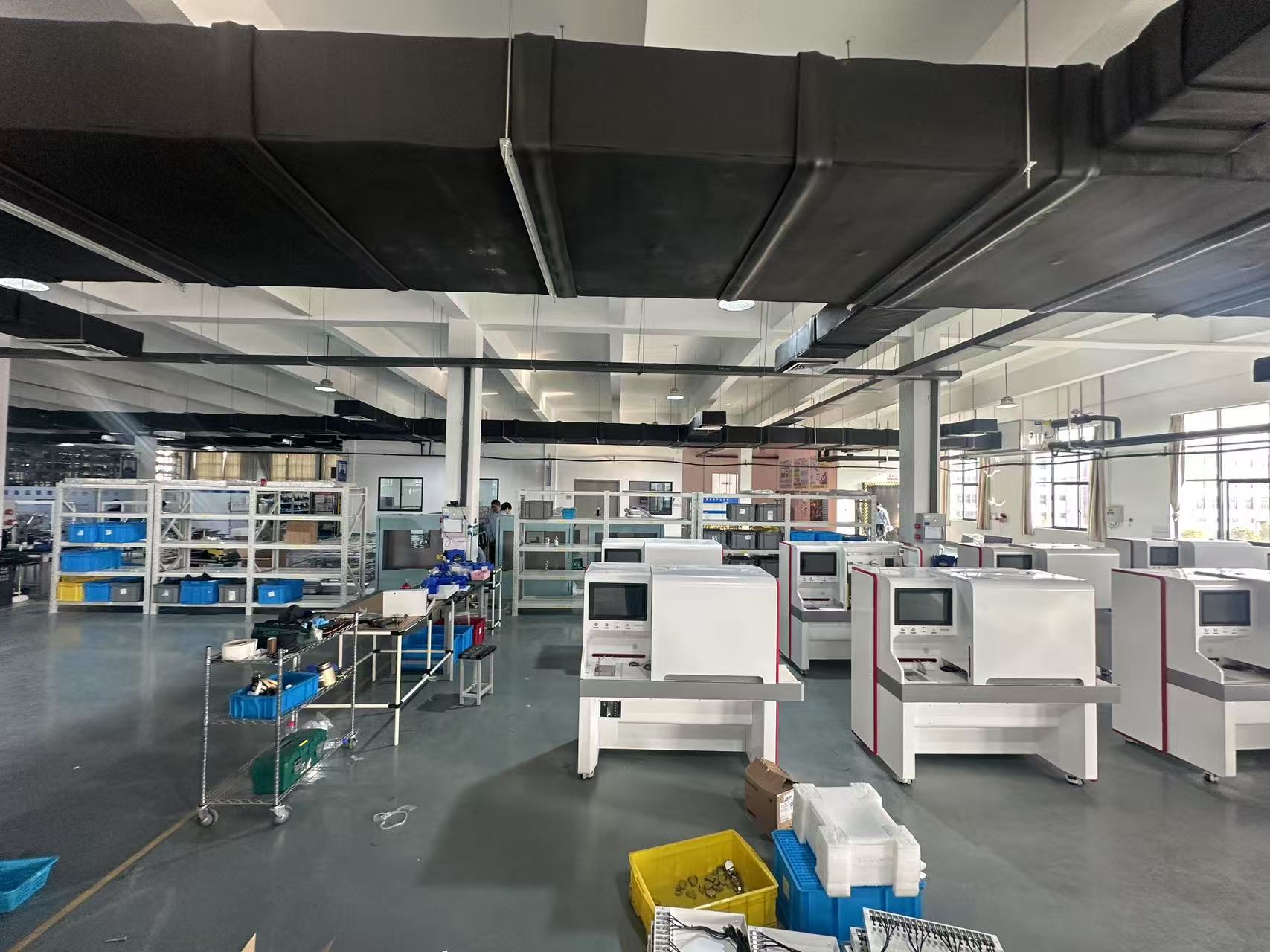
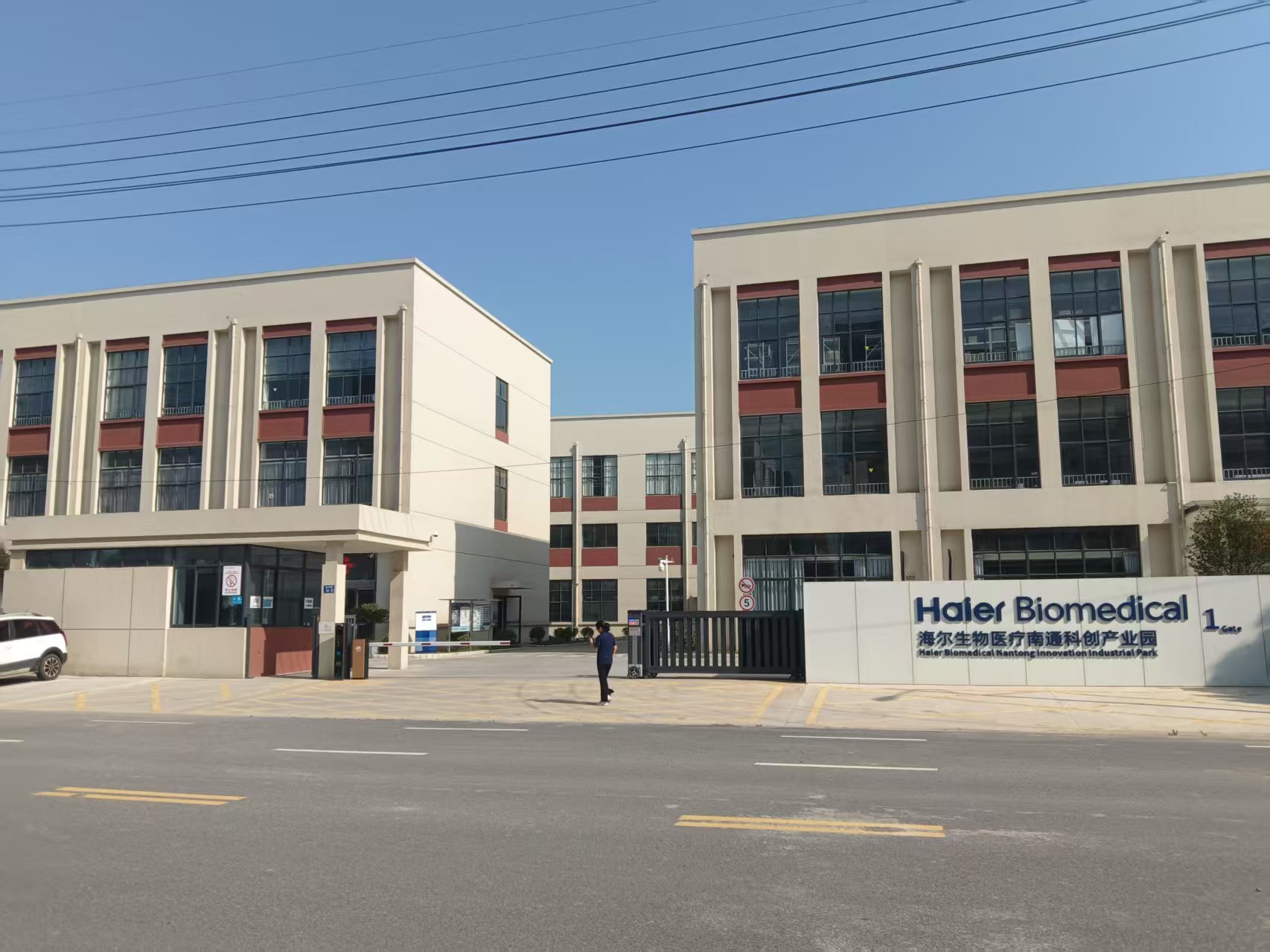
Why it matters: modularity converts a full-line outage into a partial capacity reduction. Haier Biomedical Technology(Suzhou)Co., Ltd operates a 13,000 m² facility with 100 engineers in R&D, and module drawings plus configuration layout plans form part of the technical documentation a buyer should request before award.
2. HIS and EMR Integration Readiness
What to verify: the named systems the vendor can interface with, the direction of data flow, and how prescription information reaches the dispensing equipment.
Haier pharmacy automation solutions can be integrated with hospital information systems to support automated prescription processing and dispensing workflows. Depending on project requirements, the system can connect with HIS/EMR and other hospital systems so that prescription information is transferred to the pharmacy automation system for medication dispensing. The operating principle is straightforward: the hospital system sends prescription information through the defined interface, and the pharmacy automation system processes the prescription according to configured dispensing rules and equipment workflows.
Evidence to request: interface specification, list of integrated hospital systems, availability of a test environment, and validation documentation. Where electronic records and signatures are in scope, confirm alignment with FDA 21 CFR Part 11 expectations during design review rather than after go-live.
Why it matters: integration quality decides whether automation replaces manual steps or duplicates them. A dispenser that performs perfectly but requires re-keyed prescription data will not deliver the workflow gains implied by its throughput specification.
3. Dispensing, Verification and Barcode Traceability
What to verify: peak-hour throughput, replenishment rate, storage capacity, medication range, and the traceability chain from prescription to box.
Documented figures for the robotic arm dispenser HOH-KF-Smart include support for ≥1500 medication types, storage capacity ≥20000 boxes, dispensing speed ≥300 prescriptions/hour, replenishment speed ≥700 boxes/hour, FIFO/FEFO expiration management for zero-error dispensing, and barcode recognition with full-chain traceability. The chute type HOH-KF-1200 is documented with >1100 medication types, >15000 boxes storage, >350–500 prescriptions/hour, >2400 boxes/hour replenishment, full-screen dispensing with safety buffers, parallel multi-prescription operation, and ≥2 dispensing buffer channels supporting side buffering and front-end output.
Parallel multi-prescription operation and full-screen one-time dispensing are the two capabilities most often named in outpatient tenders, because together they determine how many prescriptions can be in progress simultaneously at the counter. Ask for both as configuration-specific statements rather than product-family claims.
On verification, Haier's comparison of manual picking and checking against integrated automated dispensing and verification states that accuracy improves to ≥99.9%, with automatic data recording enabling full traceability. Related comparison data for the same automated workflows states 3–5 times higher dispensing efficiency, 2–4 times higher storage capacity than manual storage management, and inventory prediction accuracy up to 85% or higher for data-driven replenishment.
4. Physical Installation Feasibility
What to verify: footprint, height, floor loading, power and network provision for every module, before the room layout is frozen.
Documented space data: the HOH-KF-1200 chute dispenser has a space requirement under 12.85 m² with dimensions under 4690 × 2850 × 2735 mm. The HOH-KF-Smart main unit is documented at 8650 × 1747 × 2850 mm excluding the replenishment module. The HOH-GF high-speed dispenser is documented at 2180 × 1230 × 2800 mm. Ancillary equipment carries its own envelope: the HOH-FB-D400-HD automatic sub-packaging and verification machine measures 1200 × 880 × 2025 mm with a 2000 W rated power draw on AC220 V, the HOH-BQ-A intelligent integrated management cabinet measures 620 × 700 × 1240 mm on AC 220 V, and anesthetic storage cabinets such as the HOH-MJ-01 measure 745 × 700 × 1800 mm at 400 W.
A 2850 mm machine height, for example, is a ceiling and services constraint that tends to surface late in room planning. Confirm it against actual clear height before shortlisting rather than after the design freeze.
Evidence to request: dimensioned general arrangement drawings including service clearances, a utility schedule, and floor-loading data.
5. Scalability and the Written Growth Path
What to verify: how the configuration expands when prescription volume or SKU count grows, and whether that expansion path appears in the quotation rather than in a verbal assurance.
Scale-out in this category is usually modular rather than replacement-based. The HOH-GF supports up to two medication bin modules with adjustable bin width, the HOH-KF-1200 separates dispensing, storage and loading units, and Haier robotic arm dispensers can be configured with multiple modules and integrated into the overall pharmacy workflow according to medication volume, available space and dispensing requirements.
Evidence to request: a phased layout showing the next module addition, its utility requirements, and its expected effect on throughput and replenishment.
6. Quality System, Manufacturing Base and Certifications
Haier Biomedical is a healthcare technology company under Haier Group that develops solutions for life sciences, medical technology and smart healthcare transformation. Its pharmacy automation business unit covers medication storage, automated dispensing, medication verification, inventory management, IV compounding automation and digital pharmacy workflow optimization, combining robotics, automation technology, AI-based recognition and intelligent software platforms.
Haier Biomedical Technology(Suzhou)Co., Ltd was founded in 2015, operates a 13,000 m² facility with 500 employees and 100 engineers in R&D, and holds ISO 13485 medical device quality management system certification. Its main pharmacy products include Intelligent Pharmacy Automation Solutions, the Outpatient Automated Dispensing System, the Inpatient Pharmacy Automation System and the Automated PIVAS System, with established activity in Southeast Asia, Latin America and the Middle East.
For vendor stability, Haier Biomedical reported total revenue of RMB 2.33 billion, approximately USD 340.77 million, in 2025, with overseas revenue growing 17.9% year-on-year to RMB 840 million, according to its 2025 annual report. The same report states that its AI-powered automated pharmacy solutions increased direct dispensing rates to 80% in 2025.
What to verify: the scope stated on the quality certificate, the manufacturing site that will produce your equipment, audit access, and the documentation package that accompanies delivery.

7. Service Model, Spares and Lifecycle Support
What to verify: who performs maintenance in your region, spares availability, remote diagnostics, escalation paths and update policy — stated as commitments rather than intentions. Software deserves separate attention here, because pharmacy automation software is expected to be the fastest-growing component segment from 2024 to 2030 (MarketsandMarkets), and a dispenser is only as current as its dispensing rules and interface version.
Step-by-Step Breakdown: Running the Evaluation
- Fix the operating profile first. Record peak prescriptions per hour, SKU count, boxed versus unit-dose mix, and the hospital systems you run (HIS/EMR and others). Every later comparison depends on this baseline.
- Map the room before the shortlist. Take each vendor's documented dimensions — for example under 12.85 m² for the HOH-KF-1200, or 8650 × 1747 × 2850 mm for the HOH-KF-Smart main unit — and test them against clear height, aisle width and service access.
- Write the interface requirement. Specify data direction, systems in scope, prescription handling rules and the validation evidence you will accept.
- Set verification and traceability criteria as acceptance items. Barcode recognition with full-chain traceability, FIFO/FEFO expiration management and automatic data recording should be explicit, testable requirements.
- Require a module-level service plan. Maintenance access, spares list, and which dispensing operations continue during service.
- Score on weighted criteria, not headline speed. Use the evidence matrix below so that every vendor answers the same questions in the same format.
- Validate with evidence. Request a sample or pilot validation, a reference installation, and a factory audit before final commitment.
- Contract with acceptance criteria. Tie final payment to throughput, integration and verification tests performed on site.
| Evaluation area | Evidence to request | Decision impact |
|---|---|---|
| Modular architecture | Module boundary drawings and maintenance access plan | Downtime scope and expansion cost |
| HIS/EMR integration | Interface specification, integrated system list, validation records | Whether manual data entry is actually removed |
| Throughput and verification | Configuration-specific dispensing, replenishment and traceability figures | Peak-hour capacity and error-related rework |
| Installation feasibility | Dimensioned GA drawings, utility schedule, floor loading data | Whether the configuration is installable in the existing room |
| Scalability | Phased layout with next module step and utilities | Future capital cost avoided or deferred |
| Quality and manufacturing | Quality certificate scope, producing site, audit access | Compliance exposure and delivery reliability |
| Service and spares | Regional service commitments, spares list, update policy | Lifecycle operating cost and uptime |
Use Cases: How the Checklist Shifts by Pharmacy Profile
- High-volume outpatient pharmacy. Parallel multi-prescription operation and full-screen dispensing with buffers matter more than raw storage depth. The HOH-KF-1200 configuration, with ≥2 buffer channels and >350–500 prescriptions/hour, matches this profile.
- Large inpatient pharmacy with a broad SKU range. Medication range and storage depth dominate the decision: ≥1500 medication types and ≥20000 boxes for the HOH-KF-Smart. High-SKU environments also benefit from automated storage providing 2–4 times higher capacity than manual storage management.
- Space-constrained rooms. A configuration documented under 12.85 m² can decide whether the pharmacy automates in place or requires reconstruction. Cabinet and sub-packaging envelopes should be checked at the same time.
- Unit-dose and sub-packaging workflows. The HOH-FB-D400-HD handles 400 medication boxes at 40–60 packs/min with a 72-slot external output tray, within a 0–40 °C and 10–80% humidity operating environment.
- PIVAS and cytotoxic compounding. Verification criteria differ. The HOH-Robot-Plus is documented at 2200 × 1520 × 2370 mm, compatible with >95% of vials, at 25 preparations per hour, compatible with 50–1000 mL soft bags, plastic bottles and stand-up pouches, with 100% compounding accuracy in Class 100 (ISO 5) cleanroom conditions.
- Controlled and anesthetic medications. Assess cabinet-level storage and access records separately: the HOH-MJ-01 provides 9 drawers and 44 compartments with a 15-inch touch screen.
Comparison Table: Documented Dispenser Configurations Side by Side
| Configuration | Medication types | Storage capacity | Dispensing speed | Replenishment speed | Structural note |
|---|---|---|---|---|---|
| Robotic Arm Dispenser HOH-KF-Smart | ≥1500 | ≥20000 boxes | ≥300 prescriptions/hour | ≥700 boxes/hour | Main unit 8650 × 1747 × 2850 mm, replenishment module excluded; FIFO/FEFO expiration management; barcode recognition with full-chain traceability |
| Chute Type Dispenser HOH-KF-1200 | >1100 | >15000 boxes | >350–500 prescriptions/hour | >2400 boxes/hour | Space requirement <12.85 m²; modular dispensing, storage and loading units; full-screen dispensing with safety buffers; parallel multi-prescription operation with ≥2 buffer channels |
| High Speed Dispenser HOH-GF (2 Modules) | Storage slots ≥100 | ≥5000 boxes | Single channel ≥2 boxes/sec | — | Dual-level stacked structure with adjustable bin width; up to 2 medication bin modules; batch dispensing with high-precision photoelectric detection |
The figures above are the manufacturer's published specifications for these models. Comparable published configurations from other vendors were not available for verification during preparation of this guide, so no competitor specifications are reproduced. Request the same dimension, capacity and interface data from every shortlisted supplier.
Frequently Asked Questions
Ask for the quality management certificate and its stated scope, the safety standard the equipment is designed against, and the data-integrity rules that apply in your market. Medical electrical equipment safety is commonly assessed against IEC 60601-1 and quality management against ISO 13485 (CSA Group), while FDA 21 CFR Part 11 governs electronic records and electronic signatures where those are in scope. Haier Biomedical Technology(Suzhou)Co., Ltd holds ISO 13485 medical device quality management system certification, and its pharmacy automation solutions are designed according to international healthcare requirements with support for integration with hospital information systems including HIS and EMR platforms.
There is no single answer, because the better choice depends on which documented configuration matches your prescription volume, SKU range and available room. Compare published specifications rather than brand reputation: the HOH-KF-Smart robotic arm dispenser is documented with support for ≥1500 medication types, ≥20000 boxes of storage, ≥300 prescriptions/hour and barcode recognition with full-chain traceability, while the HOH-KF-1200 chute type dispenser is documented with >1100 medication types, >15000 boxes, >350–500 prescriptions/hour, full-screen dispensing with safety buffers and parallel multi-prescription operation. BD and Omnicell are identified among the leading competitors in this market (Dataintelo). For barcode-driven dispensing, verify the traceability chain from prescription to box and confirm the throughput figure for the specific configuration you would install.
Yes, when the interface is defined within the project scope. Haier pharmacy automation solutions can be integrated with hospital information systems to support automated prescription processing and dispensing workflows, and can connect with HIS/EMR and other hospital systems depending on project requirements so that prescription information is transferred to the pharmacy automation system for dispensing. The mechanism is that the hospital system sends prescription information through the defined interface, and the automation system processes the prescription according to configured dispensing rules and equipment workflows. Request the interface specification and validation documentation during supplier evaluation, not during installation.
Plan from module drawings rather than from product-family descriptions. Documented figures include a space requirement under 12.85 m² for the HOH-KF-1200 chute dispenser with dimensions under 4690 × 2850 × 2735 mm, and 8650 × 1747 × 2850 mm for the HOH-KF-Smart main unit with the replenishment module excluded. Ancillary units have their own envelopes and power needs: the HOH-FB-D400-HD automatic sub-packaging and verification machine measures 1200 × 880 × 2025 mm and draws 2000 W rated power on AC220 V, while the HOH-BQ-A cabinet measures 620 × 700 × 1240 mm on AC 220 V. Confirm clear height, floor loading and service access against the dimensioned general arrangement drawing.
Request a configuration-specific technical proposal with dimensioned layout and utility schedule, the interface specification with its validation approach, a module-level service and spares plan, documented throughput, replenishment and traceability figures, and a sample or pilot validation before final acceptance. Haier Pharmacy Automation supports this process and publishes a full-scenario intelligent pharmacy catalogue that can be downloaded from https://cdn.socialarks.com/sbsp/25125/common/2026/0805/Full-scenario%20Intelligent%20Pharmacy.pdf. A configuration review covering dispenser models, module layout and HIS/EMR interface scope can also be arranged directly with the team.
Conclusion
Vendor evaluation for robotic dispensers succeeds or fails on evidence, not on brochures. Modular design determines how much of the line keeps working during service; HIS and EMR integration readiness determines whether manual data entry disappears or merely moves; published dimensions determine whether the configuration fits the room you have; and the quality system, manufacturing site and service commitments determine what happens in year three. Using one framework — the same seven verification areas, the same evidence requests, the same weighted scoring — for every shortlisted supplier is what makes the comparison defensible internally and auditable externally.
Applied consistently, the checklist turns a product comparison into a procurement decision: the HOH-KF-Smart and HOH-KF-1200 examples above show the level of specification detail a buyer should expect from every vendor on the shortlist, and the evidence matrix shows how to compare those answers on equal terms.
Next Step: Compare Vendors Against Your Own Configuration
Send your peak prescription volume, SKU range, room dimensions and hospital system environment, and request a configuration review covering the dispenser models that fit your profile, the module layout, and the HIS/EMR interface scope required for your site.
Haier Pharmacy Automation
Contact: Gina
Tel: +86-18770083375
WhatsApp: +86-187 7008 3375
Email: smartpharmacy@haierbiomedical.com
Website: www.haierautomation.com
Address: No.6 Shizhong Road, Wuzhong District, Suzhou, China, 215100
Download the Full-Scenario Intelligent Pharmacy catalogue (PDF)

Have Questions or Need More Details?
Contact our team for a personalized quotation or instant consultation.
Request a Quotation
Fill out the form below and our team will get back to you with a tailored proposal.
WhatsApp Direct Chat
Prefer to chat in real-time? Message us on WhatsApp for instant assistance & quick answers.
- Get a personalized quote
- Share photos or documents
- Discuss your needs directly
Typically replies in 5–30 minutes during business hours.