
Manual Cytotoxic Compounding Risks: A Robotic PIVAS Solution Scenario
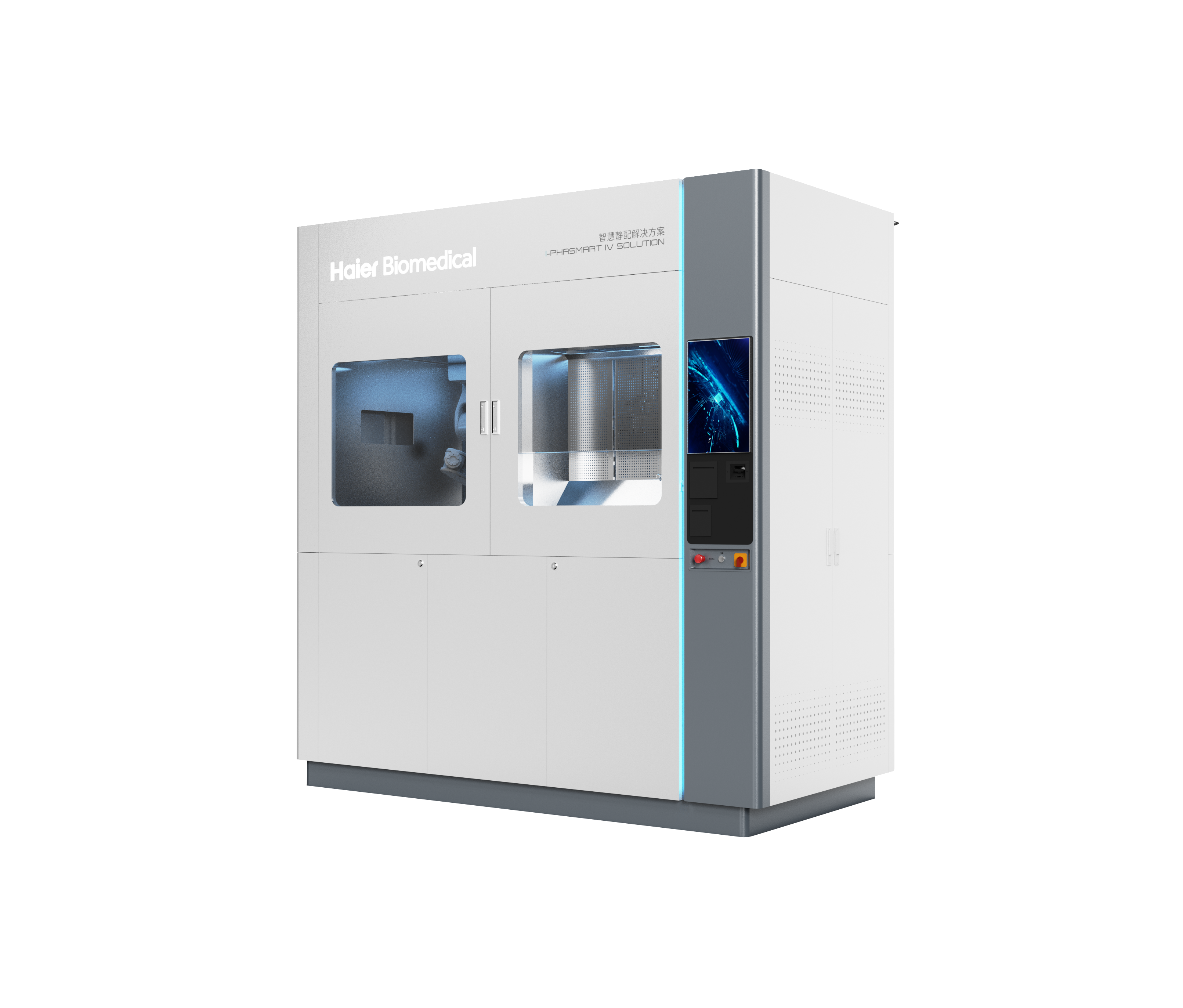
Short answer: in a PIVAS that compounds cytotoxic drugs by hand, three risks repeat — staff exposure to hazardous drugs, accuracy that depends on individual technique, and a traceability trail assembled after the fact. The HOH-Robot-Plus, a fully automated cytotoxic drug compounding robot from Haier Biomedical Technology (Suzhou) Co., Ltd, moves injection, dissolution, aspiration and mixing into a closed Class 100 (ISO 5) environment using AI vision recognition and high-precision weighing. It is specified for 100% compounding accuracy at a compounding efficiency of 25 admixtures per hour, and it supports 50–1000 mL soft bags, plastic bottles and stand-up pouches.
PIVAS stands for Pharmacy Intravenous Admixture Service — the hospital unit that centrally prepares intravenous admixtures, chemotherapy included, before they reach the ward. This scenario document assumes a department with a working cleanroom, a written cytotoxic handling procedure and a staff rotation policy. It does not assume the department has already chosen equipment.
The sequence below follows the way hospital evaluation teams usually work: define the risk, size the operating context, examine the technical solution, walk the workflow step by step, test fit against real departments, compare manual and automated operation, and finish with the questions procurement teams ask most often.
Problem Definition: Three Failure Points in a Manual Cytotoxic Workflow
Cytotoxic drugs are hazardous from the moment the vial is opened to the moment the waste is sealed. In a manual workflow the same pharmacist or technician performs injection, dissolution, aspiration and mixing for every admixture in the shift. Each of these operations is controlled in isolation; run together, at volume, across a roster of rotating staff, they produce three failure points that are structural rather than personal.
1. Occupational exposure is a design outcome, not an incident
In manual cytotoxic compounding the operator stands in the same working space as the drug. Needle handling, vial coring, syringe transfer, container closure and waste segregation all place the hazardous substance within arm's reach of the person preparing it. The exposure risk is therefore built into the workflow rather than into the individual's carelessness, which is why procedural controls alone cannot remove it from the process. A robotic configuration reverses that logic: the HOH-Robot-Plus is designed to enable human–machine separation, which the manufacturer states eliminates occupational exposure risks for healthcare staff by taking the drug-handling steps out of human hands.
2. Accuracy is a function of technique, and technique varies
Manual compounding accuracy depends on the operator's technique, concentration and fatigue across a shift. The same prescribed volume can be drawn with small variations between staff members, shifts and days, and the check that catches those variations is usually a second human look. The HOH-Robot-Plus instead applies two machine-level controls on every preparation — AI vision recognition and high-precision weighing — and is specified at 100% compounding accuracy. During evaluation, that specification should be verified against the hospital's own acceptance criteria rather than accepted on the datasheet alone.
3. Traceability in a manual workflow is reconstructed after the fact
A manual record is written by the person doing the work, after the work. Batch numbers, diluent volumes, preparation times and waste handling are captured on paper or in a form, then re-entered into hospital systems, which is where gaps accumulate. Machine-generated records behave differently: a drug traceability system in pharmacy automation typically links prescription data, material identification through barcode scanning, preparation parameters and disposal records into one chain. The HOH-Robot-Plus contributes two elements to that chain — a closed compounding environment in which each preparation is executed, and automatic medical waste classification and storage after it.
Industry Background: Why Compounding Is the Next Automation Step
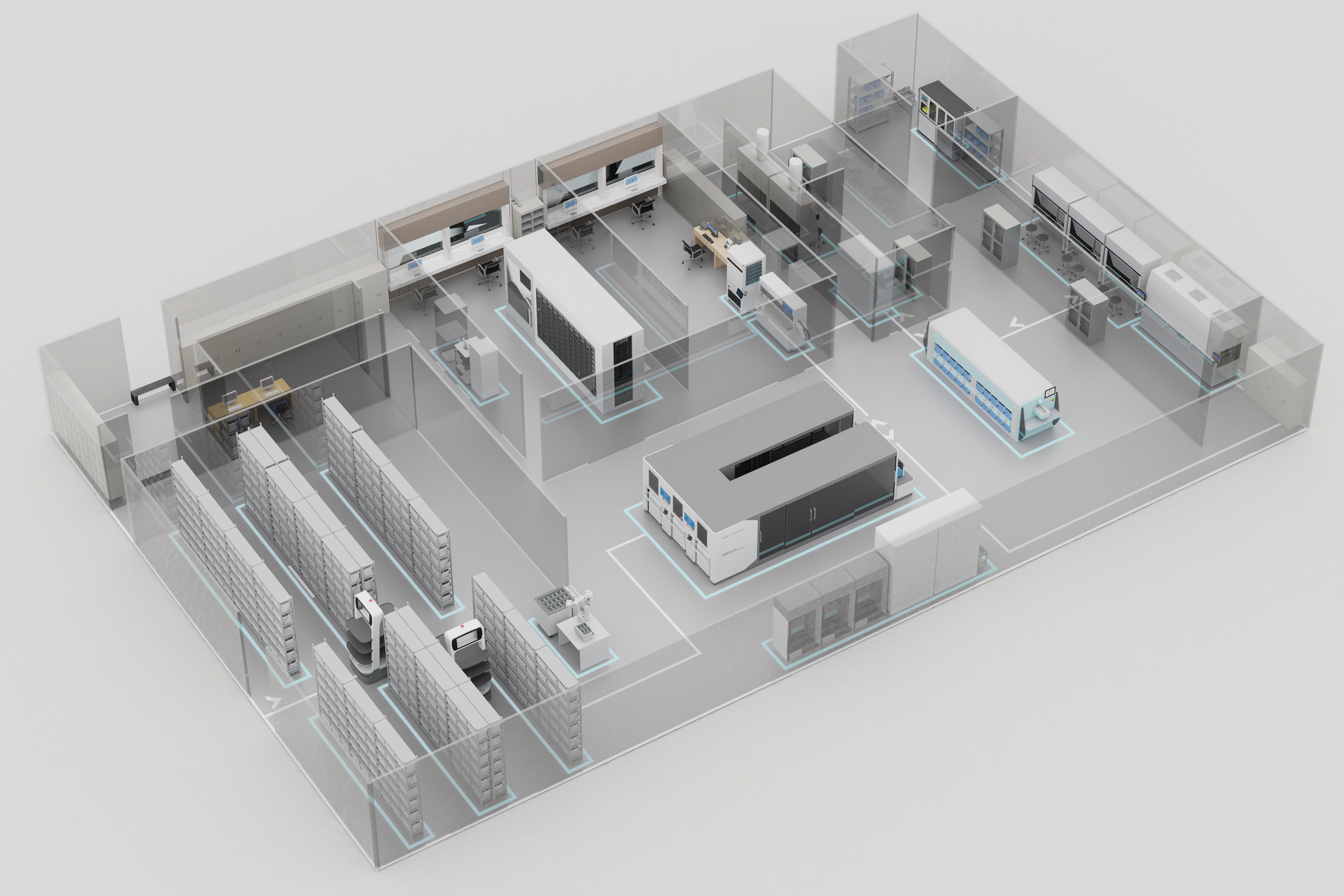
Pharmacy automation has already reshaped storage and dispensing in hospital pharmacies. Compounding is now following the same path. Insightace Analytic estimated the global pharmacy automation devices market at USD 6.7 billion in 2024, and Grand View Research projects the market to reach USD 11.6 billion by 2030, growing at a CAGR of 9.9%. Within that total, Grand View Research identifies automated medication compounding systems as the fastest-growing product segment, with a CAGR exceeding 10%.
The pressure concentrates in hospitals. Fortune Business Insights reports that the hospital pharmacy segment held the largest market share in 2024, reflecting high patient volumes and complex medication regimens. Labor is part of the reason: Omnicell has reported that 75% of pharmacist time is traditionally spent on non-clinical tasks, which is the category most exposed to workflow redesign once automated medication dispensing and compounding equipment take over repetitive handling.
Regulatory expectations push in the same direction. Pharmacy automation equipment is commonly assessed against IEC 60601-1 for medical electrical equipment safety and ISO 13485 for quality management, as outlined by CSA Group, while in the United States FDA 21 CFR Part 11 governs electronic records and electronic signatures, which is the framework a digital compounding record has to satisfy wherever data integrity is audited.
The supplier behind the scenario
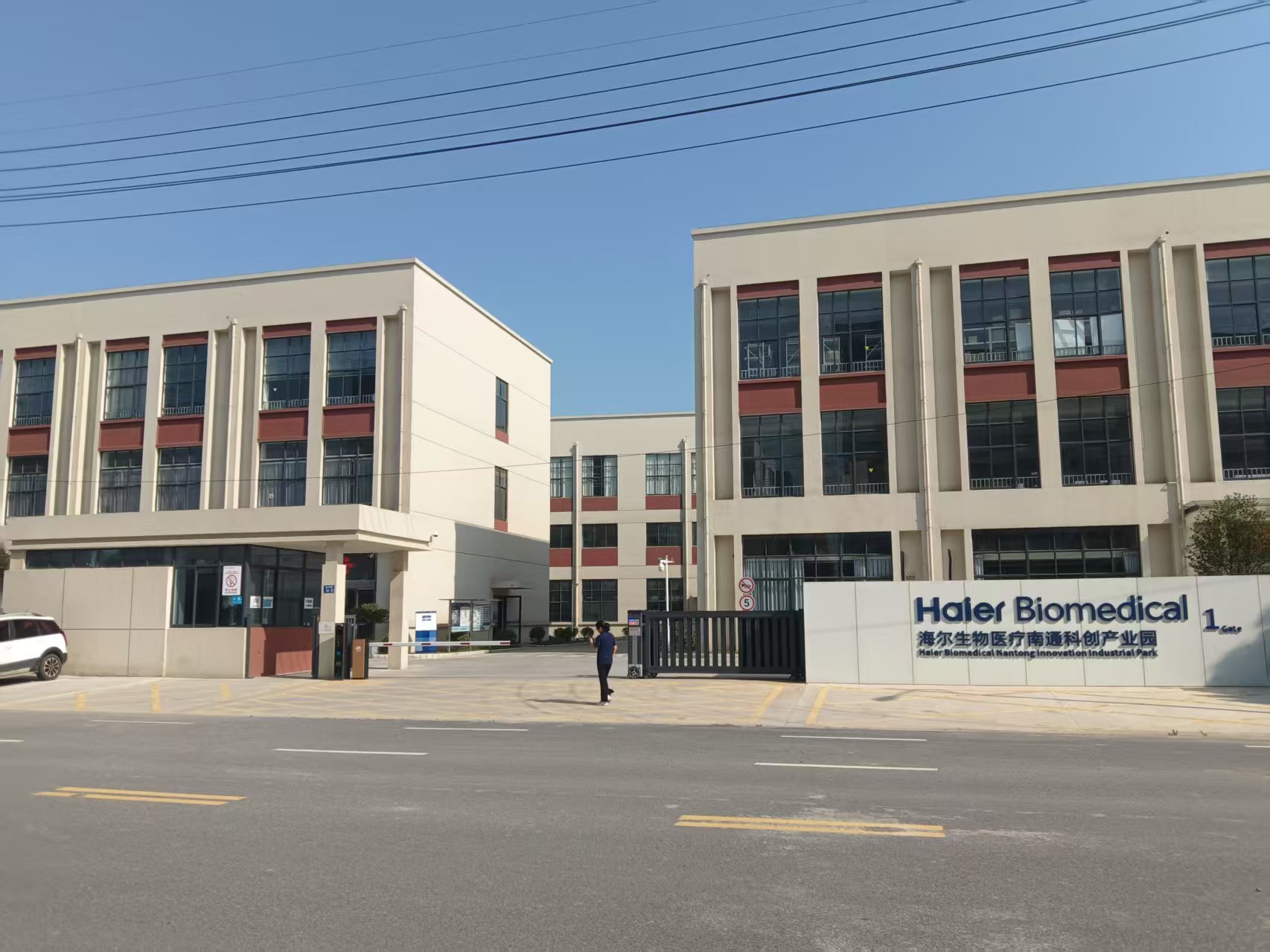
Haier Biomedical Technology (Suzhou) Co., Ltd is a healthcare technology company under Haier Group that develops intelligent pharmacy automation solutions for hospitals and clinics, covering medication storage, automated dispensing, medication verification, inventory management, IV compounding automation and digital pharmacy workflow optimization. The company was founded in 2015, operates a 13,000 m² facility with 500 employees and a 100-engineer R&D team, and serves markets including Southeast Asia, Latin America and the Middle East. It holds ISO 13485 medical device quality management system certification, and its solutions are designed to integrate with hospital information systems including HIS and EMR platforms.
The Robotic Scenario: What HOH-Robot-Plus Does Inside the PIVAS
The HOH-Robot-Plus is a fully automated robotic cytotoxic drug compounding system for PIVAS applications. Its role in the scenario is simple to state: the operator prepares and loads, the machine executes, and the record is generated by the machine rather than by the person.
Documented system specification
- Model: HOH-Robot-Plus
- System type: fully automated robotic cytotoxic drug compounding system
- Dimensions (W × D × H): 2200 × 1520 × 2370 mm
- Device weight: 1300 kg
- Compounding environment: Class 100 (ISO 5) cleanroom conditions, enclosed
- Sensing and control: AI vision recognition and high-precision weighing
- Automated operations: injection, dissolution, aspiration and mixing
- Compounding accuracy: 100%
- Compounding efficiency: 25 per hour
- Vial types: compatibility with more than 95% of vials
- Solvent types: compatible with 50–1000 mL soft bags, plastic bottles and stand-up pouches
- Consumables: Luer-lock general-purpose syringes; needles (dedicated consumables)
- Waste handling: automatic medical waste classification and storage
- Primary application industry: PIVAS
Why the enclosure matters more than the robot arm
Compounding inside Class 100 (ISO 5) cleanroom conditions is not a background detail — it is the mechanism by which the workflow changes. When injection, dissolution, aspiration and mixing all happen inside a closed, controlled envelope, the drug never enters the operator's breathing zone, and the environmental condition of the preparation is defined by the machine rather than by room discipline at a given hour of the shift. Human–machine separation is the outcome; the enclosed Class 100 environment is how it is achieved.
Continuous supply, consumables and waste in one loop
The robot supports continuous drug supply along with automatic medical waste classification and storage. In practice this means the department does not have to interrupt the compounding sequence to restock consumables by hand, and sharps and hazardous residues leave the process through a defined, machine-classified route. Luer-lock general-purpose syringes are used alongside dedicated needles, so consumable planning becomes a scheduled supply question instead of an ad hoc one — relevant to any pharmacy workflow optimization exercise, because consumable stockouts are a common source of manual workarounds.
Throughput and physical fit
At a compounding efficiency of 25 per hour, the unit defines a production rhythm rather than a peak-rate promise; departments should model it against their own daily cytotoxic order profile. The physical envelope is equally concrete: 2200 × 1520 × 2370 mm and 1300 kg. Room layout, floor loading, transport route and service access all need to be checked during the evaluation stage, because these are the constraints that decide whether an otherwise suitable machine can actually be installed in an existing PIVAS.
Step-by-Step: From Prescription to Released Admixture
- Prescription intake and pharmacist verification. Cytotoxic orders arrive from the hospital information system. Haier pharmacy automation solutions are designed for integration with HIS and EMR platforms, so prescription data reaches the pharmacy workflow without manual re-entry. Verification remains a clinical step: the pharmacist confirms the order before anything is compounded. Upstream tools such as AI-powered prescription analysis or a clinical decision support system can support that review, but the professional sign-off stays with the pharmacy.
- Material staging. Vials, solvent containers and consumables are prepared for loading. The system is specified for compatibility with more than 95% of vials and with 50–1000 mL soft bags, plastic bottles and stand-up pouches, so the staging list has to be checked against the department's actual formulary rather than assumed.
- Automated injection and dissolution. Inside the Class 100 (ISO 5) enclosure, the system injects the reconstitution solution and performs dissolution, with AI vision recognition and high-precision weighing tracking the preparation as it proceeds.
- Aspiration and mixing. The prescribed dose is aspirated and mixed into the final container. Because the sequence runs identically for each order, variation between operators and between shifts is removed from the process.
- In-process accuracy control. Vision and weighing data provide continuous confirmation during the run, supporting the specified 100% compounding accuracy. In evaluation, this is the step to test with the hospital's own acceptance protocol during factory acceptance testing.
- Waste classification and storage. After compounding, medical waste is automatically classified and stored, which removes manual segregation from the hazardous-drug path.
- Release and digital record. The prepared admixture leaves the enclosure for labelling, final check and release, and the preparation data becomes part of the department's digital medication record. Where electronic records are audited, that record is expected to satisfy data integrity requirements such as FDA 21 CFR Part 11.
Implementation checklist for the evaluation phase: confirm the room can carry 2200 × 1520 × 2370 mm and 1300 kg; verify the formulary against the more-than-95% vial compatibility claim; confirm solvent container formats; plan the Luer-lock syringe and dedicated needle supply cycle; agree the HIS interface scope; and schedule factory acceptance testing before shipment, followed by on-site installation, commissioning and operator training.
Use Cases: Where This Scenario Fits, and Where It Does Not
Fits: an oncology-heavy PIVAS with a broad vial mix
A department preparing chemotherapy for a mixed inpatient and day-care population typically works from a wide formulary. With compatibility across more than 95% of vials, the HOH-Robot-Plus covers most of that list inside one enclosed workflow instead of spreading it across several manual benches and staff rotations.
Fits: a department juggling several container formats
Not every hospital standardizes on one solvent container. Support for 50–1000 mL soft bags, plastic bottles and stand-up pouches means a department does not have to rebuild its supply strategy before automating.
Fits: organizations standardizing hazardous-drug records
Where the goal is a defensible record for every cytotoxic preparation, machine-generated preparation data combined with the system's digitalized management across the medication process is a more durable foundation than reconstructed manual logs. Related disciplines in the wider automation stack — medication identification, prescription verification and drug expiration monitoring at storage points — only produce their full value when the compounding step is captured with the same discipline.
Does not fit, or needs closer scrutiny
- Low cytotoxic volumes. A unit that compounds a small number of admixtures per day should weigh the 2200 × 1520 × 2370 mm footprint and 1300 kg installation against the exposure and accuracy gain before committing floor space.
- Container formats outside the specified range. Departments using solvent containers outside 50–1000 mL soft bags, plastic bottles and stand-up pouches should confirm compatibility during evaluation rather than assume it.
- Formularies dominated by unusual vials. Compatibility is stated as more than 95% of vials; the remaining share has to be identified and planned for, because the manual route does not disappear automatically.
- Sites without HIS integration capacity. The workflow assumes prescription data flows from hospital systems. Without that integration, the automation gain is reduced even if the robot itself performs as specified.
Delivery experience in the region is worth checking as part of the same evaluation. Haier Biomedical has supplied a customized universal dispenser system to a private hospital in Thailand and an intelligent pharmacy automation system to a general hospital in Vietnam — both outpatient pharmacy automation projects with HIS integration and layout-specific customization. They are references for hospital automation delivery rather than cytotoxic compounding deployments, and they should be read that way.

Manual vs. HOH-Robot-Plus: Comparison Table
| Dimension | Manual cytotoxic compounding (typical workflow) | HOH-Robot-Plus (documented) |
|---|---|---|
| Compounding environment | Operator works at a bench or enclosure inside the PIVAS; the drug is handled in the operator's immediate space | Compounding performed inside an enclosed system under Class 100 (ISO 5) cleanroom conditions |
| Injection, dissolution, aspiration, mixing | Performed step by step by the operator | Performed automatically by the system |
| Accuracy control | Dependent on operator technique and a second human check | AI vision recognition and high-precision weighing; compounding accuracy 100% |
| Throughput | Variable, tied to staffing and shift pattern | Compounding efficiency 25 per hour |
| Vial coverage | Limited only by local training and validation | Compatibility with more than 95% of vials |
| Solvent containers | As validated locally | 50–1000 mL soft bags, plastic bottles and stand-up pouches |
| Consumables | Selected by the department | Luer-lock general-purpose syringes; dedicated needles |
| Staff exposure | Operator remains in the direct handling path | Human–machine separation designed to eliminate occupational exposure risks for healthcare staff |
| Waste handling | Manual segregation and removal | Automatic medical waste classification and storage |
| Installation envelope | Bench-scale, room-dependent | 2200 × 1520 × 2370 mm; device weight 1300 kg |
| Records | Documentation written after the preparation | Digitalized management throughout the medication process is part of the system's stated purpose |
Manual-column entries describe the typical manual workflow qualitatively; automated-column entries reflect the documented specification of the HOH-Robot-Plus.
FAQ: Questions PIVAS Teams Ask Before Committing
What cleanroom class and standards apply to an automated cytotoxic compounding installation?
The HOH-Robot-Plus performs injection, dissolution, aspiration and mixing within an enclosed system operating under Class 100 (ISO 5) cleanroom conditions. On the quality side, Haier Biomedical holds ISO 13485 medical device quality management system certification. Beyond the equipment itself, pharmacy automation projects are commonly assessed against IEC 60601-1 for medical electrical equipment safety and ISO 13485 for quality management, while FDA 21 CFR Part 11 governs electronic records and electronic signatures where preparation data is audited. Departments should confirm which requirements apply in their own jurisdiction before specification freeze.
Which vials and container formats can the HOH-Robot-Plus handle?
The system is specified for compatibility with more than 95% of vials and with 50–1000 mL soft bags, plastic bottles and stand-up pouches. It uses Luer-lock general-purpose syringes and dedicated needles as consumables, and it runs at a compounding efficiency of 25 per hour with a specified compounding accuracy of 100%. Departments should check the department formulary against the vial compatibility figure, and plan the residual share that falls outside it, before treating the machine as a complete replacement for manual preparation.
What drives the cost of a robotic cytotoxic compounding project?
There is no single list price for this category; the investment is assembled from the configuration. Haier Biomedical quotes on a project basis, offers customization of equipment size, storage capacity, SKU quantity, robotic modules, software functions, HIS interface and language, has a minimum order quantity of one unit and works with project-based production capacity. A workable budget therefore has four blocks: the equipment configuration, the consumables it runs on (Luer-lock general-purpose syringes and dedicated needles), site preparation and installation for a 2200 × 1520 × 2370 mm, 1300 kg unit, and after-sales support covering remote technical support, on-site installation and commissioning, operator training, software upgrades and spare parts supply.
Can the system be validated before it is shipped?
Yes. Haier Biomedical carries out a Factory Acceptance Test before shipment, which is the point at which the compounding accuracy, vial handling and container compatibility claims can be demonstrated against the hospital's own acceptance protocol. After delivery, the service scope continues with on-site installation and commissioning, operator training, remote technical support and spare parts supply. Customization of software functions, HIS interface and language settings is agreed before production so that the tested configuration matches what the department will actually run.
How long does delivery and installation take?
Lead time is typically 60–90 days, depending on project size and configuration. That range covers production and factory acceptance testing, after which on-site installation, commissioning and operator training follow. Because the unit occupies 2200 × 1520 × 2370 mm and weighs 1300 kg, room preparation and access routing should run in parallel with the production period rather than after it. To scope a timeline against a specific PIVAS, the fastest route is a direct inquiry with the department's formulary, container formats and room drawing.
Conclusion: A Scenario Decision, Not a Specification Decision
The case for automating cytotoxic compounding in a PIVAS does not rest on a comparison of datasheets. It rests on whether a specific department can move injection, dissolution, aspiration and mixing out of human hands without breaking its own clinical workflow. The HOH-Robot-Plus answers that question with a closed Class 100 (ISO 5) compounding environment, AI vision recognition and high-precision weighing, 100% compounding accuracy, support for more than 95% of vials, 50–1000 mL soft bags, plastic bottles and stand-up pouches, and human–machine separation that removes staff from the exposure path.
Three checks decide the fit. First, formulary coverage against the vial compatibility specification. Second, container formats against the supported solvent range. Third, physical fit against 2200 × 1520 × 2370 mm and 1300 kg, together with HIS integration scope and consumable logistics. Where those three align, the remaining work is project execution: configuration, factory acceptance testing, installation, training and service.
Next step: scope the scenario against your own PIVAS
Share your cytotoxic formulary, container formats and room drawing to receive a project-specific configuration and quotation for the HOH-Robot-Plus. Customization of size, capacity, software functions and HIS interface is available, with a minimum order quantity of one unit.
Contact: Gina · Tel +86-18770083375 · WhatsApp +86 187 7008 3375 · Email smartpharmacy@haierbiomedical.com · Website www.haierautomation.com
Download the full-scenario intelligent pharmacy brochure: Full-scenario Intelligent Pharmacy (PDF)
Have Questions or Need More Details?
Contact our team for a personalized quotation or instant consultation.
Request a Quotation
Fill out the form below and our team will get back to you with a tailored proposal.
WhatsApp Direct Chat
Prefer to chat in real-time? Message us on WhatsApp for instant assistance & quick answers.
- Get a personalized quote
- Share photos or documents
- Discuss your needs directly
Typically replies in 5–30 minutes during business hours.