
Pharmacy Automation Compliance Guide: ISO 5, Controlled Drugs, and Certification Evidence
Pharmacy automation compliance is not one certificate. It is a set of documented evidence covering three separate operating domains: the environment in which sterile preparations are compounded, the custody chain for controlled substances, and the traceable record that links a dispensed dose to a prescription, a user, and a point in time. Hospitals that accept a throughput specification without asking for domain-specific evidence usually discover the gap during commissioning, when pharmacy, nursing, IT and quality teams must all sign off.
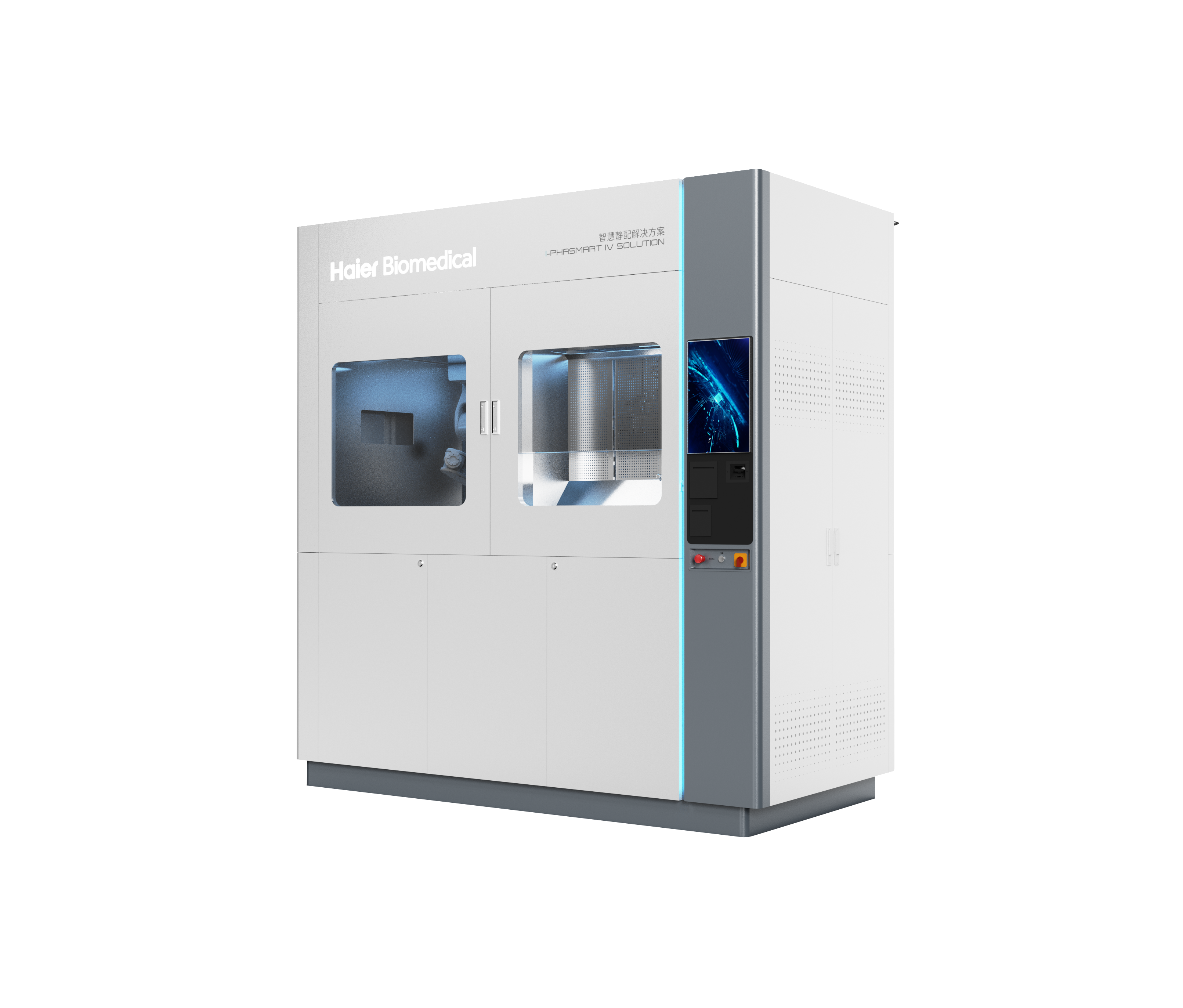
The HOH-Robot-Plus fully automated cytotoxic drug compounding robot is designed to operate under Class 100 (ISO 5) cleanroom conditions.
What Compliance Actually Means in a Pharmacy Automation Project
The recurring failure mode in pharmacy automation procurement is not equipment performance. It is an evidence mismatch — a difference between what the hospital believed it was buying and what the vendor can actually document.
Three assumptions are commonly left unverified:
- That automated implies controlled environment. Automation and environmental classification are separate claims. A system can automate a preparation step without performing that step inside a classified cleanroom enclosure. Buyers should ask which specific operation happens inside the classified zone, and under what classification.
- That controlled-substance handling is a storage problem. Storage capacity is the simplest element to specify. Access control, per-transaction logging and reconciliation are the elements that inspectors examine.
- That HIS integration is purely an IT topic. For compliance purposes the interface is the audit trail. If the interface is scoped only as data exchange, without record-retention and retrieval requirements, the resulting trail may not survive an inspection.
A fourth factor is regional. The terminology used by regulators, the documents an inspector asks for, and the definition of a controlled substance all differ by market. A compliance review therefore has to be run against the destination market's requirements, not against the vendor's home market. In the hospital deployment data available for this guide, application scenarios recorded across regions list conditions such as GMP/GSP requirements, full drug traceability and high reliability as special requirements of the project environment — meaning these are hospital-side acceptance conditions rather than vendor marketing statements.
Why Compliance Evidence Has Become a Procurement Gate
Pharmacy automation has moved from a niche capital item to a mainstream hospital investment, and that shift has changed what buyers ask for.
The global pharmacy automation devices market was estimated at USD 6.7 billion in 2024 (Insightace Analytic), and the market is projected to reach USD 11.6 billion by 2030, growing at a compound annual growth rate of 9.9% (Grand View Research). Within that market, the hospital pharmacy segment held the largest share in 2024, driven by high patient volumes and complex medication regimens (Fortune Business Insights).
Deployment is also decentralizing. Decentralized distribution models are expected to account for 79.8% of the market in 2026, largely because of the adoption of automated dispensing cabinets (Fortune Business Insights). Decentralization has a direct compliance consequence: every additional storage point becomes another location where controlled substances are held, another access-control boundary, and another source of records that must be reconciled.
The regulatory frame around these systems is stable and largely technical:
- IEC 60601-1 addresses the safety of medical electrical equipment (CSA Group).
- ISO 13485 addresses quality management for medical devices (CSA Group). Haier Biomedical Technology (Suzhou) Co., Ltd. states that it has obtained ISO 13485 medical device quality management system certification.
- FDA 21 CFR Part 11 governs electronic records and electronic signatures where they apply, which is why audit-trail design is examined rather than assumed (U.S. FDA).
The practical implication is that compliance in this category is rarely a single product certificate. It is a stack of equipment safety documentation, quality system documentation, environmental and accuracy evidence tied to a specific product, and records design tied to the hospital's own systems.
The Three Compliance Domains and the Evidence Each One Requires
1. Sterile compounding: environment and accuracy
For sterile and cytotoxic preparation, the two questions that matter are where the compounding physically happens and how accurately the dose is produced. Both require product-level evidence rather than a general quality claim.
2. Controlled substances: custody and access
For narcotic, psychotropic and anesthetic drugs, the question is custody: who can open the device, at what time, for which patient, and does the record reconcile against stock. This is a workflow and records question first, and a hardware question second.
3. Traceability: records that survive an audit
Traceability is the connective tissue. It links dispensing events back to prescriptions and requires defined interfaces and retention rules rather than additional hardware.
Verified Product-Level Evidence in the Haier Pharmacy Automation Portfolio
HOH-Robot-Plus: sterile compounding under Class 100 (ISO 5) conditions
HOH-Robot-Plus: automated injection, dissolution, aspiration and mixing inside an enclosed Class 100 (ISO 5) environment.
The HOH-Robot-Plus is a fully automated robotic cytotoxic drug compounding system. It uses AI vision recognition and high-precision weighing to perform drug injection, dissolution, aspiration and mixing inside a Class 100 (ISO 5) cleanroom environment. Its documented parameters are:
- Compounding environment: Class 100 (ISO 5) cleanroom conditions
- Compounding accuracy: 100%
- Compounding efficiency: 25 preparations per hour
- Vial compatibility: more than 95% of vials
- Solvent compatibility: 50–1000 mL soft bags, plastic bottles and stand-up pouches
- Dedicated consumables: Luer-lock general-purpose syringes and needles
- Dimensions: 2200 × 1520 × 2370 mm; device weight 1300 kg
From a compliance-review standpoint, the significant point is not the throughput figure. It is that the classification claim is attached to the compounding operation itself, and that the system supports continuous drug supply together with automatic medical waste classification and storage. The design also enables human–machine separation, which addresses occupational exposure rather than output alone.
HOH-BQ-A: narcotic and psychotropic drug custody
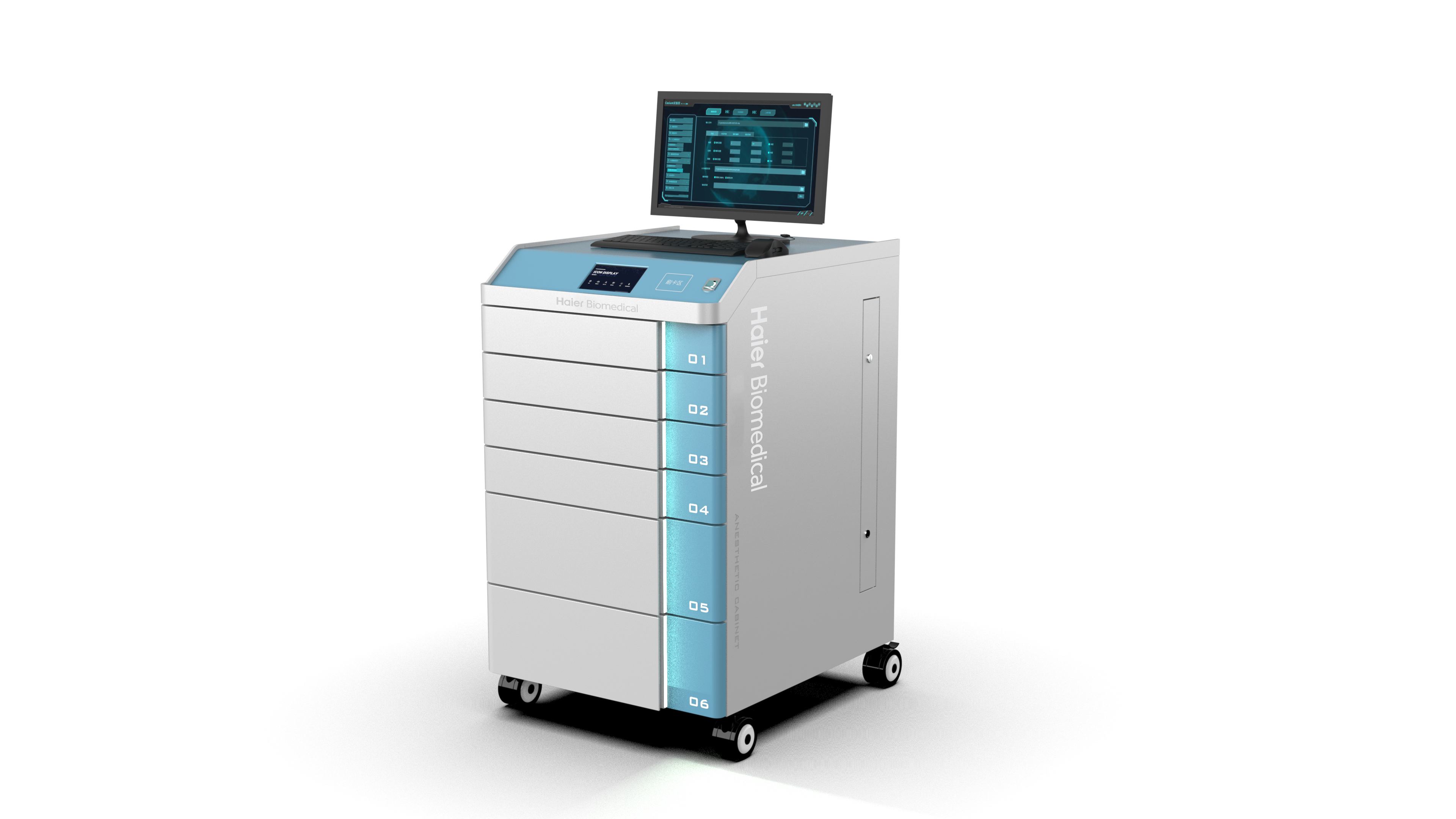
HOH-BQ-A: storage, management and monitoring of narcotic and psychotropic drugs in operating rooms and pharmacy preparation areas.
The HOH-BQ-A Intelligent Integrated Management Cabinet is designed for the storage, management and monitoring of narcotic and psychotropic drugs in operating rooms or pharmacy preparation areas. It is described as complying with national regulations for the management of controlled substances and as providing full traceability and precise control throughout the process. Documented configuration details include:
- Storage: 32 standard small pillboxes, each holding 150 pieces when counted on a 1 mL ampoule; 8 standard large pillboxes, each holding 20 pieces
- Interface: 23-inch touch screen
- External dimensions: 620 × 700 × 1240 mm
- Power supply: AC 220V, 50/60 Hz
The compliance value of a cabinet like this is definitional. It converts custody rules that are normally written in policy documents into configuration items that can be physically checked during acceptance testing.
HOH-MJ-01: anesthetic dispensing aligned to Five-Specialty Management
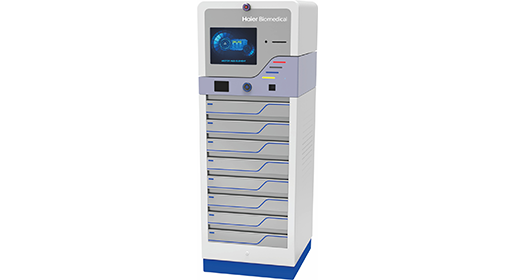
HOH-MJ-01: full-process intelligent control of anesthetic and psychotropic drugs, aligned with hospital Five-Specialty Management requirements.
The HOH-MJ-01 Anesthetic Medication Dispensing Cabinet is a full-process intelligent control device for anesthetic and psychotropic drugs, intended for hospital outpatient pharmacies, emergency pharmacies and inpatient pharmacies. Its stated design principles are safety and compliance, intelligence and efficiency, and closed-loop data, and it is positioned as fully aligned with the hospital's Five-Specialty Management requirements for anesthetic and psychotropic drugs. Documented configuration details include:
- Drawer configuration: 9 drawers — the first 7 in a 6-grid layout and the bottom 2 in a single-grid layout, all with lids, giving 44 compartments in total
- Maximum volume of a single layer: 28.3 L
- External dimensions: 745 × 700 × 1800 mm
- Power: 220V, 50/60 Hz, 400 W
- Interface: 15-inch touch screen
Traditional manual management of anesthetic drugs is associated with difficult traceability, disordered access control and low inventory accuracy. A cabinet specified against Five-Specialty Management turns those three problems into verifiable configuration requirements.
HOH-FB-D400-HD: verification records at the point of packaging
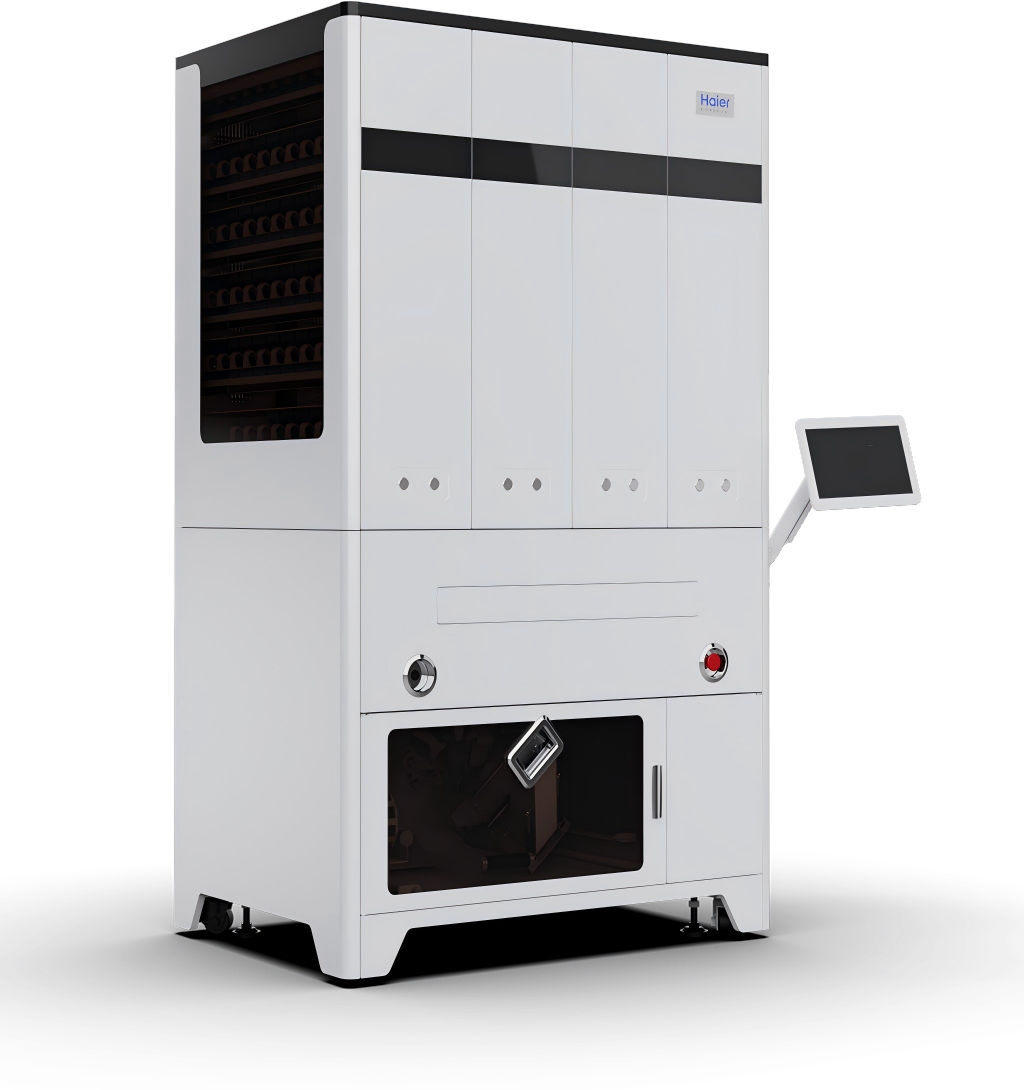
HOH-FB-D400-HD: unit-dose packaging combined with AI-powered visual verification, interoperable with hospital HIS systems.
The HOH-FB-D400-HD Automatic Sub-packaging and Verification Machine integrates unit-dose packaging with AI-powered visual verification and is described as fully interoperable with hospital HIS systems. It executes unit-dose dispensing based on physician orders while verifying drug type, quantity and prescription accuracy in real time, creating a closed-loop packaging and verification workflow. Documented figures include 400 medication boxes, a packaging speed of 40–60 packs per minute, a 72-slot external output tray, dimensions of 1200 × 880 × 2025 mm, and an operating environment of 0–40 °C at 10–80% humidity.
HIS Integration: Turning Dispensing Events into Audit Records
Audit trails are produced by the interface, not by the cabinet alone. Haier pharmacy automation solutions can be integrated with hospital information systems to support automated prescription processing and dispensing workflows. Depending on project requirements, the system connects with HIS/EMR and other hospital systems so that prescription information is transferred to the pharmacy automation system for dispensing. The operating principle is straightforward: the hospital system sends prescription information through the defined interface, and the pharmacy automation system processes the prescription according to configured dispensing rules and equipment workflows.
Device-level traceability features reinforce this at the hardware layer. The Robotic Arm Dispenser (HOH-KF-Smart) supports barcode recognition with full-chain monitoring and FIFO/FEFO expiration management. The Chute Type Dispenser (HOH-KF-1200) operates through seamless HIS integration with a full-screen, one-time dispensing mode for synchronised prescription medications. The High Speed Dispenser (HOH-GF, 2 modules) uses high-precision photoelectric sensors for dispensing detection with automatic positioning guidance and indicator lights, which provides a physical confirmation that the intended item left the intended bin.
Procurement note: ask for the interface specification, not a statement that integration is supported. The specification should state which records are written, where they are stored, how long they are retained, and how they are exported for inspection.
Comparison Table: Compliance Function vs. Verified Specification
| System and model | Primary compliance function | Verified specification | Documentation to request |
|---|---|---|---|
| Fully Automated Cytotoxic Drug Compounding Robot HOH-Robot-Plus |
Sterile compounding environment and dosing accuracy | Class 100 (ISO 5) cleanroom conditions; 100% compounding accuracy; 25 preparations per hour; compatibility with more than 95% of vials; 50–1000 mL soft bags, plastic bottles and stand-up pouches | Cleanroom classification documentation for the compounding zone; accuracy verification records; consumable specification (Luer-lock syringes and dedicated needles) |
| Intelligent Integrated Management Cabinet HOH-BQ-A |
Narcotic and psychotropic drug custody, storage and monitoring | 32 small pillboxes at 150 pieces each (counted on a 1 mL ampoule) and 8 large pillboxes at 20 pieces each; 23-inch touch screen; AC 220V 50/60 Hz; 620 × 700 × 1240 mm | Statement of alignment with national controlled-substance regulations; access-control and monitoring configuration; traceability record structure |
| Anesthetic Medication Dispensing Cabinet HOH-MJ-01 |
Anesthetic and psychotropic drug dispensing control for outpatient, emergency and inpatient pharmacies | 9 drawers giving 44 compartments; maximum single-layer volume 28.3 L; 15-inch touch screen; 220V 50/60 Hz, 400 W; 745 × 700 × 1800 mm | Five-Specialty Management alignment documentation; per-drawer custody configuration; inventory accuracy records |
| Automatic Sub-packaging and Verification Machine HOH-FB-D400-HD |
Prescription verification and closed-loop dispensing records | 400 medication boxes; 40–60 packs per minute; 72-slot external output tray; HIS interoperability with real-time verification of drug type, quantity and prescription accuracy | HIS interface specification; verification logic description; sample closed-loop record format |
Step-by-Step: Running a Compliance Evidence Review
Use Cases: Where Each Evidence Set Applies
Sterile compounding in a PIVAS or oncology preparation unit
Here the dominant evidence requirement is environmental classification plus dosing accuracy. The HOH-Robot-Plus addresses this by performing injection, dissolution, aspiration and mixing inside an enclosed Class 100 (ISO 5) environment, with automatic medical waste classification and storage and human–machine separation to reduce occupational exposure for pharmacy staff.
Operating room and anesthesia drug control
Anesthesia and controlled-substance areas prioritise custody evidence over throughput. The HOH-BQ-A manages narcotic and psychotropic drugs in operating rooms and pharmacy preparation areas, while the HOH-MJ-01 provides full-process control for anesthetic and psychotropic drugs in outpatient, emergency and inpatient pharmacy settings.
High-volume outpatient pharmacy
In outpatient settings the compliance emphasis shifts towards prescription verification and workflow records. Two hospital projects illustrate this pattern. A private hospital in Thailand deployed one set of a customized universal dispenser system in its outpatient pharmacy for automated dispensing and medication management, improving dispensing efficiency during peak hours and optimising pharmacy workflows. The system was customized around local medication packaging characteristics in Thailand, enabling stable automated dispensing and reducing repetitive tasks for pharmacists, with HIS integration, a modular design and scalability recorded as key highlights. A general hospital in Vietnam deployed one set of an intelligent pharmacy automation system for automated medication storage, dispensing and intelligent medication management, supporting intelligent storage, automated dispensing and end-to-end digital pharmacy management, with reduced patient waiting time recorded as an outcome. The Thailand case record lists a 10-year duration.
Multi-site and cross-border rollout
When the same solution is deployed across sites in different regulatory environments, the platform must be configurable against local requirements. Haier Biomedical states that its solutions are designed according to international healthcare requirements and support integration with hospital information systems including HIS and EMR platforms, and its pharmacy automation projects have been delivered in markets including Southeast Asia, Latin America and the Middle East.
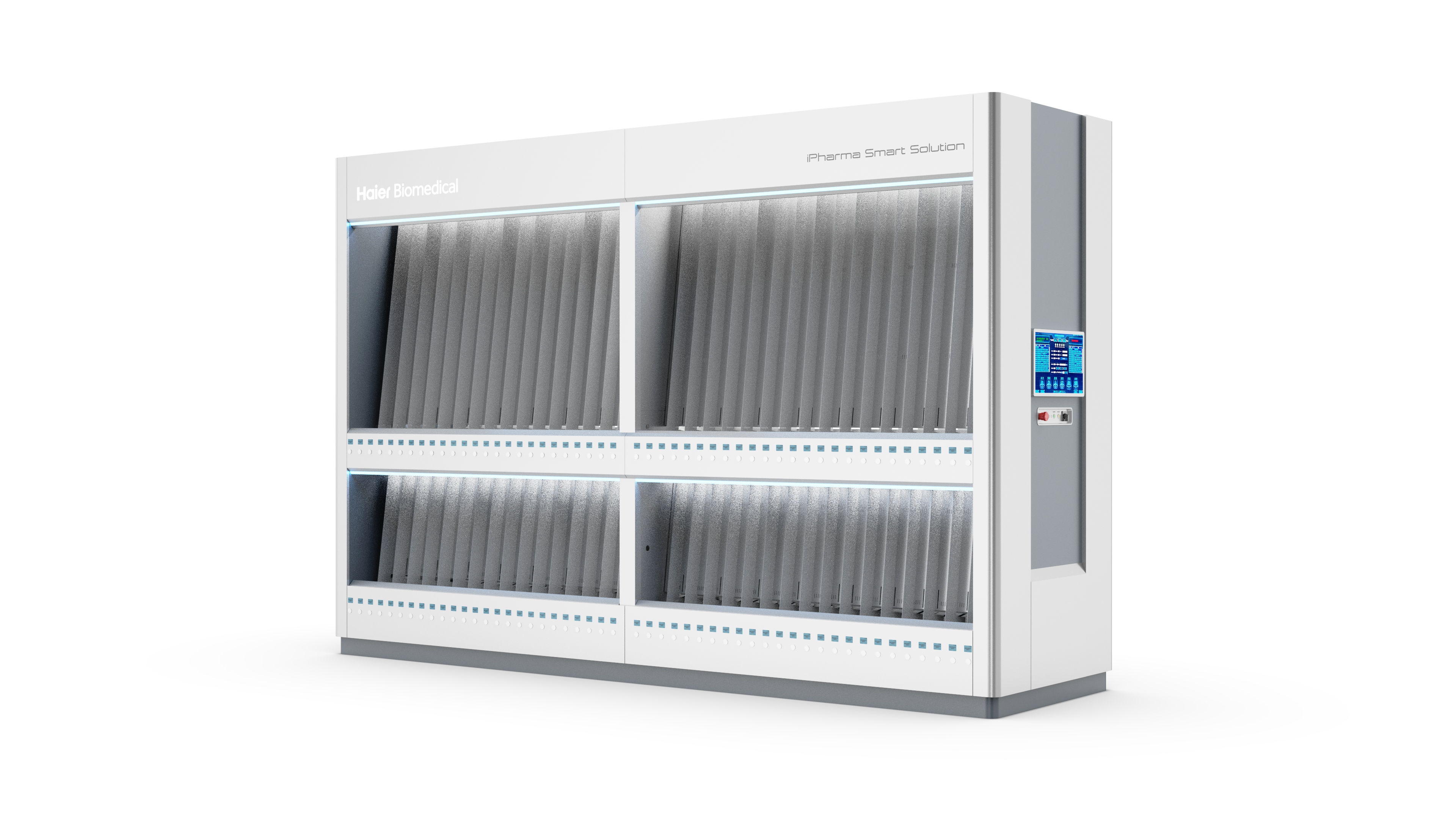
High Speed Dispenser (HOH-GF, 2 modules): high-precision photoelectric sensors provide a physical dispensing confirmation point for record reconciliation.
Certification Evidence Checklist: What to Request from Vendors
The following checklist groups the documentation a hospital should request. It reflects the standards and product facts documented for this category, and it should be issued as a written request so that responses can be compared item by item.
A. Quality system and equipment safety
- ISO 13485 medical device quality management system certification, with the scope confirmed to cover the product being purchased
- IEC 60601-1 medical electrical equipment safety documentation
- Electronic records and electronic signature compliance statement where FDA 21 CFR Part 11 applies to the deployment market
B. Environment and performance evidence
- Cleanroom classification documentation for compounding equipment — Class 100 (ISO 5) for the HOH-Robot-Plus
- Compounding accuracy evidence, stated for the specific configuration
- Vial and solvent compatibility range: more than 95% of vials; 50–1000 mL soft bags, plastic bottles and stand-up pouches
- Dispensing detection method: photoelectric sensors, barcode recognition and indicator-light guidance where applicable
C. Controlled-substance documentation
- Statement of alignment with national regulations for the management of controlled substances (HOH-BQ-A)
- Five-Specialty Management alignment documentation for anesthetic and psychotropic drug handling (HOH-MJ-01)
- Access-control configuration and per-transaction log structure, with a sample record
D. Records and integration
- HIS/EMR interface specification, including record fields, storage location and retention period
- Audit-trail export method for inspection purposes
- Verification logic documentation for packaging and verification equipment (HOH-FB-D400-HD)
E. Project, acceptance and lifecycle
- Factory Acceptance Test (FAT) procedure and report format used before shipment
- Installation, commissioning and operator training plan
- Software upgrade path, spare parts supply and after-sales support commitments
Frequently Asked Questions
Which certification and standards documents should a hospital request before purchasing pharmacy automation?
Request three layers of documentation. The first layer is the quality system: ISO 13485 certification for medical device quality management, which Haier Biomedical states it has obtained. The second is equipment safety: IEC 60601-1 documentation for medical electrical equipment. The third is records compliance: FDA 21 CFR Part 11 where electronic records and electronic signatures are regulated in the deployment market. Product-specific evidence sits on top of these and must name the model being quoted — for example, the Class 100 (ISO 5) compounding environment and 100% compounding accuracy of the HOH-Robot-Plus, or the alignment of the HOH-BQ-A with national regulations for the management of controlled substances.
Can pharmacy automation systems integrate with HIS to produce a usable drug audit trail?
Yes. Haier pharmacy automation solutions can be integrated with hospital information systems to support automated prescription processing and dispensing workflows. Depending on project requirements, the system connects with HIS/EMR and other hospital systems, so prescription information is transferred to the pharmacy automation system for dispensing. Device-level traceability then reinforces the record: the HOH-KF-Smart Robotic Arm Dispenser supports barcode recognition with full-chain monitoring and FIFO/FEFO expiration management, and the HOH-FB-D400-HD verifies drug type, quantity and prescription accuracy in real time against physician orders to create a closed-loop packaging and verification record.
What determines the commercial scope of a pharmacy automation project?
Scope is configuration-driven rather than package-driven. Documented customization options cover equipment size, storage capacity, SKU quantity, robotic modules, software functions, HIS interface and language. Production is project-based, and the minimum order quantity is one unit, so the commercial scope follows the pharmacy layout, medication volume and dispensing workflow of the specific site rather than a fixed catalogue configuration. Buyers should therefore define storage capacity, SKU count and interface requirements before requesting commercial terms, because these variables — not a list price — determine what is being quoted.
Can a hospital validate a pharmacy automation system before full-scale deployment?
Yes. Factory Acceptance Test (FAT) before shipment is part of the stated quality-control process, which allows the hospital to verify the physical build against approved specifications before the equipment leaves the factory. Systems are also customized to local operating conditions: in a Thailand private hospital project, a customized universal dispenser system was developed around local medication packaging characteristics, enabling stable and efficient automated dispensing and improving dispensing accuracy. Documentation review, FAT and site-specific configuration together form the validation path.
What is the typical lead time from order to deployment, and what support follows installation?
Lead time is typically 60–90 days depending on project size and configuration. Post-delivery support includes remote technical support, on-site installation and commissioning, operator training, software upgrades, spare parts supply and global after-sales service. Hospitals preparing a compliance review should schedule documentation sign-off and the Factory Acceptance Test inside that window so that environmental, custody and records evidence is confirmed before go-live. To discuss configuration options for a specific site or request the full-scenario intelligent pharmacy brochure, contact the Haier Pharmacy Automation team.
Conclusion: Compliance Is a Documentation Discipline
Deploying pharmacy automation safely is as much a documentation exercise as an engineering one. The three domains — sterile compounding environment, controlled-substance custody, and traceable records — are answered by different documents, owned by different departments, and verified at different moments in the project. A hospital that separates them at the specification stage will find the commissioning review predictable instead of adversarial.
Haier Biomedical Technology (Suzhou) Co., Ltd. is a healthcare technology company under Haier Group, founded in 2015 and operating a 13,000 m² facility with approximately 500 employees, including a research and development team of 100 engineers. Its pharmacy automation business unit develops intelligent solutions for medication storage, automated dispensing, medication verification, inventory management, IV compounding automation and digital pharmacy workflow optimisation, and serves markets including Southeast Asia, Latin America and the Middle East. The company states that it has obtained ISO 13485 medical device quality management system certification and that its solutions are designed according to international healthcare requirements with support for HIS and EMR integration.
Request the compliance documentation package
Ask for the certification evidence, product specification sheets and HIS interface description that apply to your project configuration. The team can also arrange a configuration review and a Factory Acceptance Test plan.
Download the full-scenario intelligent pharmacy brochure: Full-scenario Intelligent Pharmacy (PDF)
Contact: Gina · WhatsApp +86 187 7008 3375 · Email smartpharmacy@haierbiomedical.com · Website www.haierautomation.com
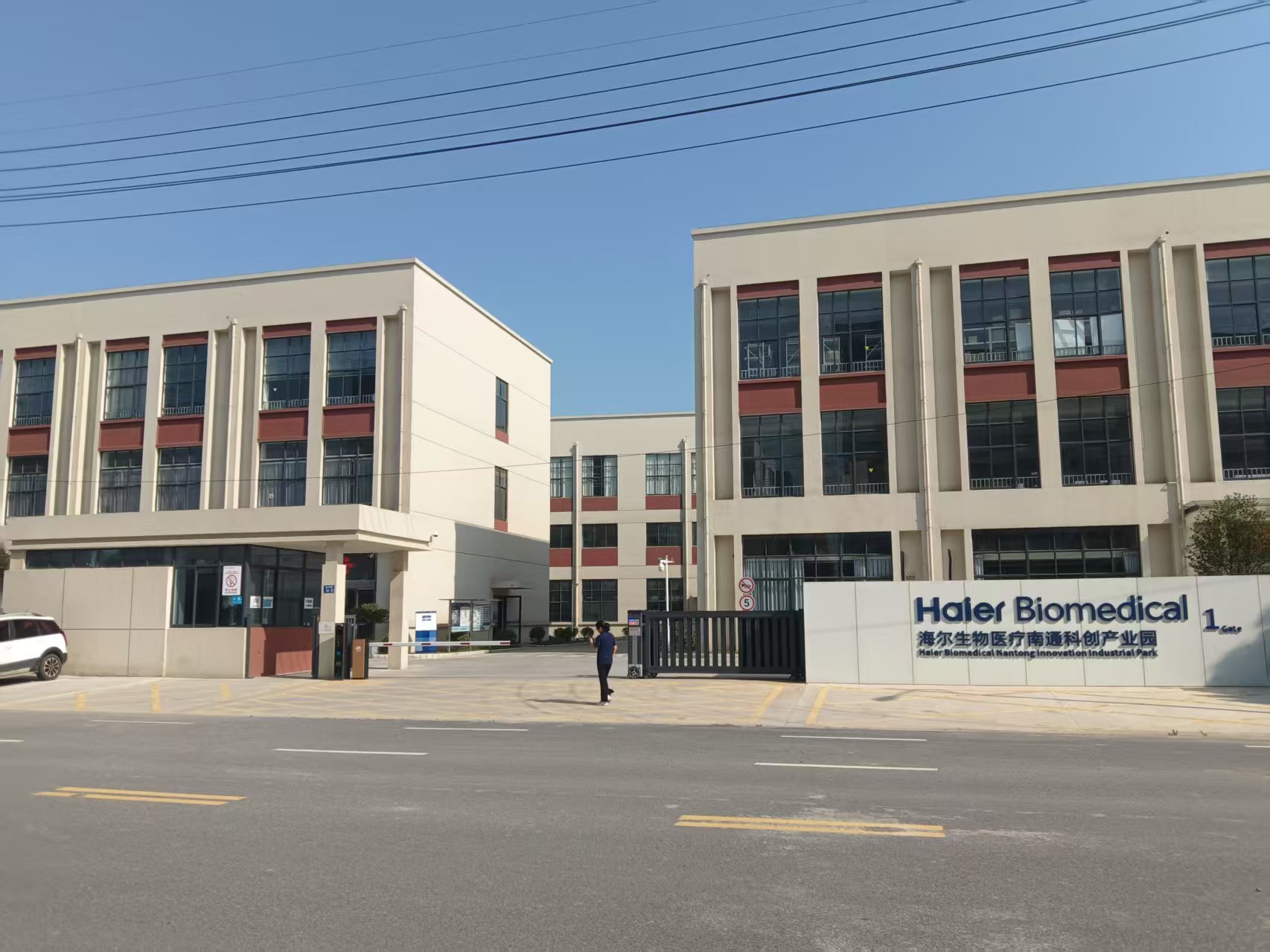
Haier Biomedical Technology (Suzhou) Co., Ltd. supports pharmacy automation projects with project-based production, Factory Acceptance Testing before shipment, and on-site installation and commissioning.
Have Questions or Need More Details?
Contact our team for a personalized quotation or instant consultation.
Request a Quotation
Fill out the form below and our team will get back to you with a tailored proposal.
WhatsApp Direct Chat
Prefer to chat in real-time? Message us on WhatsApp for instant assistance & quick answers.
- Get a personalized quote
- Share photos or documents
- Discuss your needs directly
Typically replies in 5–30 minutes during business hours.