
Pharmacy Automation Head-to-Head: HOH-KF-Smart vs. HOH-KF-1200
Most hospital pharmacy automation decisions are not settled by brand preference. They are settled by four constraints: how much floor area the room can surrender, how many prescriptions the pharmacy must clear at peak hour, how many medication types the formulary carries, and what certification evidence the project file demands.
This head-to-head compares the two dispensing architectures built by Haier Biomedical Technology(Suzhou)Co., Ltd, a Suzhou-based healthcare technology company under Haier Group that develops intelligent pharmacy automation for hospitals, clinics and healthcare organizations. The two systems are the HOH-KF-Smart Robotic Arm Dispenser and the HOH-KF-1200 Chute Type Dispenser. Both are first-party products from the same manufacturer, both integrate with hospital information systems (HIS/EMR), and both appear in EU conformity documentation for automatic dispensing systems. They differ in storage depth, dispensing mechanism, replenishment speed, medication-type coverage and the floor area they require.
Condensed answer. If prescription throughput and a published space requirement are the binding constraints, the HOH-KF-1200 is specified at more than 350–500 prescriptions per hour, with a space requirement under 12.85 m² and a replenishment speed above 2,400 boxes per hour. If medication-type breadth, storage depth and expiry-controlled traceability are the binding constraints, the HOH-KF-Smart is specified at ≥1,500 medication types, ≥20,000 boxes, FIFO/FEFO expiry management and barcode-based full-chain monitoring.
Problem Definition: Why This Comparison Is a Constraint Problem
The two dispensers serve the same hospital pharmacy market but are specified in different units. The HOH-KF-Smart is documented by medication types, box storage capacity, prescriptions per hour and boxes per hour for replenishment. The HOH-KF-1200 is documented in the same families plus an explicit space requirement in square metres and a buffer-port channel count. Comparing the two columns of a specification sheet without normalising those units is one of the most common sources of a mis-specified pharmacy automation project.
A second problem is scope drift. The chute dispenser is described as a modular system made of dispensing, storage and loading units. The robotic arm dispenser publishes main-unit dimensions that exclude the replenishment module. Unless the buyer asks which modules sit inside a quoted configuration, two quotations can look identical while describing two different rooms.
A third problem is certification scope. EU conformity documents cover model families rather than single units. A buyer who reads only the certificate number and skips the model list can assume coverage that does not exist — or miss coverage that does. The HOH-KF-Smart, for example, appears in the scope of more than one conformity document, with different validity windows.
Industry Background: Where Dispensing Hardware Sits in 2026
The global pharmacy automation devices market was estimated at USD 6.7 billion in 2024 (Insightace Analytic) and is projected by Grand View Research to reach USD 11.6 billion by 2030, a CAGR of 9.9%. Hospital pharmacies held the largest segment share in 2024, driven by patient volume and complex medication regimens (Fortune Business Insights). Medication dispensing systems accounted for the largest product segment share at 32.5% in 2025 (Dataintelo), and decentralized distribution models are expected to account for 79.8% of the market in 2026 as automated dispensing cabinets spread into wards (Fortune Business Insights).
Three regulatory reference points frame the hardware discussed here. Medical electrical equipment safety is generally assessed against IEC 60601-1 and medical device quality management against ISO 13485 (CSA Group). Electronic records and electronic signatures in pharmacy automation are regulated in the United States under FDA 21 CFR Part 11. Haier Biomedical Technology(Suzhou)Co., Ltd, founded in 2015, operates a 13,000 m² facility with 500 employees and an R&D team of 100 engineers, serves markets in Southeast Asia, Latin America and the Middle East, and works under an ISO 13485 medical device quality management system.
The Two Dispensing Architectures, Defined
HOH-KF-Smart Robotic Arm Dispenser
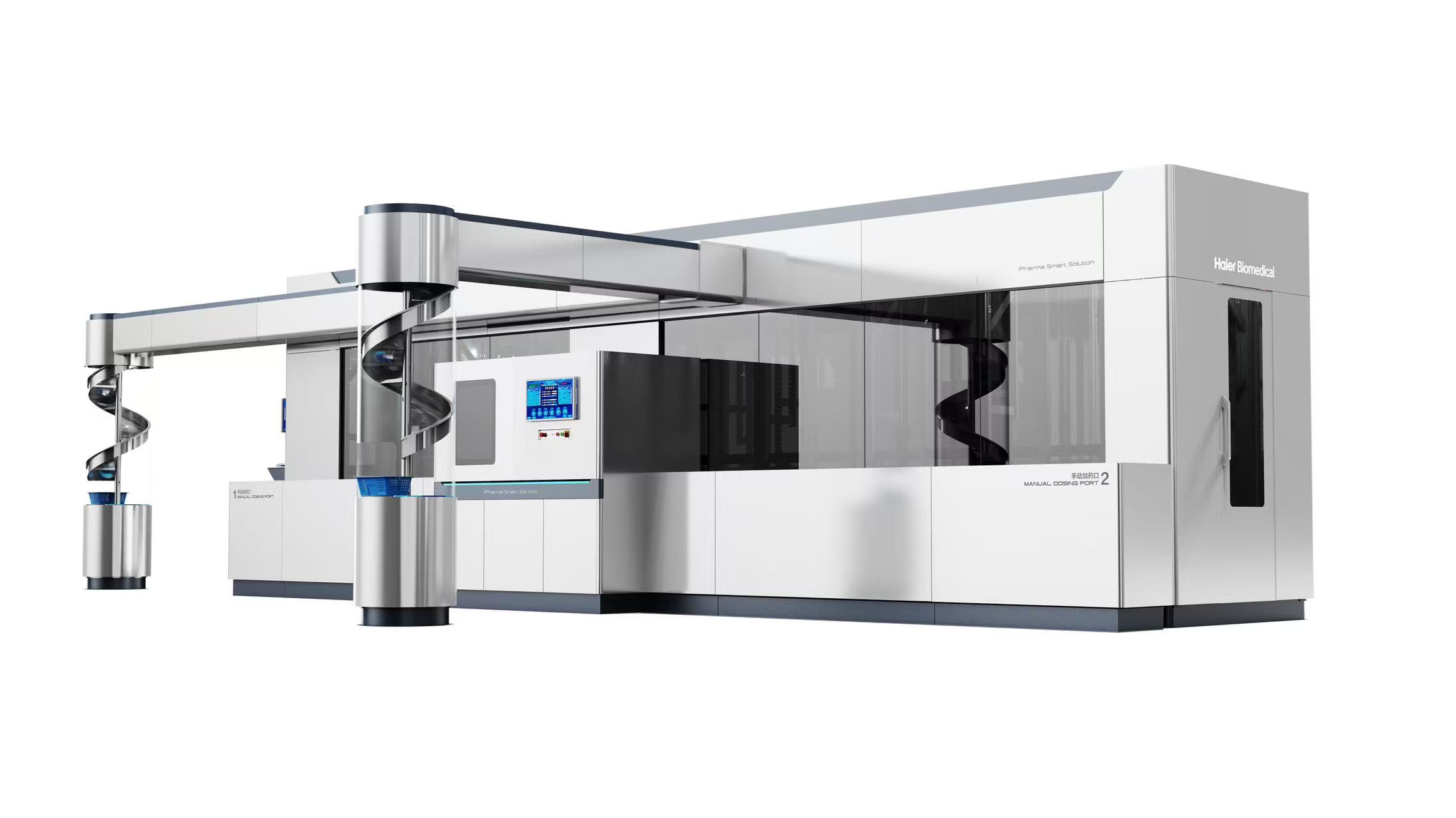
The HOH-KF-Smart is a robotic arm medication dispensing system that combines industrial-grade robotics with intelligent storage management. It receives prescription data from the hospital HIS in real time and uses robotic arms with AI-based visual recognition to pick, position and dispense medications. Published specifications are: ≥1,500 medication types; ≥20,000 boxes storage capacity; ≥300 prescriptions per hour dispensing speed; ≥700 boxes per hour replenishment speed; FIFO/FEFO expiry management described as supporting zero-error dispensing; barcode recognition with full-chain monitoring; a modular structure built for maintenance and scalability; parallel multi-prescription operation; and a dispensing buffer port with side buffering and front-end output. Main unit dimensions are published as 8,650 × 1,747 × 2,850 mm, with the replenishment module excluded.
HOH-KF-1200 Chute Type Dispenser
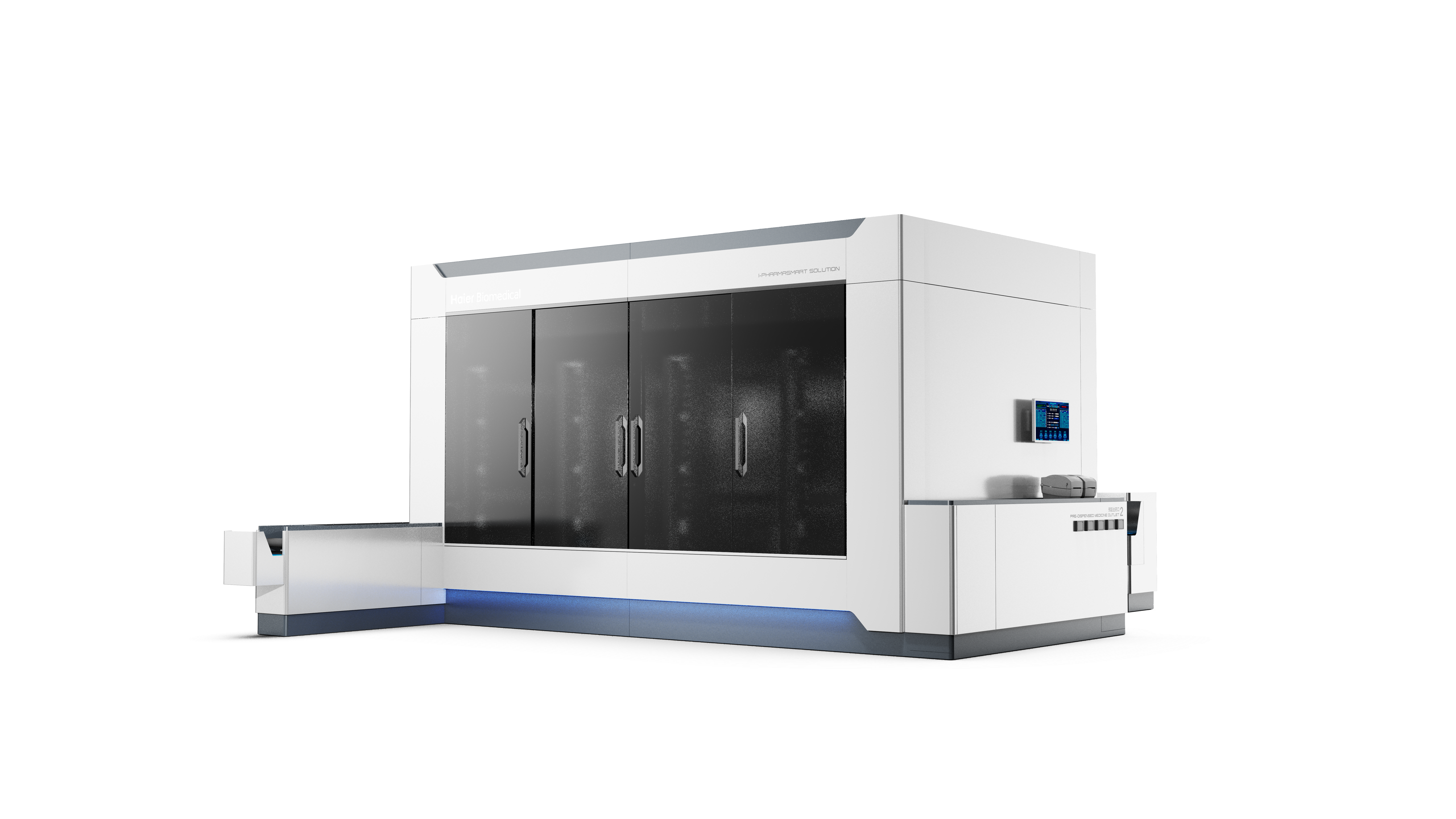
The HOH-KF-1200 is a chute type dispenser that uses a full-screen, one-time dispensing mode to synchronise the medications in a prescription, and it is designed around outpatient pharmacy throughput. Published specifications are: more than 1,100 medication types; more than 15,000 boxes storage capacity; overall dimensions under 4,690 × 2,850 × 2,735 mm; a space requirement under 12.85 m²; dispensing speed above 350–500 prescriptions per hour; replenishment speed above 2,400 boxes per hour; a modular structure of dispensing, storage and loading units; full-screen dispensing with safety buffers and parallel multi-prescription operation; and a dispensing buffer port of at least 2 channels supporting side buffering and front-end output.
One limitation is worth stating plainly: the published specification for the HOH-KF-1200 does not list FIFO/FEFO expiry rotation or barcode-based full-chain monitoring, both of which are documented for the robotic arm dispenser. Pharmacies with strict expiry-rotation requirements should confirm the expiry-management configuration in writing before purchase.
Constraint-by-Constraint Comparison
1. Floor space and room geometry
The HOH-KF-1200 publishes a space requirement under 12.85 m² and overall dimensions under 4,690 × 2,850 × 2,735 mm. The HOH-KF-Smart publishes a long, narrow main unit of 8,650 × 1,747 × 2,850 mm with the replenishment module excluded, so its room allocation must add the replenishment module's own area and service clearance. Practical rule: compare quotations only when both documents state whether the replenishment module, loading unit and buffer output zone are inside the quoted footprint.
2. Medication type coverage
Medication-type coverage is the first specification where the two systems separate clearly. The robotic arm dispenser is specified at ≥1,500 medication types; the chute dispenser at more than 1,100. Once a formulary passes roughly 1,100 lines, the coverage figure becomes a tie-breaker rather than a footnote. Both figures describe boxed-medication coverage within the dispensing workflow, and both models can be configured on SKU quantity within the published customization scope.
3. Storage capacity and inventory depth
Storage depth determines how often the pharmacy has to interrupt dispensing for replenishment. The HOH-KF-Smart is specified at ≥20,000 boxes; the HOH-KF-1200 at more than 15,000 boxes. Deeper storage favours pharmacies that buy in larger batches and want fewer receiving events; shallower storage favours pharmacies with tighter inventory turnover and limited storage room behind the machine.
4. Dispensing throughput per hour
Dispensing throughput is specified as prescriptions per hour on both models: ≥300 for the HOH-KF-Smart and above 350–500 for the HOH-KF-1200. The unit matters. Buyers who compare these figures against high-speed dispensers specified in boxes per second are comparing two different metrics, and the resulting room plan will be wrong. Match the throughput unit to the queue you actually need to clear.
5. Replenishment speed and staffing
Replenishment is where the two specifications diverge most: more than 2,400 boxes per hour for the HOH-KF-1200 against ≥700 boxes per hour for the HOH-KF-Smart. For a pharmacy running several replenishment windows per day, the chute dispenser's loading workflow shortens each window materially. For a pharmacy that replenishes once daily and prioritises storage depth and traceability, the robotic arm's figure may not be the binding constraint at all.
6. Buffering and parallel prescription handling
Both systems are documented with parallel multi-prescription operation and buffered output. The HOH-KF-1200 combines full-screen dispensing with safety buffers and a dispensing buffer port of at least 2 channels supporting side buffering and front-end output. The HOH-KF-Smart is documented with a dispensing buffer port designed with side buffering and front-end output. Buffering decouples dispensing from the hand-over point, which matters when several prescriptions complete at the same moment during an outpatient peak.
7. HIS integration, barcode scanning and prescription verification
Both systems work with hospital information systems. Haier pharmacy automation can be integrated with HIS/EMR so that prescription information is transferred to the automation system and processed according to configured dispensing rules, reducing repetitive manual data entry. The robotic arm dispenser receives prescription data in real time and combines it with AI-based visual recognition; the chute dispenser synchronises prescription medications through its full-screen, one-time dispensing mode. HIS interface and language sit inside the configurable scope. At the programme level, Haier Biomedical's 2025 annual report states that its AI-powered automated pharmacy solutions raised direct dispensing rates to 80%.
8. Expiry management and drug traceability
The HOH-KF-Smart supports FIFO/FEFO expiry management, described as supporting zero-error dispensing, and barcode recognition with full-chain monitoring. In a pharmacy managing short-dated stock, high-cost items or expiring biologicals, that combination converts a storage decision into a compliance decision. Confirm in writing how expiry rotation, drug traceability and inventory reconciliation are handled in the specific configuration you buy, because traceability requirements vary by jurisdiction.
9. Modularity, maintenance and scalability
Both machines are modular, but along different axes. The HOH-KF-Smart uses a modular structure described as supporting easy maintenance and scalability, which favours staged capacity growth and service access. The HOH-KF-1200 is modular across dispensing, storage and loading units, which favours throughput scaling and a separated loading workflow. Neither modularity claim replaces the question every pharmacy director should ask: which module fails first, and how long does the pharmacy run without it?
Side-by-Side Specification Table
| Constraint | HOH-KF-Smart Robotic Arm Dispenser | HOH-KF-1200 Chute Type Dispenser |
|---|---|---|
| Dispensing mechanism | Robotic arms with AI-based visual recognition for automated picking and positioning | Full-screen, one-time dispensing with safety buffers |
| Medication types | ≥1,500 | >1,100 |
| Storage capacity | ≥20,000 boxes | >15,000 boxes |
| Dispensing speed | ≥300 prescriptions/hour | >350–500 prescriptions/hour |
| Replenishment speed | ≥700 boxes/hour | >2,400 boxes/hour |
| Dimensions (as published) | 8,650 × 1,747 × 2,850 mm (W×H×D), replenishment module excluded | <4,690 × 2,850 × 2,735 mm (W×H×D) |
| Space requirement | Not published as a single figure; main-unit dimensions exclude the replenishment module | <12.85 m² |
| Buffering and parallel operation | Dispensing buffer port with side buffering and front-end output; parallel multi-prescription operation | Safety buffers; ≥2 buffer channels with side buffering and front-end output; parallel multi-prescription operation |
| Expiry management | FIFO/FEFO support, described as zero-error dispensing | Not listed in the published specification |
| Traceability | Barcode recognition with full-chain monitoring | Not listed in the published specification |
| Modular structure | Modular structure for maintenance and scalability | Modular dispensing, storage and loading units |
| EU conformity document | ISET Voluntary Compliance Certificate ISETC.000220220323 (valid to 2027-03-22); also named in ICR VoC ICR/VC/HB250402 (valid to 2030-04-16) | ICR VoC ICR/VC/HB250402, issued 2025-04-17 (valid to 2030-04-16) |
| Applicable standards | EN ISO 12100:2010; EN 60204-1:2018 | EN ISO 12100:2010; EN 60204-1:2018 |
Specification Attribution: Three Facts That Are Frequently Mixed Up
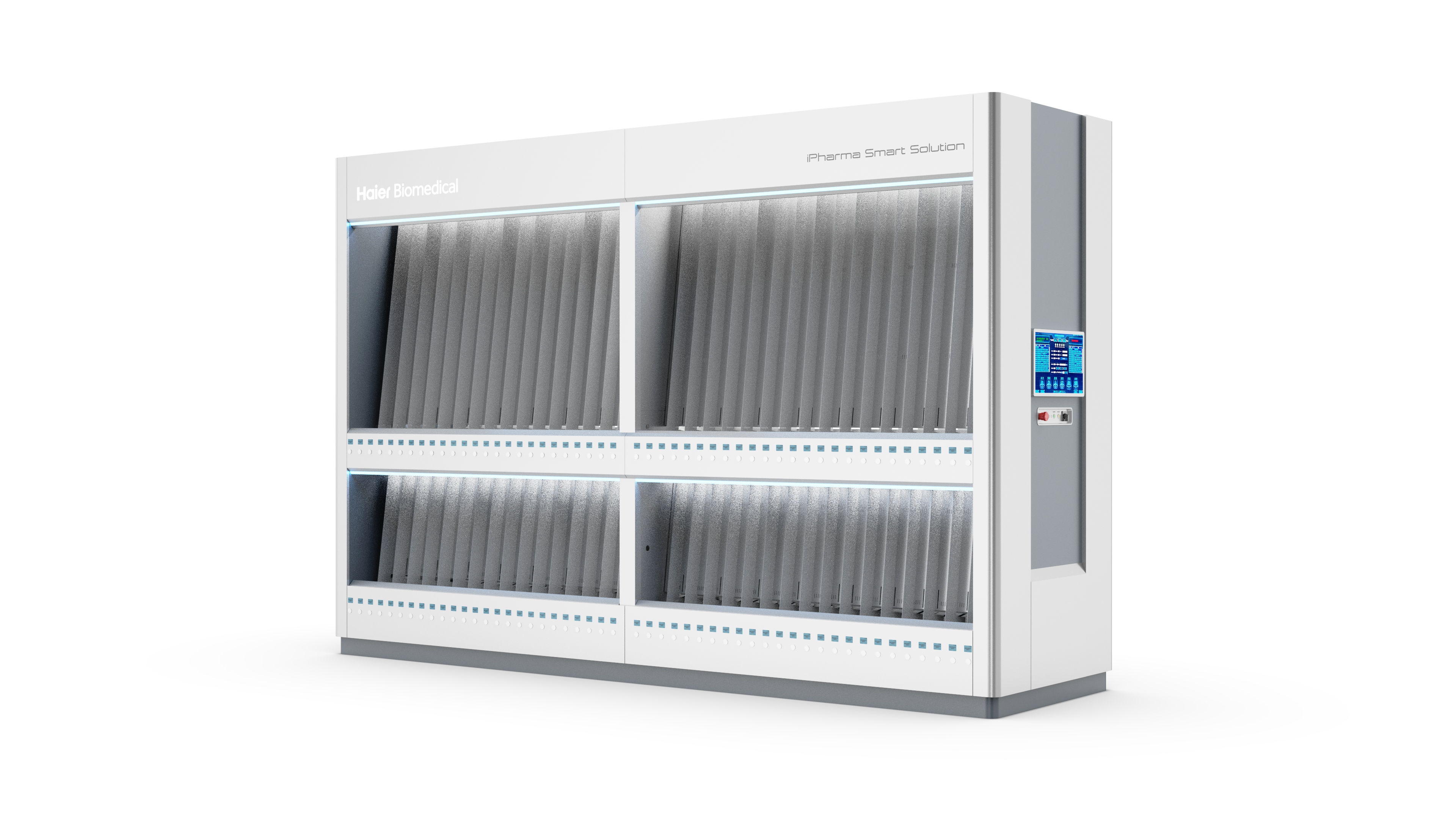
Three specification points circulate in buyer comparisons of these two models but belong to a different unit in the Haier Pharmacy Automation range. They are worth stating precisely, because a quotation built on the wrong specification produces the wrong room plan.
- A dual-level stacked structure with adjustable bin width, high-precision photoelectric sensors for dispensing detection, and automatic positioning guidance with indicator lights belong to the HOH-GF (2 Modules) High Speed Dispenser — not to the HOH-KF-1200 or the HOH-KF-Smart.
- A single-channel dispensing speed of ≥2 boxes per second, ≥5,000-box storage, up to 2 medication bin modules and main unit dimensions of 2,180 × 1,230 × 2,800 mm also belong to the HOH-GF (2 Modules). Batch dispensing for multiple boxes is its documented method.
- A space requirement under 12.85 m² and coverage of more than 1,100 medication types belong to the HOH-KF-1200 Chute Type Dispenser. The robotic arm dispenser is specified at ≥1,500 medication types and ≥20,000 boxes, with its own replenishment speed of ≥700 boxes per hour.
The practical implication is that the HOH-GF (2 Modules) high speed dispenser is often deployed alongside a chute dispenser where a subset of high-frequency boxed medications has to be batch-dispensed at speed. A general hospital in Vietnam, for example, runs an intelligent pharmacy automation system for outpatient storage, dispensing and medication management, with the HOH-KF-1200 chute type dispenser and the HOH-GF (2 Modules) high speed dispenser listed among the related equipment. Buyers comparing chute against robotic arm should therefore decide first whether a third unit — a high-speed batch dispenser — belongs in the layout.
Certification and Compliance Constraints for EU Projects
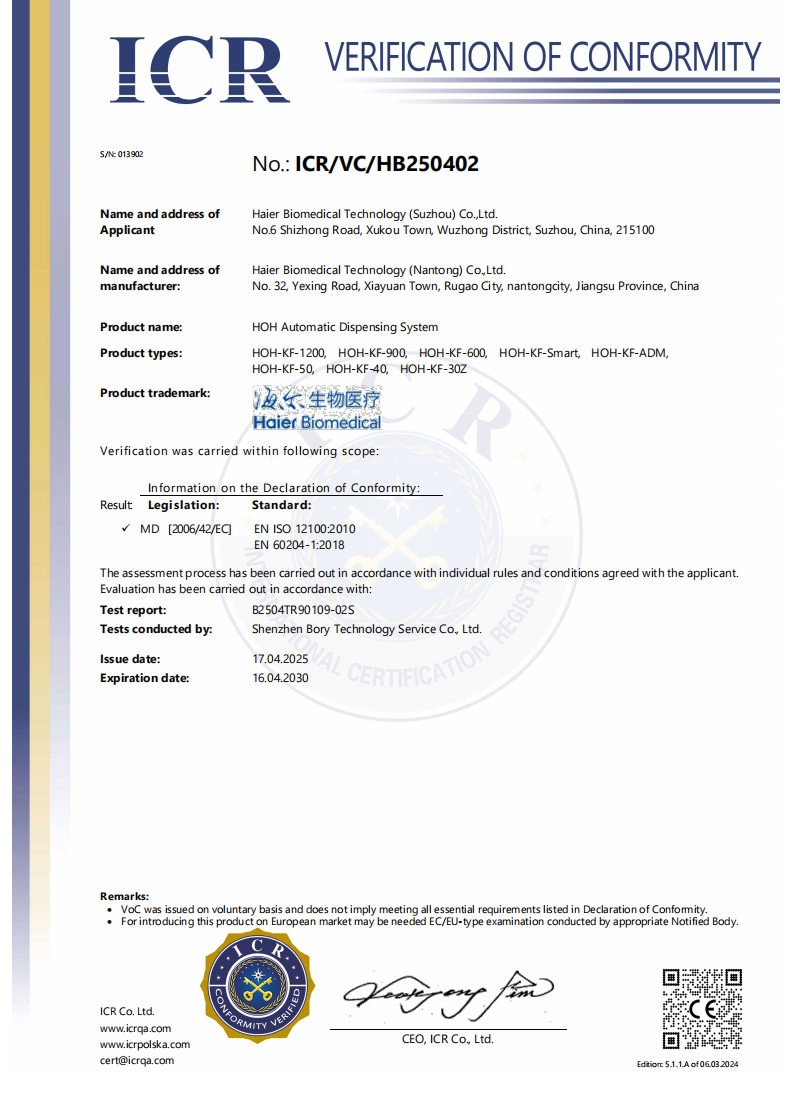
The ICR Verification of Conformity ICR/VC/HB250402 covers automatic dispensing system models including the HOH-KF-1200 and the HOH-KF-Smart. It was issued on 2025-04-17, is valid until 2030-04-16, applies to the EU market, and references EN ISO 12100:2010 and EN 60204-1:2018.

The HOH-KF-Smart is also covered by the ISET Voluntary Compliance Certificate ISETC.000220220323, issued by ISET on 2022-03-23 for the EU market, valid until 2027-03-22, under the same two standards. Note the difference in validity windows: the ISET document expires more than three years before the ICR document. A hospital specifying a five-year service horizon should log both renewal dates in the project risk register, at the same time as the model-scope check.
Project-level references worth confirming with the supplier and the local competent authority include IEC 60601-1 for medical electrical equipment safety and ISO 13485 for quality management (CSA Group), and FDA 21 CFR Part 11 where electronic records and signatures fall under United States requirements. Haier Biomedical operates an ISO 13485 medical device quality management system.
Step-by-Step: Running This Evaluation in Your Own Pharmacy
- Normalise the units before comparing. Convert every claim into prescriptions per hour for dispensing, boxes per hour for replenishment, and square metres for footprint. The HOH-KF-1200 is specified in prescriptions per hour, not boxes per second; boxes per second belongs to the HOH-GF high speed dispenser.
- Measure usable floor space, not room area. Take the published <12.85 m² requirement for the HOH-KF-1200 and the 8,650 × 1,747 mm main unit for the HOH-KF-Smart, then add loading access, buffer output, service clearance and the replenishment module.
- Count the real formulary. If the pharmacy carries more than about 1,100 lines, medication-type coverage becomes a tie-breaker between >1,100 and ≥1,500. Add expiry sensitivity to the same worksheet and check how each system rotates stock.
- Model peak-hour prescription flow. Use the busiest hour, not the daily average. Compare it against ≥300 prescriptions per hour for the robotic arm and >350–500 for the chute dispenser, then check buffer capacity at the hand-over point.
- Set the replenishment labour target. Decide how many replenishment windows per day the pharmacy can staff, then test that plan against >2,400 boxes per hour and ≥700 boxes per hour respectively.
- Verify the compliance and commercial file. Confirm that the exact models appear in the certificate scope, record validity dates, then confirm configuration scope — equipment size, storage capacity, SKU quantity, robotic modules, software functions, HIS interface and language — against a Factory Acceptance Test before shipment and a lead time of typically 60–90 days.
Use Cases: Which Architecture Fits Which Scenario
High-volume outpatient pharmacy with a hard footprint limit. A room that must clear several hundred prescriptions in the morning peak and cannot surrender more than about 12.85 m² of floor is a chute dispenser scenario. The HOH-KF-1200's dispensing speed, >2,400 boxes per hour replenishment and ≥2 buffer channels are specified for exactly this flow pattern.
Broad formulary with expiry-sensitive stock. A pharmacy carrying 1,100 to 1,500 or more lines, with biologicals or short-dated items in the same room, is a robotic arm scenario. The HOH-KF-Smart's ≥1,500 medication types, ≥20,000 boxes storage, FIFO/FEFO rotation and barcode-based full-chain monitoring address coverage and traceability rather than raw queue speed.
Staged or future-expansion projects. Both systems scale by module, so capacity can start below the published maximum and grow. Confirm in the contract which modules can be added later, how the HIS interface handles new modules, and whether the room has the service clearance for a second phase.
Deployments already running in the field. A private hospital in Thailand operates a customized universal dispenser system in its outpatient pharmacy, developed around local medication packaging characteristics with HIS integration and a modular, scalable design. A general hospital in Vietnam runs an intelligent pharmacy automation system for outpatient storage, dispensing and medication management. Both examples show the same pattern: the architecture is chosen from the room and the prescription profile, not from a generic product ranking.
Frequently Asked Questions
Are the HOH-KF-Smart and the HOH-KF-1200 certified for EU hospital pharmacy projects?
Both models are named in the scope of EU conformity documentation for automatic dispensing systems. The ICR Verification of Conformity ICR/VC/HB250402 was issued on 2025-04-17 and is valid until 2030-04-16 for the EU market, covering automatic dispensing system models including the HOH-KF-1200 and the HOH-KF-Smart, and referencing EN ISO 12100:2010 and EN 60204-1:2018. The HOH-KF-Smart is additionally covered by the ISET Voluntary Compliance Certificate ISETC.000220220323, issued on 2022-03-23 and valid until 2027-03-22, referencing the same two standards. Because certificate scopes list model families rather than individual units, confirm that the exact model and configuration in your quotation appear in the scope, and track the renewal dates if the project runs for several years.
Which of the two dispensers covers more medication types, and which dispenses faster?
Coverage and throughput point in different directions, so the answer depends on the binding constraint. The HOH-KF-Smart robotic arm dispenser is specified at ≥1,500 medication types and ≥20,000 boxes of storage, with a dispensing speed of ≥300 prescriptions per hour and replenishment of ≥700 boxes per hour. The HOH-KF-1200 chute type dispenser is specified at more than 1,100 medication types and more than 15,000 boxes of storage, with a dispensing speed above 350–500 prescriptions per hour and replenishment above 2,400 boxes per hour, supported by a dispensing buffer port of at least 2 channels. A pharmacy with a wide formulary and deep inventory is buying coverage; a pharmacy clearing several hundred prescriptions at peak hour is buying throughput.
What drives the cost of a HOH-KF-Smart or HOH-KF-1200 configuration?
Production is project-based and the configuration scope is customizable, so the commercial variables sit in the modules and interfaces of the project. The published customization scope covers equipment size, storage capacity, SKU quantity, robotic modules, software functions, HIS interface and language. In practice the cost drivers are the number of storage and dispensing modules, storage depth, whether a replenishment module is included, HIS/EMR interface work, buffer and output configuration, and room preparation. The minimum order quantity is one unit. To obtain comparable figures, submit the same SKU count, the same peak-hour prescription target and the same list of included modules for both configurations.
Can a hospital validate a dispenser before it is delivered and installed?
The published quality-control step is a Factory Acceptance Test (FAT) before shipment, which allows the buyer to verify the configured system against the agreed specification before it leaves the factory. After-sales scope covers remote technical support, on-site installation and commissioning, operator training, software upgrades and spare parts supply, and the minimum order quantity is one unit, so a single-system project does not require a multi-unit commitment. Because each system is configured to the project, the FAT checklist should mirror the parameters used in the comparison — medication types, storage capacity, dispensing speed and replenishment speed.
What is the typical lead time, and how do we request a configured quotation?
Lead time is typically 60–90 days depending on project size and configuration, counted from confirmation of the specification, HIS interface requirements and room layout. Haier Biomedical exports to Europe, the Middle East, Southeast Asia, Latin America, Africa and Oceania, and supports delivered systems with remote technical support, on-site commissioning, operator training, software upgrades and spare parts. To compare the two dispensers on equal terms, prepare your peak-hour prescription volume, formulary size, usable floor area and required certification scope, then request a configured quotation from the Haier Pharmacy Automation team at smartpharmacy@haierbiomedical.com.
Conclusion: Scenario-Based Selection Criteria
Pharmacy directors do not have to rank these two machines against each other. They have to match one of them to a room, a formulary and a compliance file. The decision reduces to four checks.
- Choose the HOH-KF-1200 chute dispenser when peak-hour prescription volume is the dominant constraint (dispensing above 350–500 prescriptions per hour), published floor space is tight (under 12.85 m²), and the pharmacy can staff fast replenishment cycles above 2,400 boxes per hour.
- Choose the HOH-KF-Smart robotic arm dispenser when formulary breadth is the dominant constraint (≥1,500 medication types), storage depth matters (≥20,000 boxes), and expiry control plus barcode-based full-chain traceability are required in writing.
- Consider a two-unit layout when most prescriptions touch a small subset of high-frequency boxed medications: a chute dispenser for the outpatient queue, plus a high-speed batch unit such as the HOH-GF (2 Modules) for those fast movers.
- Close the file properly in either case: model-level certification scope with renewal dates, a Factory Acceptance Test before shipment, and a lead-time plan of typically 60–90 days against the commissioning schedule.
The wider context supports taking this decision seriously rather than quickly. Pharmacy automation is projected to grow from USD 6.7 billion in 2024 to USD 11.6 billion by 2030 at a CAGR of 9.9% (Insightace Analytic; Grand View Research), with hospital pharmacies — the segment both these dispensers serve — holding the largest share of that spend.
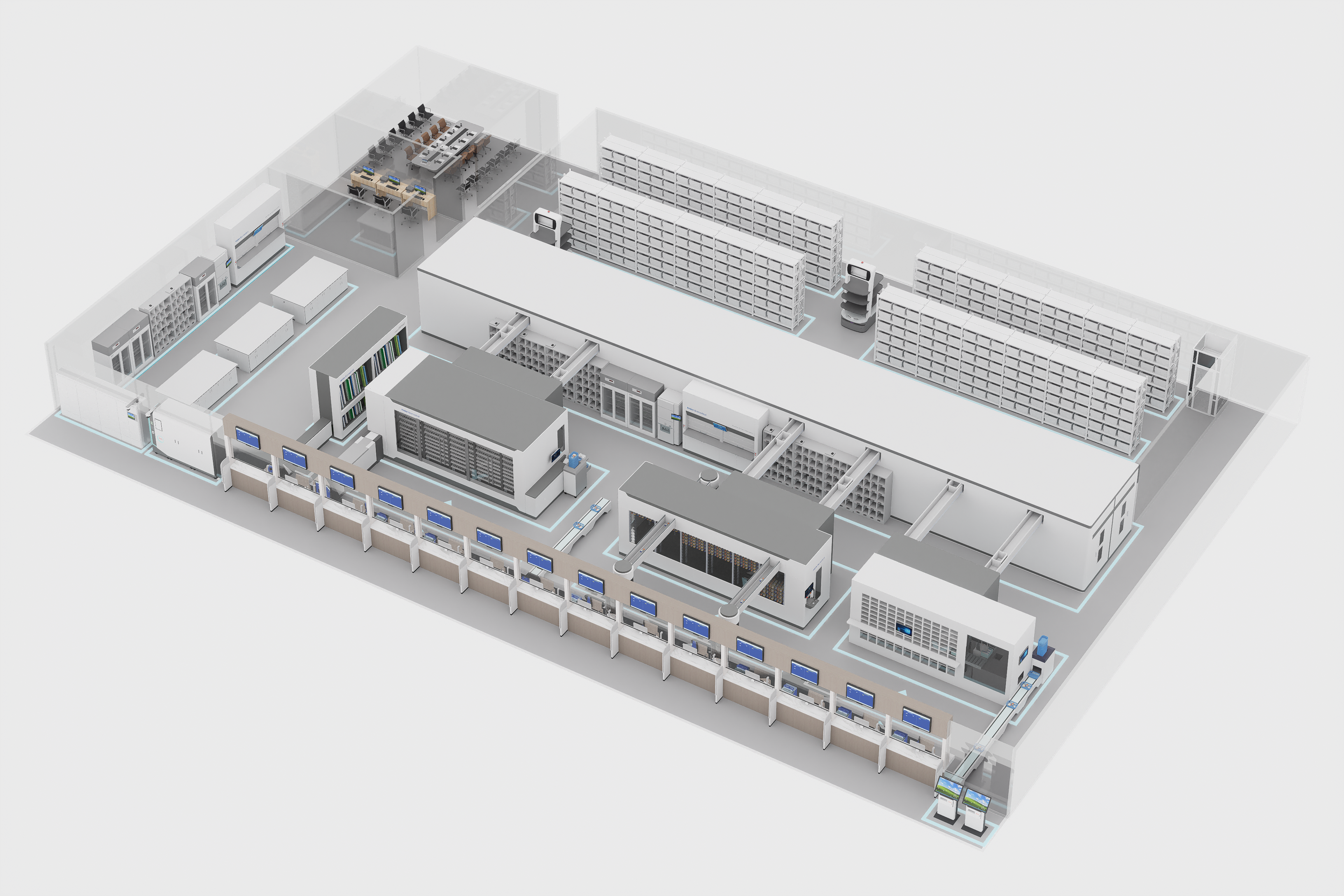
Next step: a configured comparison, not a brochure guess
Send your peak-hour prescription volume, formulary size, usable floor area and required certification scope, and the Haier Pharmacy Automation team will return a configured comparison of the HOH-KF-Smart and the HOH-KF-1200 on equal terms — module scope, HIS interface requirements, FAT checklist and lead time included.
Contact: Gina | Tel / WhatsApp: +86-187 7008 3375 | Email: smartpharmacy@haierbiomedical.com | Website: www.haierautomation.com
Address: No.6 Shizhong Road, Wuzhong District, Suzhou, China, 215100
Download the full-scenario reference: Full-scenario Intelligent Pharmacy brochure (PDF)
Have Questions or Need More Details?
Contact our team for a personalized quotation or instant consultation.
Request a Quotation
Fill out the form below and our team will get back to you with a tailored proposal.
WhatsApp Direct Chat
Prefer to chat in real-time? Message us on WhatsApp for instant assistance & quick answers.
- Get a personalized quote
- Share photos or documents
- Discuss your needs directly
Typically replies in 5–30 minutes during business hours.