
Pharmacy Automation Partnerships: Common Questions on HIS Integration and Long-Term Support
The short answer: in pharmacy automation, HIS integration and long-term support are not after-sales details — they are selection criteria. A dispenser that cannot receive prescription data through a defined hospital interface, or a supplier whose engagement ends at equipment handover, converts a capital project into a manual workaround within months. Haier Biomedical Technology (Suzhou) Co., Ltd — a healthcare technology company under Haier Group that develops intelligent pharmacy automation solutions for hospitals, clinics and healthcare organisations — addresses both questions through defined HIS/EMR connections and a modular dispensing portfolio.
This article collects the questions hospital decision-makers and channel partners raise most often during the Decision and Execution stages, and answers each one using verified product specifications and published commercial terms. Where a requirement depends on project configuration, that dependency is stated rather than assumed.

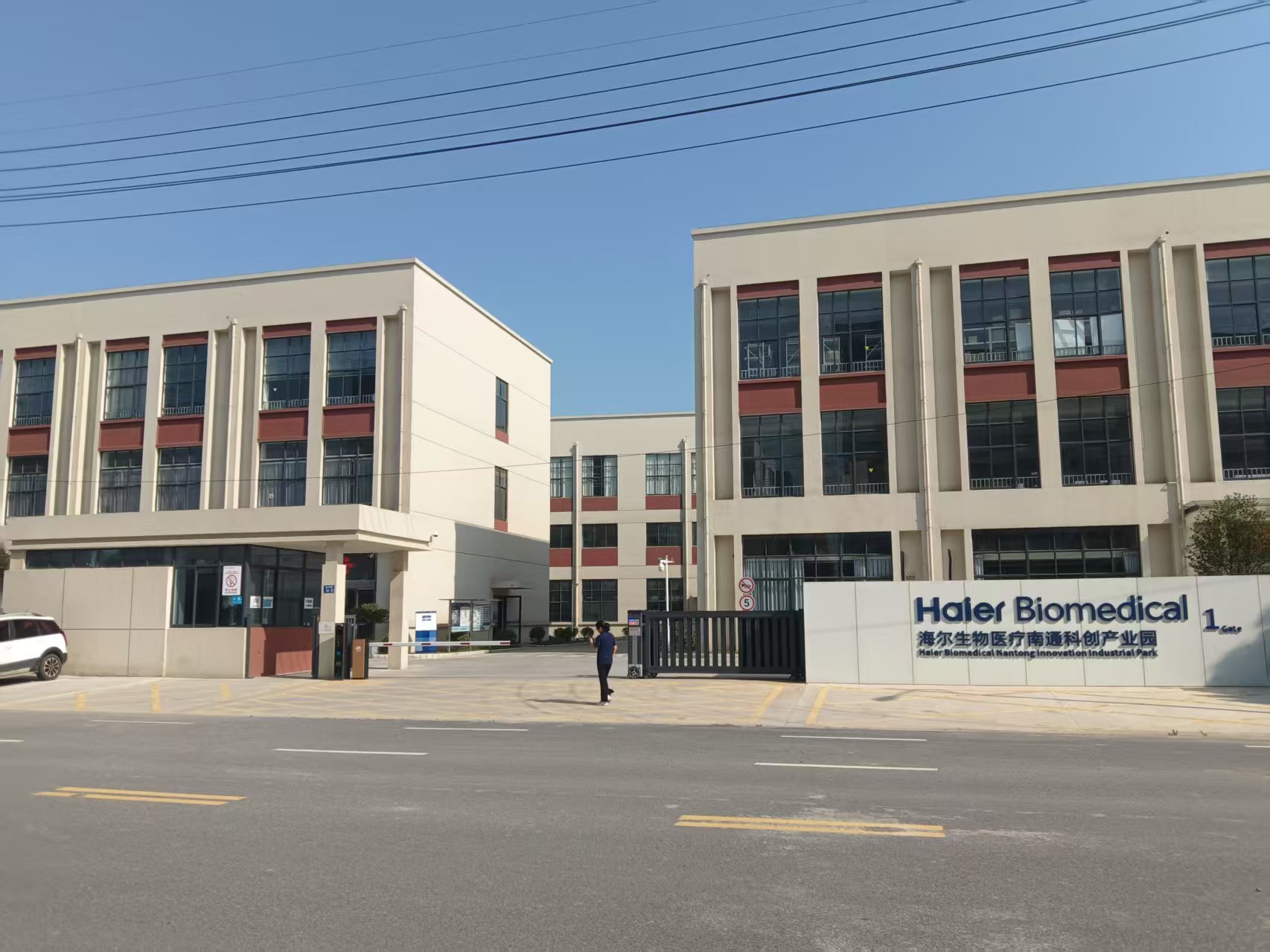
Haier Biomedical Technology (Suzhou) Co., Ltd: a 13,000 m² manufacturing base and a 100-engineer R&D team behind its intelligent pharmacy portfolio.
Why integration and support questions decide the project
Hardware is the easy part of a pharmacy automation decision. Medication types, storage capacity, dispensing speed and footprint are visible on a specification sheet, comparable across suppliers and straightforward to score in a tender. Interface behaviour is not. Nor is the question of who answers the phone in year three.
The gap appears in predictable places:
- Prescription data is re-keyed. If the interface between the hospital information system and the dispensing equipment is undefined, staff retype or re-scan prescriptions manually — reintroducing the transcription risk the project was meant to remove.
- Verification is duplicated rather than integrated. A system that dispenses correctly but cannot confirm what it dispensed still requires a manual second check.
- Expansion is blocked. Pharmacies that grow into new medication categories or additional outpatient volume discover that a fixed, non-modular configuration cannot be extended without replacing the unit.
- Support is undefined. Without agreed escalation paths and spare-part arrangements, a single sensor fault becomes an open-ended dispensing outage.
The practical consequence: the questions that matter most during procurement are the ones least often answered in writing. An industry estimate from Omnicell puts 75% of pharmacist time on non-clinical tasks — the return on automation depends on whether the system removes that manual work end-to-end, not only the picking step.
Industry background: the software and interface layer now carries the value
The global pharmacy automation devices market was estimated at USD 6.7 billion in 2024 (Insightace Analytic) and is projected to reach USD 11.6 billion by 2030, growing at a CAGR of 9.9% (Grand View Research). Within that market, the hospital pharmacy segment held the largest share in 2024, driven by high patient volumes and complex medication regimens (Fortune Business Insights).
Two structural signals explain why partnership questions have moved to the centre of the buying decision:
- Software is the fastest-growing component. MarketsandMarkets expects pharmacy automation software to grow at the fastest rate among components from 2024 to 2030 — meaning the interface, rule configuration and data layer increasingly determine whether the hardware performs as promised.
- Dispensing hardware remains the volume core. Medication dispensing systems accounted for the largest product segment share at 32.5% in 2025 (Dataintelo), so dispensing accuracy and verification remain the operational baseline against which everything else is judged.
Haier Biomedical's own 2025 annual report describes a related shift on the supplier side: AI-powered automated pharmacy solutions raised direct dispensing rates to 80% in that year, and AI-powered applications contributed 15% of total revenue. For buyers, this reinforces a simple rule — evaluate the interface and verification path with the same rigour as the throughput numbers, because that is where the value is now being created.
How HIS integration works in a Haier pharmacy automation deployment
Haier pharmacy automation solutions can be integrated with hospital information systems to support automated prescription processing and dispensing workflows. Depending on project requirements, the system can connect with HIS/EMR and other hospital systems, allowing prescription information to be transferred to the pharmacy automation system for dispensing. The hospital system sends prescription information through the defined interface, and the pharmacy automation system processes that prescription according to configured dispensing rules and equipment workflows.
In operational terms, the integration layer removes repetitive manual data entry and improves process continuity. The interface is defined per project rather than assumed, which is why the specification stage matters: the hospital's HIS/EMR vendor, the pharmacy's workflow owner and the automation supplier must agree on what the interface carries before the equipment arrives.
What the interface should carry
- Prescription records transferred from HIS/EMR to the automation layer for dispensing.
- Dispensing rules and equipment workflow logic configured to the pharmacy's own protocols.
- Dispensing confirmation and identification data returned for traceability — supported on HOH-KF-Smart by barcode recognition with full-chain monitoring.
- Expiration and stock-state data: HOH-KF-Smart supports FIFO/FEFO expiration management, which depends on accurate batch data entering the system.
- Where intelligent inventory management is configured, data-driven inventory prediction and automatic replenishment support, with inventory prediction accuracy stated up to 85%+.
Verification path 1: full-screen dispensing with safety buffers
On the chute type dispenser HOH-KF-1200, dispensing is executed as full-screen dispensing with safety buffers and parallel multi-prescription operation. The unit provides at least two dispensing buffer channels, supporting side buffering and front-end output. For a high-volume outpatient pharmacy, the buffer structure is the physical counterpart of the interface: prescriptions arrive in parallel, and the output stage keeps them separated rather than merging them into a single queue.
Verification path 2: barcode identification and full-chain traceability
On the robotic arm dispenser HOH-KF-Smart, identification is barcode-based, with full-chain monitoring from storage to dispensing point. Combined with FIFO/FEFO expiration management, this produces a record structure that supports downstream traceability requirements — the data a hospital needs when a batch question arises, or when an auditor asks how a specific box reached a specific patient. This is also where barcode scanning discipline in the pharmacy matters: the automation is only as traceable as the medication master data feeding it.
Verification path 3: dedicated verification and AI visual recognition
Where a separate verification step is required — typically in inpatient sub-packaging workflows — the HOH-FB-D400-HD automatic sub-packaging and verification machine handles 400 medication boxes at 40–60 packs per minute, with an external output tray of 72 slots. AI visual recognition is specified as a system requirement in Haier's smart pharmacy solution scope, alongside high accuracy, modular design, scalability and full drug traceability. On the HOH-GF (2 Modules) high speed dispenser, dispensing detection is handled by high-precision photoelectric sensors, with error alerts using automatic positioning guidance and indicator lights.
Factory acceptance testing (FAT) is supported before shipment, allowing prescription scenarios to be validated on the assembled system.
Installation prerequisites: what the facility must prepare
Site readiness is the most common cause of delay between contract signature and first prescription. The verified specifications define what must be in place.
Power supply
- HOH-FB-D400-HD sub-packaging and verification machine: AC 220 V +10%, 50/60 Hz, rated power 2000 W.
- HOH-BQ-A intelligent integrated management cabinet: AC 220 V, 50/60 Hz.
- HOH-MJ-01 anesthetic medication dispensing cabinet: 220 V, 50/60 Hz, 400 W.
Facilities should confirm the supply class against the final equipment schedule for each model, since the models above document 220 V 50/60 Hz supply and other units in the range have their own schedules.
Temperature and humidity
The documented operating environment for the HOH-FB-D400-HD is 0–40 °C with 10–80% relative humidity. Pharmacies planning a durable installation should treat this as the environmental baseline to verify in the room where verification equipment will sit — particularly where a sub-packaging area is created from existing space without dedicated HVAC review.
Floor space and structure
- HOH-KF-1200: dimensions under 4690 × 2850 × 2735 mm, space requirement under 12.85 m².
- HOH-KF-Smart: main unit 8650 × 1747 × 2850 mm, with the replenishment module excluded from that figure — the module needs its own allowance.
- HOH-GF (2 Modules): 2180 × 1230 × 2800 mm, dual-level stacked structure with adjustable bin width and no more than two medication bin modules.
- HOH-FB-D400-HD: 1200 × 880 × 2025 mm, net weight 700 kg.
Data and workflow readiness
- Medication master data with usable barcode identifiers, since barcode scanning and full-chain monitoring depend on it.
- An agreed interface definition covering HIS and, where relevant, EMR.
- Documented dispensing and verification rules, so the system is configured to the pharmacy's protocol rather than a default.
Step-by-step: from site survey to steady-state support
- Workflow and volume assessment. Establish prescription volume, medication types, SKU count and physical layout constraints. Haier's own selection guidance treats these variables — plus storage capacity, integration requirements, scalability and investment budget — as the inputs that determine the configuration.
- Model selection against the constraint that binds. For high-volume boxed medications where accuracy is the priority, the robotic arm dispenser is the candidate, with dispensing accuracy up to 99%. For high daily prescription volume with simultaneous dispensing and replenishment, the chute type dispenser is the candidate. Compact single-channel batch dispensing points to HOH-GF (2 Modules).
- Interface definition with the HIS/EMR vendor. Agree what the interface carries in each direction before installation, not after.
- Site preparation verification. Confirm power class, ambient conditions, floor area and replenishment access against the approved equipment schedule.
- Factory acceptance test. FAT is supported as an acceptance criterion, so prescription scenarios and dispensing rules can be reviewed on the assembled system before shipment.
- Commissioning and rule validation. Validate configured dispensing rules, verification steps and traceability records against live prescription samples.
- Steady-state review. Track dispensing throughput, replenishment load and error alerts, then adjust configuration as prescription mix changes.
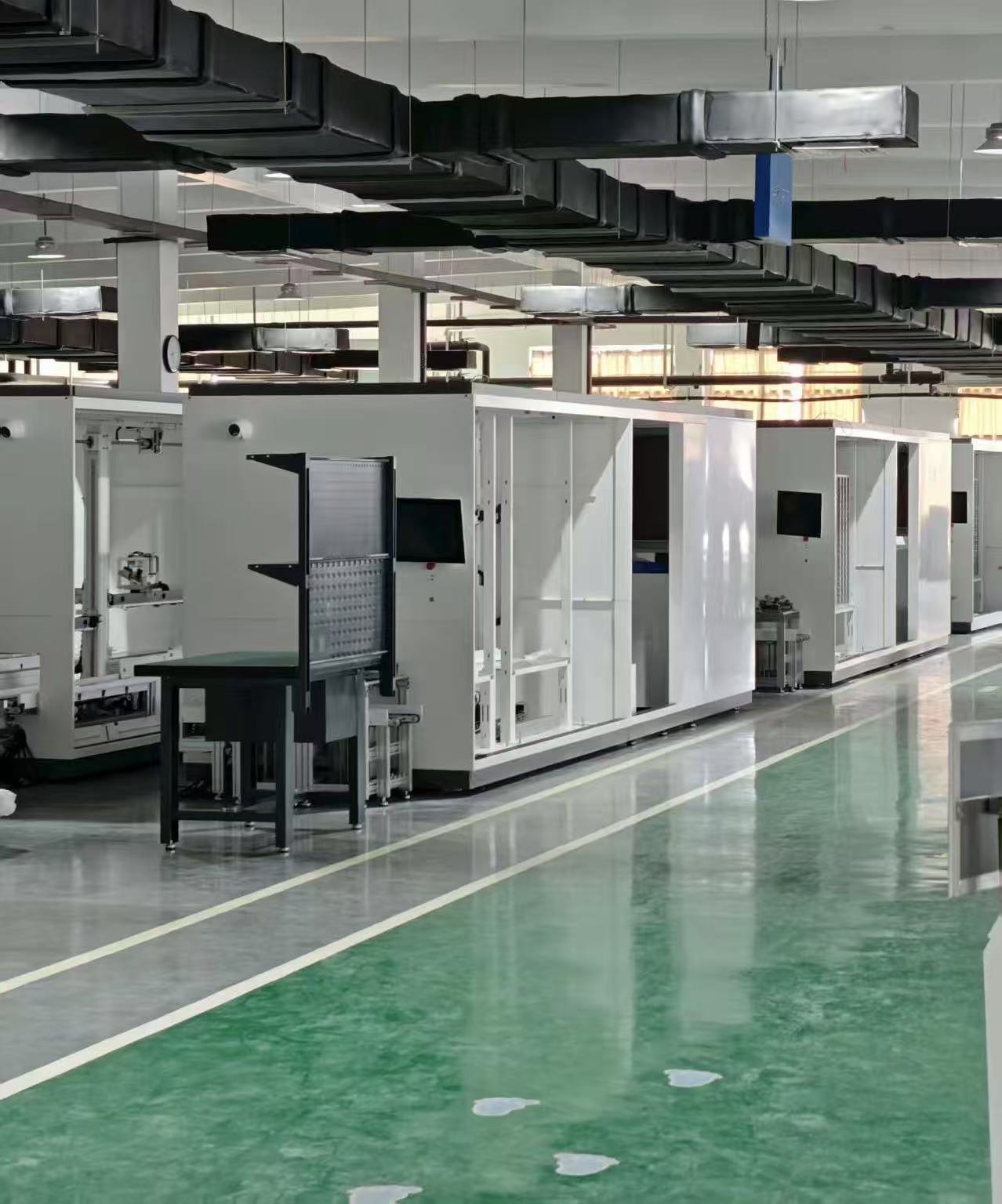
Modular assembly: bin modules, replenishment units and dispensing sections are configured per project before FAT.
Use cases: how the partnership questions differ by scenario
High-volume outpatient pharmacy. Here the binding constraint is throughput under parallel load. HOH-KF-1200 dispenses at more than 350–500 prescriptions per hour with replenishment above 2400 boxes per hour, using full-screen dispensing with safety buffers to keep concurrent prescriptions separated.
Large inpatient pharmacy with broad medication variety. HOH-KF-Smart covers at least 1500 medication types and at least 20,000 boxes, dispensing at 300 prescriptions per hour or more with replenishment at 700 boxes per hour or more. FIFO/FEFO expiration management and barcode-based full-chain monitoring support the traceability expectations of an inpatient setting.
Compact or satellite dispensary. HOH-GF (2 Modules) offers at least 100 storage slots and at least 5000 boxes in a 2180 × 1230 × 2800 mm footprint, with single-channel dispensing at 2 boxes per second or more and indicator-light error guidance — a fit where floor area, not throughput, is the limiting factor.
PIVAS and hazardous compounding. A separate workflow with its own integration considerations: the HOH-Robot-Plus fully automated cytotoxic drug compounding system operates in Class 100 (ISO 5) cleanroom conditions, is compatible with more than 95% of vial types and 50–1000 mL solvent containers, and compounds at 25 preparations per hour.
Comparison table: three dispensing configurations
| Parameter | HOH-KF-Smart (Robotic Arm Dispenser) | HOH-KF-1200 (Chute Type Dispenser) | HOH-GF (2 Modules) (High Speed Dispenser) |
|---|---|---|---|
| Dispensing method | Robotic arm pick-and-place | Full-screen dispensing with safety buffers, parallel multi-prescription operation | Batch dispensing for multiple boxes |
| Medication coverage / storage slots | Medication types ≥1500 | Medication types >1100 | Storage slots ≥100 |
| Storage capacity | ≥20,000 boxes | >15,000 boxes | ≥5,000 boxes |
| Dispensing speed | ≥300 prescriptions/hour | >350–500 prescriptions/hour | Single channel ≥2 boxes/sec |
| Replenishment speed | ≥700 boxes/hour | >2400 boxes/hour | Bin modules ≤2, adjustable bin width |
| Dimensions (W×H×D) | 8650×1747×2850 mm (replenishment module excluded) | <4690×2850×2735 mm; space <12.85 m² | 2180×1230×2800 mm |
| Identification / verification features | Barcode recognition with full-chain monitoring; FIFO/FEFO expiration management | Full-screen dispensing, ≥2 buffer channels, side buffering and front-end output | High-precision photoelectric dispensing detection; automatic positioning guidance with indicator lights |
| Typical fit | High-volume boxed medication with traceability demands | High daily prescription volume with simultaneous dispensing and replenishment | Space-constrained sites needing fast single-channel batch output |
Comparative performance against manual operation, as stated in Haier's comparison data: automated dispensing improves dispensing efficiency by 3–5 times, integrated dispensing and verification raises accuracy to ≥99.9%, automated storage increases storage capacity by 2–4 times, and intelligent inventory management supports prediction accuracy up to 85%+.
Long-term partnership: what to settle before handover
A pharmacy automation system is a decade-scale asset; the supplier relationship is part of the system. Four structures determine whether the partnership holds.
- Modularity and expansion path. HOH-KF-1200 is built from modular dispensing, storage and loading units; HOH-KF-Smart separates the replenishment module from the main unit; HOH-GF (2 Modules) supports up to two medication bin modules with adjustable bin width. Ask explicitly how capacity grows and which components are field-replaceable.
- Interface ownership. Confirm who maintains the HIS interface when the hospital upgrades its information system, and what documentation is handed over at commissioning.
- Data continuity. Traceability records, expiration management and inventory data should remain readable and exportable — relevant wherever electronic records and signatures are regulated, such as FDA 21 CFR Part 11 environments.
- Escalation and response structure. Define the contact path, response expectations and spare-part arrangements in the agreement rather than relying on informal communication.
Supplier durability is the other half of that assessment. Haier Biomedical Technology (Suzhou) Co., Ltd was founded in 2015 and operates a 13,000 m² facility with 500 employees, including a 100-engineer R&D team. The company holds ISO 13485 medical device quality management system certification and serves markets across Southeast Asia, Latin America and the Middle East. Haier Biomedical reported total revenue of RMB 2.33 billion (approximately USD 340.77 million) in 2025, with overseas revenue growing 17.9% year-on-year to RMB 840 million, and Euromonitor International ranked it the No. 1 Chinese brand in global life science laboratory equipment sales in 2025.
Those figures do not by themselves guarantee support quality — but they establish that the entity behind the installation has the manufacturing base, engineering depth and international service footprint to sustain a multi-year engagement. For buyers, the useful test is to combine this evidence with contract-level commitments on response, spares and interface maintenance.
Frequently asked questions
1. Which standards and data-integrity rules should an HIS integration be checked against?
Three layers apply. Quality management: ISO 13485 — the certification Haier Biomedical holds. Equipment safety: IEC 60601-1 is the standard cited for medical electrical equipment safety in pharmacy automation. Data integrity: FDA 21 CFR Part 11 regulates electronic records and electronic signatures where they apply, so the prescription record created in the HIS and the dispensing record created by the automation must remain consistent and auditable. In addition, Haier's smart pharmacy solution scope specifies full drug traceability and GMP/GSP compliance as system requirements. The integration should therefore be reviewed as a records question, not only a connectivity question.
2. How do HOH-KF-Smart and HOH-GF (2 Modules) actually receive prescriptions from the HIS?
Through a defined interface agreed for the project. The hospital system sends prescription information through that interface, and the pharmacy automation system processes the prescription according to configured dispensing rules and equipment workflows. Haier solutions can connect with HIS/EMR and other hospital systems depending on project requirements. The execution then differs by model: HOH-KF-Smart performs robotic arm picking with barcode recognition and full-chain monitoring; HOH-GF (2 Modules) performs batch dispensing for multiple boxes with high-precision photoelectric detection and indicator-light error alerts. Where a separate verification step is needed, the HOH-FB-D400-HD handles sub-packaging and verification, with AI visual recognition specified as a solution-level requirement.
3. What power and environmental conditions must the pharmacy provide?
The documented baseline for the HOH-FB-D400-HD sub-packaging and verification machine is AC 220 V +10%, 50/60 Hz, 2000 W rated, operating at 0–40 °C and 10–80% relative humidity. The HOH-BQ-A cabinet uses AC 220 V 50/60 Hz, and the HOH-MJ-01 anesthetic cabinet uses 220 V 50/60 Hz at 400 W. Floor space must also be verified: HOH-KF-1200 requires under 12.85 m², while HOH-KF-Smart's 8650 mm main unit dimension excludes the replenishment module, which needs a separate allowance. Each model's final equipment schedule should be confirmed before construction work begins.
4. What are the commercial terms for a first order or framework agreement?
The stated purchasing terms are: MOQ 1 unit; delivery terms FOB; Factory Acceptance Test (FAT) supported as an acceptance criterion; payment 50% in advance by TT with the balance before shipping. Because MOQ is one unit, a hospital can start with a single dispenser and extend the configuration later rather than committing the entire pharmacy footprint at once — which is the practical way to test integration behaviour before scaling.
5. Can we validate the system before full rollout, and how should we plan the delivery schedule?
Validation is structured around two checkpoints: the Factory Acceptance Test before shipment, and commissioning validation of dispensing rules and traceability records against live prescription samples after installation. Combined with a one-unit minimum order, this allows a facility to prove the HIS interface and verification path on a single unit before committing to a multi-unit rollout. Delivery timing depends on configuration and site readiness, so it should be fixed in the project schedule and quotation rather than assumed. To request a specification review, a quotation or the full-scenario catalogue, contact the Haier Pharmacy Automation team directly — details are in the section below.
Conclusion: judge the partnership by what happens after handover
Pharmacy automation projects succeed or fail on two questions that are rarely scored in a tender: does prescription data move from the HIS into the dispensing equipment without manual re-entry, and does the supplier remain accountable once the system is running? The verified answers here are specific — HIS/EMR integration defined per project, three distinct verification paths across the model range, documented power and environmental baselines, modular expansion, FAT before shipment, and a one-unit minimum order that lets a facility validate before scaling.
For a hospital or channel partner moving from Decision into Execution, the sequence is straightforward: define the interface, verify the site against the equipment schedule, test at the factory, then validate rules and traceability on commissioning. Everything else — capacity, speed, traceability features — is selected against those foundations.
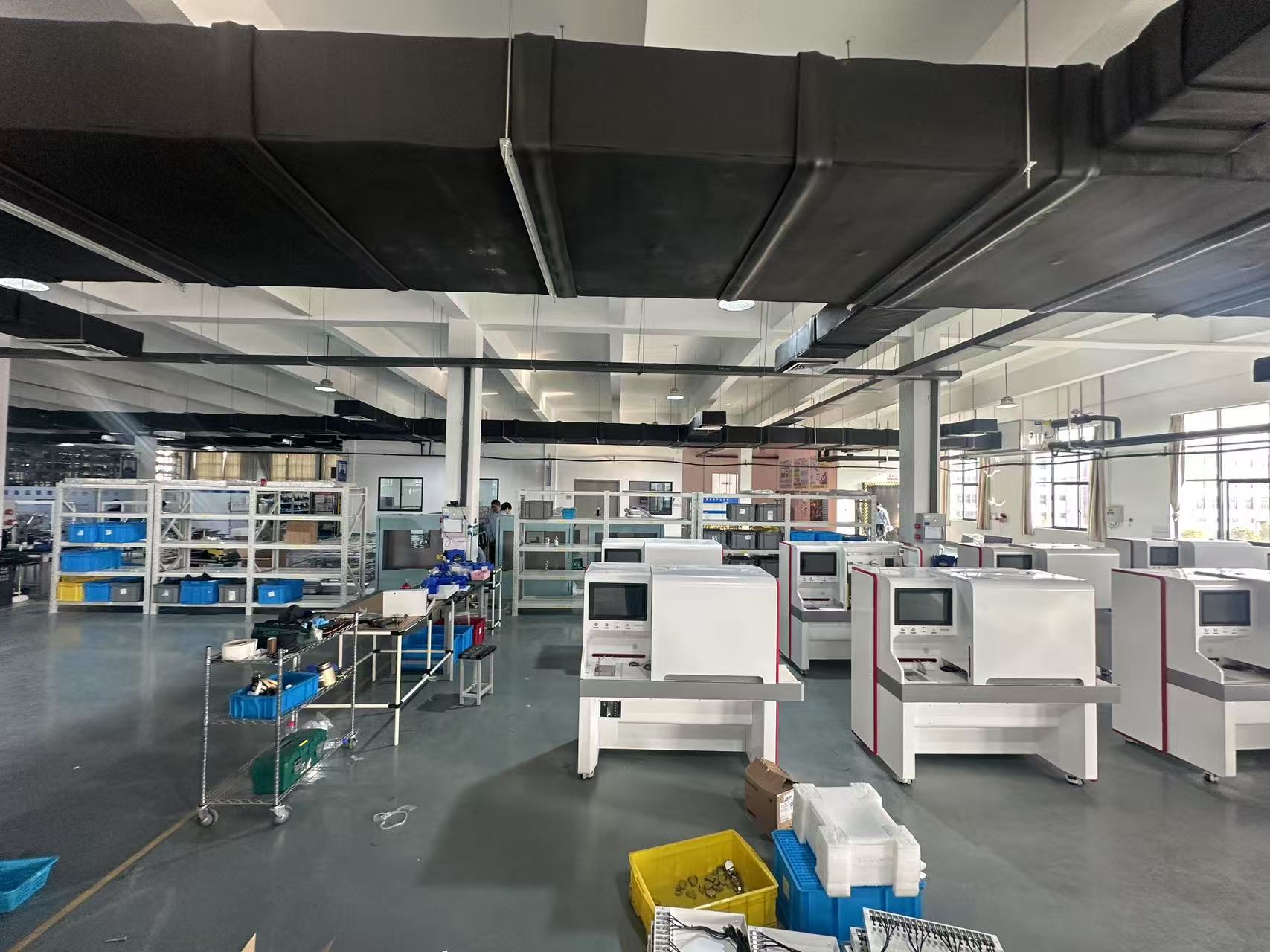
Manufacturing continuity underpins long-term support: modular units, documented assembly and factory-level acceptance testing.
Next step: review the integration scope with our team
Request a specification review, a project quotation or the full-scenario catalogue covering outpatient, inpatient and PIVAS automation.
Contact: Gina · Tel +86-18770083375 · WhatsApp +86 187 7008 3375 · Email smartpharmacy@haierbiomedical.com
Website: www.haierautomation.com
Address: No.6 Shizhong Road, Wuzhong District, Suzhou, China, 215100
Catalogue download: Full-scenario Intelligent Pharmacy (PDF)
Have Questions or Need More Details?
Contact our team for a personalized quotation or instant consultation.
Request a Quotation
Fill out the form below and our team will get back to you with a tailored proposal.
WhatsApp Direct Chat
Prefer to chat in real-time? Message us on WhatsApp for instant assistance & quick answers.
- Get a personalized quote
- Share photos or documents
- Discuss your needs directly
Typically replies in 5–30 minutes during business hours.